Nothing ruins the rhythm of making fresh pasta faster than a rolling pin that sticks, flexes, or produces uneven sheets. You need a tool with enough heft to thin dough effortlessly, a surface that won’t grab, and a design that transfers control directly to your palms. The right pin makes the difference between a silky sheet of tagliatelle and a frustrating patch of torn dough.
I’m Mohammad Maruf — the founder and writer behind AirfryerBite. I’ve spent years analyzing kitchen hardware, breaking down material density, bearing smoothness, and handle ergonomics to understand what separates a professional-grade pasta roller from an also-ran.
This guide focuses exclusively on pins built to handle the specific demands of pasta work. Whether you prefer the chill of marble or the tactile feedback of hardwood, the right rolling pin for pasta must deliver consistent thickness, easy release, and a balanced weight that does the heavy lifting for you.
How To Choose The Best Rolling Pin For Pasta
Pasta dough is denser and less forgiving than pastry dough. The wrong pin can trap moisture, transfer heat, or simply lack the mass to flatten a stiff ball of semolina and egg into a translucent sheet. Here are the three factors that matter most.
Material: Marble’s Chill vs. Wood’s Grip
Marble’s naturally cool surface keeps butter and egg fats solid, reducing adhesion and the need for excess flour. A polished marble barrel around 2.36 inches in diameter provides enough surface contact to thin dough quickly without sticking. Hardwood pins, particularly maple or beech, offer a porous surface that seasoned bakers prefer for the tactile control it provides — though they require more frequent dusting with flour to prevent sticking during pasta work.
Weight and Barrel Profile
A pin that weighs under 2 pounds forces you to push down, which fatigues your shoulders and can produce uneven thickness. For pasta, look for a barrel weight of at least 3 to 4.5 pounds so gravity does the initial flattening. French-style tapered pins allow for greater edge control during circular rolling motions, while straight-barreled pins with handles excel at producing uniform rectangular sheets ideal for lasagna or fettuccine.
Quick Comparison
On smaller screens, swipe sideways to see the full table.
| Model | Category | Best For | Key Spec | Amazon |
|---|---|---|---|---|
| SIPARUI Marble Rolling Pin | Premium Marble | Large pasta sheets, even thickness | 18.5-inch total length, 4.5 lbs | Amazon |
| J.K. Adams Maple Rolling Pin | Hardwood Gauge | Consistent thickness for cut-out pasta | 24-inch length, 1/8-inch gauge | Amazon |
| Flexzion Marble Rolling Pin | Entry-Level Marble | Everyday pizza and small pasta batches | 10-inch barrel, 5 lbs | Amazon |
| Walfos Marble Pin with Cradle | Mid-Range Marble | Petite bakers, easy handling | 16.5-inch total, 2.7 lbs | Amazon |
| Walfos French Wood Pin Set | Wood Tapered | Small kitchens, varied dough types | 8-inch and 15.7-inch set | Amazon |
In-Depth Reviews
1. SIPARUI Marble Rolling Pin with Wooden Cradle (18.5 Inch)

At 4.5 pounds with a 9.84-inch barrel and 2.36-inch diameter, this SIPARUI pin uses its mass to push pasta dough flat with almost no downward force from you. The stainless steel bearings allow the barrel to rotate 360 degrees independently of the handles, which is critical when you’re stretching a large sheet into a uniform rectangle without dragging your knuckles across the dough.
The polished marble stays noticeably cool to the touch, which helps a stiff egg dough release cleanly without tearing. Multiple customer reviews confirm the rubber sealing rings at the handle joints keep water out during cleaning — a common failure point on cheaper marble pins where moisture seeps in and stains the stone. The included wooden cradle provides a safe parking spot so the heavy barrel doesn’t roll off the counter.
Packaging has been a reported weakness, with some units arriving in thin styrofoam that risks chipping. Inspect on arrival, but know that the pin itself consistently delivers effortless, even rolling for pasta sheets up to 9 inches wide.
Why it’s great
- 4.5-pound barrel reduces arm fatigue during long pasta sessions
- Independent bearing rotation prevents dough snagging
- Cool marble surface minimizes sticking for egg-based dough
Good to know
- Packaging is minimal; inspect for chips on delivery
- Hand-wash only — never submerge or dishwasher-safe
2. J.K. Adams Lovely Maple Wood Rolling Pin (24 Inch)
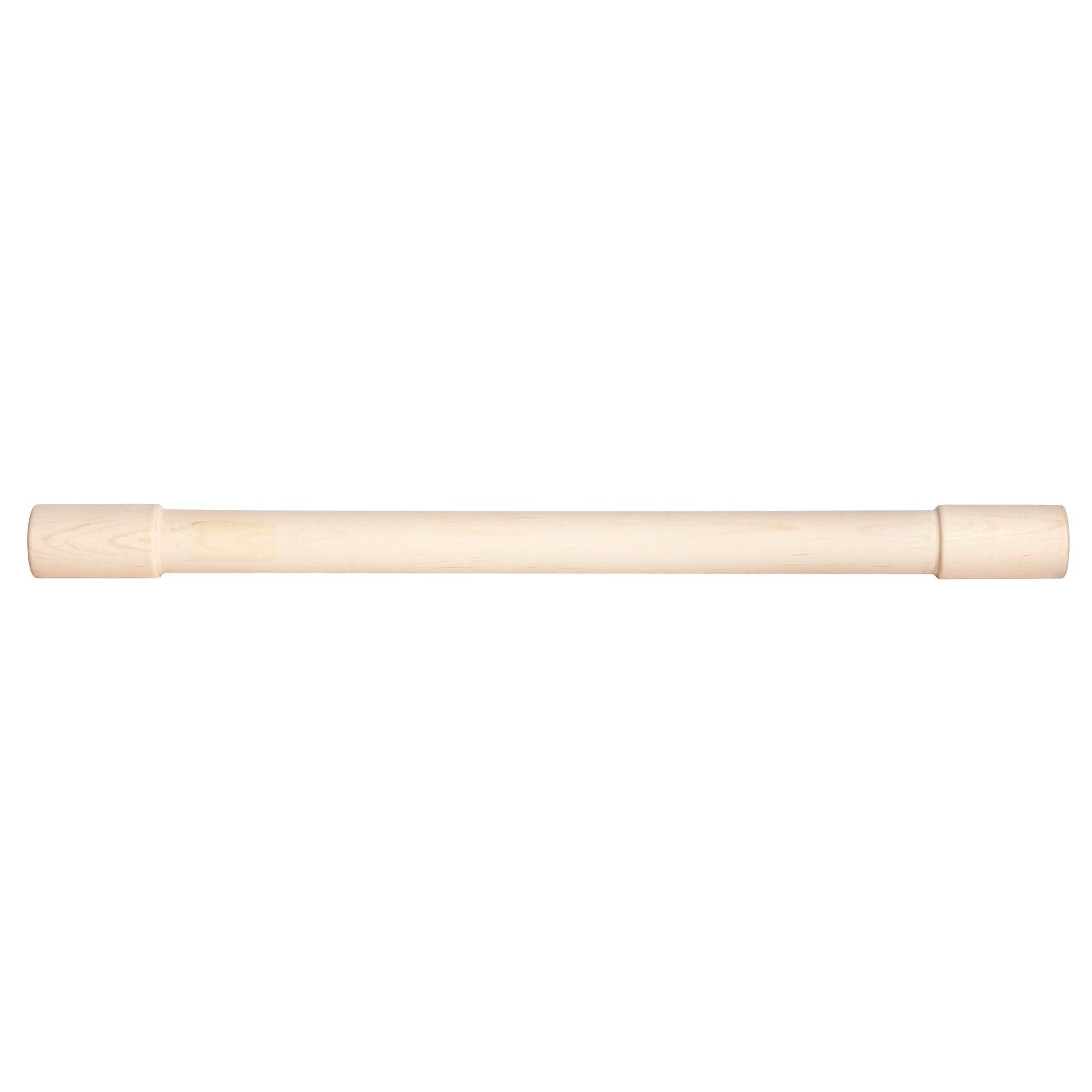
This 24-inch tapered maple pin from J.K. Adams is the gold standard for bakers who demand uniform thickness without guessing. The pin has pre-machined gauge ridges at both ends — one side rolls dough to exactly 1/8-inch, the other to 1/4-inch — so every pass produces a consistent sheet ideal for ravioli or lasagna noodles. The ash wood construction (labeled “Vermont” hardwood) offers a smooth, unpainted surface that seasoned bakers prefer for its predictable friction.
The 1.15-pound weight is significantly lighter than marble options, which means you must supply more arm pressure. However, the 24-inch length lets you roll an entire batch of pasta dough in one pass without repositioning. Customer feedback highlights the durability and the fact that the pin imparts no odors or flavors, even after years of use. Multiple users report that it “pays for itself” by eliminating uneven dough patches.
The biggest trade-off is storage — at 24 inches, this pin requires a dedicated drawer or a long utensil crock. It also needs occasional conditioning with mineral oil to prevent the wood from drying and cracking, particularly in dry climates.
Why it’s great
- Built-in 1/8-inch and 1/4-inch gauge rings guarantee consistent pasta thickness
- 24-inch length handles large dough batches in fewer passes
- Solid maple construction with no coatings or chemicals
Good to know
- Requires manual pressure — no weight assist like marble pins
- 24-inch length may be difficult to store in small kitchens
3. Walfos Marble Rolling Pin with Wooden Handles & Cradle (16.5 Inch)

The Walfos marble pin strikes a thoughtful balance at 2.7 pounds and 16.5 inches total length, making it an ideal pick for bakers with smaller workstations or shorter arm spans. The barrel diameter is approximately 2 inches, which is narrower than the SIPARUI but still wide enough to roll a standard pasta sheet without excessive folding. The gradual gray-and-white marble veining means each pin is visually unique, though the color pattern has no functional impact on rolling performance.
Customer feedback consistently praises the weight as “just right” for petite users who find heavier 4.5-pound pins unwieldy. The stainless steel bearings and rubber joint rings allow the barrel to spin smoothly while the handles remain stationary, which prevents your knuckles from scraping the counter during long rolling motions. The included wooden cradle keeps the pin stable when not in use and prevents it from rolling onto the floor.
A few users noted they wished the barrel were slightly thicker for better hand leverage, and the 2-inch diameter means you’ll need more passes to thin a stiff pasta dough compared to a thicker barrel. Still, for home cooks who make pasta once or twice a week, this pin offers marble’s non-stick benefits without the shoulder workout.
Why it’s great
- 2.7-pound weight is manageable for petite or smaller-framed users
- Includes stable wooden cradle for countertop storage
- 360-degree bearing rotation reduces dough drag
Good to know
- Barrel diameter on the narrower side — requires more passes for large sheets
- Natural marble color variations mean patterns may not match product photos
4. Flexzion Marble Rolling Pin (10 Inch Barrel)
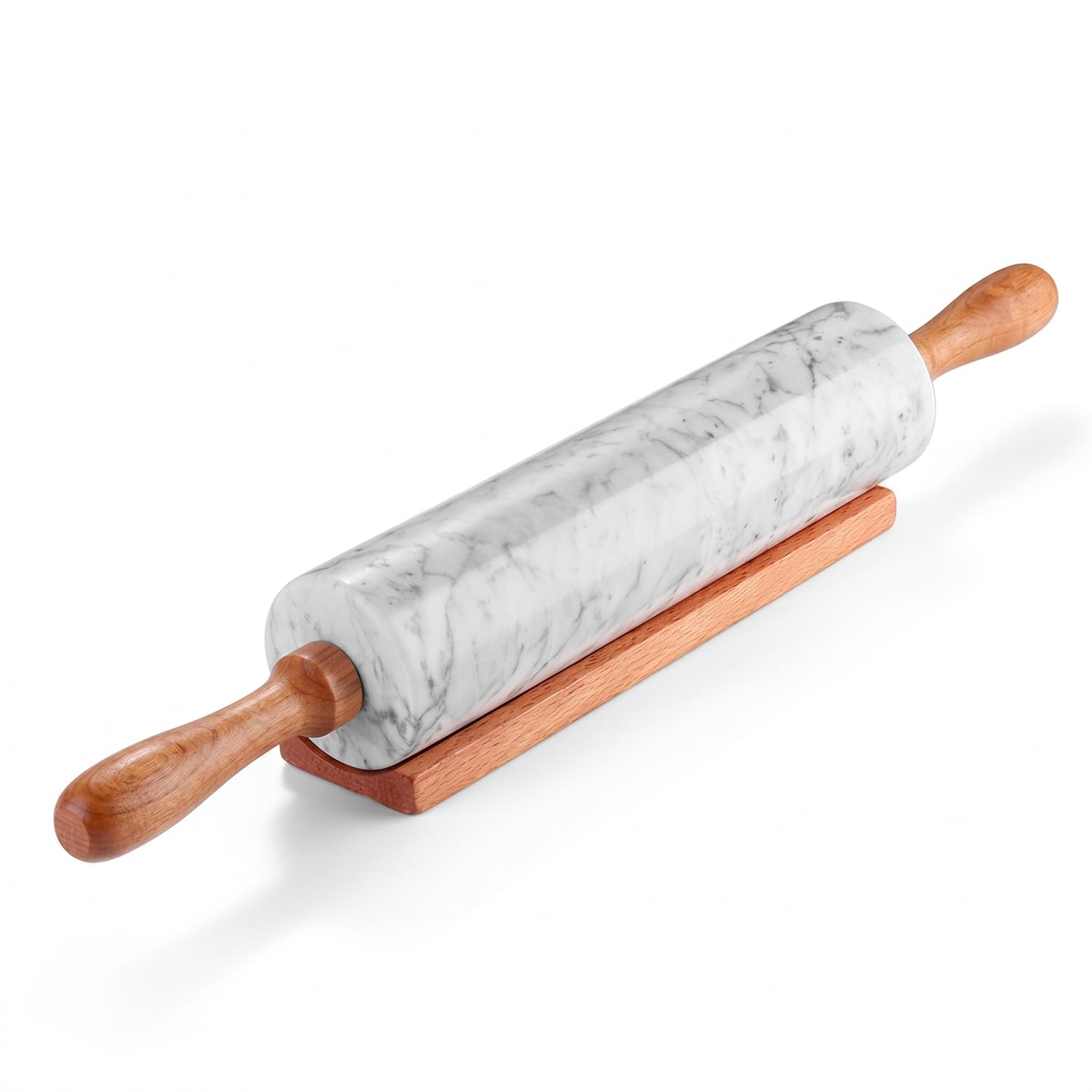
At just under 5 pounds with a 10-inch barrel, the Flexzion marble pin is the heaviest per-inch option in this lineup. The extreme weight means the pin does nearly all the flattening work — a light push is enough to transform a dense ball of pasta dough into a flat disk. The polished white marble surface is non-porous, so it resists absorbing moisture or odors from egg-rich pasta dough, and a quick wipe with a damp cloth restores its clean surface.
The ergonomic wooden handles are attached at the ends of the barrel, which provides good control but means the barrel does not rotate independently of the handles. This design requires you to lift and reposition the pin to change direction, rather than spinning it in place. Customer reviews are overwhelmingly positive for pizza and pie work, with several users noting it “makes dough rolling effortless.” However, a minority of users found the 5-pound weight fatiguing for extended rolling sessions.
One reviewer who also used the pin for clay work praised its smooth finish and depth control. This versatility suggests the pin can handle dense pasta dough well, but the fixed-handle design limits the finesse needed for very thin sheets like those for ravioli. For everyday pasta making where you value weight over articulation, this is a solid budget-friendly entry.
Why it’s great
- Extreme 5-pound mass flattens stiff dough with minimal effort
- Polished non-porous marble resists staining and odors
- Included cradle keeps the heavy pin safely stored on the counter
Good to know
- Fixed handles limit rolling articulation — must lift to reposition
- 5 pounds may fatigue users with smaller hands or wrist issues
5. Walfos French Rolling Pin Set (8-inch & 15.7-inch Wood)

This set gives you two tapered French-style pins — an 8-inch mini and a 15.7-inch standard — made from sapele and beech hardwood with zero coatings, wax, or paint. The tapered design (wider at the center, narrower at the ends) allows you to apply variable pressure on the dough’s edges, which is particularly useful for shaping pasta into rounds or controlling the outer thinness of a sheet.
The 8-inch mini pin is a clever addition for small tasks like rolling out individual pasta portions or working with fondant. Both pins are lightweight (under a pound each), so they demand arm strength rather than gravity assist. Customer feedback emphasizes the smooth, burr-free finish straight from the box, and multiple users noted the affordable price for a matching two-pin set. The smaller pin stores easily in a utensil drawer, while the 15.7-inch pin fits most standard cabinets.
Wood pins require different maintenance than marble — they must be wiped clean with a towel and occasionally oiled to prevent drying and cracking. The lack of a coating means the wood can absorb moisture from pasta dough over time if not dried promptly, potentially leading to warping. For bakers who prefer the tactile feedback of wood and need portability, this set delivers excellent versatility.
Why it’s great
- Two sizes provide flexibility for small and large dough batches
- Natural wood with no coatings or chemicals — safe for direct food contact
- French taper design offers precise edge control for round pasta shapes
Good to know
- Lightweight pins require more arm pressure than marble alternatives
- Wood will absorb moisture if not dried immediately after cleaning
FAQ
Is marble or wood better for rolling pasta dough?
What barrel diameter is ideal for pasta sheets?
Can I use a French tapered pin for pasta?
How do I clean a marble rolling pin after pasta use?
Final Thoughts: The Verdict
For most users, the rolling pin for pasta winner is the SIPARUI Marble Rolling Pin because its 4.5-pound mass, independent bearing rotation, and 18.5-inch overall length provide the ideal balance of effortless thinning and precise control for pasta sheets. If you need guaranteed uniform thickness for cut-out shapes, grab the J.K. Adams Maple Rolling Pin. And for small kitchens or bakers who prefer a lighter, maneuverable pin, nothing beats the versatility of the Walfos French Wood Pin Set.