Onigiri demands rice that clings to itself without being gummy, holds a triangular shape through a lunch bag, and tastes cleanly of the grain itself. Grab a long-grain or parboiled rice and you will watch your triangles fall apart before the first bite. The starch composition of the grain determines everything.
I’m Mohammad Maruf — the founder and writer behind AirfryerBite. I’ve spent years analyzing rice varieties by amylose-to-amylopectin ratios, milling precision, and post-harvest storage practices to understand exactly which grains deliver the adhesive structure and tender bite that true onigiri requires.
Whether you are packing bento boxes or shaping fresh triangles for a snack, choosing the wrong grain guarantees a crumbly mess. This guide narrows the field to the five best contenders so you can confidently pick your next bag of rice for onigiri without guesswork.
How To Choose The Best Rice For Onigiri
Selecting rice for onigiri is fundamentally different from picking rice for sushi, pilaf, or a simple side bowl. You need a grain that releases enough surface starch during cooking to act as a natural adhesive, yet retains enough structural integrity that the finished triangle does not turn into a paste ball. Here are the three non-negotiable factors.
Grain Shape: Short or Medium, Never Long
Short-grain and medium-grain Japonica varieties are the only reliable choices. Their high amylopectin content creates the tackiness that lets you press grains together without extra binders. Long-grain indica rice, even when rinsed thoroughly, produces separate, dry kernels that will not cohere into a stable shape.
Milling Freshness and Storage
Rice loses moisture and aromatic compounds the longer it sits on a shelf. A bag that has been warehoused for months yields harder, less sticky grains. Look for bags with clear production dates or reputable brands that rotate stock quickly. Once opened, transfer the rice to an airtight container in a cool, dry place to prevent pest infiltration and moisture loss.
Stickiness Without Gumminess
The ideal onigiri rice feels tender when you bite through it, but the individual grains remain distinct. Overly glutinous varieties (often labeled “sweet rice” or “mochi rice”) produce a gummy mass that collapses into a sticky mess. Pure Japonica short or medium grain strikes the right balance: cohesive enough to hold a shape, firm enough to deliver a clean mouthfeel.
Quick Comparison
On smaller screens, swipe sideways to see the full table.
| Model | Category | Best For | Key Spec | Amazon |
|---|---|---|---|---|
| Tamaki Gold California Koshihikari | Premium Short Grain | Gourmet onigiri with firm bite | 4.4 lb bag, California Koshihikari variety | Amazon |
| SEKKA Extra Fancy Medium Grain | Premium Medium Grain | Large batches and family meals | 15 lb bag, Japanese medium grain | Amazon |
| Nishiki Premium Sushi Rice | Mid-Range Short Grain | Budget-friendly daily onigiri | 10 lb bag, California short grain | Amazon |
| 4Sisters Short Grain Japonica | Certified Short Grain | Sustainable and non-GMO conscious cooks | 2 lb bag, Non-GMO Project Verified | Amazon |
| Nishiki Premium 7 Grains Mix | Whole Grain Blend | Adding texture and fiber to onigiri | 2 lb bag, whole grain blend | Amazon |
In‑Depth Reviews
1. Tamaki Gold California Koshihikari Short Grain Rice

Tamaki Gold is milled from premium California-grown Koshihikari, the same cultivar prized in Japan for its balance of starch and moisture. The kernels are plump and polished to a high sheen, which means they release just enough surface amylopectin during cooking to glue grains together without turning into a sticky slurry.
In practical onigiri terms, this rice holds a pressed triangle shape for hours at room temperature. The interior stays tender and the outer surface retains a subtle gloss that signals freshness. At 4.4 pounds, the bag is modest enough to use within a few weeks, which matters because Koshihikari loses its peak aromatic quality two to three months after milling.
Expect a slightly chewier bite than mass-market California short grains. That firmness is precisely why many Japanese home cooks reach for this bag when they want onigiri that stays intact inside a bento box without becoming dense or hard.
Why it’s great
- Authentic Koshihikari cultivar with ideal stickiness for shaping
- Firm, moist kernels hold shape without turning gummy
- Smaller bag size encourages fresher rotation
Good to know
- Priced higher per pound than commodity short grain options
- Limited to 4.4 lb — not ideal for very frequent large batches
2. SEKKA Extra Fancy Medium Grain White Rice

SEKKA’s extra fancy medium grain is a solid Japanese-style rice that performs nearly identically to true short grain for onigiri purposes. The medium kernel is slightly longer than pure short grain, but the amylopectin levels are comparable, so the cooked rice still clumps together reliably when pressed.
The 15-pound bag makes this an economical choice for anyone making onigiri several times a week. The grains cook up fluffy and slightly sweet, with a soft chew that does not collapse. Because it is medium grain rather than short, the surface stickiness is marginally lower — you may need a slightly firmer press when shaping, but the results hold well in a lunch container.
One trade-off: the bag is large enough that if you do not cook rice frequently, the last few cups may taste noticeably staler than the first. Portioning half the bag into a sealed freezer-safe container can extend peak freshness by several months.
Why it’s great
- Generous 15 lb bag for high-volume onigiri makers
- Medium grain offers a balanced stickiness suitable for shaping
- Delicate sweet flavor pairs well with salted or filled onigiri
Good to know
- Medium grain requires a slightly firmer hand during shaping than pure short grain
- Large bag risks staleness if used too slowly
3. Nishiki Premium Sushi Rice, 10lb
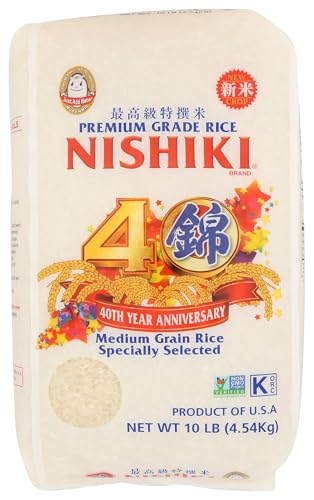
Nishiki is the most recognized California short-grain rice in American kitchens, and for good reason. It delivers consistent stickiness batch after batch, with grains that clump tightly enough for onigiri yet remain separate enough that you can still distinguish each kernel visually.
The 10-pound bag hits a sweet spot between cost per pound and manageable volume. This rice absorbs water predictably — a 1:1.1 ratio by volume yields the ideal firm-but-tender texture for shaping. It does not have the aromatic nuance of true Koshihikari, but the neutral flavor profile lets your fillings and seasonings take center stage.
One practical note: the bag does not include a re-sealable zipper, so you should transfer the rice to an airtight container immediately after opening. Stored properly, Nishiki holds its cooking properties well for up to six months, making it a reliable pantry staple for regular onigiri prep.
Why it’s great
- Consistent short grain stickiness at a lower per-pound cost
- 10 lb bag is a practical size for weekly onigiri making
- Neutral flavor works with any filling or seasoning
Good to know
- Bag lacks a re-sealable closure — airtight storage is mandatory
- Less aromatic than premium Koshihikari varieties
4. 4Sisters Authentic Short Grain Japonica Rice

4Sisters mills its Japonica short grain without synthetic fertilizers or chemicals, and the Non-GMO Project Verification adds a layer of transparency that matters to cooks who prioritize clean ingredient sourcing. The grains are moderately plump and produce a tender, cohesive texture after cooking.
At 2 pounds, this bag is best suited for smaller households or first-time onigiri makers who want to test a short grain before committing to a larger volume. The stickiness is solid — the grains press into a stable triangle without extra moisture or salt water. The flavor is slightly nuttier than typical California short grain, which adds a subtle depth to plain salted onigiri.
Because the bag is small, you will finish it quickly and can restock with fresh stock regularly. This is a meaningful advantage for anyone who has experienced stale rice ruining the texture of a batch. Just be aware that the smaller size means a higher cost per pound compared to bulk alternatives.
Why it’s great
- Non-GMO Project Verified with no chemical fertilizers used
- Small 2 lb bag ensures peak freshness for occasional use
- Slightly nutty flavor enhances plain onigiri
Good to know
- Higher cost per pound due to small bag and certification
- Not ideal for weekly high-volume onigiri production
5. Nishiki Premium 7 Grains Mix

Unlike the pure short-grain options in this guide, the Nishiki 7 Grains Mix blends white rice with whole grains including brown rice, millet, and barley. This mixture adds noticeable texture and a nutty flavor profile, but it also reduces the overall amylopectin content, which directly lowers the adhesive strength of the cooked batch.
For onigiri, this means the grains will not clump as tightly as pure short grain. You can still shape them, especially if you increase the water ratio slightly to make the rice a bit softer, but the triangles will be more delicate and prone to cracking. This bag works best for experienced makers who want to incorporate more fiber and whole-grain nutrition without completely abandoning the onigiri shape.
The 2-pound bag is a good way to experiment with a multigrain blend before scaling up. Keep in mind that the mix includes gluten-containing grains (barley), so it is not suitable for gluten-free diets despite the gluten-free claim on the package applying only to specific varieties in the blend.
Why it’s great
- Adds whole grain texture and fiber to onigiri
- Non-GMO and kosher certified
- Small bag lets you test multigrain onigiri without commitment
Good to know
- Reduced stickiness makes shaping more difficult than pure short grain
- Contains barley — not suitable for gluten-free households
FAQ
Can I use long grain rice for onigiri?
Should I rinse the rice before cooking for onigiri?
Final Thoughts: The Verdict
For most users, the rice for onigiri winner is the Tamaki Gold California Koshihikari because it delivers the firm, clean stickiness that authentic onigiri requires, with a grain quality that outperforms commodity short rice. If you want maximum volume for weekly family batches, grab the SEKKA Extra Fancy Medium Grain. And for a solid everyday option that balances cost and performance, nothing beats the Nishiki Premium Sushi Rice.