Choosing a whole-home water filter is a long-term investment in your family’s health and the longevity of your appliances, but the market is flooded with systems that over-promise and under-deliver on flow rate, contaminant removal, and filter lifespan. One wrong selection can leave you with a system that struggles to keep up with demand or fails to remove the specific pollutants in your water supply.
I’m Mohammad Maruf — the founder and writer behind AirfryerBite. I have spent years analyzing water filtration hardware, cross-referencing NSF certifications, and reading thousands of verified buyer reports to separate systems that truly protect your home from those that simply look good on a spec sheet.
Whether you are battling well water sediment, city chlorine, or heavy metals like lead and PFAS, finding the right residential water filtration system requires understanding your specific water chemistry and matching it to a system with the correct stage count, micron rating, and certified performance data.
How To Choose The Best Residential Water Filtration System
Choosing the right system starts by identifying your primary water concern: are you dealing with sediment and rust from well water, chlorine and odor from city supply, or dissolved solids and heavy metals that require reverse osmosis? The stage configuration, micron rating, and certification level should match the specific contaminant report for your tap.
Identify Your Contaminants and Match the Filtration Method
Sediment filters (5-20 micron) remove sand, dirt, and rust. Carbon filters (granular or block) adsorb chlorine, volatile organic compounds (VOCs), and odors. Reverse osmosis (RO) membranes reduce dissolved solids, lead, fluoride, nitrates, and PFAS. A whole-house system typically uses a sediment pre-filter followed by carbon stages, while an under-sink or countertop system may add an RO membrane for the most thorough removal. Always check whether the system is certified to NSF/ANSI standards 42, 53, 58, or 372 for the specific contaminants you need removed.
Consider Flow Rate and Household Demand
Whole-house systems are rated in gallons per minute (GPM). For a typical household of four, you need at least 10-15 GPM to run multiple taps, showers, or appliances without a pressure drop. Systems with smaller ports (3/4 inch) may restrict flow. Under-sink and countertop units have lower flow rates (0.5-1.5 GPM) but are dedicated to a single faucet. Always check the maximum flow rate and the inlet/outlet size on the system.
Evaluate Filter Lifespan and Replacement Costs
A filter’s lifespan is measured in gallons or months. Whole-house sediment and carbon filters often need changing every 3-6 months, while RO membranes can last 1-2 years. The long-term cost of replacement cartridges can exceed the initial purchase price. Compare the filter replacement frequency and the price of a set of filters for each system before buying.
Installation Type and Space Requirements
Whole-house systems require a dedicated space near your main water line, usually in a basement or utility area, with proper bypass valves. Under-sink systems fit inside a cabinet but need access to a drain and power (for pump-assisted or UV models). Countertop units require no installation and are ideal for renters. Measure your available space before purchasing, especially for larger whole-house systems that can be over 28 inches tall.
Quick Comparison
On smaller screens, swipe sideways to see the full table.
| Model | Category | Best For | Key Spec | Amazon |
|---|---|---|---|---|
| iSpring WGB32B | Whole House | Long-term whole-home chlorine removal | 100,000 gal capacity | Amazon |
| Waterdrop KJ600 | Under Sink RO | Instant hot/cold purified water | 600 GPD flow rate | Amazon |
| Waterdrop G5P700-Pro | Under Sink RO | Dual-flow kitchen purification | 700 GPD capacity | Amazon |
| SimPure T1-400UV | Under Sink RO | Near-zero TDS drinking water | 400 GPD with UV | Amazon |
| AquaTru Carafe | Countertop RO | No-install apartment use | 64 oz glass carafe | Amazon |
| VonWater CT910 | Countertop RO | Renters wanting smart TDS display | 528 gal filter life | Amazon |
| SimPure DB20P-3 | Whole House | Sediment and chlorine reduction | 15 GPM flow rate | Amazon |
| iSpring WCB32C-KS | Whole House | Heavy metals and PFAS reduction | 30,000 gal capacity | Amazon |
| Reverse Osmosis Revolution 3-Stage | Whole House | Entry-level well water pre-filtration | 10,000 gal capacity | Amazon |
In‑Depth Reviews
1. iSpring Commercial-Grade Whole House Water Filter System (WGB32B)

The iSpring WGB32B is a heavy-duty 3-stage whole-house system built around 20×4.5-inch industrial-standard filters. The first stage uses a 5-micron sediment filter to trap rust and sand, followed by two CTO carbon block stages using coconut-shell carbon to remove up to 99% of chlorine, along with tastes and odors. The 1-inch NPT inlet and outlet maintain high flow rates up to 15 GPM, making it suitable for larger households.
Owners consistently report excellent performance over many years, with several customers noting the system improved water taste and clarity significantly on both city and well water. The 100,000-gallon capacity means filter changes are infrequent, and the individually wrapped cartridges ensure freshness. Users also highlight the exceptional customer support from iSpring, with free replacement parts provided even years after purchase when issues arose.
The system is designed to retain healthy minerals, so if you need TDS reduction, a separate RO system is recommended. While installation is straightforward for a DIY homeowner, the large blue filter housings can be heavy when full of water, making filter changes a two-person job. Overall, this is a long-term investment in water quality backed by a responsive support team.
Why it’s great
- Heavy-duty build with 1-inch ports for excellent flow rate
- 100,000-gallon capacity reduces filter change frequency
- Exceptional customer support with out-of-warranty replacements
Good to know
- Filter housings are heavy when full, requiring careful handling
- Does not reduce TDS; an additional RO system is needed for that
- Some users report leaks at connections if Teflon tape is not applied correctly
2. Waterdrop KJ600 Reverse Osmosis System with Instant Hot Water
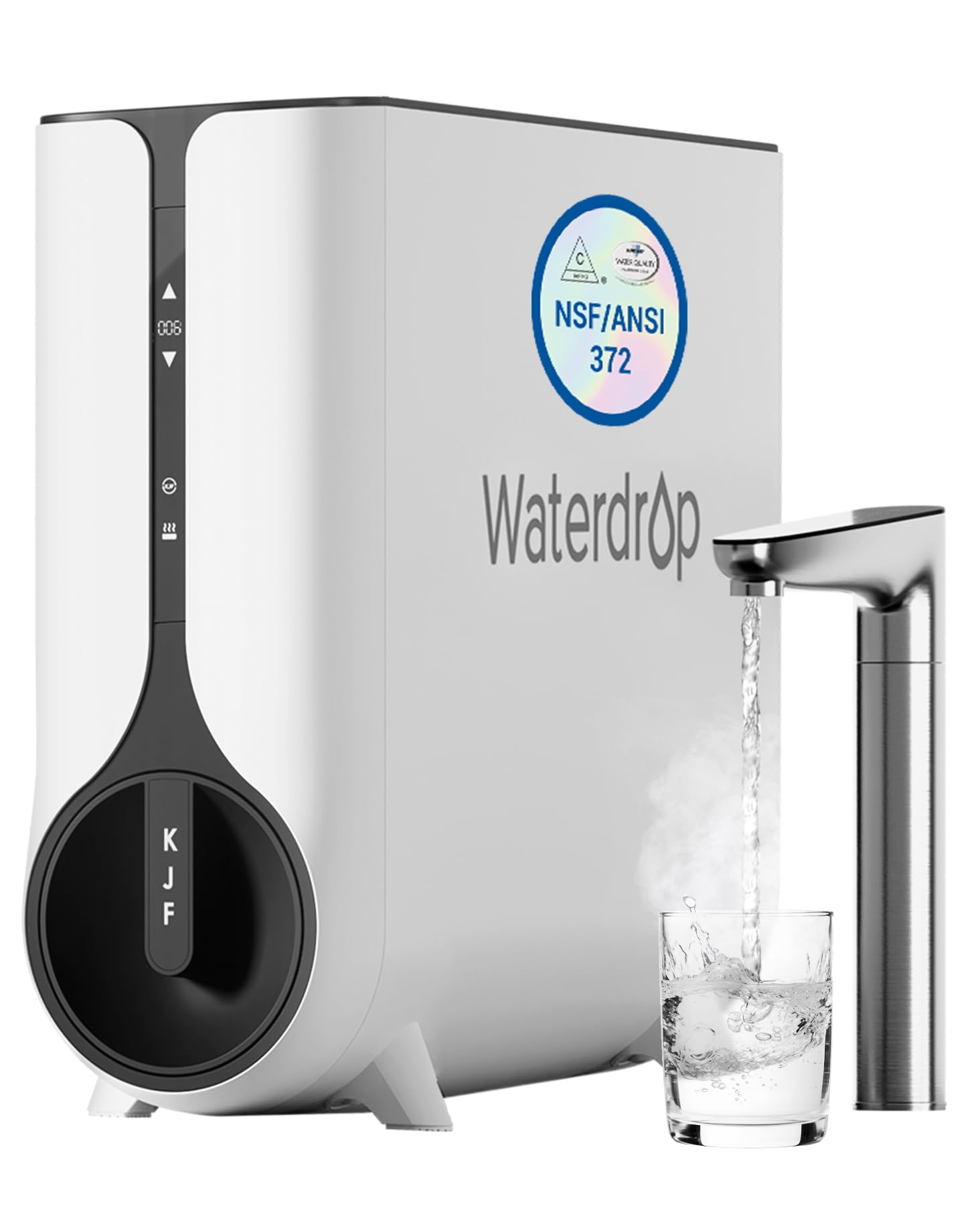
The Waterdrop KJ600 is a groundbreaking under-sink RO system that integrates a hot water dispenser, capable of delivering water at temperatures from 104°F to 203°F. It uses a 5-stage filtration process including an RO membrane, carbon block, and PP cotton to reduce TDS, PFOA/PFOS, fluoride, lead, and mercury. The smart faucet displays TDS levels and filter life, and includes a child lock for safety.
Users consistently praise the fast flow rate and the convenience of instant hot water for tea, coffee, and cooking. The system reduced TDS from 200 ppm to near 5 ppm in many cases, and the water tastes noticeably cleaner with no aftertaste. The compact tankless design saves significant under-sink space compared to traditional tank-based RO systems, and the 2:1 pure-to-drain ratio is efficient.
Some owners note that the system can be loud during its backflush cycle, and the base unit is relatively large at 17.5 inches long, requiring substantial cabinet space. A few users experienced issues with the touch controls on the faucet being unresponsive with wet hands, though customer service provided quick replacements. The hot water function is a genuine game-changer for daily convenience, but the system’s footprint should be carefully measured before purchase.
Why it’s great
- Instant hot water up to 203°F for cooking and beverages
- High 600 GPD flow rate with 2:1 efficient drain ratio
- Smart faucet with TDS display and child lock safety feature
Good to know
- Large unit requires significant under-sink space
- Can be audible during the backflush cycle
- Touch controls may be less responsive with wet hands
3. Waterdrop G5P700-Pro Reverse Osmosis System
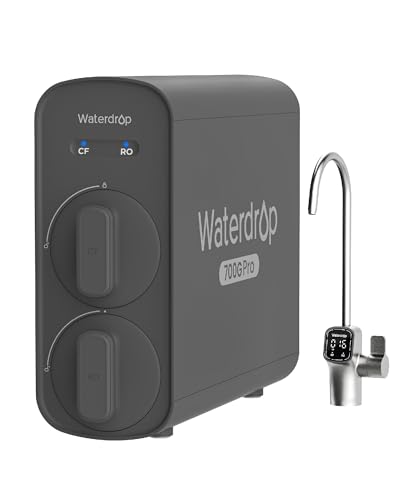
The Waterdrop G5P700-Pro is a 7-stage under-sink RO system with a unique dual-flow design: one line connects to a dedicated RO faucet for pure drinking water, while the other connects to your main kitchen faucet for filtered water for washing. The system uses a 0.0001-micron RO membrane to reduce TDS, PFOA, PFOS, lead, fluoride, and nitrates, and is NSF/ANSI 58 and 372 certified for safety and lead-free materials.
Owners highlight the compact tankless design that saves up to 70% of under-sink space compared to traditional tank systems. The 700 GPD flow rate means zero waiting for a full glass of water, and the dual-path feature allows you to have both purified drinking water and filtered washing water from the same unit. The smart faucet includes a real-time TDS monitor and filter replacement reminders.
A few users reported that the water inlet line provided with the unit was too short for their setup, but customer service quickly sent an extended hose and turn-off valve at no charge. The system is easy to install for a DIY homeowner, but the flow rate of 1 GPM from the faucet is a mechanical limit of the faucet itself, not the system. Overall, this is a premium option for those who want both RO purity and filtered water for everyday kitchen tasks.
Why it’s great
- Dual-flow design serves both RO drinking and filtered washing water
- 700 GPD high flow rate for instant water delivery
- NSF/ANSI 58 and 372 certified for safety and lead-free construction
Good to know
- Faucet flow rate is limited to 1 GPM by the faucet design
- Inlet line may be too short for some installation setups
- Premium unit with a correspondingly higher initial investment
4. SimPure T1-400UV Tankless Reverse Osmosis System

The SimPure T1-400UV is a tankless under-sink RO system that combines 8-stage filtration with ultraviolet (UV) sterilization to achieve near-zero TDS levels. SGS-tested against NSF/ANSI 58 standards, it removes over 99.99% of 1,000+ contaminants including TDS, PFAS, heavy metals, and fluoride. The built-in pump ensures consistent water pressure, and the UV light activates based on water flow to provide an extra layer of protection against microorganisms.
Users report dramatic TDS reduction, from 270 ppm to 0 ppm in the first six months, and even after 1.5 years, the TDS remained between 10-14 ppm. The tankless design saves valuable under-sink space and prevents secondary contamination from a storage tank. The system is quiet during operation and the 1.5:1 pure-to-drain ratio is more efficient than many traditional RO units.
Some units experienced damaged O-rings on the filter cartridges from the factory, which caused minor leaks that were resolved with spare O-rings included in the package. The system requires a brief flush if the water has not been used for a while, as initial TDS can spike to 50-120 ppm before settling. The UV function adds peace of mind for those concerned about bacteria, but the system is best suited for users who want ultra-pure water and are comfortable with a slightly more complex installation.
Why it’s great
- Achieves near-zero TDS levels for extremely pure water
- UV sterilization adds protection against microorganisms
- Compact tankless design saves under-sink space
Good to know
- Filter O-rings may be damaged from factory, requiring immediate inspection
- Needs a flush cycle after periods of non-use to stabilize TDS
- More complex installation due to pump and UV components
5. AquaTru Carafe Countertop Water Purifier
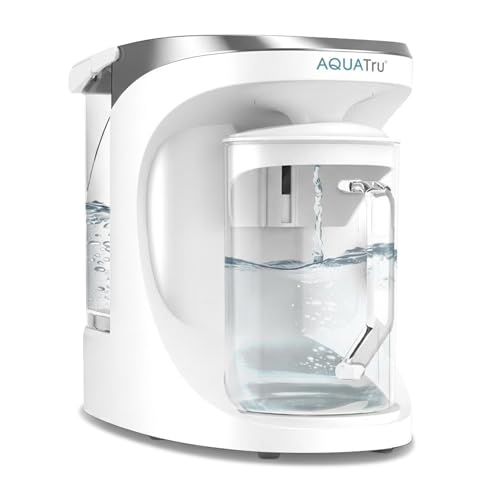
The AquaTru Carafe is a compact 4-stage countertop reverse osmosis system that requires no plumbing installation. It is certified by IAMPO to NSF standards to reduce 84 contaminants including lead, fluoride, chlorine, microplastics, and PFAS. The purified water is stored in a 64-ounce borosilicate glass carafe, which avoids the microplastic leaching concerns associated with plastic pitchers.
Users love the simplicity of the system — just fill the input tank, press a button, and the water is filtered in about 8-10 minutes per cycle. The water tastes noticeably better, with no chlorine or metallic aftertaste. The glass carafe is a premium touch that reviewers consistently praise for its clean feel and durability. The system is ideal for renters or anyone who cannot make permanent modifications to their kitchen.
The main trade-off is the small input tank capacity, which requires refilling for each batch. The wastewater must be manually discarded after each cycle, as the system uses a separate waste container. Some users found the filter life shorter than expected (around 6 months with moderate use), and replacement filters are available at a lower price direct from the manufacturer. This unit is a fantastic no-install solution for pure water, but it requires active management and has a lower throughput than plumbed systems.
Why it’s great
- Zero installation required — works on any countertop
- Glass carafe avoids plastic contamination concerns
- Effectively removes 84 contaminants including PFAS and lead
Good to know
- Small input tank requires frequent refilling for high-volume use
- Wastewater must be manually discarded after each cycle
- Filter replacement costs can be lower when purchased directly from manufacturer
6. VonWater CT910 7-Stage Countertop Reverse Osmosis System
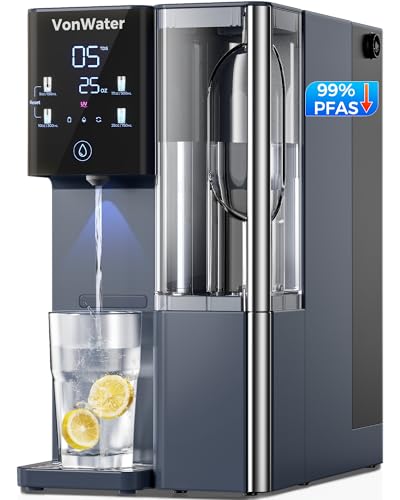
The VonWater CT910 is a 7-stage countertop RO system that uses a single all-in-one filter rated for 528 gallons or 12 months of use. It is NSF/ANSI 372, 53, 42, and 58 certified, and removes up to 99.99% of TDS, PFOA, PFOS, fluoride, lead, and other common contaminants. The unit features a smart LED touch screen with real-time TDS display and filter life indicator, along with 5 volume settings (4 oz, 8 oz, 12 oz, 17 oz, or unlimited).
Users praise the ease of setup and the fast filtration speed. The 3:1 pure-to-drain ratio is significantly better than many traditional RO systems, conserving more water. The TDS display gives immediate feedback on water quality, and customers report their local tap water TDS dropped to 35 ppm or lower. The twist-and-lock filter replacement takes only seconds, and the included 1.2L detachable pitcher is useful for refrigeration.
The unit is relatively bulky for a countertop appliance, which is a common comment from users. The system also produces wastewater that must be dumped from the feed tank, and the refill process can be slightly awkward. Some users note that the touch controls can be finicky when wet. Despite these minor ergonomic issues, the CT910 delivers strong RO performance in a no-plug form factor at a very competitive price point.
Why it’s great
- Excellent 3:1 pure-to-drain ratio saves water
- Smart TDS display and 5 volume settings for precise dispensing
- Long 528-gallon filter lifespan with easy twist-and-lock replacement
Good to know
- Bulky countertop footprint may not suit small kitchens
- Wastewater must be manually dumped from the feed tank
- Touch controls can be less responsive with wet hands
7. SimPure DB20P-3 Whole House Water Filter System
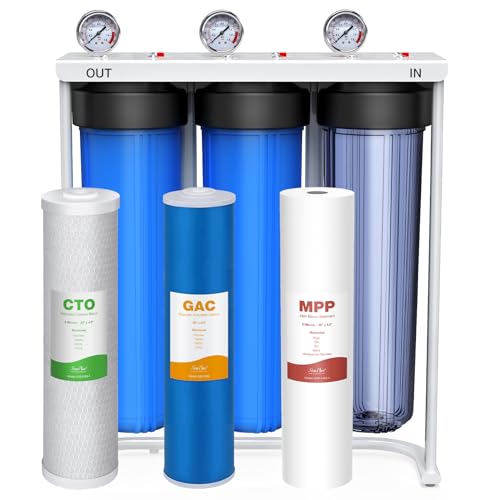
The SimPure DB20P-3 is a 3-stage whole-house filter system using 20×4.5-inch cartridges with a maximum flow rate of 15 GPM. The first stage uses a 5-micron MPP sediment filter, followed by GAC and CTO carbon stages to reduce chlorine, taste, odors, and sediment. A standout feature is the transparent filter housings on two of the three stages, allowing you to visually inspect the filter condition without disassembly.
Homeowners with well water report significant improvements in water clarity and taste, with visible reduction in iron staining and sediment. The system includes 1-inch NPT brass ports for reliable leak-proof sealing, and the dual O-ring design adds an extra layer of security. Installation is straightforward, and the system has a smaller footprint than many comparable whole-house units.
Some users with specific well water problems (tannins, hydrogen sulfide) found that the standard GAC/CTO filters were not sufficient, and needed to replace one stage with a KDF85 filter for better results. The mounting bracket does not align with standard 16-inch stud spacing, requiring additional mounting hardware. At 48.5 pounds when new, the system is heavy, and the large housings can be awkward to change under tight spaces. Overall, it is a reliable and visible whole-house pre-filtration solution.
Why it’s great
- Transparent housings allow visual filter monitoring
- High 15 GPM flow rate suitable for large households
- Brass 1-inch NPT ports for durable leak-free connections
Good to know
- Standard filters may not remove tannins or hydrogen sulfide odor
- Mounting bracket does not match standard 16-inch stud spacing
- Heavy unit at nearly 50 pounds, requiring careful installation
8. iSpring Heavy Metals Whole House Water Filter System (WCB32C-KS)
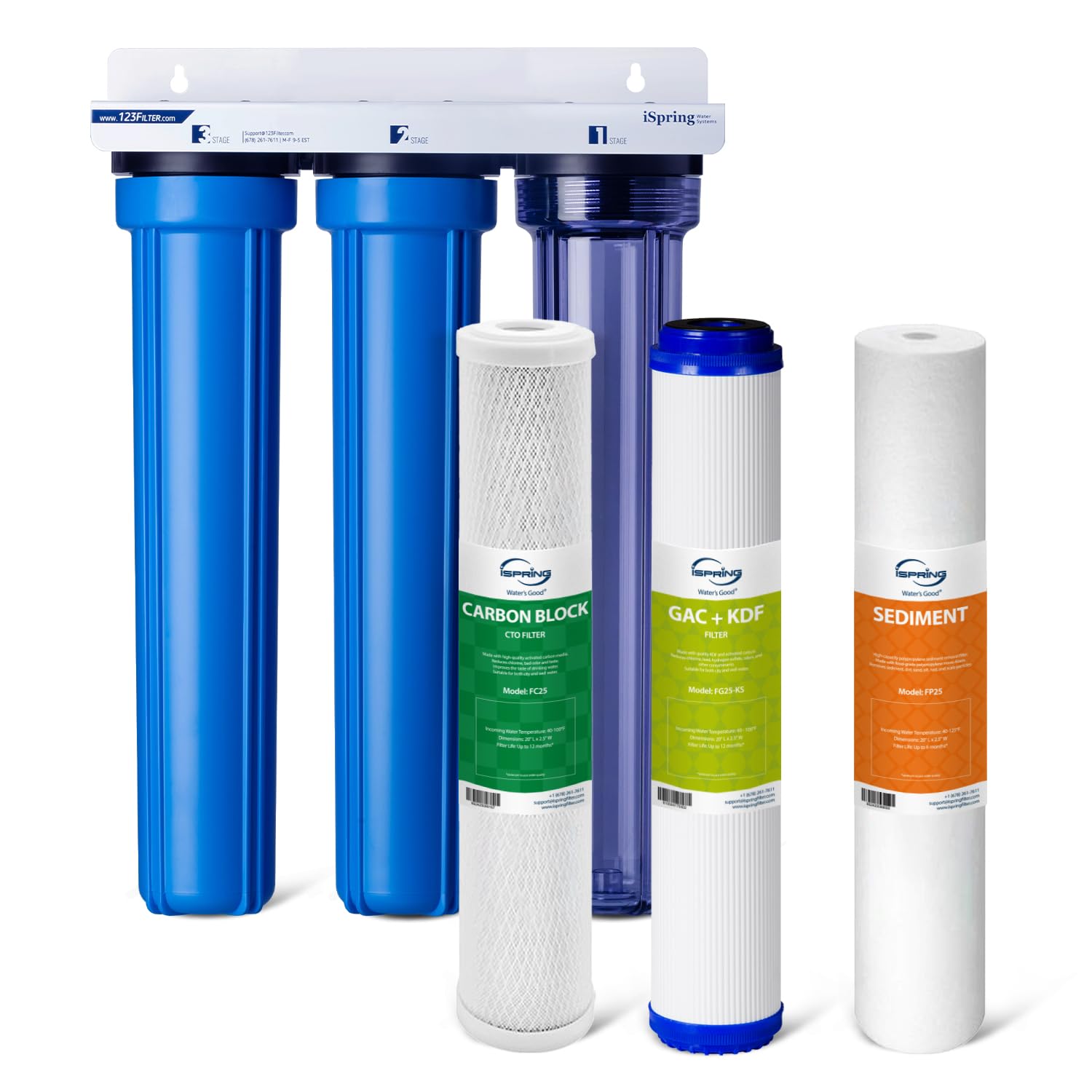
The iSpring WCB32C-KS is a 3-stage whole-house system specifically designed to target heavy metals, chloramine, PFAS, and lead. The first stage uses a 5-micron PP sediment filter to protect the subsequent stages. The second stage uses a GAC and KDF composite filter that is particularly effective at reducing chlorine, lead, PFAS, radon, chloramine, and hydrogen sulfide. The third stage is a CTO carbon block filter for fine particle removal and final taste polishing.
Users with challenging well water or city water with known PFAS concerns report excellent results, with noticeable improvements in taste, clarity, and smell. The system is designed for a family of four and has a 30,000-gallon capacity, with filters typically lasting about 6 months. The transparent first-stage housing allows quick visual checks on sediment buildup. iSpring’s customer support receives consistent praise for solving issues quickly, with several users reporting free replacement parts even after the warranty period.
Some users noted that the metal frame hanger can make it difficult to tighten PVC fittings, and the instructions for Teflon tape application may be insufficient — using pipe thread sealant instead yields better results. The system retains essential minerals and does not reduce TDS, so if you require demineralized water, a downstream RO system is needed. At this price point, it offers the most comprehensive contaminant reduction of any whole-house system reviewed here.
Why it’s great
- GAC/KDF composite filter effectively reduces PFAS, lead, and chloramine
- 30,000-gallon capacity with 6-month filter lifespan for a family of four
- Excellent customer support with extended warranty registration
Good to know
- Metal frame hanger can hinder tightening of PVC fittings
- Teflon tape instructions may need supplementation with thread sealant
- Does not reduce TDS; an RO system is needed for demineralized water
9. Reverse Osmosis Revolution 3-Stage Whole House Water Filtration System

The Reverse Osmosis Revolution 3-stage system is an entry-level whole-house filter designed for basic sediment and chemical reduction. The first stage uses a 5-micron sediment filter to catch dust, sand, and rust. The second stage is a 10-inch GAC granular activated carbon filter that removes chlorine, radon, and VOCs. The third stage uses a CTO carbon block filter for further chlorine and VOC removal along with taste improvement. The system is built in the USA and includes two extra sets of replacement filters (6 total).
Users with high-sulfur well water found the system greatly reduced the smell and taste, making the water much more palatable. The included cutoff valves and straightforward design make installation achievable for a DIY homeowner in a few hours. The value proposition is strong because it includes a 2-year supply of filters right in the box, which effectively lowers the total cost of ownership in the first year.
The system uses 3/4-inch ports, which may restrict flow in larger homes compared to 1-inch port systems. Some users reported that the faucet fitting included did not fit their existing setup, requiring a separate purchase. The warranty registration process was described as cumbersome by some customers. This system is a practical starting point for sediment and chlorine reduction, but it lacks the heavy-metal or PFAS reduction capabilities of more advanced systems.
Why it’s great
- Includes 2 extra sets of filters (6 total) for a full year of replacement
- Effective at reducing sulfur smell and sediment from well water
- Straightforward DIY installation with included cutoff valves
Good to know
- 3/4-inch ports may not provide sufficient flow for larger homes
- Faucet fitting may not be compatible with all existing setups
- Warranty registration process is more cumbersome than competitors
FAQ
Should I get a whole house system or an under sink RO system?
How often do I need to change the filters in a residential system?
Can a water filtration system remove PFAS (forever chemicals)?
Do water filtration systems reduce water pressure in the house?
Final Thoughts: The Verdict
For most users, the winner for the residential water filtration system category is the iSpring WGB32B because of its tankless reliability, high 15 GPM flow rate, exceptional customer support, and 100,000-gallon capacity that keeps filter changes minimal. If you want instant hot and cold purified water from a single under-sink unit, grab the Waterdrop KJ600. And for a no-install countertop solution that delivers pure RO water anywhere, nothing beats the AquaTru Carafe.