Managing cholesterol levels often leads to a fork in the road: prescription statins with potential muscle aches and liver concerns, or a natural route that requires careful supplement selection. Red yeast rice, a traditional fermented rice product, contains naturally occurring monacolins that can support healthy lipid profiles, but the market is flooded with products varying wildly in potency, purity, and added co-factors.
I’m Mohammad Maruf — the founder and writer behind AirfryerBite. I’ve spent years analyzing supplement supply chains and clinical data, focusing specifically on how fermentation-derived supplements like red yeast rice can serve as viable tools for cardiovascular wellness when sourced correctly.
This guide cuts through the marketing noise to deliver a clinically grounded, spec-focused breakdown of the top contenders. You will learn which formulations prioritize citrinin removal, which include synergistic CoQ10, and which deliver the highest monacolin K potency for measurable results, leading you to your ideal best red yeast rice supplement based on your health priorities.
How To Choose The Best Red Yeast Rice Supplement
Choosing the right red yeast rice supplement is not as simple as picking the cheapest bottle. The fermentation process determines the monacolin K concentration, and contamination with citrinin — a nephrotoxic byproduct — can occur if the product is not properly purified. Understanding three core criteria will help you avoid ineffective or potentially harmful products.
Prioritize Citrinin-Free Certification
During fermentation, the Monascus purpureus mold naturally produces citrinin, a mycotoxin linked to kidney toxicity. Reputable brands either use a proprietary cleansing process or source strains that produce negligible citrinin. Look for explicit third-party lab verification showing citrinin levels below 1 ppm — anything higher is a red flag. The Zazzee Organic Red Yeast Rice product in this guide explicitly markets this removal process, setting a clear safety benchmark.
Understand Extract Ratio vs. Serving Size
Not all red yeast rice is created equal. A standard whole-powder capsule may offer 1200 mg of raw rice, while a 20:1 extract delivers the equivalent of 24,000 mg of raw material in the same capsule volume. The extract form typically yields higher monacolin K per capsule, meaning fewer pills for the same effect. However, some users prefer whole-powder forms for a gentler, slower-release profile. Check the label for “extract” language — if it says “powder” without a ratio, you are buying the raw, un-concentrated form.
Check for CoQ10 (Ubiquinone) Inclusion
Statins and red yeast rice both work by inhibiting the HMG-CoA reductase enzyme, which can also reduce the body’s natural production of Coenzyme Q10 — a critical molecule for cellular energy and muscle health. Depleted CoQ10 levels are directly linked to the muscle aches that cause many people to stop taking statins. A high-quality red yeast rice supplement should include 80-100 mg of CoQ10 per serving to counter this depletion and protect muscle tissue, making it a more complete cardiovascular support formula.
Quick Comparison
On smaller screens, swipe sideways to see the full table.
| Model | Category | Best For | Key Spec | Amazon |
|---|---|---|---|---|
| Zazzee Organic 20:1 Extract | Concentrated Extract | Citrinin-free safety | 1200 mg 20:1 extract + 80 mg CoQ10 | Amazon |
| Nutricost with CoQ10 | Whole Powder | Value with CoQ10 | 1200 mg powder + 100 mg CoQ10 | Amazon |
| Carlyle 1800 mg | Whole Powder | High total dosage | 1800 mg whole powder per serving | Amazon |
| NOW Foods 600 mg | Whole Powder | Established brand trust | 600 mg per capsule, 120 servings | Amazon |
| THORNE 900 mg | Practitioner-Grade | Clinical quality assurance | 900 mg per capsule, 4 rounds testing | Amazon |
In‑Depth Reviews
1. Zazzee Organic Red Yeast Rice 20:1 Extract with CoQ10
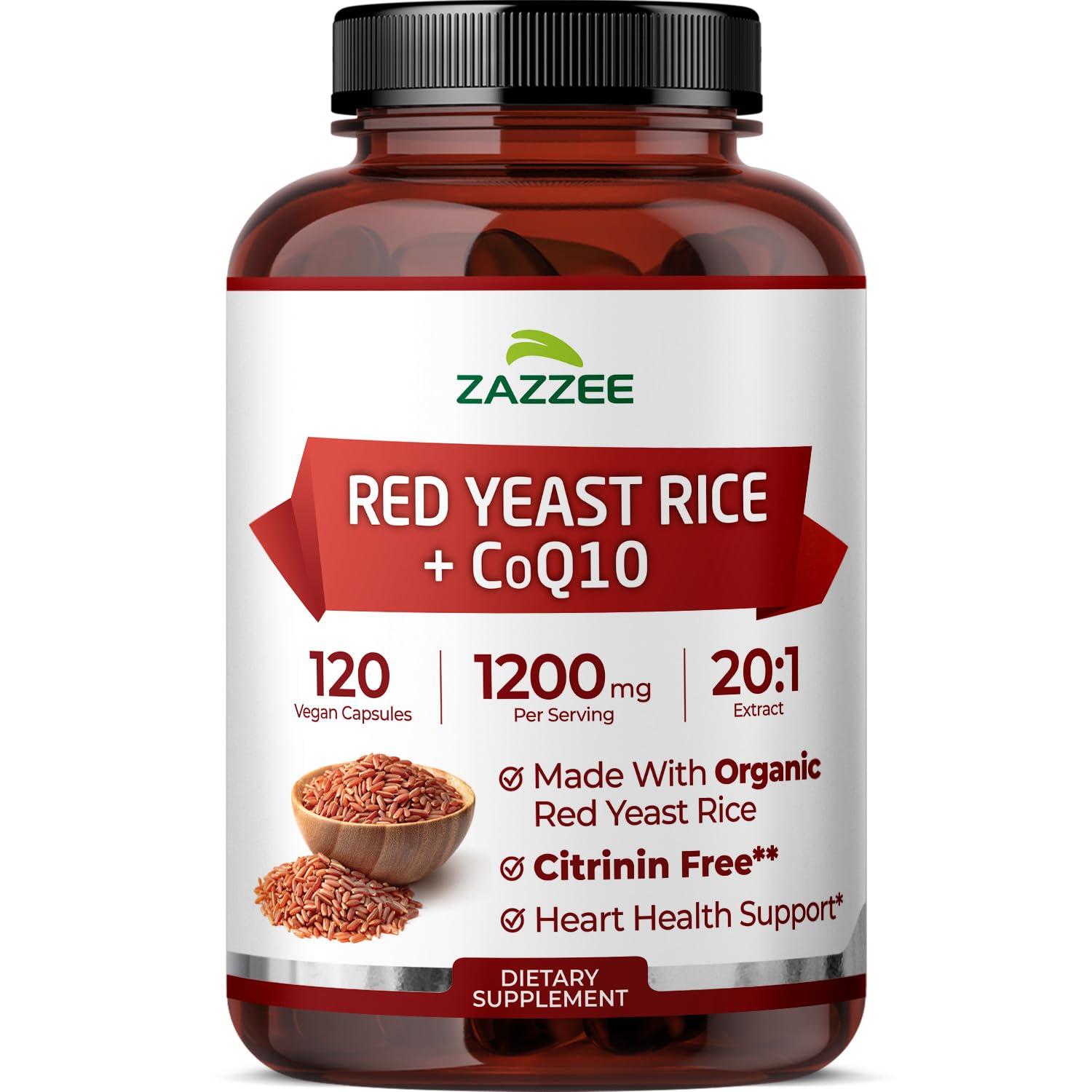
The Zazzee formulation stands alone in this category for its explicit citrinin-removal process, verified by a third-party ISO-17025 certified lab to under 1 ppm. Many red yeast rice products on the market do not even disclose citrinin content, making this a standout for safety-conscious buyers. The 20:1 extract delivers the equivalent of 24,000 mg of raw red yeast rice in a single 1200 mg serving, providing a dense monacolin K profile that users consistently report drives LDL reductions — with one customer noting a drop of over 100 points in total cholesterol after one year.
The inclusion of 80 mg of CoQ10 per serving directly addresses the enzyme-depletion concern common with HMG-CoA reductase inhibitors, helping to maintain cellular energy and reduce the likelihood of muscle cramps. Organic certification adds another layer of confidence, as non-organic rice can carry higher levels of heavy metals or pesticide residues that concentrate during extraction. The 120 vegan capsules provide 60 servings, and the BioPerine (black pepper extract) in the formula is designed to improve absorption of the active compounds.
At a mid-range price point, this product delivers premium safety standards without the premium price tag. The trade-off is capsule size — some users find the two-capsule serving requires a deliberate swallow. For those prioritizing a clean, potent, and thoroughly tested red yeast rice option, this is the most complete package in this guide.
Why it’s great
- Citrinin removed below 1 ppm with third-party certification
- 20:1 concentrated extract yields higher monacolin K per dose
- Includes CoQ10 and BioPerine for absorption and muscle protection
Good to know
- Capsules are large — may be difficult for some to swallow
- Extract form may be stronger than needed for mild maintenance users
2. Nutricost Red Yeast Rice with CoQ10 1300 mg
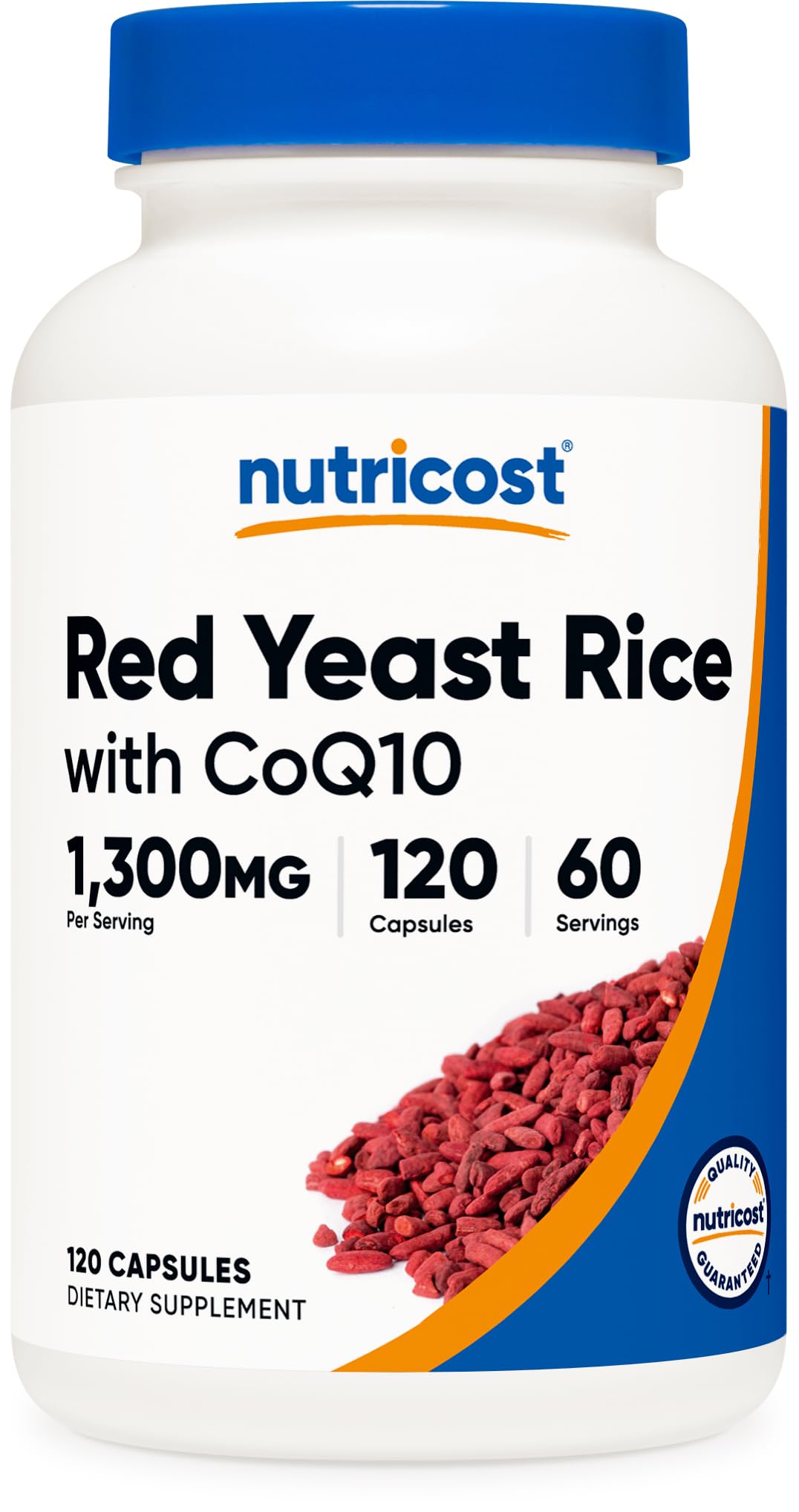
Nutricost delivers a pragmatic whole-powder formulation that pairs 1200 mg of red yeast rice with 100 mg of CoQ10 — the highest CoQ10 dosage in this comparison. For users who experience muscle fatigue on statins or previous red yeast rice products without CoQ10, the extra 20 mg over the Zazzee formula may provide meaningful relief. The product is manufactured in an NSF-certified, GMP-compliant facility, ensuring basic quality standards are met at a budget-friendly price.
Customer feedback consistently validates the cholesterol-lowering effect, with one doctor-verified blood test showing a direct drop after starting this supplement. The vegetarian-friendly, non-GMO, and gluten-free labeling covers the essential dietary restriction bases. The two-capsule serving is straightforward, and the bottle contains 60 servings, making it a solid choice for a three-month trial period before committing to a more expensive extract.
The main limitation is the use of whole powder rather than a concentrated extract, meaning the monacolin K content is lower per milligram of powder compared to extract-based products. Users who need a robust dose for significant LDL elevation may require more capsules or a stronger formula. However, for general maintenance and users who respond well to moderate doses, the Nutricost product strikes an excellent balance between cost and effectiveness.
Why it’s great
- Highest CoQ10 dosage at 100 mg per serving for muscle protection
- Manufactured in NSF-certified facility for quality assurance
- Affordable entry point for initial cholesterol support trial
Good to know
- Whole-powder form has lower monacolin concentration per serving
- No explicit citrinin testing disclosed on label
3. Carlyle Red Yeast Rice Supplement 1800 mg

Carlyle offers the highest total milligram count in this lineup at 1800 mg per serving, using a quick-release whole-powder capsule format. The 250-count bottle provides over four months of supply at the recommended two-capsule daily serving, making it the best long-term value for users who have already confirmed that red yeast rice works for their cholesterol profile. The non-GMO and gluten-free claims are backed by Carlyle’s internal laboratory testing protocols.
Customer results are notably strong — one user reported a cholesterol drop of over 100 points within six months, and another saw their glucose level decrease from 120 to 99 over a year of consistent use. These are substantial clinical outcomes for a whole-powder supplement, suggesting Carlyle’s raw material source may have robust monacolin K content. The brand markets itself as “rooted in wellness” with a 100% guarantee, which builds confidence for first-time buyers.
The most common drawback is capsule size — multiple reviews describe them as “very big,” which can cause difficulty for those with a sensitive gag reflex. Additionally, there is no CoQ10 in the formulation, so users prone to muscle aches should consider taking a separate CoQ10 supplement alongside this product. For those who can manage the pill size and do not require CoQ10 integration, this is a high-volume, high-potency option at a low per-serving cost.
Why it’s great
- 1800 mg highest per-serving dosage in this comparison
- 250 capsules provide 125+ days of supply
- Demonstrated glucose and cholesterol improvements in user reports
Good to know
- Large capsules are difficult to swallow for some users
- No CoQ10 added — requires separate supplement for muscle protection
4. NOW Foods Red Yeast Rice 600 mg
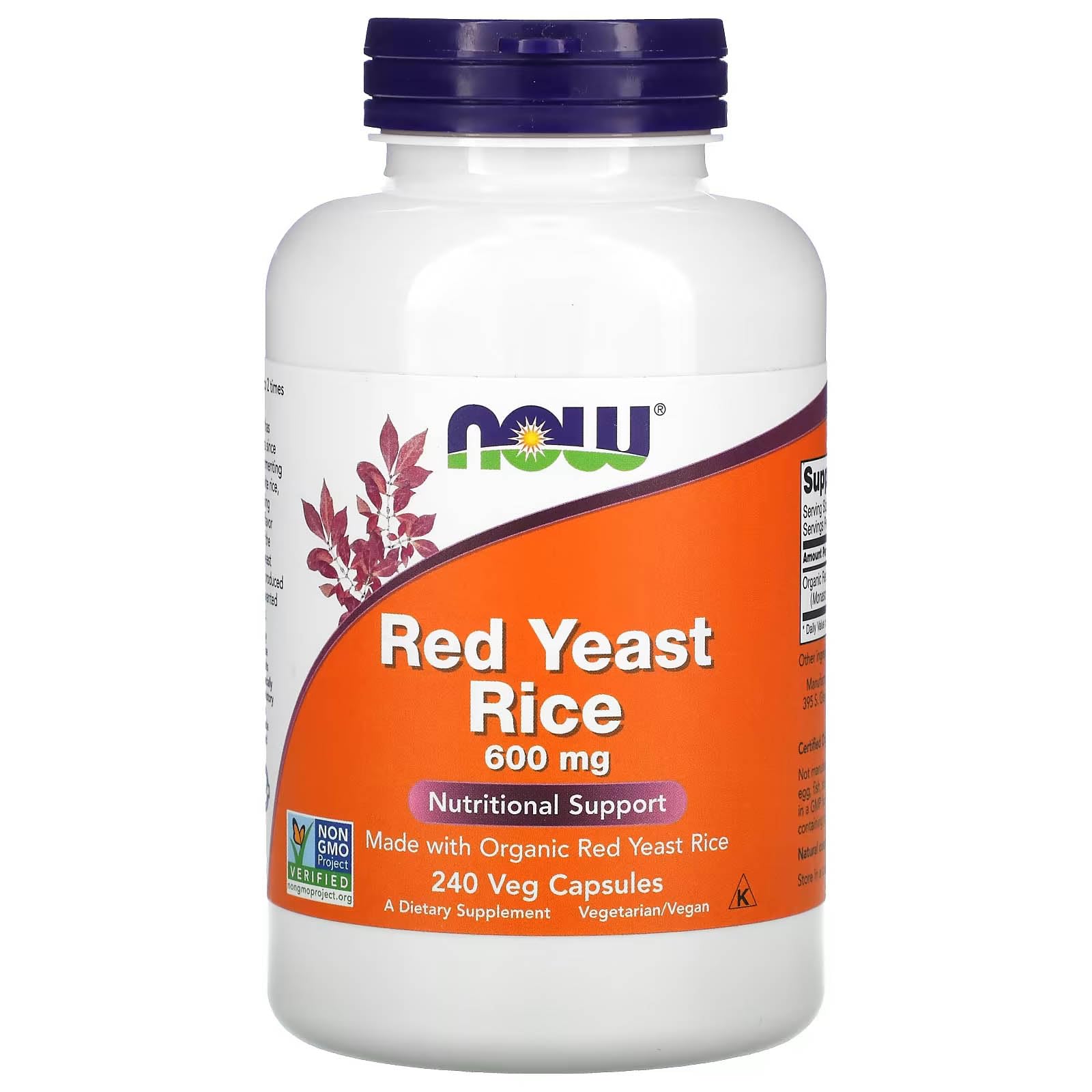
NOW Foods has been a staple in the natural supplement industry since 1968, and this red yeast rice product follows their established reputation for consistent quality control. Each serving of two VegiCaps provides 1200 mg of whole-powder red yeast rice, with 120 servings per bottle — the highest number of total servings in this comparison. The brand’s longevity suggests stable sourcing relationships and reliable monacolin K content batch to batch.
User testimonials are striking: one customer reported their cholesterol dropping from 300 to 170 mg/dL, enabling them to cut their prescription statin dose in half. This level of clinical response indicates the NOW Foods product contains meaningful monacolin K levels, despite being a whole-powder format. The product has been on the market since 2009, giving it an extensive real-world usage track record that newer brands cannot match.
The trade-off for the premium brand trust is a higher price per milligram compared to budget competitors like Nutricost and Carlyle. Additionally, there is no CoQ10 included, which is a notable omission at this tier. Users who value a brand with decades of third-party auditing and the peace of mind that comes with a universally recognized label will find this a safe, proven choice for cholesterol management.
Why it’s great
- 120 servings per bottle — exceptionally long-lasting supply
- Brand with 50+ years of supplement manufacturing credibility
- Consistent user reports of significant cholesterol reduction
Good to know
- Higher price per serving than comparable whole-powder brands
- No added CoQ10 for muscle side-effect prevention
5. THORNE Red Yeast Rice 900 mg
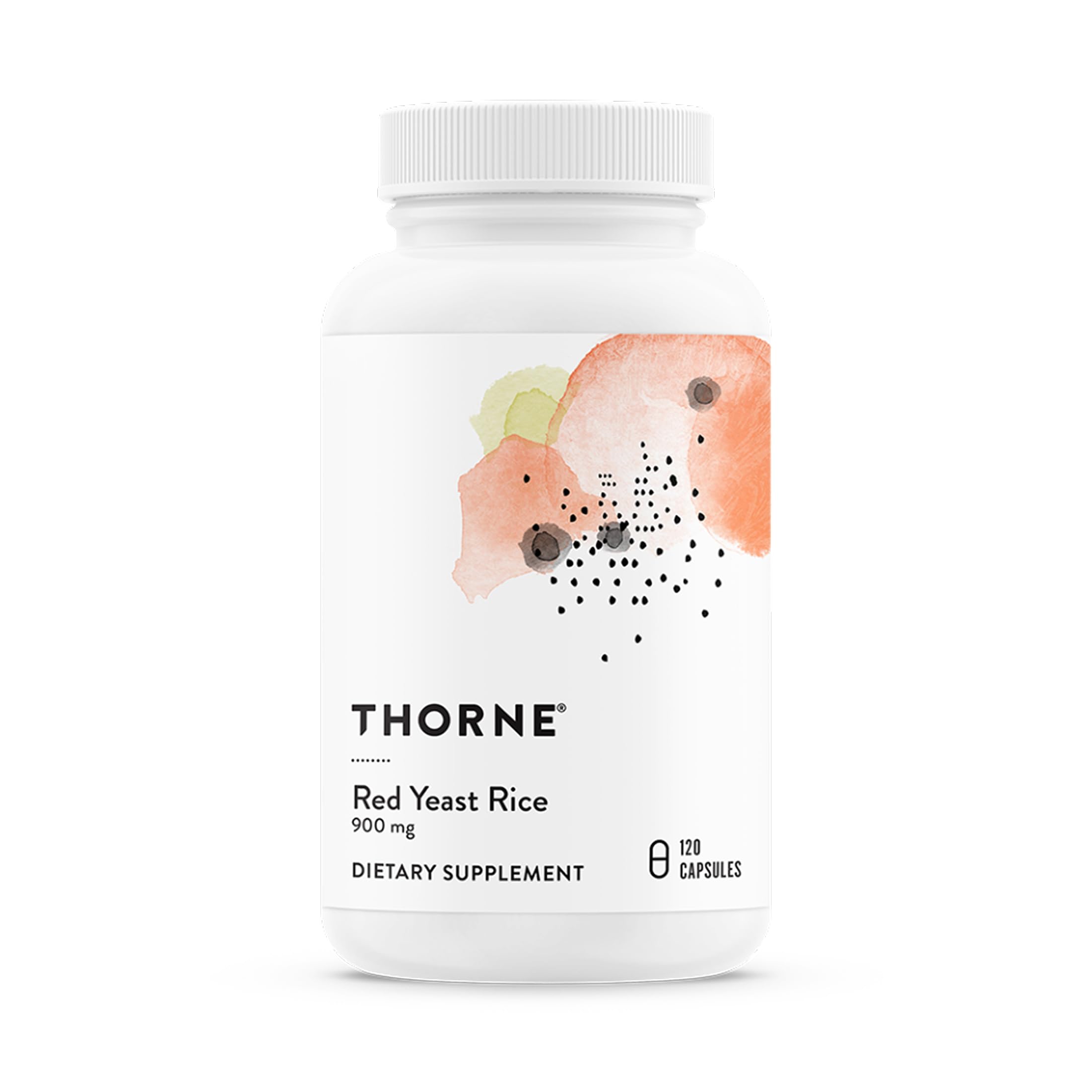
THORNE is widely regarded as the gold standard in clinical supplementation, ranked as the number one recommended professional brand by healthcare practitioners. Their red yeast rice delivers 900 mg per single-capsule serving, a convenience advantage over the two-capsule regimens of most competitors. Each batch undergoes four rounds of internal testing — from raw material purity to finished product shelf-life verification — ensuring virtually zero risk of citrinin contamination or heavy metal exposure.
Clinical outcomes from THORNE users are among the most dramatic in this guide: one reviewer saw total cholesterol drop from 244 to 185 and LDL plummet from 157 to 86 in just three months using two capsules daily. Another patient dropped total cholesterol from 266 to 241 with triglycerides improving from 174 to 124 without any diet or exercise changes. These results speak to the potency and consistency of THORNE’s raw material sourcing, which is a critical variable that cheaper brands often cannot guarantee.
The premium price is substantial — roughly three times the per-capsule cost of budget options. This price includes the convenience of a single-capsule serving and the rigorous testing protocol that eliminates guesswork about safety. For users with significant cholesterol elevation who want the highest assurance of purity and potency, THORNE’s clinical-grade approach removes the risk of buying a subpotent supplement that wastes months of trial time.
Why it’s great
- Single-capsule serving size for easy daily compliance
- Four rounds of third-party testing for purity and potency
- Recommended by healthcare practitioners and professional sports teams
Good to know
- Significantly higher cost per serving than other options listed
- No added CoQ10 at this price tier
FAQ
Can red yeast rice replace my prescription statin?
Why does CoQ10 matter in a red yeast rice supplement?
What is the difference between whole powder and 20:1 extract?
How long does red yeast rice take to lower cholesterol?
Final Thoughts: The Verdict
For most users, the best red yeast rice supplement winner is the Zazzee Organic 20:1 Extract because it uniquely combines citrinin-free safety certification, concentrated extraction for higher monacolin potency, and 80 mg of CoQ10 in a vegan, organic-certified package. If you want the best value with the highest CoQ10 dosage for muscle protection, grab the Nutricost with CoQ10. And for clinical-grade assurance with a single-capsule serving and professional trust, nothing beats the THORNE Red Yeast Rice.