Muscle soreness that lingers for days is a sign you’re missing the window. The right post-exercise formula floods torn fibers with amino acids, restores glycogen, and rehydrates cellular tissue — turning a brutal session into measurable progress. But the aisle is packed with sugar traps and under-dosed powders that do little more than color your urine.
I’m Mohammad Maruf — the founder and writer behind AirfryerBite. I’ve spent years analyzing sports supplement labels, filtering through proprietary blends, and separating genuine recovery science from marketing fluff so you don’t have to.
This guide drills into six serious contenders — from ready-to-drink shakes with 45g protein to keto-friendly cans with zero sugar — to find the actual best recovery drink that matches your training intensity and dietary constraints.
How To Choose The Best Recovery Drink
The recovery drink market has exploded beyond simple chocolate milk. Today you are choosing between ready-to-drink cans, powdered mixes, whole-food shakes, and carbonated functional beverages. Each format prioritizes different post-workout needs, and picking the wrong one can delay recovery or upset your stomach mid-day.
Protein Density and Source
Total grams per serving is the headline number, but the source determines absorption speed and digestive tolerance. Whey isolate hits the bloodstream fast — ideal within 30 minutes of training. A2 milk protein digests slower and avoids the A1 beta-casein peptide that triggers bloating in sensitive individuals. Look for at least 20g of complete protein in a single serving to stimulate muscle protein synthesis.
Carbohydrate and Sugar Profile
Post-workout insulin response helps shuttle nutrients into cells, but excessive added sugar counteracts fat-loss goals. A drink with 2g to 5g of sugar is ideal for lean-muscle phases. Keto-friendly options rely on monk fruit or stevia to keep net carbs under 5g. Carbonated recovery drinks often use natural agave or fruit concentrates — check that total sugar stays below 8g per can if you are cutting.
Specialized Additives: Creatine, BCAAs, and Electrolytes
Creatine monohydrate at 3g to 5g per serving supports ATP regeneration for the next session. Branched-chain amino acids (BCAAs) reduce exercise-induced muscle damage when protein intake is already adequate. Electrolytes like sodium, potassium, and magnesium replenish sweat loss — critical for endurance athletes training longer than 60 minutes in warm environments.
Quick Comparison
On smaller screens, swipe sideways to see the full table.
| Model | Category | Best For | Key Spec | Amazon |
|---|---|---|---|---|
| Quest Chocolate Protein Shake | Ready-to-Drink | Maximum protein per serving | 45g protein, 2g sugar | Amazon |
| Optimum Nutrition Gold Standard Whey | Powder | Customizable dosing & mixability | 24g protein per 29-scoop tub | Amazon |
| Pioneer Pastures A2 Milkshakes | Whole-Food RTD | Lactose-sensitive digestion | 30g A2 protein, 2g sugar | Amazon |
| FITAID RX Zero | Carbonated RTD | Keto-friendly zero sugar | 1g creatine, 5 calories each | Amazon |
| FITAID RX Recovery Blend | Carbonated RTD | Multi-ingredient recovery stack | 1g creatine + glucosamine + CoQ10 | Amazon |
| BSN CELLMASS 2.0 | Powder | Creatine & glutamine stacking | 5g creatine matrix, 25 servings | Amazon |
In‑Depth Reviews
1. Quest Chocolate Protein Shake

Quest delivers the highest protein count in this roundup — 45g per 14-ounce bottle — using ultrafiltered nonfat milk as the base. That density means a single shake covers the post-workout anabolic window without needing a second serving. At 2g of sugar and 4g of net carbs, it fits comfortably into low-carb and keto macros while tasting like a chocolate milkshake that actually satisfies the craving.
The consistency is noticeably thicker than standard recovery shakes, which some users describe as indulgent and others find slightly heavy. Sucralose provides the sweetness, and while most reviewers report no lingering aftertaste, a small subset detects a mild artificial note. The bottle is shelf-stable, making it easy to stash in a gym bag or office drawer without refrigeration until opened.
At roughly 3.50 per serving, this is a premium-tier ready-to-drink option. The trade-off is convenience versus cost — you pay for the 45g of bioavailable protein and the grab-and-go format. For athletes who prioritize protein density above all else and can stomach a thicker texture, this is the most effective single-serving recovery tool on the list.
Why it’s great
- 45g of high-bioavailability protein per bottle
- Only 2g sugar and 4g net carbs per serving
- Thick, milkshake-like texture that feels indulgent
Good to know
- Cost per serving is higher than most competitors
- Thicker consistency may not suit everyone’s preference
- Contains sucralose, which some users wish to avoid
2. Optimum Nutrition Gold Standard Whey – Double Rich Chocolate
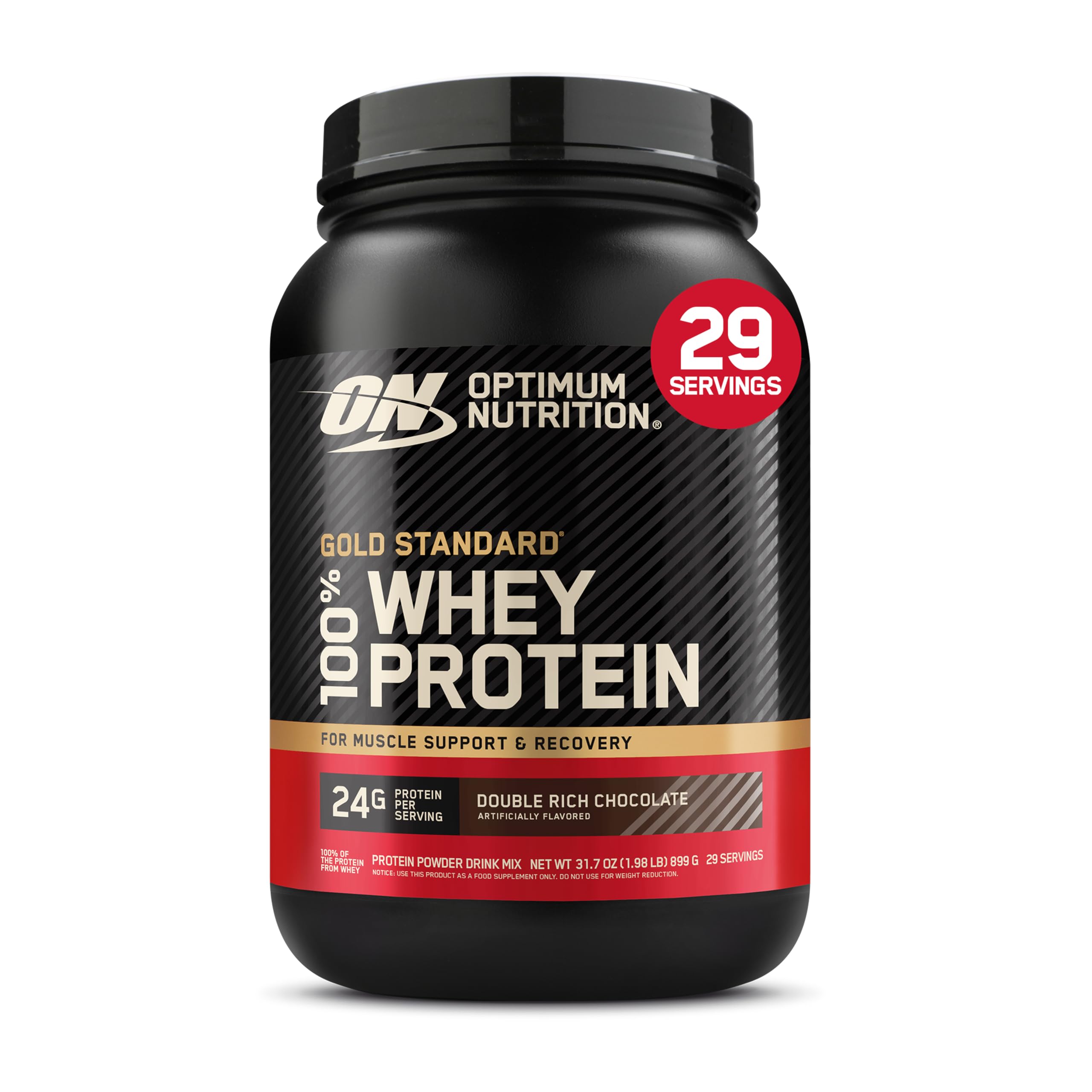
The gold standard of whey protein powders has been a gym-bag staple for 35 years, and this 1.98-pound tub delivers 29 servings of 24g protein each. The primary source is whey protein isolate, which means most of the fat and lactose have been filtered out — keeping the carb count around 3g and sugar at roughly 1g per scoop. Mixability is a standout feature; the instantized formula dissolves with a spoon in cold water or milk without clumping.
Double Rich Chocolate lands on the palate as a balanced, never-oversweet cocoa taste that works equally well shaken with water or blended into a smoothie with banana and peanut butter. The 5.5g of naturally occurring BCAAs per serving support muscle repair without requiring a separate amino supplement. Digestive tolerance is high according to the vast majority of user reports, though a minor allergic reaction is documented in one review.
This is a mid-range investment that pays off in versatility — you control the scoop size, liquid ratio, and timing. The 29-serving count means roughly 1.50 per serving when mixing with water. For anyone who prefers a classic powder over pre-mixed cans and wants proven, third-party-tested quality, this remains the most trusted entry point in the category.
Why it’s great
- Whey isolate as primary ingredient for fast absorption
- Mixes instantly with no clumps or grit
- Low sugar and carb counts suit cutting phases
Good to know
- Requires a shaker or spoon — not grab-and-go
- Some users report mild digestive sensitivity to whey
- Flavor variety is wide, but individual tastes vary
3. Pioneer Pastures High Protein A2 Milkshakes – Chocolate
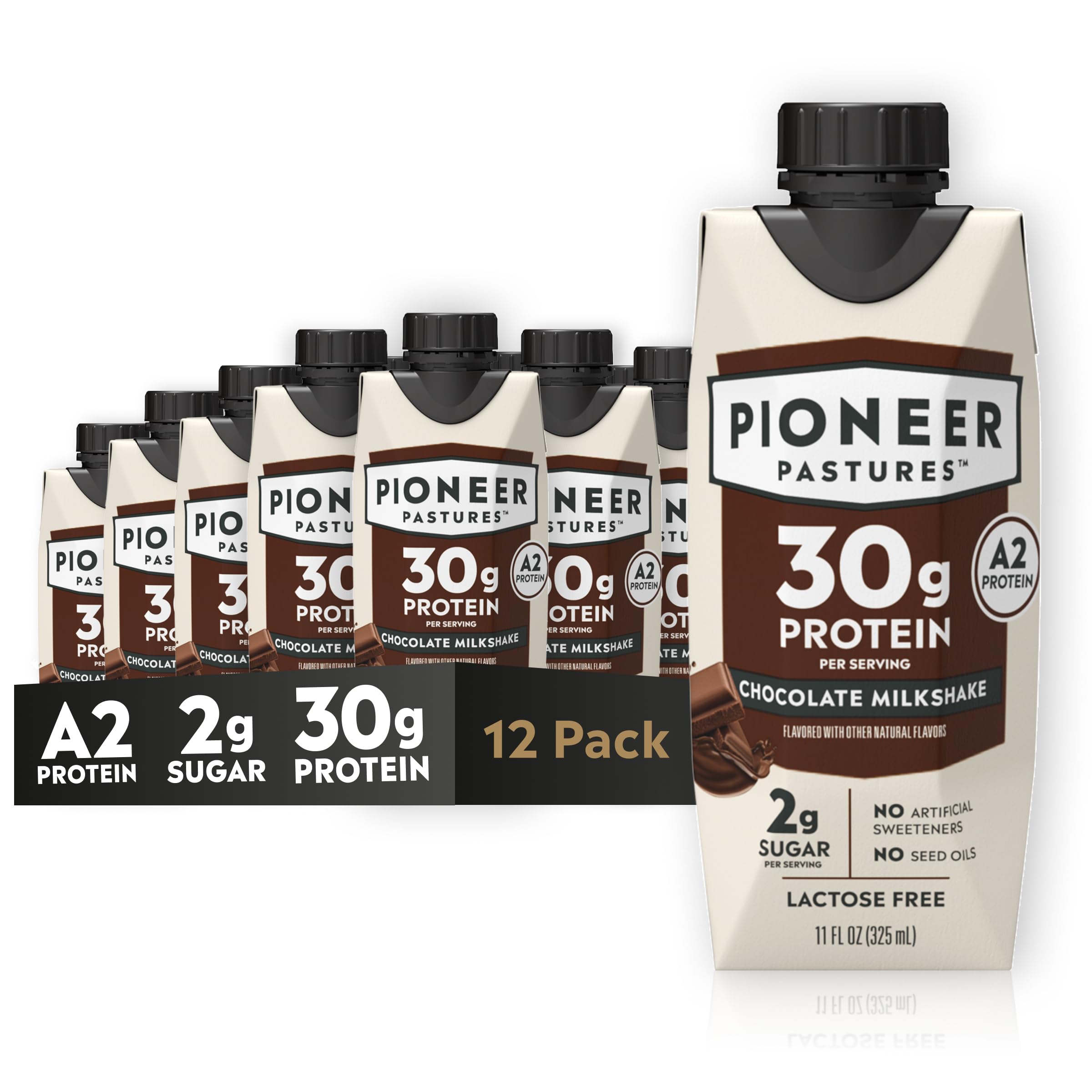
Pioneer Pastures takes a fundamentally different approach — instead of isolating whey from milk, it keeps the entire A2 dairy profile intact. The result is a creamy, shelf-stable shake that delivers 30g of protein from a single, whole-food source with no added protein powders. Because it is A2 beta-casein and lactose-free, many individuals who experience bloating or gastrointestinal distress with standard whey report zero issues with this product.
The ingredient philosophy here is strict: no seed oils, no artificial sweeteners, no carrageenan, and no sugar alcohols. Sweetness comes from stevia and monk fruit, giving the chocolate flavor a mild, clean taste that reviewers describe as reminiscent of real chocolate milk rather than a synthetic supplement. At only 2g of sugar and 30g of protein per 11-ounce serving, it matches the macros of a premium recovery shake while tasting noticeably less processed.
The 12-pack is on the higher end of the cost spectrum, but the clean-label sourcing and digestive comfort justify the price for those with dairy sensitivities. This is the strongest option for anyone who wants real milk as the base, avoids artificial additives entirely, and prioritizes gut-friendly recovery over sheer protein maximization.
Why it’s great
- Single-source A2 milk with no added protein powders
- Zero artificial sweeteners, seed oils, or carrageenan
- Lactose-free and gentle on sensitive stomachs
Good to know
- Premium pricing per 12-pack
- 30g protein is lower than the 45g competitor
- Flavor is mild — may not satisfy sweet-tooth cravings
4. FITAID RX Zero – Sour Grape

FITAID RX Zero is the sugar-free evolution of the original RX formula, designed specifically for keto dieters and macro counters who want zero grams of sugar and only 5 calories per can. The carbonated, sour grape flavor is refreshingly tart and light — a stark contrast to the creamy texture of whey shakes. Each 12-ounce can delivers 1,000mg of creatine monohydrate plus quercetin, turmeric, and BCAAs for a comprehensive anti-inflammatory and recovery stack.
The sweetness comes entirely from monk fruit and stevia, which eliminates the insulin spike associated with sugar-sweetened drinks. Users note that the vitamin taste is noticeable when served warm, but becomes crisp and pleasant when ice-cold. The addition of caffeine from green tea extract (present in the gold can version) provides a mild energy lift that some use as a pre-workout primer rather than a post-workout recovery.
At 12 cans per pack in the entry-level tier, this is a budget-friendly entry into functional recovery beverages. The trade-off is lower protein content — essentially zero — so this cannot replace a protein shake. It is best used as a complement: a post-session hydration and creatine delivery system for those who already get their protein from whole foods or a separate shake.
Why it’s great
- Zero sugar and only 5 calories per can
- Contains 1g creatine plus turmeric and quercetin
- Refreshing carbonated format — not a heavy shake
Good to know
- Contains virtually no protein
- Best served very cold to mask vitamin taste
- Caffeine content in some versions may affect evening use
5. FITAID RX Recovery Blend – Sour Grape

The original FITAID RX packs a broader ingredient panel than its Zero sibling: 1,000mg creatine, BCAAs, glutamine, glucosamine, omega-3s, CoQ10, quercetin, turmeric, and 40mg of natural caffeine from green tea — all in a lightly carbonated, 40-calorie sour grape can. This is less of a simple recovery drink and more of a multi-faceted support system for joints, inflammation, and energy levels alongside muscle repair.
The sweetness comes from raw organic agave, which keeps the calorie count low without resorting to artificial sweeteners. Taste reviews are mixed — some users describe it as a great pre-workout with manageable caffeine, while others find the flavor shocking on first sip. The carbonation and tart grape profile are divisive; regular buyers stick with it for the ingredient density rather than the taste experience.
As a post-workout option this excels for athletes who want a broad supplement stack in a single can and do not need additional protein. The inclusion of glucosamine is unique in this category, making it a smart pick for older athletes or those with joint stress from heavy lifting or running. Like the Zero version, this is best paired with a separate protein source for complete recovery.
Why it’s great
- Broad ingredient stack including CoQ10 and glucosamine
- Only 40 calories with natural agave sweetening
- Light carbonation offers a refreshing alternative to shakes
Good to know
- Distinct sour grape flavor is not for everyone
- Contains 40mg caffeine — not ideal for evening training
- Low protein — not a standalone recovery solution
6. BSN CELLMASS 2.0 – Arctic Berry

BSN CELLMASS 2.0 is a concentrated post-workout powder that focuses on three core recovery agents: a 5g creatine matrix (monohydrate, HCl, and anhydrous), 3g of glutamine and glutamic acid, and 10g of added BCAAs, plus 4g of whey protein hydrolysate. The Arctic Berry flavor is fruity and sweet, mixing easily into cold water with no grit — though BSN warns against mixing it with protein shakes due to flavor conflicts.
This is a powder-first approach that requires a shaker bottle and cold water, yielding 25 servings per container. The creatine matrix is the headline: three forms of creatine at a combined 5g dose, which is the clinically supported amount for strength and power adaptation. Users report noticeable size and pump differences within days, though individual responses to creatine vary. The inclusion of glutamine supports gut health and immune function alongside muscle repair.
Positioned in the mid-to-premium range for a powdered supplement, CELLMASS 2.0 is ideal for athletes who already have a protein source and want a specialized creatine and amino recovery formula. It is not a complete meal or protein shake — think of it as a precision tool for the window between training and your next whole-food meal. The fruity-only flavor lineup means it pairs best with water, not milk.
Why it’s great
- 5g triple-source creatine matrix per serving
- Includes 10g BCAAs and 3g glutamine
- Powder dissolves cleanly with no clumps
Good to know
- Limited to fruity flavors — not mixable with milk shakes
- Does not provide significant protein
- Flavor can be too sweet for some palates
FAQ
Can I use a recovery drink as a meal replacement?
Is carbonated recovery drink less effective than a still shake?
Do I need BCAAs if my recovery drink already contains protein?
Final Thoughts: The Verdict
For most users, the best recovery drink winner is the Quest Chocolate Protein Shake because it delivers the highest protein density per serving with minimal sugar, giving serious athletes a single-bottle solution for muscle repair. If you want a clean-label option that sits easy on digestion, grab the Pioneer Pastures A2 Milkshakes. And for a versatile powder that lets you control your macros, nothing beats the proven reliability of Optimum Nutrition Gold Standard Whey.