Choosing a prenatal vitamin feels less like shopping and more like navigating a nutritional minefield. You are not just buying a supplement; you are selecting the foundation for your baby’s brain development, your own energy levels, and a full nine months of physiological stress. The sheer volume of options—methylfolate versus folic acid, DHA dosage, choline content, iron type—makes it easy to grab the wrong bottle and miss critical nutrients.
I’m Mohammad Maruf — the founder and writer behind AirfryerBite. My analysis of prenatal vitamins focuses on bioavailability of key compounds like L-methylfolate, the inclusion of DHA for neurological support, and third-party certification status, cutting through marketing claims to identify the supplements that deliver measurable nutritional security.
Whether you are actively trying to conceive, already pregnant, or planning for the postpartum window, knowing which ingredients actually matter prevents wasted money and potential nutritional gaps. This guide breaks down the five top-selling formulas to help you find the rated prenatal vitamins for your specific needs.
How To Choose The Best Rated Prenatal Vitamins
Not all prenatal vitamins are created equal. The difference between a high-quality formula and a generic one often comes down to the specific molecular form of nutrients, the inclusion of targeted compounds like choline, and the presence of third-party testing. Here are the three most important factors to evaluate before purchasing.
The Folate Form: Methylfolate vs. Folic Acid
The most established nutrient in prenatal vitamins is folate, as it is critical for preventing neural tube defects in the developing fetus. However, up to 40% of the population has a genetic variation (MTHFR) that makes it difficult to convert synthetic folic acid into its active form, L-methylfolate. If your prenatal relies on standard folic acid and you carry this gene variant, you may not be absorbing the full dose. Premium brands increasingly use methylfolate (often listed as Metafolin or L-5-MTHF) to bypass this conversion step entirely.
DHA and Choline: The Brain Development Duo
Folic acid prevents defects, but DHA (docosahexaenoic acid) and choline build the brain. DHA is an omega-3 fatty acid that accumulates in fetal brain tissue during the third trimester, with most experts recommending at least 200 milligrams per day. Choline supports the production of neurotransmitters and cell membranes, with some research suggesting 300 to 450 milligrams daily for optimal fetal development. Many entry-level prenatal formulas omit choline entirely or include trace amounts, which is why standalone DHA and choline supplements are common additions.
Iron Type and Digestive Impact
Iron requirements double during pregnancy to support increased blood volume and oxygen transport. Standard ferrous sulfate iron is inexpensive but notoriously causes constipation, nausea, and dark stools. Premium formulas use gentler forms like ferrous bisglycinate or carbonyl iron, which are bound to amino acids for better absorption and significantly reduced gastrointestinal side effects. If you have a sensitive stomach, prioritizing a prenatal with a non-constipating iron source drastically improves compliance.
Quick Comparison
On smaller screens, swipe sideways to see the full table.
| Model | Category | Best For | Key Spec | Amazon |
|---|---|---|---|---|
| Pure Encapsulations PreNatal Nutrients | Premium | Maximum ingredient purity and absorption | 100 mg choline + Metafolin L-5-MTHF | Amazon |
| New Chapter One Daily Prenatal | Mid-Range | Gentle formula with ginger for nausea | Methylfolate + Non-constipating iron | Amazon |
| Nature Made Prenatal with DHA | Budget | Affordable USP-verified one-a-day softgel | 200 mg DHA + Folic Acid | Amazon |
| THORNE Prenatal DHA | Premium | High-dose DHA without fishy burps | 650 mg DHA + 200 mg EPA | Amazon |
| Megafood Baby & Me 2 DHA & Choline | Premium | Vegan DHA + high-dose choline in one capsule | 400 mg DHA + 300 mg Choline | Amazon |
In‑Depth Reviews
1. Pure Encapsulations PreNatal Nutrients
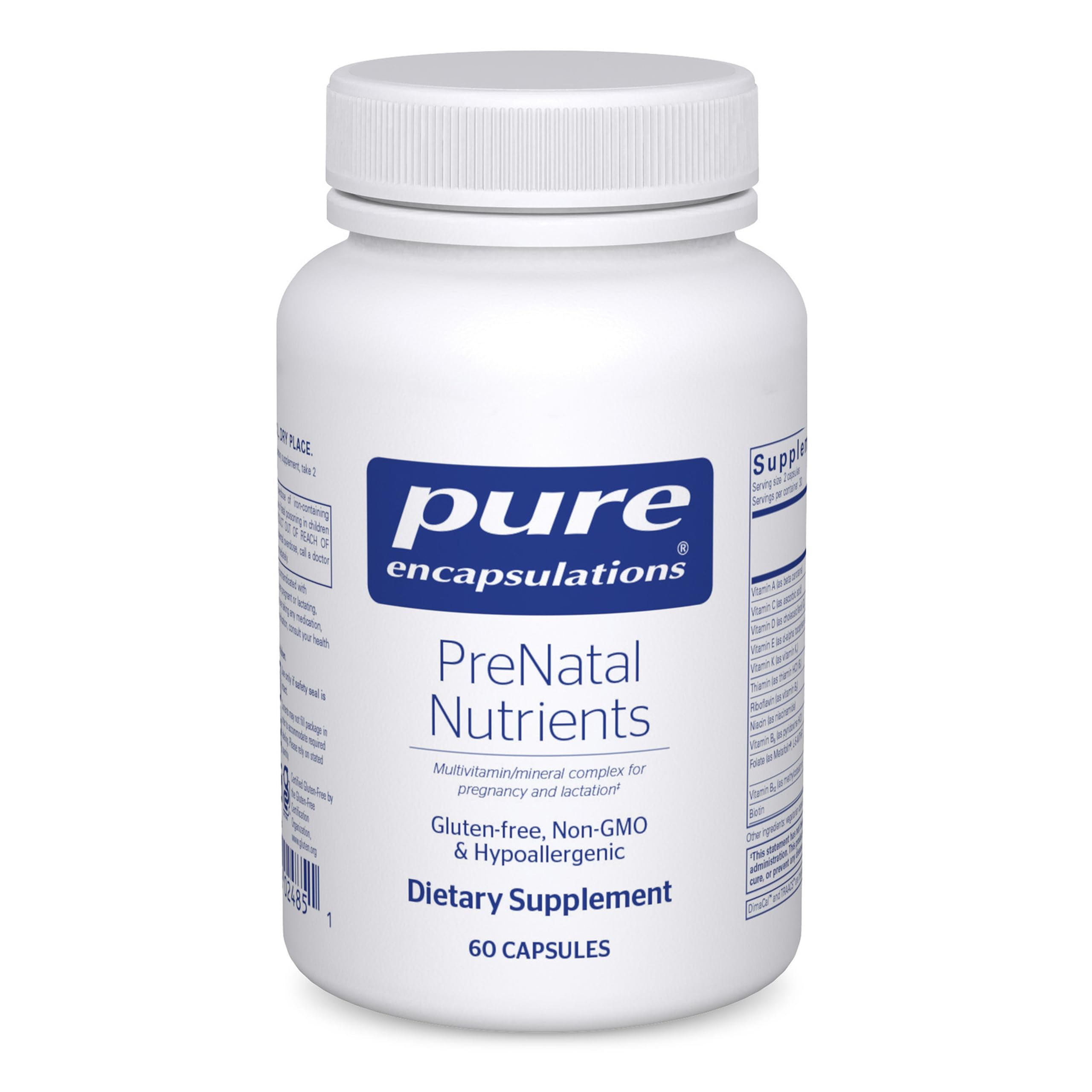
Pure Encapsulations PreNatal Nutrients represents the gold standard for ingredient transparency, with a formula free from wheat, eggs, tree nuts, peanuts, gluten, artificial colors, flavors, sweeteners, coatings, and unnecessary binders. The two-capsule daily dose delivers 100 milligrams of choline for fetal brain development and 1 milligram of Metafolin L-5-MTHF, the biologically active form of folate that bypasses MTHFR conversion issues entirely. Each serving provides 27 milligrams of iron from a form that users consistently report causes minimal stomach discomfort, a significant improvement over standard ferrous sulfate.
This formula also includes 2000 IU of vitamin A (as beta-carotene), 400 IU of vitamin D3, and 150 micrograms of iodine, covering the full spectrum of nutrients needed for both pregnancy and lactation. The manufacturer’s commitment to purity means the capsules are flavorless and easy to swallow, with no detectable aftertaste. Customer reviews highlight that even women who experienced nausea with other prenatal brands tolerated this formulation without issue, likely due to the absence of common fillers and the use of methylated B vitamins.
For women seeking a comprehensive single-bottle solution that eliminates guesswork around absorption and ingredient quality, this is the most reliable option available. The premium cost reflects the rigorous quality control and hypoallergenic manufacturing, but the peace of mind from a formula that third-party tests for over 250 contaminants justifies the investment for those prioritizing purity.
Why it’s great
- Contains 100 mg choline and active L-5-MTHF folate for direct absorption
- Hypoallergenic formula with no artificial fillers or preservatives
- Non-constipating iron form minimizes digestive side effects
Good to know
- Requires two capsules daily instead of a single softgel
- Premium price point compared to drugstore alternatives
- Does not include DHA; requires a separate omega-3 supplement
2. New Chapter One Daily Prenatal
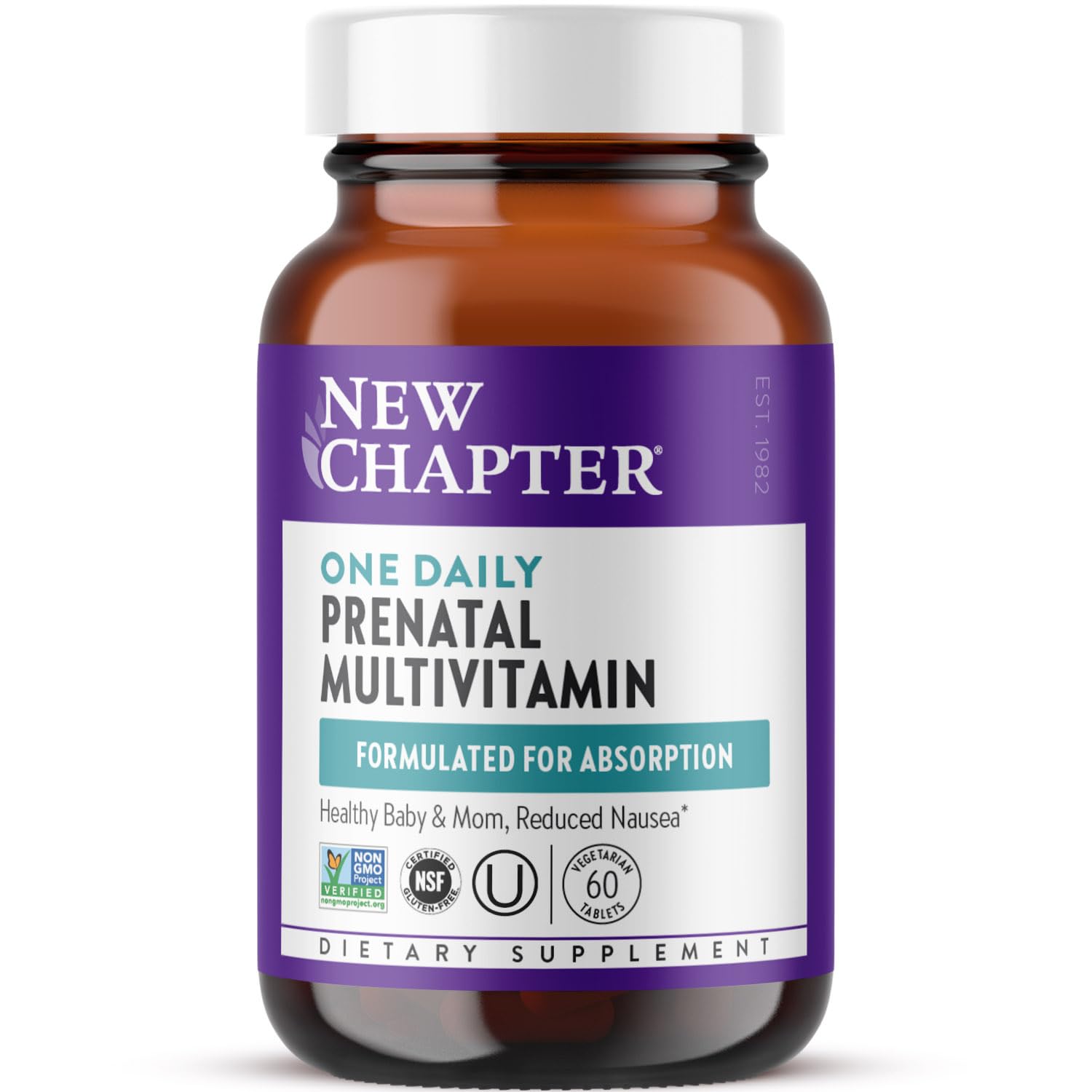
New Chapter addresses one of the most common pregnancy complaints—morning sickness—by incorporating a clinical dose of superfood ginger directly into the tablet, alongside a fermented nutrient base designed to be gentle on the stomach even when taken on an empty stomach. The one-a-day format uses methylfolate instead of folic acid and includes choline for cognitive support, though the choline dosage is not specified on the label as a standalone number the way Pure Encapsulations states it. The iron source is non-constipating, which multiple customer reviews confirm as a noticeable improvement over iron-heavy formulas that cause bloating and irregularity.
The fermented nutrients in this formula are processed by a proprietary method using Saccharomyces cerevisiae, a type of baker’s yeast, to break down the minerals into smaller, more absorbable compounds. The company claims this mimics the way the body recognizes nutrients from food, potentially improving bioavailability. New Chapter is Non-GMO Project Verified, certified gluten-free by NSF, and 100% vegetarian, with no synthetic fillers or artificial colors. The tablets have a mild herbal scent from the ginger and are larger than standard capsules, though most users report they are easy to swallow without leaving an unpleasant aftertaste.
Several users noted that if the bottle is stored in a humid or sunny environment, the pills can become sticky and develop a stronger taste, so keeping them in a cool, dry cabinet is recommended. The inclusion of ginger makes this an excellent option for women in their first trimester who struggle with nausea and want a single tablet that provides comprehensive coverage without causing further digestive upset.
Why it’s great
- Clinical dose of superfood ginger helps reduce pregnancy-related nausea
- Methylfolate form supports women with MTHFR gene variants
- Non-constipating iron and fermented nutrients ease stomach sensitivity
Good to know
- Tablets can become sticky and develop taste if stored in humid conditions
- Choline content is not explicitly stated on the label
- Does not include DHA; separate supplement required for omega-3s
3. Nature Made Prenatal with DHA
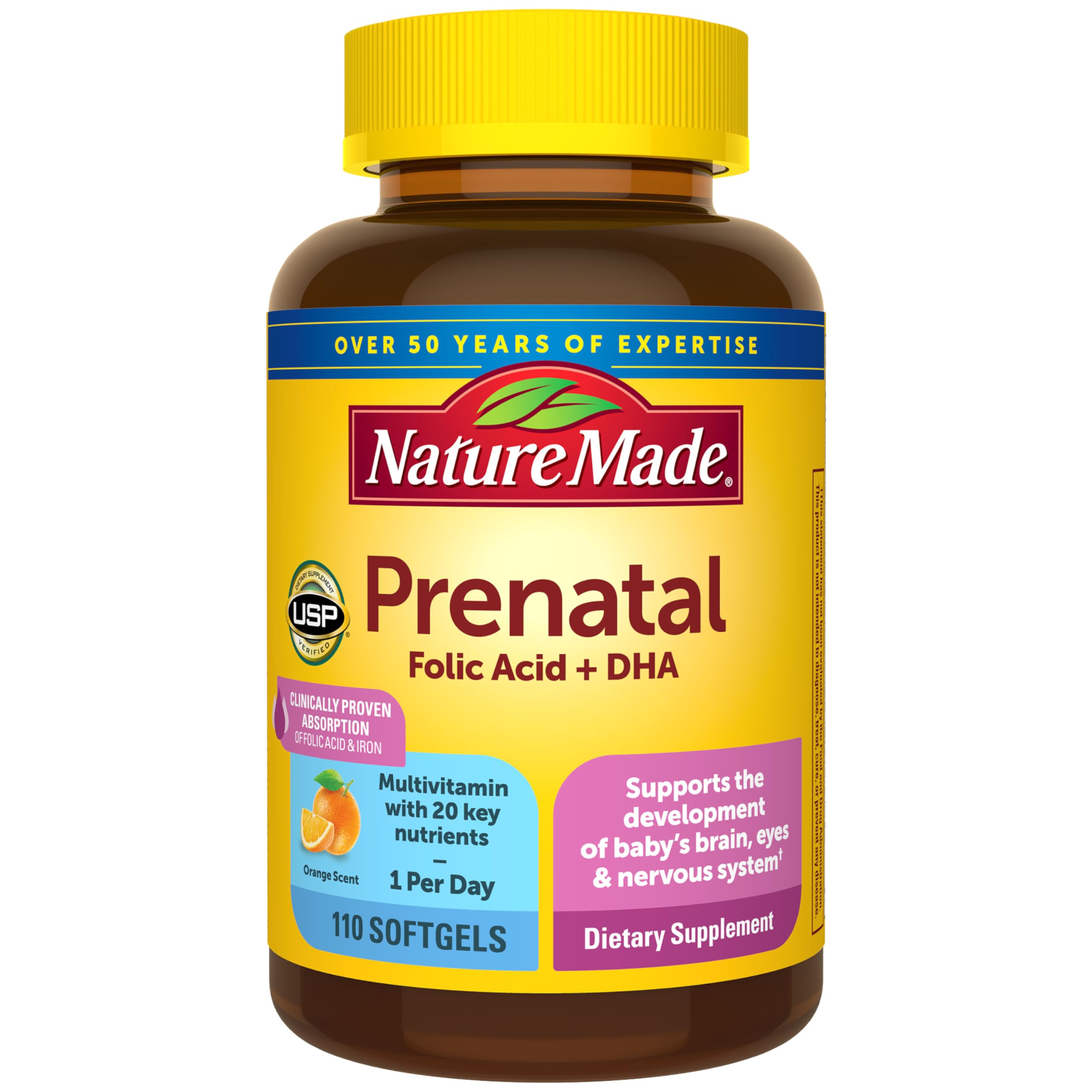
Nature Made is the most recognized mass-market prenatal vitamin brand in the United States, and this 110-count softgel bottle represents the strongest value proposition for women who want a reliable, USP-verified formula without spending on premium ingredients. Each softgel provides 200 milligrams of DHA directly in the capsule, a significant convenience factor since most budget prenatal vitamins require a separate fish oil purchase. The formula uses standard folic acid (not methylfolate) and ferrous sulfate iron, both of which are effective for the general population but may cause digestive discomfort and absorption issues for those with MTHFR mutations.
Customers consistently note that the softgels have an orange scent designed to mask the fishy odor of the DHA oil, and the capsule size is manageable for most users despite being larger than standard multivitamins. The 110-day supply reduces the frequency of repurchasing, making this a set-and-forget option for women who plan ahead. Nature Made sources its ingredients from global suppliers but manufactures in the USA, and the product is gluten-free with no synthetic FD&C dyes. The brand claims more buyers choose Nature Made prenatal vitamins than any other prenatal brand, a statistic supported by its widespread availability in pharmacies and big-box retailers.
While this formula lacks choline and methylated B vitamins, it covers the foundational bases—800 micrograms of folic acid, 200 milligrams of DHA, 27 milligrams of iron, and a full B-complex spectrum—at a cost that undercuts premium competitors. For women without known absorption issues and a healthy digestive system, this is the most cost-effective entry point into prenatal supplementation.
Why it’s great
- USP-verified for ingredient accuracy and manufacturing quality
- Includes 200 mg DHA in a single daily softgel for convenience
- 110-day supply offers excellent value and reduced repurchase frequency
Good to know
- Uses folic acid rather than methylfolate; less effective for MTHFR carriers
- Ferrous sulfate iron may cause constipation in sensitive women
- Contains no choline or additional prenatal brain-support compounds
4. THORNE Prenatal DHA
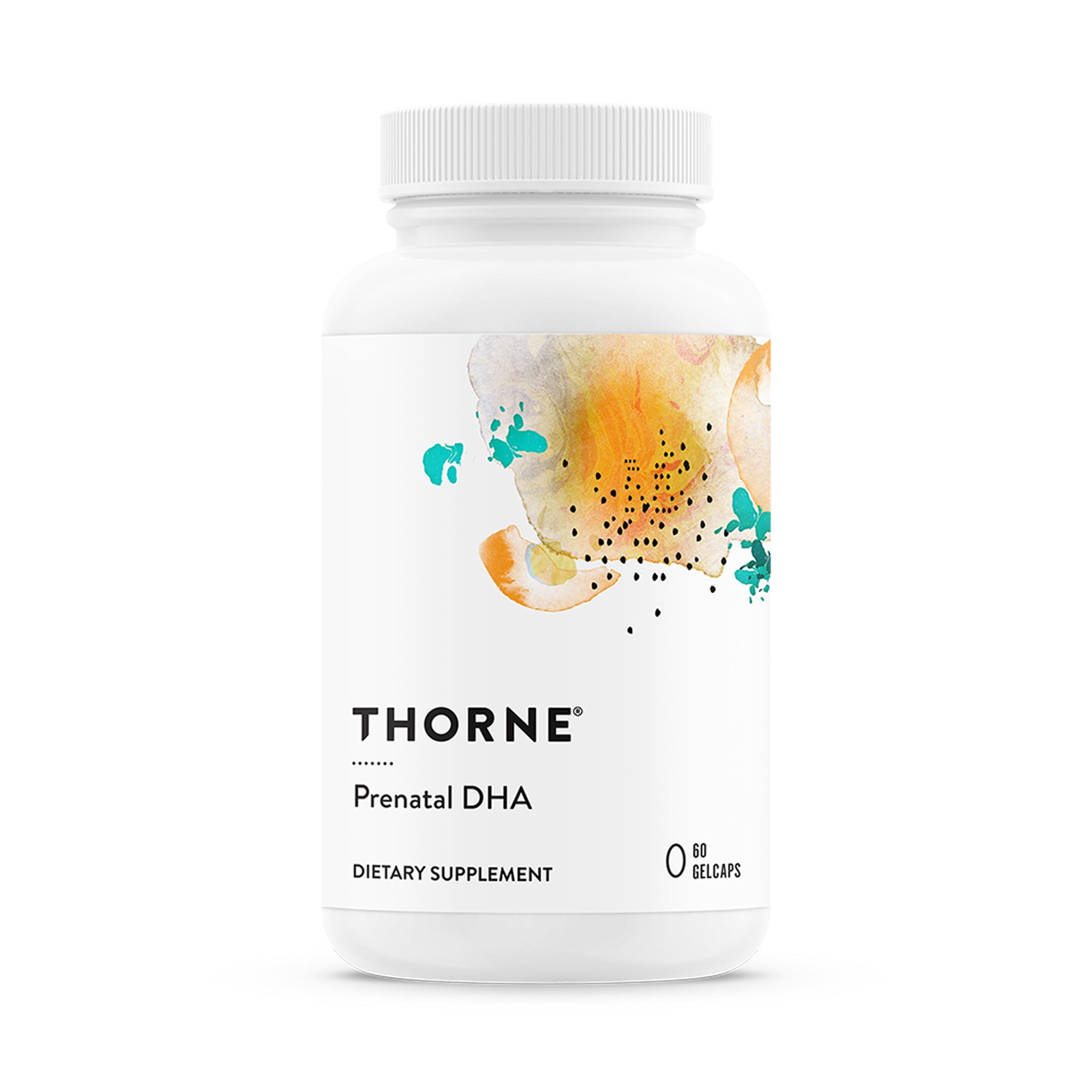
THORNE Prenatal DHA is not a complete prenatal multivitamin; it is a targeted omega-3 supplement designed to be taken alongside a separate prenatal vitamin to boost DHA and EPA intake far beyond what most multivitamins provide. Each serving delivers 650 milligrams of DHA and 200 milligrams of EPA, levels that align with research on optimal fetal brain development during the third trimester and postpartum DHA transfer through breastmilk. The gelcaps are formulated with rosemary, mint, and mixed tocopherols to prevent the fishy burps and reflux that frequently plague high-dose fish oil supplements, a detail that matters significantly for women dealing with pregnancy-related nausea.
THORNE is the number one recommended clinical brand by health-care practitioners according to the 2023 Health-Care Practitioner Seller Survey, and its products are third-party tested for over 250 contaminants, ensuring that heavy metals or PCBs are not present in concentrated fish oil. The gelcaps are small relative to the dosage strength, making them easy to swallow even for women who struggle with pill size. Users with over a decade of experience with the brand consistently cite the lack of aftertaste and the consistency of quality as reasons for remaining loyal.
Because this is a standalone DHA product, the overall cost is higher when combined with a separate prenatal vitamin, but the potency is unmatched by any all-in-one formula on this list. Women who want to ensure their DHA intake exceeds the minimum 200-milligram baseline found in most prenatals, or those who are vegan and need an alternative to algae-based DHA, should consider this as a high-potency add-on. The 30-serving count means a single bottle lasts one month, so planning for multiple months of supply is necessary.
Why it’s great
- 650 mg DHA per serving supports advanced fetal brain development
- Rosemary and mint formula eliminates fishy burps and digestive issues
- Third-party tested for 250+ contaminants with no heavy metals
Good to know
- Not a complete prenatal; must be paired with a separate multivitamin
- 30-capsule bottle provides only one month of supply
- Premium cost per month compared to combined DHA-plus-multivitamin products
5. Megafood Baby & Me 2 DHA & Choline
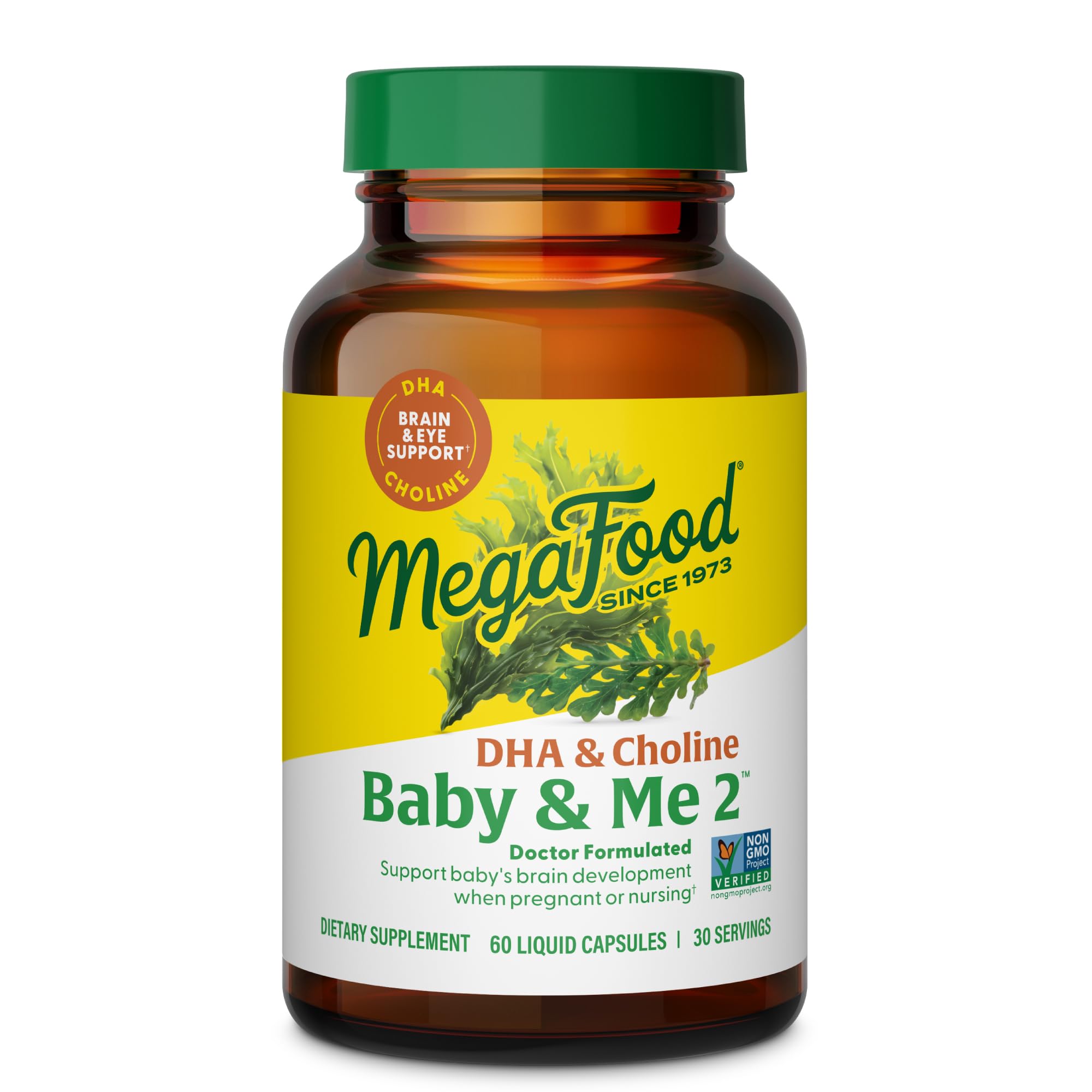
Megafood Baby & Me 2 DHA & Choline fills a specific niche that most prenatal products ignore: a vegan, algae-based liquid capsule that combines a substantial 400 milligrams of DHA with 300 milligrams of choline in a single serving of two capsules. Most prenatal multivitamins offer either DHA or choline, rarely both in meaningful amounts, making this formula a unique solution for women who want targeted brain-development support without swallowing five separate supplements. The DHA is derived from algae rather than fish oil, making it suitable for vegetarian and vegan diets, and the capsules are infused with lemon oil to create a more palatable experience than standard fish oil capsules.
This product is designed as a companion to the Megafood Baby and Me 2 Prenatal Multivitamin, though it can be taken alongside any prenatal regimen to boost the two nutrients most critical for neural development. The formula is Non-GMO Project Verified, gluten-free, and tested for 150 chemical substances, with no allergens from milk, eggs, peanuts, tree nuts, soy, wheat, fish, shellfish, or sesame. Customer feedback indicates that the lemon scent is pleasant and masks the algae taste, but that taking the capsules on an empty stomach may produce a mild aftertaste, so consuming them with food is recommended.
The two-capsule serving size and the premium positioning mean this is one of the more expensive items on a per-serving basis, but the combined DHA and choline dosage is unmatched by any other product in this review. Women who follow a plant-based diet, or who simply want to ensure their choline intake meets the higher end of research recommendations (300 to 450 milligrams daily), will find this to be the most efficient delivery system available.
Why it’s great
- Vegan DHA from algae supports both plant-based diets and high omega-3 needs
- 300 mg choline per serving addresses a nutrient gap common in most prenatals
- Lemon oil infusion provides a pleasant flavor without fishy aftertaste
Good to know
- Requires two liquid capsules daily, increasing pill burden
- Not a complete multivitamin; must pair with a separate prenatal formula
- Higher cost per serving compared to DHA-inclusive all-in-one products
FAQ
Should I take a prenatal vitamin if I have the MTHFR gene mutation?
Do I need a separate DHA supplement if my prenatal already contains DHA?
Final Thoughts: The Verdict
For most users, the rated prenatal vitamins winner is the Pure Encapsulations PreNatal Nutrients because it delivers a comprehensive, hypoallergenic formula with methylfolate, choline, and non-constipating iron in a single bottle. If you want targeted brain-development support with high-dose DHA and EPA, grab the THORNE Prenatal DHA as an add-on. And for a plant-based solution that combines meaningful DHA and choline levels, nothing beats the Megafood Baby & Me 2 DHA & Choline.