The gap between a bland, boxed spaghetti dinner and a plate of silky, restaurant-quality fettuccine is measured in a single kitchen tool. After scanning thousands of verified reviews and technical specs, one thing is clear: the right machine transforms flour and eggs into consistent, elastic sheets without the shoulder ache of hand-rolling. The wrong one introduces wobble, uneven thickness, and cutter wheels that rip dough rather than slice it cleanly. This is the buy-it-once guide built to eliminate guesswork.
I’m Mohammad Maruf — the founder and writer behind AirfryerBite. My market analysis focuses on hardware durability metrics like roller gap precision, cutter blade geometry, and attachment compatibility across both standalone and mixer-driven designs to identify the models that actually deliver on their build promises.
Every recommendation below passed a strict filter for material quality and consistent performance. Whether you are kneading for ravioli or rolling lasagna sheets, this guide to the best rated pasta machine isolates the machines that justify their reputation with every crank of the handle.
How To Choose The Best Rated Pasta Machine
Buying a pasta machine means committing to a specific rolling mechanism and build quality that will determine your dough consistency for years. Three factors separate the machines that feel fluid from those that fight you at every turn.
Rolling Mechanism: Standalone vs. Mixer Attachment
A manual hand-crank unit gives you direct tactile feedback — you feel the dough resistance and can stop or adjust mid-roll. Mixer attachments (KitchenAid-compatible models) free both hands for feeding dough and remove the need for a clamped base. The trade-off is that mixer-driven rollers operate at a fixed speed determined by the stand mixer’s power, which can sometimes stretch the dough unevenly if the hydration is off. For occasional pasta, a manual clamp-on model offers the lowest entry cost. For weekly batches, a mixer attachment saves arm fatigue.
Roller Material and Cutting Precision
304 stainless steel rollers resist corrosion and maintain a polished surface that dough releases from easily. Chrome-plated or anodized aluminum rollers perform well initially but can develop micro-pitting after repeated use, causing dough to tear. The cutting head matters equally — a double-sided cutter with precisely machined slots for spaghetti (2mm) and fettuccine (4.5mm) produces clean edges without fraying. Fewer moving parts inside the gear housing also correlate with longer operational life.
Thickness Range and Number of Settings
Most manual machines offer 7 or 8 thickness positions, ranging from roughly 0.5 mm (thin, for ravioli and wontons) to 3 mm (thick, for dumpling skins or hearty pappardelle). Models with a stepped dial that clicks into each setting provide repeatable results batch after batch. A continuous, non-clicking knob can drift during rolling, leading to uneven sheets. Prioritize machines with a clear, click-detent mechanism for consistent thickness calibration.
Quick Comparison
On smaller screens, swipe sideways to see the full table.
| Model | Category | Best For | Key Spec | Amazon |
|---|---|---|---|---|
| MARCATO Atlas 150 | Manual | Heirloom build quality | Chrome steel rollers; 4.8 mm max sheet thickness | Amazon |
| Philips Avance Accessory Kit | Electric/Extrusion | Adding shaped pasta to existing Philips machine | 4 extrusion discs; dishwasher-safe parts | Amazon |
| InnoMoon 3-Piece KitchenAid Set | Mixer Attachment | Hands-free rolling with a stand mixer | 304 stainless steel; 8 thickness settings (0.4-2mm) | Amazon |
| VEVOR Pasta Roller Attachment | Mixer Attachment | Budget-friendly KitchenAid integration | 304 stainless steel shaft; 5.5-inch roller width | Amazon |
| AceChef Manual Pasta Maker | Manual | All-in-one roller plus two cutters | 7 thickness settings; 4.5mm fettuccine & 2mm spaghetti cutters | Amazon |
| OVENTE PA515S | Manual | Budget entry for occasional pasta | 7 thickness settings; includes countertop clamp | Amazon |
| Shule Manual Noodle Maker | Manual | Versatile dough rolling for empanadas or wontons | Anodized aluminum rollers; 150mm roller width | Amazon |
In‑Depth Reviews
1. MARCATO Atlas 150 Classic Manual Pasta Maker

The MARCATO Atlas 150 is the gold standard for manual pasta machines, built in Italy with a heavy nickel-plated and chrome steel body that feels substantially denser than any budget competitor. The rollers accept dough up to 4.8 mm thick — the widest gap in this roundup — making it ideal for thick dumpling skins or layered lasagna sheets. The hand crank operates with minimal resistance thanks to precision-cut internal gears, and the adjustment dial clicks firmly into each of nine thickness settings without any slop.
Users consistently report first-try success with a simple egg-and-flour dough, producing clean sheets that do not stick or tear. The included tagliolini and fettuccine cutters slice with surgical precision, and the machine clamps securely to countertops up to roughly 2 inches thick. Cleaning is dry-only; a wooden stick removes residual dough from the rollers between uses.
While the price sits at the higher end, the Atlas 150 is built to outlast plastic-geared alternatives by decades. Owners who have used it for years note that the rollers remain smooth and the cutting heads never dull. If you want one pasta machine for life, this is it.
Why it’s great
- Heavy chrome-steel construction resists corrosion and wear
- Nine click-detent thickness settings up to 4.8 mm
- Made in Italy with precision-ground cutters
- Dishwasher-safe cutting heads
Good to know
- Higher upfront cost compared to entry-level manual models
- Dry-cleaning method may feel inconvenient at first
- Has a learning curve for dough hydration consistency
2. Philips Avance Pasta Maker Accessory (HR2494/00)
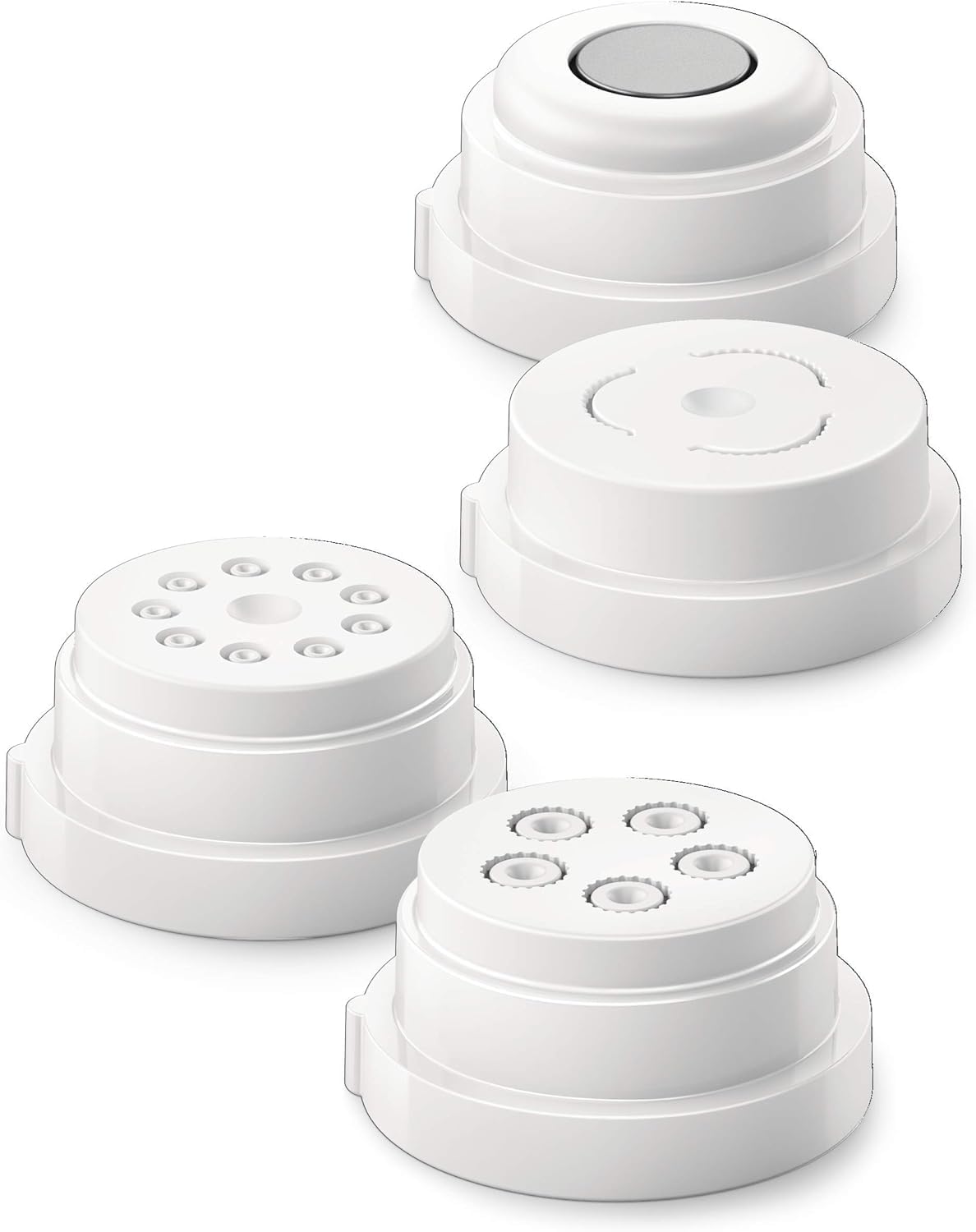
This is not a standalone pasta machine — it is a 4-disc expansion kit specifically for the Philips Avance pasta makers (models HR2357 and HR2375). The set includes shaping discs for shells, paccheri, rigatoni, and macaroni, each with precisely calibrated extrusion holes that produce consistent shapes batch after batch. The plastic discs are thick and durable, resisting warping under the pressure of the motor-driven auger.
Reviews highlight that the shells disc takes a few tries to master — cutting the extruded dough at the right moment determines whether you get cups or proper curls. The rigatoni and macaroni discs are more forgiving and produce uniform tubes immediately. All parts detach for cleaning and are dishwasher safe, though users note that dried dough in crevices sometimes requires a toothpick or the included cutting tool to dislodge fully.
For owners of the Philips Avance base unit, this kit unlocks significantly more variety without buying a second appliance. If you do not own a Philips extruder, this accessory has no utility. But if you do, it transforms the machine from a spaghetti-and-fettuccine workhorse into a full-shape pasta studio.
Why it’s great
- Four unique shapes expand capability dramatically
- Durable plastic discs resist warping
- Dishwasher-safe for easy cleanup
- Results are consistent once technique is dialed in
Good to know
- Only compatible with Philips Avance HR2357/HR2375 models
- Shells disc requires practice for proper curl
- Cleanup can be time-consuming for deep crevices
3. InnoMoon 3-Piece Pasta Attachment for KitchenAid

The InnoMoon 3-piece set gives you a sheet roller, fettuccine cutter, and spaghetti cutter in separate dedicated housings — no swapping cutter heads mid-project. Each unit is constructed from 304 stainless steel with high-precision internal gears that run quietly even under stiff dough loads. The roller offers 8 thickness settings from 0.4 mm up to 2 mm, which covers everything from paper-thin wonton wrappers to sturdy lasagna sheets.
Users who upgraded from 3-in-1 stacked roller-cutter combos report that the separate housings eliminate the wobble and alignment issues common in all-in-one designs. The clamp-free integration with KitchenAid stand mixers means the unit stays locked during operation. A dough scraper and cleaning brush are included to clear residual dough from the cutting slots.
One caveat: like most mixer attachments, the InnoMoon relies on the stand mixer’s power output, so very wet doughs can gum up the rollers. On the durability front, a small number of users reported gear failure after about ten uses, but the seller’s responsive refund policy mitigated the issue. For the price, the build quality is well above other third-party attachment sets.
Why it’s great
- Separate roller and cutter housings for better alignment
- Full 304 stainless steel construction
- 8 thickness settings provide fine granular control
- Includes dough scraper and cleaning brush
Good to know
- Not compatible with KitchenAid brand specifications
- Wet dough can gum up rollers
- A few reports of gear wear after moderate use
4. VEVOR Pasta Roller Attachment for KitchenAid

VEVOR’s pasta roller attachment stands out because it delivers a 5.5-inch roller width — slightly wider than many budget alternatives — paired with a 304 stainless steel rolling shaft that resists deformation over time. The 8 adjustable thickness settings range from 0.3 mm to 2 mm, giving you fine control for delicate ravioli sheets or chewier pappardelle. The attachment clicks onto any KitchenAid stand mixer without wobble and runs quietly even during extended rolling sessions.
User reviews consistently praise the value: the build feels dense and stable, the highly polished roller surface requires minimal flour dusting to prevent sticking, and cleanup involves a quick wipe rather than scrubbing. The adjustment wheel has a slight play according to some users, but this does not affect the consistency of the rolled sheets. For budget-conscious buyers who already own a stand mixer, this attachment cuts the cost of entry to fresh pasta dramatically.
One limitation: this unit is a roller-only attachment — it does not include cutting heads. You will need to hand-cut noodles or purchase a separate cutter attachment. The lack of cutters keeps the price low, but it also means you are committing to manual cutting or additional investment down the line.
Why it’s great
- Wider 5.5-inch roller for larger sheets
- 8 precise thickness settings from 0.3 to 2 mm
- 304 stainless steel shaft resists rust and wear
- Exceptional value for KitchenAid owners
Good to know
- Roller only — no cutter heads included
- Adjustment wheel has slight play
- Not dishwasher safe
5. AceChef Manual Pasta Maker

The AceChef manual pasta maker combines a roller and two detachable cutter heads (2 mm spaghetti and 4.5 mm fettuccine) in a single heavy-duty stainless steel frame. The countertop clamp grips firmly to any flat surface up to 2 inches thick, and the hand crank operates smoothly across all 7 thickness settings. The build weight of nearly 3 kilograms keeps the machine planted during aggressive cranking, reducing the vibration that can cause uneven sheets in lighter units.
Users highlight the double cutter head setup as a major time-saver — no need to swap blades mid-session. The cutter slots produce cleanly separated strands without ragged edges, even with slightly sticky dough. The cleaning process is standard dry-brushing; the included brush reaches most crevices, though stubborn dough in the cutter head may need a wooden pick.
The crank handle has a tendency to slip out of its slot during rolling according to some reviews, requiring firm inward pressure to keep it engaged. This is a minor ergonomic annoyance rather than a functional failure. For anyone wanting a self-contained manual machine with no separate parts beyond the cutters, this is a solid mid-range choice.
Why it’s great
- Two removable cutter heads included (spaghetti and fettuccine)
- Heavy stainless steel body for stability
- Easy to assemble and clean
- Clamp fits securely on most countertops
Good to know
- Crank handle can dislodge during use if not seated fully
- Not dishwasher safe
- Lacks very thin sub-0.5 mm setting for delicate wrappers
6. OVENTE Pasta Maker Machine PA515S

The OVENTE PA515S is a straightforward manual pasta machine built from food-grade stainless steel with a polished chrome finish. It offers 7 thickness settings ranging from 0.5 mm to 3 mm, a double cutter attachment for spaghetti and fettuccine, and a sturdy countertop clamp. The hand crank has a comfortable plastic grip, and the roller produces even sheets with minimal effort once the dough is properly kneaded and rested.
Customer feedback reveals an unexpected secondary use — polymer clay artists regularly purchase this machine for conditioning clay, citing the even roller pressure and easy cleanup. For pasta-specific use, the thin cutter occasionally struggles with very wet dough, producing strands that fuse back together. The top cutter head must be pressed firmly into place to avoid detaching during the cut cycle.
For someone making fresh pasta once or twice a month, the PA515S delivers adequate performance at a low entry point. The 1-year warranty from OVENTE provides peace of mind, though the machine’s overall feel is lighter and less substantial than premium Italian-made models. Consider this a starter machine that will confirm whether you want to invest in a higher-tier unit later.
Why it’s great
- Budget-friendly entry point for fresh pasta
- Double cutter for spaghetti and fettuccine
- Clamp holds well on standard countertops
- 1-year warranty from US-based support
Good to know
- Thin cutter can jam with overly wet dough
- Lighter build than premium competitors
- Cutter head may detach if not pressed firmly
7. Shule Manual Noodle Maker

The Shule manual noodle maker features a sturdy stainless steel body combined with anodized aluminum rollers and cutters across a 150 mm width. It includes both narrow and wide pasta cutters plus a hand crank and adjustable clamp. The thickness dial offers 14 positions ranging from 0.5 mm to 3 mm, providing twice the granularity of most competitors for fine-tuning dough thickness for specific recipes.
Users have successfully adapted this machine for Hispanic doughs like empanada and hojaldra wrappers, thanks to the wide roller gap that accommodates thicker, sturdier doughs without tearing. The crank handle, however, tends to fall out of its socket easily during operation, requiring one hand to hold it in place while the other cranks. The cutters generally work well but occasionally fail to cut all the way through the dough on the first pass, leaving a few strands fused at the edges.
For cooks who roll dough for applications beyond Italian pasta — wontons, dumplings, tortillas, or empanadas — the Shule’s wide roller and extensive thickness range offer uncommon versatility. The build quality is adequate for moderate use, though the plastic crank handle and aluminum rollers will not match the longevity of all-stainless or chrome-steel alternatives.
Why it’s great
- 14 thickness settings for precise control
- 150 mm wide rollers for larger dough sheets
- Works well with non-Italian doughs like empanadas
- Stainless steel body provides decent stability
Good to know
- Crank handle dislodges frequently
- Cutters may not slice completely through on first pass
- Anodized aluminum may wear faster than stainless steel
FAQ
Do I need a manual or electric pasta machine for home use?
How do I clean a manual pasta machine without damaging it?
Can I use any stand mixer attachment with my KitchenAid?
Final Thoughts: The Verdict
For most users, the best rated pasta machine winner is the MARCATO Atlas 150 because its chrome-steel rollers, nine click-detent settings, and Italian build quality deliver heirloom reliability that no budget machine matches. If you want hands-free rolling with a stand mixer, grab the InnoMoon 3-Piece Attachment for its 304 stainless steel construction and separate cutter housings. And for entry-level users who just need a functional starter machine without a big investment, the AceChef Manual Pasta Maker covers the basics with a solid clamp and dual cutters.