A tin of matcha powder sits on your counter—you’re staring at it, wondering if the you just spent is about to taste like ground-up lawn clippings or deliver that creamy, grassy, sweet sip you see in every café video. The problem isn’t you. It’s sifting through hundreds of “ceremonial” and “culinary” labels that don’t tell you whether it’ll turn muddy brown in milk or deliver a true, vibrant green experience. The right pick drops your morning coffee jitters and replaces them with a clean, focused hum for hours.
I’m Mohammad Maruf — the founder and writer behind AirfryerBite. I’ve spent years cross-referencing matcha harvest regions, stone-grinding methods, and ingredient sourcing data to cut through the marketing hype and point you toward the powder that actually tastes as good as it photographs.
After sifting through hundreds of reviews and lab-spec sheets, I’ve locked in the top performers that deliver on color, texture, and authentic Japanese sourcing. Read on for my definitive analysis of the best rated matcha tea options on the market today.
How To Choose The Best Rated Matcha Tea
Not all green powder is equal. The color, grind fineness, harvest season, and origin region create massive differences in taste, mouthfeel, and ease of use. Here are the three most critical factors that separate a silky, sweet bowl from a bitter, brown disappointment.
Grade: Ceremonial vs. Culinary
Ceremonial grade uses only the youngest, shade-grown first-harvest leaves, stone-ground into an ultra-fine powder that dissolves fully in water. It’s designed to be drunk straight—just matcha and water. Culinary grade uses slightly older leaves, often from later harvests, and typically has a stronger, slightly more astringent flavor that stands up well to milk, sweeteners, and baking. For daily lattes, a good culinary grade is often the smarter buy; for traditional usucha or koicha, spring for ceremonial.
Origin and Harvest Timing
Matcha from Uji (Kyoto), Yame (Fukuoka), and Kagoshima each bring distinct profiles. Uji tends toward deep umami and creamy body. Yame is known for natural sweetness and buttery notes thanks to its dramatic day-night temperature swings. Kagoshima produces a bright, balanced flavor. First-harvest (first flush) leaves are the youngest, sweetest, and most expensive; second-harvest leaves have more body and bitterness but greater value for everyday use.
Grind Texture and Packaging
Traditional stone-grinding yields particles as fine as 5–10 microns, which whisk into a velvety suspension without clumps. Blade-ground or machine-ground matcha feels sandy and settles quickly. Packaging is equally important: matcha degrades rapidly when exposed to light, heat, and oxygen. A resealable pouch or opaque, airtight canister is non-negotiable for preserving color and flavor beyond the first few weeks.
Quick Comparison
On smaller screens, swipe sideways to see the full table.
| Model | Category | Best For | Key Spec | Amazon |
|---|---|---|---|---|
| Jade Leaf Culinary Grade | Culinary | Daily lattes & baking | 3.53 oz (100g) resealable pouch | Amazon |
| Naoki Yame Ceremonial | Ceremonial | Straight usucha & koicha | 1.4 oz (40g) tin, first harvest | Amazon |
| Rishi Everyday Matcha | Culinary | Cafe-quality lattes on a budget | 1.05 oz tin, organic | Amazon |
| Handpick Organic Matcha | Culinary | Long-lasting value in bulk | 3.53 oz resealable ziplock pouch | Amazon |
| NatureBell Unsweetened | Culinary | Bulk baking & smoothies | 1 lb (454g) jar, 151 servings | Amazon |
In‑Depth Reviews
1. Jade Leaf Matcha Organic Culinary Grade

Jade Leaf’s culinary grade is the benchmark that every other daily-drinker matcha gets measured against. Sourced from Uji and Kagoshima with a blend of Okumidori, Hoshun, Okuyutaka, and Yabukita cultivars, this powder delivers a rich, umami-forward flavor with zero artificial sweetness and no chalky residue. The grind is fine enough that you can whisk it with a bamboo chasen without needing to sift first, which saves a whole step during your morning routine.
The 100-gram resealable pouch is designed for volume: at half a teaspoon per serving, you get roughly 50 lattes or 100 traditional usucha cups. Reviews consistently mention that it mixes easily with both hot water and cold milk, holding a vibrant green color that doesn’t turn brown or grey. Several users specifically call out the lack of bitterness even when used in concentrated shots, which is rare for a culinary-grade product at this tier.
Each serving contains approximately 16–24 mg of naturally occurring caffeine, paired with L-theanine for sustained, jitter-free focus. The brand recommends storing the pouch in the refrigerator after opening and using within 30–60 days for peak freshness.
Why it’s great
- Vibrant, non-bitter taste that works equally well for lattes and traditional usucha
- Fine stone-ground texture requires no pre-sifting
- Resealable pouch preserves freshness for 30–60 days after opening
Good to know
- Not pure first-harvest ceremonial grade; uses a blend of cultivars including second-harvest leaves
- Packaging is a pouch rather than a tin, so storing it upright in the fridge is essential
2. Naoki Matcha Fragrant Yame Blend – Ceremonial Grade

Naoki’s Fragrant Yame Blend took home a Silver award in a national Japanese tea competition, and one sip makes it clear why. Grown in Yame, Fukuoka—a region famous for its wide temperature swings that concentrate natural sugars in the leaf—this ceremonial-grade powder delivers a pronounced buttery sweetness with creamy body and almost zero bitterness. The grind is exceptionally fine, straight off traditional stone mills, so it dissolves into a velvety suspension without clumping or requiring a strainer.
This is a first-harvest ceremonial blend, meaning it’s designed to be drunk straight with just hot water. The flavor profile starts with a fresh, natural sweetness and finishes with a smooth, clean mouthfeel that lacks the astringent edge typical of many mid-range ceremonial matchas. Users who typically find culinary-grade powders too harsh for straight drinking consistently report that this blend is approachable even for intermediate drinkers.
The 40-gram tin is on the smaller side, but the density and concentration mean each gram packs more flavor than bulkier culinary options. It’s best used within 30 days of opening, and the airtight tin does a better job of protecting against light and oxygen than a pouch. For anyone who wants to experience true single-origin Yame matcha without stepping into a + tin, this is the sweet spot.
Why it’s great
- Award-winning ceremonial grade with naturally sweet, buttery flavor and no bitter finish
- Ultra-fine stone-ground texture that requires no sifting
- Air-tight tin packaging preserves freshness far better than pouches
Good to know
- 40-gram size yields fewer servings than bulk culinary pouches
- Best enjoyed straight; the delicate sweetness gets lost in heavily sweetened lattes
3. Rishi Tea Everyday Matcha – Organic 1.05 oz Tin

Rishi positions this as an “everyday matcha,” and it lives up to that label by delivering a reliable, vibrant green powder that works in lattes, iced drinks, and simple hot water preparations. The blend uses mostly first-harvest leaves with some second-harvest tips, resulting in a bright green color that’s slightly less deep than ceremonial grades, but still far more vivid than typical grocery-store matcha. The flavor is grassy and slightly sweet, with only the faintest hint of bitterness on the finish—nothing that milk and a touch of sweetener can’t smooth out.
The 1.05-ounce tin comes with a Mylar foil pouch inside that you can reseal, which is a thoughtful touch for preserving the powder’s color and aroma after opening. Several user reviews note that this powder mixes well with water, though it’s not quite as fine as stone-ground ceremonial blends, so a quick whisk or frother helps eliminate any minor clumps. When used in lattes with almond or oat milk and a bit of syrup, it consistently produces a café-quality drink without the premium price tag.
For beginners who are just transitioning from bagged matcha or tea-shop powders, Rishi offers an approachable entry point. The tin size is small enough that you’ll finish it before oxidation sets in, and the flavor profile is friendly enough that it won’t scare off newcomers with aggressive bitterness. It’s a solid daily driver for anyone who prioritizes convenience and consistency over absolute depth of flavor.
Why it’s great
- Bright green color and fresh, grassy flavor with minimal bitterness
- Mylar pouch inside the tin preserves freshness after opening
- Approachable flavor profile that works for matcha beginners
Good to know
- Not as fine a grind as stone-ground ceremonial matchas—may need a whisk or frother
- Smaller tin size at 1.05 oz means faster consumption and higher per-gram cost than bulk options
4. Handpick Organic Japanese Matcha – 3.53 oz Resealable Pouch
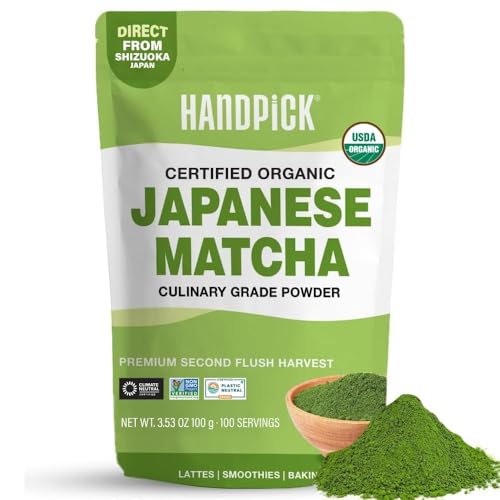
Handpick sources its matcha directly from Japan, using shade-grown leaves that are hand-picked and stone-ground into a fine, vibrant powder. The 3.53-ounce resealable ziplock pouch is designed for longevity: users report getting two to five months of daily use from a single bag, depending on serving size. The flavor profile is earthy and rich, with a smooth, velvety texture that works well in lattes and iced drinks without turning chalky.
Several verified buyers specifically compare this to the popular Jade Leaf brand and find it nearly identical in taste and quality at a more competitive price point. The Non-GMO Project verification and carbon-neutral/plastic-neutral certification add appeal for environmentally conscious shoppers. When whisked with hot water and a bit of brown sugar or honey, the result is a sweet, non-bitter cup that even matcha novices enjoy.
The main practical note is that the QR code on the pouch directs to a vendor page rather than to recipes, which some users find disappointing. But for the quality-to-price ratio alone, this is one of the strongest bulk options. It stores best in the refrigerator after opening, and the resealable zipper helps maintain freshness between uses.
Why it’s great
- Large 3.53 oz pouch yields 100+ servings, lasting months for daily drinkers
- Vibrant green color and smooth, non-chalky texture comparable to premium culinary grades
- Carbon-neutral and plastic-neutral certification appeals to eco-conscious buyers
Good to know
- QR code on packaging links to vendor page rather than recipes or usage guides
- Resealable zipper is effective but the pouch is less protective than a rigid tin against crushing
5. NatureBell Unsweetened Matcha – 1 Pound Jar
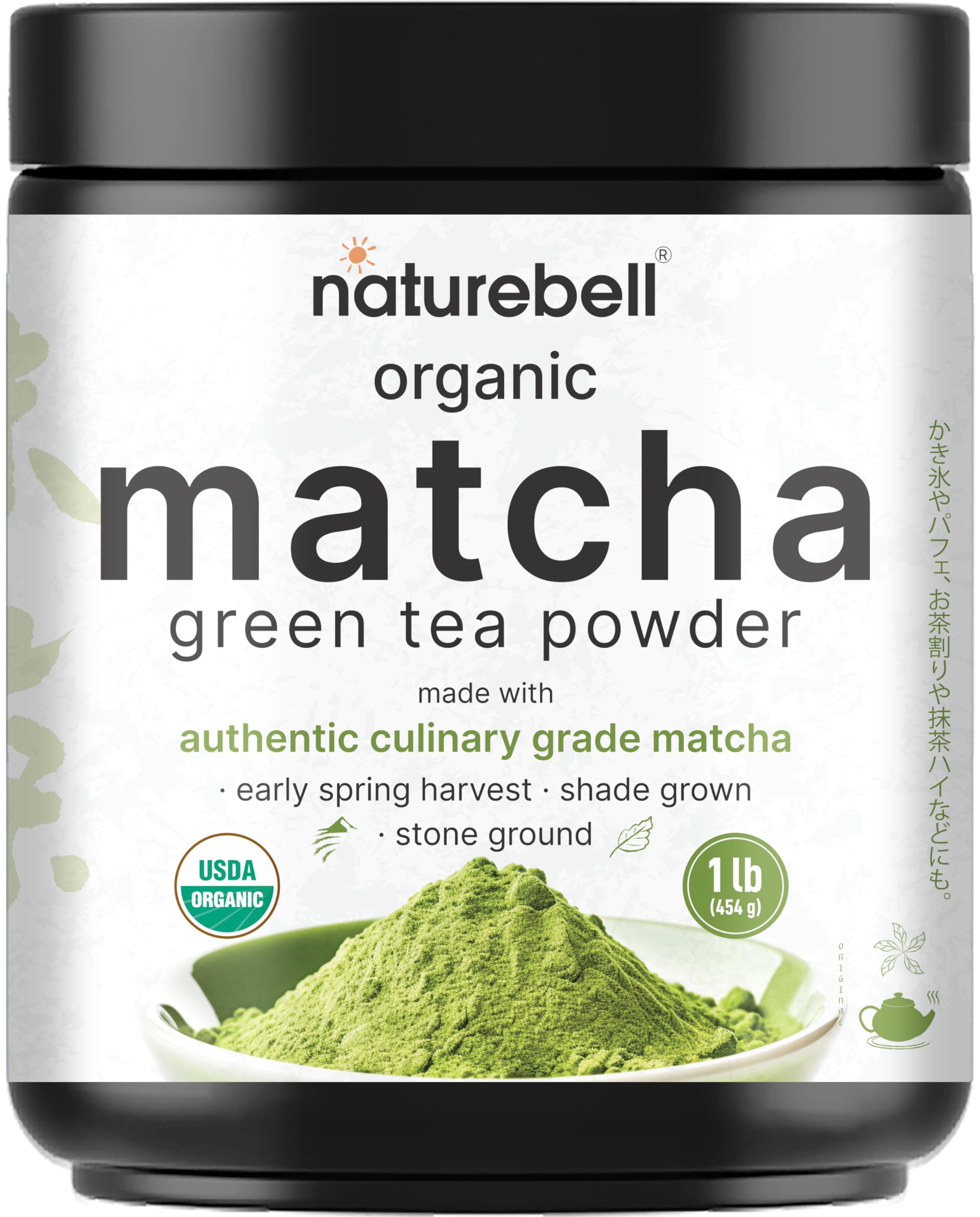
NatureBell’s one-pound jar is the heavyweight champion of bulk matcha, delivering a full 454 grams of culinary-grade powder that’s third-party lab tested for purity. The powder is derived from early spring leaf harvest and ground to a fine consistency that dissolves reasonably well with enough whisking. It’s unsweetened with zero sugar, making it a blank canvas for lattes, smoothies, baking, and even homemade ice cream—one reviewer specifically mentions using it to make matcha-and-ube ice cream with beautiful green color and rich flavor.
The sheer volume—151 servings per jar—dramatically reduces the cost per serving compared to smaller tins. Users note that it’s not quite as fine as premium stone-ground ceremonial matcha, which can lead to minor clumping if you don’t whisk thoroughly, but for culinary applications like baked goods and blended drinks, the texture is more than adequate. Several reviews specifically call out that it has no harsh bite and doesn’t require sweetener, which is impressive for a bulk culinary-grade product.
This is a straightforward, no-frills option for people who go through matcha quickly and want maximum economy. The jar packaging is practical for scooping, though once opened, storing it in a cool, dark cabinet or refrigerator is essential to slow oxidation. If you’re making matcha lattes every morning and blending them into smoothies, this jar will keep you supplied for months.
Why it’s great
- Massive 454-gram jar provides 151 servings at the lowest cost per serving in this comparison
- Early spring harvest with no harsh bite, even without sweetener
- Third-party lab tested for purity—no GMOs, gluten, soy, or fillers
Good to know
- Grind is not as ultra-fine as stone-ground ceremonial matcha—can clump without thorough whisking
- Culinary grade (C rank), so it lacks the deep umami sweetness of first-harvest ceremonial blends
FAQ
What’s the difference between matcha grades and how do I know which one to buy?
Does stone-ground matcha really taste better than machine-ground?
Does region of origin change matcha flavor that much?
What’s the best way to store matcha to keep it fresh?
Can I use culinary grade matcha for traditional tea ceremony?
Final Thoughts: The Verdict
For most users, the best rated matcha tea winner is the Jade Leaf Organic Culinary Grade because it strikes the perfect balance between vibrant flavor, smooth texture, and daily-drinker value. If you want a true ceremonial experience with buttery sweetness and zero bitterness, grab the Naoki Fragrant Yame Blend. And for bulk baking and smoothie use where cost per serving matters most, nothing beats the NatureBell Unsweetened Matcha in the one-pound jar.