Finding a decaf that delivers the same depth, body, and aromatic punch as its caffeinated counterpart is the decaf drinker’s oldest struggle. Too many bags promise rich flavor but brew flat, watery, or bear that unmistakable chemical aftertaste from harsh decaffeination methods.
I’m Mohammad Maruf — the founder and writer behind AirfryerBite. I’ve spent years analyzing coffee roasting profiles, decaffeination processes, and customer feedback across dozens of brands to separate the cups worth your morning pour from those that belong in the pantry graveyard.
This guide breaks down the five highest-rated bags on the shelf right now, comparing flavor profiles, roast levels, and decaffeination methods so you can confidently choose the absolute rated decaf coffee that matches your taste and brewing style.
How To Choose The Best Rated Decaf Coffee
Decaf coffee isn’t a compromise category if you know what to look for. The wrong bag leaves you with a cup that’s thin, bitter, or strangely flat. The right one delivers a brew that stands on its own merits. These four factors separate the exceptional from the forgettable.
Decaffeination Method: Water vs. Chemical
The process used to remove caffeine is the single biggest determinant of flavor retention. The Swiss Water Process uses pure water and osmosis to gently strip caffeine while preserving the bean’s natural oils and soluble compounds. Chemical methods using methylene chloride or ethyl acetate can leave behind solvent residues and strip away the delicate aromatic molecules that make coffee taste like, well, coffee. For clean flavor without a ghostly aftertaste, always look for Swiss Water Process or certified naturally decaffeinated labels on the bag.
Roast Level and Bean Origin
Decaffeination removes more than just caffeine — it also leaches some of the bean’s structural oils, which can make a light roast taste hollow. That’s why most top-rated decafs lean toward medium or dark roasts, where the roasting process rebuilds body and introduces the smoky, chocolaty, or caramelized notes that mask any decaf thinness. Single origin beans from high-altitude regions in Central and South America or East Africa offer more complex, fruity flavor profiles than commodity blends.
Whole Bean vs. Pre-Ground
Freshness is the enemy of good decaf. Once coffee is ground, its volatile flavor compounds start dissipating immediately. Whole bean decaf lets you grind on demand, preserving the aromatic oils that create a rich crema and full mouthfeel. Pre-ground is convenient but tends to stale faster — especially in a 2-pound bag that takes weeks to finish. If your brewing method (drip machine, French press, pour-over) can accommodate it, whole bean almost always wins for taste.
Certifications and Additives
Beyond the decaf label, look for organic, low acid, or third-party tested badges if you have a sensitive stomach or want to avoid pesticide residues. Some premium decafs are tested for mycotoxins (mold byproducts that cause bitterness) and heavy metals — a meaningful step when you’re drinking several cups daily. Bags that offer Kosher certification also signal a cleaner processing chain.
Quick Comparison
On smaller screens, swipe sideways to see the full table.
| Model | Category | Best For | Key Spec | Amazon |
|---|---|---|---|---|
| Lifeboost Medium Roast Ground Decaf | Premium/Single Origin | Low acid & organic purity | 12 oz bag, Swiss Water Process | Amazon |
| San Francisco Bay Decaf French Roast (2 lb Whole Bean) | Mid-Range/Whole Bean | Bold dark roast with chemical-free process | 32 oz bag, Swiss Water Process | Amazon |
| Eight O’Clock Coffee The Original Decaf Whole Bean | Value/Whole Bean | Balanced medium roast at a great price | 21 oz bag, 100% Arabica | Amazon |
| Lavazza Decaf K-Cup Pods 60-Count | Premium/Pods | Convenient Keurig brewing | 60 pods, medium roast | Amazon |
| San Francisco Bay Decaf Ground French Roast (28 oz) | Value/Ground | Big bag for drip or French press | 28 oz bag, Swiss Water Process | Amazon |
In‑Depth Reviews
1. Lifeboost Medium Roast Swiss Water Decaf Coffee Ground
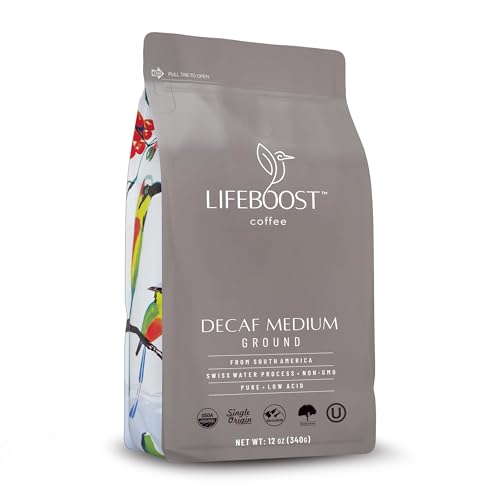
Lifeboost sits at the top of this list because it solves the two biggest decaf complaints in one bag: acidity and flat taste. Grown at high elevation in South America and decaffeinated through the Swiss Water Process, this ground coffee delivers a velvety, deep body without the sharp acid bite that bothers sensitive stomachs. Each batch is third-party tested for mycotoxins, heavy metals, and over 400 other contaminants — a level of transparency rare even among premium roasters.
The medium roast profile is smooth and balanced, with no bitterness or chemical residue. Customers who initially found it weak learned to dial in their pour-over technique (the seller provides tips) and ended up ranking it the best decaf they’ve ever had. At a 12-ounce bag, it’s smaller than bulk competitors, which actually works in its favor for freshness — you’ll finish it before the beans go stale.
It’s certified organic, Non-GMO, and single-origin, making it the strongest choice for anyone prioritizing clean ingredients and traceable sourcing. The trade-off is a higher per-ounce cost than value bags, but the quality jump is immediate and unmistakable.
Why it’s great
- Swiss Water Process preserves full flavor without chemicals
- Low acid formulation is gentle on sensitive stomachs
- Third-party tested for mycotoxins and pesticides
Good to know
- 12 oz bag has a higher per-ounce cost than bulk options
- Pre-ground format limits grind freshness control
2. San Francisco Bay Coffee Decaf Dark Roast Whole Bean Coffee (2 lb)
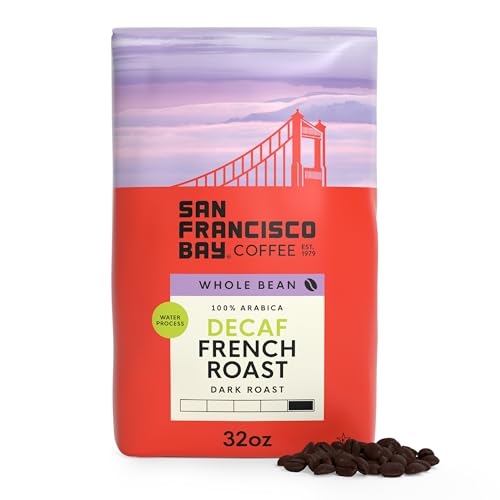
For households that blow through decaf by the pot, this 2-pound whole bean bag is the volume winner without sacrificing process integrity. Sourced from Central and South American Arabica beans and roasted dark, it delivers a bold, full-bodied cup with a smoky finish and zero chemical aftertaste, thanks to the Swiss Water Process. The dark roast is deep enough to satisfy former caffeine drinkers who crave a robust mouthfeel.
Customers consistently praise the rich aroma and smooth texture, with many noting it works exceptionally well for decaf espresso shots — the crema holds up surprisingly well for a caffeine-free bean. The whole bean format allows you to grind on demand, preserving freshness far longer than pre-ground alternatives. San Francisco Bay backs it with a satisfaction guarantee, reflecting confidence in a recipe they’ve refined over years.
Product 2 has occasional batch variation (some reviewers noted differences in bean sheen) but the flavor consistency holds strong across most bags. It’s Kosher certified and uses no chemical solvents, making it a reliable mid-range workhorse for daily drinking.
Why it’s great
- 2-pound whole bean bag delivers excellent value per cup
- Swiss Water Process ensures clean, bold dark roast flavor
- Whole bean format keeps freshness high for extended use
Good to know
- Dark roast may be too smoky for light roast fans
- Occasional batch sheen variation reported by some customers
3. Eight O’Clock Coffee The Original Decaf Whole Bean (21 oz)

Eight O’Clock has been a grocery staple for generations, and this decaf whole bean offering proves why the brand endures. Sourced from 100% Arabica beans across Latin America and East Africa, the medium roast delivers a sweet, fruity, and well-balanced cup that tastes remarkably close to its caffeinated sibling. It’s not processed via Swiss Water — the exact method is less transparent — but the flavor consistency earns strong loyalty from repeat buyers.
Customers who use a French press report that it’s nearly indistinguishable from regular coffee when brewed slightly stronger, though some note you’ll need to increase the ground-to-water ratio by about 20 percent to overcome the natural body loss from decaffeination. The 21-ounce bag hits a sweet spot between freshness and cost: large enough to last two to three weeks for a moderate drinker, but not so huge that the beans stale before you finish them.
It’s Kosher certified and backed by Tata Consumer Products’ quality standards. For a no-fuss, reliable decaf that doesn’t demand a premium budget, this is the practical champion. Some customers have reported spotty availability recently, so stock up when you see it in rotation.
Why it’s great
- Excellent value for a 21 ounce whole bean bag
- Sweet, balanced medium roast works in multiple brew methods
- Longtime brand with consistent flavor across batches
Good to know
- Requires slightly more grounds than regular coffee for full body
- Decaffeination method is less transparent than Swiss Water competitors
4. Lavazza Decaf K-Cup Pods, Medium Roast (60-Count)
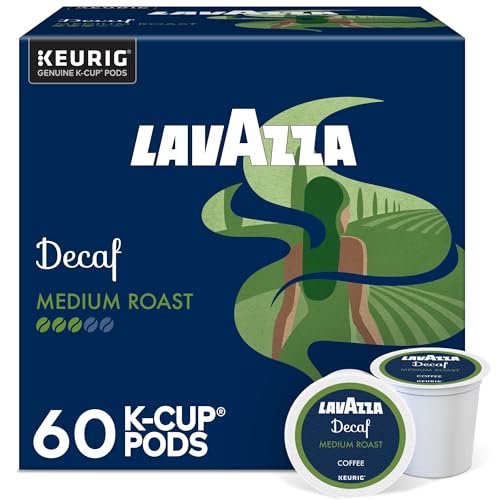
If convenience is your non-negotiable, Lavazza delivers a single-serve decaf that actually tastes like real coffee — not a watered-down pod compromise. This 60-count box of K-Cups uses Lavazza’s medium roast blend, producing a balanced, full-bodied cup with subtle dried fruit notes that cut through the typical pod flatness. Each pod brews up to a 12-ounce serving without losing strength, which is a rare feat in the decaf pod category.
Customers consistently note that they can’t tell it’s decaf — the boldness and aroma hold up to their regular morning rotation. The Orthodox Union Kosher certification adds a quality-process signal for observant buyers. The obvious drawback is the per-cup cost, which is higher than brewing whole bean or ground, and the pod format generates more waste than bulk bags.
For office kitchens, guest coffee stations, or anyone who wants a quick, reliable decaf without measuring or grinding, this is the premium pod option. The 60-count box lasts a solid two months for a daily single-cup drinker. Just be prepared for the higher price per ounce compared to loose coffee formats.
Why it’s great
- Full-bodied flavor that rivals non-decaf pods
- Consistent single-serve brewing without measuring
- Lavazza’s medium roast profile with dried fruit complexity
Good to know
- Per-ounce cost is higher than whole bean or ground formats
- K-Cup format generates more packaging waste than bagged coffee
5. San Francisco Bay Decaf Ground Coffee, French Roast (28 oz)
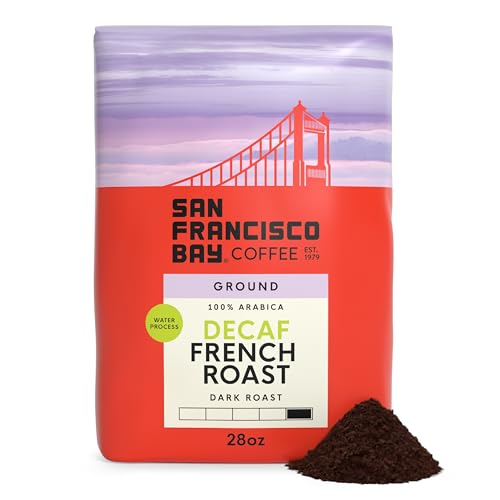
This pre-ground French roast from San Francisco Bay shares the same Swiss Water Process integrity as its whole bean sibling but at a lower entry point and in a larger bag. The 28-ounce ground format is designed for drip machines, pour-over, and French press drinkers who want bold, smoky flavor without grinding. The dark roast profile brings forward rich dark chocolate and brown spice notes, finishing with the long, smoky tail that French roast fans crave.
Customer feedback is overwhelmingly positive on the flavor: reviewers describe it as smooth, velvety, and free of bitterness or acidity, with a robust body that stands up to cream or milk. The Swiss Water certification means no chemical solvents touched the beans. Some budget-conscious buyers point out that the per-ounce cost is higher than grocery store competitors like Starbucks or Peet’s, but the flavor quality and brand satisfaction guarantee justify the premium for most.
Product 5 is an excellent entry point for anyone new to decaf or looking to switch from a chemical-process brand. The ground format is less flexible than whole bean for grind size control, but the consistency works well for standard drip brewers. If you drink multiple cups daily, the 28-ounce bag hits a practical balance between size and freshness.
Why it’s great
- Swiss Water Process at an accessible price point
- Bold dark roast with smoky, cocoa-driven flavor
- 28 oz bag offers strong value for daily drinkers
Good to know
- Pre-ground format limits fresh grind control
- Per ounce cost is higher than some bulk grocery brands
FAQ
Does Swiss Water Process decaf taste different from chemically processed decaf?
Why does decaf coffee sometimes taste watery or weak compared to regular coffee?
How can I tell if a decaf coffee is truly organic and low acid?
Final Thoughts: The Verdict
For most users, the rated decaf coffee winner is the Lifeboost Medium Roast Swiss Water Decaf Ground because it combines low acid smoothness, third-party purity testing, and rich flavor in a clean, single-origin package. If you want a bold dark roast in a value-sized whole bean bag, grab the San Francisco Bay Decaf French Roast 2 lb. And for budget-friendly, no-fuss drip brewing, nothing beats the San Francisco Bay Decaf Ground French Roast 28 oz.