The quiet hum of a sustainable kitchen starts with one choice: where to put the scraps. A compost bin isn’t just a container; it’s the gateway to reducing landfill waste, creating nutrient-rich soil, and reclaiming control over your kitchen’s waste stream. But with options ranging from sleek countertop pails to massive outdoor tumblers, the decision can get muddy.
I’m Mohammad Maruf — the founder and writer behind AirfryerBite. I’ve spent years analyzing the hardware behind home sustainability, comparing material build quality, odor-filtration systems, and decomposition efficiency to separate the bins that truly work from those that simply collect dust.
This guide cuts through the noise to help you find the rated compost bin that fits your space, lifestyle, and ambition for turning waste into a resource.
How To Choose The Best Rated Compost Bin
Selecting the right compost bin depends on where you live, how much waste you generate, and how hands-on you want to be. The right choice balances capacity, material durability, and odor control with your specific daily routine.
Capacity and Footprint
Countertop bins typically hold 1 to 1.5 gallons, perfect for 1-2 days of kitchen scraps before transferring to an outdoor unit. Outdoor bins range from 37 to 80 gallons for static models and even up to 173 gallons for large wooden pens. A dual-chamber tumbler around the 43-gallon mark serves medium-volume households well, composting one side while filling the other.
Material Matters
Powder-coated galvanized steel resists rust and looks refined on a countertop. High-density polyethylene (HDPE) and UV-inhibited recycled polyethylene withstand sun, rain, and freeze-thaw cycles in outdoor tumblers. North American cedar offers natural rot resistance and aesthetic appeal for stationary pens, but weighs more and may require occasional maintenance.
Aeration and Odor Management
Activated charcoal filters are essential for countertop bins — they neutralize odor between transfers. For outdoor tumblers, built-in ventilation holes and the tumbling action itself feed oxygen to microbes. Static bins rely on side vents and manual turning with a tool to prevent anaerobic pockets that produce smell.
Quick Comparison
On smaller screens, swipe sideways to see the full table.
| Model | Category | Best For | Key Spec | Amazon |
|---|---|---|---|---|
| FCMP Outdoor HOTFROG 37-Gallon | Tumbler | Fast composting in sun | UV-inhibited recycled polyethylene | Amazon |
| Greenes Fence Cedar Wood Composter | Static Box | Large volume family garden | 173.92 gal, 3/4″ cedar boards | Amazon |
| VermiHut Classic 5-Tray Worm Composter | Vermicompost | Indoor continuous composting | 50L capacity, HDPE construction | Amazon |
| EJWOX 43 Gal Tumbler w/ Thermometer | Tumbler | Temperature monitoring | Built-in compost thermometer | Amazon |
| EJWOX 80 Gal Static Bin | Static Bin | Massive volume on budget | 80 gal, 6-part assembly | Amazon |
| Nova Microdermabrasion 43 Gal Tumbler | Tumbler | Families needing dual-chamber | Dual chamber, steel frame | Amazon |
| D’Lifeful 1.3 Gal Countertop Bin | Countertop | Countertop scrap collection | Powder-coated galvanized steel | Amazon |
In‑Depth Reviews
1. FCMP Outdoor HOTFROG 37-Gallon Dual-Chamber Tumbling Composter
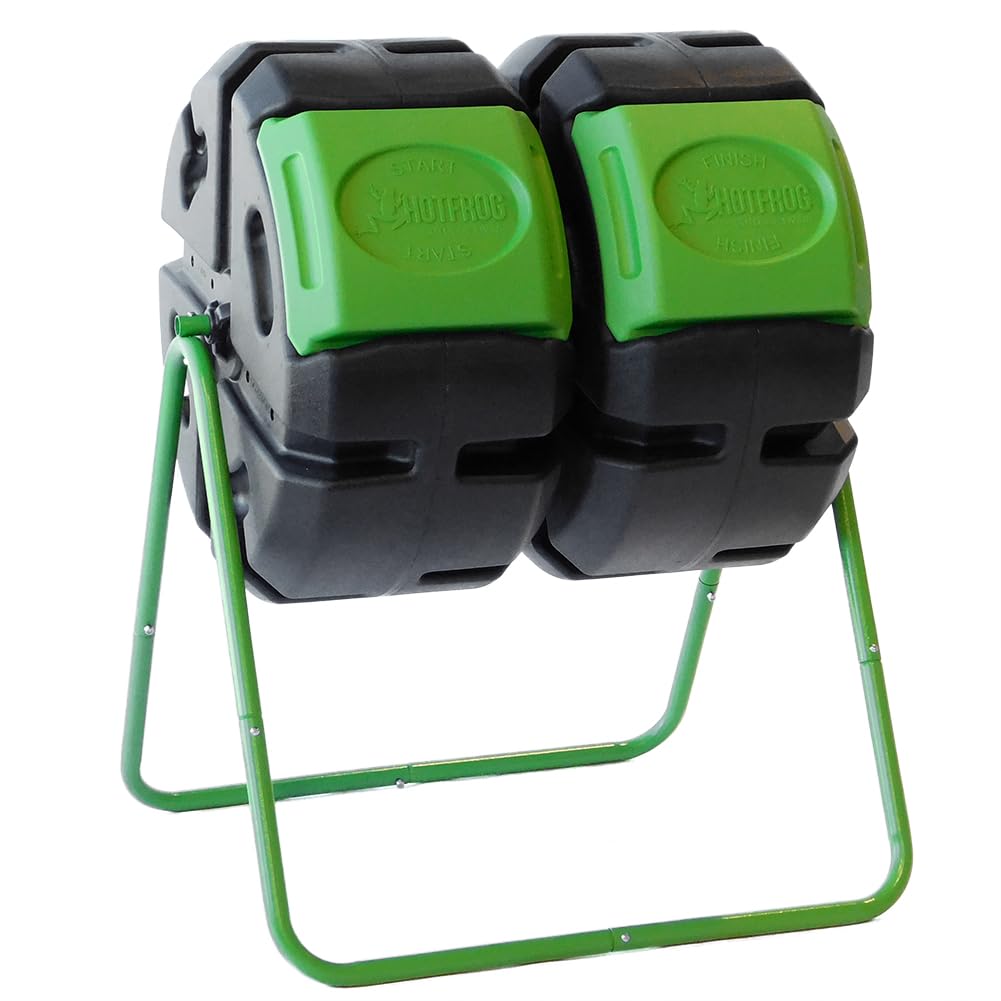
The FCMP Outdoor HOTFROG is engineered for results, with a dual-chamber design that lets you fill one side while the other cures. Its UV-inhibited recycled polyethylene shell resists sun damage, and the powder-painted galvanized steel frame holds everything steady through seasons of heavy use. The 37-gallon capacity suits most households, and the sliding doors labeled “Start” and “Finish” make workflow obvious.
Assembly takes about 15 minutes once you spot the directions printed inside the barrel. Turning requires only 5-6 rotations every few days, and in hot conditions with proper brown-to-green ratios, usable compost can appear in as little as two weeks. Aeration vents keep oxygen flowing, and the rotating action mixes material without creating anaerobic pockets.
The sliding doors are slightly stiff out of the box, which improves over time, and the door at the bottom can weep liquid if the moisture balance is off. That said, the HOTFROG consistently delivers fast, well-aerated compost with minimal daily effort.
Why it’s great
- Dual chambers allow continuous composting (fill one, cure the other)
- UV-inhibited, BPA-free polyethylene resists sun and weather
- Quick setup and 5-6 rotation cycle accelerates decomposition
Good to know
- Sliding doors may feel stiff initially
- May require moisture adjustment to avoid drippage
2. Greenes Fence Premium Cedar Wood Composter (173.92 Gal)

For serious gardeners with large yards, the Greenes Fence Cedar Wood Composter is a stationary powerhouse. Its 173.92-gallon capacity comes from 3/4-inch thick North American cedar boards, which naturally resist rot and decay. Assembly requires only a mallet — no tools, no hardware — and the slat-and-spacer system lets you create a two- or three-bin system with add-on kits.
The open-bottom design provides excellent drainage and direct soil contact for beneficial organisms. You can add material to the top and pull finished compost from the bottom through the removable front slats. The cedar smell is pleasant, and the natural aesthetic blends into garden settings without looking industrial.
Some users need to ensure the slats are inserted level to avoid binding, and the long-term durability of the wood depends on local climate and ground contact. Still, for anyone needing to process massive amounts of leaves, grass, and kitchen scraps in one spot, this bin offers unmatched volume and simplicity.
Why it’s great
- Massive 173.92-gallon capacity handles high-volume yard waste
- No-tool assembly with a rubber mallet, expandable to multi-bin system
- Natural cedar resists rot and looks attractive in the garden
Good to know
- Slats must be inserted level to avoid binding
- Wood may weather over time in extreme climates
3. VermiHut Classic Model 5-Tray Worm Composter Bin
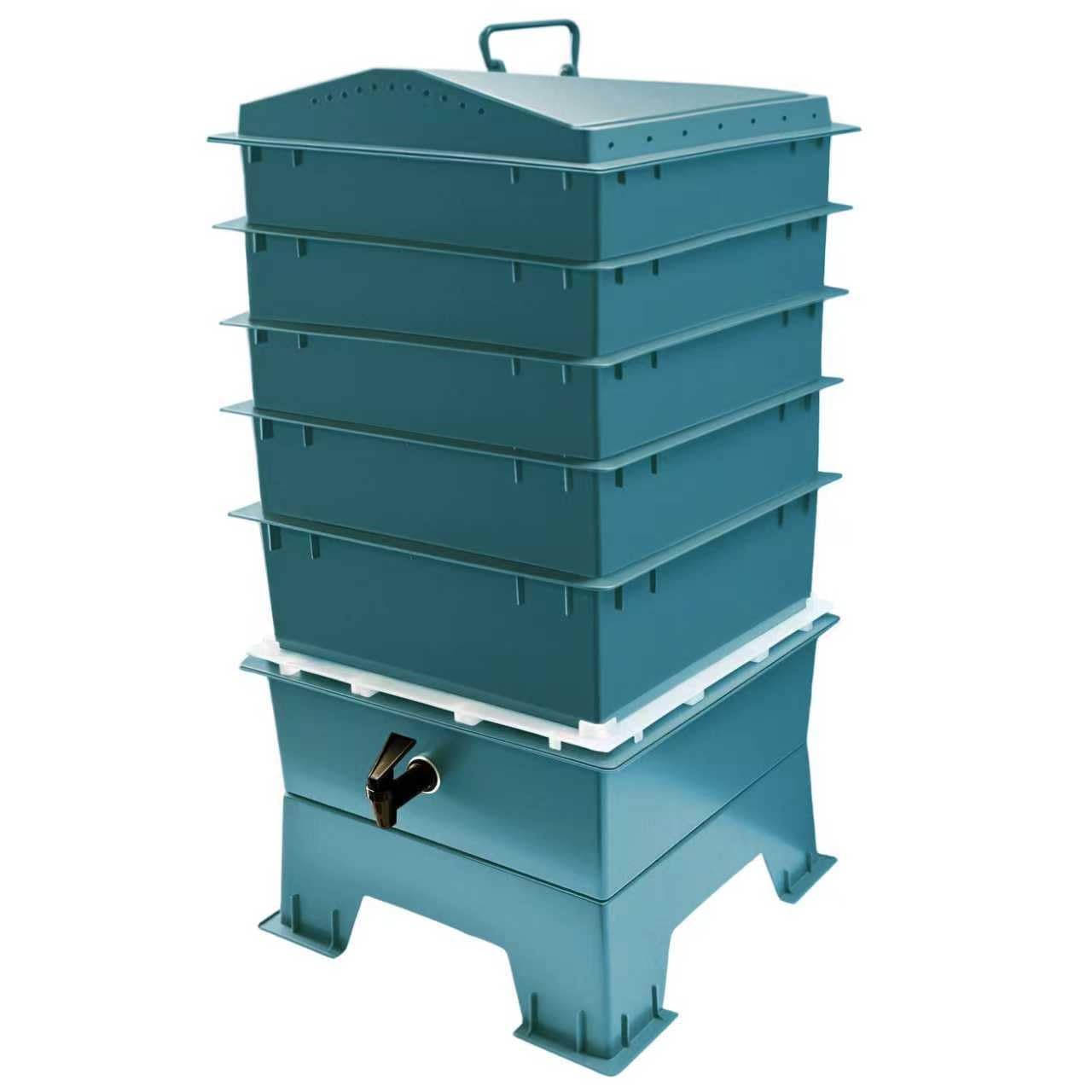
Worm composting is a different breed — it doesn’t rely on heat but on the appetite of red wigglers. The VermiHut Classic stacks five trays, each 16 inches square, giving worms 50 liters of surface area to process food scraps. The continuous-flow design means you add scraps to the top tray, and as worms finish the lower trays, finished castings are ready for harvest from the bottom.
The HDPE plastic is sturdy and UV-resistant for outdoor placement, though many keep it inside or on a porch. A spigot at the base collects worm tea (liquid fertilizer). The included coconut coir mat helps maintain moisture and gives worms a comfortable bedding layer. A drain cloth over the spigot prevents worms from escaping into the collection reservoir.
Sturdiness decreases as trays fill, so some users add spacers or PVC pipes to prevent compaction. Fruit flies can be managed by covering scraps with damp newspaper or peat. Overall, this system produces exceptionally rich castings with almost no odor when managed correctly.
Why it’s great
- Five trays provide continuous feeding and easy harvest of castings
- Spigot drains worm tea for liquid fertilizer
- Compact 16-inch footprint fits small spaces
Good to know
- Tray stack can become less stable as weight increases
- Requires managing moisture and fruit fly prevention
4. EJWOX 43 Gal Tumbling Composter with Compost Thermometer

The EJWOX 43-gallon tumbler stands out because it includes a visible compost thermometer embedded in the lid — a genuine tool that tells you when the pile is hot enough for fast decomposition (ideally 130-160°F) or when it needs more greens or browns. The dual-chamber design separates active fill from maturing compost, supporting continuous cycling.
The octagonal barrel is made from tough plastic panels bolted to a galvanized steel frame. Assembly is manageable with clear picture instructions, though a second set of hands helps hold panels in place while fastening. The deep-groove design (50mm depth) on the barrel makes turning easier regardless of fill weight. Many users report seeing usable compost within four to six weeks during warm months.
The thermometer is a real advantage for data-oriented composters who want to optimize temperature for microbial activity. Some units may have minor screw quality issues, and the thermometer’s accuracy can vary. Still, the combination of dual chambers, built-in monitoring, and sturdy metal frame makes this a strong mid-range contender.
Why it’s great
- Compost thermometer provides real-time temperature feedback
- Dual chambers allow continuous compost cycling
- Deep-groove barrel requires less effort to rotate when full
Good to know
- Assembly is easier with two people
- Thermometer accuracy may not be laboratory-grade
5. EJWOX 80 Gallon Large Capacity Static Compost Bin

The EJWOX 80-gallon static bin offers massive volume and a ridiculously fast assembly — just six parts that snap together in minutes. The open-bottom design allows direct soil contact for worms and drainage, while side vents provide passive aeration. For those who don’t want to tumble, this is a simple approach to large-scale composting.
The polypropylene construction is weather-resistant but relatively thin. The lid stays on in wind thanks to a lip design, though some users report the lid doesn’t snap shut tightly enough. Adding a brick or stone on top can secure it. The 6-8 week decomposition timeline holds true when you layer greens and browns and occasionally aerate with a hand tool.
This bin is best for households with significant yard trimmings or those composting large volumes of garden waste. It’s not ideal for small spaces or those needing airtight odor control. The plastic tabs that secure the lid may eventually weaken, but for the price-conscious buyer wanting serious capacity, this delivers.
Why it’s great
- 80-gallon capacity processes huge volumes at once
- Snap-together assembly with only six components, no tools
- Open bottom allows drainage and soil organism access
Good to know
- Thin plastic may flex over time in extreme heat or cold
- Lid fit may require weight to stay secure
6. Nova Microdermabrasion 43 Gallon Dual Chamber Tumbling Composter

The Nova Microdermabrasion 43-gallon tumbler splits its capacity across two chambers, allowing you to fill one side while the other matures. The polypropylene barrel is weather-resistant, and the steel frame provides stable support even when the barrel is fully loaded. Strategic aeration holes keep oxygen flowing through the tumbling process.
Assembly takes about an hour with many screws, but the instructions are clear and include a screwdriver. The included garden gloves are a thoughtful bonus. Users report that the dual-chamber system works well for families, reducing overall composting time since you never pause production. The barrel rotates smoothly even without a handle on some versions.
The divider between chambers is a bit flimsy and requires careful alignment during assembly. UV durability of the plastic over multiple seasons is unconfirmed, but early reviews are positive. For anyone wanting a budget-conscious path into tumbling without sacrificing the convenience of dual chambers, this is a solid find.
Why it’s great
- Dual 43-gallon chambers for continuous composting cycle
- Steel frame provides stable support even when full
- Includes garden gloves and assembly tools
Good to know
- Divider between chambers is somewhat flimsy
- Assembly takes approximately one hour
7. D’Lifeful 1.3 Gallon Countertop Compost Bin
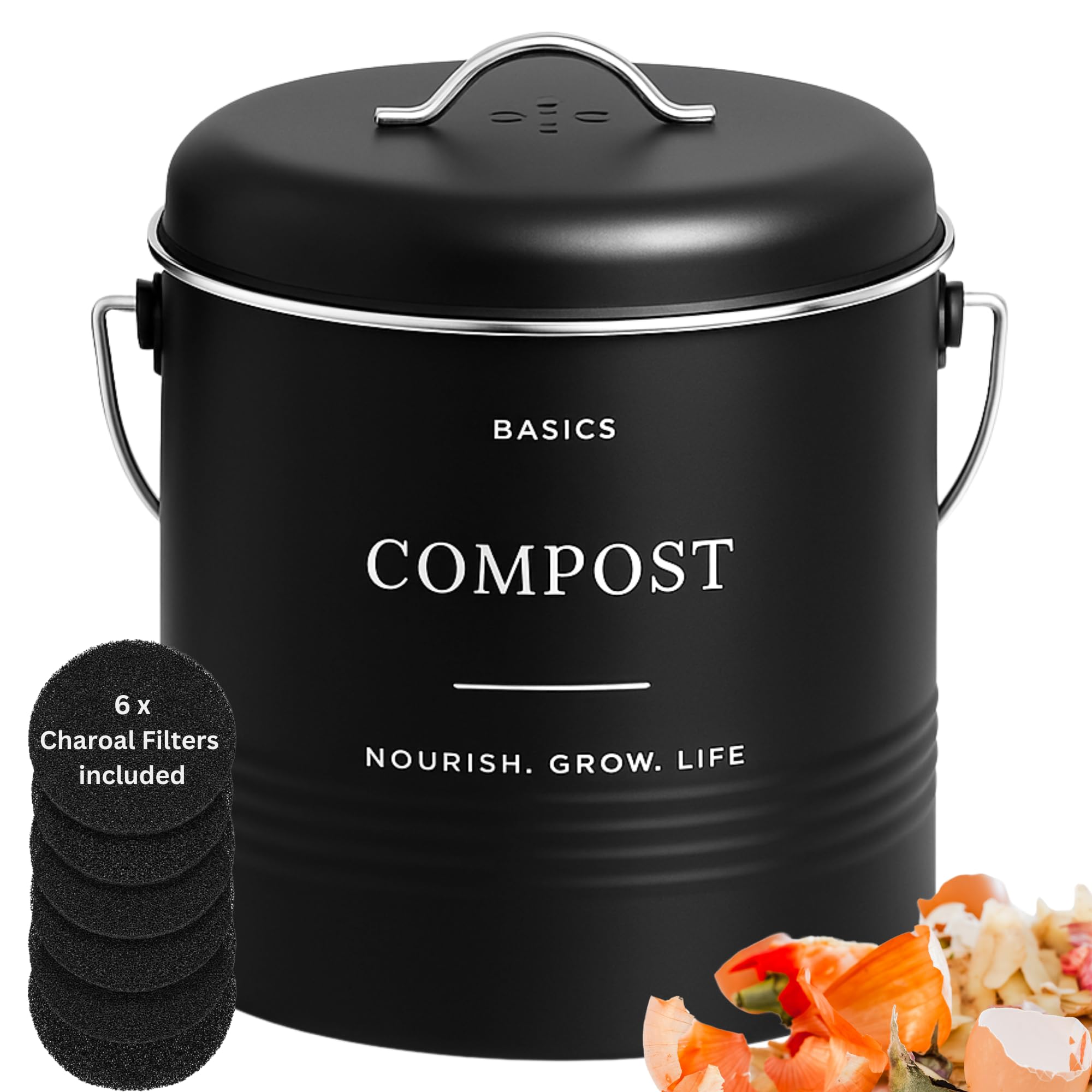
The D’Lifeful 1.3-gallon countertop bin is the entry point for anyone starting their composting journey without dedicating outdoor space. Its powder-coated galvanized steel body is rust-resistant and easy to wipe clean. The cylindrical shape (8.7 inches in diameter and height) fits neatly on most countertops without dominating the workspace.
The lid includes an activated charcoal filter that neutralizes odors, and the package comes with six filters total — roughly three years of supply. The lid creates a tight seal that prevents fruit flies and keeps smells contained between transfers to an outdoor pile. The 1.3-gallon capacity suits a small household for two to three days of daily vegetable peels, coffee grounds, and eggshells.
Some users find it slightly pricey for its size, but the build quality and finish feel premium. The charcoal filter replacement process is straightforward, and the bin can double as a countertop container for non-compostable kitchen waste in a pinch. For apartment dwellers or those just starting, this bin removes the biggest barrier: odor and mess.
Why it’s great
- Powder-coated steel resists rust and cleans easily
- Charcoal filter eliminates odor effectively
- Compact size fits under cabinets or on countertops
Good to know
- 1.3-gallon capacity may require frequent emptying for larger households
- Not suitable for direct outdoor long-term composting
FAQ
How often must I replace charcoal filters in a countertop compost bin?
Can I use a tumbling composter during winter in a cold climate?
What is the practical difference between a dual-chamber tumbler and a single-chamber unit?
Final Thoughts: The Verdict
For most users, the rated compost bin winner is the FCMP Outdoor HOTFROG 37-Gallon Tumbler because it balances dual-chamber convenience, fast decomposition cycles, and durable UV-inhibited construction at a mid-range investment. If you want a thermometer for monitoring compost heat and prefer a larger barrel, grab the EJWOX 43 Gal Tumbler with Thermometer. And for those who need to process massive yard waste volumes with zero daily effort, nothing beats the Greenes Fence Cedar Wood Composter.