That flat, dense loaf that never rose the way you imagined—it wasn’t your recipe or your technique. It was the yeast. Inconsistent activity, dead batches, and unpredictable results are the core frustrations of home bakers who thought all yeast was the same. The chemical engine behind your bread’s structure, texture, and flavor deserves more scrutiny than a quick glance at the shelf.
I’m Mohammad Maruf — the founder and writer behind AirfryerBite. My approach to this guide comes from analyzing thousands of customer evaluations and lab-level specification sheets for fermentation agents, yeast strains, and packaging integrity to determine what actually delivers reliable rising power.
This guide cuts through the marketing noise to identify the most reliable fermentation tools available. We evaluate freshness, strain viability, packaging for long-term storage, and real-world activation performance to help you find the best quality yeast for bread that won’t fail you on bake day.
How To Choose The Best Quality Yeast For Bread
The wrong yeast choice sabotages your bread before it ever hits the oven. Understanding the strain type, packaging, and storage requirements is the difference between a proud boule and a frisbee. Focus on these three factors before you buy.
Yeast Strain: Active Dry vs. Instant vs. Bread Machine
Active dry yeast requires proofing in water between 110-115°F before use—it has larger granules and a dormancy period that needs waking. Instant yeast (sometimes called RapidRise) has finer particles, absorbs liquid faster, and can be mixed directly with dry ingredients, cutting rise time by up to 50 percent. Bread machine yeast is a specific instant strain optimized for the automated cycle timing and lower hydration environments of bread machines. Choose active dry for traditional, slower-fermentation flavor development, and instant or bread machine yeast for speed and convenience.
Packaging Format: Individual Packets vs. Bulk Pouches
Each format has a clear trade-off. Individual foil packets (typically 0.25 oz each) preserve freshness until opened and are ideal for occasional bakers who measure by the recipe. Bulk vacuum-packed pouches (2 lb bags and larger) deliver drastically lower cost per ounce but require immediate transfer to an airtight container after opening—exposure to air, moisture, and temperature fluctuations kills viability within weeks. If you bake multiple times per week, bulk is the smart choice. If you bake monthly, stick with packets to avoid waste.
Freshness and Storage Conditions
Yeast is a living organism with a finite shelf life. Always check the production date on the package, not just the expiration date. Vacuum-sealed packaging is the gold standard for preserving dormant yeast cells. Once opened, active dry yeast stored in an airtight container in the refrigerator remains viable for up to four months; instant yeast can last up to two years in the freezer. Products that ship during summer months without insulation risk heat damage, so consider buying from high-volume sellers with climate-controlled logistics.
Quick Comparison
On smaller screens, swipe sideways to see the full table.
| Model | Category | Best For | Key Spec | Amazon |
|---|---|---|---|---|
| Red Star Active Dry Yeast (2 lb Pack of 2) | Premium Bulk | Frequent bakers needing low cost per ounce | Total 64 oz vacuum packed | Amazon |
| Fleischmann’s Bread Machine Yeast (4 oz Jar, Pack of 2) | Premium Jar | Bread machine owners wanting resealable storage | Total 8 oz in glass jars | Amazon |
| Platinum Instant Sourdough Yeast (10 packets) | Specialty Instant | Sourdough flavor without maintaining a starter | 10 individual 0.63 oz packets | Amazon |
| Anthony’s Active Dry Yeast Packets (42 pack) | Mid-Range Multi | Home bakers wanting single-use convenience | 42 individual 0.25 oz packets | Amazon |
| Fleischmann’s RapidRise Yeast (3-count pack of 9) | Budget Friendly | Cost-conscious bakers wanting proven speed | 27 total envelopes, 6.75 oz | Amazon |
In‑Depth Reviews
1. Red Star Active Dry Yeast, 2 Pound Pouch (Pack of 2)
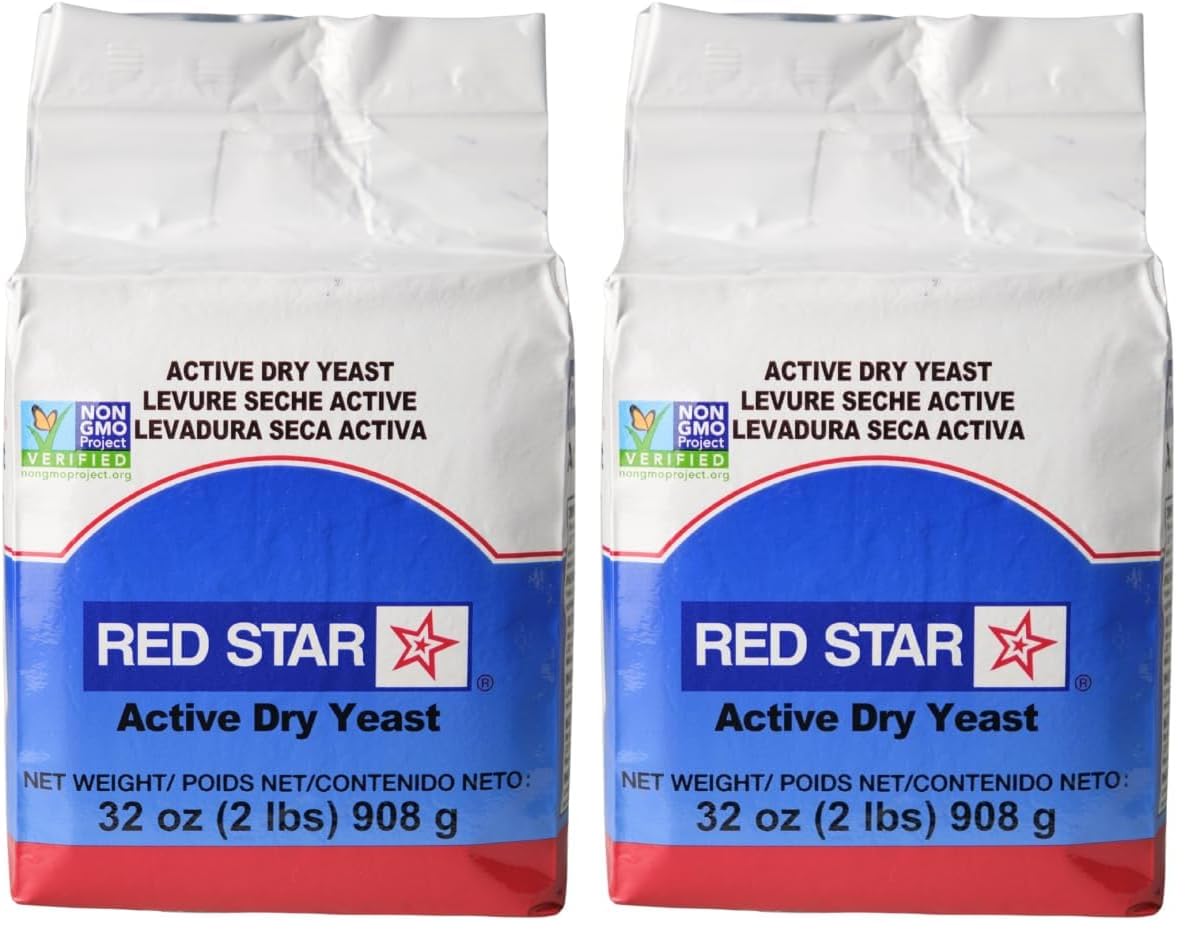
This is the quiet workhorse of serious home bakeries. The two-pack delivers a whopping total of 64 ounces of vacuum-packed active dry yeast, which translates to a per-ounce cost that undercuts individual packet options by a wide margin. The yeast strain itself is a worldwide standard—batch-tested for consistent genetic performance and suited for yeast-leavened breads, enriched doughs like challah, and pizza crusts. Activation at the recommended 110-115°F produces a vigorous, creamy foam within minutes, and the resulting crumb structure is reliably open and airy. Customers who make bread twice weekly report flawless performance across dozens of loaves without a single dead batch.
The practical downside is that the pouch is not resealable. Once you cut it open, you must transfer the contents to an airtight jar or Mylar bag with an oxygen absorber. Bakers who skip this step risk moisture contamination that kills viability within a month. Serious home bakers who bake at least twice per week will burn through both pouches before the expiration window becomes a concern. The 64-ounce total also makes this ideal for bakers who use yeast for non-food applications like homemade CO2 generators for plant growth, though the primary use remains bread.
The packaging itself arrives well-sealed with minimal air exposure, which preserves dormancy during shipping. Individual reviews highlight that the yeast activates perfectly even after months of proper cold storage. For the combination of strain reliability, raw volume, and production freshness, this is the top-tier choice for anyone who bakes bread on a weekly cadence and wants to stop worrying about yeast that fizzles out.
Why it’s great
- Incredible value at 64 total ounces for frequent bakers who store properly
- Consistent vigorous rise across batches backed by decades of brand reputation
- Versatile for bread, pizza dough, enriched doughs, and even non-food uses
Good to know
- Pouch lacks a resealable closure; requires immediate transfer to an airtight container
- Large volume is impractical for occasional bakers who bake once a month or less
- Optimal activation requires a thermometer to hit the 110-115°F sweet spot
2. Fleischmann’s Bread Machine Yeast, 4 oz Jar (Pack of 2)

This is the yeast explicitly designed for the automated cycles of bread machines, though it works equally well for any recipe calling for instant or rapid-rise yeast. The 4-ounce glass jar format is a significant practical advantage over foil pouches because it seals tightly after each use, preserving freshness without requiring a separate container. The strain is a fine-particle instant yeast that absorbs liquid faster than active dry varieties, making it ideal for the shorter kneading and rising cycles in bread machines. Customers using Cuisinart, Zojirushi, and Panasonic models report consistent dome-shaped loaves with even crumb structure cycle after cycle.
The jar format means you can scoop out exactly the amount you need—typically 1.5 teaspoons per 3-cup flour loaf—without exposing the entire supply to air. The two-pack provides 8 total ounces, which is a practical quantity for a baker who runs their bread machine once or twice per week. Unlike bulk pouches, this quantity is small enough that you’ll finish it well before the expiration date even without freezing. The yeast is also suitable for all rapid-rise recipes that skip the first rise, cutting total proofing time by roughly half compared to traditional active dry.
One important detail is that this yeast should not be proofed separately in water—it’s designed to be mixed with the dry ingredients, with the liquid added during the knead cycle. Customers who mistakenly treated it like active dry yeast and pre-dissolved it reported diminished rise. When used correctly, the results are reliable enough that several reviewers noted they’ve switched exclusively to this strain for all bread making. The 8-ounce total also makes this a budget-friendly premium option when calculated per-use against individual envelopes from the grocery store.
Why it’s great
- Resealable glass jar eliminates the need for separate airtight storage
- Instant strain optimized for bread machines and rapid-rise recipes
- Consistent results across popular bread machine brands
Good to know
- Not suitable for proofing in water before use; must be mixed with dry ingredients
- 8-ounce total is a mid-range volume not ideal for high-volume weekly bakers
- Pay attention to the expiration date; older jars may have reduced activity
3. Platinum Instant Sourdough Yeast – 10 packets

This is the yeast for bakers who want sourdough character without maintaining a living starter on the counter. The Red Star Platinum strain is a proprietary instant yeast that includes naturally occurring lactic acid bacteria strains, which produce the tangy flavor profile associated with sourdough during the fermentation process. Each packet contains 0.63 ounces, enough for a standard 3-cup flour loaf. The individual foil packets preserve the strain’s viability perfectly until opening, which is critical because the live bacteria component is more sensitive to storage conditions than standard baker’s yeast.
The flavor results are not identical to a 100-year-old San Francisco starter, but they are remarkably close for a commercial product. One reviewer whose neighbor is from San Francisco rated the finished loaf as superior to Bay Area sourdough when allowed to rise overnight in the refrigerator. The key technique difference is that this yeast benefits from a long, cold fermentation—at least 8 hours and ideally 24 hours—to develop the full sourdough profile. Bakers who rush the process with a 2-hour rise will get a crusty loaf with excellent structure but minimal tang.
The reliability concern is real: a small number of customers reported receiving packets with dead yeast that failed to bubble during proofing. This appears to be a storage or age issue rather than a strain defect, as the same customers who bought the product from other sources had no problems. To mitigate this, proof one packet in warm water (110-115°F) with a pinch of sugar before committing to a full batch. When active, this yeast produces a robust rise and a crusty loaf with a noticeably complex flavor that standard bread yeast cannot match.
Why it’s great
- Produces genuine sourdough tang without maintaining a starter culture
- Individual foil packets preserve freshness and bacteria viability
- Long cold fermentation yields bread that rivals bakery sourdough
Good to know
- Some packets may arrive with dead yeast; always proof before using
- Requires 8-24 hour cold fermentation for full flavor development
- Not suitable for recipes that need a very fast turnaround
4. Anthony’s Active Dry Yeast Packets, 42 Count
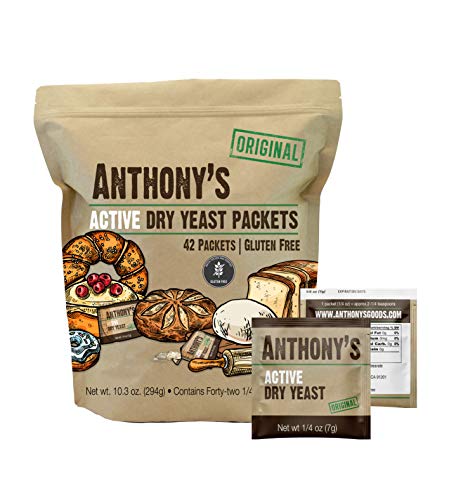
This is the set-and-forget yeast supply for home bakers who hate measuring from bulk containers. Anthony’s provides 42 individual 0.25-ounce foil packets, each one exactly enough for a standard loaf of bread using 3-4 cups of flour. The batch-tested gluten-free certification is a meaningful differentiator for households that must avoid cross-contamination. The yeast itself is a traditional active dry strain that requires proofing, but once activated, it delivers dependable results across breads, dinner rolls, pizza crusts, doughnuts, and Chinese steamed buns. The individual packet format eliminates the risk of a bulk pouch losing viability after opening.
Customer testing in cold climates is particularly revealing. One reviewer using high-protein flour in a cold kitchen found that dough rose in one hour instead of the typical three, producing an airy crumb and crunchy crust. This suggests the strain has robust cold-temperature performance, which is a genuine advantage for winter bakers or anyone with a drafty kitchen. The packets themselves are compact enough to store in a drawer or mason jar without taking up significant pantry space, and the 42-count supply will last the average home baker several months.
The common complaint is the packet design. The foil lacks a serrated tear edge, making them frustrating to open without scissors. The static cling between packets can also make separating individual units difficult. For recipes that use only partial packets, the lack of a reseal mechanism means you’re committed to using the entire 0.25-ounce portion. For most bakers, this minor inconvenience is offset by the freshness guarantee of individual packaging. Regular subscribers report that shipments arrive on schedule with consistently fresh yeast.
Why it’s great
- Each 0.25 oz packet is precisely portioned for one standard loaf
- Batch tested and certified gluten free for sensitive households
- Performs well in cold climates with faster rise times than typical
Good to know
- Packets lack serrated edges; require scissors or a knife to open
- Static cling makes separating individual packets from the bundle tricky
- Not ideal for partial-use recipes since packets are single-use only
5. Fleischmann’s RapidRise Yeast, 3-Count Envelopes (Pack of 9)

This is the bulk envelope option for bakers who trust the Fleischmann’s brand and want the speed of instant yeast without paying a premium. The pack contains nine boxes with three envelopes each, totaling 27 individual envelopes and 6.75 ounces of yeast. RapidRise is an instant strain that eliminates the first rise, cutting total proofing time by as much as 50 percent—a genuine time saver for weeknight baking. Each 0.25-ounce envelope is the standard quantity for one loaf, making portioning effortless. Customers who bake 2-3 times per week report that this pack lasts approximately three months.
The performance is consistent with what bakers have trusted for decades. The strain activates reliably when mixed directly with dry ingredients, with no need for separate proofing. One long-time reviewer noted that RapidRise was a staple in their childhood kitchen, and the current production quality matches that memory. The 27-envelope count is also a practical way to stock a pantry without committing to a bulk pouch that requires special storage protocols. The envelopes themselves have a serrated edge for clean tearing, unlike the Anthony’s packets.
The limitation is that you are locked into the 0.25-ounce envelope size. Additionally, as an instant strain, RapidRise is not ideal for traditional recipes that specifically require the flavor development of a long, slow first rise with active dry yeast. For everyday sandwich bread, dinner rolls, and pizza dough, this is a reliable and cost-effective option that prioritizes speed.
Why it’s great
- Cuts rising time by 50 percent by eliminating the first rise step
- 27 individual envelopes provide months of supply for regular bakers
- Decades-old trusted brand with consistent strain performance
Good to know
- Each 0.25 oz envelope is fixed; not adjustable for recipes needing less
- Not ideal for traditional recipes that rely on a slow first rise for flavor
- Requires mixing with dry ingredients, not pre-proofing in water
FAQ
Can I use bread machine yeast for hand-kneaded bread recipes?
How do I store a 2-pound pouch of yeast after opening?
Why should I choose active dry over instant yeast for sourdough-style bread?
Final Thoughts: The Verdict
For most users, the best quality yeast for bread winner is the Red Star Active Dry Yeast (2 lb Pack of 2) because it delivers the lowest per-ounce cost with a proven industrial-grade strain that serious bakers trust for consistent, vigorous rises across bread types. If you want resealable convenience optimized for bread machines, grab the Fleischmann’s Bread Machine Yeast (4 oz Jar, Pack of 2). And for authentic sourdough flavor without maintaining a starter culture, nothing beats the Platinum Instant Sourdough Yeast (10 packets).