Finding a matcha that delivers that vibrant, grassy sweetness without the chalky bitterness is the central struggle for anyone looking to ditch coffee or upgrade from bagged green tea. The market is flooded with dull, brownish powders that turn muddy the second they hit water, making the promise of a smooth, energizing ritual feel out of reach.
I’m Mohammad Maruf — the founder and writer behind AirfryerBite. I’ve spent years analyzing the sourcing, harvest methods, and chemical profiles of specialty teas to understand what separates a truly transcendent bowl from a mediocre one.
After reviewing dozens of tins and bags, I’ve identified the non-negotiables—origin, grade, and freshness—that define the best quality matcha you can buy today, ensuring your whisk hits a vibrant, sweet powder every single morning.
How To Choose The Best Quality Matcha
The right matcha for you depends on how you plan to use it. Sipping the powder straight requires a ceremonial grade from Japan with a first harvest date, while lattes and baking can use a slightly more robust culinary or latte grade. Prioritizing origin, harvest, and grade will save you from bitter, brown results every time.
Grade Matters: Ceremonial vs. Culinary
Ceremonial grade is milled from the youngest, most tender shade-grown leaves, yielding a naturally sweet, creamy cup with zero bitterness. Culinary grade uses older leaves and is designed to stand up to milk, sweeteners, and heat in recipes. If you drink it straight, never settle for less than ceremonial grade. For mixed drinks, a high-quality culinary or latte grade offers excellent value without sacrificing flavor.
Origin and Harvest: The Taste Map
The finest matcha comes from Japan, specifically the Uji region of Kyoto and the Kagoshima prefecture. First harvest matcha (spring) is the sweetest, most complex, and commands the highest price. Second harvest matcha is still excellent but has a slightly more astringent, grassy kick that works beautifully in daily lattes. Country of origin is not just a label—it is a promise of terroir and tradition.
Color and Freshness: The Visual Test
High-quality matcha is a vibrant, almost electric emerald green. A dull, yellowish, or brownish tint indicates oxidation, age, or low-grade leaves. Fresh matcha should be stored in an airtight, opaque container away from light, heat, and moisture. Vacuum-sealed bags inside tins are the gold standard for preserving the powder’s delicate flavor and nutritional profile for up to six months after opening.
Quick Comparison
On smaller screens, swipe sideways to see the full table.
| Model | Category | Best For | Key Spec | Amazon |
|---|---|---|---|---|
| Matcha Kari Dr. Weil Set | Ceremonial Kit | Ritual & Beginner | Uji, Japan origin; 30g ceremonial | Amazon |
| Sacred Lotus Organic | Ceremonial Tin | Straight Sipping | Kagoshima, Japan; 30g ceremonial | Amazon |
| DoMatcha Summer Harvest | Latte Grade | Daily Lattes & Smoothies | 80g organic; second harvest | Amazon |
| Renude Chaga Matcha | Adaptogen Blend | Functional Wellness | 30 servings; with chaga & cacao | Amazon |
| Davidson’s Organics Bulk | Culinary Grade | Bulk Cooking & Baking | 16 oz bag; Chinese origin | Amazon |
In‑Depth Reviews
1. Sacred Lotus USDA Organic Matcha Green Tea Powder Tin (30g)
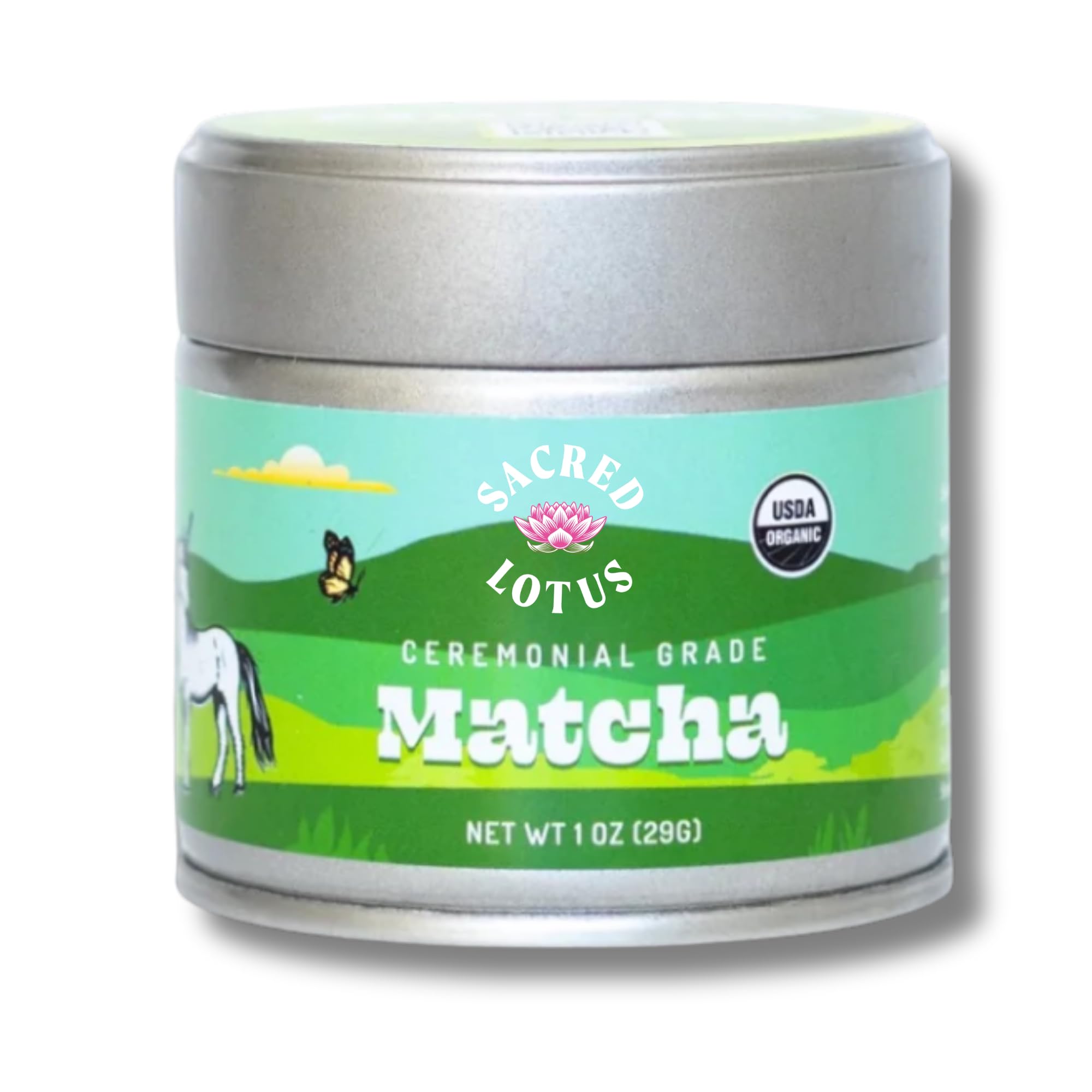
Sacred Lotus delivers a single-origin ceremonial grade from the Kagoshima region that customers consistently describe as buttery and semi-sweet with zero bitter aftertaste—a remarkable profile that health professionals have ranked above a dozen competing brands. The 30g tin is ideal for one month of daily use, and the vibrant green hue confirms it was shade-grown and properly stored.
This matcha provides a subtle, long-lasting caffeine boost without the spikes associated with coffee, thanks to its high L-theanine content. User feedback over ten years of matcha drinking identifies it as the finest for straight sipping, which is the ultimate test for any ceremonial grade powder. The Japanese sourcing and USDA organic certification give you confidence in both purity and flavor.
One reviewer noted they needed something to hold them over until their Ippodo shipment arrived, which is the best kind of faint praise—it means this powder competes with the most revered names in the category. If you want a reliable, high-end ceremonial matcha that you can drink every morning without bitterness, this is your first pick.
Why it’s great
- Buttery, semi-sweet flavor with no bitterness; perfect for straight sipping.
- Sourced from a small Japanese island (Kagoshima) with single-origin purity.
- Vibrant emerald color confirms freshness and proper shade-growing.
Good to know
- 30g tin is a bit small for heavy daily users who drink multiple bowls.
- Some users find it less flavorful than ultra-premium brands like Ippodo.
2. DoMatcha Organic Summer Harvest Matcha Powder (2.82 oz)

DoMatcha’s Summer Harvest is a second harvest matcha that strikes the ideal balance between affordability and authentic Japanese quality. At 80g, it offers three times the volume of a standard ceremonial tin, making it the economical choice for households that drink matcha daily in lattes, smoothies, and iced drinks. Reviews from users who have relied on it for 15 years speak volumes about its consistent quality.
The powder delivers a brilliant green color and a taste that is creamier and smoother than bagged green tea, though it is more pungent and grassy than the delicate first harvest counterparts. It is excellent whisked into hot milk or used in baking, and the vacuum-sealed inner bag inside a sturdy tin keeps the powder fresh for months. A few users note a slightly astringent aftertaste at high concentrations, but this is typical for second harvest matcha and easily masked by milk.
If you are making matcha lattes as a daily coffee replacement, this is the most cost-effective way to get a true Japanese organic powder without stepping down to culinary or Chinese alternatives. It is not ideal for traditional straight whisking ceremonies, but for the everyday matcha lover, it is a workhorse that delivers.
Why it’s great
- Large 80g package offers excellent value for daily latte and smoothie drinkers.
- Authentic Japanese origin with USDA organic certification and consistent flavor.
- Vacuum-sealed packaging in a tin preserves freshness effectively.
Good to know
- Second harvest means a more pungent, grassy taste; not for ceremonial sipping.
- Can develop a slightly astringent aftertaste if used in high concentrations.
3. Matcha Kari Dr. Weil Complete Tea Set (White)

The Matcha Kari Dr. Weil Complete Tea Set is the only entry on this list that bundles a genuine Uji ceremonial grade matcha with all the tools needed for a traditional preparation: a bamboo whisk, whisk holder, ceramic bowl, stainless steel sifter, and scoop. The 30g canister of matcha is sourced directly from the brand’s exclusive tea farm in Uji, Japan, and is 100% USDA organic.
Customers consistently praise the vibrant green color and smooth, delicious taste of the powder itself. The inclusion of a sifter is a smart touch—clumps are the enemy of a smooth bowl, and this ensures every bowl is lump-free from the start. The ceramic bowl is a light grey that complements the white aesthetic, and the whole set arrives ready for gifting or immediate use.
One reviewer noted that the matcha scoop was missing from their kit, which is a minor but frustrating quality-control miss for a product at this price point. The set is more expensive than buying a tin of matcha alone, but if you do not already own the tools, bundling them ensures you start with the right equipment. It is an excellent introduction to the Japanese tea ceremony at home.
Why it’s great
- Authentic Uji ceremonial grade matcha from a dedicated farm in Japan.
- Complete 6-piece kit with whisk, bowl, sifter, and holder for beginners.
- Vibrant green color and smooth taste with no bitterness.
Good to know
- More expensive than buying matcha alone; mostly pays for the tools.
- Some units have arrived missing the bamboo scoop.
4. Renude Chaga Matcha (30 Servings)

Renude Chaga Matcha is a unique functional blend that starts with 1.5g of ceremonial grade matcha from Fukuoka, Japan—sourced from one of only 13 Chasi Tea Masters—then adds wild-foraged chaga mushroom, organic Peruvian cacao, Sri Lankan cinnamon, and Japanese monk fruit sweetener. It is designed for people who want more than caffeine: immune support, adaptogenic stress relief, and sustained focus without a crash.
The flavor is a smooth, slightly sweet latte experience that mixes easily in cold milk or water, making it a favorite among cafe owners who sell it as a premium drink. Customers report it supports brain health and provides a cleaner energy boost than coffee. However, one long-term user reported two batches that turned murky dark brown instead of bright green, and the return shipping cost was a downside.
This is not a pure matcha sipping experience—the mushroom and cacao flavors dominate the profile. If you are looking for a straight ceremonial bowl, look elsewhere. But if you want a convenient, sugar-free, keto-friendly latte mix that combines the benefits of ceremonial grade matcha with proven adaptogens, Renude delivers something no other powder on this list can match.
Why it’s great
- Ceremonial grade matcha base from a certified Chasi Tea Master in Fukuoka.
- Adaptogen-rich blend with chaga, cacao, and monk fruit for functional wellness.
- Dissolves easily in cold milk or water; great for daily lattes.
Good to know
- Not for pure matcha sipping; mushroom and cacao flavors are dominant.
- Occasional batch inconsistency reported (murky brown color).
5. Davidson’s Organics Matcha Green Powder (16 oz Bag)

Davidson’s Organics Matcha Green Powder is a Chinese-origin culinary grade powder sold in a massive 16-ounce resealable bag—enough to last a heavy baker or smoothie enthusiast for months. The flavor profile is creamy, non-bitter, and vegetal, with a fine grind that whisks easily into milk without leaving a chalky film. Customers report a legitimate energy boost from just one to two teaspoons.
This is not ceremonial grade, and it tastes different from Japanese matcha—slightly more bitter according to some users, with an olive-green hue rather than the bright emerald of top-tier Japanese powders. It is USDA organic, non-GMO, and free from harmful pesticides, and Davidson’s has been a trusted organic tea grower since 1976. The bag is thick and resealable, keeping the powder fresh for its intended use.
If you bake matcha cookies, blend matcha smoothies, or make large batches of iced lattes regularly, this bag will save you significant money compared to buying ceremonial tins every week. It is not suitable for traditional whisking or straight drinking, but for bulk culinary applications, it is the most affordable organic matcha option available.
Why it’s great
- Massive 16 oz bag ideal for high-volume baking, smoothies, and cooking.
- USDA organic, non-GMO, and free from harmful pesticides or additives.
- Finely ground with a creamy, non-bitter flavor profile.
Good to know
- Chinese origin; flavor is less complex and slightly more bitter than Japanese.
- Olive-green color indicates lower grade; not suitable for ceremonial sipping.
FAQ
What is the difference between first harvest and second harvest matcha?
How do I verify my matcha is authentic Japanese ceremonial grade?
Can I use ceremonial grade matcha for baking or lattes?
Final Thoughts: The Verdict
For most users, the best quality matcha winner is the Sacred Lotus USDA Organic Matcha because its buttery, non-bitter flavor and Japanese ceremonial grade make it the closest thing to a perfect daily sip. If you want a functional wellness latte with adaptogens, grab the Renude Chaga Matcha. And for bulk baking and cooking without breaking the bank, nothing beats the Davidson’s Organics 16-ounce bag.