Replacing regular pasta with a high-protein alternative shouldn’t mean resigning yourself to a bowl of rubbery, flavorless imposter noodles. The gap between a satisfying, al dente bite and a sad, gummy texture is defined by specific ingredient science and processing methods — and finding the right option is the only way to make a meaty Bolognese or a creamy Alfredo genuinely work with your macros.
I’m Mohammad Maruf — the founder and writer behind AirfryerBite. I’ve spent years analyzing the amino acid profiles, carbohydrate impact, and cooking tolerances of various protein noodle substrates — from edamame flour and egg whites to konjac glucomannan — to understand which formulations deliver genuine culinary satisfaction.
Whether you are managing blood sugar, following a strict keto protocol, or simply trying to add substantial protein to a quick lunch, choosing the right product is a technical decision. This guide breaks down the five most effective contenders for the best protein noodles, evaluating them on texture fidelity, protein density, preparation convenience, and overall value.
How To Choose The Best Protein Noodles
Protein noodles are not a single category — the term spans everything from bean-based fettuccine to konjac shirataki to egg-white spaghetti. Your choice hinges on how the primary protein source interacts with sauce, heat, and your personal tolerance for texture deviation from semolina pasta. Three criteria define the top contenders.
Protein Source and Density
The binding agent dictates the mouthfeel. Edamame and soy-based noodles deliver high protein (40g or more per 3.5 oz serving) but carry a distinct legume flavor and a firm, slightly grainy bite. Egg white noodles offer a delicate, springy texture with moderate protein (around 10g per serving) but can break down if overcooked. Konjac (shirataki) noodles are nearly zero-calorie and zero-protein — they rely on glucomannan fiber for bulk, making them a volume play rather than a protein source. Whole-wheat gluten formulations like the Al Dente Protein Pasta hit a sweet spot, mimicking traditional pasta mouthfeel with a 30g protein load.
Net Carbohydrate Profile
For keto or low-glycemic eating, the net carb count (total carbs minus fiber) matters more than the protein number. A product like The Only Bean Edamame Fettuccine delivers only 9g net carbs per 2 oz serving, thanks to a fiber count that offsets most of the carbohydrate content. At the other end, Al Dente Protein Pasta registers 44g net carbs per 3.5 oz serving — better than standard pasta but still significant for strict macro tracking. Always verify the fiber grams on the nutrition panel; a high-fiber number keeps you in ketosis while still enjoying a pasta-like volume.
Preparation Method and Time
Not all protein noodles tolerate heat equally. Dry pasta-style options (edamame, wheat-based) hold up to boiling and can be simmered in sauce for a few minutes. Konjac and egg white noodles are typically pre-cooked and require only rinsing and a quick pan-sear or microwave blast — boiling them can make them waterlogged or rubbery. Instant ramen-style blocks (HealSpot) require just hot water but deliver a chewier, denser noodle. Match the preparation method to your typical cooking speed: if your weeknight dinner routine allows only 4 minutes, a dry pasta that needs 8 minutes of boiling might not fit.
Quick Comparison
On smaller screens, swipe sideways to see the full table.
| Model | Category | Best For | Key Spec | Amazon |
|---|---|---|---|---|
| Al Dente Protein Pasta Egg Fettuccine | Pasta-Style | Real-pasta texture seekers | 30g protein per 3.5 oz dry | Amazon |
| The Only Bean Edamame Fettuccine | Legume Pasta | Keto & high-fiber diets | 9g net carbs per 2 oz serving | Amazon |
| HealSpot High Protein Ramen Variety | Instant Ramen | Quick plant-based protein | 32g plant protein per serving | Amazon |
| Hethstia Konjac Noodles | Shirataki | Ultra-low calorie volume | 6 calories per pouch | Amazon |
| Miracle Noodle Egg White Spaghetti | Egg White | Clean-label, ready-to-eat meals | 10g protein, 1g net carb per bag | Amazon |
In‑Depth Reviews
1. Al Dente Protein Pasta Egg Fettuccine
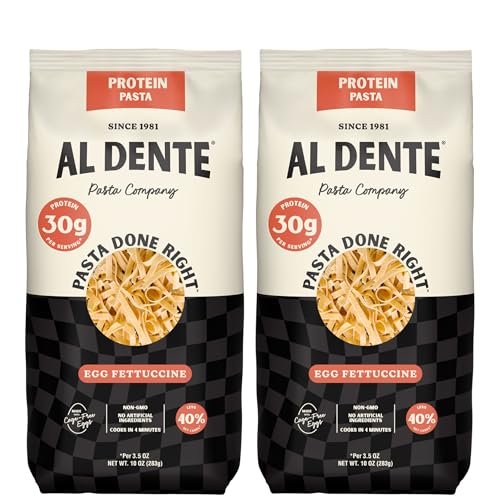
The Al Dente Protein Pasta Egg Fettuccine (formerly Carba-Nada) solves the core problem most protein noodles face: it tastes and behaves like conventional semolina pasta. With 30 grams of protein per 3.5-ounce dry serving, a 44g net carb footprint, and a cooking time of just 4 minutes, it fits seamlessly into standard weeknight dinner workflows. The combination of cage-free eggs and high-protein durum wheat semolina yields a noodle that holds a firm al dente bite under heavy sauces like Beef Stroganoff or Alfredo without turning mushy.
Customer feedback consistently highlights the absence of a funky aftertaste — a common complaint with legume and konjac alternatives. Reviewers report that even picky children and diabetics sensitive to blood sugar spikes respond well to the product. The 10-ounce bags come in a 2-pack, offering enough volume for multiple meals, and the dry format means it stores indefinitely in the pantry. The net carb count (44g per 3.5 oz) is higher than keto-focused noodles, so macro-tight consumers should measure portions carefully.
The minor packaging transition from Carba-Nada to Protein Pasta has caused some confusion, but the noodle formulation remains unchanged. If you need a high-protein noodle that does not announce its health orientation in texture or taste — one that actually works in soups, cold pasta salads, and leftovers — this is the most versatile option on the market. The 4-minute cook time undercuts almost every competitor, making it the fastest path from box to plate among dry protein pasta options.
Why it’s great
- Texture and taste indistinguishable from standard egg fettuccine
- High 30g protein per serving supports meal-level macro goals
- 4-minute cook time is faster than most conventional pasta
- Diabetic-friendly formulation with low glycemic response
Good to know
- Net carbs (44g) are higher than edamame or konjac alternatives
- Packaging may vary during transition from Carba-Nada branding
- Only available in 10-ounce bags (2-pack); larger bulk options would be welcome
2. The Only Bean Organic Edamame Fettuccine

The Only Bean Organic Edamame Fettuccine takes the opposite approach from the Al Dente option — it prioritizes extreme macro density. Each 3.5-ounce serving packs over 40 grams of complete plant-based protein and 19 grams of fiber, with only 9 grams of net carbs. That protein-to-carb ratio is unmatched in this category, making it the strongest option for anyone in strict ketosis or managing diabetes. The single-ingredient formulation (just organic edamame) means zero fillers, gums, or preservatives.
The trade-off is a firm, toothsome texture that lands closer to a legume than to wheat pasta. Some reviewers describe the flavor as slightly beany, though sauces like pesto or a rich marinara mask it effectively. The dry pasta cooks in 3-5 minutes and roughly doubles in volume — a 2-ounce dry portion yields about 2 cups of cooked noodles. That expansion ratio means the 6-pack of 8-ounce bags provides substantial volume for the price, though the per-bag cost is higher than standard protein blends.
The biggest practical consideration is mouthfeel expectation: this noodle does not mimic semolina pasta. It is firm, almost al dente in a different register, and it holds its shape in soups and stir-fries without dissolving. For users who prioritize fiber satiety and minimal carb impact above taste fidelity, this is the clear category winner. If you are new to edamame pasta, start with a single bag to confirm you enjoy the texture before committing to the 6-pack.
Why it’s great
- Extremely low net carb count (9g per 2 oz) — ideal for keto
- 40g protein and 19g fiber per single serving
- Single organic ingredient with no additives
- USDA organic, non-GMO, gluten-free, and kosher certified
Good to know
- Distinct legume flavor that may not suit all palates
- Firm, dense texture — not a soft semolina mimic
- Higher cost per ounce than wheat-based protein pasta
3. HealSpot High Protein Instant Ramen Variety Pack
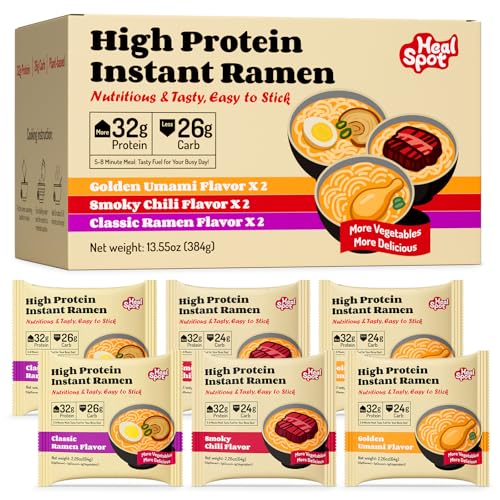
HealSpot’s High Protein Instant Ramen targets a different use case entirely: the convenience of a cup noodle with legitimate nutritional density. Each serving delivers 32 grams of plant-based protein from a pea protein formulation, with a non-fried noodle block that keeps total fat and carbs significantly lower than standard instant ramen. The 6-pack box includes three flavors — Golden Chicken, Smoky Beef, and Classic Pork — all 100% plant-based and appropriate for vegan and keto-friendly meal plans.
The preparation is genuinely low-effort: add hot water and wait 5-8 minutes. The noodle texture is chewier and denser than typical instant ramen, leaning toward a thick udon-like bite. Several reviewers noted that the broth flavors are decent but not complex enough to stand alone — they recommended boosting the bowl with spinach, kimchi, tofu, or sesame oil for depth. The portion size runs small for a main meal; many users found themselves needing two packs for a full dinner.
The main limitation is the same one that affects all cup-noodle protein products: you are trading the satisfaction of a full meal volume for extreme convenience. At roughly per pack, the cost per gram of protein is competitive with protein shakes, but the eating experience demands some dressing-up. For a desk lunch, a post-gym refuel, or a backpacking meal where every ounce of weight matters, this is the strongest option in the category. Boiling water on the stovetop instead of using a microwave may improve noodle texture significantly.
Why it’s great
- High plant protein (32g) with instant preparation — no cooking required
- Non-fried noodle block reduces fat compared to standard ramen
- Variety pack includes three distinct flavors
- Keto-friendly and Non-GMO Project Verified
Good to know
- Small portion size often requires two packs per meal
- Broth flavor benefits from added seasoning or toppings
- Higher per-serving cost than dry pasta alternatives
4. Hethstia Konjac Noodles (10-Pack)
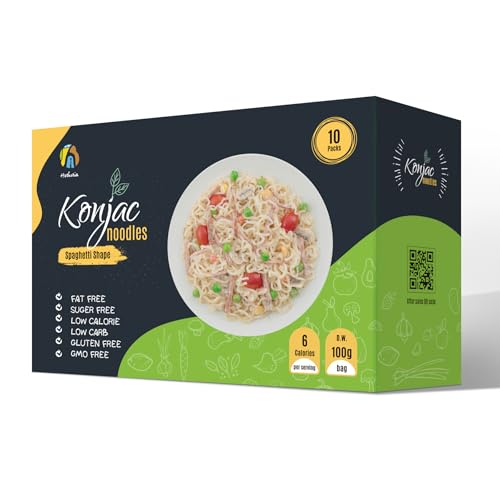
The Hethstia Konjac Noodles operate on a completely different nutritional premise: they are not a protein source but a volume delivery system. Each 3.5-ounce pouch contains just 6 calories, zero fat, zero sugar, and less than 1g of net carbs. The noodles are made from konjac glucomannan fiber, which expands in the stomach to provide a sense of fullness without caloric load. This makes them an ideal vehicle for high-protein sauces, stir-fries, or soups where you want the noodle texture without the macros.
The texture is the main divisive factor. Konjac noodles have a gelatinous, slightly springy bite that some reviewers compare to rubber bands or al dente jelly. Proper preparation is critical: rinsing thoroughly under cold water, then dry-frying in a hot pan for 2-3 minutes to remove excess moisture. The neutral flavor means they absorb whatever sauce you use, but they do not cling to liquid like semolina pasta — the sauce tends to pool at the bottom of the bowl. The 10-pack provides excellent value for the price, making it a low-risk entry point for anyone curious about shirataki.
For users who prioritize extreme calorie restriction and volume eating above culinary realism, these noodles are a legitimate tool. They are not a substitute for a pasta meal, but they function well as a bulky, satisfying base that lets the protein in your sauce or meat topping do the nutritional heavy lifting. The key to success is total preparation buy-in: skipping the rinse-and-dry step guarantees a slimy, unappetizing experience. Serve them with a bold, thick sauce and ample protein additions for the best results.
Why it’s great
- Near-zero calorie count (6 per pouch) — unmatched for volume eating
- Neutral flavor works with any sauce or seasoning profile
- 10-pack provides substantial pantry supply at a low per-unit cost
- Gluten-free, vegan, keto-friendly, and shelf-stable
Good to know
- Rubbery, gelatinous texture is polarizing — not a pasta mimic
- Requires thorough rinsing and dry-frying to avoid sliminess
- Small serving size (3.5 oz drained); may need multiple pouches
5. Miracle Noodle Egg White Spaghetti Pasta (6-Pack)
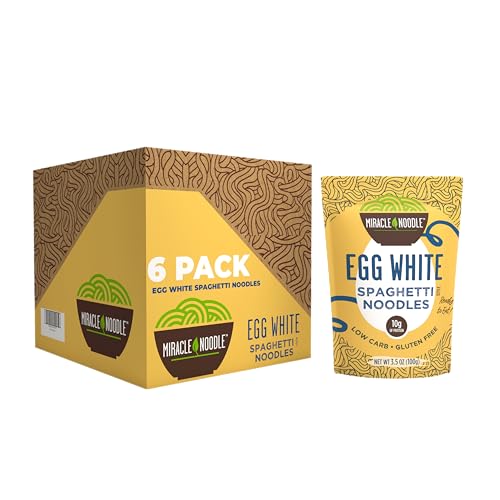
Miracle Noodle’s Egg White Spaghetti occupies a middle ground between konjac volume and legume protein density. Each 3.5-ounce bag delivers 10 grams of protein and just 1 gram of net carbs, with a clean ingredient list comprising only egg whites and water. The noodles are pre-cooked and ready to eat straight from the package; a quick 20-30 second microwave blast or a 60-second pan-sear is all that is needed. The texture is noticeably softer than semolina pasta but firmer and more noodle-like than plain konjac shirataki.
Customer feedback highlights the product’s suitability for celiac and gluten-sensitive individuals, as well as its low calorie load (45 calories per bag). The spaghetti strands are shorter than traditional pasta, making them difficult to twirl around a fork, but this also makes them easier to eat with a spoon in soup preparations. The egg white base does carry a faint natural egg flavor that is easily masked by robust sauces — a Bolognese or Alfredo eliminates it entirely. The biggest knock is price: the 6-pack costs significantly more per ounce than any other option reviewed here.
The practical sweet spot for this product is the user who wants a quick, high-protein, low-carb meal with zero cooking skill required. The pre-cooked format means you can have a bowl of noodle-based protein in under 90 seconds, which is faster than any dry pasta or instant ramen. For dinner, plan on two bags per person to reach a satisfying volume. The durability of the noodles is a weakness — they break apart more easily than edamame or wheat-based alternatives, so gentle handling during heating is essential.
Why it’s great
- Clean two-ingredient label (egg whites, water) with no additives
- Ready-to-eat format — microwave or pan in under 60 seconds
- Very low net carbs (1g) with meaningful protein (10g) per bag
- Gluten-free, dairy-free, and soy-free for restrictive diets
Good to know
- High per-ounce cost compared to dry or konjac alternatives
- Noodles break apart easily if overheated or stirred aggressively
- Small bag size (3.5 oz) typically requires two bags for a full meal
FAQ
Do protein noodles taste exactly like regular pasta?
What is the best protein noodle for a ketogenic diet?
How do I prepare konjac noodles so they are not slimy?
Are protein noodles safe for people with celiac disease?
Can protein noodles be used in cold pasta salads?
Final Thoughts: The Verdict
For most users, the best protein noodles winner is the Al Dente Protein Pasta Egg Fettuccine because it delivers 30g of protein with a texture and taste profile that closely mimics traditional semolina pasta, cooks in only 4 minutes, and suits a wide range of dietary needs without demanding a flavor sacrifice. If you want the lowest net carbs and highest fiber possible, grab the The Only Bean Organic Edamame Fettuccine. And for a quick, plant-based meal that requires nothing more than hot water, nothing beats the HealSpot High Protein Instant Ramen Variety Pack.