Making high-protein frozen treats at home usually means settling for a gritty texture or a freezer full of pre-portioned tubs that taste more like chalk than dessert. The right appliance changes that equation entirely, delivering a creamy, scoopable, macro-friendly base without the ice crystals. The decision comes down to a few critical mechanical factors — how the machine freezes, how it aerates the mix, and how much control you have over the final consistency.
I’m Mohammad Maruf — the founder and writer behind AirfryerBite. I spend my days dissecting appliance hardware, freezer-bowl geometry, and churn-cycle efficiency to separate genuine kitchen tools from countertop dust-collectors. My research on this category focuses on the freeze-rate, paddle-to-bowl clearance, and protein-fortified base compatibility across dozens of models.
Whether you are loading in whey isolate, casein, or a plant-based blend, you need a machine that emulsifies rather than separates. This guide breaks down the exact models that earn the title of protein ice cream maker by delivering dense, cold, and creamy results without melting in the time it takes to wash a spoon.
How To Choose The Best Protein Ice Cream Maker
Not all ice cream makers handle a protein-heavy base the same way. Whey isolates are thin, casein blends thicken fast, and sugar-free sweeteners depress the freezing point more than standard sucrose. The machine you pick must match how you plan to build your frozen treat — not just the final flavor profile. Here is what to filter for before you click add to cart.
Freezer Bowl vs. Built-In Compressor
The single biggest fork in the road. Freezer-bowl models (like the Cuisinart ICE-21P1) require you to freeze the bowl for 12 to 24 hours before each use. They are affordable, quiet, and produce excellent texture — but you cannot make back-to-back batches. Compressor machines (like the oplace SU-I03) have a built-in refrigeration system and handle continuous churning with no pre-freeze. If you plan to make protein ice cream daily, the compressor cost is amortized quickly. For occasional Sunday batches, the freezer bowl is the smarter spend.
Paddle Design and Overrun Control
Overrun is the amount of air incorporated during churning. A commercial soft-serve machine might run at 50–60% overrun; a good home unit for protein ice cream should be much lower, ideally below 25%. The paddle geometry matters here — wider paddles with scraping edges fold in less air and push the cold mix from the bowl wall to the center faster. Models with a mix-in chute (like the Martha Stewart 2-quart) let you add solid ingredients late in the cycle without breaking the paddle rhythm, which is a huge advantage when folding in chocolate chips or crushed nuts without diluting the protein density.
Base Temperature and Ingredient Compatibility
Machines that work well with a full-fat cream base can struggle with a skim milk and whey blend because the thinner liquid freezes differently against the bowl surface. Look for a unit that lets you run the churn cycle for at least 30 minutes (some cheap timers cut off at 20). You need that extra time to let the lower specific heat of a protein-fortified base reach the proper semi-solid state. Also check if the bowl or churn paddle is dishwasher-safe — sticky protein residue clings hard and hand-washing a narrow bowl is a chore you will hate after the first three uses.
Quick Comparison
On smaller screens, swipe sideways to see the full table.
| Model | Category | Best For | Key Spec | Amazon |
|---|---|---|---|---|
| Cuisinart ICE-21P1 | Freezer Bowl | Budget-friendly daily use | 1.5-quart capacity, 20-min churn | Amazon |
| Martha Stewart 2QT | Freezer Bowl | Family-size batches with mix-ins | 2-quart capacity, LED display, pour chute | Amazon |
| Cuisinart ICE-FD10 | Freeze Wand | Quick single servings of protein ice cream | Half-pint per batch, 5 preset modes | Amazon |
| SYINTAO SBL-2408 | Compressor | Slushies and soft serve with no pre-freeze | 96oz vessel, 6 presets, self-cleaning | Amazon |
| oplace SU-I03 | Compressor | Small batch, premium texture, no prep | 1-quart built-in compressor, 4 modes | Amazon |
In‑Depth Reviews
1. Cuisinart 1.5-Quart Double Insulated Ice Cream Maker ICE-21P1

The Cuisinart ICE-21P1 is the standard that all other home ice cream makers are measured against, and for good reason. The single-paddle design is simple but effective — the wide plastic blade scrapes the bowl wall continuously, preventing the formation of large ice crystals that ruin the mouthfeel of a low-fat, high-protein recipe.
This model shines in the post-churn hold. Once the paddle stops, the double insulation keeps the internal temperature stable long enough to transfer your batch to a storage container without it turning into soup. The clear lid with a large spout lets you pour in your liquid base and even drop in solid mix-ins mid-cycle. After a two-hour deep freeze, the texture rivals a commercial gelato in creaminess, especially when you use a blend of skim milk, casein powder, and a gum-based stabilizer like xanthan.
The catch is the obligatory pre-freeze time. You need to keep the bowl in the freezer for a full 12 to 24 hours before use, and back-to-back batches are impossible unless you own a second bowl. The 1.5-quart capacity yields about four modest servings, so heavy-hitters who prep a week’s worth of macro-friendly ice cream in one go will need to plan their freezer schedule. The one-button operation is genuinely foolproof, making this a strong entry point before you decide if a compressor unit makes sense for your habits.
Why it’s great
- Proven paddle geometry delivers low-overrun, dense texture ideal for protein bases.
- Double-insulated bowl maintains consistent cold for full 20-minute cycle.
- Spout on lid allows mid-churn ingredient additions without losing cold air.
Good to know
- Bowl must be frozen 12–24 hours in advance; no consecutive batch capability.
- Plastic construction is durable but feels lighter than premium metal-bodied units.
2. Martha Stewart 2-Quart Double-Insulated Ice Cream Maker
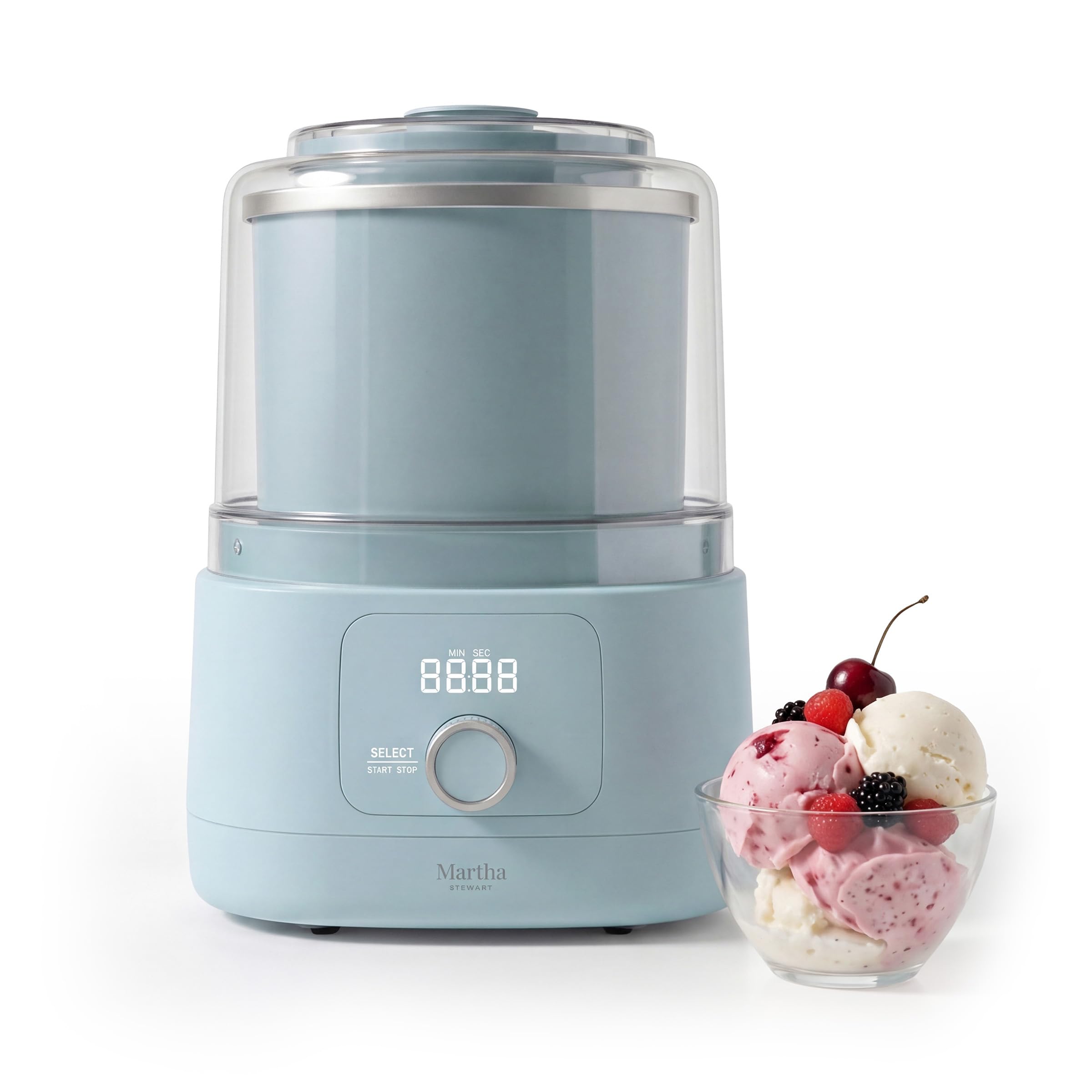
Martha Stewart’s entry into the freezer-bowl segment brings a 2-quart capacity that practically doubles the output of the standard Cuisinart unit, making it the obvious choice for anyone who wants to batch-prep protein ice cream for the entire week. The metal-and-plastic build feels more substantial than the all-plastic competition, and the sky blue finish is surprisingly pleasant on a crowded counter. The included LED display with a simple dial controller removes the guesswork from timing your cycle — you can set it and walk away.
What sets this model apart is the ingredient pour chute built into the transparent lid. You can drop in chocolate chips, crushed peanuts, or freeze-dried fruit pieces without interrupting the churn. The wide mixing paddle creates a smoother fold-in than the narrow paddles found on cheaper machines, which is especially important when you are working with a sticky, high-protein base that tends to climb the sides of the bowl. Dishwasher-safe accessories (lid, paddle, and a dedicated ice cream scoop) make cleanup nearly effortless — the protein residue that cakes onto paddle edges comes off easily in a top rack cycle.
The biggest operational quirk is the plastic wall flex. A few users reported that pressing too firmly against the lid can cause the wall to bow inward, stopping the paddle mid-cycle. It is not a design flaw so much as a reminder to handle the lid with care during operation. The freezer bowl still requires the standard 12-hour freeze, but the larger thermal mass means it holds its temperature for longer, giving you a full half-hour of churning before the mix starts to soften. For protein ice cream makers who prioritize volume over spontaneity, this is a strong mid-range contender.
Why it’s great
- 2-quart capacity yields eight standard servings per batch — ideal for meal prep.
- Dishwasher-safe lid, paddle, and scoop reduce post-churn cleanup effort.
- Pour chute on clear lid enables late-cycle mix-ins without temperature loss.
Good to know
- Plastic housing can flex and stop the paddle if pressure is applied to the lid.
- Freezer bowl requires full 12–24 hour pre-freeze; no skip or shortcut possible.
3. Cuisinart FastFreeze 5-in-1 Ice Cream Maker ICE-FD10
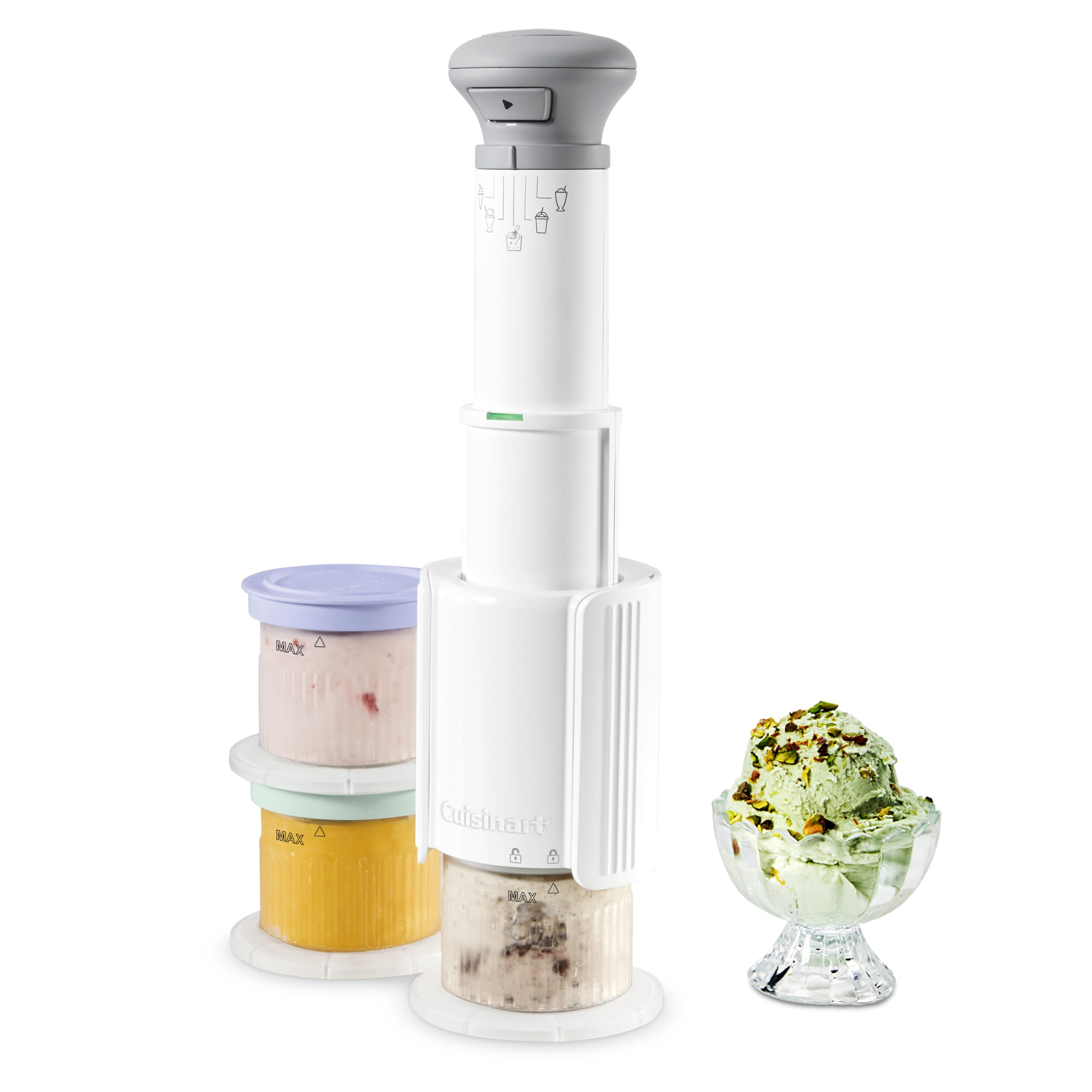
The Cuisinart FastFreeze ICE-FD10 takes a fundamentally different approach. Instead of a spinning bowl, this model uses a freeze wand that you plunge into a pre-frozen half-pint cup. The wand freezes the mixture from the center outward while a motor rotates it to scrape and aerate the base. The result is a single serving of protein ice cream in roughly 10 minutes, with no bulky bowl to store and less motor noise than a conventional compressor unit. It is an excellent option for anyone living in a small apartment or who only needs a single high-protein serving at a time.
The 5-in-1 preset system is not merely a gimmick — each mode adjusts the freeze wand speed and churn duration to match the target texture. The ice cream mode runs the wand slower to fold in more air, while the milkshake mode spins faster to incorporate less air and keep the mixture fluid. For protein ice cream specifically, the sorbet mode works surprisingly well because it runs a shorter cycle that produces a denser, lower-overrun result — closer to a frozen custard than an airy soft-serve. Users have reported success by adding two tablespoons of milk after the initial spin and re-running the cycle to smooth out the crystal structure.
The downsides are real but manageable. The half-pint cup is genuinely small — you are making a single serving, not a batch for the week. The freeze wand itself is somewhat tricky to clean because the blade assembly is not fully submersible; you have to rinse it carefully under running water without wetting the motor housing. The included recipe booklet is sparse, and you will need to experiment to dial in your ideal protein powder to liquid ratio. Still, for the athlete who wants a fresh, high-protein dessert on demand without pre-planning 24 hours in advance, this is a clever solution.
Why it’s great
- No freezer bowl required — cup freezes in a standard freezer, wand does the churning.
- Lower noise and smaller footprint than compressor-based alternatives.
- Multiple modes allow precise control over texture for protein and non-dairy bases.
Good to know
- Cups must freeze for 24 hours before use; batch size is limited to one serving per cup.
- Blade assembly requires careful hand-washing; cannot be submerged.
4. SYINTAO 2-in-1 Slushie & Soft Serve Ice Cream Maker SBL-2408
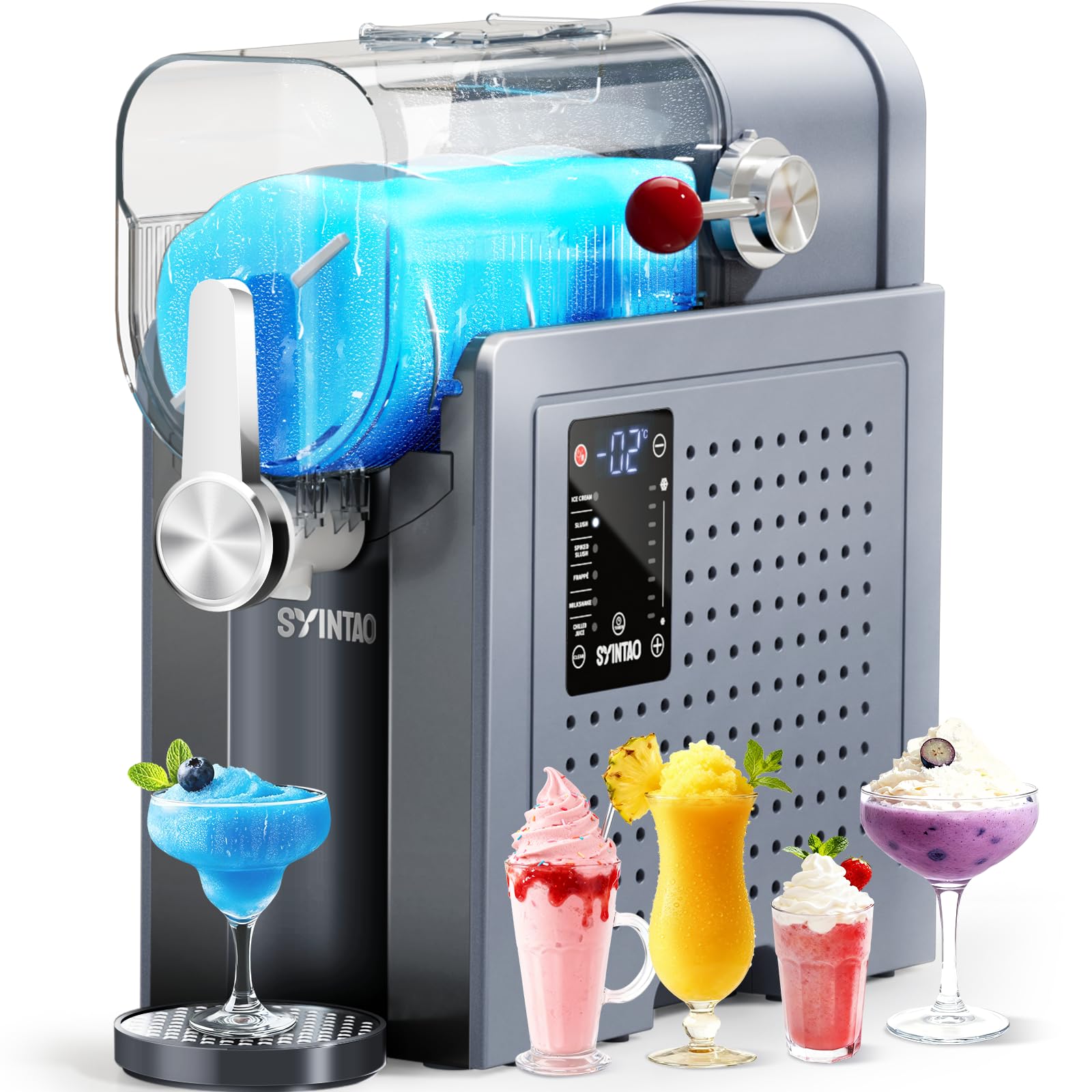
The SYINTAO SBL-2408 is a compressor-driven frozen drink machine that also makes soft serve, which places it in a different league from the freezer-bowl models above. The built-in rapid-freeze system chills your liquid directly inside the 96-ounce vessel (with a maximum fill line at 61 ounces), meaning you never have to pre-freeze a bowl or wand cup. For protein-based frozen treats, this is a major convenience if you cycle through multiple recipes in a single day — the compressor handles back-to-back batches without losing a degree of cold.
The six preset modes (Slush, Ice Cream, Cocktail Slush, Milkshake, Frappe, and Chilled Juice) each control freezing power and churn duration automatically. The ice cream mode runs a longer, slower cycle that produces a denser result than the slush mode, which is important when you are building a high-protein base because the added protein solids freeze at a different rate than simple sugar syrups. The LED display shows remaining time and real-time vessel temperature, giving you a level of visibility that no freezer-bowl machine provides. The delay timer is genuinely useful — load your ingredients in the morning, set the timer, and have fresh soft serve waiting after dinner.
The trade-offs are notable. The machine requires a 2-hour upright rest before first use to allow compressor oil to settle, so it is not an unbox-and-churn device. The 4% minimum sugar requirement means protein bases sweetened with pure stevia or monk fruit will not freeze properly, so you must include some source of sugar or allulose to hit the freezing point threshold. The unit is heavy (over 23 pounds) and takes up significant counter real estate. A small number of early units had seal failures that caused leaking, though subsequent production runs appear to have corrected this. As a dedicated fitness dessert station, it is one of the most versatile options on the market.
Why it’s great
- Compressor-driven, no pre-freezing required; back-to-back batches are seamless.
- Six preset modes match different freeze curves required by protein and sugar bases.
- Delay timer and temperature display give precise control over batch timing.
Good to know
- Heavy (23+ lbs) with a large footprint; needs dedicated counter space.
- Requires at least 4% sugar or allulose base for proper freezing.
5. oplace 4-in-1 Compressor Ice Cream Maker SU-I03
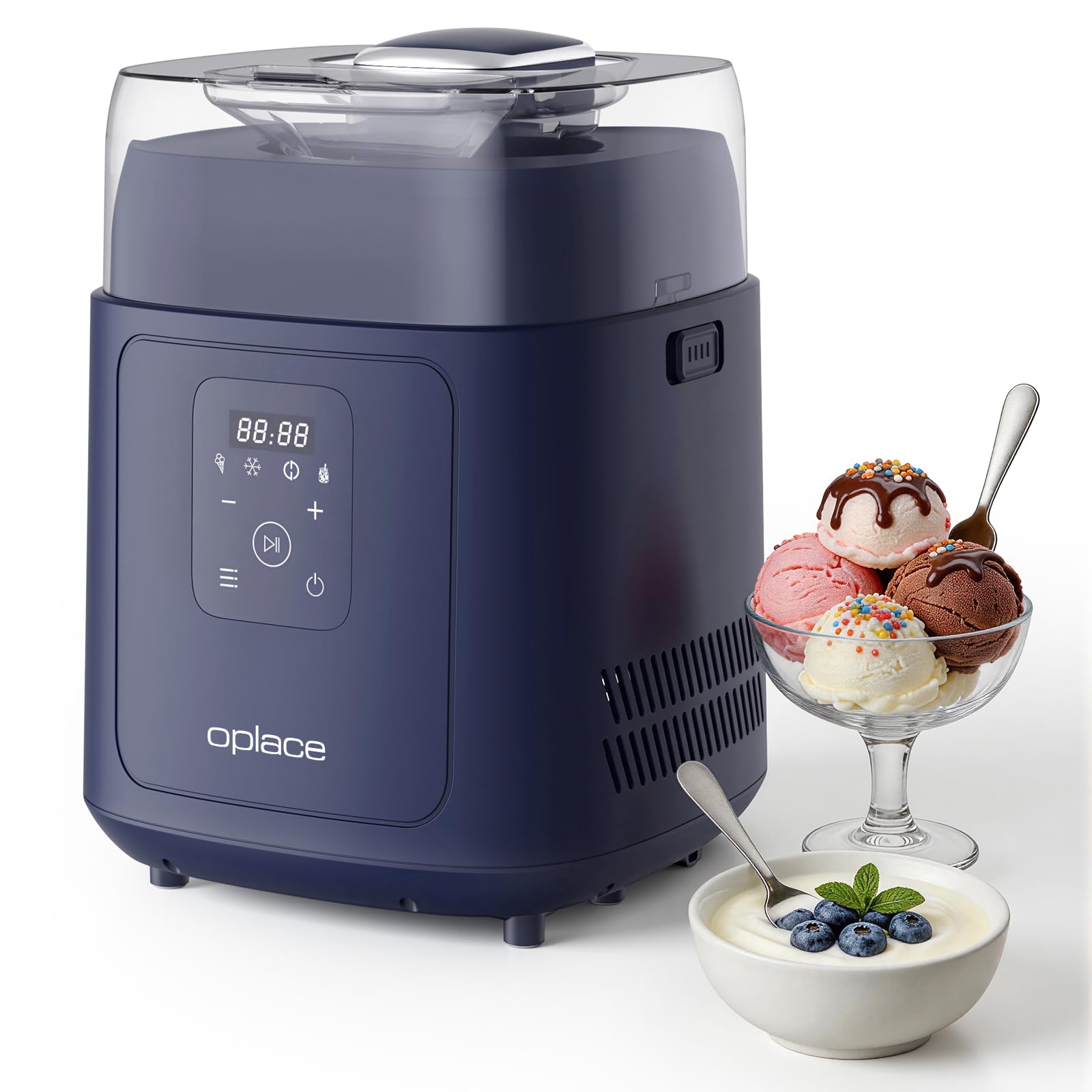
The oplace SU-I03 is a compact compressor machine designed for the home cook who wants gelato-grade texture without the bulk of a commercial countertop unit. The built-in compressor chills the 1-quart bowl directly, so you never touch a pre-frozen bowl. For protein ice cream, this thermal stability is critical — a compressor that cannot hold a steady 15°F will produce a slushy mess with a high-protein base.
The four modes cover ice cream, gelato, sorbet, and yogurt, each adjusting the churn speed and compression cycle. The gelato mode runs the slowest paddle speed, which minimizes overrun and produces the densest final product — ideal for a macro-friendly base where you want maximum protein per spoonful without a fluffy, airy texture. The included transparent lid lets you monitor the build, and a small hatch on the lid allows for late-cycle mix-ins. After the churn cycle completes, the machine will hold the cold for a short period, but the ice cream will be soft-serve consistency; a two-hour hard freeze in your freezer is still necessary for a scoopable texture.
The unit is not without compromises. The 1-quart capacity is small — you get roughly two generous servings per batch, so this is not a party machine. The build quality is good for its price tier, but the ABS plastic housing does not have the same premium feel as a Breville or Lello. A few users noted that the motor can stall if the base is too thick (a common issue when adding scoop-sized portions of casein powder), so you should blend your protein smooth before pouring it into the bowl. For the single athlete or couple who wants fresh, creamy, high-protein ice cream on demand with zero pre-planning, this is an exceptional value in the compressor category.
Why it’s great
- Built-in compressor eliminates need for pre-freezing; supports consecutive daily use.
- Gelato mode produces very low overrun — denser texture for high-protein bases.
- Compact vertical footprint fits small countertops and apartments easily.
Good to know
- 1-quart capacity yields only two servings; not suitable for large families.
- Motor can stall with overly thick protein blends; pre-blend to a pourable consistency.
FAQ
Can I use whey protein powder directly in a freezer bowl machine?
Why does my protein ice cream come out icy instead of creamy?
How long does a compressor ice cream maker take to freeze a protein base?
Final Thoughts: The Verdict
For most users, the protein ice cream maker winner is the Cuisinart ICE-21P1 because it offers the best balance of price, proven paddle design, and low-overrun texture that handles protein bases predictably every time. If you want no pre-freezing and the ability to make a fresh high-protein serving on demand, grab the oplace SU-I03. And for volume — batch prepping a full week of macro-friendly frozen treats — nothing beats the sheer capacity of the Martha Stewart 2QT model.