Bloating, irregularity, and digestive discomfort often stem from an imbalance between the beneficial bacteria in your gut and the fuel they need to thrive. A supplement that delivers both live cultures and prebiotic fiber in one capsule eliminates the guesswork of buying and timing two separate products.
I’m Mohammad Maruf — the founder and writer behind AirfryerBite. I’ve spent years analyzing supplement formulations, comparing CFU counts, strain diversity, and prebiotic fiber sources to identify what actually works for digestive health.
Whether you struggle with gas, constipation, or simply want to support your immune system, finding the right probiotic with fiber means understanding CFU potency, strain variety, and prebiotic synergy in a single daily dose.
How To Choose The Best Probiotic With Fiber
Not all probiotic-fiber combos deliver real digestive support. The capsule format, CFU count, strain selection, and the type of prebiotic fiber all determine whether the product survives your stomach acid and actually colonizes in your gut. Focus on these criteria to avoid wasting money on supplements that don’t survive digestion.
CFU Count vs. Strain Diversity
A high CFU number like 60 billion looks impressive, but more is not always better if only one or two strains are present. Look for a minimum of 10 strains to cover a broader range of digestive functions. Lower CFU formulas with 15+ strains often outperform high-CFU single-strain products because different bacteria handle different tasks — some reduce bloating, others ease constipation.
Prebiotic Fiber Types That Actually Feed Bacteria
The best probiotic-fiber combos include organic prebiotics like inulin, acacia fiber, FOS (fructooligosaccharides), GOS (galactooligosaccharides), or XOS (xylooligosaccharides). A blend of multiple prebiotics feeds more bacterial species than using just one type. Avoid formulas that only list “proprietary blend” without naming the specific fiber sources.
Acid-Resistant & Delayed-Release Capsules
Your stomach acid can kill up to 99% of unprotected probiotics before they reach your intestines. A quality product uses acid-resistant capsules or delayed-release technology to protect the live cultures through the stomach. If the label omits any mention of capsule protection, the probiotic likely won’t survive the journey to your gut.
Quick Comparison
On smaller screens, swipe sideways to see the full table.
| Model | Category | Best For | Key Spec | Amazon |
|---|---|---|---|---|
| Physician’s Choice 60 Billion | Probiotic + Prebiotic | General digestive support & regularity | 60 Billion CFU, 10 strains, organic prebiotics | Amazon |
| Garden of Life 3-in-1 30 Billion | Probiotic + Pre + Post | Triple-action immune & digestive balance | 30 Billion CFU, 16 strains, pre + postbiotics | Amazon |
| Anven Health 60 Billion | 2-in-1 Synergy Blend | High-potency with 5 prebiotic fiber types | 60 Billion CFU, 19 strains, 5 organic prebiotics | Amazon |
| Garden of Life Gas & Bloating 50 Billion | Gas & Bloating Relief | Targeting occasional gas, bloating & constipation | 50 Billion CFU, 15 strains, HN019 + prebiotics | Amazon |
| Yerba Prima Daily Fiber Caps | Fiber-Only Supplement | Adding diverse fiber sources without probiotics | 5 fiber types, 400 capsules, soluble + insoluble | Amazon |
In‑Depth Reviews
1. Physician’s Choice 60 Billion Probiotic

Physician’s Choice strikes the cleanest balance between potency and practicality with 60 billion CFU from 10 diverse strains paired with organic prebiotics. The capsules are acid-resistant, meaning the live cultures survive stomach acid and actually reach your intestines rather than being destroyed en route. Many users reported reduced bloating within the first week and consistent regularity after one month of use.
The formulation is shelf-stable, so you don’t need refrigerator space, and the bottle provides a 30-day supply at one capsule per day. Long-term users spanning eight years report that stopping the supplement caused gut irritability and irregularity to return, which suggests the product is genuinely colonizing and supporting the microbiome rather than just passing through.
One capsule per day after dinner works well for most users, with some doubling the dose after heavy meals. The bottle ships well-sealed, and the capsules are easy to swallow despite containing 60 billion CFU. Third-party testing for purity and potency adds confidence that you’re getting the stated CFU count.
Why it’s great
- Acid-resistant capsules protect strains through stomach acid
- 10 diverse strains target bloating, gas, and constipation
- No refrigeration needed for storage or travel
Good to know
- Some users notice symptoms return if they stop taking it
- Price per bottle sits in the mid-range tier
2. Garden of Life Dr Formulated Once Daily 3-in-1
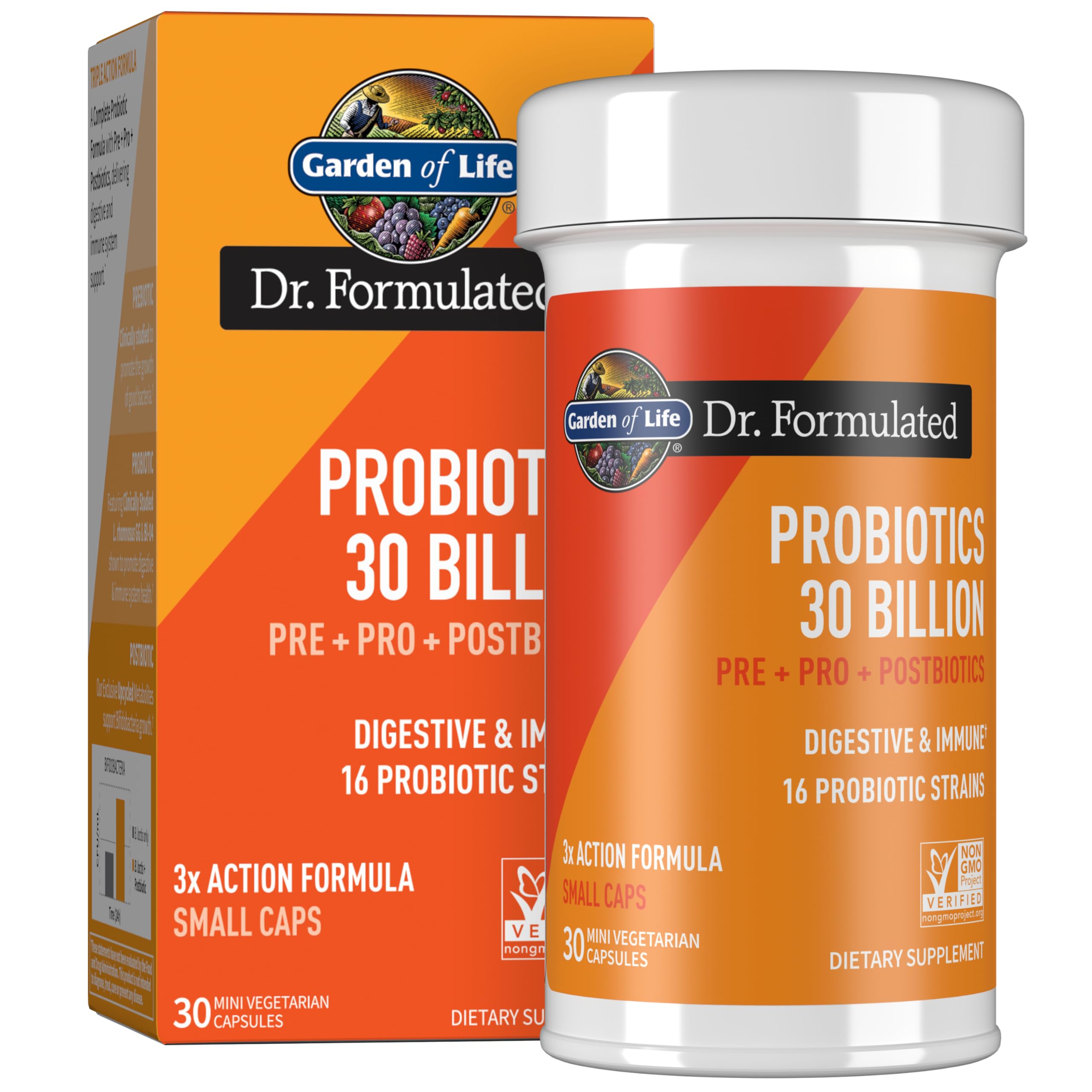
Garden of Life’s 3-in-1 formula goes beyond the standard probiotic-prebiotic duo by adding postbiotics — the metabolic byproducts that beneficial bacteria produce after fermenting fiber. This triple-action approach aims to support immune function alongside digestive health. The 30 billion CFU count is lower than some competitors, but the 16 strains including L. rhamnosus GG and B. lactis Bl-04 offer broader coverage for different gut needs.
Users with IBS and Celiac disease noted reduced bloating and constipation within the first day of use, describing the effect as gentle rather than harsh. The formula is Non-GMO Project Verified, NSF Certified Gluten-Free, and vegan, making it a clean choice for those avoiding common allergens. Each capsule is shelf-stable with no unnecessary binders or fillers.
Some users found it difficult to gauge effectiveness since digestive changes can be subtle, but the common thread in reviews is improved regularity and reduced gas over the first month. Taking one capsule daily with food appears to maximize absorption. The price point sits in the mid-range tier for a 30-day supply.
Why it’s great
- Includes prebiotics, probiotics, and postbiotics in one capsule
- 16 strains with clinically studied L. rhamnosus GG
- NSF Certified Gluten-Free and vegan formulation
Good to know
- 30 billion CFU is lower than some alternatives
- Effects may be subtle and take weeks to notice
3. 60 Billion Probiotic and Prebiotic — 19 Strains
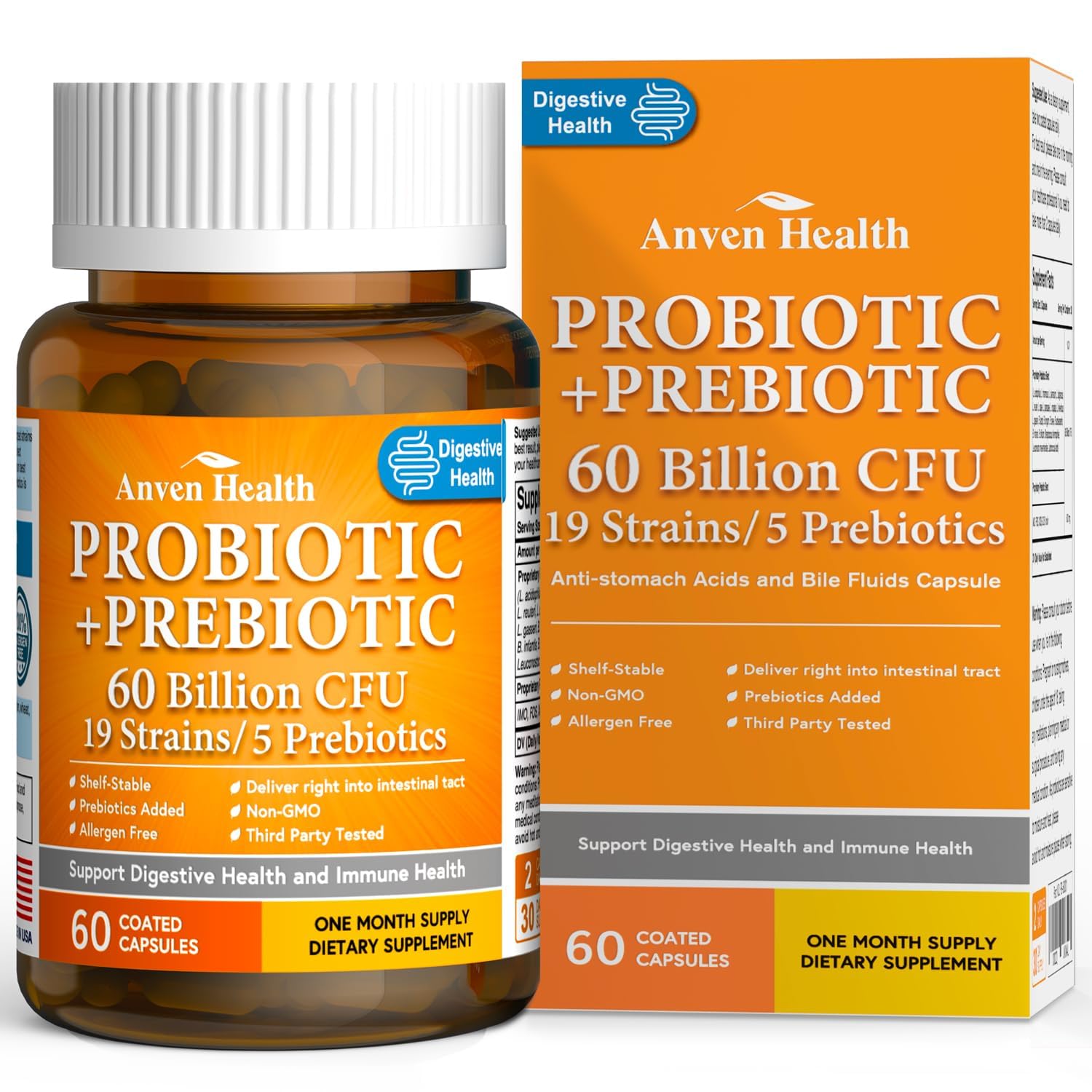
This Anven Health formula packs 60 billion CFU from 19 diverse strains and combines them with five different organic prebiotics — IMO, FOS, GOS, XOS, and inulin. The multi-prebiotic approach is notable because different fiber types feed different bacterial species, so this formula nourishes more of your gut microbiome than single-prebiotic supplements. The plant-based delayed-release capsule protects the strains through the stomach.
User feedback over a year of consistent use highlights effective relief from bloating and improved gut health with just one pill daily. The capsules are small and easy to swallow despite the high CFU count. The formula is vegan, Non-GMO, and free from gluten, dairy, and soy, making it suitable for people with multiple dietary restrictions.
The shelf-stable format eliminates refrigeration, and the 60-capsule bottle provides a solid value for the potency level. Some users mentioned using it specifically to support fertility, as certain strains are associated with reproductive health. The 19-strain diversity covers more ground than most competitors in this price tier.
Why it’s great
- 19 strains with 5 different organic prebiotic fiber sources
- Delayed-release capsules protect through stomach acid
- Shelf-stable with no refrigeration needed
Good to know
- Packaging occasionally arrives damaged during shipping
- Higher CFU may cause adjustment gas for first few days
4. Garden of Life Gas & Bloating 50 Billion
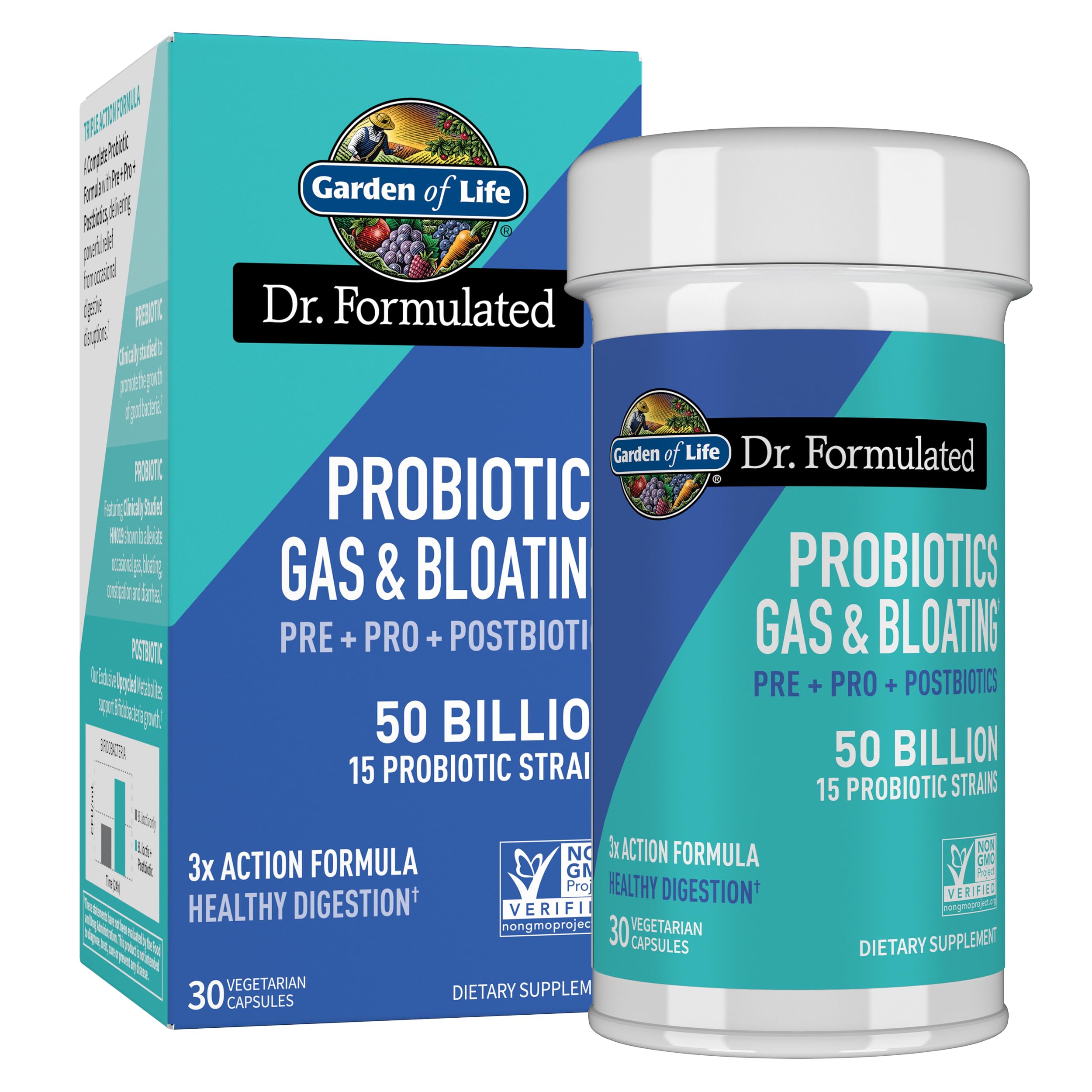
Garden of Life’s Gas & Bloating variant is specifically formulated to target occasional gas, bloating, constipation, and diarrhea using 50 billion CFU with 15 strains including the clinically studied HN019 strain. HN019 has research backing for reduced gut transit time and improved regularity, making this a targeted choice for those whose primary complaint is trapped gas or slow digestion. The triple-action formula again includes prebiotics and postbiotics alongside the live cultures.
The capsule is shelf-stable, vegan, Non-GMO, and NSF Certified Gluten-Free, maintaining the same clean standards as the brand’s other products. Users with slow metabolism and chronic acid reflux saw improvement over six months of daily use. The formulation avoids artificial dyes and fillers, and the delayed-release capsule helps ensure the HN019 strain reaches the colon intact.
This sits in the premium tier of the market with a 30-day supply. The focused strain selection for gas and bloating makes it a better choice for symptom-specific relief than broader-spectrum formulas. One capsule daily with food is sufficient for most users.
Why it’s great
- Clinically studied HN019 strain for gas and bloating relief
- Triple-action with prebiotics and postbiotics included
- NSF Certified Gluten-Free with no artificial fillers
Good to know
- Higher price per bottle compared to mid-range options
- Specifically targets gas, not general microbiome diversity
5. Yerba Prima Daily Fiber Caps Formula

Yerba Prima takes a different approach by offering a fiber-only supplement rather than a probiotic-fiber hybrid. This 400-capsule bottle provides five types of fiber — psyllium seed husks, acacia gum, apple fiber, and more — delivering both soluble and insoluble fiber to support regularity and bulk stool. It’s designed for people who already use a separate probiotic but need an extra fiber boost to meet the recommended 25-40 grams of daily fiber.
Serving size is four capsules, which is more pill volume than probiotic-fiber combos. Users report the capsules are small and easy to swallow despite the higher serving count. The formula is Non-GMO, gluten-free, and keto-friendly since the fiber carbs are not digested. Users who track their macros in apps like MyFitnessPal find this helps them hit daily fiber goals without drinking gritty powder mixes.
One major consideration is that the bottle empties quickly due to the four-capsule serving size. This is purely a fiber supplement — it contains no probiotic strains or prebiotics designed to feed specific bacteria. For users who want both fiber and probiotics in one pill, the three previous options are more efficient choices.
Why it’s great
- Five different fiber types for balanced soluble/insoluble support
- 400 capsules per bottle for extended use
- Non-GMO, gluten-free, keto-friendly formula
Good to know
- No probiotic strains included — fiber only
- Requires four capsules per serving, bottle empties faster
FAQ
Should I take a probiotic with fiber or a separate fiber supplement?
Will 60 billion CFU cause excessive gas at first?
Can I take a probiotic with fiber if I have IBS or Celiac disease?
Do I need to refrigerate probiotics with fiber?
Final Thoughts: The Verdict
For most users, the probiotic with fiber winner is the Physician’s Choice 60 Billion Probiotic because it combines high CFU potency, 10 diverse strains, organic prebiotics, and acid-resistant capsules at a reasonable cost. If you want the broadest strain diversity with 5 different prebiotic fiber types, grab the Anven Health 19-Strain formula. And for targeted gas and bloating relief backed by the clinically studied HN019 strain, nothing beats the Garden of Life 50 Billion Gas & Bloating formula.