Traveling disrupts your gut microbiome on a cellular level—new water sources, unfamiliar bacteria strains, and a sudden shift in diet can demolish the delicate bacterial balance you maintain at home. The result is a familiar misery: bloating, irregularity, or the dreaded traveler’s diarrhea that can sideline a vacation for days. A smart traveler packs a weapon specifically designed for this biological ambush.
I’m Mohammad Maruf — the founder and writer behind AirfryerBite. I’ve spent over a decade analyzing supplement delivery formats, CFU viability in non-refrigerated conditions, and strain-specific resistance to stomach acid, focusing exclusively on what actually survives the journey from packet to colon.
Whether you are hopping time zones for business or trekking through remote regions, selecting the right probiotic for travel means choosing a formula engineered to endure heat, humidity, and the hostile gut environment without losing its potency or requiring a refrigerator.
How To Choose The Best Probiotic For Travel
The market is flooded with probiotics, but the vast majority are designed for a stationary life—they require refrigeration, use fragile strains that die in heat, and come in bulky bottles. A travel probiotic must meet a different standard: it must survive in a suitcase, survive your luggage’s temperature swings, and survive your stomach acid to actually colonize your gut abroad. Here are the four non-negotiable factors to analyze before you pack.
Delivery Format: Powder, Capsule, or Softgel
Powder formats in single-serving stick packs are the most practical for travel because they eliminate the need to count pills, they mix into any cold liquid, and the powdered matrix protects bacteria from moisture better than a capsule shell. Capsules with delayed-release technology offer superior acid resistance compared to standard softgels, which often dissolve prematurely in the stomach. Softgels like the Nature’s Way Pearls are ultra-compact and easy to swallow, but their oil-based coating can be less effective against strong stomach acid on a full stomach. For high-risk destinations, a powder stick pack or a delayed-release capsule is the safer bet.
CFU Count: How Much Is Enough for Travel?
Colony-forming units (CFUs) measure the number of viable bacteria in each dose. A count of 5 to 10 billion CFU is sufficient for maintaining routine gut balance during low-risk domestic travel. For international travel to regions with substantially different bacteria profiles—Southeast Asia, Africa, parts of South America—a higher CFU count of 40 to 60 billion provides a thicker protective barrier against pathogenic bacteria. However, CFU alone is not the deciding factor; strain diversity matters just as much because different strains target different intestinal issues. A formula with 10 to 13 strains broadly covers digestive, immune, and regularity needs better than a single-strain high-CFU product.
Shelf Stability and Heat Tolerance
A travel probiotic that requires refrigeration is essentially dead weight once it leaves your home. Look for explicit “no refrigeration required” labeling on the product page. Probiotics that remain viable at temperatures up to 77°F (25°C) are considered heat-tolerant. Some premium brands use lyophilization (freeze-drying) or moisture-barrier blister packaging to keep bacteria dormant until ingestion. The raw customer data confirms that the most reliable travel probiotics are those that travelers can throw into a carry-on without worrying about a hotel minifridge.
Prebiotic Fiber Inclusion
Prebiotics are soluble fibers that feed your probiotic bacteria once they reach the colon. Without prebiotic fuel, many ingested bacteria die off within hours of arrival. A true synbiotic formula—one that combines both probiotics and prebiotics—increases the odds that the bacteria will stay alive long enough to crowd out pathogens. Products like the Physician’s Choice Stick Packs and Doctor’s Recipes capsules both include organic prebiotic fibers (acacia Senegal, Jerusalem artichoke root) to enhance colonization. If you choose a probiotic without prebiotics, you should ideally consume fiber-rich foods at the same time to support the process.
Quick Comparison
On smaller screens, swipe sideways to see the full table.
| Model | Category | Best For | Key Spec | Amazon |
|---|---|---|---|---|
| Physician’s Choice 60B Stick Packs | Stick Pack | High-risk international travel | 60 billion CFU, 10 strains | Amazon |
| Probaclac Travelers | Capsule | Diarrhea prevention & immune | Added Vitamin C, anti-diarrhea strain | Amazon |
| Nature Target Probiotic Powder | Powder Packets | Family travel, no-pill preference | 60 billion CFU, 13 strains, prebiotics | Amazon |
| Doctor’s Recipes Women’s Probiotic | Capsule | Vaginal & digestive health on the go | 140 billion CFU, delayed-release | Amazon |
| Nature’s Way Pearls Max Potency | Softgel | Budget-friendly daily maintenance | 5 billion CFU, 4 strains, tiny softgel | Amazon |
In‑Depth Reviews
1. Physician’s Choice 60 Billion CFU Probiotic Stick Packs
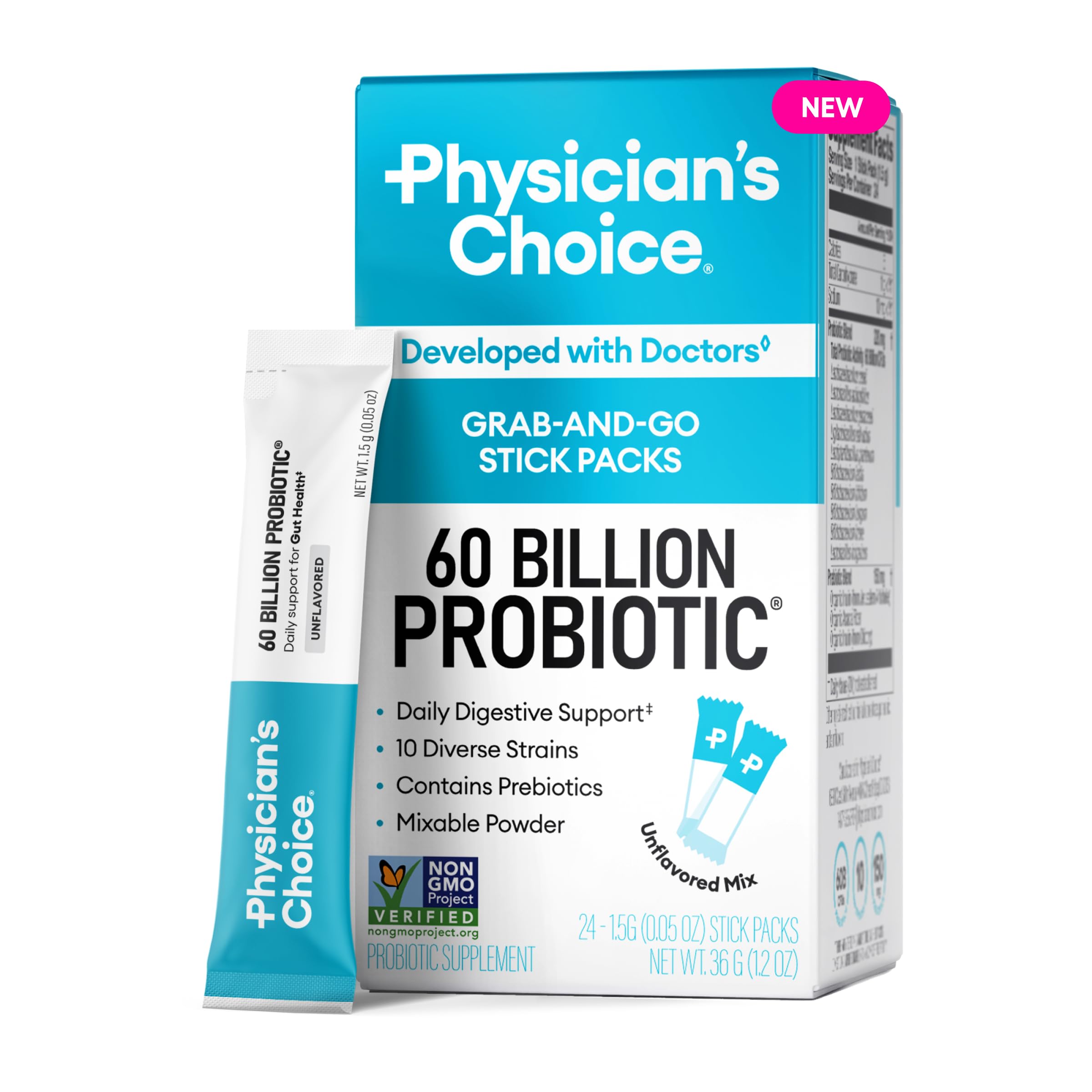
This is the benchmark for a serious travel probiotic. Each single-serving stick pack delivers 60 billion CFU across 10 diverse strains plus organic prebiotics from acacia Senegal—a deliberate synbiotic design that keeps the bacteria alive through the stomach and gives them immediate fuel upon arrival in the colon. The stick pack format eliminates the need to count pills, and the unflavored powder mixes cleanly into cold water, yogurt, or a smoothie, making it the easiest format to consume on an airplane or at a hotel breakfast bar.
Physician’s Choice formulated this with a Scientific Advisory Board of medical professionals who focus specifically on gut health. The delayed-release technology is made to withstand the higher stomach acid production that often spikes during travel stress. Customer feedback highlights consistent relief from bloating within the first week of use and normalization of bowel movements after a month. The 24-count supply covers a two-week trip plus a pre-loading week, which is the recommended protocol for high-risk international travel.
The only notable drawback is the price point relative to the 24-count quantity. For a long-term user or someone traveling for more than three weeks, the per-serving cost is higher than comparable powder formats. However, the quality of the strain selection and the doctor-developed formulation justify the premium for anyone who cannot afford a gastrointestinal disruption during travel.
Why it’s great
- High-potency 60B CFU with organic prebiotics for colonization
- Single-serve stick packs are the most travel-friendly format available
- Doctor-formulated with delayed-release technology for acid resistance
Good to know
- Only 24 servings per purchase—higher per-dose cost than bottle formats
- Powder may clump slightly if mixed into very cold beverages
2. Probaclac Natural Travelers Probiotics
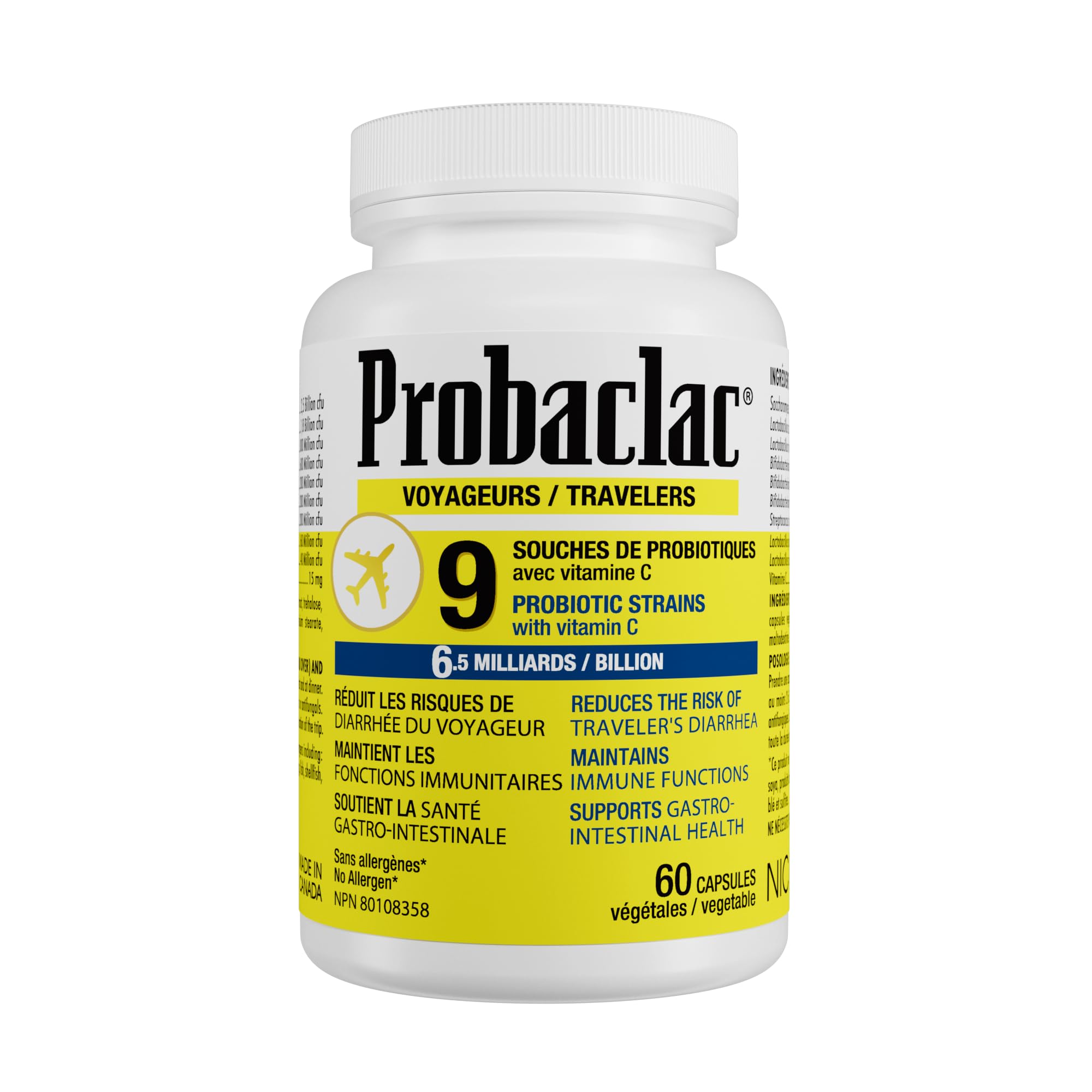
Probaclac is an outlier in the category because it is explicitly designed as an anti-diarrhea travel probiotic rather than a general gut health supplement. The formula includes the specific strain Lactobacillus plantarum, which has documented efficacy in reducing the risk of traveler’s diarrhea caused by pathogenic bacteria in unfamiliar water and food sources. The addition of Vitamin C boosts immune defense, creating a dual-action approach that addresses both the bacterial threat and your body’s natural barrier system.
The recommended protocol is to start one week before departure, continue through the trip, and maintain for one week after return—a total commitment of three to four weeks. The 60-capsule bottle accommodates this regimen easily. Customer reviews are mixed when it comes to extreme-risk destinations like India and parts of Africa, where some users still experienced diarrhea despite pre-loading. This suggests the product is more reliable for moderate-risk travel (domestic, Western Europe, or resort-based tourism) than for high-exposure backpacking itineraries.
On the downside, multiple users report significant gas, bloating, and nausea during the first few days of use, particularly when starting at the full dose. Reducing the dose to one capsule daily and taking it with a full meal helps mitigate this. The product is vegan, gluten-free, and does not require refrigeration, making it a solid mid-range option for travelers who want a specialty formula rather than a broad-spectrum probiotic.
Why it’s great
- Specifically formulated to reduce the risk of traveler’s diarrhea
- Contains Vitamin C for simultaneous immune support during flights
- Vegan, gluten-free, and compact bottle fits in any carry-on
Good to know
- Can cause significant gas and bloating during the loading phase
- Effectiveness may be inconsistent for high-risk international destinations
3. Nature Target Probiotics Powder 60 Billion CFU

Nature Target packs 60 billion CFU from 13 individual strains into a powder format that the manufacturer claims has ten times better absorption than capsules. The 30-count box of single-serving packets provides a generous supply for a family trip—each packet is unflavored, tasteless, and dissolves in any room-temperature beverage without altering the flavor. This makes it the best option for travelers who hate swallowing pills or who need to dose multiple family members from the same box.
The formula includes a prebiotic fiber blend designed to feed the probiotic bacteria, which is critical when traveling because you may not have access to your usual fiber-rich foods. The strain diversity covers digestive health, immune support, and even weight management—an interesting bonus for long-haul travelers who struggle with bloating on flights. Customer reviews note that the powder dissolves extremely well in room-temperature water but can clump when added to ice-cold water or beverages with high acidity like coffee.
One practical limitation is that these packets are slightly larger than the Physician’s Choice sticks, taking up a bit more space in a Dopp kit or backpack. Also, while the formula is designed for ages six and up, the dosing per packet is calibrated for an adult, so families with younger children should check with a pediatrician before sharing. Overall, this is a budget-friendly, high-CFU option for travelers who prioritize strain diversity and powder format over capsule convenience.
Why it’s great
- 13-strain diversity at 60B CFU—one of the broadest strain profiles available
- Unflavored powder dissolves without altering drink taste, ideal for picky eaters
- Prebiotic fiber blend included to support bacterial colonization on the road
Good to know
- Powder can clump in cold water or acidic drinks
- Packets are slightly larger than competing stick pack formats
4. Doctor’s Recipes Probiotics for Women with Prebiotics
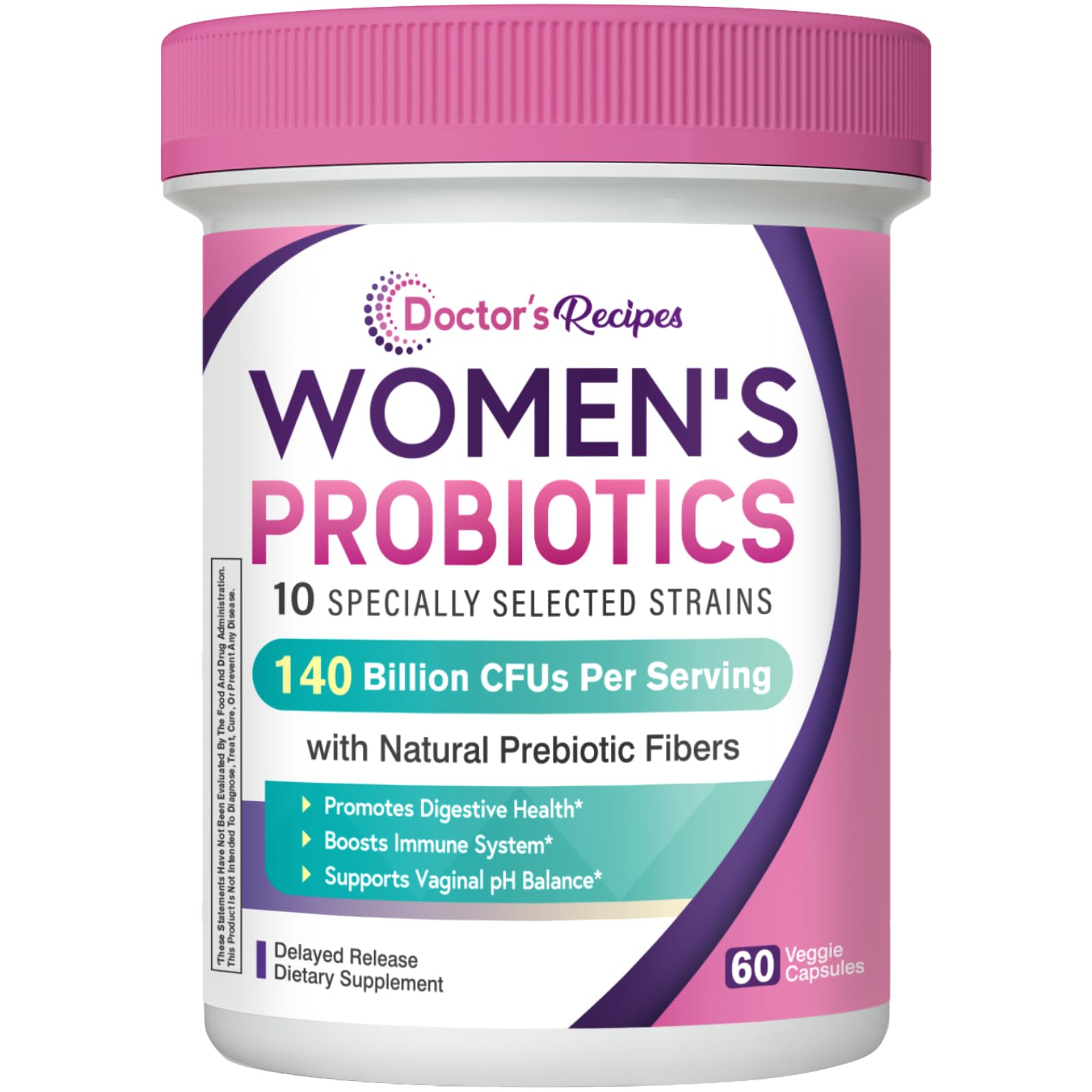
Doctor’s Recipes positions this as a premium women’s probiotic, but its travel relevance comes from the exceptionally high CFU counts—140 billion CFU from 10 strains per serving—and the inclusion of organic prebiotics from acacia Senegal and Jerusalem artichoke root. The delayed-release capsule technology is specifically engineered to survive stomach acid, which is a common weak point for standard gelatin capsules. This makes it a strong candidate for female travelers who want to maintain both vaginal and digestive health while abroad.
The 60-capsule bottle is more convenient for extended travel or for users who prefer a once-daily capsule over a powder packet. The formula includes L. reuteri and L. acidophilus, two strains specifically linked to vaginal flora balance and optimal pH levels, addressing a concern that many women face when exposed to different water and hygiene conditions during travel. Customers consistently report that the product works gently and effectively, with many noting that they only needed one capsule per day instead of the recommended two.
The main trade-off is that this product is a dedicated women’s formula, which means it may not be the best pick for male travelers or for general family use. Additionally, the bottle is not as space-efficient as a stick pack box for minimalist packers. But for women who want a targeted, high-CFU synbiotic that can withstand temperature swings and stomach acid without refrigeration, this is a category-leading choice.
Why it’s great
- Highest CFU in the review at 140 billion with 10 targeted strains
- Delayed-release capsules protect bacteria through the stomach acid barrier
- Specifically formulated to support vaginal pH and digestive health simultaneously
Good to know
- Women-specific formula—less suited for male travelers or unisex use
- Bottle format is bulkier than stick packs for packing efficiency
5. Nature’s Way Pearls Max Potency Probiotic

Nature’s Way Pearls is the minimal viable travel probiotic—a tiny, pearl-shaped softgel that is exceptionally easy to swallow and comes in a bottle small enough to disappear into any pocket. The 5 billion CFU count is modest compared to the heavy hitters in this guide, but it is entirely adequate for domestic travel or short trips to regions with similar bacteria profiles to your home environment. Each softgel is individually sealed in blister packaging, protecting it from moisture and heat better than a standard bottle.
The formula includes four clinically studied strains with a focus on supporting digestive, immune, and colon health. Customer feedback emphasizes the softgel’s ease of use and the fact that it causes none of the gas or bloating associated with higher-CFU formulas. Reviewers who use it for daily maintenance during routine travel report consistent relief from constipation and overall digestive comfort without any adjustment period. It is also free of soy, wheat, and artificial colors, covering common dietary restrictions.
The limitation is clear: 5 billion CFU across four strains is not sufficient protection for high-risk international travel. A traveler heading to a region with drastically different water microbiology would be better served by a higher-CFU product. Additionally, the softgel format lacks the delayed-release technology found in other options, so taking it on an empty stomach could reduce its effectiveness. For entry-level travelers or those on a strict budget, however, this is a reliable and compact choice.
Why it’s great
- Ultra-small softgel is the easiest format in this guide to swallow
- Individual blister packs protect each dose from moisture and heat
- No gas, bloating, or adjustment period reported during use
Good to know
- Only 5 billion CFU—insufficient for high-risk international travel
- Softgel lacks delayed-release technology, reducing acid resistance
FAQ
Should I start taking a travel probiotic before my trip or only after I arrive?
How many CFU do I need for a trip to Southeast Asia or India?
Can I mix probiotic powder with hot coffee or tea?
Is a probiotic stick pack better than a capsule for air travel?
Final Thoughts: The Verdict
For most users, the probiotic for travel winner is the Physician’s Choice 60 Billion CFU Stick Packs because it combines the most practical delivery format with high CFU potency, ten diverse strains, and doctor-developed delayed-release technology. If you want a formula specifically engineered to prevent traveler’s diarrhea and boost immune defenses, grab the Probaclac Travelers. And for a budget-friendly powder option with the broadest strain diversity for family travel, nothing beats the Nature Target Probiotics Powder.