Rebuilding your gut microbiome after a colonoscopy is a delicate process. The bowel prep empties your digestive tract completely, stripping away both harmful and beneficial bacteria. Choosing the right probiotic to repopulate your gut flora without causing further irritation can feel overwhelming, especially when your system is at its most sensitive.
I’m Mohammad Maruf — the founder and writer behind AirfryerBite. My research focuses on identifying supplements that deliver measurable colony-forming units and diverse, clinically-studied strains, specifically for sensitive digestive phases like post-procedure recovery.
After analyzing dozens of formulations, I’ve narrowed the field to five supplements that balance potency with gentleness. This guide breaks down the critical specs and strain profiles you need to find the best probiotic after colonoscopy for a smooth and effective recovery.
How To Choose The Best Probiotic After Colonoscopy
Not all probiotics are created equal, especially when your gut is recovering from a full cleanse. You need a formula that is potent enough to repopulate the microbiome but gentle enough not to shock a sensitive system. Here are the three most important factors to evaluate.
CFU Potency and Strain Diversity
Colony-forming units (CFUs) represent the number of viable bacteria in each serving. After a colonoscopy, your gut is a blank slate, so a higher CFU count — typically between 30 billion and 200 billion — helps jumpstart recolonization. Strain diversity matters just as much. A multi-strain formula with a mix of Lactobacillus, Bifidobacterium, and Bacillus species covers more ground in terms of digestive and immune support compared to a single-strain product.
Triple Action Formulas: Prebiotics, Probiotics, and Postbiotics
Prebiotics feed the good bacteria you’re introducing, postbiotics are the beneficial compounds those bacteria produce, and probiotics are the live strains themselves. A 3-in-1 supplement provides a complete support system. After a colonoscopy, the gut lining is vulnerable — postbiotics like butyrate can support the intestinal barrier while prebiotics like acacia fiber or chicory inulin fuel the new bacteria without causing excessive gas or bloating.
Delivery Form and Shelf Stability
Most high-quality probiotics are shelf-stable, meaning they don’t require refrigeration to maintain potency. This is crucial for consistent daily use during recovery. Capsule form is standard, but look for vegetarian capsules or delayed-release technology that protects the strains from stomach acid until they reach the intestines where they are needed most. Spore-based probiotics are particularly resilient and survive the digestive tract even in the empty, altered environment after bowel prep.
Quick Comparison
On smaller screens, swipe sideways to see the full table.
| Model | Category | Best For | Key Spec | Amazon |
|---|---|---|---|---|
| Micro Ingredients 200B | Premium | High-potency recovery | 200 Billion CFU, 40 Strains | Amazon |
| MaryRuth’s 3-in-1 | Premium | Gentle daily support | 50 Billion CFU, 23 Strains | Amazon |
| Garden of Life 3-in-1 | Mid-Range | Triple action simplicity | 30 Billion CFU, 16 Strains | Amazon |
| Migcopat 4-in-1 | Mid-Range | Added enzymes & gut repair | 80 Billion CFU, 120 Capsules | Amazon |
| Beekeeper’s Naturals | Budget | Quick-start spore formula | Spore-Based, Propolis | Amazon |
In‑Depth Reviews
1. Micro Ingredients Probiotics 200 Billion CFU

The Micro Ingredients formula leads this list with a massive 200 billion CFUs per serving and 40 different strains — a combination that delivers robust recolonization after bowel prep. The inclusion of Bifidobacterium and Lactobacillus families, plus prebiotics like chicory inulin and acacia fiber, creates a complete gut environment reboot rather than just seeding a few strains.
Users consistently report rapid relief from bloating and constipation, often within days. The 120-capsule count at this potency level means you get two months of high-dose support without needing a second bottle right away. It is also third-party lab tested and free of soy, dairy, gluten, and major allergens.
Some users find the 200 billion CFU dose intense for the first few days. Starting with one capsule instead of the recommended two allows your system to adjust gradually without overwhelming the gut during the initial recovery phase.
Why it’s great
- Highest CFU count in this guide for aggressive recolonization
- Broad 40-strain diversity covers multiple gut health angles
- Non-GMO and free of top allergens
Good to know
- Potent dose may require a gradual start for sensitive stomachs
- Two-capsule serving size adds up over the bottle
2. MaryRuth’s 3-in-1 Probiotics for Digestive Health

MaryRuth’s has earned a reputation for clean, gentle formulations, and this 3-in-1 probiotic is no exception. With 50 billion CFUs and 23 strains including prebiotics and postbiotics, it provides substantial support without the extreme potency that can trigger digestive upset in a freshly prepped system. The vegan, dairy-free, nut-free, and gluten-free profile makes it accessible for nearly any dietary restriction.
Customer feedback highlights an initial adjustment period — some users experience mild diarrhea during the first week as the microbiome rebalances. After that, the reviews consistently note reduced bloating, improved regularity, and better energy. The single-capsule daily dose is simple and easy to maintain during recovery when you may not feel like managing complex supplement routines.
The Clean Label Project certification adds a layer of trust for anyone concerned about heavy metals or contaminants in their supplements during a sensitive health period. This certification is rare even among premium probiotic brands.
Why it’s great
- Gentle enough for sensitive post-procedure digestion
- Clean Label Project Certified with strict purity testing
- One capsule daily simplifies the routine
Good to know
- Initial week may include mild adjustment symptoms
- 50 billion CFU is moderate for those seeking maximum potency
3. Garden of Life Dr. Formulated Once Daily 3-in-1
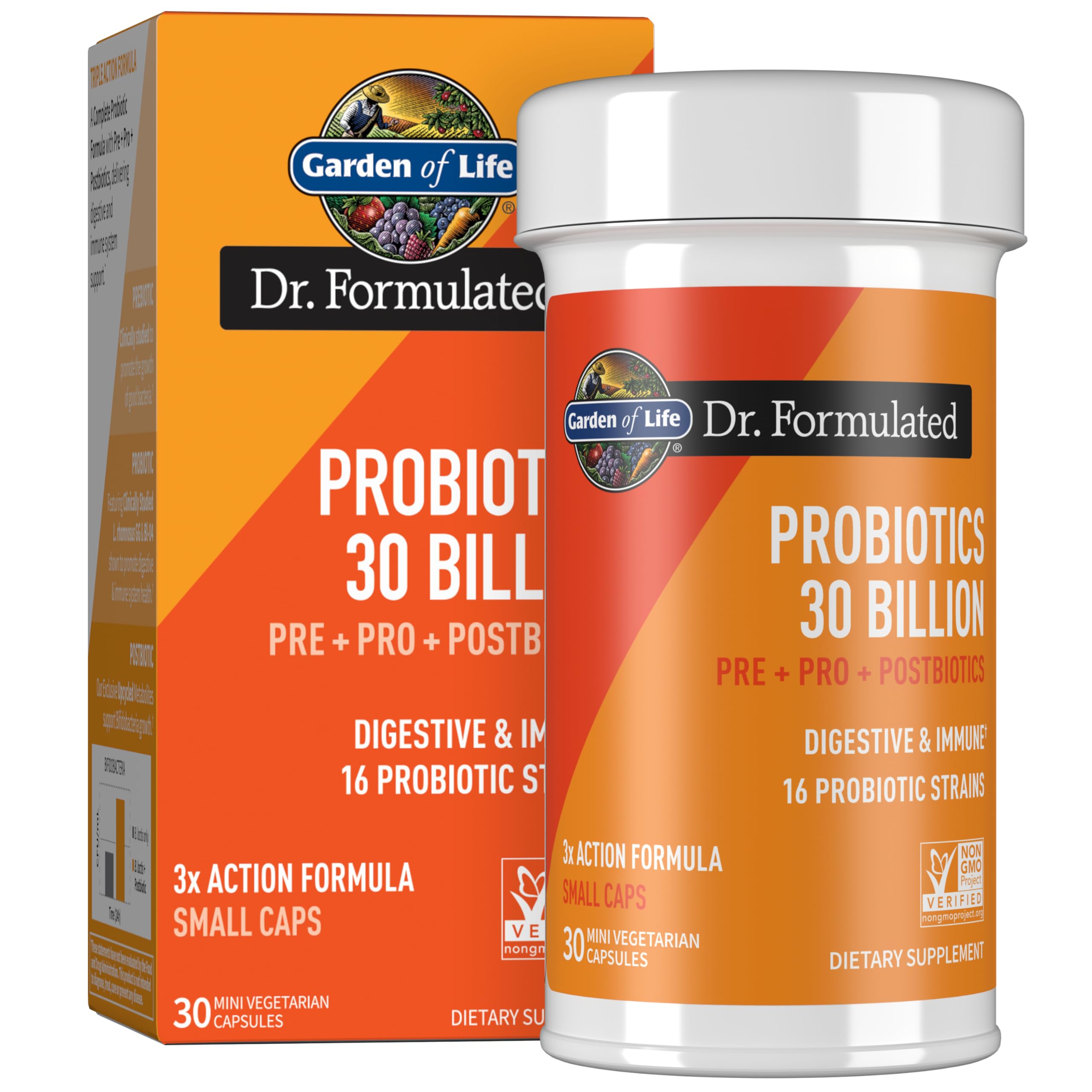
Garden of Life’s Dr. Formulated line brings credibility through its clinically studied strains including L. rhamnosus GG and B. lactis Bl-04. At 30 billion CFUs and 16 strains, this is a measured approach that avoids overwhelming the gut while still providing meaningful diversity. The addition of organic potato starch and acacia fiber as prebiotics supports gentle feeding of the new bacteria.
Users with Celiac disease and IBS have reported noticeable improvements within the first day, including reduced bloating and more regular bowel movements. The NSF Gluten-Free certification and Non-GMO Project verification give peace of mind for those with autoimmune or digestive sensitivities common after a colonoscopy.
The shelf-stable capsules require no refrigeration, making them convenient for travel or storing in multiple locations. Some users note they cannot directly feel the effects, which is common with lower-to-mid CFU doses — the benefit may be more subtle but still effective for maintenance.
Why it’s great
- Clinically studied strains with strong research backing
- NSF Gluten-Free Certified for sensitive systems
- Triple action includes pre, pro, and postbiotics
Good to know
- 30 billion CFU may be too mild for some post-cleanse needs
- Effects may not be immediately noticeable for every user
4. Migcopat Probiotic Prebiotic, Postbiotic & Digestive Enzymes
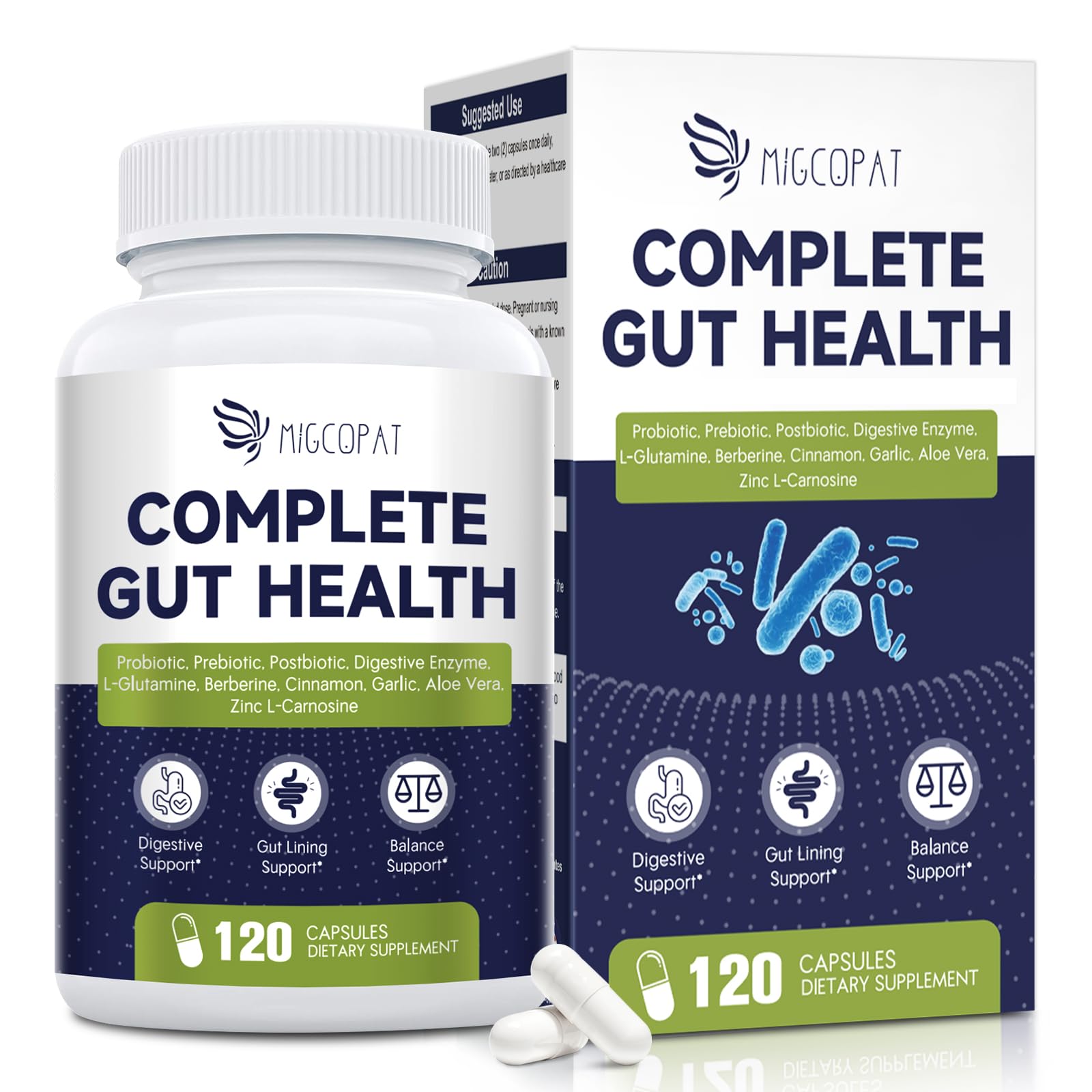
Migcopat takes a comprehensive approach by adding digestive enzymes to the standard prebiotic-probiotic-postbiotic stack. This is particularly useful after a colonoscopy when natural enzyme production may be temporarily disrupted. The 80 billion CFU count sits between the moderate and high-potency options, and the inclusion of L-Glutamine and zinc L-carnosine supports gut barrier integrity during the healing phase.
Gallbladder removal patients and those with chronic digestive sluggishness have reported improved regularity and stable weight after switching to this formula. The berberine and cinnamon components add metabolic support that goes beyond basic probiotic function, making this a solid choice if you want to address multiple gut health angles simultaneously.
The 120-capsule bottle at a two-capsule daily serving provides two months of supply. Some users may find the added herbal ingredients like berberine too stimulating if they are not accustomed to them, so a gradual introduction is recommended for the first few days.
Why it’s great
- Digestive enzymes support post-procedure nutrient breakdown
- L-Glutamine aids gut barrier repair after bowel prep
- High CFU count with bonus metabolic support ingredients
Good to know
- Herbal additives may be too strong for very sensitive stomachs
- Two-capsule serving requires consistent daily habit
5. Beekeeper’s Naturals Complete Gut Health
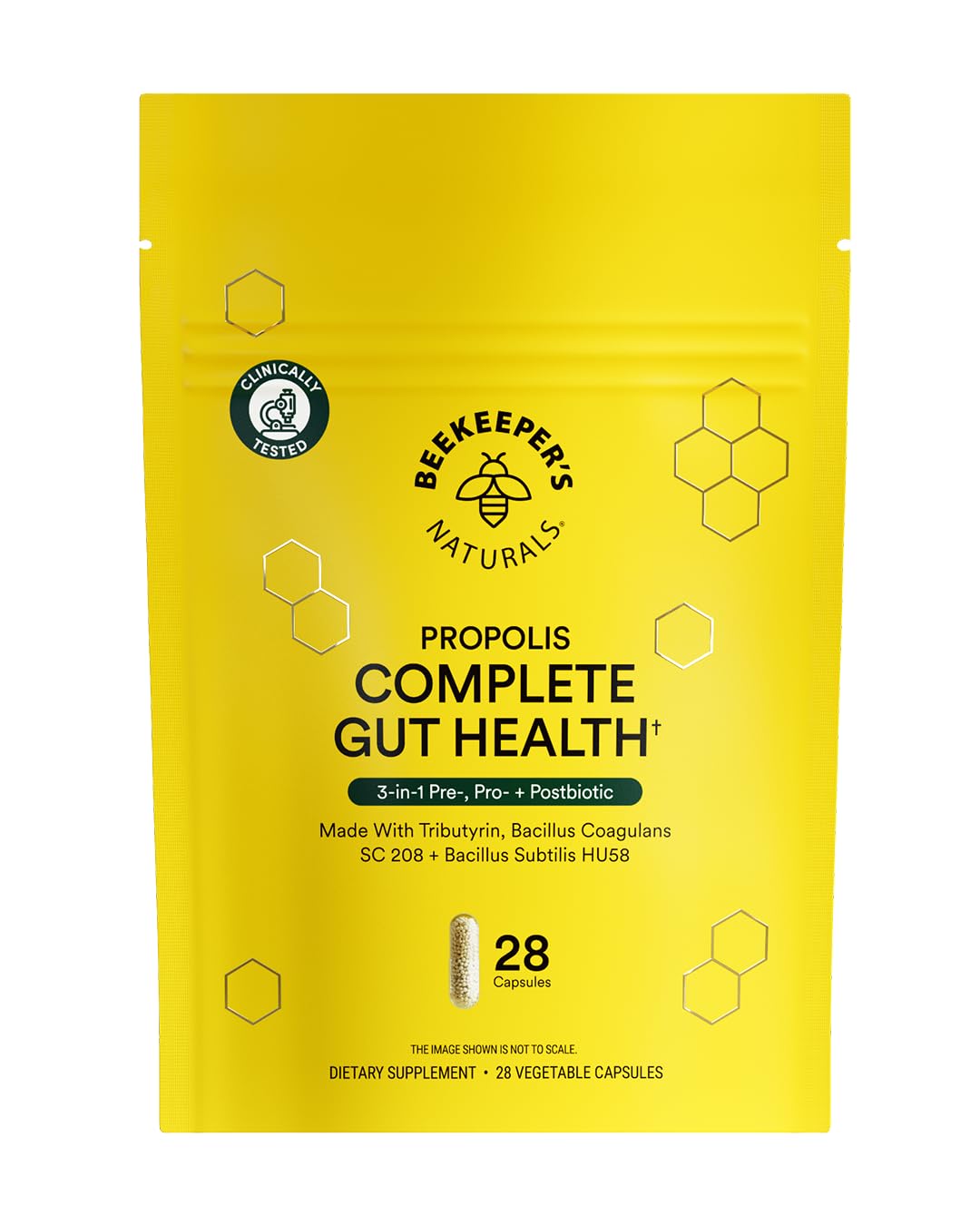
Beekeeper’s Naturals uses a unique spore-based probiotic strain called MegaDuo (Bacillus species) that is naturally designed to survive the harsh acidic journey through the stomach. This is a critical advantage after a colonoscopy when the gut environment is in flux. The propolis prebiotic, derived from bee resin, feeds these spores in a way that standard fiber prebiotics cannot match.
Clinical data cited by the brand shows over 50% of participants felt gut improvements within the first five to seven days, and customer reviews back this up with reports of chronic stomach issues resolving in as little as two days. Users with long-standing gut problems who failed other probiotics found lasting relief with this propolis-powered approach.
The 28-capsule bottle provides a one-month supply at one capsule per day. Because propolis is a bee product, this is not vegan despite being vegetarian. The smaller bottle size means you will need to reorder more frequently than with larger-count options.
Why it’s great
- Spore-based strains survive the empty post-cleanse GI tract
- Propolis prebiotic is unique and highly effective
- Fast results reported within first week
Good to know
- Only 28 capsules per bottle — requires frequent reordering
- Not vegan due to bee-derived propolis
FAQ
How soon after a colonoscopy should I start taking a probiotic?
Can high CFU probiotics cause gas or bloating after bowel prep?
Should I choose a probiotic with prebiotics included after a colonoscopy?
Final Thoughts: The Verdict
For most users, the probiotic after colonoscopy winner is the Micro Ingredients 200 Billion CFU because its extreme potency and 40-strain diversity provide the most comprehensive recolonization support for a wiped-clean gut. If you want a gentler transition, grab the MaryRuth’s 3-in-1. And for a unique spore-based approach that survives the journey reliably, nothing beats the Beekeeper’s Naturals Complete Gut Health.