You open the pantry, grab a pouch, and within seconds your baby is eating a meal made from real fruits and vegetables. That is the promise of premade baby food — convenience without the compromise. But with dozens of brands lining the shelves, choosing the right puree means decoding ingredient lists, stage labels, and nutritional claims that are not always clear.
I’m Mohammad Maruf — the founder and writer behind AirfryerBite. My deep-dive research into commercial baby food manufacturing, USDA organic certification standards, and stage-by-stage nutritional requirements for infants and toddlers helps me separate marketing fluff from truly clean recipes.
I have analyzed dozens of ingredient panels and customer feedback to bring you a focused list of options that deliver real nutrition without hidden additives. This is your complete guide to choosing the best premade baby food for your little one, whether you are starting solids or feeding a busy toddler on the go.
How To Choose The Best Premade Baby Food
Selecting premade baby food goes beyond picking a favorite flavor. You need to consider your baby’s developmental stage, the ingredient integrity, and the practical format that fits your daily routine. The right choice balances texture readiness with nutritional density and clean sourcing.
Match the Stage to Your Baby’s Skills
Baby food stages correspond to developmental milestones, not just age. Stage 1 (4+ months) offers single-ingredient, thin purees ideal for first tastes. Stage 2 (6+ months) introduces combination blends like fruit and vegetable mixes with slightly thicker textures. Stage 3 (9+ months) includes chunkier purees with small soft pieces for babies learning to chew. Stage 4 (12+ months) targets toddlers with more complex recipes that include grains, seeds, and higher fiber content. Choosing a stage too early can cause gagging, while staying on a stage too long delays oral motor development.
Check for Hidden Sugars and Preservatives
“No added sugar” does not mean the same as “no sugar.” Some premade baby foods use fruit juice concentrates or puree concentrates that spike sugar content naturally. Legitimate products rely on the natural sweetness of whole fruits. Equally important is the absence of preservatives like citric acid or ascorbic acid used as stabilizers — while generally safe, they can be unnecessary additives in a product meant to be consumed fresh. Look for labels that explicitly say “no preservatives” alongside “no artificial flavors or colors.”
Evaluate Pouch Quality and Packaging Integrity
The packaging matters as much as the contents. Squeeze pouches should have a reliable resealable cap to keep leftover contents fresh for up to 24 hours in the refrigerator. Check for BPA-free and BPS-free certification on the pouch itself — some lower-tier brands use liners that contain these compounds. Also inspect customer feedback for reports of burst seals during shipping, which indicates weak pouch construction that can expose the puree to air and spoilage.
Quick Comparison
On smaller screens, swipe sideways to see the full table.
| Model | Category | Best For | Key Spec | Amazon |
|---|---|---|---|---|
| Plum Organics Mighty Builder | Pouch | Toddlers 12+ months | 4 oz pouches with chia & white bean | Amazon |
| HAPPYTOT Super Bellies | Pouch | Immune & digestive support | 35mg beta-glucan per pouch | Amazon |
| Beech-Nut Farmer’s Favorites | Pouch | Starting solids | 3.5 oz smooth fruit & veggie blends | Amazon |
| Happy Baby Stage 2 Oat & Fruit | Pouch | Exploratory eaters 6+ months | 4 oz with oats & fruit puree | Amazon |
| Gerber My First Fruits & Veggies | Tub | First taste & sensitivity check | 2 oz single-ingredient tubs | Amazon |
In-Depth Reviews
1. Plum Organics Mighty Builder Variety Pack (12+ Months)
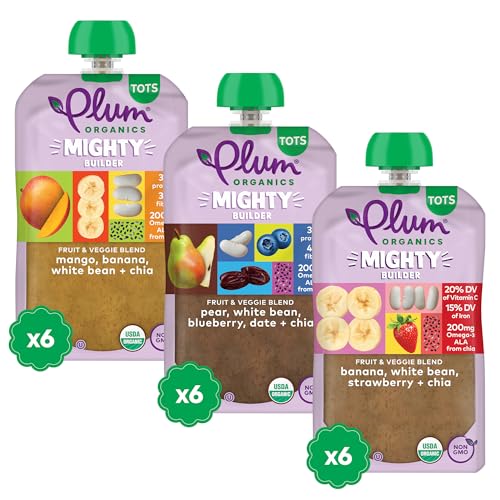
This premium variety pack stands out because it integrates actual protein and fiber sources — white beans and chia seeds — directly into fruit and vegetable purees. Each 4-ounce pouch contains a balanced blend of mango, banana, white bean, and chia or pear, white bean, blueberry, date, and chia, giving your toddler both natural sweetness and satiating nutrition that goes beyond simple fruit sugar. The texture is slightly thicker than standard Stage 2 purees, which helps reduce spillage from the squeeze pouch during independent feeding.
Plum Organics uses USDA Organic certified ingredients with no added salt or sugar, and the resealable cap allows you to store the remaining portion in the refrigerator for the next day without the puree drying out or oxidizing. The pouch construction feels robust — fewer reports of burst seams compared to budget alternatives. The flavor profile is complex enough that multiple reviewers noted their toddlers accepted these blends even during picky phases, which is the real stress test for any premade baby food.
On the downside, this pack is designed for toddlers 12 months and older, so it is not suitable for younger infants just starting solids. The inclusion of chia seeds means the texture is not perfectly smooth — small seeds are visible and provide a slight grittiness that some younger babies may not tolerate. The price per ounce sits at the premium end of the spectrum, but the added protein and fiber content justify the cost for parents who want more than just fruit water in a pouch.
Why it’s great
- Contains protein and fiber from white beans and chia seeds
- Thicker consistency reduces mess during self-feeding
- No added sugars, salt, or artificial ingredients
Good to know
- Not suitable for babies under 12 months
- Small chia seed texture may not appeal to all toddlers
2. HAPPYTOT Super Bellies Stage 4 Variety Pack (2 Years +)
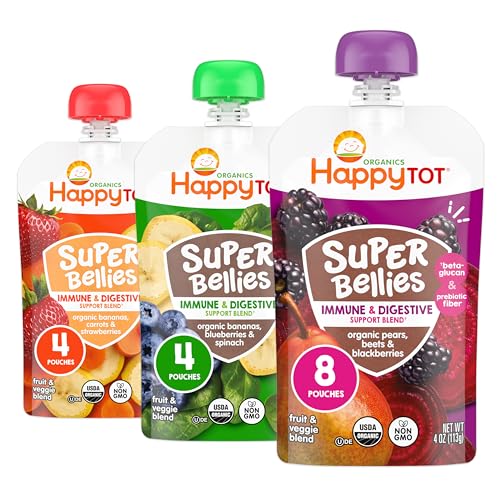
This Amazon-exclusive pack from Happy Family Organics targets older toddlers with a functional nutrition approach. Each 4-ounce pouch delivers 35mg of beta-glucan — a soluble fiber derived from oats that supports immune function — alongside 2g of prebiotic fiber to aid digestive regularity. That dual-action nutritional profile makes this one of the few premade baby food products that actively addresses common toddler issues like constipation and immune vulnerability during daycare season.
The variety pack includes fruit and veggie blends that taste genuinely appealing without relying on heavy sweeteners. Parents in customer reviews consistently reported that their toddlers accepted these pouches even during illness-related appetite drop-offs, which speaks to the mild, familiar flavor base. The pouches are resealable and BPA-free, and the consistency is smooth enough for Stage 4 eaters but thick enough to minimize mess when the pouch is squeezed directly into a bowl or eaten straight from the spout.
The main trade-off is the price point — this is the most expensive option on the list per pouch, and the Stage 4 designation means it is formulated for children 2 years and older, so it is not appropriate for younger infants. Additionally, some parents noted that the beta-glucan content can cause temporary bloating in sensitive toddlers, so it is wise to introduce one pouch per day at first rather than making it a full-meal replacement.
Why it’s great
- Contains beta-glucan for immune and digestive health
- Pleasant flavor accepted by picky toddlers
- USDA Organic with no added sugars
Good to know
- Premium price per ounce
- Not intended for children under 2 years
3. Beech-Nut Farmer’s Favorites Fruit & Veggie Variety Pack
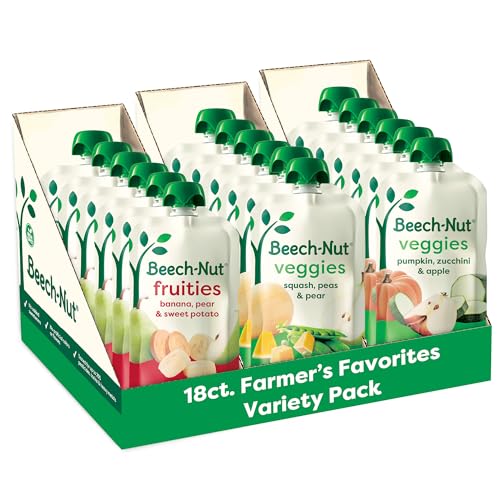
Beech-Nut’s Farmer’s Favorites pack delivers 18 pouches of 3.5-ounce smooth purees across three flavor combinations: banana, pear, sweet potato; squash, peas, pears; and pumpkin, zucchini, apple. The texture is notably smooth — no seeds, chunks, or fibers — which makes this a strong starting point for babies transitioning from single-ingredient Stage 1 foods into combination flavors at the Stage 2 level. Each pouch contains one full serving of fruits or vegetables with no added sweeteners.
What sets this pack apart is its clean allergen profile. The purees are free of dairy, gluten, nuts, and soy, which simplifies introduction for babies with suspected food sensitivities. The pouches are also free from artificial preservatives, colors, and flavors. One customer specifically noted that this was the only banana-based baby food they found without a fermentation or alcohol smell, suggesting Beech-Nut uses a reliable processing method that prevents the natural sugars from breaking down prematurely in transit.
The pouch size at 3.5 ounces is slightly smaller than the 4-ounce standard used by Plum and HAPPYTOT, which is actually a benefit for younger eaters who cannot finish a full 4-ounce portion in one sitting without waste. The resealable cap works well for refrigerator storage of leftovers. The only limitation is the relatively narrow flavor variety — three blends repeated six times each means less diversity compared to the eight-flavor packs offered by competitors.
Why it’s great
- Exceptionally smooth texture suitable for early solids introduction
- Free of dairy, gluten, nuts, and soy
- No fermentation odor reported in banana blends
Good to know
- Only three flavor varieties in the pack
- Smaller 3.5 oz pouches may not satisfy older toddlers
4. Happy Baby Organics Stage 2 Oat & Fruit Puree (Apples, Blueberries & Oats)
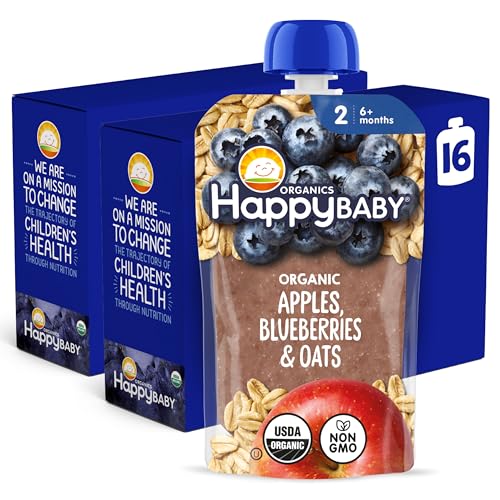
Happy Baby’s “Clearly Crafted” line uses transparent packaging that lets you see the actual color and consistency of the puree inside — a transparency-first approach that no other brand on this list matches. The apples, blueberries, and oats blend delivers a Stage 2 texture (smooth with a slightly thicker consistency from the oats) that introduces babies to the concept of whole grains alongside fruit. The oats add a subtle heartiness that helps the puree feel more like a mini-meal than a quick fruit snack.
This pack contains 16 pouches at 4 ounces each, providing a generous total volume for the mid-range price tier. The ingredients are USDA Organic and non-GMO, with no toxic persistent pesticides used in growing the produce. Customer feedback consistently highlights that picky toddlers accept the flavor well, which is noteworthy because oat-based purees can sometimes have a flat or gluey mouthfeel that babies reject. The brand recommends this for Stage 2 eaters starting at 6 months, making it one of the most versatile options for the transition from single-ingredient to combination foods.
The clear pouch, while visually reassuring, has a practical downside — it is slightly less opaque than standard foil pouches, meaning exposure to direct light during storage could theoretically degrade certain light-sensitive nutrients like riboflavin over time. The pouches do not have a resealable cap in the traditional sense; they use a screw-on spout that must be cleaned between uses to prevent mold growth around the threading. Some parents also note that the oat sediment can settle at the bottom, requiring a thorough shake before serving.
Why it’s great
- Transparent packaging lets you inspect the puree before feeding
- Includes whole grain oats for added texture and nutrition
- Bulk pack of 16 pouches offers strong value
Good to know
- Clear pouch may be less protective against light exposure
- Screw-on spout requires diligent cleaning between uses
5. Gerber My First Fruits and Veggies Starter Kit
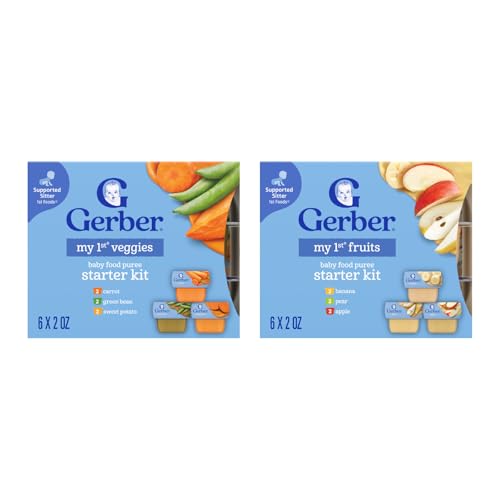
This starter kit takes a fundamentally different approach from the pouch-dominated market. Instead of multi-flavor blends, Gerber packages single-ingredient purees in 2-ounce tubs — banana, pear, and apple for the fruit sampler, plus carrot, green bean, and sweet potato for the veggie sampler. The 2-ounce portion size is intentionally small to minimize waste when you are testing a single food for allergic reactions or digestive tolerance. Each ingredient stands alone, which is the gold standard for the first weeks of solids introduction.
The kit comes with a step-by-step feeding guide and a coupon for Gerber 1st Foods, which is useful for new parents navigating the confusing transition from milk to solids. The tub format is actually preferable for spoon-feeding compared to pouches — you can scoop out a small amount, warm it slightly in a bowl, and leave the rest sealed in the refrigerator for the next day without introducing bacteria from a shared spout. Gerber’s quality testing standards are well established; the company tests every batch for nutrient consistency and contaminants before release.
The obvious limitation is that these are not pouches — the tubs require a spoon and a bowl, which reduces the on-the-go convenience that many parents expect from modern premade baby food. The 2-ounce size also means you will go through the 12 tubs quickly if your baby finishes an entire serving. One customer noted the tubs lack a pull-tab seal, requiring a knife or fingernail to pry open the lid, which is a minor but consistent annoyance in user feedback.
Why it’s great
- Single-ingredient format ideal for allergy and sensitivity testing
- Small 2 oz portions reduce food waste during introduction phase
- Includes step-by-step feeding guide for new parents
Good to know
- Tub format requires spoon and bowl — not on-the-go friendly
- Lid is difficult to open without a tool
FAQ
Can I use Stage 2 pouches for a 4-month-old starting solids?
How long can I store an opened pouch of premade baby food in the refrigerator?
Are organic premade baby foods significantly more nutritious than conventional ones?
Final Thoughts: The Verdict
For most users, the best premade baby food winner is the Plum Organics Mighty Builder Variety Pack because it bridges the gap between convenience and real nutritional substance — the white bean and chia blends provide protein and fiber that standard fruit purees lack. If you want targeted immune support for your toddler, grab the HAPPYTOT Super Bellies pack for its beta-glucan and prebiotic content. And for the very first introduction to solids with single-ingredient purity and minimal waste, nothing beats the Gerber My First Fruits and Veggies Starter Kit.