Selecting the right powered mixer is about more than just volume—it’s about managing a clean signal chain from input to output without noise, distortion, or setup headaches. Whether you’re wrangling a live band, running a house of worship sound system, or building a mobile DJ rig, the amplifier section built into the mixer board dictates your system’s clarity and headroom.
I’m Mohammad Maruf — the founder and writer behind AirfryerBite. I have spent years analyzing audio hardware specifications, matching amplifier power ratings with speaker loads, and evaluating preamp quality and digital effects for live sound reinforcement systems.
Your master output should be free of hum and hiss, and that starts with a well-reviewed unit from this curated list of the best powered mixer options available right now for live sound, mobile performances, and fixed installations.
How To Choose The Best Powered Mixer
Choosing a powered mixer means balancing amplifier power, preamp quality, channel count, and effects against the size of your venues and the type of sources you’ll connect. Here are the most critical factors to check before you buy.
RMS Power vs. Peak Power Ratings
Powered mixers combine a mixer board and an amplifier in one chassis. The most important spec is the RMS (Root Mean Square) wattage per channel at a given impedance, usually 4 or 8 ohms. RMS represents continuous, clean output. Peak wattage is a marketing number—it indicates the brief maximum before distortion. For driving passive speakers, always match the mixer’s RMS rating to your speaker’s power handling for reliable, distortion-free sound.
Preamps and Digital Effects Quality
The preamps capture the initial signal from microphones and instruments. High-quality preamps like Midas or Onyx provide low noise, high headroom, and clean gain before any processing. Built-in digital effects (reverb, delay, chorus) save you from buying separate processors. A 24-bit effects processor with adjustable parameters and multiple presets gives you studio-grade reverb for vocals and room tuning without external gear.
Channel Count and Connectivity
Count the XLR combo jacks for microphones, 1/4-inch TRS inputs for instruments, and dedicated stereo channels for backing tracks. Bluetooth streaming lets you play music wirelessly between sets, and USB-C or USB-B audio interfaces enable direct recording to a laptop. For portable setups, battery-powered models offer up to 12 hours of operation. Evaluate your typical input sources and choose a channel count that gives you room for growth.
Quick Comparison
On smaller screens, swipe sideways to see the full table.
| Model | Category | Best For | Key Spec | Amazon |
|---|---|---|---|---|
| Behringer X AIR XR18 | Digital | Full band mixing via tablet | 16 Midas preamps, 18 channels | Amazon |
| Mackie ProFX10 GO | Analog/Battery | Remote gigs without power | 8-hour battery, Onyx preamps | Amazon |
| Zoom LiveTrak L6max | Digital/Recorder | Multitrack recording on SD | 32-bit float, 14-track recording | Amazon |
| Yamaha EMX7 | Analog Powered | Reliable plug-and-play PA | 2x 710W RMS at 4 ohms | Amazon |
| Mackie ShowBox | All-in-One/Battery | Solo/duo portable PA | 400W amp, breakaway controller | Amazon |
| Bose T4S | Digital/Bose | Bose L1 system integration | 4 preamps, ToneMatch processing | Amazon |
| Rockville RPM870 | Analog Powered | High-power live sound | 2x 750W RMS at 4 ohms | Amazon |
| Behringer FLOW 8 | Digital | Compact digital mixing | 8 channels, EZ-Gain, app control | Amazon |
| Rockville RPM80BT | Analog Powered | Budget-friendly 8-channel rig | 500W RMS, Bluetooth, 8 channels | Amazon |
In‑Depth Reviews
1. Behringer X AIR XR18

The XR18 is a digital powerhouse designed for full-band live mixing and studio recording. Its 16 Midas-designed programmable preamps deliver audiophile-grade headroom and ultra-low noise, which is critical when you’re miking a drum kit or a vocalist in a small venue. The built-in tri-mode Wi-Fi router lets you control every parameter—EQ, compression, gates, and effects—directly from an iPad or Android tablet without needing an external router.
With 18 inputs (16 combo XLR/TRS plus a dedicated stereo channel) and 12 buses, you can set up separate monitor mixes for each band member and still have outputs left for recording. The 18×18 USB audio interface streams multi-track audio directly to your DAW, making it equally valuable for studio tracking. The Dugan-style automixing function automatically manages gain sharing among multiple microphones, a godsend for panel discussions and theater.
Users consistently praise the XR18’s feature set and sound quality, calling it “unbelievable capability for an unparalleled price.” The compact metal chassis fits into a 3U rack space, making it a top-tier portable solution for touring engineers and fixed installations alike. It’s a premium digital investment that replaces a rack full of outboard gear.
Why it’s great
- 16 award-winning Midas preamps with programmable gain
- 18×18 USB audio interface for multi-track recording
- Built-in Tri-mode WiFi for direct tablet control without external router
Good to know
- Requires an iPad or Android tablet for operation
- Built-in WiFi can be flaky in congested RF environments
2. Mackie ProFX10 GO
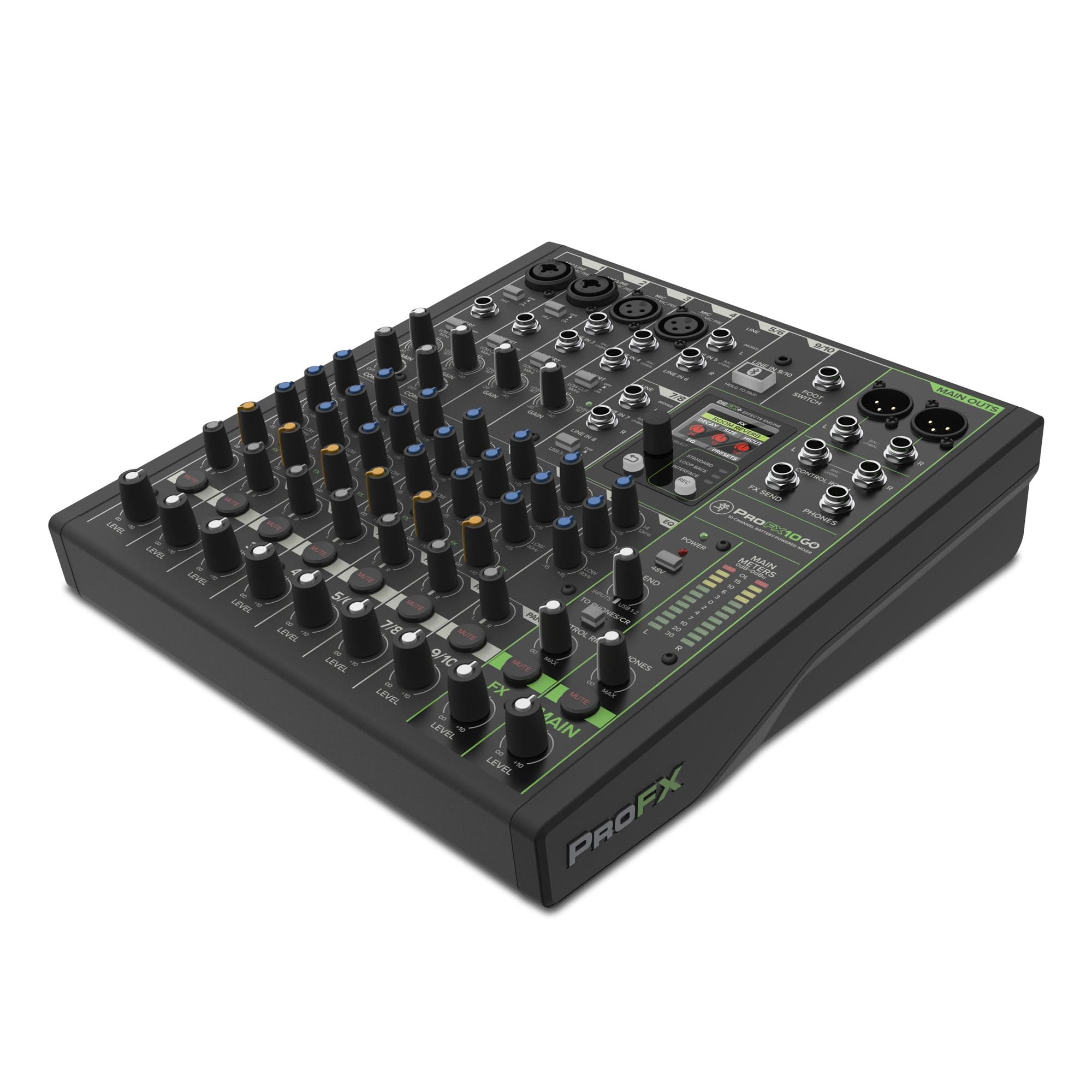
The ProFX10 GO is a professional analog mixer with a rechargeable, swappable battery that powers the board for up to eight hours. This makes it the definitive solution for remote gigs—street performances, park events, weddings in venues without accessible power outlets. The Onyx preamps are renowned for their high headroom and low noise floor, ensuring vocals and acoustic instruments stay clean and present.
Connectivity includes a dedicated Bluetooth channel for streaming music from a phone or tablet, plus three USB-C recording modes: Standard (full mix with effects), Loopback (capture computer audio for livestreams), and Interface (direct channel 1-2 recording without effects). The GigFX+ effects engine provides high-resolution reverbs, delays, and choruses with a full-color LCD screen for editing and saving custom presets on the fly.
Users highlight the fast Bluetooth pairing, crystal-clear audio with no hiss or hum, and the portability. One reviewer called it “perfect for a living room studio” setup with guitar, vocals, and computer integration. The 10-channel layout (4 XLR, 2 1/4-inch, plus stereo 3.5mm) is ideal for solo performers and duos who need a compact, battery-powered mixing solution.
Why it’s great
- Rechargeable swappable battery with up to 8 hours of runtime
- Onyx preamps deliver studio-grade clarity and headroom
- Three USB-C recording modes for streaming and multitrack capture
Good to know
- Lacks a second output bus for separate monitor mix
- Battery life may vary with phantom power usage and channel count
3. Zoom LiveTrak L6max
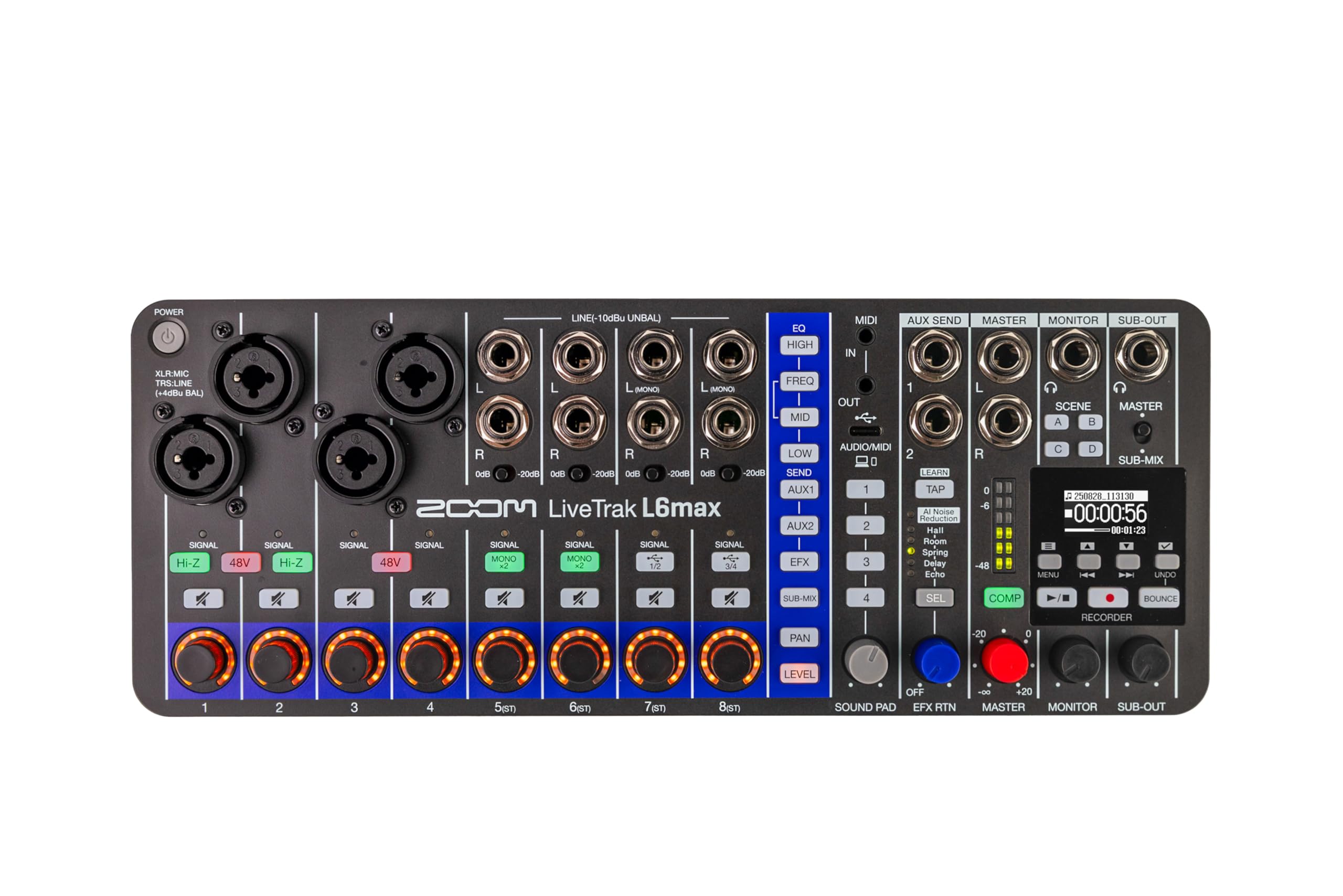
The Zoom LiveTrak L6max redefines what a compact mixer can do by integrating a 14-track 32-bit float recorder directly into the board. This means you can record every channel simultaneously to an SD card (up to 2TB) with zero risk of clipping, thanks to the dual AD converters on channels 1-4 that capture extreme dynamic range without distortion. It’s the perfect tool for recording rehearsals, live shows, or podcasts without needing a laptop.
Beyond recording, the L6max offers AI-powered background noise reduction that intelligently removes hum, hiss, and ambient noise in real time while preserving voice and instrument detail. The built-in sound pads lock to MIDI clock, letting you trigger samples and jingles during electronic performances. Power options are flexible: AA batteries, USB bus power, or a mobile battery pack, giving you true go-anywhere capability.
Users consistently compare the L6max favorably against the Behringer Flow 8, citing no cross-talk, no app crashes, and no pops or clicks. The mixer is described as “small but mighty,” with intuitive multifunction rotary controls that handle volume, pan, EQ, and FX parameters. It’s a premium compact mixer for musicians and content creators who demand pristine recording quality and robust live mixing.
Why it’s great
- 14-track 32-bit float recording to SD card with clip-free audio
- AI noise reduction removes background hum in real time
- Versatile power options: AA, USB, or mobile pack
Good to know
- USB class-compliant at 48kHz/24-bit max (not higher sample rates)
- Limited to four physical combo inputs for microphone preamps
4. Yamaha EMX7

The Yamaha EMX7 is a classic analog powered mixer built for consistent, plug-and-play reliability. The integrated amplifier delivers 2 x 710 watts RMS at 4 ohms, providing serious headroom for medium-sized venues, churches, and school auditoriums. The lightweight, portable design features a top-panel layout that makes all controls visible and accessible, even from a standing position behind the board.
DSP effects include Yamaha’s renowned SPX processors with reverb, delay, and modulation, plus a feedback suppression system that automatically detects and eliminates ring frequencies during live events. The 12-input layout (with multiple XLR and 1/4-inch inputs) supports up to four microphones and several line-level sources. Output EQ and a graphic EQ on the master bus allow fine-tuning of the room’s acoustics without external gear.
Users praise the EMX7’s excellent sound quality and ease of setup, noting that it is “perfect for an acoustic show” and can handle a “3-4 piece band in a small area.” One experienced user compared it to the EMX2/5 and recommended the EMX7 specifically for its real EQ and Yamaha speaker processing presets. The main trade-off is the lack of a dedicated headphone output and subwoofer out, which are present on some competitors.
Why it’s great
- 2 x 710W RMS at 4Ω amplifier for serious venue coverage
- Built-in SPX digital effects and automatic feedback suppression
- Lightweight and portable with easy top-panel control layout
Good to know
- No dedicated headphone output for solo monitoring
- No built-in subwoofer crossover output
5. Mackie ShowBox

The Mackie ShowBox is a unique all-in-one live performance rig that combines a 400W battery-powered PA speaker, a 6-channel mixer, an effects processor, and a breakaway remote controller into one portable package. The detachable mix control mounts to a mic stand via the included RJ45 cable, giving you hands-on access to levels, EQ, effects, looper, and snapshot recall from anywhere on stage—a huge advantage for solo singer-songwriters.
The amplifier drives custom speakers with PA and amp voicing modes, letting you shape your tone from clean acoustic reinforcement to gritty electric amp simulation. The built-in SD card recorder captures full-performance stereo mixes, while the USB-C interface enables direct streaming. Bluetooth playback handles backing tracks between songs, and the battery provides up to 12 hours of power, making it truly cord-free for outdoor events.
Users describe the ShowBox as a “Swiss Army knife of compact PAs,” praising its clear sound, useful onboard effects, and the detachable controller. Some note that it is heavy (25.9 pounds) but manageable with the included backpack. A minority found the maximum volume insufficient for large outdoor crowds, suggesting it is best suited for small to medium gigs, coffee shops, and street performances.
Why it’s great
- Battery-powered with up to 12 hours of runtime for cord-free operation
- Breakaway remote controller mounts to mic stand for stage control
- PA and amp voicing modes for versatile tone shaping
Good to know
- Weighs nearly 26 pounds; backpack included but still heavy for some
- Not loud enough for large venues with 200+ people
6. Bose T4S toneMatch Mixer

The Bose T4S is a digital mixer engineered exclusively for integration with Bose L1 Model II and Model 1S line array systems. The ToneMatch cable carries both digital audio and power, creating a single-cable connection that simplifies setup dramatically. The four high-quality preamps with XLR combo jacks support microphones and instruments, with switchable phantom power for condenser mics.
Bose’s advanced ToneMatch processing automatically applies EQ and dynamics optimized for specific microphone and instrument models, making it nearly impossible to get a bad sound. The ZEQ (Z EQ) controls focus the ToneMatch presets for quick on-the-fly adjustments. The updated effects engine delivers studio-quality reverb, delay, and modulation that integrate naturally with the Bose system’s sound signature.
Users with Bose L1 systems consistently call the T4S a “must-have” upgrade, noting that it provides “better sound and reverb” compared to the older T1 model. The compact footprint (2.1 pounds) and reclining back for angled operation on a tabletop make it highly portable. The main limitation is that it is designed specifically for Bose L1 systems—it does not function as a standalone powered mixer for other speaker brands.
Why it’s great
- Single ToneMatch cable provides digital audio and power
- Automatic instrument and vocal presets via ToneMatch processing
- Updated studio-quality effects and ZEQ for fast adjustments
Good to know
- Limited to 4 channels—not suitable for full bands
- Only works with compatible Bose L1 systems (Model II or 1S)
7. Rockville RPM870

The Rockville RPM870 is an 8-channel analog powered mixer that delivers serious amplifier muscle: 750 watts RMS per channel at 4 ohms (3000 watts peak per channel). This sort of juice is ideal for driving passive 12- or 15-inch speakers in VFW halls, small clubs, and school events. The 24-bit digital effects processor offers 16 presets with adjustable FX level controls and an optional footswitch for remote muting.
Connectivity includes USB playback and recording, Bluetooth streaming, RCA input and output, and a headphone jack with PFL (Pre-Fader Listen) monitoring for checking channels before bringing them into the mix. The dual 7-band graphic equalizers on the master bus give you precise control over room response, while the 4-band EQ on each channel allows per-source tone shaping. The 110V/220V switchable power supply makes it usable internationally.
Users praise the RPM870’s clean sound, with “crisp highs and solid lows” when paired with passive speakers and powered monitors. The fan cooling system stays on constantly under heavy load, but the noise is generally not noticeable to the audience. Some users experienced hardware issues on first units, but replacements were accepted quickly. Overall, it is considered excellent value for bands needing high output without a digital workflow.
Why it’s great
- 2 x 750W RMS at 4Ω provides high power for passive speakers
- Dual 7-band graphic EQs on master for precise room tuning
- Bluetooth streaming and USB recording included
Good to know
- Fan operates continuously and can be audible in quiet settings
- Some users report quality control issues on first units
8. Behringer FLOW 8

The FLOW 8 is an ultra-compact digital mixer that brings professional features like two Midas microphone preamps and an EZ-Gain function to a format that fits in a laptop bag. The EZ-Gain system automatically analyzes your input signal and sets the optimal gain level for maximum headroom, eliminating the guesswork of channel setup. Bluetooth app control via iOS or Android gives you wireless access to all EQ, compression, effects, and monitor mixes.
Despite its small size, the FLOW 8 includes 60 mm channel faders and a master rotary control with a bright LED collar for precise adjustment. The two FX processors offer high-quality reverbs, delays, and modulation, and the 3-band EQ per channel provides flexible tone shaping. The USB audio interface enables multi-track recording, and the headphone output with dedicated mix allows private monitoring.
Users call the FLOW 8 a “must-have for mobile DJs” and a “great little mixer” for duos and small gigs. The Bluetooth connectivity works reliably for track playback, and the compressor/limiter/crossover features are praised for professional sound. Weaknesses include a somewhat fragile Micro USB power port, a weak headphone amp, and a non-intuitive initial setup for the app. For the price, it offers a flagship digital feature set in a tiny package.
Why it’s great
- EZ-Gain automatically sets optimal input headroom for each channel
- Two Midas preamps provide high-quality, low-noise input
- Ultra-portable design with physical faders and Bluetooth control
Good to know
- Headphone amplifier output is weaker than some competitors
- Initial setup requires manual pairing with the app
9. Rockville RPM80BT

The Rockville RPM80BT is a budget-friendly entry into powered mixing that still manages to pack 500 watts RMS (2400W peak) to drive a pair of passive speakers. The 8-channel layout includes XLR, 1/4-inch TRS, and RCA inputs, making it suitable for mics, guitars, and line-level sources. Bluetooth connectivity lets you stream backing tracks or music between sets directly to the mixer without a separate adapter.
The onboard sound control includes a 5-band master graphic EQ plus individual bass, treble, and reverb controls per channel. The dedicated echo and delay effects are adjustable, giving you ambient processing for vocals without external pedals. A fan vent cooling system keeps the amplifier stable during extended operation. The headphone output and REC output allow monitoring and recording of the main mix.
Users consistently report that the RPM80BT is a reliable solution for rehearsals and small shows, with one reviewer noting it has been “running strong a few years later” driving Peavey SP2 speakers. The “warm, mellow sound” and “plenty of inputs” make it a popular choice for churches, senior groups, and karaoke events. The build quality is solid for the price, though some users wish for more power and a shorter learning curve for output volume balancing.
Why it’s great
- 500W RMS delivers reliable power for small venue passive speakers
- Bluetooth streaming for backing tracks without extra gear
- 8-channel input flexibility with XLR, TRS, and RCA connections
Good to know
- 5-band EQ less granular than dual 7-band competitors
- Slight learning curve for balancing input and output volume levels
FAQ
Can I use a powered mixer with unpowered passive speakers?
What does phantom power do and when should I use it?
Final Thoughts: The Verdict
For most users, the best powered mixer winner is the Behringer X AIR XR18 because it combines 16 professional Midas preamps, 18 channels, and full iPad control in a rack-mountable digital format—delivering flagship features at a price that undercuts traditional analog boards. If you want all-day battery portability for remote gigs without wall power, grab the Mackie ProFX10 GO. And for high-power analog simplicity with DSP effects and feedback suppression, nothing beats the Yamaha EMX7 for reliable plug-and-play performance in houses of worship and small venues.