The transition to solid foods is a messy, time-sensitive operation. You need a delivery system that keeps puree in the mouth and off the car seat, the stroller, and your favorite shirt. The right pouch solves that equation without sacrificing nutrition or flavor.
I’m Mohammad Maruf — the founder and writer behind AirfryerBite. I’ve spent years analyzing feeding gear specifications, ingredient sourcing practices, and real-world durability data to separate the genuinely useful from the merely marketed.
This guide is built around the specific trade-offs that matter when shopping for the best pouches for baby. I look at resealability, ingredient transparency, texture consistency, and how each pouch holds up under the pressure of a toddler’s grip.
How To Choose The Best Pouches For Baby
Baby pouches sit at the intersection of convenience and nutrition. The wrong choice can mean a sink full of leaked puree or a toddler who refuses to eat. Here are the three criteria that separate a reliable daily pouch from an occasional disappointment.
Ingredient Integrity vs. Marketing Language
A pouch labeled “all natural” can still contain concentrated fruit juice as a sweetener, which spikes sugar content without adding fiber. Look for the USDA Organic seal if you want third-party verification that no synthetic pesticides or GMOs were used. Check the ingredient list for added sugars, artificial colors, or preservatives—these have no place in a product sold for infants. Genuine clean labels list whole fruits, vegetables, or grains and stop there.
Texture Grade and Developmental Stage
Pouches are not one-size-fits-all. Stage 2 pouches (typically 3.5 oz) feature a smooth, single-ingredient or simple blend puree ideal for babies 6 months and older who are just starting solids. Stage 4 pouches (typically 4 oz) incorporate heartier ingredients like grains, yogurt, or small soft pieces suitable for toddlers 12 months and up who need more chewing practice. Picking the wrong stage can lead to gagging on too-thick textures or frustration with overly thin liquids.
Pouch Construction and Cap Design
A well-designed pouch has a cap that seals securely enough to survive a diaper bag toss. Reusable plastic pouches must have a screw cap with a breakable tamper-evident collar so you know the contents haven’t been opened before. For pre-filled pouches, the spout should be wide enough for a toddler to suck without collapsing but narrow enough to limit flow and prevent choking. The material should be BPA-free and thick enough to resist puncture from small teeth or rough handling.
Quick Comparison
On smaller screens, swipe sideways to see the full table.
| Model | Category | Best For | Key Spec | Amazon |
|---|---|---|---|---|
| HAPPYTOT Stage 4 Variety Pack | Premium | Immune-supporting toddler snacks | 4 oz, 16-pack, USDA Organic | Amazon |
| Plum Organics Mighty 4 | Premium | Organic fruit-veggie-grain blends | 4 oz, 12-pack, USDA Organic | Amazon |
| Beech-Nut Variety Pack | Mid-Range | Veggie-forward Stage 2 introductions | 3.5 oz, 18-pack, Non-GMO | Amazon |
| Gerber Stage 2 Banana Blueberry | Mid-Range | Fruit-forward Stage 2 daily feeding | 3.5 oz, 12-pack, No Added Sugar | Amazon |
| Meanplan Reusable Pouches | Budget | DIY puree storage and travel | 3.5 oz, 100-pack + 2 funnels | Amazon |
In‑Depth Reviews
1. HAPPYTOT Organics Stage 4 Variety Pack
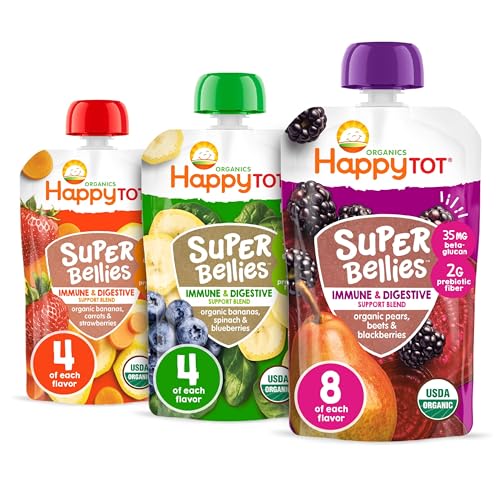
HAPPYTOT’s Super Bellies line targets the toddler who is past the basic puree phase but still needs a nutrient-dense snack that travels well. Each 4-ounce pouch delivers 35 mg of beta-glucan, a soluble fiber derived from oats that supports immune function, plus 2 g of prebiotic fiber for digestive health. The four-flavor variety pack is an Amazon exclusive, meaning you get a curated rotation of fruit-and-veggie blends you won’t easily find in grocery stores.
The texture is thicker than Stage 2 options, intended for toddlers 2 years and up who have more developed oral motor skills. It is not a smooth puree—expect a porridge-like consistency that requires a bit of chewing. That makes it less suitable for a 6-month-old but ideal for an on-the-go 18-month-old who needs something filling between meals. The resealable cap holds well under moderate squeezing, and the packaging lists no added sugars, artificial flavors, or preservatives.
Picky eaters who reject plain vegetable purees often accept these because the fruit-acai base masks the greens. The trade-off is a higher per-pouch cost compared to conventional brands, and the thicker formula means it does not flow as quickly through the spout—a minor frustration for impatient toddlers but a safety benefit for preventing over-feeding. Parents who have used this line for years report it is one of the few snacks their children will reliably eat during long flights or car rides.
Why it’s great
- Immune-supporting beta-glucan and prebiotic fiber in every pouch
- USDA Organic with no added sugars or artificial ingredients
- Resealable cap stays secure in a diaper bag
Good to know
- Thicker texture not suitable for Stage 1 or early Stage 2 eaters
- Higher cost per ounce than conventional baby food pouches
2. Plum Organics Mighty 4 – Strawberry Banana Greek Yogurt
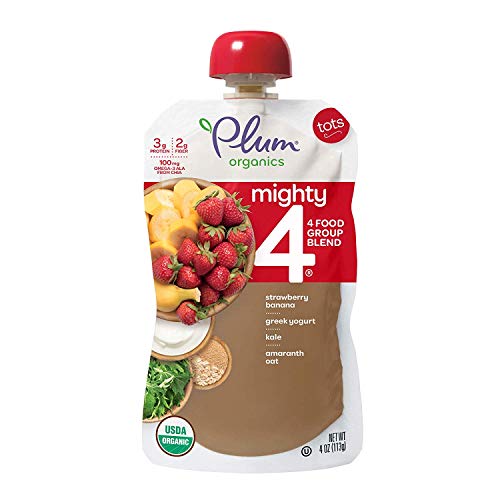
Plum Organics Mighty 4 stands out because it combines four food groups into a single 4-ounce squeeze pouch: fruit, vegetable, dairy (Greek yogurt), and grains (amaranth and whole oat flour). That makes it a more nutritionally complete option than a standard fruit puree, which typically only covers one or two groups. The strawberry-banana base does the heavy lifting for flavor, while the kale, amaranth, and oat flour are ground fine enough that most toddlers do not detect them.
The organic certification is genuine—USDA Organic with non-GMO verification—and the ingredient list is clean: no added sweeteners, no artificial colors, and no preservatives. The yogurt inclusion means the pouch must be kept refrigerated after opening, though the unopened pouches are shelf-stable until their printed date. The texture is thicker than a plain fruit puree but thinner than the HAPPYTOT Stage 4 offering, placing it in a middle zone appropriate for toddlers 12 months and older.
Families who have used this pouch for years note that the lid reseals firmly and the spout resists tearing even when gnawed by emerging molars. Some parents freeze unopened pouches for use as a cold teething soother on particularly bad days. The main limitation is the 12-count pack size—heavy users will blow through these quickly, and the per-pouch cost is higher than Gerber or Beech-Nut. But for a parent who wants a single-pouch meal that covers protein, grains, and produce, this is the most efficient pick.
Why it’s great
- Four food groups in one pouch: fruit, veggie, dairy, and grains
- Clean USDA Organic ingredients with no added sweeteners
- Durable cap and spout survive aggressive toddler handling
Good to know
- Must be refrigerated after opening
- 12-count pack may not last long in a house with daily pouch eaters
3. Beech-Nut Baby Food Pouches Variety Pack

Beech-Nut’s variety pack contains an 18-count mix of three veggie-forward blends: Squash, Peas & Pears; Zucchini, Spinach & Banana; and Pumpkin, Zucchini & Apple. The intentional use of vegetables as the primary ingredient rather than fruit makes this a smart choice for parents trying to train a baby’s palate toward savory flavors before the sugar preference sets in. Each 3.5-ounce pouch contains one full serving of fruits or vegetables, and the blends are smooth enough for Stage 2 solids.
The pouches are Non-GMO Project Verified and free of dairy, gluten, nuts, and soy. There are no artificial preservatives, colors, or flavors, and no added sweeteners—the sweetness comes entirely from the fruit content. The texture is smooth and consistent, which matters for parents dealing with texture-sensitive eaters. The pouch material is BPA-free and the cap reseals adequately, though it is not as robust as the HAPPYTOT or Plum Organics caps.
Smoothie lovers have also discovered these pouches as a convenient base for adult smoothies, which speaks to the quality of the puree. The biggest practical advantage is the 18-count size: at this volume, the cost per pouch is lower than most organic competitors, making it easier to stock a pantry without worrying about expiration. Some parents note that the squash-based blends can separate slightly in the pouch, requiring a quick shake before feeding.
Why it’s great
- Vegetable-forward blends help develop early savory taste acceptance
- Non-GMO, dairy-free, gluten-free, nut-free, and soy-free
- 18-count pack offers a low per-pouch cost
Good to know
- Cap reseals but is less secure than premium brand caps
- Some blends may separate and require shaking before use
4. Gerber Stage 2 Banana Blueberry Puree Pouch
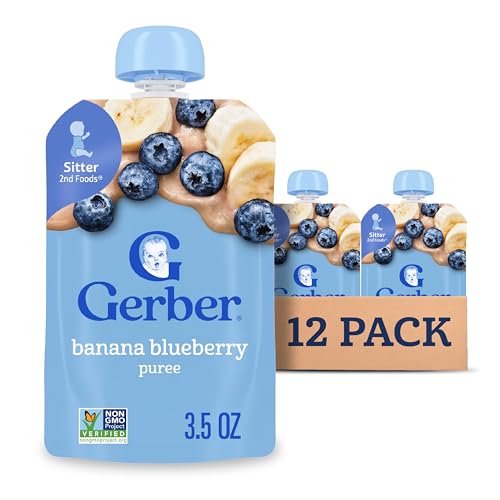
The Gerber Stage 2 Banana Blueberry pouch is the default option for countless families, and that ubiquity is earned. Each 3.5-ounce pouch provides 40 percent of the daily value of potassium and 30 percent of the daily value of vitamin C from whole fruit puree. The flavor combination is one of the most universally accepted among babies—banana provides natural creaminess while blueberry adds a mild tartness that does not overwhelm developing palates.
This is a Stage 2 product, meaning the texture is smooth and the ingredient list is short: banana puree and blueberry puree, with no added sweeteners, artificial colors, or artificial flavors. The pouches are portable, reclosable, and easy to store in a diaper bag without leaking. The 12-count pack size hits a sweet spot for cost-conscious parents, delivering a nationally trusted brand at a workable per-pouch price.
The biggest single strength of this pouch is its reliability as a sensory-safe food for children with texture aversions. Multiple reviews from parents of children with autism spectrum disorder or general picky eating patterns confirm that the consistency and taste remain consistent batch to batch. The cap is adequate but not exceptional—it will not survive a high-pressure squeeze from an older toddler, so supervise self-feeding sessions. If you want a straightforward, clean-ingredient fruit pouch that almost every baby will accept, this is the safest bet.
Why it’s great
- Short, clean ingredient list with no added sweeteners or preservatives
- High potassium and vitamin C content from whole fruit
- Universally accepted banana-blueberry flavor profile
Good to know
- Cap can leak under aggressive toddler squeezing
- Only fruit-based, no vegetable or grain components
5. Meanplan 100 Pcs Plastic Pouches Bulk Reusable Squeeze Pouches
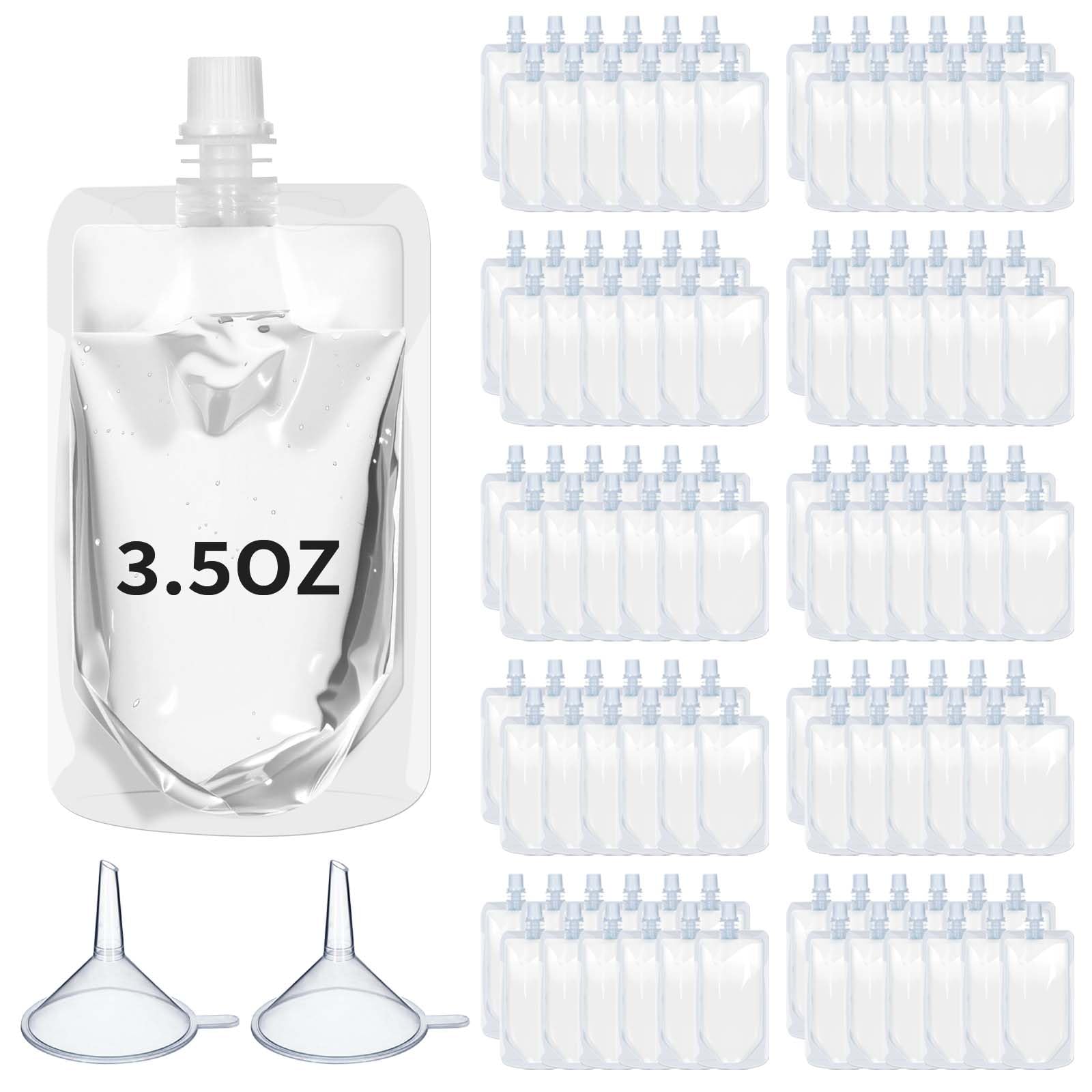
Meanplan’s 100-count pack of reusable squeeze pouches is a completely different category from the pre-filled options above. These are empty 3.5-ounce plastic pouches with screw caps that you fill yourself with homemade puree, smoothies, yogurt, or juice. The pack includes two funnels with a 4 mm nozzle diameter, which is narrow enough to fit into the opening without spilling but wide enough to handle thicker purees without clogging.
The material is polyethylene—food-grade, BPA-free, and lightweight. Each pouch has a screw cap with a breakable tamper-evident collar, so you can verify that a filled pouch has not been opened before your child uses it. The pouches are technically reusable, but the plastic is thin enough that repeated washing and drying will degrade it over time. Many parents use them as single-use containers for travel or party favors and then recycle them.
The value proposition is straightforward: you buy these once, fill them with your own organic puree, and avoid the premium price of pre-filled pouches. The trade-off is the labor—you have to wash, dry, and fill each pouch yourself. Some users report that the thin plastic can be difficult to dry completely after washing, which creates a risk of mold if not stored properly. For a parent who already makes baby food at home and wants a portable delivery system, this is the most economical route by a wide margin.
Why it’s great
- 100 pouches plus funnels for an extremely low per-unit cost
- Breakable tamper-evident collar for safety verification
- Enables complete control over ingredients and sugar content
Good to know
- Thin plastic is difficult to dry thoroughly, risking mold
- Requires significant prep time for washing, filling, and storing
FAQ
Can I reuse a pre-filled baby pouch after my toddler eats from it?
Is there a difference between Stage 2 and Stage 4 pouches besides the age label?
How can I tell if a reusable pouch is completely dry inside after washing?
Do baby pouches need to be refrigerated before opening?
Final Thoughts: The Verdict
For most users, the pouches for baby winner is the HAPPYTOT Organics Stage 4 Variety Pack because it combines immune-supporting beta-glucan, prebiotic fiber, and USDA Organic certification in a texture appropriate for older toddlers who need a filling, travel-ready snack. If you want a multi-food-group pouch that covers fruits, vegetables, dairy, and grains in one squeeze, grab the Plum Organics Mighty 4. And for budget-conscious parents who make their own purees at home, nothing beats the per-squeeze cost of the Meanplan 100-pack reusable pouches with funnels included.