The classic tuna can comes with a litany of small frustrations: the hunt for a can opener, the messy liquid to drain, the metallic edge that always seems to catch a finger. Pouch tuna solves every one of those annoyances with a simple tear-and-eat design that has quietly taken over lunch bags, hiking packs, and office drawers. This category is less about a single appliance and more about a packaging revolution that makes high-quality protein genuinely portable.
I’m Mohammad Maruf — the founder and writer behind AirfryerBite. I’ve spent over a decade dissecting kitchen product categories, from air fryer wattage to knife steel hardness, and I apply that same obsessive spec-level scrutiny to pantry staples like pouch tuna, where protein content, sourcing certifications, and flavor profiles determine whether a product earns its spot in your rotation.
After sorting through dozens of options and analyzing hundreds of verified buyer experiences, I’ve identified the five pouches that define the best pouch tuna category for convenience, taste, and nutritional value.
How To Choose The Best Pouch Tuna
Pouch tuna isn’t just canned tuna in a different wrapper. The pouch format creates distinct trade-offs in texture, moisture, and shelf stability that change how you should evaluate each option. Understanding three core factors will help you avoid the soggy, bland, or overly processed packets that waste your money.
Protein Density and Pouch Size
A standard 2.5-ounce pouch delivers roughly 11 to 17 grams of protein, but the variation matters significantly for meal planning. Pouches with added grains, beans, or vegetables—like the StarKist Smart Bowls—drop to around 10 grams of protein per serving in exchange for a more complete meal profile with fiber and complex carbs. Straight tuna pouches give you higher protein density per ounce, making them the better choice if you’re adding the tuna to your own base of rice, salad, or bread.
Sourcing and Certifications
Marine Stewardship Council (MSC) certification is the most reliable shorthand for sustainable fishing practices in the pouch tuna aisle. MSC-certified skipjack tuna indicates pole-and-line or FAD-free methods that reduce bycatch and protect juvenile fish populations. Wild Planet goes a step further with third-party mercury testing, a detail that matters if you eat tuna multiple times per week. Chicken of the Sea and Bumble Bee both carry MSC certification on their pouch lines, so you don’t have to sacrifice sustainability for value.
Flavor Profile vs. Versatility
Pre-seasoned pouches like the Bumble Bee Applewood Smoke or the StarKist Latin Citrus offer a complete flavor experience straight from the packet, ideal for eating without any additional prep. Plain tuna in spring water gives you maximum versatility—you control every seasoning, acid, and fat that goes into your final dish. The trade-off is straightforward: seasoned pouches save time but lock you into a specific taste profile, while unseasoned pouches demand more effort but adapt to any cuisine.
Quick Comparison
On smaller screens, swipe sideways to see the full table.
| Model | Category | Best For | Key Spec | Amazon |
|---|---|---|---|---|
| Wild Planet Skipjack Wild Tuna | Premium | Mercury-conscious buyers | 3 oz, third-party mercury tested | Amazon |
| StarKist Smart Bowls Latin Citrus | Complete Meal | No-prep lunch bowls | 4.5 oz, quinoa & beans, 10g protein | Amazon |
| Bumble Bee Applewood Smoke Tuna | Flavored | Bold flavor without prep | 2.5 oz, 15g protein, smoky seasoning | Amazon |
| Chicken of the Sea Light Tuna in Water | Classic | Budget-friendly versatility | 2.5 oz, 11g protein, skipjack in spring water | Amazon |
| StarKist Smart Bowls Tomato Basil | Grain Bowl | Mediterranean-style meals | 4.5 oz, barley & beans, soy-free | Amazon |
In‑Depth Reviews
1. Wild Planet Skipjack Wild Tuna, Sea Salt (3 oz, Pack of 12)
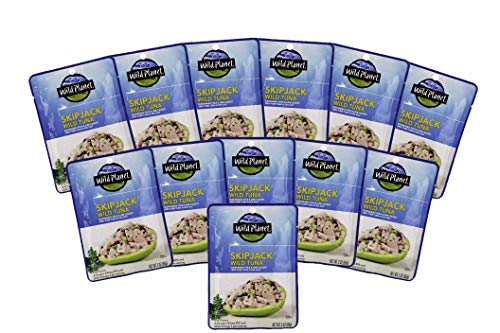
Wild Planet occupies a distinct tier in the pouch tuna category because it addresses the two concerns most frequent tuna eaters eventually develop: mercury accumulation and sustainability. Each 3-ounce pouch is third-party tested for mercury, and the skipjack is caught using pole-and-line methods that carry a FAD-free certification, meaning fewer dolphins, turtles, and juvenile fish are caught as bycatch. The resulting meat is denser and slightly more textured than the standard skipjack found in mass-market pouches, with a clean, natural sea-salt finish that doesn’t rely on heavy seasoning to mask quality.
The nutritional profile supports regular consumption without guilt. Each serving delivers 230 mg of combined EPA and DHA omega-3 fatty acids, which is notably higher than many competitors that hover closer to 100-150 mg per pouch. The 3-ounce size is also a meaningful upgrade over the standard 2.5-ounce format, giving you roughly 20% more tuna per pouch without the added water or oil fillers that pad out cheaper options. Buyers consistently note the absence of that metallic or overly “fishy” odor that plagues lower-grade tuna, making it a strong candidate for eating straight from the pouch with just a fork.
The one trade-off is price positioning. Wild Planet sits at a clear premium tier relative to Bumble Bee or Chicken of the Sea, and the flavor profile—while clean—is not seasoned, so you’ll need to add your own mayonnaise, citrus, or spices if you want anything beyond a straightforward tuna taste. The texture leans toward firm flakes rather than the softer, almost pate-like consistency that some buyers prefer for spreads or sandwiches. If budget is your primary constraint, you can get adequate protein from cheaper pouches, but if your priority is a clean, low-mercury, high-omega-3 option you can eat five days a week, this is the pouch that delivers.
Why it’s great
- Third-party mercury testing provides peace of mind for frequent consumption
- Pole-and-line, FAD-free fishing methods are genuinely sustainable
- Higher omega-3 content (230mg per serving) than most pouch competitors
Good to know
- Premium pricing places it above mass-market brands
- Unseasoned profile requires you to add your own flavorings
2. Chicken of the Sea Wild Caught Light Tuna in Spring Water (2.5 oz, Pack of 12)
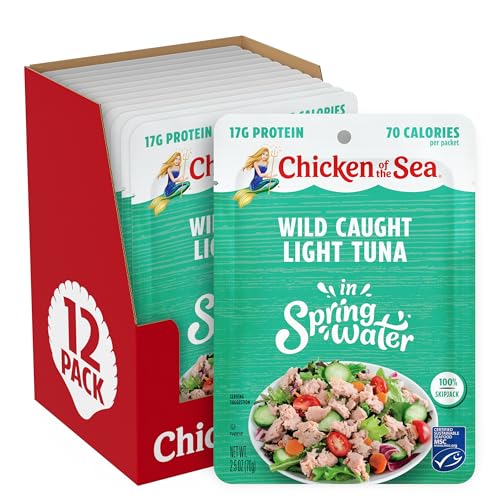
Chicken of the Sea has been packing tuna since 1914, and the company’s pouch offering reflects that institutional experience in the most practical way: it simply works without drama. The 2.5-ounce pouches contain 100% skipjack tuna packed in spring water with no oil, no broth, and no fillers. The protein count comes in at 11 grams per pouch—slightly lower than Bumble Bee’s 15-gram pouches but entirely reasonable for a standard serving size. What distinguishes this option in the value category is how consistently it delivers a clean, mild flavor that buyers describe as lacking that off-putting “fishy” smell that sometimes turns people off from tuna entirely.
The MSC certification matters here because Chicken of the Sea is not a boutique brand; it’s a global operation that has committed to sustainable sourcing at scale. That means the wild-caught skipjack in these pouches meets the same Marine Stewardship Council standards as premium-tier competitors, but at a price point that makes it feasible to stock your pantry with a 12-count case without flinching. The pouches are also noticeably easier to tear open than some competitors, which is a small detail that becomes significant when you’re eating this for lunch five days a week and don’t want to hunt for scissors every time.
The spring water packing liquid is thinner and less flavorful than oil-packed alternatives, which can make the tuna feel slightly drier if you’re eating it straight. That’s actually an advantage if you’re mixing it into a recipe—the neutral moisture base won’t conflict with mayonnaise, avocado, or vinaigrette dressings—but buyers who want a richer mouthfeel straight from the pouch may find themselves adding a splash of olive oil. The texture is flaky without being mushy, and reviewers consistently report that the pouches hold up well over their shelf life without developing off-flavors. For a no-surprises, versatile, sustainably-sourced tuna pouch at a sensible price, this is the benchmark.
Why it’s great
- MSC-certified skipjack at a price point that rewards bulk buying
- Mild, low-odor flavor that works in any recipe context
- Spring water packing avoids unnecessary oils and calories
Good to know
- 11g protein per pouch is lower than some 15g competitors
- Dryer texture when eaten straight without added fat or dressing
3. Bumble Bee Applewood Smoke Seasoned Tuna (2.5 oz, Pack of 12)

Bumble Bee’s Applewood Smoke flavor is the rare seasoned pouch that actually commits to its advertised taste profile. The skipjack tuna is lightly marinated with a subtle blend of applewood smoke, garlic, and onion that lands as a gentle warmth rather than an aggressive artificial smoke bomb. That restraint makes it versatile—you can eat it straight from the pouch on crackers without needing any additional condiments, but it also integrates cleanly into a rice bowl, pasta, or salad without overpowering the other ingredients. Each 2.5-ounce serving delivers 15 grams of protein for only 80 calories, giving you a protein density that outpaces most other flavored pouches on the market.
The MSC certification confirms wild-caught, dolphin-safe fishing, and Bumble Bee’s Trace My Catch program lets you input the product code to see exactly where and how your specific tuna was caught. That level of traceability is unusual for a brand operating at Bumble Bee’s scale, and it adds a layer of accountability that sustainability-minded buyers should appreciate. The pouch itself is compact and packs flat, making it an efficient choice for camping, hiking, or airline travel where every cubic inch of bag space counts. A few technical points: the pouch material is slightly stiffer than some competitors, which helps it resist punctures in a packed lunch, but that same stiffness means you’ll want scissors handy—several buyers note that tearing it open by hand requires uncomfortable effort.
The smoke flavor, while well-executed, is mild enough that some buyers looking for a bold BBQ experience may find it underwhelming. The seasoning reads more as a gentle aroma and background note rather than a punchy front-of-palate flavor, which works for some palates but leaves others wishing for more intensity. The 80-calorie count per pouch is driven by the lean protein and minimal fat content, which is excellent for macronutrient tracking but means the mouthfeel is on the drier side compared to oil-packed tuna. Overall, this is the strongest option if you want a ready-to-eat pouch with a distinctive flavor profile that doesn’t rely on heavy processing or artificial additives to make its impression.
Why it’s great
- 15g of protein at only 80 calories creates an excellent macro ratio
- Subtle applewood smoke flavor is balanced and not artificial-tasting
- Trace My Catch program offers full supply-chain transparency
Good to know
- Pouch material is tough to tear without scissors
- Smoke flavor may be too subtle for buyers seeking bold seasoning
4. StarKist Smart Bowls Latin Citrus (4.5 oz, Pack of 12)
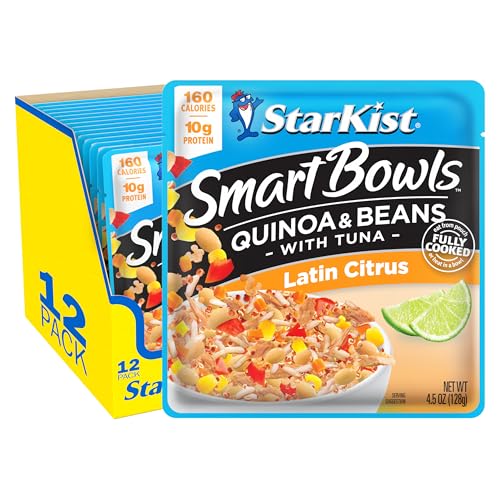
The StarKist Smart Bowls line rethinks the pouch format by treating it as a complete meal rather than just a protein component. The Latin Citrus variety packs quinoa, white beans, sweet corn, and wild-caught skipjack tuna with lime and cilantro seasoning into a single 4.5-ounce pouch that requires no heating, no mixing, and no additional ingredients. The nutritional result is a balanced 160-calorie serving with 10 grams of protein and 5 grams of fiber—a macro split that leaves you genuinely full, not just temporarily satiated by protein alone. The lime-cilantro profile is bright and clean, with enough acidity to cut through the beans without becoming sour or overwhelming.
The serving size is noticeably larger than standard 2.5-ounce tuna pouches, which changes how you use it. One pouch represents a legitimate lunch rather than a snack, especially if you eat it over greens or with a piece of fruit on the side. The quinoa and white beans provide slow-release carbohydrates that sustain energy longer than a plain tuna pouch would, making this a smart choice for afternoon work schedules where a 3 PM energy crash would sabotage productivity. Gluten-free certification and natural omega-3 content round out the health profile, and the resealable aspects of the packaging are adequate for the single-serve format—you won’t be saving half a pouch for later, which is honestly fine because the portion is designed to be consumed in one sitting.
The catch is that 10 grams of protein is relatively modest for a meal pouch, and active individuals who need 30+ grams per meal may need to supplement with additional protein. The texture is softer and more uniform than a straight tuna pouch because the beans and quinoa blend into a cohesive mixture that lacks the distinct flake separation of plain tuna. A few buyers noted that the Latin Citrus flavor benefits from a squeeze of fresh lime or a dash of hot sauce to brighten it further. It’s also worth checking the best-by dates on your case when it arrives, as the grain components have a shorter peak-window than pure tuna pouches.
Why it’s great
- Complete meal in a pouch with grains, fiber, and protein in one serving
- 160 calories with 5g fiber provides sustained energy for hours
- Bright lime-cilantro flavor stands out without being artificial
Good to know
- 10g protein per pouch is lower than straight tuna options
- Best-by dates are shorter than pure tuna pouches due to grain content
5. StarKist Smart Bowls Tomato Basil (4.5 oz, Pack of 12)
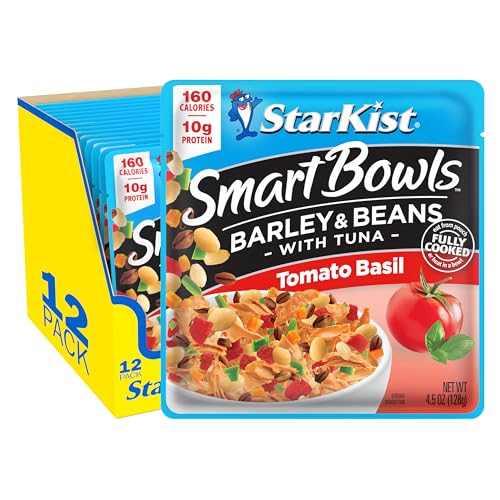
The Tomato Basil Smart Bowl takes the same complete-meal concept as the Latin Citrus but pivots to a heartier, earthier flavor profile built around barley, white beans, tomatoes, basil, and garlic. The barley provides a chewier texture than quinoa, giving the pouch a more substantial mouthfeel that mimics a warm grain bowl despite requiring no heating. The tomato-basil base is savory and aromatic without relying on heavy oil or salt, and the wild-caught skipjack tuna integrates into the blend without dominating—the beans and grains carry the flavor while the tuna provides the protein anchor. At 160 calories with 10 grams of protein and 3 grams of fiber, it’s nutritionally similar to the Latin Citrus but with a notably lower fiber count due to the barley versus quinoa swap.
Soy-free certification is a meaningful differentiator for buyers with soy sensitivities, and the ingredient list is refreshingly short: tuna, cooked barley, cooked white beans, tomato paste, basil, garlic powder, and a small handful of natural seasonings. The 4.5-ounce portion is generous enough to serve as a standalone lunch, particularly if you pair it with a piece of fruit or a handful of nuts to round out the fat content. Buyers consistently praise the flavor balance, noting that the basil and garlic come through clearly without the acidity overwhelming the other components. The pouch format eliminates the need for draining or mixing—just tear the top and eat directly, which makes it a strong option for desk lunches, road trips, or any situation where a bowl and utensils are optional.
The texture is the primary point of debate among buyers. The barley and bean mixture creates a softer, more uniform consistency that some describe as comforting and others find monotonous compared to a flaked tuna pouch. A small number of cases have been reported with pouches exhibiting swelling or gas buildup—likely from temperature fluctuations during shipping—though the majority of cases arrive intact with best-by dates several years out. The absence of acidic citrus means this flavor pairs exceptionally well with a side of roasted vegetables or a simple green salad dressed with balsamic vinaigrette. If your preference leans toward savory, warm-spice profiles rather than bright citrus, this is the Smart Bowl to grab.
Why it’s great
- Savory tomato-basil flavor profile is comforting and recipe-friendly
- Soy-free certification makes it accessible for allergy-sensitive diets
- Substantial barley texture mimics a warm meal without heating
Good to know
- Texture is soft and uniform, lacking the flake separation of plain tuna
- Occasional packaging swelling has been reported in isolated cases
FAQ
How long does pouch tuna stay fresh after opening?
Is pouch tuna healthier than canned tuna?
Can I use pouch tuna as a direct substitute for canned tuna in recipes?
How should I store unopened pouch tuna for long-term pantry use?
Final Thoughts: The Verdict
For most users, the best pouch tuna winner is the Wild Planet Skipjack Wild Tuna because it delivers verified low mercury levels, robust omega-3 content, and genuinely sustainable fishing practices in a format that works for daily consumption without compromise. If you want a ready-to-eat meal that requires zero prep and zero additional ingredients, grab the StarKist Smart Bowls Latin Citrus. And for a budget-friendly classic that simply does the job reliably without fuss, nothing beats the Chicken of the Sea Light Tuna in Spring Water.