Tomato plants are heavy feeders that demand a specific soil structure — loose enough for deep root penetration, rich enough to fuel rapid fruit set, and acidic enough to prevent nutrient lockout. A generic bag of topsoil or garden dirt will compact around the roots, starve them of oxygen, and invite fungal diseases like root rot. The right blend makes the difference between a few mealy fruits and a season-long harvest of sweet, fragrant tomatoes.
I’m Mohammad Maruf — the founder and writer behind AirfryerBite. Over the years I’ve analyzed hundreds of soil formulations, pH test results, and real-world user feedback to understand exactly what a container-grown tomato needs to thrive.
After comparing structure, drainage, nutrient content, and value across the market, I’ve narrowed down the contenders to help you choose the best potting soil mix for tomatoes for your containers, raised beds, and grow bags.
How To Choose The Best Potting Soil Mix For Tomatoes
Tomatoes are not forgiving plants. A mix that works for ferns or succulents will likely stunt a tomato’s growth or cause blossom-end rot. Focus on four factors every time you evaluate a bag.
Drainage & Aeration
Tomato roots need oxygen as much as they need water. A mix heavy in fine peat or dense topsoil will suffocate roots after rain or irrigation. Look for coarse perlite, pumice, or horticultural-grade pine bark in the ingredient list. These create the air pockets that let roots breathe and expand deep into the container.
Organic Matter & Nutrients
Tomatoes are voracious feeders. They consume nitrogen early for foliage, then demand phosphorus and potassium during fruit set. A premium mix will include worm castings, composted bark, or aged manure as slow-release organic sources. Avoid synthetic slow-release fertilizers that can burn roots in hot weather.
pH Balance
The ideal pH range for tomatoes is 6.0 to 6.8. Outside this window, plants cannot absorb calcium or magnesium efficiently, leading to yellow leaves and blossom-end rot. Many bagged mixes are pH-adjusted with lime. Always check the label or test the mix yourself with a cheap pH probe before planting.
Moisture Retention Without Sog
Tomatoes hate sitting in wet soil, but they also dry out quickly in porous mixes. A balanced blend uses coconut coir or sphagnum peat moss to hold moisture while coarse particles (perlite, bark) drain excess. The goal is a mix that stays damp for 48 hours but never feels like a wet sponge.
Quick Comparison
On smaller screens, swipe sideways to see the full table.
| Model | Category | Best For | Key Spec | Amazon |
|---|---|---|---|---|
| Espoma Organic Potting Mix | Premium All-Purpose | Organic container tomatoes | Myco-Tone + 4 qt. bag | Amazon |
| Miracle-Gro Potting Mix | Value Multi-Pack | Feeds up to 6 months | Fertilizer-infused + 16 qt. (2-pack) | Amazon |
| Back to the Roots Coir | Expanding Base | Building custom tomato mix | 51 qt. expanding block | Amazon |
| FoxFarm Happy Frog Fertilizer | Amendment for Vigor | Boosting fruiting & rot prevention | 5-7-3 NPK + calcium | Amazon |
| DUSPRO 8in1 Aroid Mix | Specialty Drainage | Chunky structure for root health | Pine bark + LECA + pumice | Amazon |
In‑Depth Reviews
1. Espoma Organic Potting Soil Mix

Espoma’s formula blends sphagnum peat moss, humus, and perlite with earthworm castings, alfalfa meal, kelp meal, and feather meal — a nutrient profile that directly addresses the heavy-feeding nature of tomatoes. The inclusion of Myco-Tone, a proprietary mix of endo and ecto mycorrhizae, colonizes the root system early, improving water and nutrient uptake during the critical transplant phase. Tomato roots grow noticeably denser in this mix compared to standard peat‑based alternatives.
Moisture retention is excellent without becoming waterlogged. Users report that pothos and tropicals stay moist for days longer than with cheaper brands, which translates to fewer watering cycles for container tomatoes during hot summer weeks. The texture is light and fluffy straight out of the bag, requiring no additional perlite for most 5‑gallon grow bags.
The 4‑quart bag is compact and good for starting a few plants or topping off pots. For larger container operations you will need multiple bags, but the organic certification and mycorrhizal boost deliver noticeable results in fruit size and plant vigor.
Why it’s great
- Myco-Tone boosts root efficiency for stronger transplants
- Rich organic feed blend (castings, kelp, alfalfa)
- Retains moisture well without becoming soggy
Good to know
- 4‑quart size is small for multiple large pots
- Premium cost per quart compared to economy bags
2. Miracle-Gro Potting Mix

This is the volume king for a reason. The 2‑pack of 16‑quart bags gives you enough mix to fill several 12‑inch containers or a handful of 10‑gallon grow bags. The formula includes a built-in fertilizer that feeds plants for up to six months, so you can skip the first round of liquid feedings. For tomatoes, this means steady nitrogen early for foliage and consistent phosphorus release when flowering begins.
The texture is a rich, dark medium with generous perlite content for drainage. Users blending this with orchid bark for indoor tropicals report excellent results, which suggests it handles the aeration needs of tomato roots well. The chemical smell noted by some reviewers dissipates within a day of opening. Blending in a handful of worm castings or a calcium supplement further reduces the risk of blossom-end rot.
This mix is best for gardeners who want a predictable, no‑fuss base that works for tomatoes, peppers, and herbs out of the same bag. The built-in feed eliminates guesswork for the critical early growth phase.
Why it’s great
- Built-in fertilizer feeds tomatoes for up to six months
- High volume at a very accessible price per quart
- Strong perlite content for drainage and aeration
Good to know
- Contains synthetic components — not organic
- Some users note a temporary chemical odor when first opened
3. Back to The Roots Organic Coir

This compressed coconut coir block expands to 51 quarts — over two cubic feet — when hydrated. It is not a complete potting mix on its own, but it is the ideal base for building a custom tomato blend. Coir has a balanced pH and holds moisture like peat but drains faster and rehydrates more easily. By mixing this with perlite, worm castings, and a slow-release tomato fertilizer, you get total control over drainage and nutrient density.
Users who have repotted plants from fungus gnat-infested soil praise the coir’s ability to stay clean on the surface. Because it is made from coconut husk, it resists compaction far better than peat over a full growing season. The OMRI listing assures organic production, which matters for growers who avoid synthetic inputs.
The main downside is the labor of hydrating the brick. You need a large tote and warm water, and the block takes patience to break apart completely. Once expanded, though, the volume-to-weight ratio is unmatched for shipping and storage.
Why it’s great
- Huge volume (51 qt.) from one compressed block
- Peat-free, OMRI certified organic, and sustainably sourced
- Superior drainage and re-wetting compared to peat moss
Good to know
- Requires hydration and mixing — not ready to use out of the box
- Needs added nutrients and aeration amendments for tomatoes
4. FoxFarm Happy Frog Tomato & Vegetable Fertilizer

This granular fertilizer is not a potting soil but the essential amendment that turns a decent base into a tomato powerhouse. The 5-7-3 formulation is tailored for vigorous feeders — higher phosphorus and potassium support abundant flower and fruit development, while the calcium content directly targets blossom-end rot, the most common frustration of container tomato growers. Mycorrhizal fungi are included to improve root efficiency in the soil medium you choose.
Users mixing Happy Frog with FoxFarm Ocean Forest soil, perlite, and coco coir report harvests that are noticeably larger and more flavorful than with standard fertilizers. The lack of chemical or fishy odor makes it pleasant to work with, and the granule form is easy to scratch into the top inch of soil around the tomato stem. It works for peppers, leafy greens, and root crops too.
A single 4‑pound bag provides enough top-dressing for a season of 8–10 tomato plants in containers. For best results, apply it at transplant time and then again when the first fruits begin to set.
Why it’s great
- Calcium content prevents blossom-end rot in tomatoes
- Mycorrhizal fungi improve nutrient and water uptake
- No strong chemical or fishy smell during application
Good to know
- Not a stand-alone potting mix; must be blended into a base soil
- 4‑lb bag covers a limited number of large containers
5. DUSPRO 8in1 Aroid Potting Mix
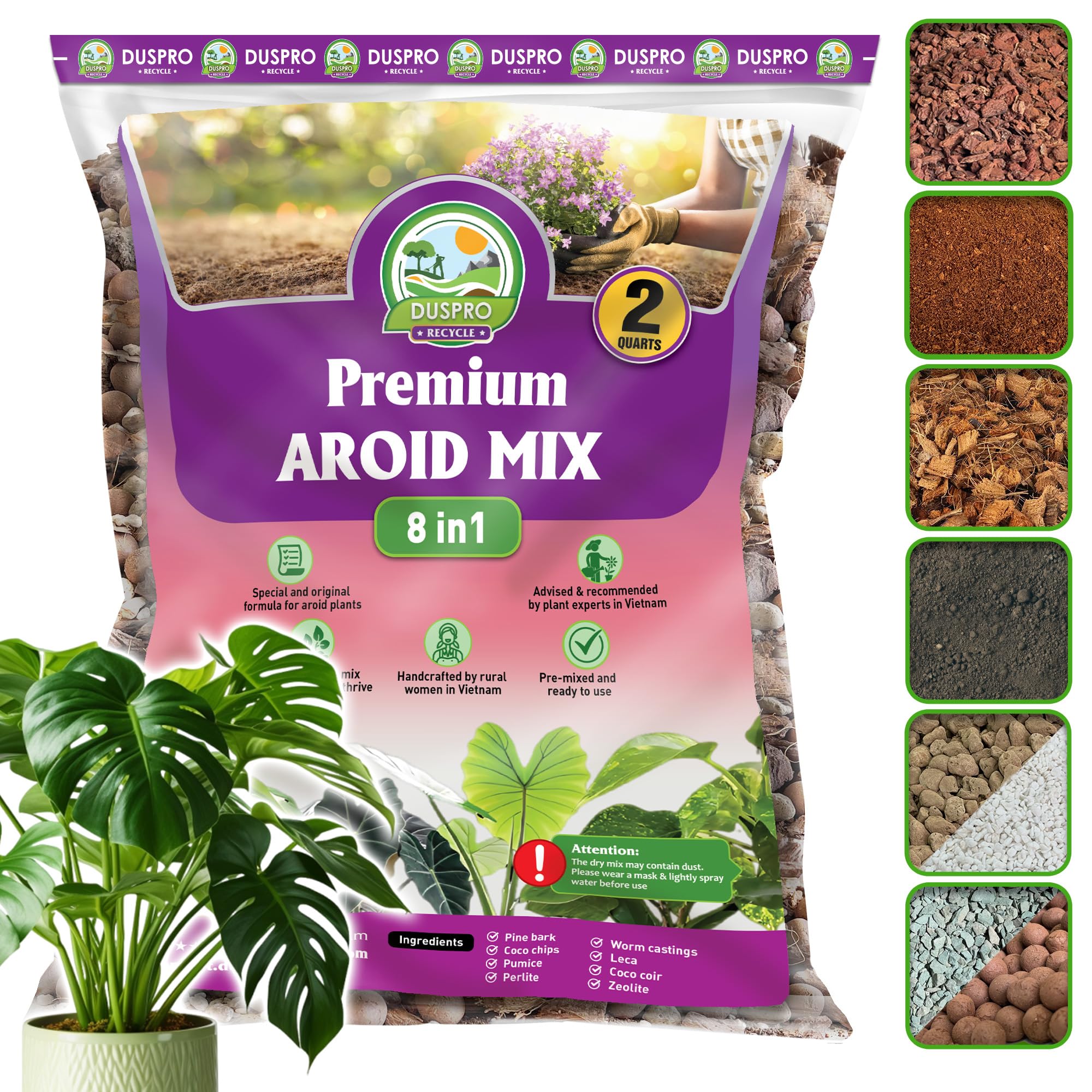
This mix was designed for aroid plants — monsteras, philodendrons, alocasias — but its chunky, open structure works surprisingly well for tomato roots when used as a primary medium. The eight components include pine bark, coco chips, pumice, LECA (clay pebbles), coarse perlite, coco coir, zeolite, and worm castings. The particle sizes are large, creating large air pockets that prevent compaction even after months of watering.
Users who transplanted struggling citrus and tangerine trees into this mix reported rapid recovery with new green growth within weeks, which speaks to the aeration and moisture balance. For tomatoes, this mix reduces the risk of root rot in heavy clay pots or self-watering containers that tend to stay wet at the bottom. The coir and worm castings provide a small nutrient charge, but you will need to supplement with a tomato-specific fertilizer like the FoxFarm Happy Frog.
The 2‑quart bag is small — ideal for starting a single determinate tomato or for mixing into a larger batch of generic potting soil to improve drainage. It is a premium solution for growers who want maximum aeration and have a small container setup.
Why it’s great
- Chunky particles create superior aeration for tomato roots
- Pre-mixed and ready to use — no DIY blending required
- Lightweight and clean with no large sticks or debris
Good to know
- Small 2‑quart size is insufficient for large grow bags
- Nutrient profile is light; needs supplemental feeding for tomatoes
FAQ
Can I reuse leftover tomato potting soil from last year?
What is the ideal bag size for one tomato plant in a 5-gallon container?
Should I add perlite to a pre-mixed potting soil for tomatoes?
Why do my tomato leaves turn yellow even with a nutrient-rich potting mix?
Final Thoughts: The Verdict
For most users, the best potting soil mix for tomatoes winner is the Espoma Organic Potting Soil Mix because it combines organic feed, mycorrhizal root enhancers, and reliable moisture retention in a ready-to-use bag that suits container tomatoes from transplant to harvest. If you want a high-volume base for building your own custom mix, grab the Back to The Roots Organic Coir. And for preventing blossom-end rot and boosting fruit production, nothing beats the FoxFarm Happy Frog Tomato & Vegetable Fertilizer as a side amendment.