Your basil’s leaves are turning yellow, the stems are leggy, and that fresh pesto you dreamed of is a distant memory. The culprit is rarely your watering can—it is almost always the foundation your plant sits in. A dense, waterlogged potting mix suffocates basil roots, while the wrong pH locks away nutrients, leaving you with a sad, bitter plant instead of the lush, aromatic harvest you paid for.
I’m Mohammad Maruf — the founder and writer behind AirfryerBite. I spend my days dissecting hardware specifications and analyzing market data, from air fryer wattages to the precise drainage ratios that make or break an indoor herb garden.
After cross-referencing dozens of soil blends against the specific needs of Ocimum basilicum, I have pinpointed the five mixes that consistently deliver the drainage, aeration, and nutrient profile basil demands. This is the definitive guide to the best potting soil for basil, built for home cooks who want a thriving windowsill harvest, not a science project.
How To Choose The Best Potting Soil For Basil
Basil needs a mix that drains quickly enough to keep roots oxygenated but retains enough moisture to prevent wilting between waterings. Finding that balance is the single challenge every basil grower faces, and most standard “indoor potting mixes” fail at it because they are formulated for moisture-loving tropical houseplants, not Mediterranean herbs.
Aeration and Drainage: The Non‑Negotiables
Check the ingredient list for perlite, pumice, or coarse sand. These chunky inorganic particles create air pockets that allow excess water to flow out of the pot. A mix that feels heavy or clumps when squeezed in your palm will suffocate basil roots within a week. Aim for a light, fluffy texture that crumbles easily.
pH and Nutrient Base
Basil thrives in a slightly acidic soil pH between 6.0 and 7.0. Look for bags that specify pH control or balanced pH levels. Avoid mixes high in uncomposted bark or raw manure, which can burn tender basil roots. Organic amendments like earthworm castings, kelp meal, or alfalfa meal provide a slow-release nutrient supply that matches basil’s moderate feeding habit.
Bag Volume and Portion Control
For a few windowsill basil plants, a 2 to 8 quart bag is more than sufficient. Larger bags (16 quarts) make sense if you are filling multiple containers or plan to repot frequently. Resealable packaging is a practical bonus because it keeps the mix dry and free of fungus gnats between uses.
Quick Comparison
On smaller screens, swipe sideways to see the full table.
| Model | Category | Best For | Key Spec | Amazon |
|---|---|---|---|---|
| Miracle‑Gro Indoor Potting Mix Bundle | Bundle | Beginners wanting a complete kit | 6 qt bag + 8 oz liquid plant food | Amazon |
| Espoma Organic Potting Mix (2‑Pack) | Organic | Chemical‑free indoor/outdoor growing | 8 qt bag (pack of 2) | Amazon |
| Leaves and Soul Indoor Herb Soil Mix | Herb‑Specific | Targeted basil, mint & rosemary care | 2.2 quart, resealable bag | Amazon |
| Midwest Hearth Premium Potting Soil Mix | Professional | Seed starting and small‑scale repotting | 4 dry quarts, peat‑perlite‑vermiculite | Amazon |
| Coast of Maine Bar Harbor Blend (2‑Pack) | Premium Organic | Large containers & heavy feeders | 16 quarts total, lobster‑shell meal | Amazon |
In‑Depth Reviews
1. Miracle‑Gro Indoor Potting Mix Bundle (6 qt + Plant Food)

This bundle pairs a 6‑quart bag of Miracle‑Gro’s indoor potting mix with an 8‑ounce bottle of their liquid plant food, giving you everything needed to get a basil seedling going from day one. The soil formula is specifically blended to be less prone to fungus gnats—it contains no compost or bark, two materials that commonly harbor those pests. The easy‑to‑rewet texture means you won’t battle dry pockets after a watering.
The liquid food mixes directly into your watering can and feeds all edible indoor plants, so you can stick to a simple every‑other‑week schedule without mixing separate fertilizers. Customer reports note visible improvement in leaf vibrancy and new growth on snake plants, peace lilies, and herbs alike, confirming the nutrient profile supports basil’s leaf‑production cycle.
For a home cook who just wants one purchase that covers both soil and food, this bundle removes guesswork. The 6‑quart bag fills three standard 6‑inch pots, and the resealable bag keeps unused mix fresh. Just be careful with the feeding directions—overfeeding basil can cause leaf burn, so measure the spout cap precisely.
Why it’s great
- Gnat‑resistant formula (no compost or bark)
- Includes liquid plant food for immediate use
- Easy‑rewet texture prevents dry spots
Good to know
- Liquid food must be dosed carefully to avoid overfeeding
- Bag is 6 quarts—small for multiple large containers
2. Espoma Organic Potting Soil Mix (8qt. Bag, Pack of 2)

Espoma’s mix skips synthetic chemicals entirely, relying on a rich blend of sphagnum peat moss, humus, perlite, earthworm castings, alfalfa meal, kelp meal, and feather meal. This ingredient lineup provides a slow‑release nitrogen source that basil can draw from steadily without the risk of chemical burn. The inclusion of Myco‑Tone—a blend of endo and ecto mycorrhizae—supports root development by colonizing the root zone with beneficial fungi.
The texture is light and fluffy, promoting the drainage basil demands while retaining enough moisture to prevent daily watering. Multiple reviewers noted that plants responded quickly after transplanting, with one commenting their African violet grew rapidly after the switch. The dual 8‑quart bags give you 16 quarts total, enough to fill four 8‑inch containers or to mix with extra perlite for even sharper drainage.
One recurring observation is that the mix can arrive very dry, which means you should moisten it thoroughly before planting to ensure it absorbs water rather than repelling it. This is a minor prep step, but it makes a real difference in preventing initial transplant shock for your basil.
Why it’s great
- Certified organic with no synthetic chemicals
- Myco‑Tone improves root colonization
- Dual‑pack offers good volume for multiple pots
Good to know
- Mix can arrive very dry; pre‑moisten before planting
- Slightly higher cost per quart than conventional blends
3. Leaves and Soul Professional Indoor Herb Soil Mix (2.2 Quarts)
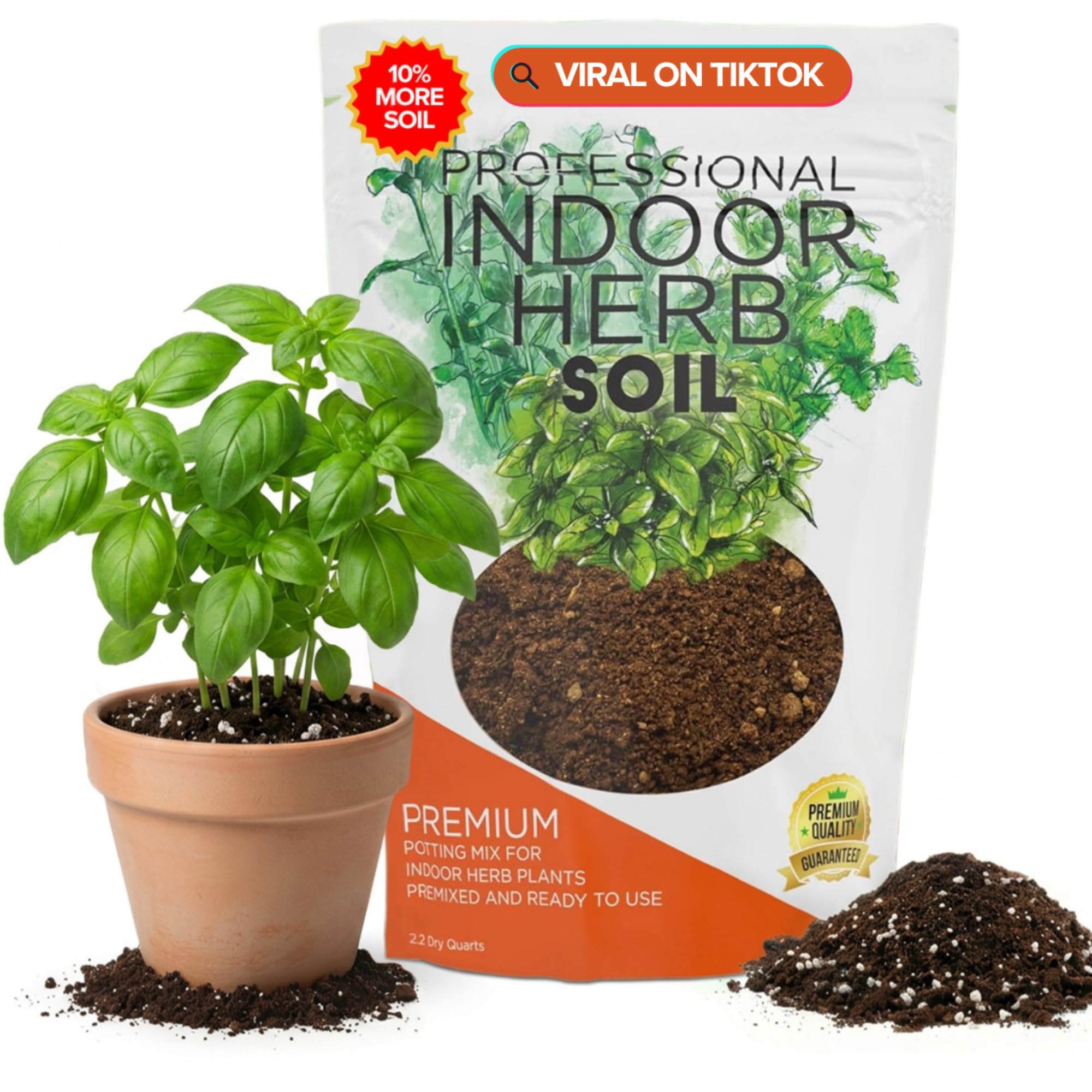
Leaves and Soul designed this mix specifically for indoor culinary herbs—basil, mint, rosemary, thyme, and parsley—rather than repurposing a generic houseplant formula. The blend uses peat moss, coco coir, perlite, and dolomite, creating a soil structure that drains efficiently while holding enough moisture between waterings to keep basil from wilting in dry indoor air.
The 2.2‑quart bag is compact, making it an ideal size for someone starting a small windowsill garden or testing a single basil plant before expanding. The resealable packaging keeps the mix fresh and prevents insects from getting in, which several reviewers appreciated for maintaining a clean storage environment. One reviewer specifically mentioned using it for hydroponic herbs in a small condo setup, highlighting the mix’s versatility.
Because the bag is small, you will need to buy multiple units if you are filling several larger pots. The coco coir component helps with moisture retention, but if your basil is in a very hot, sunny window, you may need to add extra perlite to increase drainage further. For a dedicated herb gardener who values a formulation tailored to their plants, this is a precise, no‑waste option.
Why it’s great
- Formulated specifically for culinary herbs
- Resealable bag keeps soil fresh and pest‑free
- Compact size suits small windowsill gardens
Good to know
- Small volume—multiple bags needed for larger projects
- May need additional perlite for very hot exposures
4. Midwest Hearth Premium Potting Soil Mix (4 Dry Quarts)

Midwest Hearth’s mix mirrors the formulation used by professional growers, combining peat moss, perlite, and vermiculite in proportions that deliver both aeration and moisture retention. Unlike many bagged soils that are heavy on peat, this one uses vermiculite alongside perlite, which gives it a noticeable fluffiness that resists compaction over time. The pH is controlled to suit a broad spectrum of plants, falling right in the 6.0–7.0 range basil prefers.
Customer feedback consistently praises the texture—reviewers describe it as “light, fluffy” and note that it holds moisture without becoming soggy. One user specifically called it great for germinating seeds, which matters if you are starting basil from seed rather than transplanting a nursery plant. The 4‑quart bag is resealable, and the easy‑pour spout design makes dispensing clean and simple.
The bag size is best for a single large pot or two medium pots. Some users mentioned the price per quart feels higher compared to bulk options, but the quality control—no weeds, no bugs, no bad smell—justifies the cost for growers who want a reliable, sterile starting mix. If you plan to scale up, you will need to buy multiple bags.
Why it’s great
- Professional‑grade peat‑perlite‑vermiculite blend
- pH balanced (6.0–7.0) for basil
- Resealable bag with easy‑pour spout
Good to know
- Bag size is small for multiple large containers
- Higher per‑quart cost than bulk alternatives
5. Coast of Maine Bar Harbor Blend Potting Soil (16 QT, 2‑Pack)
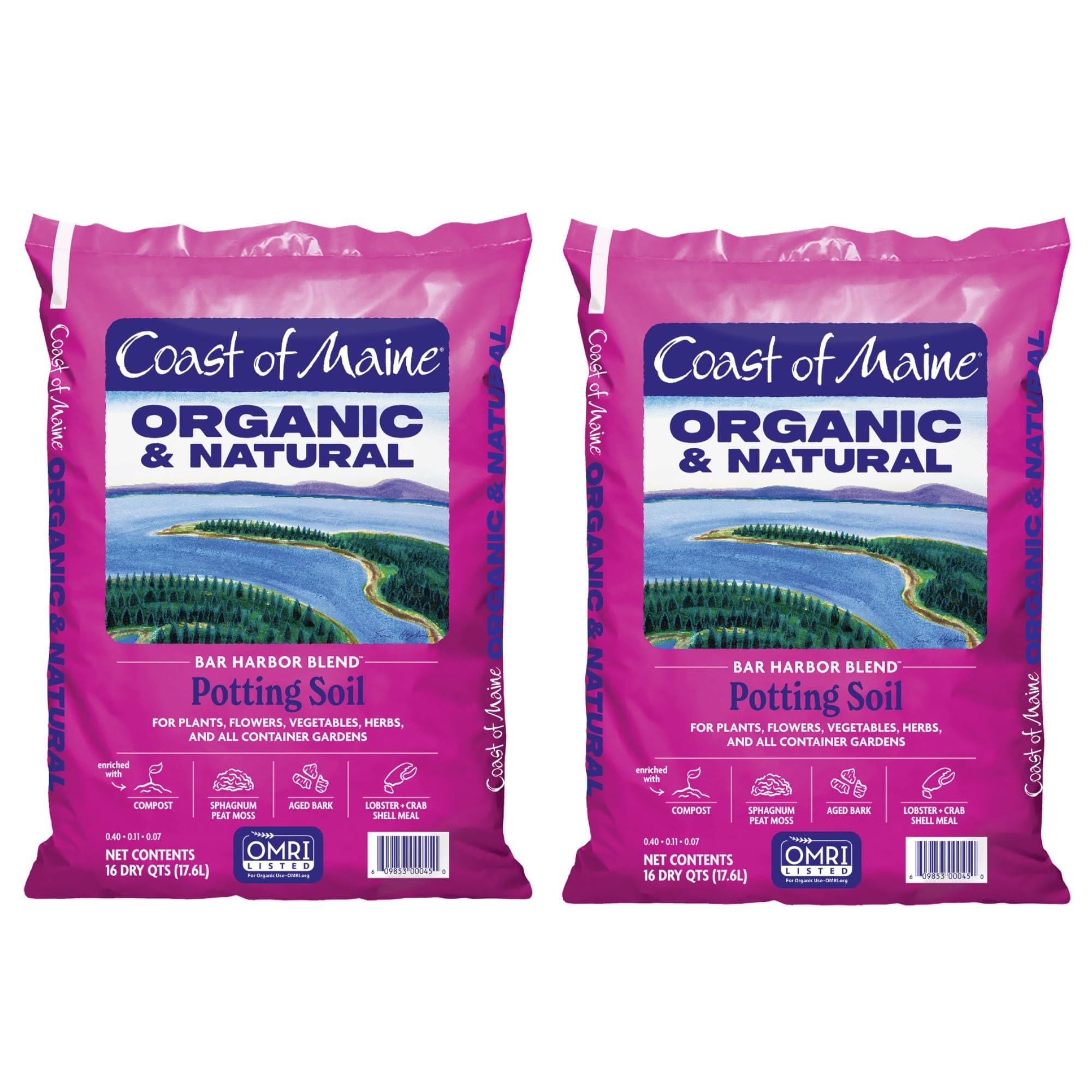
Coast of Maine takes a regionally sourced approach, mixing sphagnum peat moss, compost, perlite, and two unique marine ingredients—lobster and crab shell meal—along with kelp meal. These shell meals provide a slow‑release calcium and chitin boost that strengthens cell walls in basil, making leaves more robust and disease‑resistant. The compost gives the mix a darker color and a rich, earthy smell that indicates biological activity.
The 16‑quart total volume (two 8‑quart bags) is the largest on this list, making it the practical choice for anyone filling multiple large planters or an outdoor container garden. Reviewers report that vegetables like tomatoes and potatoes thrived in this soil, and one noted it held water without drying out too fast—a useful trait for basil during hot spells. The blend is certified organic and uses no synthetic fertilizers.
Because the mix is compost‑heavy, it retains more moisture than a straight peat‑perlite blend. If you are growing basil indoors in a standard plastic pot, you may need to cut the mix with extra perlite to prevent overwatering. For outdoor or greenhouse basil in larger containers, this blend’s nutrient density and moisture‑holding capacity are significant advantages.
Why it’s great
- Large volume suitable for multiple or oversized pots
- Unique lobster & crab shell meal for calcium boost
- Certified organic with slow‑release nutrients
Good to know
- Compost‑heavy mix may hold too much water for indoor pots
- Adding perlite is recommended for containers
FAQ
Can I use standard garden soil for basil in a pot?
How often should I replace the potting soil for my basil?
What does “pH controlled” mean on a potting soil bag?
Final Thoughts: The Verdict
For most users, the potting soil for basil winner is the Miracle‑Gro Indoor Potting Mix Bundle because it pairs a gnat‑resistant, easy‑rewet soil with a liquid plant food designed for edibles, making it the most complete starter package for home cooks. If you want certified organic ingredients and a mycorrhizae boost for root health, grab the Espoma Organic Potting Mix (2‑Pack). And for large‑scale container gardening where slow‑release calcium from marine sources makes a difference, nothing beats the Coast of Maine Bar Harbor Blend.