Switching to a lower-sodium lifestyle often means facing the grim reality of potassium chloride — a bitter, metallic, and frankly unpleasant replacement that ruins your eggs, soups, and roasted vegetables. The challenge is finding a blend that actually tastes like salt without the chemical bite or requiring a doctor’s note to understand the label.
I’m Mohammad Maruf — the founder and writer behind AirfryerBite. I’ve spent months cross-referencing lab results, customer feedback, and ingredient lists on potassium-based salt alternatives to separate the genuinely palatable blends from the gritty, bitter fillers that dominate the market.
Whether you are managing blood pressure, following a kidney-friendly diet, or simply trying to cut sodium without sacrificing flavor, finding the right potassium salt requires understanding the ratio of potassium chloride to sodium chloride and the presence of additives like anti-caking agents that can ruin the texture.
How To Choose The Best Potassium Salt
Not all salt substitutes are created equal. The key differentiators come down to the exact potassium-to-sodium ratio, the presence of supporting minerals like magnesium and iodine, and the physical form of the product — powder versus granulated versus capsule. Understanding these three variables will save you from wasting money on a bitter, poorly dissolving product that sits unused in your cabinet.
Potassium-to-Sodium Ratio
The ratio defines the taste profile and the medical suitability. A 50/50 blend (half potassium chloride, half sodium chloride) delivers the closest taste to regular table salt with roughly half the sodium. Pure potassium chloride (sodium-free) is significantly more bitter and requires careful measurement for people with kidney conditions. Products with added minerals like magnesium and iodine often mask the bitterness more effectively than straight KCl.
Additives and Anti-Caking Agents
Many cheap potassium salts use silicon dioxide or magnesium stearate to prevent clumping. While generally recognized as safe, these fillers can create a chalky mouthfeel and prevent the salt from dissolving properly in cold liquids. Premium blends avoid these entirely or use natural flow agents. Also check for iodine — some blends add it back to replace the iodine lost when reducing sodium chloride.
Form Factor: Powder vs. Granulated vs. Capsule
Fine powders dissolve instantly in hot liquids and are ideal for soups, stews, and brines but can be messy for table use. Granulated products behave identically to table salt in shakers and are better for baking and dry rubs. Capsules are strictly for electrolyte supplementation and are not intended for cooking — they deliver a precise dose for hydration during fasting or heavy exercise.
Quick Comparison
On smaller screens, swipe sideways to see the full table.
| Model | Category | Best For | Key Spec | Amazon |
|---|---|---|---|---|
| Morton Lite Salt | 50/50 Blend | Everyday cooking and baking | 50% less sodium per serving | Amazon |
| R-U VED Wright Salt | Mineral Blend | Mild flavor with added electrolytes | 295 mg sodium per 1/4 tsp | Amazon |
| Bakers Club KCl Powder | Pure Powder | Bulk seasoning and DIY electrolyte drinks | 2 lb bag, sodium-free | Amazon |
| BulkSupplements KCl Powder | Pure Powder | Hydration and high-volume use | 2.2 lb bag, cGMP certified | Amazon |
| Smarter Electrolyte Capsules | Capsule | Hydration during keto and fasting | 500 mg potassium per serving | Amazon |
In‑Depth Reviews
1. Morton Lite Salt (11 oz, 6-Pack)
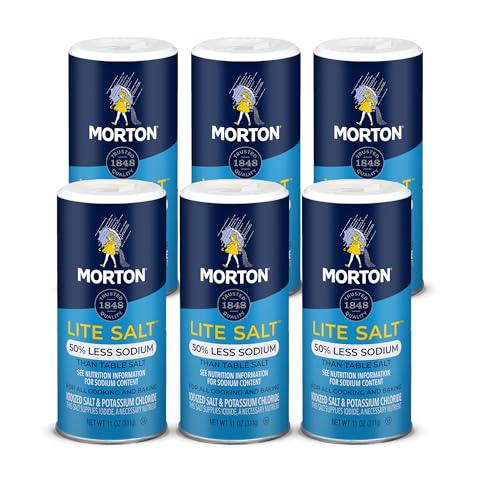
Morton Lite Salt is the benchmark for anyone who wants to cut sodium without relearning how to cook. The 50/50 blend of sodium chloride and potassium chloride delivers the same granular texture, same dissolution rate, and same salty punch as regular table salt — just with half the sodium. Customers consistently report it behaves identically in baking, searing, and seasoning, which is rare among salt alternatives.
The 6-pack format offers exceptional value for households that go through salt quickly. Each cardboard container features a rotating plastic lid with both shaker and pour openings, though the flimsy construction can be frustrating for users with arthritis or dexterity issues. Many buyers also repurpose this as a cheap electrolyte source for homemade hydration drinks, noting it mixes easily with only a subtle mineral aftertaste.
For most homes, this is the single easiest swap to reduce sodium intake. It works seamlessly in everything from scrambled eggs to bread dough to dry rubs. The only real downside is the packaging — transfer to a glass shaker if the cardboard-on-plastic mechanism bothers you.
Why it’s great
- True 50% sodium reduction without changing cooking behavior
- Dissolves and measures exactly like standard table salt
- 6-pack provides long-term supply at a reasonable per-unit cost
Good to know
- Cardboard shaker with plastic lid feels cheap and can be hard to open
- Contains silicon dioxide as an anti-caking agent
- Not sodium-free — still suitable for those needing strict potassium-only diets
2. R-U VED Wright Salt (8.4 oz)
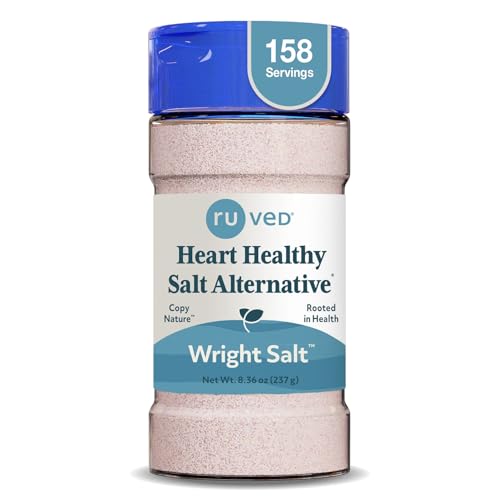
Wright Salt stands out because it is not a pure potassium chloride substitute — it is a proprietary blend of Himalayan pink salt, potassium, magnesium, and iodine. This combination dramatically reduces the bitter, metallic aftertaste that plagues straight KCl products. Users describe the flavor as “mild” and “clean,” with several noting it tastes closer to regular salt than any other alternative they have tried.
At 295 mg of sodium per 1/4 teaspoon, it delivers roughly half the sodium of regular salt (590 mg), making it a strong middle-ground option for those who want significant sodium reduction without going to zero. The fine grind is slightly powdery but dissolves well in hot dishes. A little goes a long way — several users report reducing their husband’s or father’s sodium intake effectively with this product.
The price per ounce is higher than bulk powders or the Morton blend, but the superior taste and inclusion of iodine (important for thyroid health) justify the premium for those who find pure KCl unbearable. It is vegan, non-GMO, and free from chemical flow agents, which is a bonus for label-conscious buyers.
Why it’s great
- Nicely balanced mineral profile masks the bitter KCl taste
- Includes iodine for thyroid support
- No anti-caking agents or artificial fillers
Good to know
- Small 8.4 oz container runs out quickly with daily use
- Higher cost per serving compared to bulk KCl powders
- Powdery consistency may clump in humid environments
3. BulkSupplements Potassium Chloride Powder (2.2 lb)

BulkSupplements delivers exactly what the name promises — pure, unflavored potassium chloride in a massive 2.2-pound bag. This is the go-to for serious DIY electrolyte mixers, keto dieters, and anyone who wants to add potassium to homemade sports drinks without paying for branded packets. The powder is fine, dissolves readily in water, and each 200 mg serving makes dosing simple.
The unflavored nature means the classic KCl bitterness is fully present — users report it works best when mixed into strong-flavored soups, chili, or stews that can mask the taste. Many customers use it alongside regular salt to cut overall sodium while maintaining flavor. The cGMP-certified facility and third-party testing add a layer of quality assurance that budget brands often skip.
One bag will last a single person well over a year when used for daily electrolyte drinks or moderate food seasoning. The packaging is a basic resealable bag, so transferring to an airtight container is recommended. The price per serving is exceptionally low, making it the most economical option on this list for those who can handle the pure KCl taste.
Why it’s great
- Extremely low cost per serving, especially for bulk hydration use
- Fine powder dissolves instantly in both hot and cold liquids
- Third-party tested with cGMP certification
Good to know
- Pure KCl has a distinct bitter/metallic taste that many dislike
- Bag packaging is not resealable enough for long-term storage
- Not suitable for direct table use — needs blending with salt or flavors
4. Bakers Club Potassium Chloride Powder (2 lb)

Bakers Club positions this as a filler-free, sodium-free powder for culinary flexibility, and it delivers on that promise. The 2-pound bag contains nothing but potassium chloride — no silicon dioxide, no magnesium stearate, no flow agents. This purity matters for precise recipe formulation, particularly in commercial kitchens or for those with sensitivities to common additives.
Customer feedback highlights its versatility in soups, stews, chili, eggs, and even roasted chicken. Users note that it requires more product than sea salt for large pots and can taste “funky” if used straight on the table. It is explicitly not recommended for baking, as sodium chloride plays a chemical role in leavening that potassium cannot replicate. The unflavored nature makes it a blank slate for custom spice blends.
For the price, this is a strong competitor to BulkSupplements with a slightly smaller total weight. The resealable bag design is marginally better than the BulkSupplements offering. If you are building a salt-free spice cabinet from scratch, this is a reliable base ingredient that will not introduce hidden sodium or unwanted flavors into your formulas.
Why it’s great
- Filler-free formula with zero additives
- Dissolves easily in hot liquids for soups and stews
- Good value for the volume at a mid-range price point
Good to know
- Not suitable for baking due to lack of sodium for chemical reactions
- Bitterness is present and requires strong flavors to mask
- Bag packaging can be prone to moisture clumping if not sealed properly
5. Smarter Electrolyte Capsules (90 Count)
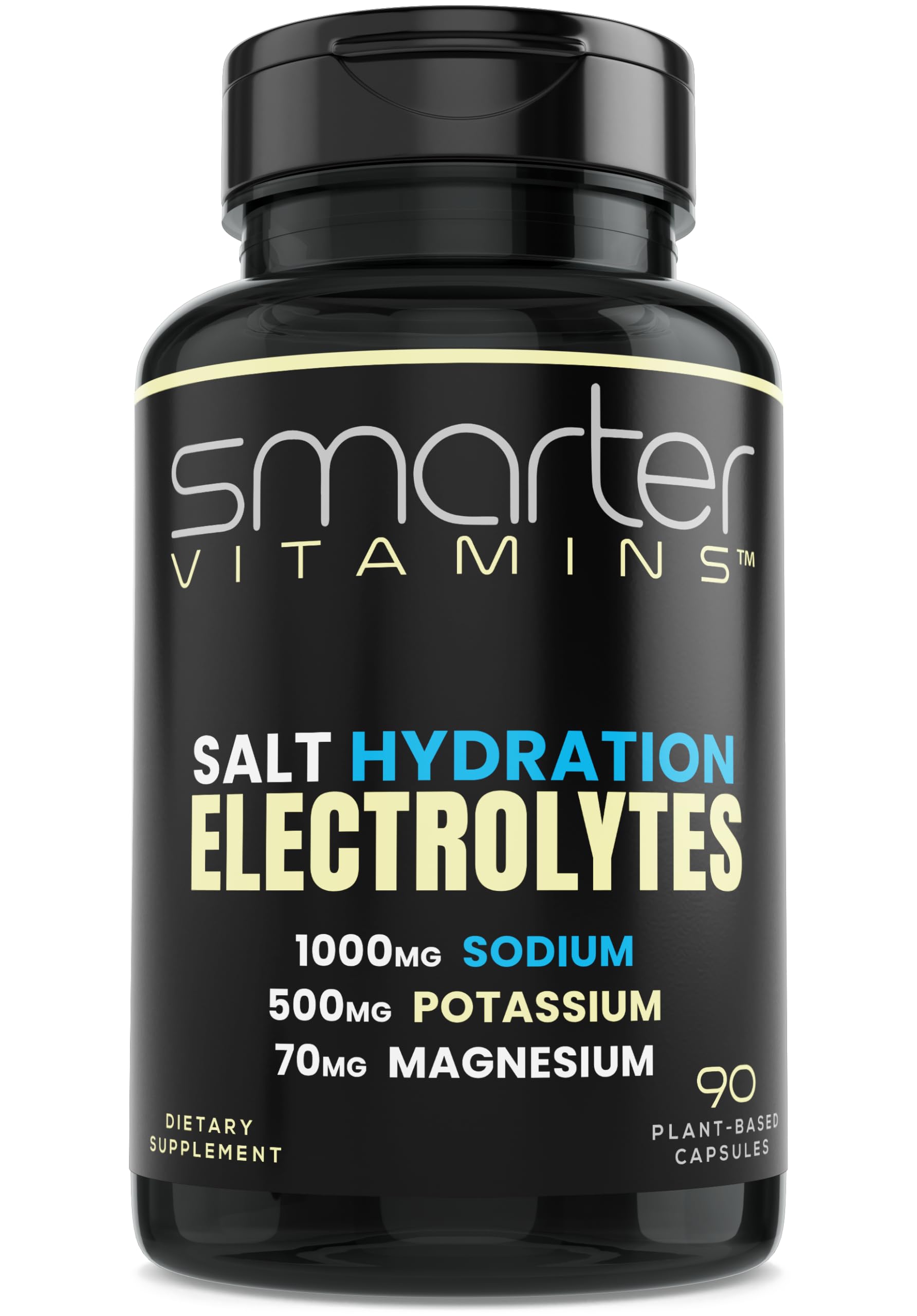
Smarter Electrolyte Capsules serve a completely different use case from the other products on this list — this is not a cooking ingredient but a targeted supplement for hydration support during keto, fasting, extended workouts, or sauna sessions. Each serving of three capsules delivers 1000 mg sodium, 500 mg potassium, and 70 mg magnesium in a tasteless, easy-to-swallow format.
The capsule form eliminates the bitter taste problem entirely — no mixing, no gritty residue, no metallic aftertaste. Users with low blood pressure or those who hate the flavor of LMNT-style electrolyte powders praise this product for being effective without the sensory unpleasantness. One reviewer noted it helped their sick mother feel better within two days, while another uses it daily for POTS management.
These are not intended for cooking or table seasoning, so they cannot replace the other products in a culinary context. However, for anyone following a strict keto diet, extended fast, or heavy training regimen, these capsules provide a precise, clean electrolyte hit without added sugar, dyes, or fillers. The 90-count bottle provides 30 servings, and many users report taking them every other day to extend the supply.
Why it’s great
- Zero taste — no bitter KCl flavor to mask
- Convenient capsule format for travel, gym, or desk use
- Third-party tested with clean label (no sugar, no caffeine)
Good to know
- Not a cooking substitute — strictly a hydration supplement
- Higher cost per potassium dose compared to bulk powders
- Some users find one serving too strong and prefer half doses
FAQ
Does potassium salt taste exactly like regular table salt?
Can I use potassium salt for baking?
Is potassium salt safe for people with kidney disease?
How do I fix the bitter taste of pure potassium chloride?
Final Thoughts: The Verdict
For most users, the potassium salt winner is the Morton Lite Salt because it delivers genuine 50% sodium reduction without forcing you to learn new cooking techniques or tolerate a bitter aftertaste. If you want a cleaner label with added minerals and iodine, grab the R-U VED Wright Salt. And for high-volume DIY electrolyte drinks or bulk seasoning, nothing beats the cost-per-serving value of the BulkSupplements KCl Powder.