The shift from probiotics to postbiotics isn’t a marketing trend—it’s a biological upgrade. While probiotics are live bacteria that must survive stomach acid to reach your gut, postbiotics are the bioactive compounds produced during fermentation, offering digestive support without the fragility. For anyone dealing with bloating, irregularity, or gut discomfort that probiotics haven’t resolved, a targeted postbiotic formula can deliver more consistent results.
I’m Mohammad Maruf — the founder and writer behind AirfryerBite. After analyzing the formulation science, third-party testing standards, and user-reported outcomes across a dozen brands, I’ve pinpointed which products offer a genuine 3-in-1 advantage (prebiotic, probiotic, and postbiotic) versus those that simply repackage standard probiotics under a trendy label.
Whether your goal is to reduce occasional bloating, support immune function, or rebuild gut resilience after antibiotics, finding the right combination of strains and delivery mechanisms is critical. This guide breaks down the top 5 contenders for the best postbiotic supplements based on potency, ingredient transparency, and real-world user feedback.
How To Choose The Best Postbiotic Supplements
Postbiotic supplements aren’t all created equal. Three critical factors separate effective formulations from those that won’t survive your digestive system or deliver meaningful benefits.
3-in-1 vs. Standalone Formulations
A true postbiotic supplement contains prebiotics (fuel for good bacteria), probiotics (live beneficial bacteria), and postbiotics (the beneficial metabolites produced). Products that only include one or two components may not provide the full synergistic effect needed for digestive balance, reduced bloating, and immune support.
Spore-Based Probiotic Strains
Look for spore-forming probiotics like Bacillus subtilis (often branded as MegaDuo). Unlike conventional probiotics that perish in stomach acid, spore-based strains remain dormant until they reach the intestines, where they germinate and produce postbiotic metabolites. This survivability makes them far more reliable for daily gut support.
Ingredient Sourcing and Certifications
Clean label certifications (Non-GMO, NSF Gluten-Free, Vegan, B Corp) indicate rigorous third-party testing for purity and potency. Propolis-based prebiotics offer antimicrobial and anti-inflammatory benefits that standard fiber prebiotics cannot match, but they are not suitable for strict vegans.
Quick Comparison
On smaller screens, swipe sideways to see the full table.
| Model | Category | Best For | Key Spec | Amazon |
|---|---|---|---|---|
| Beekeeper’s Naturals (60ct) | Premium 3-in-1 | Chronic gut issues & inflammation relief | Propolis + MegaDuo + CoreBiome | Amazon |
| Garden of Life Dr. Formulated | Mid-Range 3-in-1 | Gas & bloating relief with 50B CFU | 50 Billion CFU + 15 strains | Amazon |
| MARYRUTH’S 3-in-1 | Mid-Range 3-in-1 | Vegan-friendly 23-strain support | 50 Billion CFU + 23 strains | Amazon |
| Love Wellness Gut Feelings | Budget-Friendly 3-in-1 | Women’s digestive & immune support | 3 Billion CFU + prebiotic fiber | Amazon |
| Beekeeper’s Naturals (28ct) | Entry-Level 3-in-1 | Trial-size starter for gut health | Propolis + MegaDuo + CoreBiome | Amazon |
In‑Depth Reviews
1. Beekeeper’s Naturals Complete Gut Health (60ct)
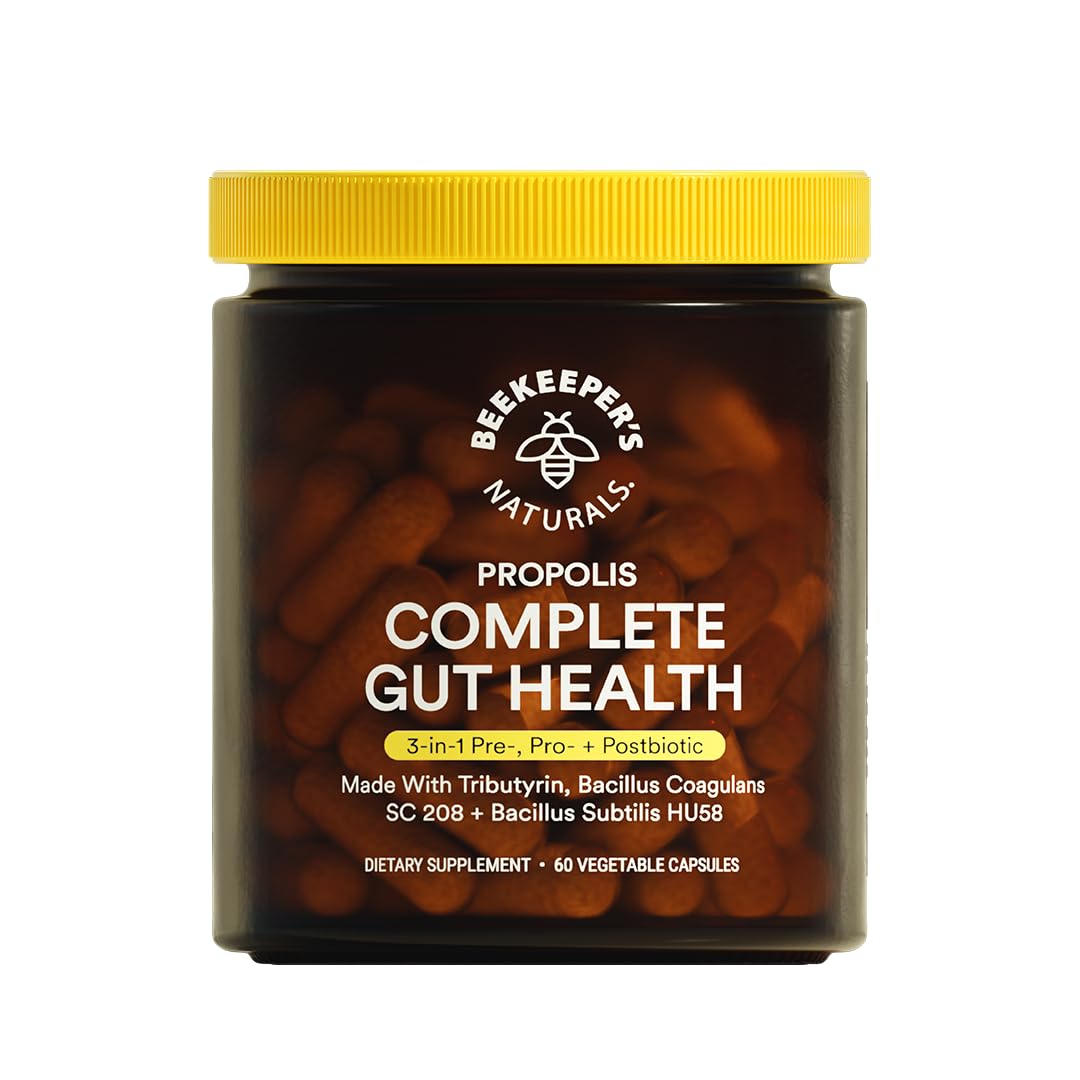
This is the product that customers call a “life changer” across multiple verified reviews. The 60-count bottle delivers the same propolis-powered 3-in-1 (prebiotic, probiotic, postbiotic) formula as the smaller version, but at a more economical per-dose cost. The proprietary combination—propolis as a prebiotic, MegaDuo (Bacillus subtilis) as a spore-based probiotic, and CoreBiome (tributyrate) as a postbiotic—targets inflammation, bloating, and energy levels simultaneously. Clinical data shows over 50% of participants felt gut health improvements within the first 5–7 days, with 68% reporting reduced bloating and 74% experiencing less gas.
Users report resolution of chronic stomach issues that persisted for years despite dietary changes, often noticing improvement within 48 hours. The spore-based probiotic survives the entire digestive journey, which explains why many find it effective even when standard probiotics failed. Capsules are vegetarian-friendly, though the bee propolis makes them unsuitable for strict vegans (“beegan” is the brand’s term).
The most consistent complaint involves fill consistency: some 60-count jars contain 59 capsules instead of the advertised 60. While this indicates a quality control gap in packaging, the formula itself receives near-universal praise for reducing inflammation, boosting mental clarity, and maintaining regularity without harsh side effects.
Why it’s great
- Propolis prebiotic offers antimicrobial benefits fiber cannot match
- MegaDuo spore-based probiotic survives stomach acid for reliable delivery
- Rapid symptom relief reported within 48 hours for chronic gut issues
Good to know
- Not vegan due to bee propolis content
- Occasional underfill (59 capsules instead of 60) reported
- Higher per-bottle cost than standard probiotic blends
2. Garden of Life Dr. Formulated Pre, Post & Probiotics
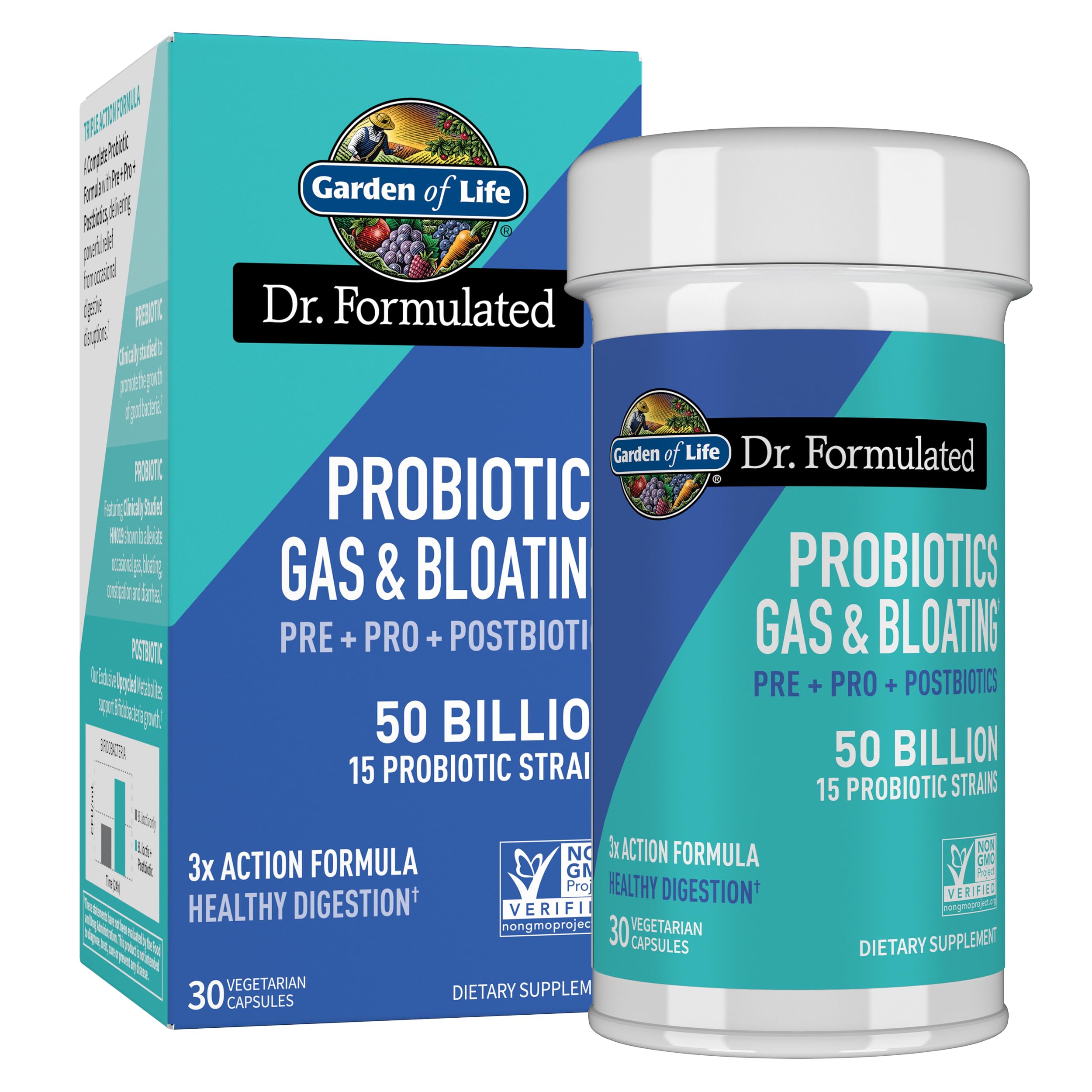
Garden of Life brings its established credibility to the 3-in-1 space with a formula that packs 50 billion CFU across 15 clinically studied probiotic strains, plus organic potato starch and acacia fiber as prebiotics, and upcycled postbiotics from the PreforPro blend. The formula is specifically targeted at occasional gas and bloating relief, with strain HN019 being the standout digestive aid. Each vegetarian capsule is shelf-stable, non-GMO, NSF Certified Gluten-Free, and vegan-certified—making it one of the most broadly accessible options in this category.
User feedback highlights consistent bloating relief, with many customers reporting noticeable improvement within the first few days. The once-daily dosing is convenient, and the shelf-stable nature means no refrigeration is required. Some experienced users note that effectiveness can wane over time, recommending a rotation between different probiotic brands every 2–3 months to maintain digestive responsiveness.
The clean label certification (NSF Gluten-Free, Non-GMO) provides reassurance for those with dietary restrictions, and the absence of artificial dyes or fillers aligns with the brand’s commitment to whole-food-based supplements. For those wanting a high-CFU 3-in-1 without the propolis allergen, this is the strongest pick.
Why it’s great
- 50 billion CFU per capsule with 15 diverse strains
- NSF Certified Gluten-Free and Non-GMO verified
- Vegan-friendly and shelf-stable for travel
Good to know
- May require rotating every 2–3 months to avoid tolerance
- Some users find effectiveness declines on second bottle
- Postbiotic component is an upcycled ingredient, not tributyrate
3. MARYRUTH’S 3-in-1 Probiotics for Digestive Health

MaryRuth’s stands out for strain diversity—23 unique prebiotic, probiotic, and postbiotic strains in a single 50 billion CFU capsule. The formula targets digestion, microbiome balance, immune function, and mood, making it the broadest-spectrum option in this roundup. Women in their 60s and beyond specifically report improved regularity and reduced bloating after consistent use, with one 4-month daily user describing it as “the best digestive aid I’ve ever tried.” The capsules are vegan, non-GMO, dairy-free, nut-free, gluten-free, soy-free, and sugar-free, backed by both Clean Label Project Certification and B Corp Certification.
An important adjustment period exists: several verified reviewers noted initial diarrhea or digestive disturbance during the first week as the gut microbiome adjusts. After this window, benefits including less bloating, better digestion, and improved energy levels become apparent. The 50 billion CFU potency is appropriate for those with moderate to severe digestive concerns, but sensitive individuals may want to start with a lower CFU option.
MaryRuth’s manufacturing quality (GMP Facility certification) and the dual Clean Label Project and B Corp certifications provide exceptional third-party verification. The 30-count bottle offers a one-month supply at a competitive mid-range price point, making it an accessible entry point into high-CFU postbiotic supplementation.
Why it’s great
- 23 unique strains—the widest diversity in this comparison
- Clean Label Project and B Corp certified for purity
- Free from 7 common allergens (dairy, soy, gluten, nut, etc.)
Good to know
- Initial digestive adjustment (diarrhea, gas) common in first week
- 30-count supply requires monthly repurchase
- High CFU may be too potent for sensitive beginners
4. Love Wellness Gut Feelings Probiotic

Love Wellness Gut Feelings takes a more gentle approach with 3 billion CFU, making it suitable for those new to gut health supplementation or with sensitive digestive systems. The 3-in-1 formula includes prebiotic fiber to feed probiotics, probiotics to support healthy gut function, and postbiotics (produced through natural fermentation) to strengthen the gut lining and support immunity. The capsule can be opened and mixed into beverages for those who struggle with pill swallowing, a thoughtful accessibility feature.
Women specifically praise this formula for reducing bloating and gas quickly, with many noting it works “faster than cheaper alternatives” and subscribing for monthly delivery. The doctor-developed femcare approach means the entire product line (including companion supplements like Bye Bye Bloat) is designed with women’s hormonal and digestive health in mind. The formula is dairy-free, gluten-free, and vegetarian, though it lacks the higher CFU counts of competitive 3-in-1 blends.
The lower 3 billion CFU dosage means it may not satisfy those with severe IBS-D or complex gut issues—multiple reviewers noted it didn’t work for their specific condition while acknowledging the brand’s overall quality. For women seeking a maintenance-level gut health supplement rather than intensive therapeutic support, this remains an accessible and well-regarded option.
Why it’s great
- Gentle 3 billion CFU ideal for beginners and sensitive stomachs
- Capsule can be opened and mixed into drinks for easy consumption
- Doctor-developed with women’s health focus across the product line
Good to know
- Lower CFU may not resolve severe IBS or chronic digestive issues
- Some users report strain incompatibility with specific gut conditions
- Smaller bottle (30 count) compared to competitors
5. Beekeeper’s Naturals Complete Gut Health (28ct)
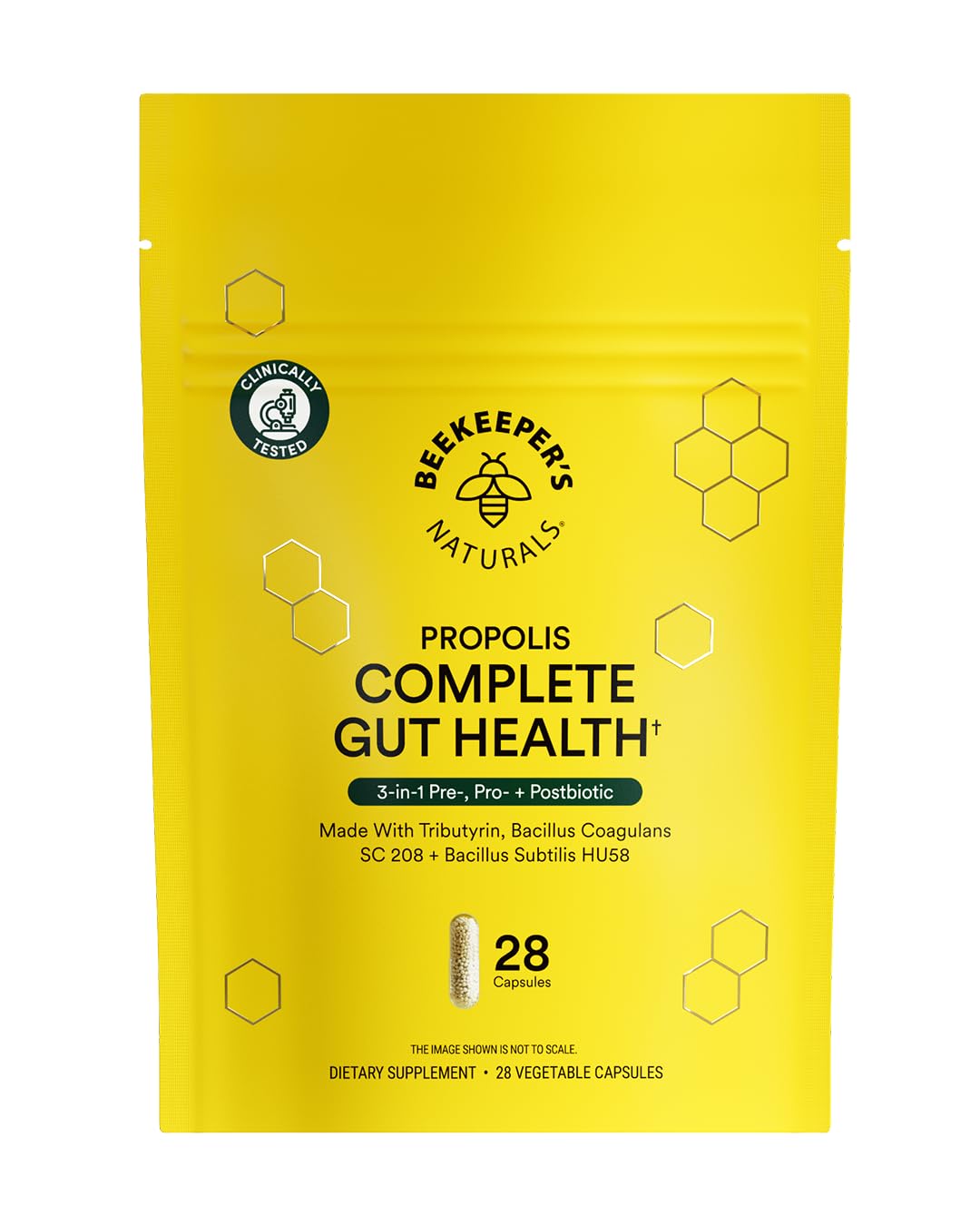
The 28-count version of Beekeeper’s Naturals Complete Gut Health offers the exact same propolis-powered 3-in-1 formula as the 60-count bottle—just in a smaller, more affordable package. For newcomers hesitant to commit to a full month’s supply, or for travelers needing a compact container, this entry-level size provides a 28-day trial period at a reduced upfront cost. The formula remains identical: propolis as a prebiotic, MegaDuo spore-based probiotic, and CoreBiome tributyrate postbiotic.
User feedback mirrors the larger bottle’s reputation—chronic stomach issues resolving within days, improved energy, reduced inflammation, and better mental clarity. The “proven results” claim is backed by the same clinical data (over 50% of participants reporting gut health improvements within 5–7 days). The smaller size also means the capsules are consumed before any potential potency degradation from long-term storage, though shelf stability isn’t a concern with this spore-based technology.
Being the exact same formulation as the 60ct bottle, the per-capsule cost is higher with the 28ct version. For anyone who knows their digestive system responds well to this formula, the 60-count bottle delivers superior value. However, as a trial size for first-time postbiotic users, the 28ct eliminates the risk of investing in a full month’s supply of a supplement that may not suit their individual biochemistry.
Why it’s great
- Low-commitment trial size for first-time postbiotic users
- Identical clinical-grade formula to the 60ct bottle
- Compact packaging for travel or on-the-go use
Good to know
- Higher per-capsule cost than the 60-count version
- Same underfill issue reported (27–28 capsules vs. advertised 28)
- 28-day supply requires frequent reordering
FAQ
Can I take a postbiotic supplement with my existing probiotic?
How quickly do postbiotic supplements work for bloating relief?
Are postbiotic supplements safe during pregnancy or breastfeeding?
What is the difference between a postbiotic and a probiotic metabolite?
Final Thoughts: The Verdict
For most users, the best postbiotic supplements winner is the Beekeeper’s Naturals Complete Gut Health (60ct) because its propolis-spore-tributyrate trio delivers clinically backed results for bloating, inflammation, and overall gut balance within days. If you want a vegan-certified high-CFU option with the widest strain diversity, grab the MARYRUTH’S 3-in-1 Probiotics. And for a gentle introduction to postbiotic supplementation at the lowest entry price, nothing beats the Love Wellness Gut Feelings Probiotic.