Tap water traveling through aging municipal pipes often carries perfluorooctanoic acid (PFOA), a persistent “forever chemical” linked to long-term health risks that standard carbon pitchers simply do not touch. The gap between what you expect your tap to deliver and what actually flows out is wider than most people realize.
I’m Mohammad Maruf — the founder and writer behind AirfryerBite. I’ve spent years analyzing water filtration hardware, cross-referencing NSF/ANSI certification data for PFOA/PFOS reduction against independent lab results to separate real filtration claims from marketing noise.
This guide breaks down the top contenders for a pfoa water filter that actually holds a certification or verified test to reduce these specific compounds, helping you choose the right level of protection for your kitchen without overpaying for unnecessary stages.
How To Choose The Best PFOA Water Filter
Choosing a filter aimed at PFOA reduction shifts the decision from simple taste improvement to a contaminant-specific engineering selection. Not every carbon block touches these compounds; you need the right certification, media type, and contact time.
Certification: NSF/ANSI 53 or IAPMO Listing for PFOA
This is the single most important checkbox. A filter that reduces PFOA/PFOS must carry an NSF/ANSI 53 certification (or IAPMO equivalent) specifically listing those contaminants. Without it, the claim is unverified. Pitchers marked only NSF 42 (taste and odor) do not qualify for PFOA removal regardless of marketing language.
Filtration Media: Carbon Block, Ion Exchange, or Reverse Osmosis
Activated carbon block can reduce PFOA if designed with a tight enough micron rating (0.5 micron or smaller) and sufficient contact time. Ion exchange resins add a layer of chemical binding for more consistent removal. Reverse osmosis offers the highest reduction percentage but produces wastewater and requires electricity or mains pressure.
Filter Lifespan and Gallons Per Minute Tradeoffs
PFOA filters typically have shorter rated lifespans than generic taste filters because the media becomes saturated with the contaminant faster. A 200-gallon pitcher may need replacement every 3 months, while a countertop unit rated for 8,000 gallons uses replaceable cartridges. Check the gallon rating for the PFOA-specific media, not the general housing.
Quick Comparison
On smaller screens, swipe sideways to see the full table.
| Model | Category | Best For | Key Spec | Amazon |
|---|---|---|---|---|
| AquaTru Carafe Countertop | Reverse Osmosis | Maximum PFOA/PFOS reduction | 4-stage RO with glass carafe | Amazon |
| Clearly Filtered Pitcher | Pitcher | NSF-certified broad contaminant removal | 365+ contaminants, 100-gal filter | Amazon |
| Frizzlife DS99 Countertop | Countertop | Fast flow with dual-stage filtration | 2 GPM, 0.5 micron carbon block | Amazon |
| Purewell Gravity System | Gravity | No electricity, high capacity | 2.25 gal, 0.01µm UF membrane | Amazon |
| Waterdrop ED04B-L Electric | Electric Pitcher | Large-dispense with battery operation | 27 cups, 200-gal NSF 53 certified | Amazon |
| OEMIRY Stainless Countertop | Countertop | Long 8,000-gal filter lifespan | 1.6 GPM, 304 stainless housing | Amazon |
| ZeroWater 5-Stage Replacement | Replacement Pack | Zero TDS with IAPMO PFOA cert | 4-pack, 15-gal ion exchange | Amazon |
In‑Depth Reviews
1. AquaTru Carafe Countertop Water Purifier
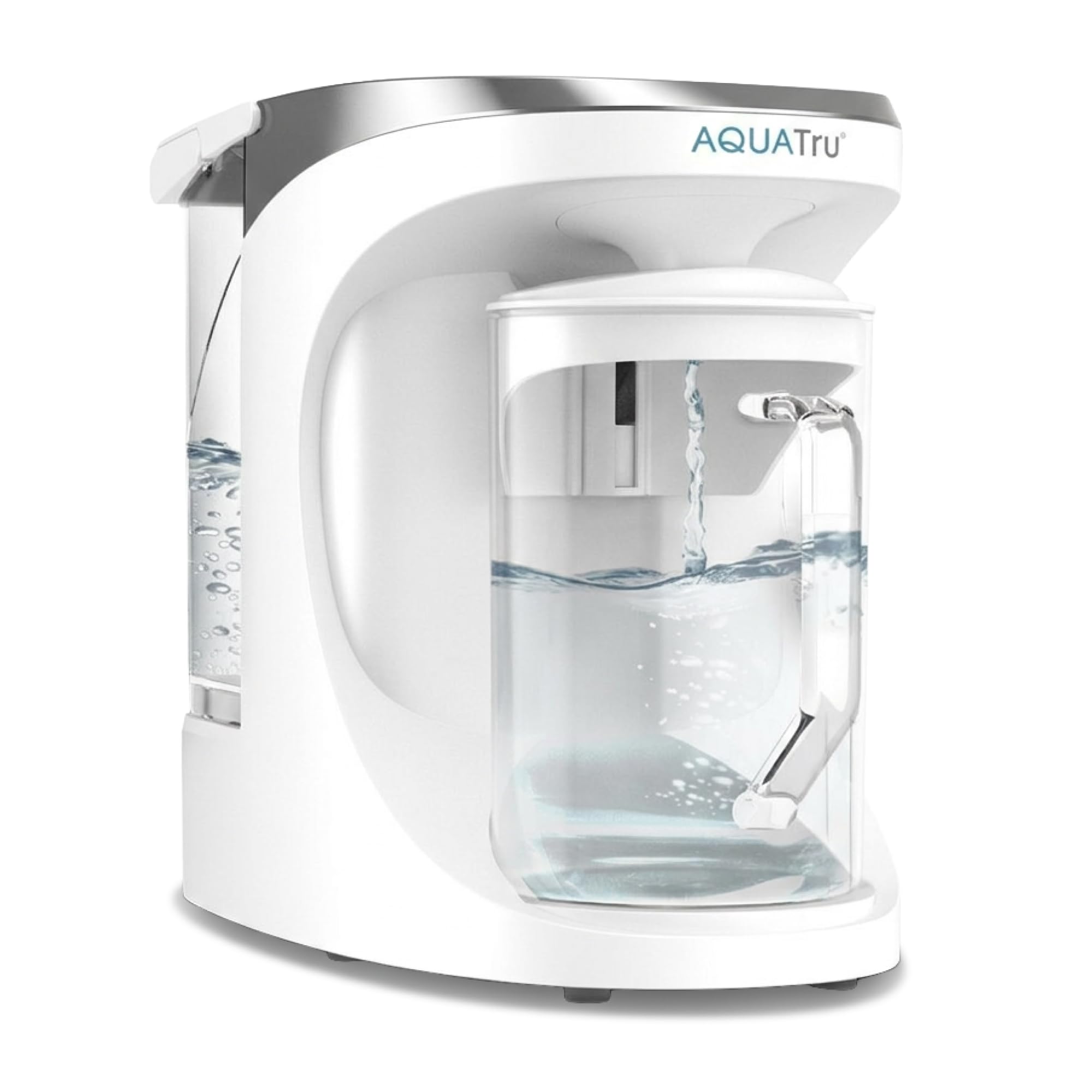
The AquaTru Carafe uses a true 4-stage reverse osmosis membrane certified by IAMPO to NSF standards for reducing PFOA, PFOS, lead, fluoride, and 84 total contaminants. This is the only unit in this lineup that physically rejects dissolved solids at the molecular level rather than relying on adsorption alone, delivering water with virtually zero detectable PFOA when operated correctly. The 64 oz borosilicate glass carafe eliminates plastic leaching concerns from storage.
Setup is truly tool-free and takes under five minutes — no drilling, no permanent plumbing attachment, just a countertop footprint roughly the size of a mid-range coffee maker. The filtration cycle produces approximately 30 oz of purified water per batch, with the input tank needing refills about 1.5 times per full pitcher. Filter sets last up to 6 months under moderate usage, with each set replacing the equivalent of roughly 4,500 plastic bottles.
The tradeoff is wastewater output — every cycle generates rejected water that must be discarded — and the input tank design requires attention to avoid overflow. Amazon pricing for replacement filters runs higher than buying direct from the manufacturer. For households demanding the highest PFOA reduction percentage without under-sink installation, this is the proven choice.
Why it’s great
- Certified PFOA/PFOS reduction via reverse osmosis membrane
- Glass carafe avoids plastic storage contamination
- No plumbing or drilling required for installation
Good to know
- Produces wastewater that must be manually discarded each cycle
- Input tank cannot fill the pitcher in a single batch
- Replacement filter costs are higher on Amazon than direct from brand
2. Clearly Filtered Filtered Water Pitcher
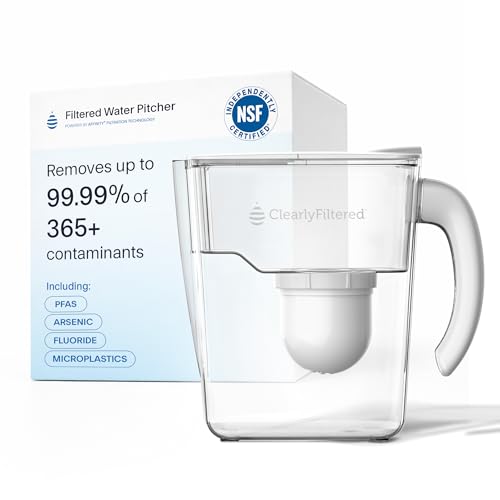
Clearly Filtered targets 365+ contaminants including PFOA/PFOS using a proprietary Affinity Filtration Technology that binds contaminants at the ionic level while preserving beneficial minerals. The pitcher holds 80 fl oz (approximately 10 cups) and is built from medical-grade Tritan plastic that is BPA-free and BPS-free, with NSF certification to standards 42 and 372 for chlorine reduction and lead-free materials. Independent third-party testing by an EPA-accredited lab backs the PFOA removal claims.
Each filter handles 100 gallons — roughly 4 months of daily use — and the design includes a spill-resistant water dam and a hinge-fill lid for one-handed refilling. The fit on standard refrigerator shelves is intentional, making this a direct upgrade for anyone currently using a basic carbon pitcher. Users consistently report a dramatic improvement in taste with complete elimination of chemical aftertaste.
The filtration flow rate slows noticeably as the filter approaches saturation, which is typical for high-contaminant media. Some units have shown a tendency for slow flow, and plastic longevity concerns have appeared in isolated long-term reviews. For a drop-in pitcher solution with verified PFOA reduction, this is the defensive standard.
Why it’s great
- NSF-certified reduction for PFOA, PFOS, and 365+ contaminants
- 100-gallon long filter life reduces replacement frequency
- Medical-grade Tritan construction with no BPA or BPS
Good to know
- Flow slows significantly as filter nears end-of-life
- Plastic pitcher body may show wear over extended use
- Not suitable for pull-down or sprayer faucet attachments
3. Frizzlife DS99 Countertop Water Filter System
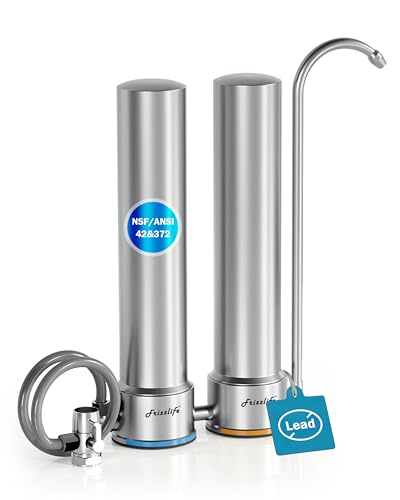
The Frizzlife DS99 uses an 8-stage dual-filter design that combines a PP membrane and activated coconut shell carbon block with KDF in the first stage, and a 0.5-micron carbon block with lead removal media in the second stage. This micron rating is tight enough to capture a meaningful percentage of PFOA particles, and the system is NSF 42 and 372 certified. The dual-stage configuration allows independent replacement of the two cartridges — the first lasts up to 8 months, the second up to 12 months or 8,000 gallons.
Flow rate is the standout feature here: 2 gallons per minute at 60 psi, filling an 8 oz cup in under 3 seconds. The switch between tap water and filtered water is a quarter-turn valve, and installation requires no tools or drilling — just a direct connection to the faucet aerator thread. The housing is 1 mm-thick 304 stainless steel, reinforced against water hammer and burst risk, with 100,000-cycle pulse testing.
The system does not reduce TDS because it retains beneficial minerals, so if you want zero dissolved solids you need a different solution. The included adapters cover most standard faucets, but non-standard thread sizes may require contacting the manufacturer for additional fittings. Residual pressure after shutting off can cause a brief dribble from the spout.
Why it’s great
- 2 GPM flow rate fills a glass in 2-3 seconds
- Dual-stage 0.5-micron filtration with independent cartridge lifespan
- Thickened 304 stainless steel housing resists corrosion and bursting
Good to know
- Does not reduce TDS — retains minerals but not zero-solids water
- Post-shutoff dribble from spout due to residual pressure
- Not compatible with pull-down or handheld spray faucets
4. Purewell 2.25G Gravity Water Filter System

The Purewell system operates on gravity alone — no electricity, no pumps, no plumbing connection. The upper chamber holds unfiltered tap water, which passes through two filter pairs: a black carbon filter with a 0.01-micron hollow fiber UF membrane, silver ion, and activated carbon block, plus a white fluoride filter with a fluoride reduction membrane and triple sediment PP layers. The 0.01-micron rating is significantly tighter than standard carbon blocks and intercepts rust, sediment, organic matter, and heavy metals, including PFOA particles.
The transparent water level window in the stainless steel tank lets you see exactly how much filtered water remains without opening the lid. Total capacity is 2.25 gallons, and the combined filter set processes up to 1,000 gallons (fluoride filters) and up to 6,000 gallons (carbon filters) before replacement, rated at 6-month intervals. The stand included with the system elevates the unit for easier access to the spigot.
Gravity filtration is inherently slow — maximum flow rate is 0.05 GPM, so waiting for a pitcher to fill takes patience. The system does not lower TDS because it retains minerals. The upper chamber should not be refilled while the bottom chamber is still full to prevent leakage. For off-grid cabins or households wanting zero electricity consumption, this is a robust volume-oriented solution.
Why it’s great
- 0.01-micron UF membrane captures PFOA-sized particles
- No electricity required — works off-grid or during outages
- 2.25-gallon capacity with visible water level window
Good to know
- Very slow flow rate at 0.05 GPM requires patience
- Does not lower TDS — retains minerals
- Cannot refill upper chamber when bottom chamber is full
5. Waterdrop ED04B-L Mega Electric Water Filter Dispenser
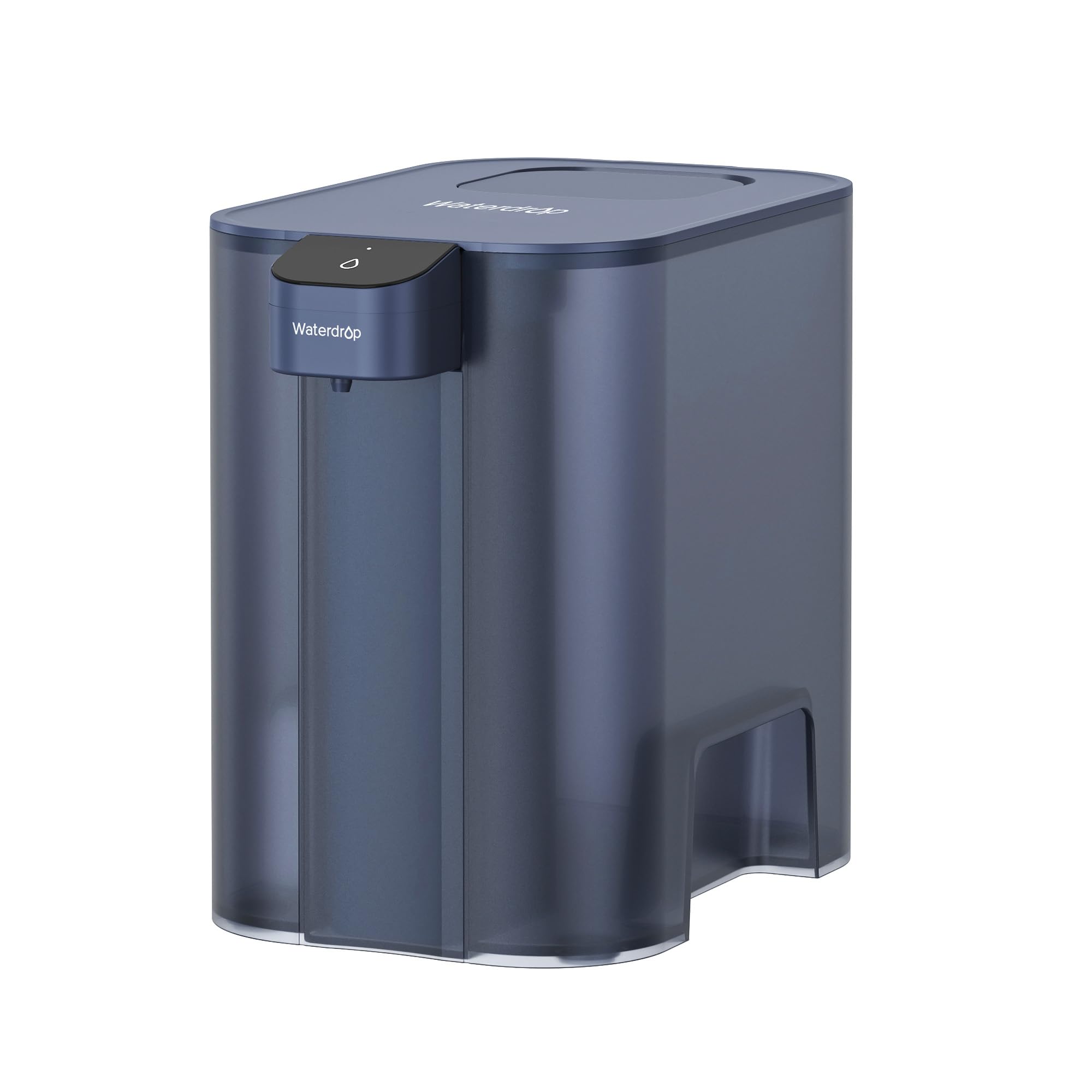
The Waterdrop ED04B-L is an electric pitcher with a built-in rechargeable battery rated for 30 days of operation per charge. It uses a carbon block filter certified by IAPMO against NSF/ANSI 42, 53, 401, and 372 standards for reducing 45+ substances including PFOA and PFOS. The unit dispenses on demand via an electric pump rather than gravity, meaning water passes through the filter only when you press the button — eliminating stale water sitting in a reservoir.
Capacity is 27 cups (approximately 1.7 gallons), which reduces the frequency of refills for larger households or office breakrooms. The filter lasts 200 gallons or about 3 months, and the battery life holds up well even with multiple dispenses per day. The blue LED backlight adds visibility for nighttime use, and the compact footprint fits on a countertop without dominating the space.
The system explicitly does not lower TDS, so if you want reduced dissolved solids you need the TDS reduction version of this dispenser. Some users reported filter indicator malfunctions that were resolved by customer support. The sealed carbon block construction minimizes channeling but does not remove total dissolved solids or soften water. For a self-contained, battery-powered dispenser with verified PFOA reduction, this is a unique convenience-first option.
Why it’s great
- NSF 53 certified for PFOA/PFOS reduction in an electric dispenser
- 30-day battery life eliminates power cord clutter
- 27-cup capacity reduces refill frequency for families
Good to know
- Does not lower TDS — retains dissolved solids
- Filter indicator may require calibration for accurate lifespan tracking
- Electric components add a potential failure point compared to purely mechanical filters
6. OEMIRY Countertop Water Filter Stainless Steel

This entry-level countertop filter from OEMIRY uses a multistage filtration system housed in a 304 food-grade stainless steel body with a 1 mm thickened wall for corrosion resistance. Rated for 8,000 gallons or 12 months of municipal water use, the filter reduces 99% of chlorine, heavy metals, and sediment while retaining calcium, magnesium, and potassium. The manufacturer states third-party testing for PFOA/PFOS reduction, making it an accessible option for PFOA awareness at a lower cost threshold.
Maximum flow rate is 1.6 GPM — slower than the Frizzlife DS99 but still capable of filling an 8 oz cup in 2-3 seconds. The installation uses a simple twist-on connection to standard faucet threads, with six included adapters and two wrenches for filter changes. The operating pressure range is 15-100 psi and temperature range is 41-100°F. No electricity or drilling is needed.
The system does not reduce TDS, and it is only compatible with standard aerator faucets — not pull-out, handheld, sprayer, or sensor models. The replacement filter is B0B28YCF1Q on Amazon, and the included wrench set is necessary for cartridge swaps. For first-time PFOA-conscious buyers looking to test filtration without committing to a premium system, this is a low-barrier entry point.
Why it’s great
- 8,000-gallon filter lifespan at an accessible price point
- 304 stainless steel housing resists corrosion and impact
- 1.6 GPM flow fills a cup in seconds
Good to know
- Not compatible with pull-out or sprayer-style faucets
- Does not reduce TDS — retains beneficial minerals
- Replacement filter must be sourced separately after initial unit
7. ZeroWater 5-Stage Replacement Filter 4-Pack

ZeroWater uses a 5-stage ion exchange filtration system that reduces virtually all total dissolved solids (TDS) to zero, verified by the included TDS meter with a replacement trigger at 006. The filters are IAPMO certified to reduce PFOA/PFOS, lead, chromium, and mercury, and all ZeroWater products are made from BPA-free plastic. Each filter is rated for approximately 15 gallons, though actual lifespan depends on influent TDS — cleaner source water extends the life significantly.
This 4-pack brings the per-filter cost down compared to single purchases, and users with tap water TDS in the 35-49 range report getting 5-6 months of zero-TDS water from a single filter. The ion exchange media is aggressive: it strips out everything, including beneficial minerals, so the water tastes absolutely flat — which is exactly what TDS-zero advocates want for coffee brewing or sensitive appliances.
Consistency has been an issue in some batches, with reports of defective filters that block water entirely or degrade taste within two weeks. These are replacement filters only and require a ZeroWater pitcher system, not the newer Culligan ZeroWater systems. For households prioritizing zero dissolved solids alongside PFOA reduction, this pack offers the lowest cost per verified PFOA-certified filter in the lineup.
Why it’s great
- IAPMO certified for PFOA/PFOS reduction with ion exchange technology
- Reduces TDS to zero — ideal for coffee, tea, and sensitive appliances
- 4-pack lowers per-filter cost for frequent replacement users
Good to know
- Filter lifespan varies dramatically with input water TDS
- Batch quality inconsistency — some units fail prematurely
- Only compatible with ZeroWater pitcher systems (not Culligan variants)
FAQ
Do standard Brita or PUR pitchers remove PFOA?
How often should I replace a PFOA-rated filter?
Can a countertop filter remove PFOA as well as an RO system?
Final Thoughts: The Verdict
For most users, the pfoa water filter winner is the AquaTru Carafe because it delivers certified reverse osmosis reduction of PFOA and 83 other contaminants in a truly zero-plumbing, countertop-friendly package. If you want a pitcher that drops into your fridge and holds NSF 53 certification for PFOA, grab the Clearly Filtered Pitcher. And for a gravity-fed system that requires no electricity and handles high volumes, nothing beats the Purewell Gravity System.