A personal cooler is the gear that determines whether your lunch break, tailgate, or beach day ends with a refreshing meal or a soggy, lukewarm disappointment. The difference between a cooler that performs and one that doesn’t comes down to insulation density, seal integrity, and the real-world construction that holds up to daily abuse.
I’m Mohammad Maruf — the founder and writer behind AirfryerBite. I specialize in breaking down the materials science and thermal performance of portable cooling gear, analyzing how different insulation foams, liner materials, and gasket designs actually perform in everyday carry conditions.
Whether you need a rugged lunchbox for the job site or a sleek caddy for carrying craft beers to a picnic, choosing the right best personal cooler means understanding which specs deliver genuine cold retention and which are just marketing copy.
How To Choose The Best Personal Cooler
Buying a personal cooler is deceptively simple. The real challenge isn’t finding one that holds cans — it’s finding one that keeps your food cold through an eight-hour shift, doesn’t leak condensation all over your bag, and still works after a season of daily use. Here’s what separates the good from the mediocre.
Insulation Material: The Real Cold Retention Metric
Polyurethane foam is the standard for hard coolers because it has a higher R-value per inch than the thin foam used in cheap lunch bags. Closed-cell polyurethane foam, like what the RTIC Road Trip and Coleman Pro use, resists water absorption and maintains its insulating properties even as the ice pack inside melts. Soft-sided coolers typically use polyethylene foam or 3M Thinsulate — the latter, found in the Bellroy Lite Cooler Caddy, uses recycled microfiber that traps air pockets effectively but compresses more easily than rigid foam.
Seal and Latch Integrity
The gasket is the single most overlooked component. A freezer-style rubber gasket — like the one on the RTIC 8 QT Road Trip — creates an airtight seal that prevents cold air from escaping and warm air from entering. Press-and-pull latches, like the Pelican 8QT’s, provide mechanical closure force that zippers can’t match. Zippered coolers rely on the zipper’s weatherproofing, which degrades over time. Zipperless designs, such as the Titan by Arctic Zone Deep Freeze, eliminate that failure point entirely.
Liner Quality and Leak Resistance
A waterproof liner isn’t just about cleaning up spills — it prevents the insulation from getting waterlogged, which kills the cooler’s ability to retain cold. Seam-sealed liners, like the Bellroy’s, keep moisture contained even under slush conditions. PEVA liners, like the Carhartt’s, wipe clean easily but are less durable over years of use than the rigid HDPE liners found in hard coolers like the RTIC Road Trip and Pelican.
Quick Comparison
On smaller screens, swipe sideways to see the full table.
| Model | Category | Best For | Key Spec | Amazon |
|---|---|---|---|---|
| RTIC 8 QT Road Trip | Hard Cooler | Extended cold retention | 2 in. closed-cell foam | Amazon |
| Pelican 8QT | Hard Cooler | Built-in ice pack | Removable ice pack | Amazon |
| Coleman Pro 9qt | Hard Cooler | Job site durability | TempLock FX insulation | Amazon |
| Bellroy Lite Cooler Caddy | Soft Cooler | Urban portability | 3M Thinsulate insulation | Amazon |
| RTIC Everyday Cooler | Soft Cooler | Multiple storage pockets | Closed foam insulation | Amazon |
| Titan by Arctic Zone Deep Freeze | Hybrid Cooler | Crush protection | HardBody liner w/ SmartShelf | Amazon |
| Carhartt 12 Can Lunch Box | Soft Cooler | Rain-resistant durability | 600-denier polyester | Amazon |
In‑Depth Reviews
1. RTIC 8 QT Road Trip Personal Cooler
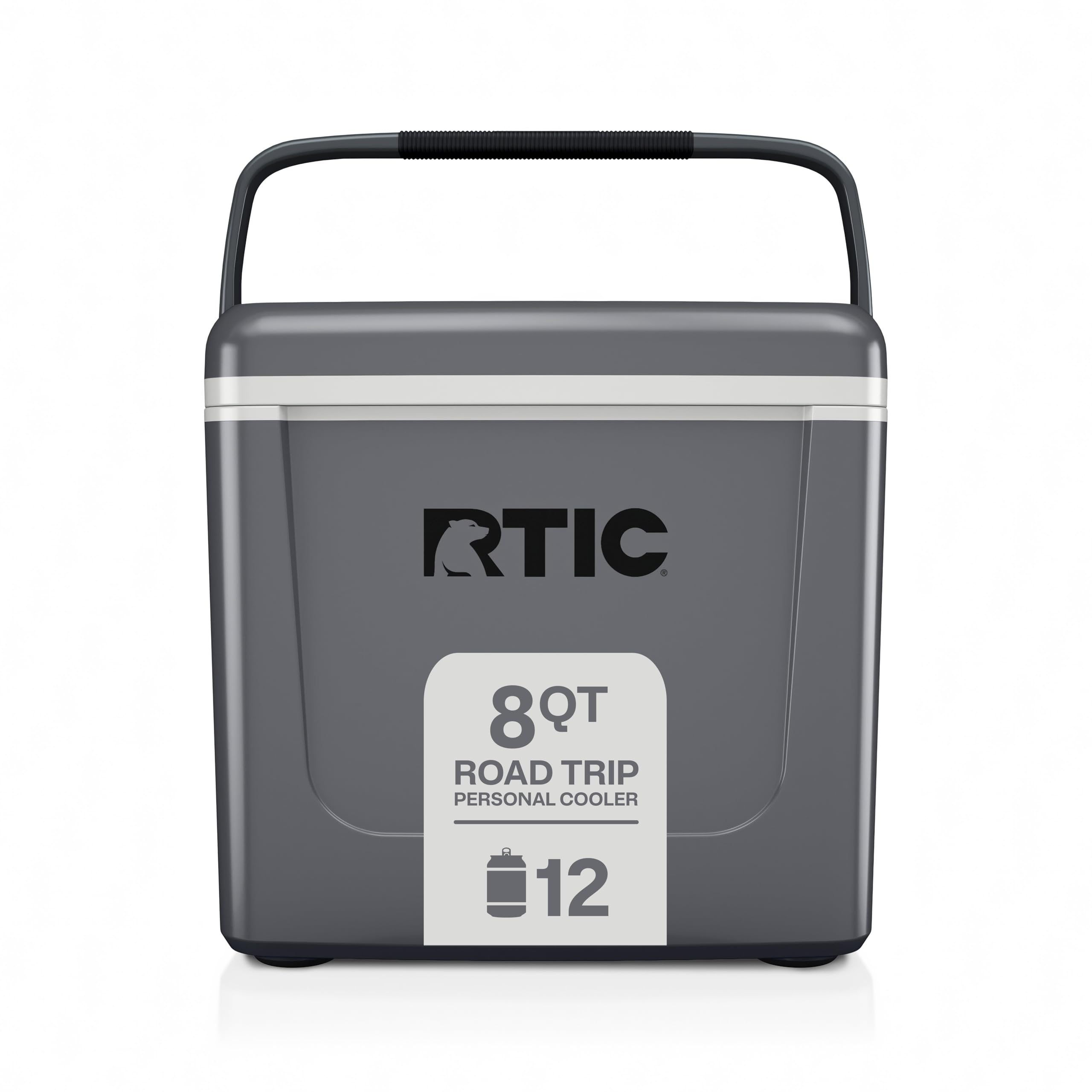
The RTIC 8 QT Road Trip sets the benchmark for personal hard coolers by packing two inches of closed-cell polyurethane foam into a compact 8-quart shell. That insulation density is what allows it to hold ice for up to 40 hours when pre-chilled correctly — a figure that beats every other cooler in this roundup. The lid lock handle engages when upright, sealing the freezer-style gasket tight enough that you can actually feel the resistance when pulling the lid open.
At just over four pounds, it’s not ultralight, but the trade-off is structural rigidity that prevents the walls from bowing when loaded with twelve cans and ice. The silicone cargo net built into the lid provides dry storage for utensils or a wallet without compromising the main compartment’s cold retention, and the non-skid rubber feet keep the cooler from sliding around in a truck bed or boat deck.
The polypropylene construction is impact-resistant and easy to hose out, though the textured handle recesses into the lid rather than folding — meaning you lose a few inches of usable lid space when the handle is stored. For anyone who needs reliable all-day cold performance without the bulk of a full-size cooler, this RTIC delivers the most insulation per quart in its class.
Why it’s great
- Up to 40 hours of ice retention due to thick closed-cell foam
- Freezer-style gasket creates an airtight seal for cold retention
- Silicone cargo net provides integrated dry storage
Good to know
- Heavier than soft-sided coolers at 4.1 pounds
- Recessed handle reduces usable lid space when stored
2. Pelican 8QT Personal Cooler & Dry Box

Pelican brings its legendary protective-case DNA to the personal cooler category with the 8QT model. The defining feature here is the integrated, removable ice pack that sits beneath a removable inner tray — a design that separates the cooling mass from your food so sandwiches don’t sit directly on ice. The interior dimensions measure 10.80 x 6.40 x 7.50 inches, providing true 8-quart capacity that fits six to eight cans plus the included ice pack.
The press-and-pull latch is the same style Pelican uses on its waterproof cases, offering mechanical closure force that a zipper can’t replicate. A dry storage compartment built into the lid keeps keys, phone, or snacks separate from the cold zone below. Tie-down openings on the sides let you strap it to a kayak, ATV, or job-site gear bag with zero concern about the lid popping open during transport.
At this price point, the 3-year warranty reflects Pelican’s confidence in the polyurethane foam insulation and polypropylene shell. The trade-off is that the interior tray, while convenient, reduces usable vertical space — taller water bottles may need to sit on the ice pack rather than the tray. For cold retention that outlasts a full day on the water or in the field, the Pelican 8QT is the most thoughtfully compartmentalized personal cooler available.
Why it’s great
- Integrated removable ice pack keeps food dry and cold
- Press-and-pull latch provides secure mechanical closure
- Dry storage compartment in lid for accessories
Good to know
- Inner tray reduces usable vertical space for taller items
- Not suitable for bulk ice — designed for the included ice pack
3. Coleman Pro Heavy-Duty 9qt Ultra-Light Premium Hard Cooler

Coleman’s Pro series targets the jobsite and outdoor work market with the 9-quart Heavy-Duty cooler. TempLock FX insulation pairs a fully insulated lid with a foam-injected body, delivering cold performance that Coleman claims keeps ice for days when the cooler isn’t opened frequently. The exterior rubberized boots at each corner prevent the cooler from sliding on wet truck beds, concrete floors, or boat decks — a small detail that makes a big difference when you’re moving around in muddy conditions.
The flat-top lid doubles as both a writing surface for paperwork and a seat stable enough to support an adult’s weight, making it practical for lunch breaks on site. Anchor points molded into the base allow secure tie-down with bungee cords or straps, and the 5-year limited warranty signals Coleman’s confidence in the polyurethane foam and polypropylene shell construction. At just one pound, it is remarkably lightweight for a hard cooler with its insulation thickness.
The trade-off for this weight is a relatively thin wall profile compared to the RTIC Road Trip — the Coleman relies more on the TempLock FX foam’s efficiency than sheer foam depth. The lid hinge is articulated rather than pinned, which holds up better to repeated heavy use but doesn’t allow full lid removal for cleaning. For workers who need a cooler that survives drops, supports their weight at break time, and won’t slide off a tailgate, the Coleman Pro 9qt earns its reputation.
Why it’s great
- Rubberized boots prevent sliding on wet surfaces
- Flat lid doubles as a seat and writing surface
- Lightweight at 1 pound with good insulation efficiency
Good to know
- Wall insulation is thinner than the RTIC Road Trip’s 2-inch foam
- Hinge isn’t removable for full disassembly cleaning
4. Bellroy Lite Cooler Caddy (6L)

The Bellroy Lite Cooler Caddy redefines what a personal cooler can look like, shifting from chunky thermal box to a sleek, squishable bag that compresses around your contents to save space in a backpack or tote. Its 6-liter capacity fits a six-pack or a packed lunch, and the 3M Thinsulate insulation — made from 83% recycled materials — provides cold retention without the bulk and weight of polyurethane foam. The seam-sealed internal lining is waterproof, meaning melted ice stays contained inside the bag rather than soaking your groceries.
The quick-release slide hook is a clever addition that lets you hang the caddy from the outside of a daypack, and the integrated bottle opener built into the hook means you’re never caught without a way to open drinks. When empty, the caddy rolls or folds flat for storage, occupying virtually zero space compared to a rigid cooler. The water-resistant recycled fabric exterior handles light rain and beach sand well, and the leather-free construction appeals to buyers looking for sustainable materials.
The key limitation is that the insulation is thinner than any hard cooler in this roundup — the caddy is designed for short trips (a few hours) rather than all-day cold retention. And while the lining is waterproof, the zipper is not, so if the bag is inverted with liquid inside, it will leak. For urban commuters, bike riders, or farmers market shoppers who need a lightweight, packable cooler that prioritizes style and portability over brute-force insulation, the Bellroy is unmatched.
Why it’s great
- Compresses and folds flat when not in use
- Seam-sealed waterproof lining prevents leaks
- Quick-release hook doubles as a bottle opener
Good to know
- Thinner insulation limits cold retention to a few hours
- Zipper leaks if the bag is inverted with liquid inside
5. RTIC Everyday Cooler (15 Can)

The RTIC Everyday Cooler bridges the gap between a lunch bag and a full soft-sided cooler with a 15-can capacity that’s still manageable for one person to carry. Closed-foam insulation lines the main compartment, offering better cold retention than the thin bubble-wrap-style insulation found in basic lunch totes, while multiple storage pockets inside and out keep napkins, utensils, and valuables organized without cluttering the main cold zone. The removable stainless steel bottle opener integrated into the exterior is a genuinely useful detail that prevents the “forgot an opener” frustration at the beach or park.
The polyester outer fabric feels durable enough for regular use, and the adjustable shoulder strap with a padded pad makes hands-free carry comfortable even when the cooler is fully loaded. The cooler collapses into its own lid when empty, solving the storage problem that soft-sided coolers often create. Available sizes range from 6-can to 28-can, allowing buyers to choose the capacity that matches their typical outing.
Where this cooler falls short is thermal performance compared to hard coolers: the closed-foam insulation is effective but thin, so you’ll need a solid ice pack for anything beyond a few hours of cooling. The zipper closure is the primary cold-air leak point, and the fabric exterior isn’t waterproof — it will absorb moisture if condensation builds up inside. For casual picnics, beach trips, and tailgates where convenience and pockets matter more than all-day ice retention, the RTIC Everyday Cooler offers strong value.
Why it’s great
- Multiple internal and external storage pockets for organization
- Integrated stainless steel bottle opener is always ready
- Collapses flat into its own lid for easy storage
Good to know
- Thin insulation limits cold retention to a few hours
- Zipper closure is the primary cold-air leak point
6. Titan by Arctic Zone Deep Freeze Cooler (16 Can)
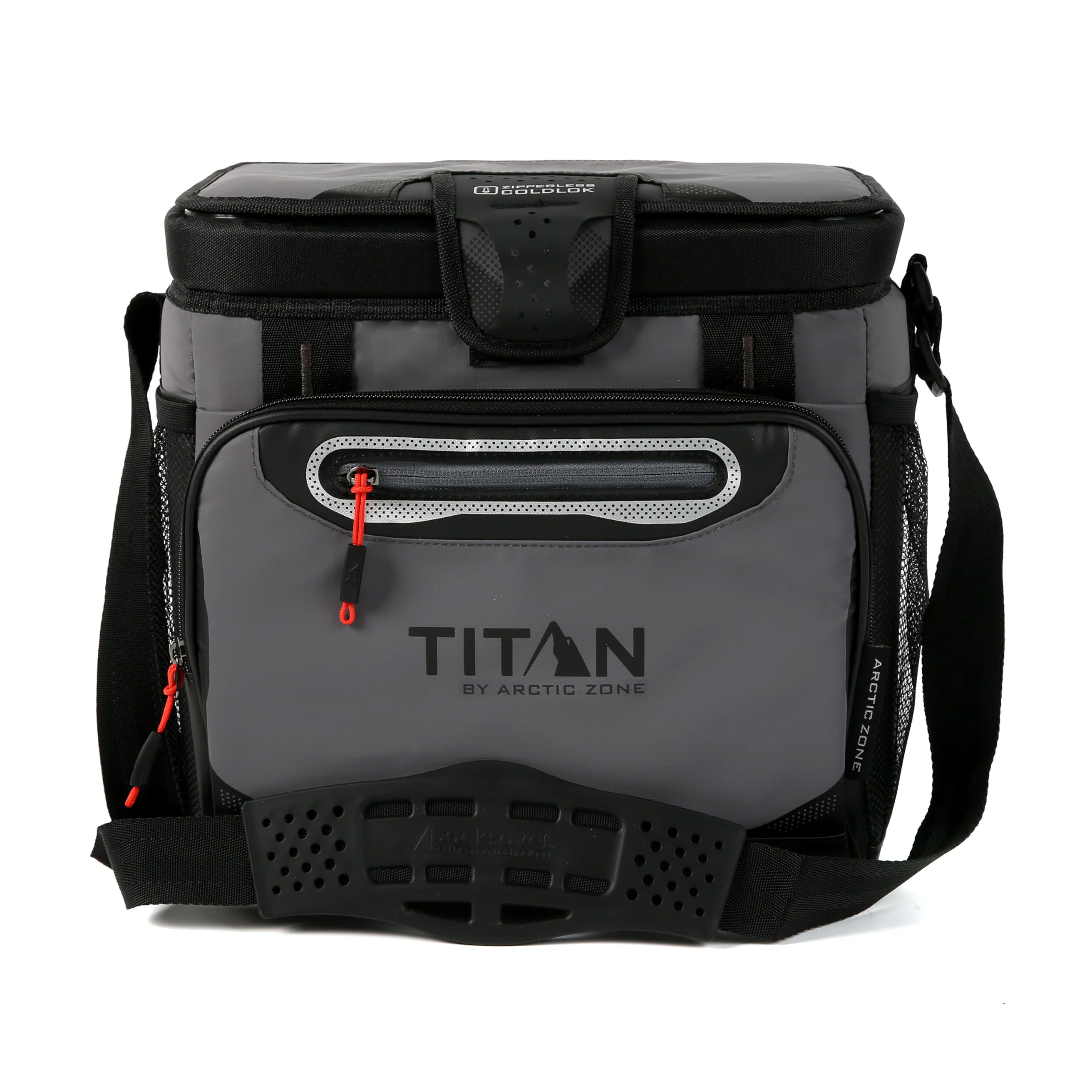
The Titan by Arctic Zone Deep Freeze cooler takes a hybrid approach: a low-density polyethylene shell provides the structural support of a hard cooler, while the flexible exterior makes it easier to store and carry than a fully rigid box. The zipperless design uses a pressure-seal closure that eliminates the single most common failure point on soft coolers — the zipper. The removable HardBody liner provides impact protection for sandwiches and fruit, and the SmartShelf inserts to create a second level that keeps hard items from crushing softer foods.
Deep Freeze Performance insulation integrates a radiant heat barrier that reflects thermal energy away from the interior, improving cold retention beyond what the same thickness of plain foam would achieve. The 16-can capacity is generous for a personal cooler, and the adjustable Backsaver shoulder strap with an anti-slip pad makes carrying a fully loaded cooler comfortable. The rugged polyester exterior is water- and stain-repellent, wiping clean with a damp cloth.
The trade-off for the hybrid design is that the HardBody liner reduces internal volume compared to a fully soft-sided cooler of the same exterior dimensions. The pressure-seal closure, while durable, requires a firm press to ensure a proper seal — if not fully engaged, cold air escapes more readily than a zipper would. For buyers who want a cooler that won’t fail in the zipper zone, protects their food from crushing, and offers a good balance of capacity and portability, this Titan is a smart middle-ground pick.
Why it’s great
- Zipperless pressure-seal closure eliminates zipper failure
- HardBody liner with SmartShelf prevents food crushing
- Radiant heat barrier improves insulation efficiency
Good to know
- HardBody liner reduces internal volume vs. exterior size
- Pressure seal requires firm engagement for proper cold retention
7. Carhartt 12 Can Two Compartment Lunch Box

Carhartt’s 12 Can Two Compartment Lunch Box applies the brand’s workwear-grade construction to the lunch bag category, using 600-denier polyester with Rain Defender DWR coating that sheds water during rain walks from the parking lot to the job site. The duplex-compartment design is its standout feature: an insulated top compartment keeps dry foods like sandwiches and fruit separated from the ice in the main bottom compartment, eliminating the soggy-bread problem that plagues single-zone lunch bags. The PEVA lining in both compartments wipes clean in seconds after spills.
The front Velcro pocket provides immediate-access storage for condiments, utensils, or a protein bar without unzipping the main compartment and exposing cold food to warm air. A sturdy top carry handle and an adjustable shoulder strap offer two carry options, and the 8-liter capacity is well-suited for a full workday’s worth of meals and snacks. The dimensions — 10 x 9 x 7 inches — are compact enough to fit inside most standard backpacks or tool bags.
The PEVA liner, while easy to clean, is less durable long-term than the rigid HDPE liners found in hard coolers — repeated flexing can cause micro-cracking over years of use. The side pockets are absent, so items like a phone or keys need to go in the front Velcro pocket or the shoulder strap isn’t ideal for non-carry use. For workers, students, and commuters who need a rain-resistant lunch bag with separate dry and cold zones that can survive a full school year or work season, the Carhartt delivers proven durability.
Why it’s great
- Two insulated compartments keep dry food separate from ice
- Rain Defender DWR coating sheds water in wet weather
- Compact size fits inside backpacks and tool bags
Good to know
- PEVA liner is less durable than rigid liners over the long term
- No side pockets for phone or keys
FAQ
How long will a personal cooler keep ice frozen compared to a full-size cooler?
What’s the difference between closed-cell and open-cell foam in personal coolers?
Can I put a personal cooler in the freezer to pre-charge the insulation?
How do I clean a personal cooler with a PEVA liner versus a hard plastic liner?
Final Thoughts: The Verdict
For most users, the best personal cooler winner is the RTIC 8 QT Road Trip Personal Cooler because its 2-inch closed-cell foam and freezer-style gasket deliver the most reliable cold retention in a compact, portable package. If you want the convenience of a built-in ice pack and dedicated dry storage, grab the Pelican 8QT Personal Cooler. And for a lightweight, packable cooler that folds flat when not in use, nothing beats the Bellroy Lite Cooler Caddy.