The kitchen wall behind your stove shouldn’t dictate your weekend plans. The best peel and stick tile backsplash options let you bypass the slurry bucket, the rented wet saw, and the three-day drying cycle that comes with traditional ceramic installs.
I’m Mohammad Maruf — the founder and writer behind AirfryerBite. I’ve spent hundreds of hours analyzing DIY home finishes, cross-referencing adhesion chemistry, dimensional tolerances, and real-world wear data to separate the tiles that stick from those that peel.
Whether you’re a renter who can’t drill or a homeowner wanting to refresh a tired kitchen without the contractor overhead, this guide breaks down the thickest PVC composites, the strongest 3M-grade backings, and the most realistic stone textures so you can find the best peel and stick tile backsplash for your space and skill level.
How To Choose The Best Peel And Stick Tile Backsplash
A smart peel-and-stick purchase hinges on three variables that most shoppers overlook until their first tile curls off the wall or refuses to align. Get these right, and your install will look grout-free for years. Get them wrong, and you are redoing the wall before the paint dries.
Decode the Material Stack
Standard vinyl tiles are thin, prone to tearing during repositioning, and can warp behind a stovetop. The better options use multi-layer PVC composite laminate — a denser core that resists heat from a nearby burner and won’t wrinkle when you wipe grease off. Look for listings that specifically mention “PVC composite laminate” rather than just “vinyl.”
Measure Adhesive Backing, Not Just Pattern
All peel-and-stick tiles use pressure-sensitive adhesive, but the quality varies enormously. Budget tiles employ a thin acrylic glue that grabs smooth surfaces well but fails on lightly textured or painted drywall. Premium tiles use a modified rubber-based adhesive that bonds to semi-rough surfaces and allows a brief window for shifting before the final grip sets. If a product mentions “3M” or “industrial-grade” in the adhesion description, it signals a higher tack threshold.
Check Tile Thickness in Millimeters
Thickness is the single best predictor of durability and realism. A tile under 2 mm behaves like thick wallpaper — it will show every wall imperfection and can be cut with standard household scissors. A tile at 4 mm or above mimics the weight and feel of real ceramic and requires a sharp utility knife or a carpenter’s square to cut cleanly. The thicker substrate also hides uneven drywall better.
Quick Comparison
On smaller screens, swipe sideways to see the full table.
| Model | Category | Best For | Key Spec | Amazon |
|---|---|---|---|---|
| STICKGOO 20-Sheet | Premium | Large projects after stovetops | 20 sheets, 12″x5.9″ per tile | Amazon |
| Midcard White Marble | Premium | High-moisture bathrooms | 0.6-inch thick PVC tile | Amazon |
| Reovatile 10-Pack | Mid-Range | Textured wall surfaces | 4 mm thick PVC laminate | Amazon |
| WOWSTAR 10-Sheet | Mid-Range | Renter-friendly budget install | 12″x12″ vinyl per sheet | Amazon |
| Yipscazo 10-Pack | Entry-Level | Sample testing before full order | PVC composite, 10 sheets | Amazon |
In‑Depth Reviews
1. STICKGOO 20-Sheet Peel and Stick Backsplash
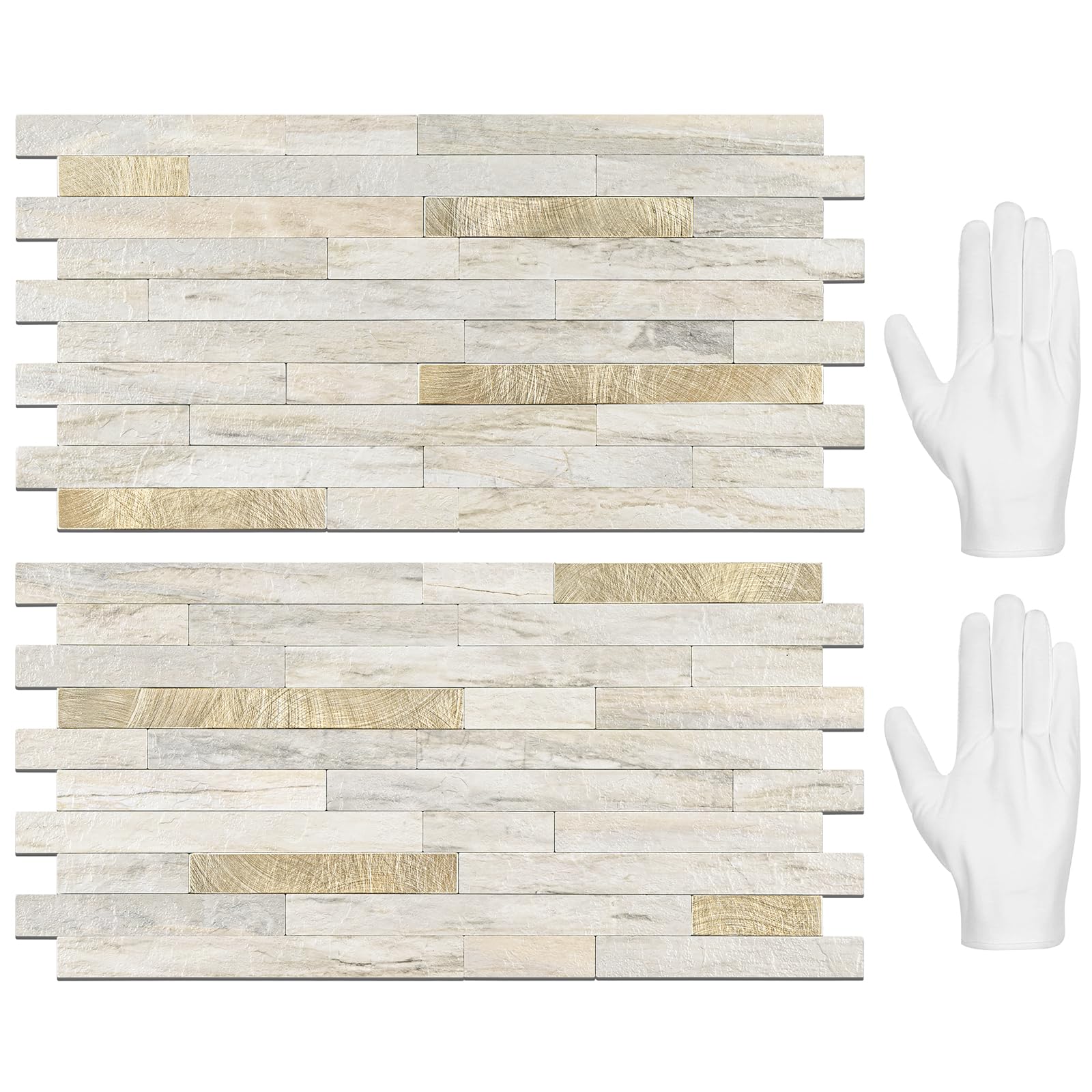
The STICKGOO bundle is the highest-count kit in this roundup, shipping twenty 12-inch by 5.9-inch tiles in a sunny beige hue mixed with metallic gold flecks. That coverage volume means you can tackle a standard backsplash behind a 30-inch cooktop plus a full counter return without placing a second order. The PVC composite substrate includes a scratch-resistant surface layer that survives repeated wipe-downs near a fry station.
Real-world installers report the adhesive grip is aggressive enough to damage drywall if you try to pull a tile off after it has set — a sign of the bonding chemistry working correctly. The mixed metal texture produces a depth that photographs well, and the tiles come with a pair of gloves, a 2-year warranty, and round-the-clock support. Edge alignment is tight, with no overlapping required.
The only tradeoff is the narrow tile width (5.9 inches) which increases the number of horizontal seams compared to a 12×12 format. That extra seam count means more time aligning rows, but the finished look is uniform and the metallic accent catches light naturally. For anyone covering a large area and wanting a single-box solution, this is the volume leader.
Why it’s great
- 20-sheet count covers large backsplashes in one purchase.
- Aggressive rubber-based adhesive bonds to semi-rough walls.
- Scratch-resistant top layer handles kitchen grease wipes.
Good to know
- Narrow 5.9-inch tiles increase visible seam count.
- Adhesive is nearly impossible to remove without damaging paint.
2. Midcard 10-Sheet Peel and Stick Backsplash
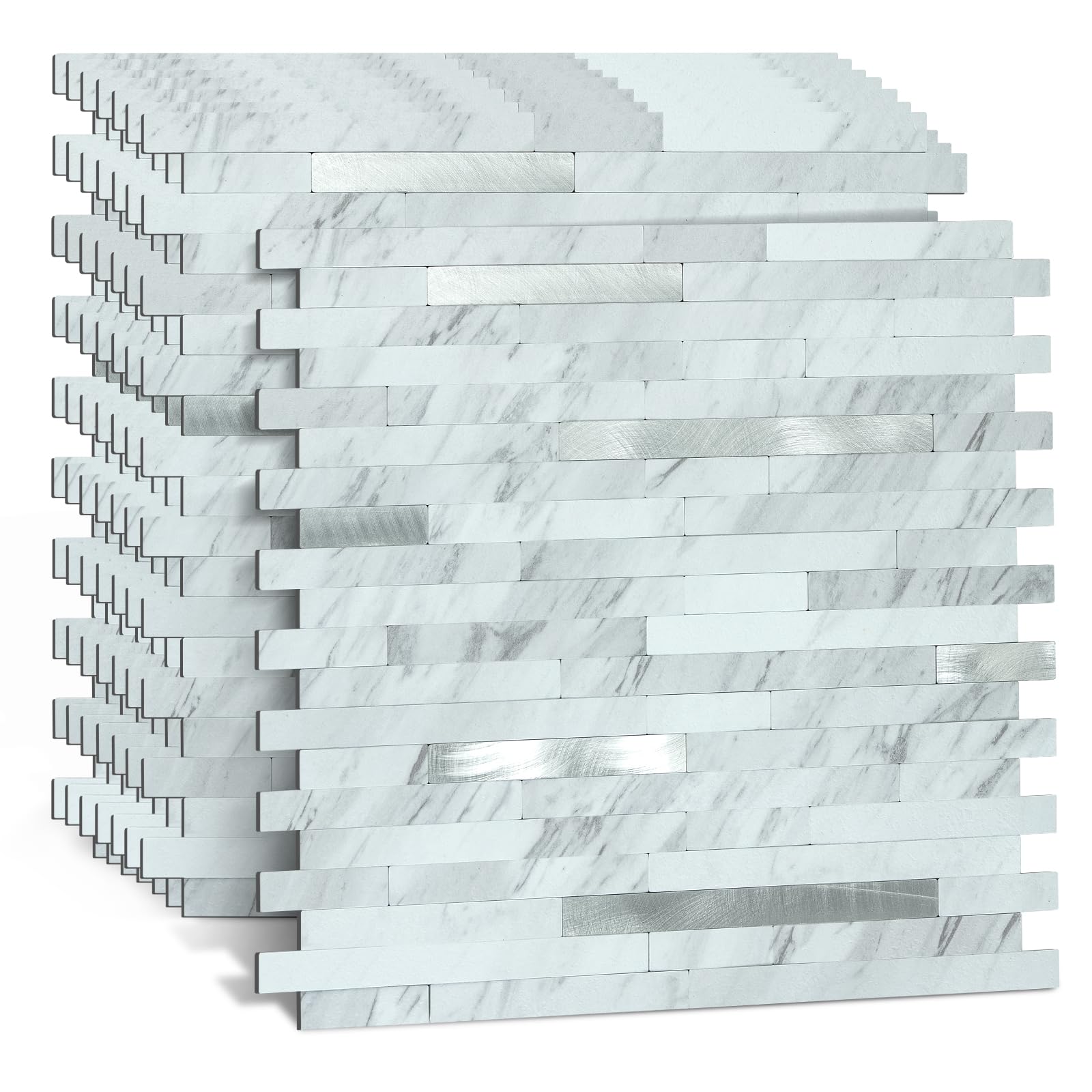
The Midcard tiles stand out for their unusual thickness — 0.6 inches — which gives them a heft and rigidity that cheaper sub-2-mm vinyls cannot match. That thickness translates into a convincing marble texture with a herringbone pattern that doesn’t look like a sticker once installed. The PVC composite laminate resists grease absorption and handles the constant moisture of a bathroom shower wall without edge curling.
Installers consistently mention the strong adhesive requires precision on the first placement because repositioning can break the tile along the seam. The backing peels cleanly and the tiles cut easily with sharp scissors or a utility knife, but the firm material demands a steady hand. Several users noted using the tiles on sailboat interiors to replace rotted wood, underscoring the adhesive’s moisture tolerance.
Quality control occasionally slips — a small percentage of packs arrive with a missing tile from the sheet edge, so ordering 10% extra coverage is recommended. The white marble with metallic silver accent suits contemporary kitchens and bathrooms equally well, and the overall cost per square foot lands closer to mid-range tile while delivering a premium visual weight.
Why it’s great
- 0.6-inch thickness mimics real ceramic weight and feel.
- High-tack adhesive works on lightly textured walls.
- Herringbone marble pattern looks expensive from arm’s length.
Good to know
- Some packs have missing tiles on edge sheets.
- Once positioned, removing a tile usually breaks it.
3. Reovatile 10-Pack Peel and Stick Backsplash
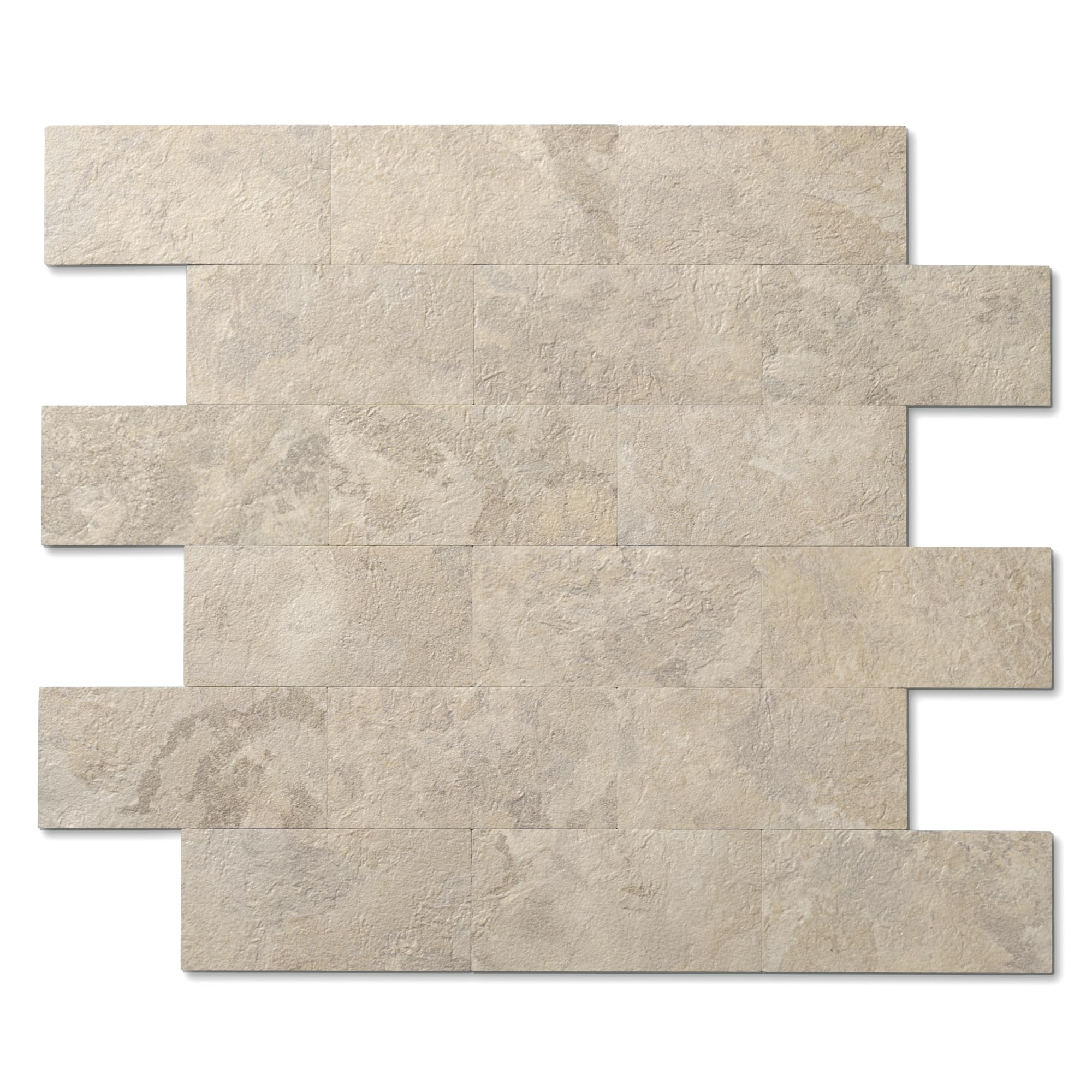
Reovatile brings a distressed wood-textured aesthetic to the peel-and-stick category, offering a beige ecru finish with visible grain lines that create a retro feel. The 4-millimeter thickness is a deliberate sweet spot — thick enough to hide minor drywall dimples but not so thick that you need a saw to cut it. The multi-layer PVC composite resists heat and fading, making it suitable for the wall behind a stovetop or a bathroom vanity.
The adhesive uses a 3M-grade backing that reviewers describe as unforgiving: once the tile contacts the wall, repositioning is extremely difficult. That stickiness also means these tiles hold onto glossy painted or textured surfaces without peeling. A few users reported slight edge lifting on warped walls after a week, which was resolved with a bead of clear silicone caulk along the top edge.
Cutting requires a sharp utility knife — standard kitchen scissors struggle with the 4-mm substrate. The striped pattern is symmetrical, which helps maintain alignment but also means any cutting error becomes more visible. For DIYers with straight-wall kitchens who want a natural stone alternative without the porous maintenance of real wood, this tile delivers convincing texture.
Why it’s great
- 4 mm thickness hides wall imperfections better than thin vinyl.
- Distressed wood grain texture looks natural and retro.
- 3M-grade adhesive sticks to glossy and textured paint.
Good to know
- Requires a utility knife — scissors won’t cut cleanly.
- Adhesive is unforgiving; measure twice before sticking.
4. WOWSTAR 10-Sheet Peel and Stick Backsplash

WOWSTAR offers a 12×12-inch square format that covers 40% more area per tile than the competing 10×10 sheets do. The geometric grey-blue pattern pairs a modern finish with a vinyl material that resists cracking over time. The tile surface cleans easily with a damp cloth and does not yellow or fade, even when installed directly behind a gas range.
The adhesive is strong enough for apartment walls and rental conditions, but reviewers note that if you need to readjust a tile, the glue can pull paint off drywall. The seam alignment is seamless when installed correctly — the patterns are printed to interlock without visible overlap lines. Several buyers mention the tile looks more expensive than its price suggests, with the grey-blue tones reading as a soft marble in lower light.
One common design frustration is the printed “overlap here” instruction that runs along the left edge of each row. Some users found it distracting and had to trim the directions off or start tiling from the right side. The vinyl cuts easily with scissors, making it a true entry-level option for a first-time DIY tile job. It remains a reliable budget-friendly choice for renters.
Why it’s great
- 12×12 sheets cover large areas with fewer seams.
- Cuts with standard scissors — no utility knife needed.
- Aligned pattern hides seam overlaps well.
Good to know
- Printed instructions on the left edge require trimming.
- Adhesive can pull paint off drywall during repositioning.
5. Yipscazo 10-Pack Peel and Stick Backsplash
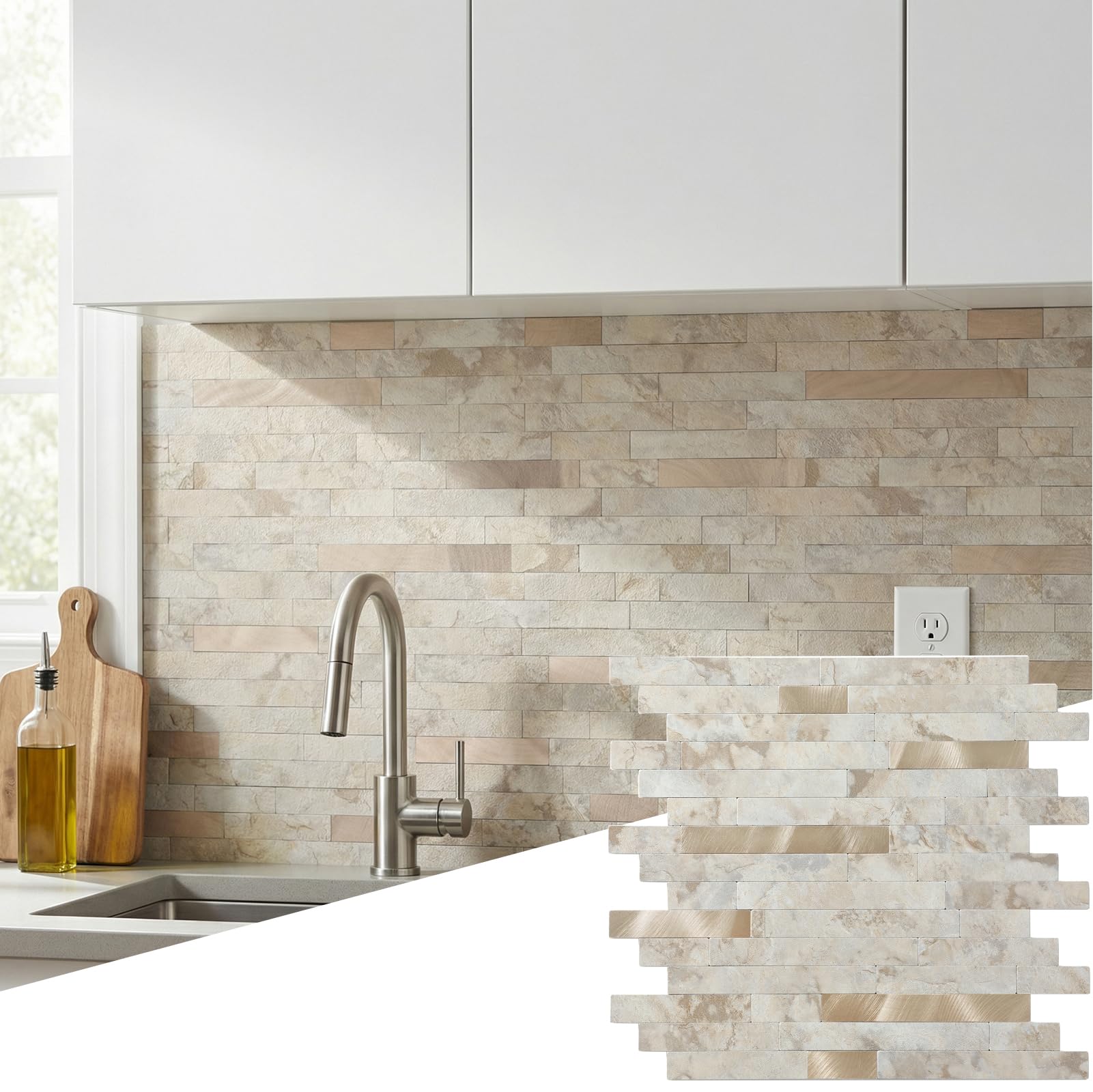
The Yipscazo pack uses a metal stone stamping technique that creates a realistic beige rock texture with visible metallic flecks. The PVC composite substrate is waterproof and heat resistant, and the square-edge format produces a clean modern look without visible bevels. The manufacturer recommends buying a single sample pack before committing to a full project, which is practical advice given the distinct rock pattern that doesn’t suit every kitchen color palette.
Installing these tiles requires a sharp blade — the composite is denser than typical vinyl and resists scissor cuts. The adhesive is extremely sticky, and multiple reviews advise that precise alignment on the first press is critical. A few users received tiles with chipped edges in the bagged 10-pack configuration; the 20-pack boxed version reportedly protects the panels better during shipping.
One upside: the realistic rock surface hides small cutting errors and wall imperfections better than a flat marble tile does. The beige color works well in warm-toned kitchens with wood cabinets. For renters who need a landlord-friendly solution that peels off relatively cleanly, the Yipscazo is a solid starting point, but ordering the boxed version is strongly advised to avoid damage in transit.
Why it’s great
- Realistic beige rock texture hides imperfections and cuts.
- Waterproof PVC composite resists bathroom and kitchen moisture.
- Square-edge format creates a clean modern seam.
Good to know
- Bagged 10-pack has risk of chipped edges in shipping.
- Adhesive is very aggressive — minimal repositioning window.
FAQ
Can peel and stick tile backsplash go behind a gas stove?
Will peel and stick tiles damage painted drywall when removed?
How do I cut peel and stick tiles for electrical outlets?
Final Thoughts: The Verdict
For most users, the best peel and stick tile backsplash winner is the STICKGOO 20-Sheet because it delivers the highest coverage volume, a scratch-resistant PVC surface with realistic metal-flecked stone texture, and the aggressive adhesive needed to stay put behind a cooktop. If you want a thick ceramic-weight feel under your fingers, grab the Midcard White Marble. And for an entry-level budget install that cuts with scissors, nothing beats the WOWSTAR 10-Sheet.