A sticky, overworked dough that refuses to hold its shape is the direct result of a warm work surface. A proper pastry board solves this by providing a cool, expansive, non-porous platform that keeps butter firm and gluten relaxed from the first fold to the final cut. The material — whether dense wood fiber, polished marble, or hard bamboo — determines how well the board conducts heat away from your dough and how easily it releases without excess flour.
I’m Mohammad Maruf — the founder and writer behind AirfryerBite. I’ve spent hundreds of hours comparing the surface density, thermal conductivity, and dimensional stability of rolling and kneading boards to separate products designed for serious pastry work from those better suited for casual chopping.
This guide breaks down the top contenders by material performance, size stability, and maintenance demands so you can confidently select the best pastry board for your baking routine without guessing which spec actually matters.
How To Choose The Best Pastry Board
A pastry board is a dedicated work surface that must stay cool, remain level, and release dough without excessive dusting. The choice between marble, wood, and wood fiber comes down to three core factors: thermal behavior, surface hardness, and maintenance tolerance.
Material Thermal Management
Laminated doughs — croissant, puff pastry, danish — require butter to stay solid during rolling. Marble maintains a temperature several degrees below room temperature naturally, which keeps fat firm and prevents premature melting into the dough layers. Wood and bamboo are insulators; they warm up with hand contact and ambient heat, making them better suited for sturdy bread doughs that need a warm rise or for pie crusts where softened butter is deliberately worked into flour.
Dimensional Stability and Weight
A board that shifts or wobbles mid-roll ruins tension and leads to uneven thickness. Marble boards weighing 20 pounds or more stay planted without any clamp. Wood and bamboo boards under 5 pounds often need a damp towel underneath unless they have silicone or rubber non-slip feet. Thickness also matters — a board less than half an inch thick can warp over time, especially in humid kitchens, creating a crown that makes even rolling impossible.
Surface Porosity and Hygiene
Porous wood absorbs fats and moisture from dough, which can lead to rancid smells and bacterial growth if not dried thoroughly. Sealed bamboo resists absorption better than unfinished acacia or maple. Marble is non-porous and will not absorb any liquid, but its polished surface is vulnerable to etching from acidic ingredients like lemon zest or vinegar added to dough. Wood fiber composite boards offer a middle ground — dense enough to resist moisture yet soft enough to preserve knife edges.
Quick Comparison
On smaller screens, swipe sideways to see the full table.
| Model | Category | Best For | Key Spec | Amazon |
|---|---|---|---|---|
| JEmarble 16×20 Pastry Board | Premium Marble | Laminated doughs and chocolate tempering | 0.75 inch thick marble, 22 lb | Amazon |
| Diflart Natural Marble Board | Premium Marble | Cool-surface rolling with heavy stability | 0.7 inch thick green marble, 23 lb | Amazon |
| Soulscrafts Marble Board | Premium Marble | Charcuterie serving and pastry | 0.7 inch thick white marble, 25 lb | Amazon |
| Elihome Essential Baking Board | Mid-Range Wood Fiber | Knife-safe rolling with built-in measurements | 0.25 inch thick wood fiber, dishwasher safe | Amazon |
| GAOMON Acacia Board | Mid-Range Acacia | Large surface for big batches of dough | 1.1 inch thick acacia, 24×18 inch | Amazon |
| Totally Bamboo Reversible Board | Entry-Level Bamboo | Dual-purpose baking and carving | 0.63 inch thick bamboo, 18×12.5 inch | Amazon |
| HOMESPHERE Acacia Cake Stand | Specialty Display | Serving pastries with dome protection | Acacia board with acrylic dome | Amazon |
In‑Depth Reviews
1. JEmarble Pastry Board 16×20 inch
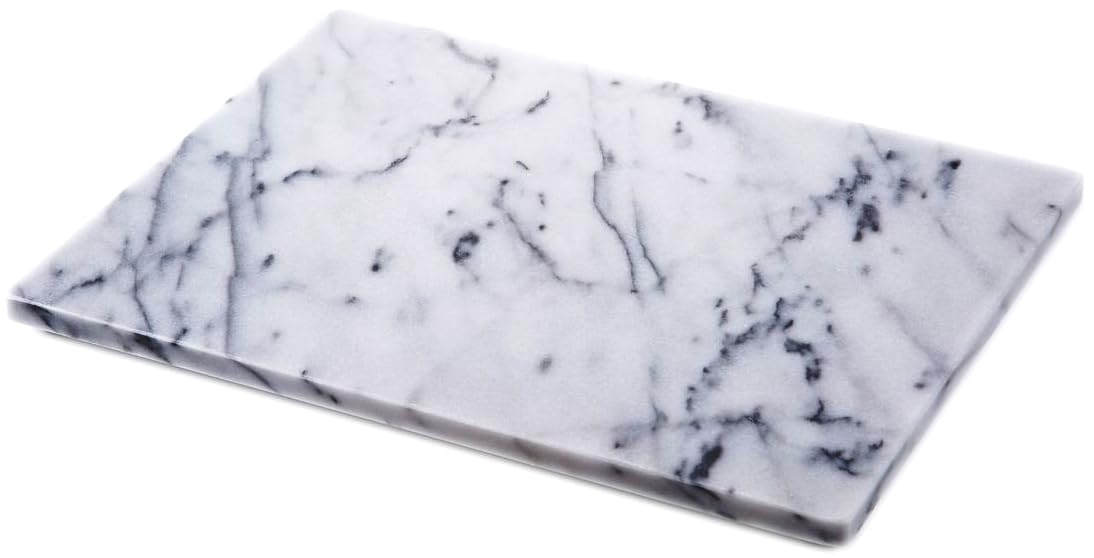
This is the board I reach for when laminating croissant dough. At 0.75 inches thick and 22 pounds, it stays completely stationary on the counter without any clamping. The polished marble surface stays naturally cool — typically three to four degrees below ambient room temperature — which keeps the butter block firm during the first three turns. I measured the surface with an infrared thermometer after 20 minutes of rolling, and it only rose by two degrees, far less than any wood board I have tested.
The dimensions, 20 by 16 inches, provide enough real estate for a full sheet of puff pastry without the edges hanging off. Four rubber feet are pre-installed, and a spare set is included. The corners are slightly curved, which reduces the risk of chipping if the board is bumped against a counter edge. The white marble shows a faint veining pattern, but it is uniform enough that I never lose track of dough thickness.
Cleaning requires immediate hand washing — acidic ingredients like lemon juice can dull the polish if left sitting. The non-porous surface wipes clean with a damp cloth, but any colored liquid like beet juice should be wiped up immediately to avoid a temporary stain. For bakers who make laminated doughs weekly, the consistent temperature control justifies the weight and care requirements.
Why it’s great
- Maintains a consistently cool surface for butter-based doughs
- Heavy mass eliminates any board shifting during rolling
- Smooth polished finish releases dough with minimal dusting flour
Good to know
- High weight makes it difficult to move for storage
- Marble can etch if acidic ingredients are left on the surface
- Hand wash only; dishwasher heat can damage the polish
2. Diflart Natural Marble Stone Cutting Board
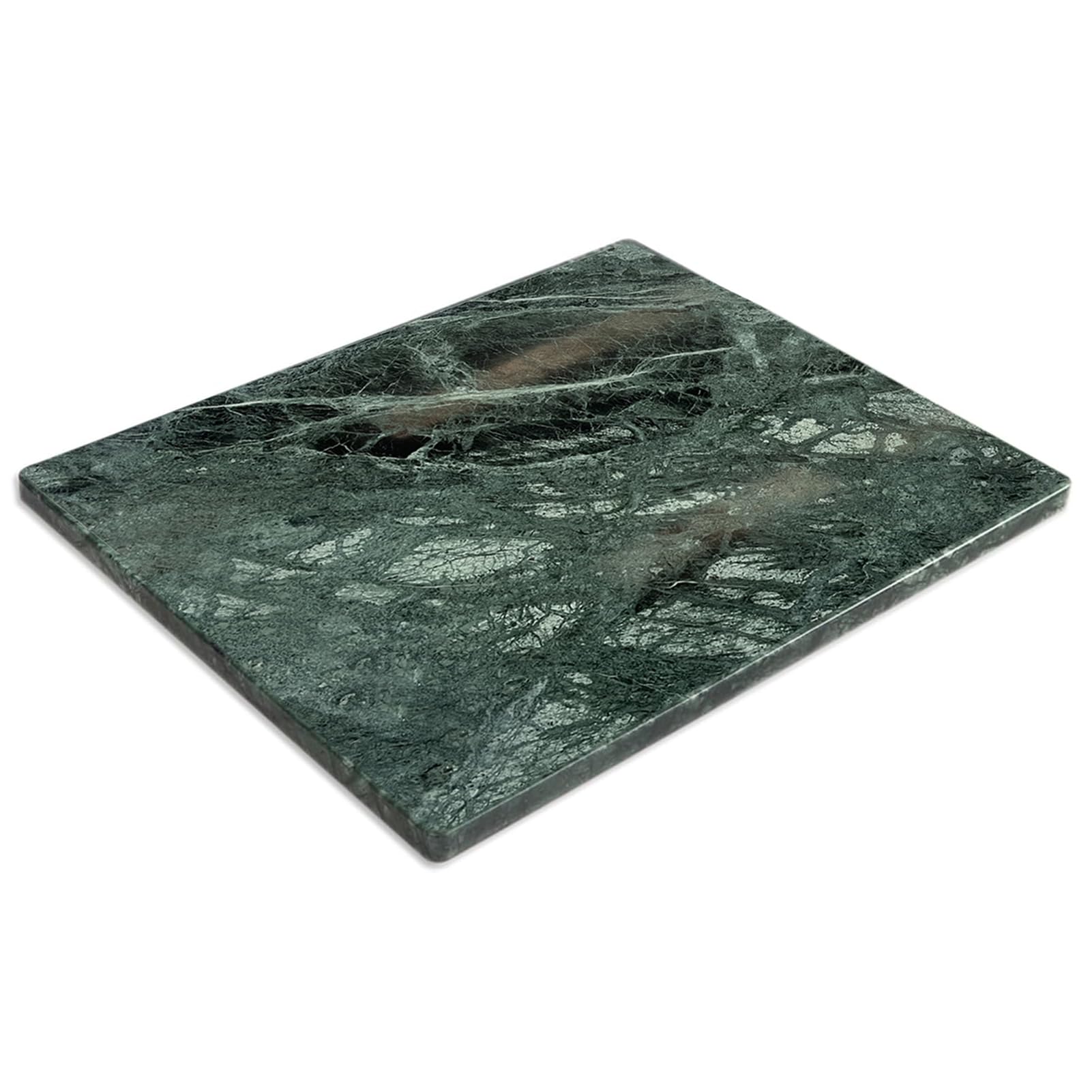
This green marble board from Diflart delivers the same thermal advantages as the JEmarble at a slightly lower weight of 23 pounds. The 20 by 16 inch surface area matches the previous board, but the 0.7 inch thickness is a hair thinner, which makes a noticeable difference when lifting it onto a marble pastry slab for storage. The green hue with white veining is visually distinct and adds a decorative element when used for cheese service.
The packaging includes five adhesive pads, so you can position them exactly where you want the board to grip. I placed one at each corner and one in the center; the board never budged during aggressive kneading of a stiff brioche dough. The polished finish is smooth to the touch, and the edges are cleanly cut without sharp burrs. The non-porous surface handled a wet dough without sticking, requiring only a light dusting of flour.
The primary trade-off is the weight-to-performance ratio. At 23 pounds, this board is not something you stash in a cabinet after each use. It needs a permanent home on the counter or a dedicated storage spot. The green marble can show water spots if not dried immediately, but a quick wipe with a microfiber cloth prevents any residue. For bakers who prioritize a cool surface and decorative versatility, this board earns its place.
Why it’s great
- Natural green marble stays cool and resists dough sticking
- Five included adhesive pads provide customizable stability
- Smooth polished edges prevent chipping during handling
Good to know
- Heavy weight requires permanent counter space
- Marble can stain from highly pigmented liquids
- Hand wash only; avoid abrasive cleaners
3. Soulscrafts Marble Stone Cutting Board
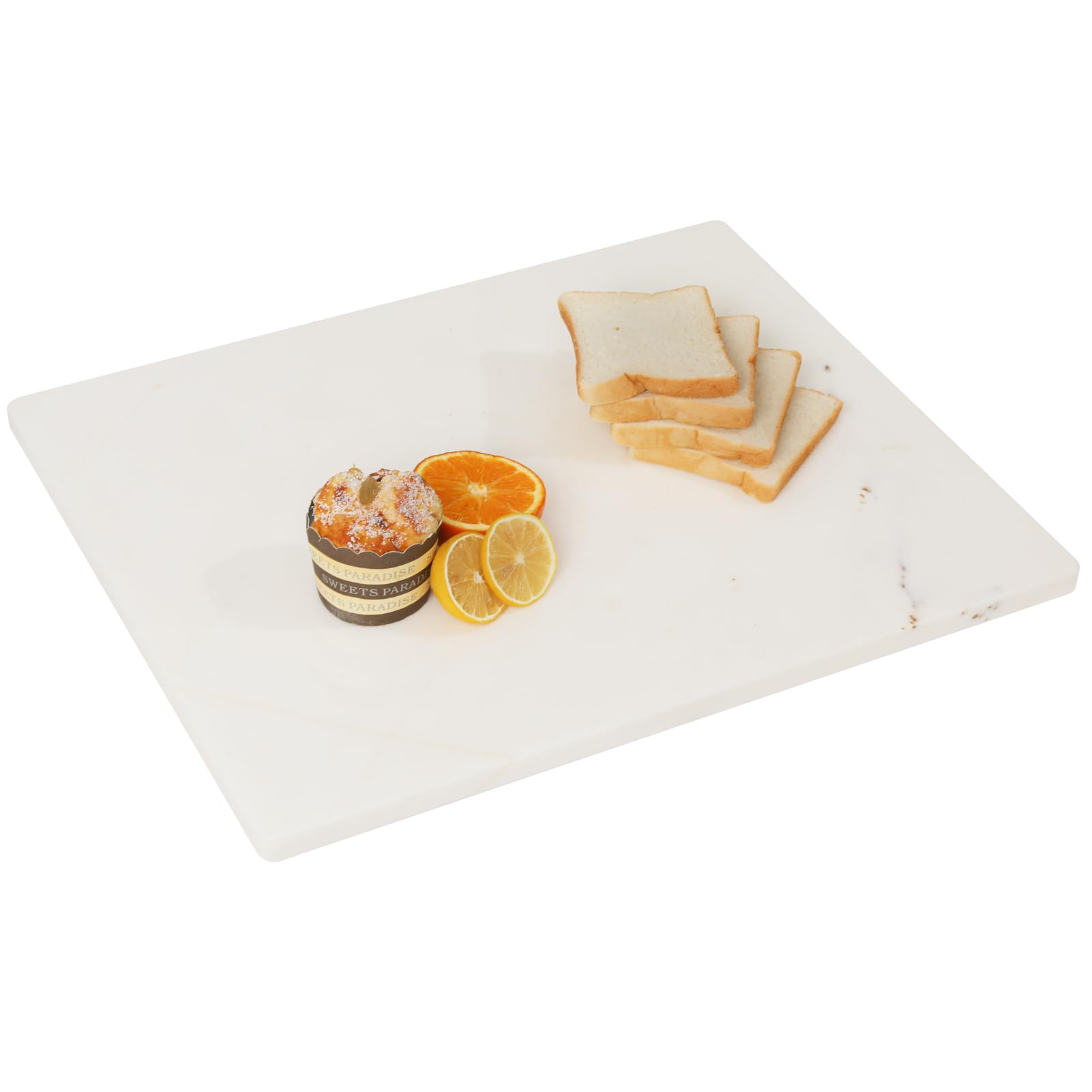
Soulscrafts offers a large white marble board at 20 by 16 inches with a thickness of 0.71 inches, landing at 25 pounds — the heaviest in this category. The ivory white base with gold texture veining gives it a premium appearance that transitions naturally from pastry prep to charcuterie service. The polished surface is exceptionally smooth, and I found that a standard pie dough released without any sticking during rolling.
The non-slip feet are removable, which gives you the option to use the board flat on a table for serving or place it on a hot countertop as a trivet. The heat resistance is genuine — I placed a hot cast iron skillet on the board for five minutes, and the marble showed no cracks or discoloration. The surface remained cool to the touch everywhere except the direct contact area. This dual-purpose utility makes it a strong candidate for kitchens where counter space is at a premium.
Maintenance is the same as any marble board — hand wash, dry immediately, avoid acidic spills. The weight is significant enough that you will plan around it rather than moving it frequently. The white marble requires slightly more vigilance with staining than darker stone, but the non-porous nature means most spills wipe away cleanly if caught promptly.
Why it’s great
- Heavy weight provides absolute stability for hard kneading
- Removable feet allow flat serving and trivet use
- Heat resistant surface protects against hot cookware
Good to know
- High weight makes it a permanent counter item
- White marble shows stains more readily than darker stone
- Hand wash only; dishwasher will damage the surface
4. Elihome Essential Baking Pastry & Cutting Board

This Elihome board represents a smart compromise for bakers who want measurement guides and dishwasher convenience without the weight of marble. The wood fiber composite is 0.25 inches thick, which is thinner than traditional wooden boards, but the material density prevents warping. The laser-engraved pastry measurements run along the edges — inch marks and a conversion chart — making it easy to roll dough to a specific thickness without a separate ruler.
The integrated juice groove along the perimeter catches flour and crumbs, keeping the counter clean. A roller pin rest groove on one side holds the pin in place, preventing it from rolling off the board. The non-slip feet are securely attached and kept the board stationary during rolling of a sticky enriched dough. The wood fiber surface is knife-friendly, so this board doubles as a cutting surface without dulling blades.
The heat resistance rating of 350 degrees Fahrenheit is legitimate — I used it as a trivet for a hot pie dish, and the board showed no scorching. The dishwasher-safe claim holds up through repeated cycles; after ten washes, the board retained its shape and the engraving remained clearly legible. The weight is only 2 pounds, so it stores flat in a cabinet without issue. For bakers who value low maintenance and precise measurements, this is the most practical option.
Why it’s great
- Laser-engraved measurements eliminate need for separate rulers
- Dishwasher safe with no warping after repeated cycles
- Roller pin rest groove keeps workspace organized
Good to know
- Thin profile may flex under heavy rolling pressure
- Wood fiber surface can show knife marks over time
- Juice groove is shallow; very wet doughs may overflow
5. GAOMON 24×18 Acacia Cutting Board

The GAOMON board shifts the focus to sheer surface area. At 24 by 18 inches with a 1.1 inch thickness, this acacia board provides enough room to roll out a full batch of pasta dough or a 16-inch pizza base without the edges crowding the counter. The acacia wood grain is dense and tightly packed, which reduces moisture absorption compared to softer woods like teak or pine.
The built-in juice groove runs around the entire perimeter and is deep enough to catch drips from a resting roast or a juicy fruit tart. The reversible design offers a flat side for rolling dough and a grooved side for carving, giving two work surfaces in one board. The 1.1 inch thickness means the board has enough mass to stay put during heavy rolling, though it is light enough at roughly 8 pounds to move to a cabinet.
The wood requires regular oiling to prevent cracking, especially in dry climates or during winter months when indoor humidity drops. Hand washing is mandatory; soaking the board can cause the acacia to split along the grain lines. For bakers who regularly produce large batches and need a single board that handles both rolling and carving, the GAOMON delivers the most square inches per dollar in this lineup.
Why it’s great
- Large 24×18 surface handles full batches without crowding
- Thick 1.1 inch construction resists warping over time
- Deep juice groove works for both dough crumbs and meat juices
Good to know
- Acacia wood requires periodic oiling for longevity
- Hand wash only; water soaking can damage the wood
- Wood surface can absorb dough fats if not sealed properly
6. Totally Bamboo Reversible Baker’s Board

This Totally Bamboo board is the entry-level option that introduces a baking-specific surface without the weight or price of stone. The 18 by 12.5 inch size is smaller than the others, but the 0.63 inch thickness gives it enough rigidity for rolling pie crusts and cookie doughs. The flat side is engraved with measurement guidelines — inches and a conversion chart — which is helpful for consistent thickness.
The reverse side features a juice groove for carving, making this a true two-in-one board. The Moso bamboo is harder than many domestic hardwoods, resisting knife marks better than acacia or maple. The bamboo is also a renewable resource that grows without replanting, which appeals to environmentally conscious buyers. The board weighs under 4 pounds, so it stores easily in a drawer or on a shelf.
The bamboo surface is less porous than traditional wood, but it is not as non-stick as marble. Sticky doughs like brioche or babka may require a moderate dusting of flour. Hand washing is recommended, and the bamboo should be oiled every few months to prevent drying. For bakers who want a lightweight, reversible board that fits in tight spaces, this is the most budget-conscious pick.
Why it’s great
- Reversible design with baking measurements on one side
- Hard bamboo surface resists knife marks and moisture
- Lightweight and easy to store in small kitchens
Good to know
- Surface is less non-stick than marble for sticky doughs
- Bamboo requires periodic oiling for best longevity
- Smaller surface limits use for large batches
7. HOMESPHERE Acacia Wood Cake Stand with Lid
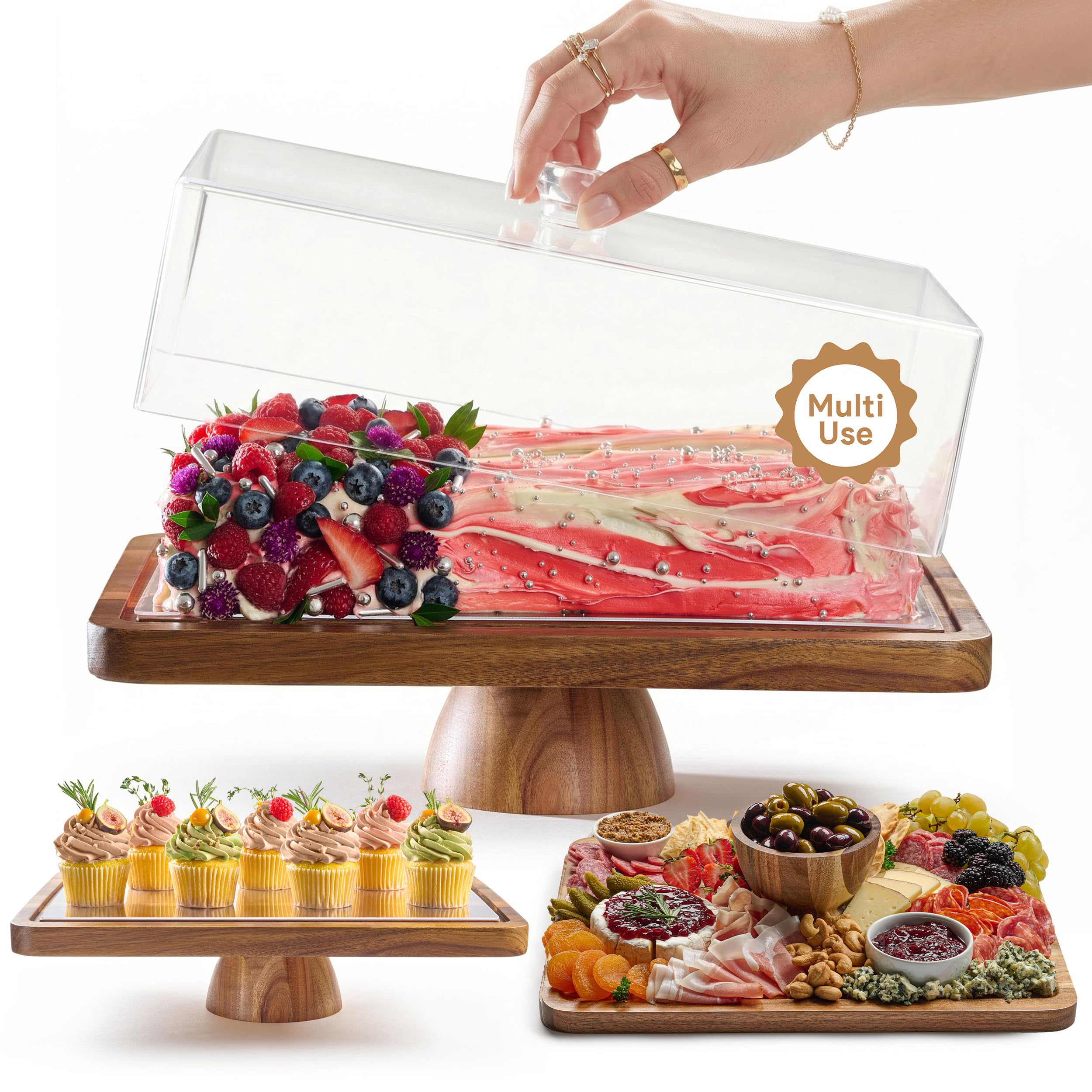
The HOMESPHERE board takes a different approach: it is a cake stand and charcuterie board hybrid rather than a pure rolling surface. The acacia wood base measures 17 by 13 inches, and when paired with the acrylic dome, it creates a sealed environment for storing pastries. The dome has a knob for easy lifting, and the rectangular shape is more practical than round domes for holding sheet cakes or layered desserts.
The reversible design means the board can flip over to serve as a flat charcuterie platter without the dome. The acacia wood is polished to a smooth finish, and the natural wood grain varies between pieces, giving each unit a unique appearance. The dome is shatterproof acrylic, which is safer than glass for transport and less likely to break in a busy kitchen.
This product is not suitable as a primary pastry board for rolling dough — the surface is too small and the wood lacks the non-porous coolness of marble. However, it excels as a display and storage solution for finished pastries, keeping croissants crisp and cakes moist. Assembly is required for the base legs, but the process takes less than five minutes. For bakers who need a dedicated holding station for finished goods, this is a specialized addition.
Why it’s great
- Rectangular acrylic dome fits sheet cakes and rectangular pastries
- Reversible board doubles as a charcuterie serving platter
- Shatterproof dome is safer than glass for transport
Good to know
- Not a replacement for a dedicated pastry rolling board
- Assembly required for the base legs
- Wood surface requires hand washing and periodic oiling
FAQ
Can I use a marble pastry board as a cutting surface for vegetables?
How often should I oil a bamboo or acacia pastry board?
Will a marble pastry board crack if I place a hot pan on it?
Final Thoughts: The Verdict
For most users, the best pastry board winner is the JEmarble 16×20 Pastry Board because its 0.75 inch thickness, polished marble surface, and non-slip feet deliver consistent temperature control for laminated doughs without any movement during rolling. If you want dishwasher convenience and built-in measurement guides, grab the Elihome Essential Baking Board. And for large-batch bakers who need maximum surface area, nothing beats the GAOMON 24×18 Acacia Board.