Nothing ruins a Sunday morning like cinnamon rolls fused to the bottom of a pan. You pull them out of the oven, the kitchen smells incredible, and then you struggle to pry the first roll loose, leaving half the caramelized bottom crust stuck to the metal. The ideal pan for this task delivers even heat distribution, a slick release surface, and a deep enough wall to contain the rising dough and the bubbling butter-sugar mixture without overflow.
I’m Mohammad Maruf — the founder and writer behind AirfryerBite. I’ve spent years analyzing bakeware construction, non-stick coating chemistries, and real-world release performance across hundreds of models to filter out the pans that actually deliver on their promise.
After comparing materials, heat tolerances, and cleaning ease, I’ve narrowed the field to the top options that define the pan for cinnamon rolls category.
How To Choose The Best Pan For Cinnamon Rolls
Baking cinnamon rolls isn’t the same as baking a sheet cake. The sugar and butter mixture that creates that gooey caramel bottom is also the primary reason for sticking and burning. The right pan addresses this with specific material and coating choices.
Interior Depth: The 2.75-Inch Minimum
Standard jelly roll pans at 1 inch deep are a disaster waiting to happen. Cinnamon roll dough rises significantly during proofing and baking, and the butter-sugar glaze bubbles up vigorously. A pan with at least 2.75 inches of interior depth prevents overflow onto your oven floor and gives the rolls room to expand into their signature tall, pillowy shape.
Non-Stick Coating Chemistry: Ceramic vs. PTFE
PTFE-based coatings are the traditional non-stick workhorses — slick release, easy cleanup, but limited to about 450°F before degradation. Ceramic coatings handle higher temperatures (up to 550°F) and are PTFE- and PFOA-free, appealing to health-conscious bakers. Both work well for cinnamon rolls; the trade-off is longevity. PTFE tends to outlast ceramic, which can lose its slickness after a year of heavy use.
Material Base: Carbon Steel vs. Aluminum vs. Stoneware
Carbon steel offers excellent heat retention and even browning, but it is prone to warping under sudden temperature changes. Aluminum heats faster and more evenly, resisting warping better. Stoneware provides beautiful oven-to-table presentation and even heat, but it is heavy, has no non-stick coating, and can cause sticking if not greased thoroughly. For cinnamon rolls specifically, carbon steel or aluminum with a quality non-stick layer is the sweet spot.
Quick Comparison
On smaller screens, swipe sideways to see the full table.
| Model | Category | Best For | Key Spec | Amazon |
|---|---|---|---|---|
| Caraway Rectangle Pan | Premium Ceramic | Non-toxic, high-heat baking | 550°F max temp, ceramic coating | Amazon |
| Boxiki Kitchen Cake Pan | Mid-Range Steel | Versatile everyday baking | 420°F max, heavy gauge carbon steel | Amazon |
| HONGBAKE Lasagna Pan | Budget Carbon Steel | Deep pan, high volume | 450°F max, 3″ interior depth | Amazon |
| Nordic Ware Treat Pan | Value Carbon Steel | Warp-resistant daily use | Diamond texture, PFOA-free coating | Amazon |
| Martha Stewart Stoneware | Premium Stoneware | Oven-to-table serving | 350°F max, cream glazed finish | Amazon |
In‑Depth Reviews
1. Caraway Non-Stick Ceramic 9″x13″ Rectangle Pan

Caraway delivers a ceramic-coated aluminum pan that handles oven temperatures up to 550°F — well beyond what any PTFE-coated pan can take. This heat ceiling means you can crank the oven for that last-minute caramelization without worrying about coating breakdown. The aluminum core heats evenly and resists warping, a common failure point in carbon steel pans used at high temperatures.
The naturally slick ceramic surface requires little to no greasing for cinnamon rolls. Real-world feedback confirms that even burnt-on sugar residue slides off after a short soak, though hand washing is recommended to preserve the coating. The navy color and minimalist design also look sharp for direct serving at the table.
For bakers who prioritize non-toxic materials — free of PTFE, PFOA, PFAS, lead, and cadmium — this pan checks every box without compromising release performance. The only catch is the price; it sits at the top of the range.
Why it’s great
- Non-toxic ceramic coating with no PTFE or PFOA
- 550°F max temperature for high-heat baking
- Aluminum core resists warping
Good to know
- Hand washing required for longevity
- Premium price point
2. Boxiki Kitchen Non-stick 9×13 Rectangular Cake Pan
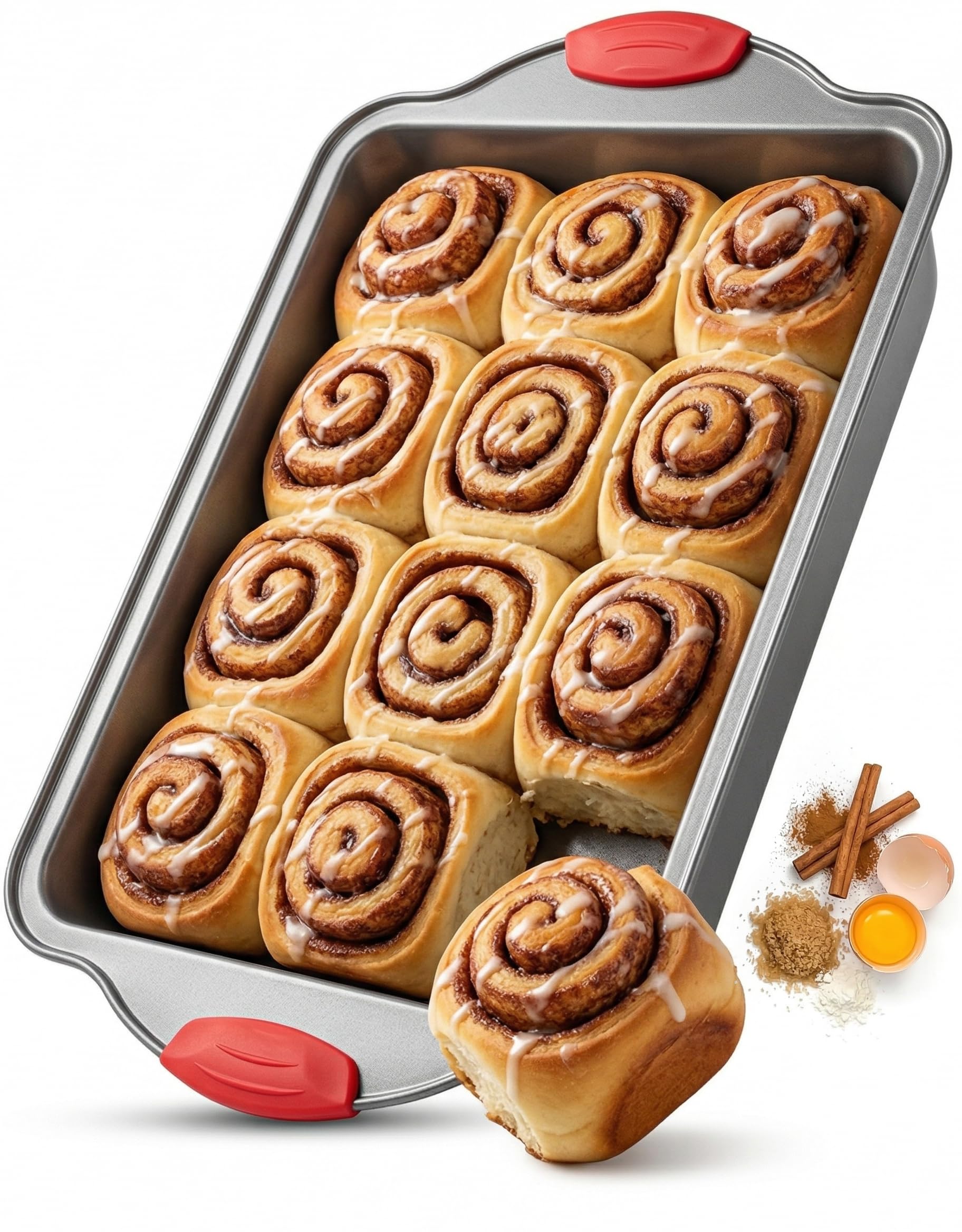
Boxiki Kitchen uses heavy-gauge carbon steel with a non-stick ceramic coating, hitting a sweet spot between build quality and cost. At 420°F max, it won’t handle the extreme heat of the Caraway, but it is perfectly adequate for the standard 350°F to 400°F recommended baking temperature for cinnamon roll recipes.
The silicone handles are a standout feature — they stay cool during transport and provide a secure grip even with oven mitts. The non-stick release is reliable; users report easy removal of cakes and even reheated barbecue ribs without sticking. Cleaning is straightforward, and dishwasher compatibility adds convenience, though hand washing will extend the coating’s life.
For a mid-range carbon steel pan, the Boxiki delivers consistent even heating thanks to the thick gauge metal. It is an excellent choice for bakers who want a dedicated cinnamon roll pan without stepping up to the premium tier.
Why it’s great
- Silicone handles for safe, easy gripping
- Reliable non-stick ceramic coating
- Dishwasher safe for easy cleanup
Good to know
- Max temperature limited to 420°F
- Hand washing recommended for coating durability
3. HONGBAKE Nonstick Lasagna Pan 3 Inch Deep

The HONGBAKE pan is built around depth: 3 inches of interior height, significantly taller than the standard 2 to 2.5-inch bakeware. For cinnamon roll bakers who use jumbo-sized rolls or double batches, this extra capacity prevents the characteristic overflow disaster. The pan is made from carbon steel that is 57% thicker than typical bakeware, reducing the risk of warping at the 450°F max temperature.
The Whitford-reinforced two-layer coating is free of PFOA, BPA, and PTFE, and the 34% silicon content creates a smooth surface that resists scratching and corrosion. Riveted stainless steel handles are comfortable and stay secure. A few users noted rust appearing around the edges over time, suggesting that thorough drying after washing is important.
At a budget-friendly price point, this pan offers tremendous capacity and solid non-stick performance. It is a strong option for bakers who need room for tall, generous cinnamon rolls without worrying about spillover.
Why it’s great
- Deep 3-inch interior prevents overflow
- 57% thicker carbon steel resists warping
- PFOA, BPA, and PTFE-free coating
Good to know
- Some reports of edge rust over time
- Heavy compared to thinner pans
4. Nordic Ware Treat Rectangular Cake Pan
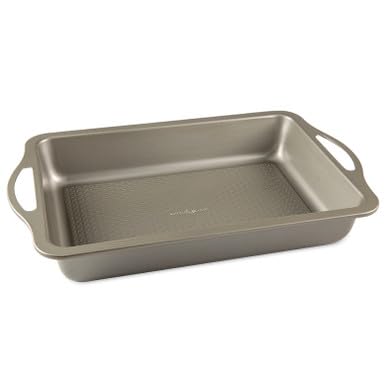
Nordic Ware addresses the chronic warping issue with a subtle diamond texture stamped into the carbon steel. This reinforcement keeps the pan flat through repeated heating and cooling cycles. The PFOA-free nonstick coating provides a smooth release surface that works well for cinnamon rolls without excessive greasing.
The open handle design offers a solid, easy grip — a thoughtful detail when pulling a heavy pan of caramel-covered rolls out of a hot oven. At 2.38 inches deep, it sits slightly below the 2.75-inch sweet spot, so it is best suited for standard-sized cinnamon rolls rather than oversized bakery-style ones.
Hand washing is recommended to protect the nonstick layer. Users consistently praise its sturdiness and reliable release. For a mid-range carbon steel pan that resists the warping that plagues cheaper bakeware, Nordic Ware is a dependable choice.
Why it’s great
- Diamond texture reinforcement prevents warping
- Open handles for secure grip
- PFOA-free nonstick coating
Good to know
- Not dishwasher safe
- Shallower depth (2.38″) not ideal for jumbo rolls
5. Martha Stewart Broadbrook Ceramic Bakeware
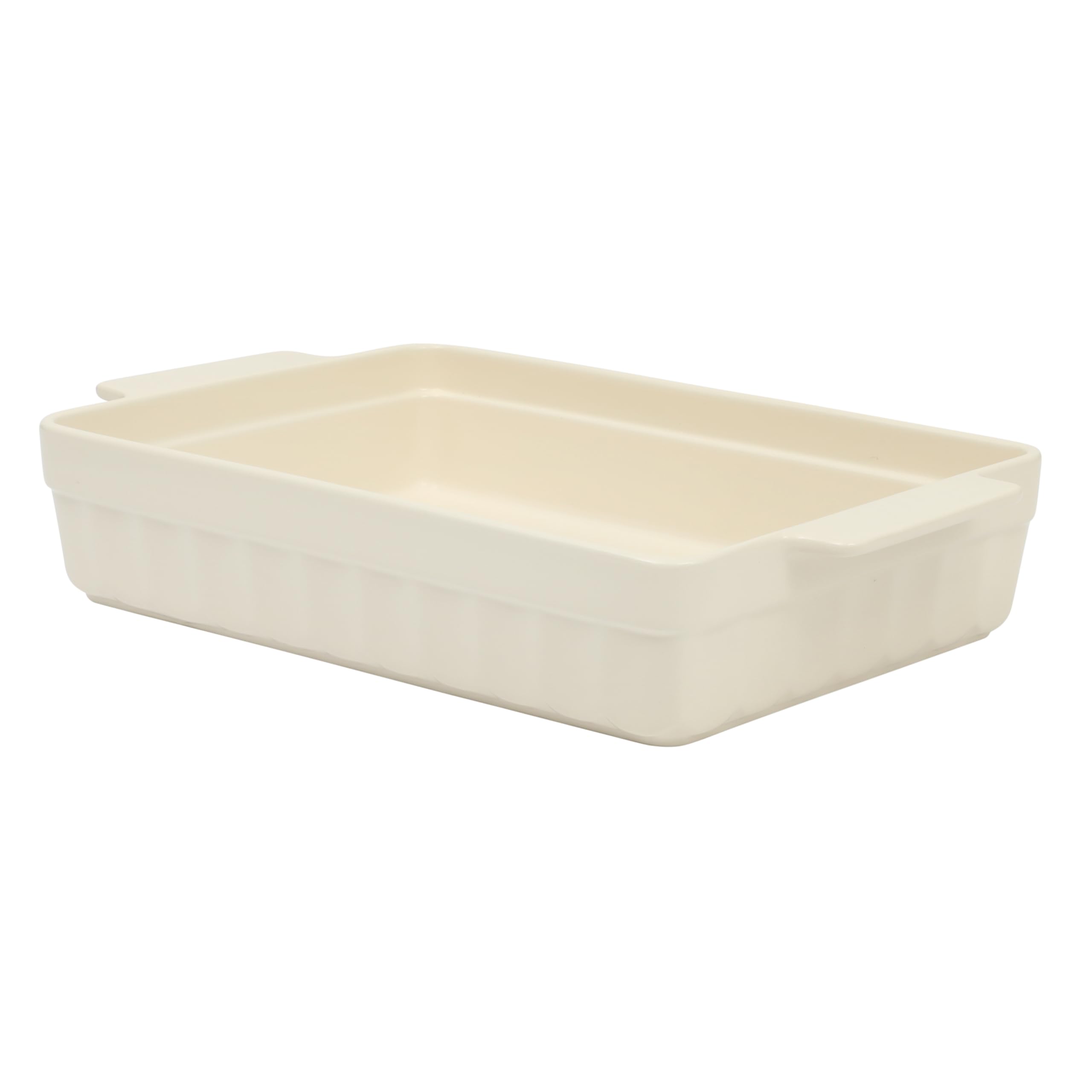
Martha Stewart’s stoneware baker is a different animal — uncoated glazed ceramic that distributes heat evenly but lacks the slick release of non-stick pans. For cinnamon rolls, this means you must grease the pan thoroughly, including the corners, to avoid sticking. The cream glazed finish with fluted exterior looks elegant for oven-to-table serving.
The stoneware is heavy — about 6.5 pounds — which contributes to its stability and heat retention. However, the maximum oven temperature is limited to 350°F, which is fine for most cinnamon roll recipes but leaves no headroom for higher-temperature techniques like pre-heating the pan or final broiling for extra caramelization.
If you value presentation and don’t mind the extra greasing and weight, this is a beautiful serving piece. It is dishwasher and microwave safe. For pure release performance with cinnamon rolls, a non-stick alternative is generally more forgiving.
Why it’s great
- Elegant stoneware for direct table serving
- Dishwasher and microwave safe
- Heavy, stable construction
Good to know
- 350°F max temperature limit
- Requires thorough greasing to prevent sticking
- Heavy and bulky to handle
FAQ
Can I use a glass baking dish for cinnamon rolls?
Why do my cinnamon rolls stick to the pan?
What size pan is best for standard cinnamon rolls?
Is ceramic coating better than non-stick spray?
Final Thoughts: The Verdict
For most users, the pan for cinnamon rolls winner is the Caraway Rectangle Pan because it combines a high-temperature ceramic coating, warp-resistant aluminum construction, and non-toxic materials into one premium package. If you want durable value with cool-touch silicone handles, grab the Boxiki Kitchen Cake Pan. And for deep-dish bakers who pack jumbo rolls, nothing beats the HONGBAKE Lasagna Pan for overflow protection.