The wrong primer turns a weekend cabinet refresh into a weeks-long ordeal of peeling paint, sticky doors, and regret. Cabinet-grade primers must bond to slick, oil-stained surfaces without sanding, block tannins from bleeding through, and provide a rock-hard base for topcoats that withstand daily slams, greasy fingerprints, and humidity.
I’m Mohammad Maruf — the founder and writer behind AirfryerBite. I’ve analyzed hundreds of primers for kitchen cabinets by cross-referencing adhesion tests, stain-blocking chemistry, dry times, and real-user durability reports to separate the products that deliver factory-like finishes from those that fail the fingernail scratch test.
Whether you are painting over dated oak, laminate, or thermofoil, this guide ranks the top formulas by bonding power, coverage, and final finish. Read on for the definitive best paint primer for cabinets for your next kitchen upgrade.
How To Choose The Best Paint Primer For Cabinets
Cabinet primers are not created equal. A general-purpose wall primer might seal drywall, but it will peel off kitchen cabinets within weeks. You need a formula engineered for high-adhesion on slick, vertical, and temperature-fluctuating surfaces. Here is what matters most.
Adhesion to slick substrates
The number one failure point for cabinet paint is poor adhesion to the factory finish. Look for primers labeled “bonding” or “universal bonding” — these contain tackifiers that grip glossy surfaces like laminate, thermofoil, and previously painted varnishes. Products like the XIM UMA Acrylic Bonder are specifically formulated to pass the fingernail test on slippery plastic laminates where standard primers slide right off.
Stain-blocking and tannin resistance
Oak and cherry cabinets bleed tannins through water-based paints, creating yellow or brown spots that ruin a fresh white finish. A superior stain-blocking primer, like the INSL-X Aqua Lock Plus, contains opaque pigments and a shellac-like barrier that seals water-soluble stains. If you are covering dark wood or smoke residue, choose a primer that explicitly lists “stain-blocking” in its description rather than a general-purpose formula.
Dry time and recoat window
Cabinet painting demands patience, but no one wants to wait days between coats. The best cabinet primers are tack-free in 30 minutes and ready for a topcoat in one hour. Quick-dry formulas allow you to apply two primer coats and your first paint coat within a single day. Slower-curing primers require up to 24 hours before sanding, which stalls your project unnecessarily.
Quick Comparison
On smaller screens, swipe sideways to see the full table.
| Model | Category | Best For | Key Spec | Amazon |
|---|---|---|---|---|
| Rust-Oleum Universal Bonding Primer | Premium | Slick surfaces, metal lockers | 35 sq ft coverage per quart | Amazon |
| XIM UMA Acrylic Bonder | Mid-Range | Laminate, Formica, glossy trim | Excellent wet adhesion | Amazon |
| INSL-X Cabinet Coat (Paint) | Mid-Range | True all-in-one topcoat over primer | 87–112 sq ft per quart | Amazon |
| INSL-X Aqua Lock Plus | Value | Stain blocking on drywall, new trim | 75–100 sq ft per quart | Amazon |
| Country Chic All-in-One Chalk Paint | Premium | Chalky matte furniture transformations | Built-in primer & top coat | Amazon |
In‑Depth Reviews
1. RUST-OLEUM 330494 Quart Universal Bonding Primer

The Rust-Oleum Universal Bonding Primer is the undisputed champion for adhesion on the hardest-to-coat surfaces. This premium formula bonds aggressively to glossy metal, laminate, and previously painted enamel without sanding — users report passing the fingernail scratch test on kiln-treated flower pots and metal lockers with just one coat. Its coverage is rated at 35 square feet per quart, which is modest but reflects the thick, high-solids chemistry that does the sticking.
Application is smooth with minimal drips, and the primer dries to a flat matte finish that accepts both latex and oil-based topcoats. The dry time is slower than water-based options — expect 24 hours before recoating — but the bond strength justifies the wait. Multiple users successfully primed Formica countertops and galvanized metal without surface prep beyond cleaning.
Where it truly shines is in extreme scenarios: high-gloss factory finishes and non-porous metals where other primers slide right off. If your cabinets have a slick, unknown coating or you are painting over melamine, this is the primer that eliminates the “peel risk.” The only trade-off is the smaller coverage area per quart, which means you may need two quarts for a full set of kitchen cabinets.
Why it’s great
- Exceptional adhesion to glossy and metal surfaces without sanding
- Thick, high-solids formula minimizes drips during brush application
- Compatible with latex, oil, and hybrid topcoat paints
Good to know
- Only 35 square feet coverage per quart — plan for two quarts on a full kitchen
- Full cure takes 24 hours, requiring project pacing
2. XIM Products UMA Acrylic Bonder and Primer/Sealer

The XIM UMA Acrylic Bonder is the specialists’ choice for the most challenging non-porous substrates — specifically laminate, Formica, and cultured marble. Where standard primers leave a film that scratches off with a fingernail, XIM’s proprietary UMA formula delivers “wet adhesion,” meaning it retains its grip even when moisture, grease, or humidity attack the bond line. Users who previously failed with standard primers on smooth laminate report that this primer finally passed the scratch test, enabling durable topcoat finishes.
It applies as a thin, leveling liquid that dries streak-free, making it ideal for roll-on application without visible lap marks. The primer is compatible with all topcoat paints — water-based, oil-based, and even epoxy. One reviewer successfully used three light coats under a pour-on epoxy countertop, demonstrating its versatility beyond simple cabinet painting.
The biggest advantage of the XIM is its low-temperature tolerance. It can be applied in conditions as low as 35°F, making it usable in unfinished garages or basements during cooler months. The trade-off is a slightly longer drying time than the INSL-X options — plan for two to three coats with drying intervals to build a solid foundation, especially on high-gloss plastic surfaces.
Why it’s great
- Superior wet adhesion on glossy laminate and Formica that defeats standard primers
- Can be applied in low temperatures down to 35°F
- Streak-free, self-leveling finish for smooth rolling
Good to know
- Requires two to three coats for full opacity and bond strength
- Thin consistency may surprise users accustomed to thick primers
3. INSL-X Cabinet Coat Urethane Acrylic Semi-Gloss Enamel

The INSL-X Cabinet Coat is not strictly a primer — it is an all-in-one urethane acrylic enamel that claims to deliver a “factory-like” finish without a separate primer coat. The formulation includes self-leveling agents that reduce brush and roller marks, producing a smooth, semi-gloss surface that resists chipping, scuffing, and grease. Users rave about its ability to dry to a hard, durable shell that stands up to kitchen abuse.
Where this product fits into a primer discussion is as a topcoat over a dedicated bonding primer. While INSL-X markets it as “primer not required,” professional cabinet finishers often apply a thin coat of the XIM or Rust-Oleum bonding primer first to ensure maximum adhesion on slick surfaces. The Cabinet Coat then performs best when applied with a 1/4-inch nap microfiber roller for a near-sprayed finish.
Coverage is generous at 87 to 112 square feet per quart, and the paint is truly waterproof once cured. One reviewer reported excellent results on bathroom vanity cabinets, highlighting its resistance to moisture and cleaning chemicals. The downside is that going without a bonding primer on gloss surfaces is risky — some users noted peeling when applied directly over factory-finished oak without sanding.
Why it’s great
- Self-leveling formula creates a near-sprayed, smooth finish with a roller
- High durability against grease, stains, and moisture in kitchen environments
- Can be used as a standalone topcoat over sanded surfaces
Good to know
- Using without a bonding primer on glossy surfaces is risky — sand or use a dedicated primer first
- Pour small amounts to avoid gloppiness; thick consistency requires careful application
4. INSL-X Aqua Lock Plus Acrylic Stain Blocking Primer Sealer

The INSL-X Aqua Lock Plus is the budget-friendly champion for standard cabinet painting projects — especially when your main enemy is stain bleeding rather than adhesion. This 100% acrylic formula seals water-soluble stains from wood tannins, smoke residue, and water damage with a single coat. Users report excellent coverage on new drywall and previously stained trim, with the primer drying tack-free in 30 minutes and ready for a topcoat in just one hour.
Coverage is strong at 75 to 100 square feet per quart, making it economical for full kitchen runs. The low-VOC formula has almost no odor, which is a significant advantage if you are working indoors without professional ventilation. User reviews highlight its ability to prevent yellow spots from bleeding through white paint on oak cabinets — a common headache that cheaper primers fail to solve.
The limitation is that Aqua Lock is a stain blocker first and a bonder second. On glossy laminate or previously painted oil-based surfaces, it may not grip as aggressively as the XIM or Rust-Oleum bonding primers. It works best when applied over sanded wood, primed MDF, or new drywall. If your cabinets have a slick factory finish, you should pair this primer with a light scuff-sanding or choose a dedicated bonding product instead.
Why it’s great
- Superior stain-blocking performance prevents tannin bleed on oak and cherry
- Quick drying — recoat in one hour, perfect for same-day multi-coat projects
- Low odor and low VOC for comfortable indoor application
Good to know
- Not a bonding primer — requires sanding or a clean, porous surface for best adhesion
- Coverage drops on rough-textured surfaces; budget extra for second coat
5. Country Chic All-in-One Chalk Paint
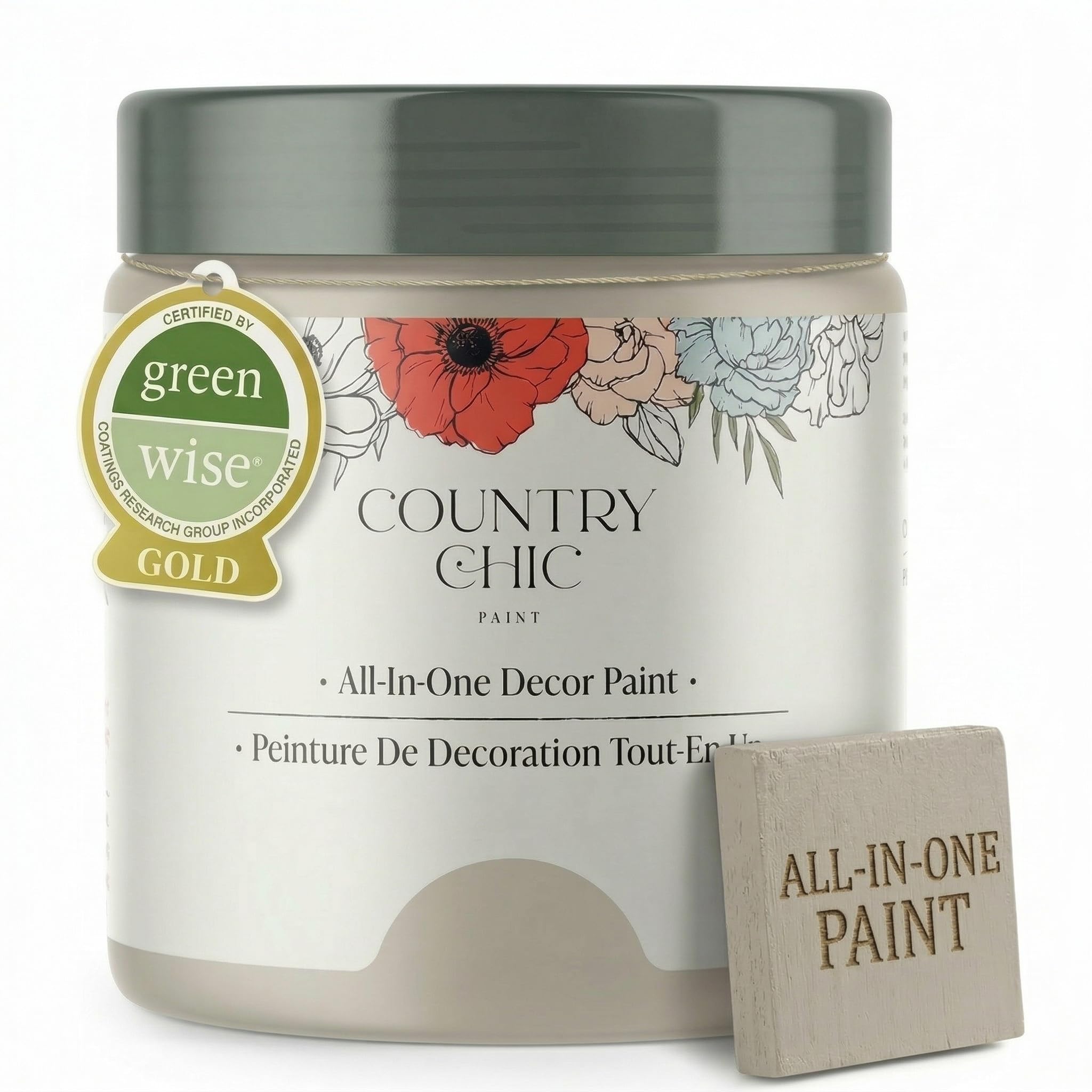
The Country Chic All-in-One Chalk Paint occupies a unique niche: it is a decorative finish paint with a built-in primer, tailored for chalky matte furniture transformations rather than high-gloss kitchen cabinets. The formula includes both primer and top coat in a single bottle, allowing you to paint over dark surfaces without sanding — one user successfully covered a black dresser with two coats and achieved a beautiful matte, chalky finish.
Application is genuinely effortless — the paint glides on smoothly with a brush or roller, and the self-leveling action minimizes streaks. It dries to a dry-touch state in 30 minutes, though full curing takes longer. Being Green Wise Gold certified, it is free of phthalates, formaldehyde, and heavy metals, with ultra-low VOCs that produce almost no odor. This makes it ideal for indoor bedroom or living room furniture projects where strong fumes are unacceptable.
The critical caveat is that this is not a true cabinet-grade primer. While it adheres well to wood, metal, and even plastic laminate, the chalky matte finish is less durable against kitchen grease and constant wiping than a urethane-acrylic system. It is best suited for low-traffic cabinet fronts, decorative pieces, or DIY furniture flips where the distressed chalky look is the goal, rather than a hard, scrubbable kitchen finish.
Why it’s great
- Truly all-in-one — primer, paint, and top coat in a single application
- Eco-friendly, zero harsh chemicals, and almost no odor
- Self-leveling and smooth, ideal for furniture transformations
Good to know
- Chalky matte finish is less durable than urethane-acrylic for high-traffic kitchens
- Packaging quality is inconsistent — lid may loosen during shipping
FAQ
Can I use standard wall primer on kitchen cabinets?
Do I need to sand cabinets before applying a bonding primer?
What is the difference between a primer and a paint that says “primer included”?
How long should I wait between primer and paint on cabinets?
Can I use chalk paint as a cabinet primer?
Final Thoughts: The Verdict
For most users, the best paint primer for cabinets winner is the Rust-Oleum Universal Bonding Primer because its aggressive adhesion formula eliminates sanding on the most challenging glossy surfaces and provides a fail-safe base for any topcoat. If you want superior stain blocking on wood cabinets with quick drying, grab the INSL-X Aqua Lock Plus. And for bonding to laminate and Formica where other primers fail, nothing beats the XIM UMA Acrylic Bonder.