Shucking oysters is one of the most rewarding kitchen skills, but the margin for error is razor-thin. A single slip with a shucking knife against a slick shell can send the blade straight into your palm or fingers. The difference between a clean shuck and a trip to urgent care is a pair of properly protective gloves designed for this exact task.
I’m Mohammad Maruf — the founder and writer behind AirfryerBite. I specialize in analyzing the hardware specifications of kitchen safety gear, comparing cut-resistance ratings, material weaves, and ergonomic designs to separate the genuinely protective products from the ones that just look tough on the shelf.
Whether you are shucking a dozen oysters for a weekend gathering or handling raw shellfish daily in a commercial kitchen, the right pair of gloves turns a dangerous job into a comfortable routine. This guide breaks down the current market to help you find the best oyster shucking gloves for your specific needs and skill level.
How To Choose The Best Oyster Shucking Gloves
Protecting your non-shucking hand (the one holding the shell) is the primary goal of an oyster glove, but not every cut-resistant glove is built for wet, slippery shellfish work. The material, cut level, wrist coverage, and food safety rating all matter differently here than for dry construction or woodworking tasks.
Cut-Resistance Level: A2 vs A9
The ANSI/ISEA 105 standard rates cut resistance from A1 (lowest) to A9 (highest). For oyster shucking, where the blade moves against a hard shell surface with moderate force, an A5 or higher rating is the safe baseline. Gloves rated A6 to A9 — typically woven from stainless steel wire or high-performance polyethylene (HPPE) with steel reinforcement — reliably stop a sharp shucking knife from penetrating to your skin. Levels below A5 may stop a glancing cut but can fail under direct pressure.
Food Grade Material and Moisture Management
Your shucking glove must be food-safe since it will constantly contact raw shellfish and saltwater. Stainless steel mesh is inherently food-grade, non-corrosive, and easy to rinse. Coated gloves must specify that the coating (nitrile or PU) is food-compatible and does not retain odors. Breathability is equally important — working over a bucket of shucked oysters generates moisture and heat, so gloves with mesh construction or ventilated backings prevent your hand from becoming a sweaty, slippery mess inside the glove.
Wrist Coverage and Grip Pattern
Standard cut-resistant gloves often stop at the wrist crease, leaving the lower part of your palm and wrist exposed. For shucking, a longer cuff or an adjustable wrist buckle (common on stainless steel mesh gloves) keeps the glove securely in place and prevents shell fragments or cold water from sliding down inside. The grip surface must perform when wet — nitrile-dipped palms offer excellent traction on slick oyster shells, while bare stainless steel mesh can be slippery on smooth shell surfaces unless paired with a textured coating or an inner liner.
Quick Comparison
On smaller screens, swipe sideways to see the full table.
| Model | Category | Best For | Key Spec | Amazon |
|---|---|---|---|---|
| Herda Stainless Steel Mesh | Mesh / A9 | Heavy shell work, mandolin slicing | Level 9 cut resistance, 1 pair + 2 liners | Amazon |
| NoCry Cut Resistant | Coated / A5 | Wet grip, daily kitchen use | Level 5, nitrile-coated waterproof palm | Amazon |
| TruChef Cut Resistant | Coated / A5 | Multi-user households, color-coding | 3-piece pack, machine washable, color-coded | Amazon |
| Schwer PU Coated | Coated / A6 | High dexterity, touchscreen use | ANSI A6, 10-finger touchscreen, 3-pair pack | Amazon |
| COOLJOB Bulk Pack | Coated / A4-A6 | Volume kitchens, job sites | 12 or 120 pairs, 13-gauge, PU grip | Amazon |
In‑Depth Reviews
1. Herda Stainless Steel Mesh Cut Resistant Gloves

The Herda glove is built around a stainless steel wire weave that delivers Level 9 cut resistance — the highest tier in the ANSI standard. For oyster shucking, this means a sharp blade pressing directly into the mesh with full body weight will not reach your skin. The metal construction is food-grade, non-corrosive, and rinses clean under running water, which is essential when you are handling raw shellfish in a saltwater environment. Each order includes two white nylon inner gloves that wick moisture and improve the overall fit, preventing the metal mesh from shifting against your hand during repetitive motions.
The adjustable wrist buckle is a practical detail that standard cut-resistant gloves often overlook. It cinches the glove tight against your forearm, stopping cold water, shell fragments, and slippery brine from running down inside the glove while you work. The extra liner gloves also act as a buffer, reducing the metallic feel against your skin and making the glove more comfortable for extended shucking sessions. Users report using these gloves for offshore fishing, mandolin slicing of hard vegetables, and heavy meat cutting — all tasks that demand the same blade-stopping confidence required for oysters.
One limitation worth noting: the glove runs shorter than some users prefer. The cuff ends at the palm-to-wrist transition rather than extending an inch or two up the wrist, which exposes a small gap if your shucking apron or sleeves ride up. The metal weave is also denser than coated fabric gloves, which slightly reduces airflow — though the liner gloves help mitigate heat buildup. For maximum protection during high-volume shucking, pairing this with a longer wrist guard or a rag tucked into the cuff solves the gap concern completely.
Why it’s great
- Level 9 cut resistance stops even heavy blade pressure during shucking
- Stainless steel weave is food-safe, rust-resistant, and easy to sanitize
- Adjustable buckle keeps water and shell debris out during wet work
- Includes breathable nylon inner liners for sweat absorption and comfort
Good to know
- Cuff length ends at the wrist, leaving a small gap above the palm
- Dense steel mesh reduces ventilation compared to open-knit fabric gloves
2. NoCry Professional Cut Resistant Work Gloves

The NoCry glove combines a Level 5 polyethylene-and-fiber blend liner with a nitrile-coated palm that delivers category-leading wet grip on smooth oyster shells. The coating is waterproof and latex-free, which matters when your shucking hand is submerged in a bowl of cold water to keep the oysters alive and briny. The reinforced seam between the thumb and forefinger — the exact zone that takes the most strain during repeated shucking — prevents early blowouts that cheaper gloves suffer from after a few dozen oysters.
Breathability is a standout feature here. The knit back of the glove allows air to circulate while the coated palm keeps moisture off your skin, reducing the clammy feeling common with full-coverage rubber or thick leather gloves. The overall fabric is thin enough to allow precise finger movement for wiggling the knife tip into the oyster hinge, but thick enough that a glancing knife slip is absorbed by the Level 5 weave without transferring through. Users consistently praise the balance of dexterity and protection, with many reporting that the glove eliminated kitchen accidents after switching to it.
The trade-off is that Level 5 cut resistance is not absolute. A forceful, direct stab with a sharp shucking knife can penetrate this fabric, so the NoCry glove is best suited for cooks who have developed solid technique and need a reliable secondary barrier rather than a full-blade stopper. The sizing runs slightly large, so check the measurement guide carefully — a loose fit compromises the grip coating’s contact with the shell. Also, the interior wrist label can feel rough against bare skin during extended wear, a minor annoyance that is easily solved by wearing the glove over an elastic wristband.
Why it’s great
- Nitrile-coated palm provides excellent traction on wet, slick oyster shells
- Breathable knit back prevents sweat buildup during long shucking sessions
- Reinforced thumb crotch area resists wear from repetitive knife work
- Touchscreen-compatible tips allow phone use without removing the glove
Good to know
- Level 5 rating stops glancing cuts but can be pierced under heavy direct force
- Runs slightly large; measure hand circumference before ordering
- Inner wrist label may irritate bare skin without an under-glove layer
3. TruChef Cut Resistant Gloves – 3-Pack

TruChef’s three-pack is a practical solution for households or small kitchens where multiple people shuck oysters or handle sharp knives. Each glove in the pack is color-coded — blue, red, and gray — so different users can quickly grab their size without mixing up fit or contaminating food handling zones. The fabric uses a high-density polyethylene weave with a Level 5 cut rating, similar to the NoCry glove, but the fit here runs more consistently true to size across the three variants, reducing the guesswork for buyers with smaller or larger hands.
Machine washability is a key advantage for heavy shucking rotations. After a session with shellfish brine and organic residue, simply toss the gloves into a cold-water wash cycle and air dry them. The weave resists shrinking and maintains its structural tension through repeated cleaning, which is not always the case with lower-cost polyethylene gloves that loosen after a few washes. The gloves also provide decent puncture resistance from shell shards — a common hazard when handling cracked or badly damaged oysters — though they are not rated as puncture-proof.
The main drawback for dedicated shuckers is wrist length. These gloves terminate at the standard wrist line without any extended cuff, adjustable strap, or elastic closure. When you are shucking over a deep bowl of ice water, some splash inevitably runs into the wrist opening, which can be uncomfortable on cold mornings. Users with very small hands (under 6-inch palm circumference) may find the small size still a bit loose for fine knife control. For casual home use and shared kitchen environments, however, the three-pack convenience and washability make it a strong mid-range option.
Why it’s great
- Three color-coded gloves prevent mix-ups in multi-cook kitchens
- Machine washable without losing cut resistance or fit over time
- Consistent sizing across all three gloves in the pack
- Good puncture resistance against small shell fragments
Good to know
- No wrist strap or extended cuff to block water and debris ingress
- May run loose on very small hands, reducing precision for delicate shucking
4. Schwer Cut Resistant Gloves A6 – 3-Pair Pack
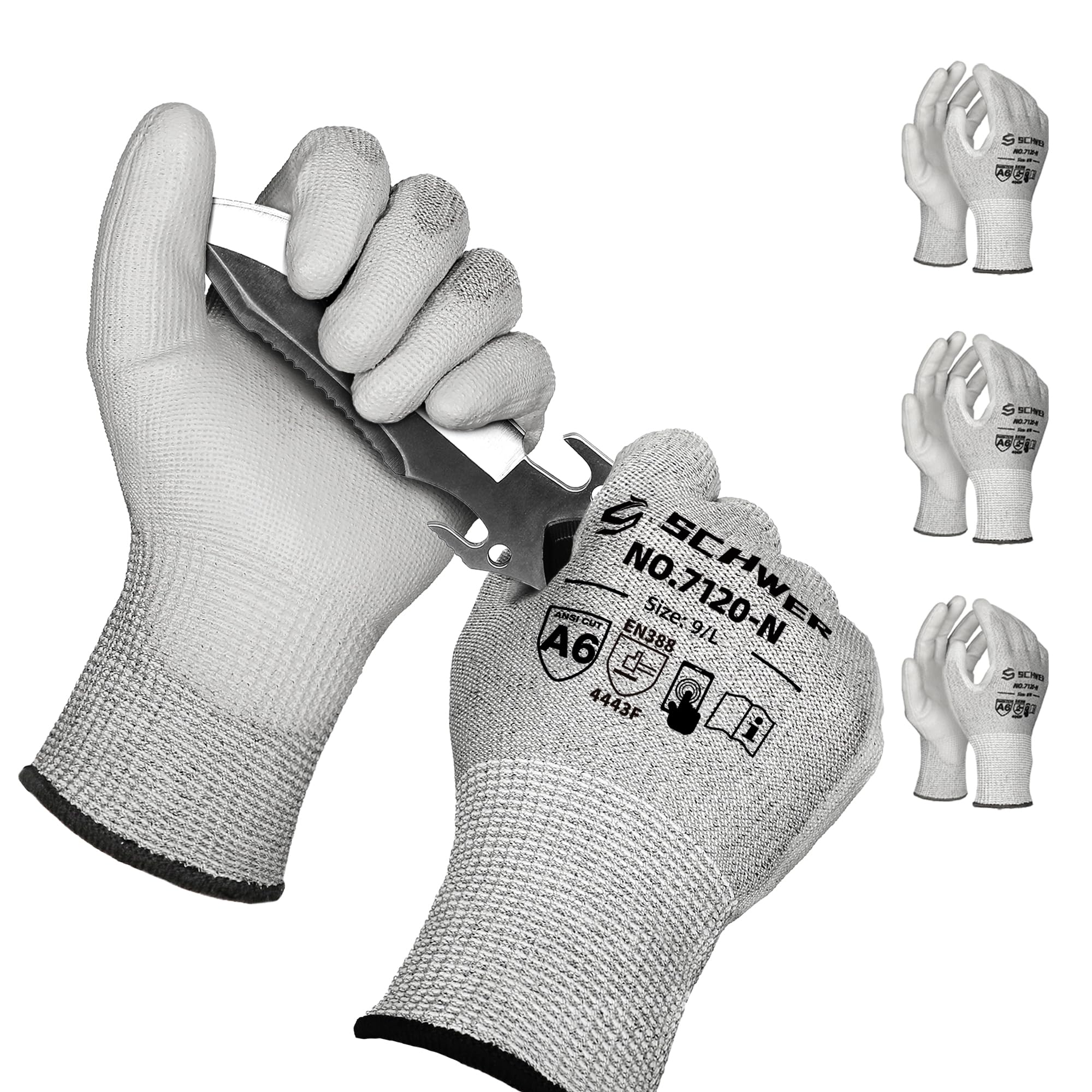
The Schwer glove steps up the cut protection to ANSI A6, placing it a full level above the NoCry and TruChef options while maintaining a fabric that is surprisingly flexible. The glove is woven from HPPE fiber with steel wire reinforcement — the steel content is what pushes it past Level 5 into the medium-to-heavy cut hazard tier. For oyster shucking, this means the Schwer glove can handle both the slice of a dull blade and a more committed shucking force without the wearer feeling the edge through the weave.
The PU coating on the palm and fingers is a high-grip formula that performs on wet surfaces, though it is not as aggressively tacky as the NoCry nitrile coating. The trade-off is that the PU coating is thinner and does not stiffen the glove, so your fingers retain full range of motion for the delicate twist-and-lever motion required to open a tight oyster hinge. The three-pair pack is generous for the price tier, and the sizing chart is accurate enough that most buyers land on the correct fit the first time. Touchscreen compatibility on all ten fingers is a convenience bonus for looking up recipes or communicating on the line without de-gloving.
Where this glove falls short for strict shellfish work is the grip in standing water. Submerge the PU-coated palm continuously in a bowl of oysters and water, and the coating’s traction on smooth shell surfaces diminishes noticeably compared to a fully nitrile-dipped palm. The wrist closure is a simple knit cuff with no cinching mechanism, so cold water can trickle in if you are working at a deep sink. These are excellent all-around kitchen cut gloves, but for a shucker who works submerged for extended periods, the Herda stainless steel mesh or a nitrile-coated option may perform better in the wet.
Why it’s great
- ANSI A6 rating offers reliable blade protection with thin, flexible fabric
- Steel wire reinforcement adds cut resistance without sacrificing dexterity
- Three pairs provide good value for shared kitchen environments
- Full ten-finger touchscreen response for device use without removing gloves
Good to know
- PU coating loses some grip on shells when fully submerged in water
- Knit cuff lacks an adjustable closure to seal out moisture and debris
5. COOLJOB Cut Resistant Work Gloves – 12/120 Pairs
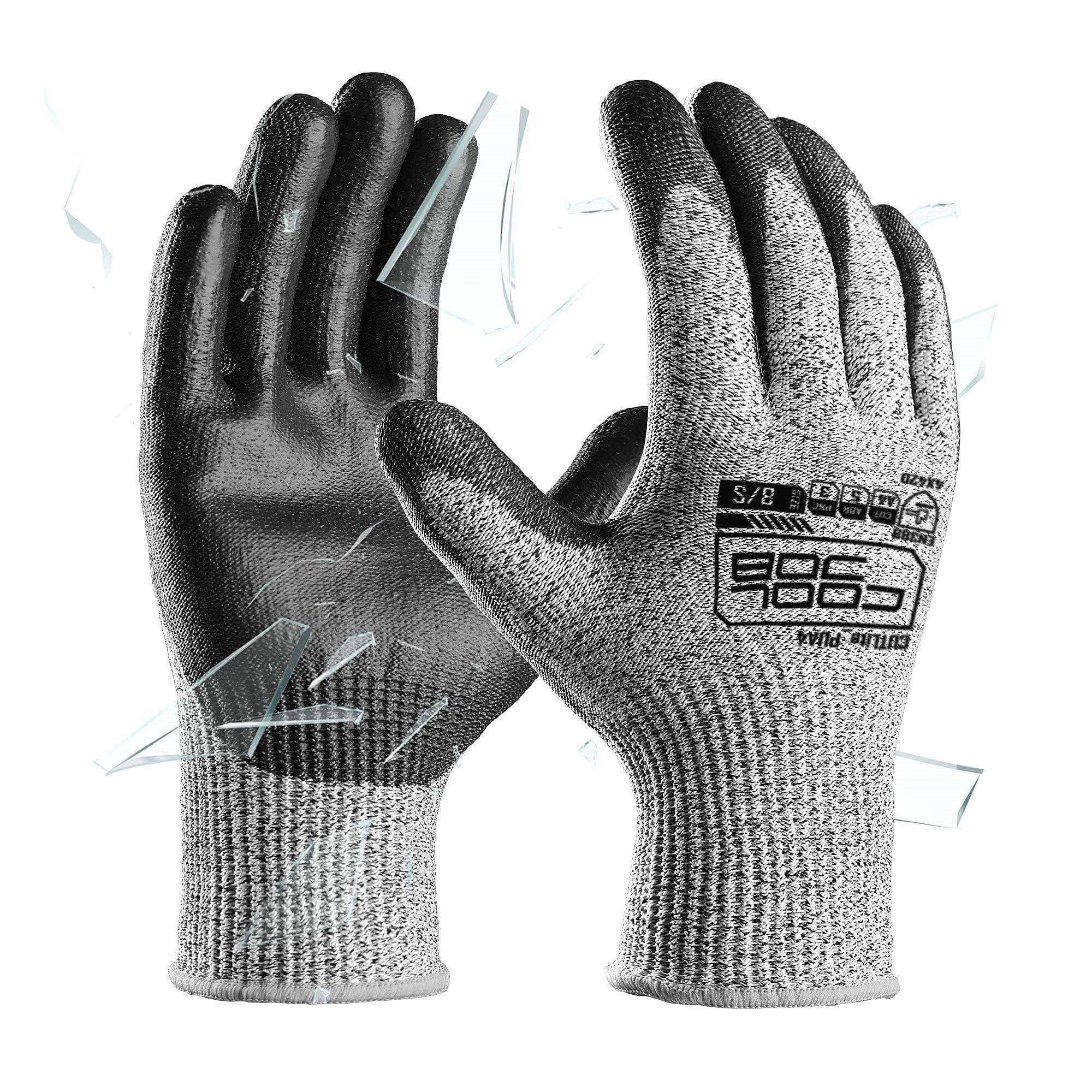
COOLJOB markets these gloves primarily to commercial kitchens and job sites where volume drives purchasing decisions, but the 12-pair option is also available to home users who go through gloves quickly or need backups for multiple family members. The 13-gauge seamless shell is lightweight, and the PU coating on the palm delivers reasonable dry grip for light shucking duty. The cut resistance varies from ANSI A2 up to A6 depending on the specific variant ordered — the bulk pack typically lands around A4, which is adequate for preventing minor knife contact but not sufficient for confident full-force shucking.
The primary value proposition is the cost per pair, which drops significantly in the 120-pair configuration. For a restaurant that goes through dozens of gloves a week due to frequent glove changes or sanitation requirements, this pricing model makes practical sense. The gloves are also comfortable enough to double as general-purpose prep gloves for vegetable slicing, fish filleting, and clean-up tasks. Sizing runs true, and the knit cuff is long enough to offer basic wrist coverage — though again, there is no adjustable seal against water ingress.
For serious oyster shucking, these gloves are best viewed as an entry-level or back-up option rather than a primary protection layer. The lower cut rating means a sharp shucking knife can penetrate the weave with moderate pressure, and the PU coating does not maintain its grip as well as nitrile when the glove is constantly wet. Frequent shuckers who work with a dozen or more oysters per session will want a higher-rated glove like the Herda or NoCry. If you are just learning to shuck at home and want a cheap, comfortable glove to practice with before investing in premium protection, the COOLJOB 12-pack is a low-risk starting point.
Why it’s great
- Extremely low cost per pair in the 12- or 120-pack configurations
- Lightweight 13-gauge shell allows good fingertip sensitivity for practice shucking
- Comfortable enough for all-day wear during general food prep tasks
- Multiple size options in the bulk pack accommodate entire kitchen crews
Good to know
- Lower cut rating (A2–A4 typical) is not reliable against sharp shucking knife force
- PU coating loses traction on shells when wet compared to nitrile alternatives
FAQ
What ANSI cut level is recommended for oyster shucking?
Can I use PU coated cut gloves for shucking oysters underwater?
How do I properly clean oyster shucking gloves after use?
Do stainless steel mesh shucking gloves rust after repeated saltwater exposure?
Final Thoughts: The Verdict
For most users, the best oyster shucking gloves winner is the Herda Stainless Steel Mesh Glove because it offers the highest ANSI cut level (A9) in a food-grade, rinse-clean design with an adjustable wrist buckle that keeps cold water and shell grit out during long shucking sessions. If you prioritize wet grip on slippery shells and prefer a breathable fabric that allows more finger dexterity, grab the NoCry Nitrile-Coated Glove. And for multi-user households or small kitchens where cost and color-coding matter, nothing beats the TruChef 3-Pack for its machine-washable convenience and easy size separation.