Choosing an OTC calcium supplement for osteoporosis means navigating a maze of calcium forms, absorption rates, and confusing labels. The wrong choice can leave you with digestive discomfort, poor absorption, and no measurable improvement in bone density. The right supplement, on the other hand, becomes a seamless part of your daily routine that you can actually feel working.
I’m Mohammad Maruf — the founder and writer behind AirfryerBite. I’ve spent years analyzing supplement formulations, clinical absorption data, and real user feedback to cut through the marketing noise and find what actually supports bone health.
The goal of this guide is to clarify the critical differences between calcium citrate and carbonate, citrate malate, and gummy formulations, so you can confidently select the otc calcium supplement for osteoporosis that aligns with your stomach sensitivity and absorption needs.
How To Choose The Best OTC Calcium Supplement For Osteoporosis
Not all calcium is created equal, especially when your goal is to slow or reverse bone mineral density loss. The form of calcium, the co-factors included, and how your stomach handles the dose all determine whether a supplement is genuinely effective or just expensive urine.
Calcium Form Matters: Citrate vs. Carbonate vs. Citrate Malate
Calcium carbonate is cheap and requires stomach acid to break down, meaning it must be taken with food. Calcium citrate, by contrast, is absorbed independently of stomach acid and is the gold standard for older adults, bariatric patients, and anyone on acid-reducing medication. The most advanced forms, di-calcium malate and calcium citrate malate, offer even higher bioavailability and are found in premium-tier brands like Thorne.
Co-Factor Requirements
Calcium alone won’t rebuild bone if your body cannot absorb or direct it. Vitamin D3 is essential for intestinal absorption, while vitamin K2 (specifically MK-7) activates osteocalcin to bind calcium to bone matrix rather than leaving it in arteries. Magnesium and zinc also play structural roles in bone formation. A leading supplement for osteoporosis should include at least D3, ideally K2 and magnesium as well.
Dosing and Pill Burden
Most calcium citrate supplements require multiple capsules per serving to reach an effective dose of 600-1200 mg of elemental calcium. If you struggle with swallowing large pills, look for mini tablets, coated tablets, or gummy formulations. The total number of pills you take daily directly affects long-term compliance, which is the single biggest predictor of real-world results.
Quick Comparison
On smaller screens, swipe sideways to see the full table.
| Model | Category | Best For | Key Spec | Amazon |
|---|---|---|---|---|
| THORNE Calcium | Premium Capsule | Highest absorption + purity | Di-calcium malate chelate | Amazon |
| Rainbow Light Calcium Citrate Mini | Mid-Range Tablet | Stomach-friendly mini tablets | 800 mg calcium citrate + D3 | Amazon |
| LUCNVEM Calcium Gummies | Gummy | Pill-averse users | 1200 mg citrate + D3/K2/Mg/Zn | Amazon |
| BariatricPal Easy Swallow | Coated Tablet | Bariatric & sensitive stomachs | 600 mg citrate + 750 IU D3 | Amazon |
| Nutricost Calcium Citrate Powder | Budget Powder | Lowest cost per gram | 650 mg pure citrate per scoop | Amazon |
In‑Depth Reviews
1. THORNE Calcium (Formerly DiCalcium Malate)
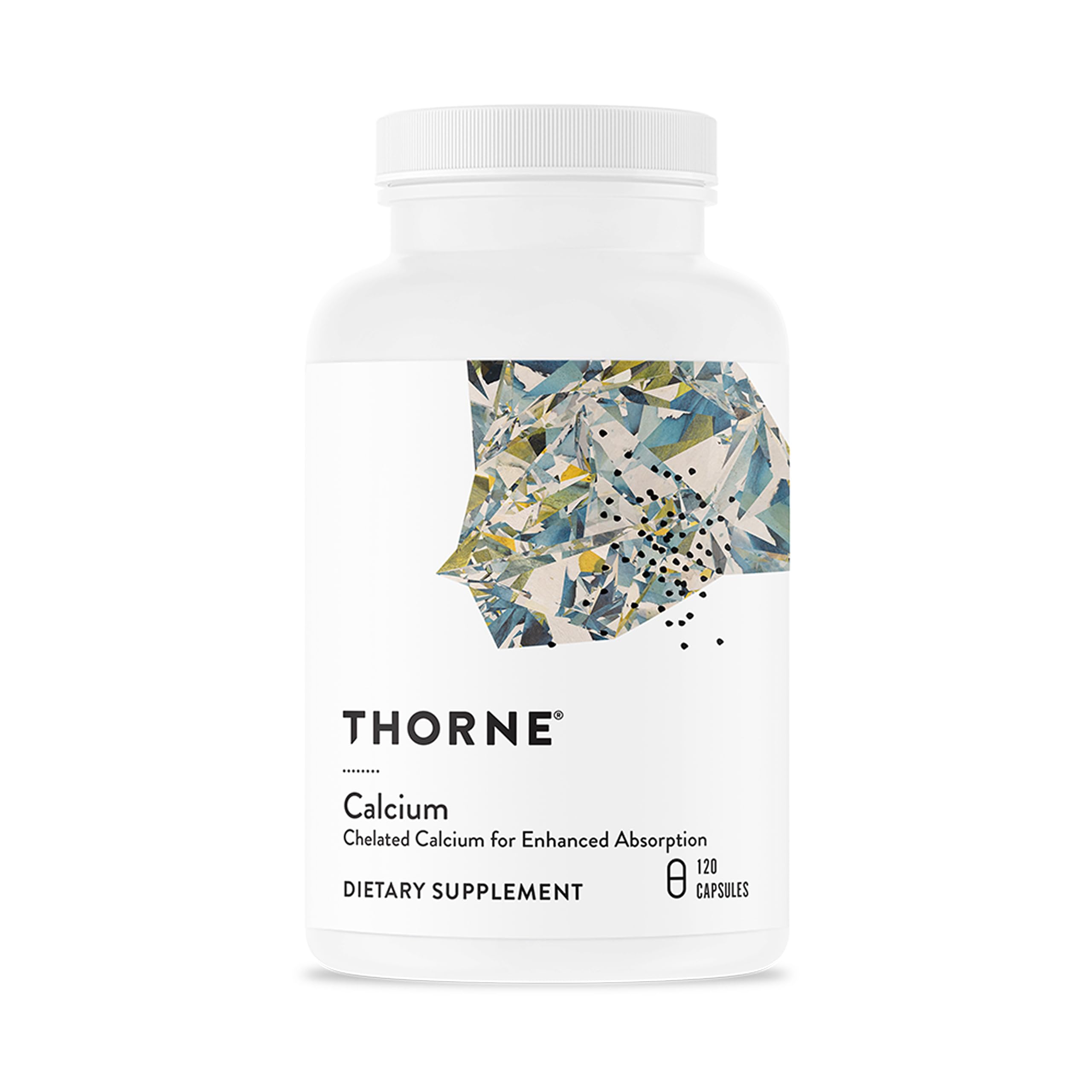
Thorne uses a patented form of calcium called di-calcium malate (DimaCal), a chelated mineral where calcium is bonded to malic acid. This structure dramatically improves bioavailability — studies show it is absorbed significantly better than standard calcium carbonate or even plain citrate. Each capsule delivers a higher concentration of elemental calcium per unit volume, meaning fewer pills for an effective dose. The brand is the #1 recommended clinical supplement brand by healthcare practitioners, which carries weight when managing a condition like osteoporosis.
User reports consistently highlight that Thorne’s calcium shows up in serum blood tests, keeping levels in the normal range where other supplements failed. The capsules are easy to swallow and cause zero digestive upset, even for those with sensitive stomachs. This is the supplement you choose when you want laboratory-verified results rather than marketing claims.
Thorne is free from gluten, soy, dairy, shellfish, and major allergens. If you have multiple food sensitivities or a complex medication regimen, this is the safest bet. The only downside is that it does not include built-in vitamin D3 or K2, so you will need to pair it with a separate D3/K2 supplement for complete osteoporosis support.
Why it’s great
- Highest-absorption chelated calcium form available
- Trusted by 100+ professional sports teams and clinicians
- Zero stomach discomfort reported consistently
Good to know
- No vitamin D3 or K2 included — requires separate purchase
- Premium tier pricing per bottle
2. Rainbow Light Calcium Citrate Mini Tablets +
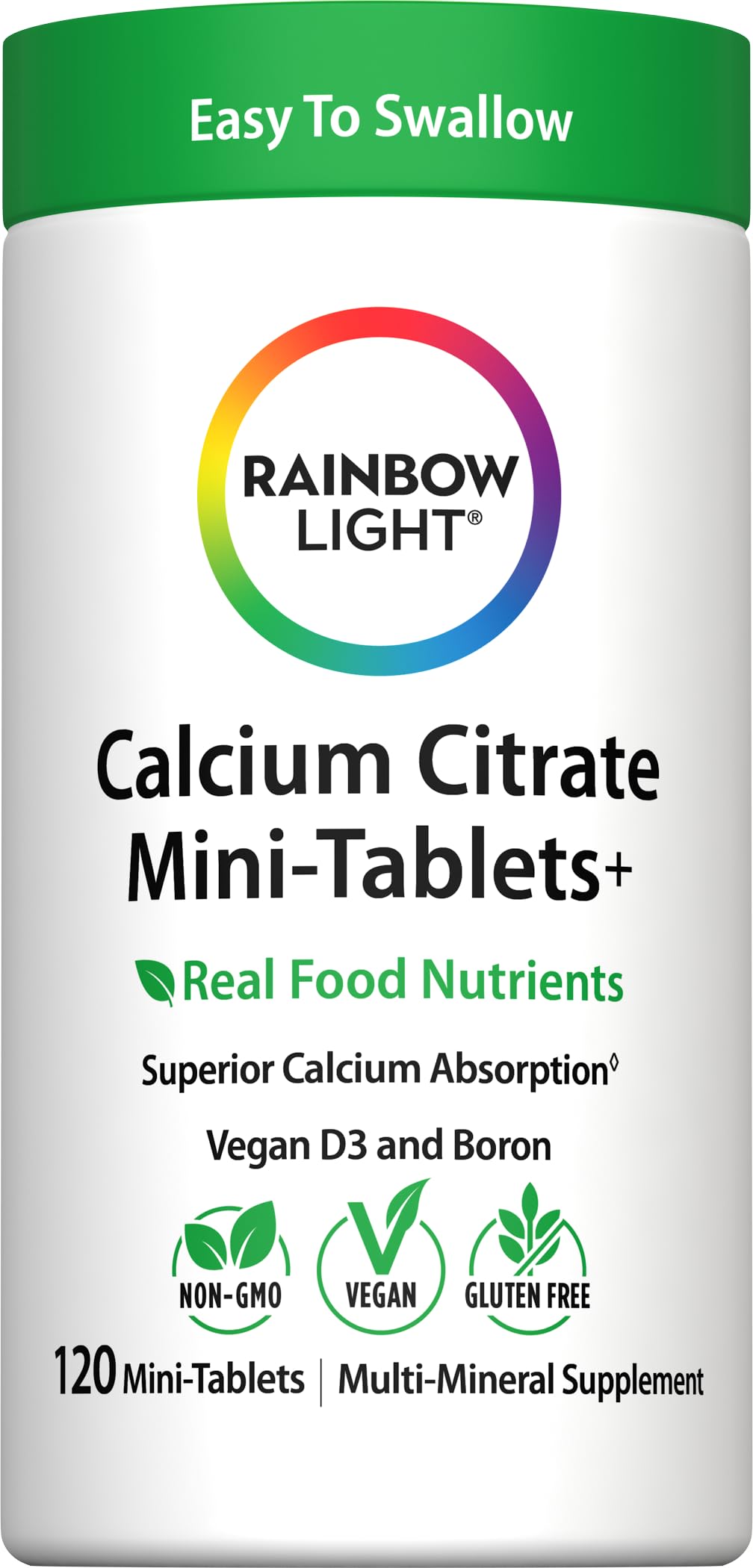
Rainbow Light has been formulating supplements since 1981, and their calcium citrate mini tablets remain a benchmark for stomach-friendly bone support. Each serving of four mini tablets delivers 800 mg of calcium citrate with 800 IU of vitamin D3 to enhance absorption. The tablets are deliberately made small and slender — reviewers consistently note they are far easier to swallow than standard calcium pills, despite the four-tablet serving size. The formula explicitly contains no added magnesium, which matters if you are already supplementing magnesium separately or have a high-magnesium diet.
The base is enriched with real food nutrients like spirulina and boron, which support bone matrix integrity beyond just mineral content. The allergy-friendly profile is impressive — no wheat, milk, tree nuts, peanuts, soy, eggs, fish, or shellfish. This makes it a safe daily choice for those with multiple food allergies who cannot risk cross-contamination in a standard supplement facility.
The packaging uses 100% recycled material, and the tablets themselves are vegetarian. Users with chronic stomach issues report no discomfort after months of use. The trade-off is that you need to take four tablets daily, which can feel like a lot if you are already on other supplements. The tablets are dry and require liquid to swallow comfortably.
Why it’s great
- Proven gentle on stomach — no digestive side effects
- Includes 800 IU D3 for absorption support
- Free from top 8 allergens
Good to know
- Requires 4 tablets per serving for full dose
- No vitamin K2 or magnesium in the formula
3. LUCNVEM Calcium Citrate Gummies
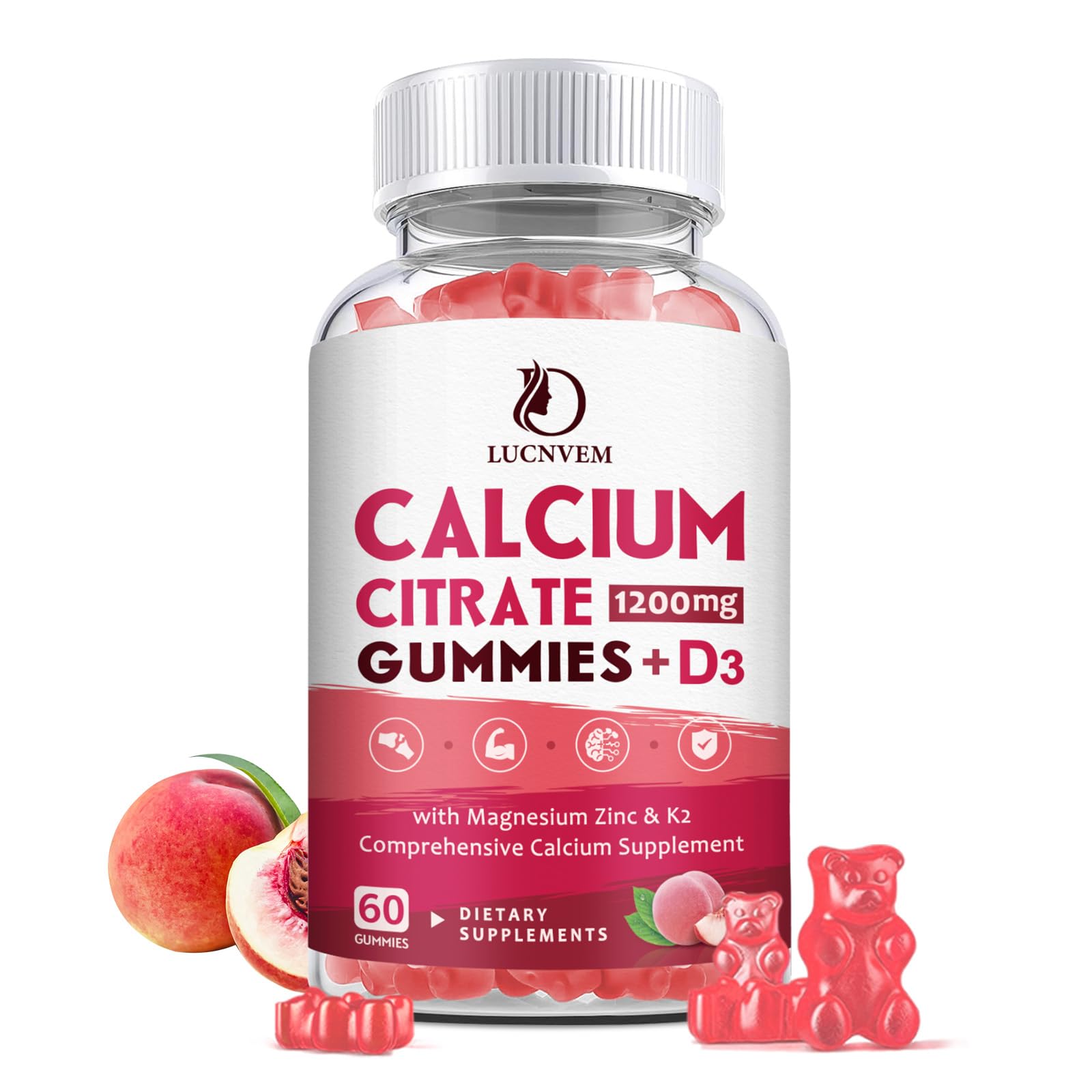
Each two-gummy serving delivers 1200 mg of calcium citrate, 400 mg of magnesium glycinate, 10 mg of zinc, 1000 IU of vitamin D3, and 120 mcg of vitamin K2. That is a comprehensive osteoporosis-support stack in a single, pleasant-tasting white peach gummy. The inclusion of K2 (MK-7) is notable because it actively directs calcium into bone tissue rather than allowing it to calcify in arteries.
The taste is described by users as genuinely enjoyable, not the chalky or medicinal flavor common in calcium chews. The formula uses magnesium glycinate, which is highly absorbable and gentle on digestion. Users who switched from calcium carbonate report immediate relief from bloating and constipation. The gummies do tend to stick together in the jar, but refrigerating them solves the issue.
The only real limitation is that gummies have a shorter shelf life than capsules and can soften in warm conditions. You also need to take two gummies per day, which is reasonable but not as portable as a capsule bottle. For someone who consistently skips their calcium because of pill fatigue, this format eliminates that compliance barrier entirely.
Why it’s great
- Complete stack: calcium + D3 + K2 + magnesium + zinc
- Great-tasting white peach flavor — easy daily compliance
- No stomach issues vs. calcium carbonate
Good to know
- Gummies stick together — refrigerate to separate
- 30-day supply only (60 count)
4. BariatricPal Easy Swallow Calcium Citrate Tablets
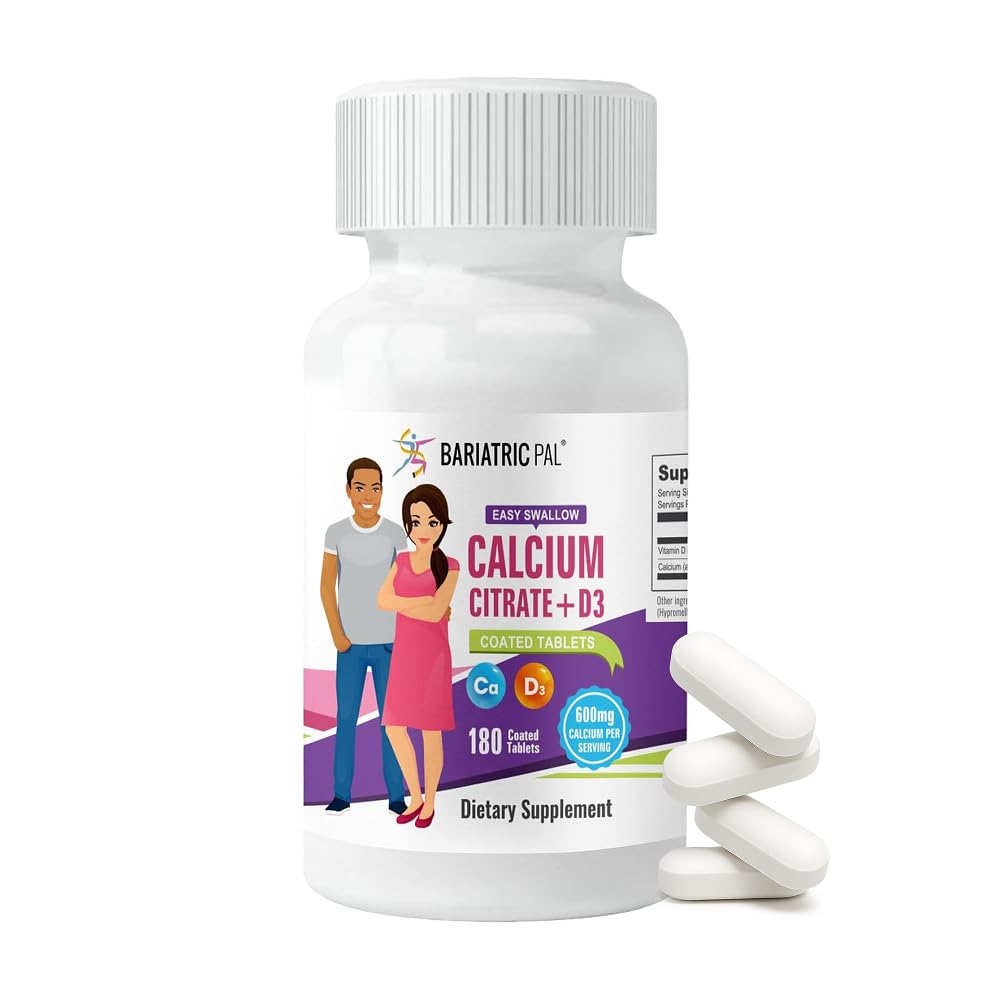
BariatricPal formulated these tablets specifically for post-bariatric surgery patients, but the design principles apply directly to anyone with a sensitive stomach or difficulty swallowing large pills. Each serving provides 600 mg of calcium citrate with 750 IU of vitamin D3 in a coated tablet that glides down easily. The coating is the key differentiator — it prevents the tablet from sticking to the esophagus and masks any bitter aftertaste from the calcium citrate.
Users who have had gastric sleeve or bypass surgery report that these tablets are the easiest calcium supplement they have tried, and their doctors specifically approve the formulation. The 180-count bottle supplies a 30-day supply at three tablets twice daily. The dosing schedule of 3 tablets twice a day is designed to maximize absorption by spreading calcium intake across two windows rather than loading it all at once.
Some reviewers note that the tablets are larger than expected, but the coated surface makes them slide down without the chalky drag of uncoated calcium tablets. There is no added magnesium or K2, so you will need to supplement those separately if your osteoporosis protocol includes them. For pure ease of swallowing with proven absorption, this is the strongest option.
Why it’s great
- Coated tablets are genuinely easier to swallow
- Doctor-approved formulation for bariatric needs
- Split dosing schedule improves absorption efficiency
Good to know
- Requires 6 tablets per day total
- No K2 or magnesium in the formula
5. Nutricost Calcium Citrate Powder

Nutricost strips away every frill and delivers pure calcium citrate powder with no fillers, flavors, or binders. Each scoop provides 650 mg of elemental calcium from calcium citrate, and the 500-gram container yields 147 servings. This is the most economical way to get a high dose of absorbable calcium if you are willing to mix it into a beverage. The powder is unflavored and dissolves well in coffee, protein shakes, or almond milk without altering the taste.
The biggest advantage here is customization — you can adjust your dose scoop by scoop to meet a precise elemental calcium target without being locked into a fixed tablet size. This is especially useful if your doctor has prescribed a specific daily milligram amount that does not align with standard pre-measured doses. Users report no digestive issues even after a year of daily use, in stark contrast to calcium carbonate powder which often causes bloating and gas.
The trade-off is texture. The powder does not fully dissolve — it remains slightly gritty even with vigorous shaking. Users who are sensitive to texture should mix it into thicker liquids like smoothies rather than water. Also, there is no vitamin D3 or K2 included, so you must pair this with a separate fat-soluble vitamin supplement to achieve proper calcium utilization.
Why it’s great
- Lowest cost per gram of calcium citrate
- 147 servings per container — exceptional value
- Dose can be precisely customized
Good to know
- Gritty texture even when mixed well
- No D3 or K2 — must supplement separately
FAQ
Should I choose calcium citrate or calcium carbonate for osteoporosis?
How much vitamin D3 should be in my calcium supplement?
Can I take calcium supplements if I have had bariatric surgery?
Final Thoughts: The Verdict
For most users, the otc calcium supplement for osteoporosis winner is the THORNE Calcium because its di-calcium malate form offers the highest proven bioavailability on the market, and the brand’s clinical reputation is unmatched. If you want a complete all-in-one formula with D3, K2, magnesium, and zinc in an easy gummy format, grab the LUCNVEM Calcium Gummies. And for the absolute best value per gram of pure calcium citrate with no fillers, nothing beats the Nutricost Calcium Citrate Powder.