The search for a quick, comforting bowl of noodles often ends with a packet of instant ramen loaded with MSG, artificial preservatives, and fried noodles that spike sodium levels. You want the deep, rich umami of a ramen shop bowl without the chemical aftertaste or the guilt, but finding a shelf-stable option that delivers real broth flavor, chewy noodles, and a clean ingredient deck feels like hunting for a unicorn in the grocery aisle.
I’m Mohammad Maruf — the founder and writer behind AirfryerBite. I’ve spent years analyzing the nutritional profiles, sourcing claims, and cooking methodologies behind packaged noodles to separate true craft ramen from overpriced imposters.
After comparing steamed versus fried noodle textures, sodium content per serving, and the sourcing of organic flours, I’ve narrowed the field to five contenders that earn a spot in the pantry. This guide walks you through the top choices for the best organic ramen noodles that balance authentic taste with honest ingredients.
How To Choose The Best Organic Ramen Noodles
Not all organic ramen is created equal. The biggest trap buyers fall into is assuming any package with an organic label delivers a premium eating experience. The noodle-making method, the sodium concentration, and the broth base ingredients matter far more than the organic certification alone. Here are the three specs that separate a truly satisfying bowl from a disappointing one.
Steamed vs. Fried Noodle Construction
The single most important structural difference in organic ramen is whether the noodles are steamed or fried before drying. Fried noodles — the standard in cheap instant packs — soak up oil during processing, adding saturated fat and a greasy mouthfeel. Steamed noodles retain a cleaner, springy bite similar to fresh ramen bar noodles and keep the fat content near zero. Always check the ingredient list for frying oils; if it says “steamed” or “baked” on the package, you are getting a vastly superior texture.
Sodium Content and Broth Concentration
A single serving of mainstream instant ramen often packs 800 to over 1,000 milligrams of sodium — nearly half your daily allowance. Organic brands frequently market “40% less sodium” as a differentiator, but the baseline varies wildly. Compare the milligrams per serving against your dietary needs, not against a marketing percentage. Also consider the seasoning packet’s makeup: real dried herbs and spices versus powdered salt and maltodextrin make a measurable difference in both health impact and flavor depth.
Flavor Profile and Topping Versatility
An organic ramen noodle is only as good as the broth it swims in. Brands that use real miso paste, dried kimchi, or garlic powder as the primary flavor base offer a richer umami than those relying on yeast extract and natural flavors. Consider whether you plan to eat the ramen as-is or build a bowl with added protein, vegetables, and soft-boiled eggs. A neutral, quality noodle like Hakubaku gives you full creative control, while flavored broths from Mike’s Mighty Good or Snapdragon deliver a complete bowl straight out of the package.
Quick Comparison
On smaller screens, swipe sideways to see the full table.
| Model | Category | Best For | Key Spec | Amazon |
|---|---|---|---|---|
| Hakubaku Organic Ramen | Plain Noodle Packs | Custom ramen bowls from scratch | 8 packs, 76 oz total; cooks in 4 min | Amazon |
| Mike’s Mighty Good Fried Garlic Chicken | Meat Broth Cups | Gourmet chicken garlic soup | Steamed organic noodles; 40% less sodium | Amazon |
| Mike’s Mighty Good Vegetarian Kimchi | Vegan Broth Cups | Spicy vegan kimchi ramen | 7 pillow packs; palm oil free | Amazon |
| Snapdragon Miso Ramen Cup | Instant Cup Bowls | Quick miso soup meal prep | 6 cups with chili oil; ready in minutes | Amazon |
| Koyo Asian Vegetable Reduced Sodium | Low Sodium Cups | Everyday low sodium lunches | 12 packs; baked not fried noodles | Amazon |
In‑Depth Reviews
1. Hakubaku Organic Ramen, 9.52-Ounce (Pack of 8)

Hakubaku delivers the closest thing to a blank canvas for serious ramen builders. These are authentic Japanese wheat noodles, certified organic and kosher, that cook in exactly four minutes — faster than most pasta yet with a noticeably springy, chewy bite that mimics fresh ramen bar noodles. Each 9.52-ounce bag provides multiple servings, making the 8-pack the highest total noodle weight in this roundup at 76 ounces.
The noodles are baked rather than fried, which keeps the fat content near zero and the texture clean. Because there is no seasoning packet included, you are expected to build your own broth from scratch. This is ideal for anyone who wants total control over sodium levels and flavor profile — use a good quality bouillon, miso paste, or soy sauce base. The thicker cut holds up well against hearty toppings like braised pork, soft-boiled eggs, and nori.
Several verified buyers noted the suggested cooking time on the package produces a firmer noodle than they preferred. Boiling for an extra two minutes and adding a splash of sesame oil to the water yields a softer, more traditional texture. The packaging is straightforward without fancy branding, but the consistency batch-to-batch is excellent, which matters more for regular use.
Why it’s great
- Highest total noodle volume (76 oz) in the comparison
- Baked, non-fried noodles with authentic chew
- Completely customizable — no seasoning packet means full sodium control
Good to know
- No included broth or seasoning — requires separate broth preparation
- Package directions produce a very firm noodle; add 2 minutes for softer bite
2. Mike’s Mighty Good Fried Garlic Chicken Soup – Organic Noodles, 7-Pack
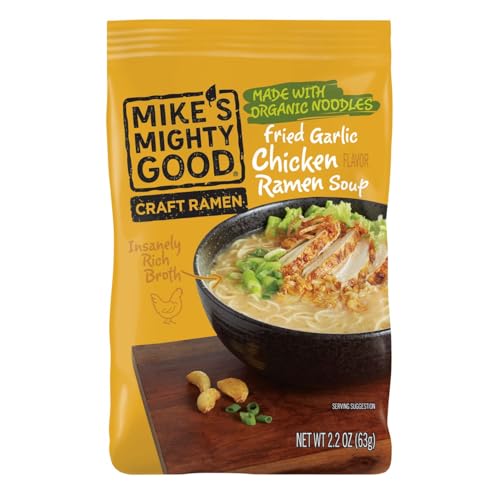
Mike’s Mighty Good repositions the entire instant ramen category by steaming its noodles instead of frying them, then packing them with a broth that tastes like it simmered for hours rather than mixed from powder. The fried garlic chicken flavor delivers a dominant savory chicken note balanced by a distinct roasted garlic undertone that avoids the synthetic onion-powder taste common in mainstream packets.
The 40% less sodium claim is benchmarked against the leading conventional ramen brand, which typically runs around 800 mg per serving. That puts each Mike’s pack closer to 480 mg — still notable but far more reasonable for regular consumption. The noodles come in 2.2-ounce pillow packs, individually portioned, making them ideal for a quick lunch or a snack that feels substantial without being heavy. The broth is thin but intensely flavored, so adding a handful of spinach or shredded chicken boosts the meal without diluting the taste.
Some experienced buyers flagged the portion size as smaller than expected for the price point. The 2.2-ounce pack works well as a single serving if you add toppings, but may leave a hungry appetite wanting a second pack. A few reviews also noted the noodle texture changed slightly over the past year — becoming thinner and softer — though most still rated the consistency above any fried-noodle competitor.
Why it’s great
- Steamed noodles deliver springy, non-greasy bite
- 40% less sodium than standard instant ramen
- Fried garlic chicken broth is deeply savory and clean-tasting
Good to know
- Small serving size (2.2 oz) may require supplementation
- Premium pricing per pack compared to basic organic options
3. Mike’s Mighty Good Vegetarian Kimchi Ramen – Organic Noodles, 7-Pack
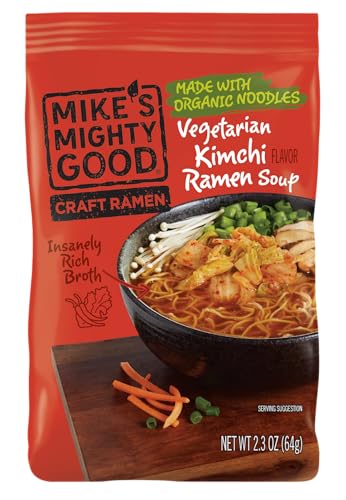
This kimchi ramen from Mike’s Mighty Good solves the perennial vegan instant noodle problem: bland broth and mushy noodles. The broth is genuinely spicy with a fermented tang from real kimchi flavor, not just chili powder and vinegar. Unlike many plant-based ramen cups that lean on yeast extract for savory depth, this one builds its umami from dried vegetables and spices, keeping the ingredient list clean and recognizable.
The noodles are steamed instead of fried, matching the construction of the chicken variant, which means zero saturated fat from frying oil. Each 2.3-ounce pillow pack is slightly larger than the chicken version, and the spicy kick is noticeable but not punishing — several reviewers described it as sinus-clearing heat rather than mouth-burning pain. The 40% less sodium claim applies here too, making it a smarter daily choice than standard spicy ramen which often exceeds 900 mg per serving.
One practical note from the reviews: draining most of the water after boiling concentrates the spicy broth flavor significantly. If you prefer a soup-style bowl, keep the full cooking water. The palm oil free certification matters for anyone tracking environmental impact, and the non-GMO organic noodles provide a chewy base that holds texture even after sitting in hot broth for several minutes. The per-pack cost is higher than bulk noodle bags, but the complete broth-noodle system justifies the premium for quick vegan meals.
Why it’s great
- Genuine spicy kimchi broth with fermented tang, not artificial heat
- Steamed noodles — zero saturated fat from frying
- Vegan, non-GMO, and palm oil free with clean label
Good to know
- Higher per-pack cost than bulk plain noodles
- Spice level may be intense for sensitive palates
4. Snapdragon Miso Ramen Cup Noodles – 6 Pack
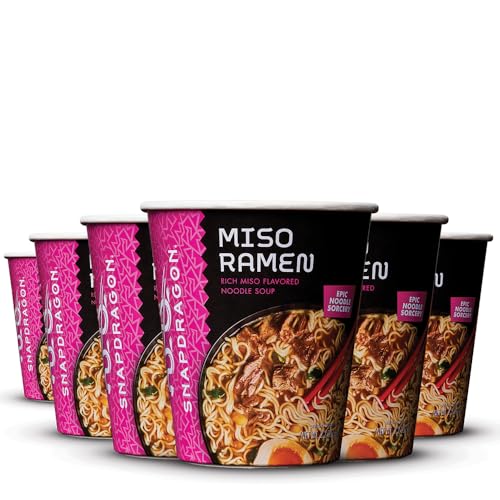
Snapdragon’s Miso Ramen Cup brings the convenience of a microwaveable cup without sacrificing the layered umami of a real miso broth. Each cup contains authentic wheat ramen noodles, a miso-based soup sauce, dried vegetable pieces, and a separate chili oil packet that lets you dial in the heat level. Unlike many cup noodles that taste like salty hot water, the miso base delivers actual savory depth with a creamy mouthfeel when prepared with hot water or microwaved.
The 6-pack format is ideal for desk drawers, office pantries, or camping trips where no pot or bowl is available. The chili oil is genuinely flavorful — one reviewer described it as a “mild spicy kick” that clears the sinuses without burning. Leaving out the oil packet yields a gentle, umami-forward soup that works well for those avoiding heat entirely. The noodles themselves are pre-cooked and dried, not fried, which keeps the fat content lower than standard cup noodles.
A common refinement from buyers: adding fresh vegetables like bok choy, bean sprouts, or a jammy egg transforms this cup into a full meal. The miso broth provides a strong enough base that extra seasoning is rarely needed. The cup size is moderate — similar to a standard instant lunch portion — so heavy eaters may want to pair it with a side of protein. These cups have become harder to find in brick-and-mortar stores, making the Amazon multipack the most reliable sourcing option.
Why it’s great
- Real miso broth with separate chili oil for heat control
- Microwaveable cup makes preparation extremely fast
- Non-fried noodles with lower fat than standard cup noodles
Good to know
- Cup size is moderate; heavy eaters may need a side dish
- Some buyers report difficulty finding this brand locally
5. Koyo Ramen Soup, Asian Vegetable Reduced Sodium – 12 Pack
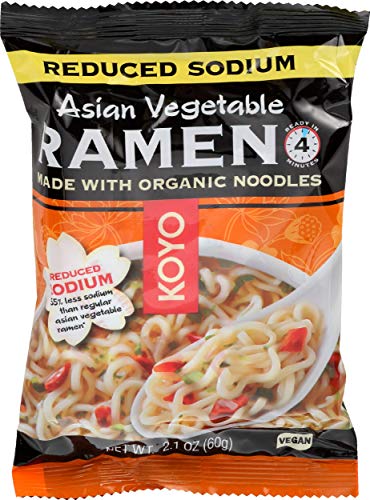
Koyo takes a back-to-basics approach: organic heirloom grains milled fresh, noodles baked instead of fried, and a broth packet made from real herbs and spices with no added MSG or high fructose corn syrup. The Asian Vegetable Reduced Sodium variant delivers a lighter, cleaner flavor compared to conventional ramen — the seasoning is intentionally mild, which some reviewers found bland but others appreciated as a neutral base for customization.
The 12-pack provides the highest number of individual servings in this lineup, making it the most cost-efficient entry point for building a pantry. Each 2.1-ounce package contains one block of noodles plus a seasoning packet. The noodles are thinner than Hakubaku’s cut, cooking in under six minutes, and the baked construction means they contain minimal fat. Verified buyers consistently praise the low sodium and clean ingredient deck, with many using them as weekday lunches where flavor comes from added vegetables, tofu, or canned tuna rather than the seasoning alone.
Several experienced ramen users recommend adding the spice packet to the water before boiling the noodles to infuse flavor directly into the wheat rather than just coating the surface. Others dress the finished bowl with sesame oil, soy sauce, and fresh herbs to compensate for the subtle broth. This is not the ramen for those who want an intense, punchy bowl straight out of the package — it is designed for the health-conscious cook who wants a reliable organic base and doesn’t mind spending five extra seconds adding condiments.
Why it’s great
- Highest serving count (12 packs) for the price tier
- Baked, non-fried noodles with organic heirloom grains
- Clean label — no MSG, no preservatives, vegan
Good to know
- Seasoning is intentionally mild; most users add extra spices
- Noodles are thinner and may cook softer than thicker cuts
FAQ
Are organic ramen noodles healthier than regular instant ramen?
Do I need to add my own seasoning to organic ramen noodles?
How long do organic ramen noodles take to cook?
Final Thoughts: The Verdict
For most users, the best organic ramen noodles winner is the Hakubaku Organic Ramen 8-Pack because it delivers the highest noodle volume, authentic organic Japanese wheat chew, and total control over sodium and broth ingredients. If you want a complete, restaurant-quality bowl straight from the pack, grab the Mike’s Mighty Good Fried Garlic Chicken. And for a budget-friendly vegan option that works for daily desk lunches, nothing beats the Koyo Asian Vegetable Reduced Sodium 12-Pack.