The flour aisle at the grocery store is a minefield of bleached, bromated, and nutritionally stripped powders that deliver little more than empty carbs and a faint cardboard taste. If you have spent years settling for bland baked goods that leave you feeling bloated and unsatisfied, it is not your recipe at fault — it is the flour itself. The shift to organic, heritage, and properly milled grains transforms a simple loaf of bread into a deeply flavorful, nutrient-dense experience, and the difference is dramatic enough to change how you bake forever.
I’m Mohammad Maruf — the founder and writer behind AirfryerBite. I have spent the past several years dissecting the technical specifications and farming practices behind dozens of flour brands, from stone-milling speed and protein percentages to certification rigor and digestibility claims.
Whether you are a committed sourdough artisan or a bread-machine enthusiast looking to upgrade your pantry staples, finding the right bag of grain is the single most impactful decision you will make. This guide breaks down five rigorously vetted options to help you pick the best organic flour for your kitchen.
How To Choose The Best Organic Flour
Selecting organic flour goes far beyond the seal on the bag. The variety of wheat, the milling technique, the protein percentage, and the presence of chemical residues all determine whether your loaf rises tall, tastes rich, and leaves you feeling energized rather than heavy.
Wheat Variety and Heritage Genetics
Modern commodity wheat has been hybridized for high yields and uniform baking performance, but often at the cost of digestibility and flavor. Heritage varieties like Turkey Red, White Sonora, and Red Fife are pre-1950s strains that many bakers report cause less bloating and inflammation. If you suffer from gluten sensitivity but want to keep baking, a heritage organic flour might be the answer, as the altered protein structures in these older grains can be gentler on the gut.
Protein Content and Gluten Structure
Protein percentage directly correlates with gluten-forming potential. For artisan loaves and sourdough, look for flours in the 12-15% protein range — the higher end produces stronger dough capable of trapping gas for a larger oven spring. All-purpose flours hover around 10-12% protein and are better suited for muffins, pancakes, and cookies. Whole wheat flour typically retains more protein and fiber, making it more nutritious but also more absorbent; you will likely need to increase hydration by 5-10% compared to white bread flour.
Milling Method and Freshness
Stone grinding on cool-running millstones preserves the natural oils and nutrients of the wheat berry, delivering a fuller flavor profile and a coarser, more textured crumb. Roller milling strips the germ and bran to extend shelf life, sacrificing nutrition and taste. Single-pass milling — a technique that passes the grain through a screen only once — produces an exceptionally fine, fluffy flour ideal for lofty baked goods. Whichever method you choose, check for grind dates; flour that sits on a warehouse shelf for months loses volatile flavor compounds and can go rancid.
Quick Comparison
On smaller screens, swipe sideways to see the full table.
| Model | Category | Best For | Key Spec | Amazon |
|---|---|---|---|---|
| Palouse Brand Bread Flour | Premium | Glyphosate-free whole wheat loaves | Certified Glyphosate Residue Free | Amazon |
| Great River Milling Organic Flour | Premium | Value-sized artisan sourdough | Unbromated, retains germ & bran | Amazon |
| Sunrise Flour Mill Heritage White | Mid-Range | All-purpose baking with heritage digestibility | Pre-1950s Turkey Red heritage wheat | Amazon |
| Sunrise Flour Mill Heritage Bread Blend | Mid-Range | Bloating-free sourdough and sandwich bread | Single-pass milled, super-fine texture | Amazon |
| Bob’s Red Mill Organic Whole Wheat | Value | Budget-friendly whole wheat for daily loaves | 13-15% protein, stone ground | Amazon |
In‑Depth Reviews
1. Palouse Brand Certified Glyphosate Residue Free Bread Flour

Palouse Brand operates its own 125-year-old family farm in Washington State, handling every step from field to bag. The whole wheat flour is stone ground from wheat berries that are triple cleaned, certified glyphosate residue free by The Detox Project, and packed with no additives or preservatives. The 3-pound resealable bag ensures freshness between bakes, and the 5:1 carb-to-fiber ratio provides a nutritional profile that standard supermarket whole wheat flours cannot touch.
Bakers report a slightly sweet, never bitter flavor profile with an old-school homemade texture that holds up beautifully in both bread machines and hand-kneaded artisan dough. The protein content is robust enough to produce good oven spring and a firm crumb, while the whole grain integrity means you are getting the full germ and bran. A few users noted that the newer packaging does not stand upright as well as the previous design, making measuring slightly less convenient.
If your primary concern is avoiding glyphosate contamination while still achieving a flavorful, high-rise loaf, this flour is the top-tier choice. The farm-to-table traceability and third-party certification set it apart from nearly every competitor in this category.
Why it’s great
- Certified glyphosate residue free by The Detox Project
- Grown, milled, and packaged on a single family farm for full traceability
- Slightly sweet, non-bitter whole wheat flavor
Good to know
- Resealable bag does not stand upright as easily as older packaging
- 3-pound size may require frequent reordering for high-volume bakers
2. Great River Milling Organic Unbleached Wheat Bread Flour
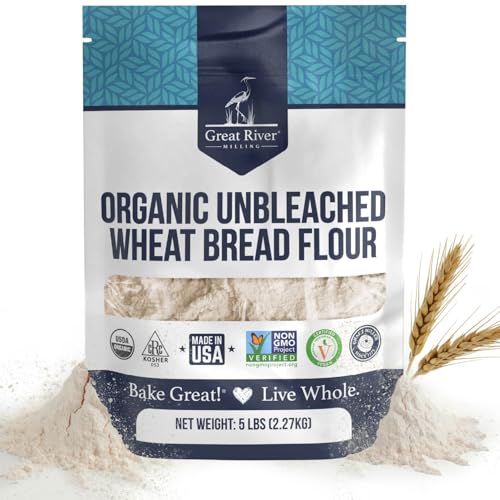
Great River Milling delivers a 5-pound bag of organic, non-GMO, kosher certified flour that retains the germ and most of the bran, offering a tender texture with whole grain nutrition. The balanced gluten content makes it a versatile choice for both savory artisan loaves and sweet recipes like cookies and pancakes. Unlike the ultra-fine single-pass flours, this product sits in the mid-range of texture — fine enough for muffins but with enough bran presence to add wholesome character.
Commercial micro-bakeries have reported replacing King Arthur Organic Bread Flour with this option after finding the aroma and crumb to be superior. The unbromated and unbleached nature means no chemical treatment, so dough may require slightly higher hydration to compensate for the retained bran and germ — a typical adjustment for whole wheat-oriented bakes. One baker noted that using it as a direct 1:1 replacement for white flour produced denser loaves, and recommended adding vital wheat gluten or blending with white flour to achieve the loft traditional sourdough bakers expect.
At 5 pounds, this bag supports high-volume prep without the commitment of bulk bins. If you run a home bakery or bake multiple times a week, the value proposition here is strong — you get premium milling standards and clean ingredients at a price that makes daily use practical.
Why it’s great
- Retains wheat germ and most bran for superior nutrition and flavor
- 5-pound bag ideal for frequent bakers and small food businesses
- Certified USDA Organic, Non-GMO, and Kosher
Good to know
- Higher bran content requires slightly more liquid in dough
- May produce denser loaves when substituted directly for white flour
3. Sunrise Flour Mill Heritage Organic All Purpose White Flour
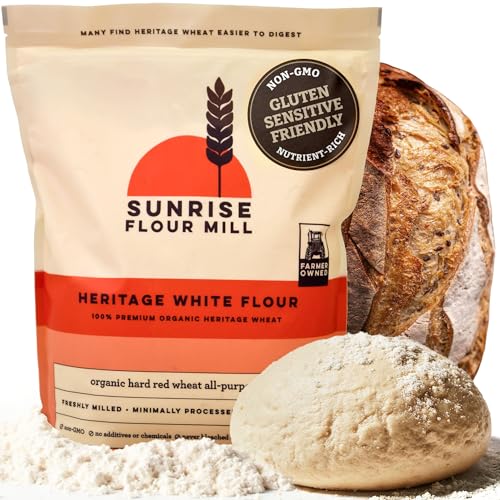
Milled from Turkey Red Heritage Wheat grown without glyphosate, this unbleached all-purpose flour from Sunrise Flour Mill is a standout for bakers who experience bloating or inflammation from conventional wheat. Customers consistently report being able to enjoy bread, bagels, and muffins again without the digestive discomfort that modern hybrids trigger. The 32-ounce bag is milled from pre-1950s wheat genetics, which many in the heritage grain community consider easier to digest due to their unmodified gluten structure.
The texture is described as “silky soft” and “velvety,” producing blueberry muffins and cookies with a tender crumb that is sturdy but never tough. Bakers note good browning and rise in bagels and buns, with no need for bromates or chemical dough conditioners. The absence of folic acid, bromate, and other common additives makes this a clean option for those seeking a minimally processed white flour. Multiple long-term customers describe it as the only flour they use, citing consistent quality and no bug or debris issues across many bags.
The primary trade-off is cost — heritage organic flour is inherently more expensive than commodity organic flour. If your budget allows, the combination of digestibility, superior flavor, and clean ingredient list makes this one of the most rewarding flours to bake with.
Why it’s great
- Pre-1950s Turkey Red heritage wheat offers improved digestibility for sensitive guts
- No glyphosate, bromate, folic acid, or synthetic additives
- Silky texture produces outstanding muffins, cookies, and bagels
Good to know
- Heritage price point is higher than conventional organic all-purpose flour
- 32-ounce bag is smaller than many bulk options
4. Sunrise Flour Mill Heritage Organic Bread Flour Blend
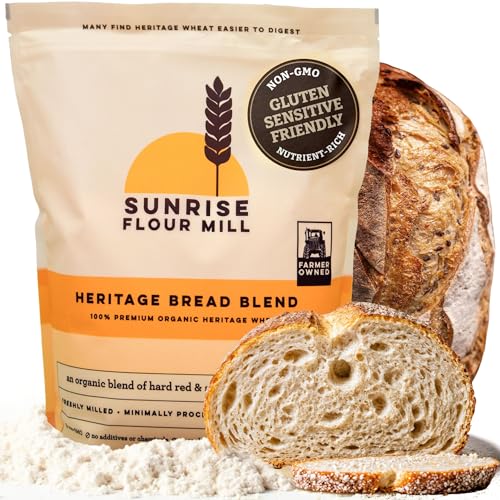
This blend of Turkey Red and White Sonora Heritage Wheat is single-pass milled using 1930s unifine milling technology to produce an exceptionally fluffy, super-fine flour that rivals the texture of modern white flour while retaining the nutritional and digestive benefits of heritage grains. The 2-pound bag is focused on bread making, with a protein profile that supports strong gluten development for soft, airy loaves with a golden crust. Users with IBS and severe gluten sensitivity report being able to tolerate this flour when using a 24-hour cold fermentation, a claim that is backed by numerous detailed customer accounts.
The flavor is described as smooth, creamy, and nutty with none of the bitterness that sometimes accompanies whole wheat or even some white flours. The fine texture means it hydrates quickly and evenly, making it ideal for sourdough starters and bread machine recipes that require predictable performance. At 66% hydration, sandwich bread emerges with a soft crumb, and artisan sourdough develops a rich, complex flavor profile that standard bread flour cannot replicate.
This is the overall best pick because it solves the central tension in organic flour: how to get the digestibility and nutrition of heritage wheat without sacrificing the fine texture and high rise that modern baking demands. For anyone transitioning away from conventional flour, this blend offers a seamless upgrade.
Why it’s great
- Single-pass milling creates ultra-fine, fluffy texture for lofty loaves
- Blend of two heritage wheats improves digestibility without sacrificing bake quality
- Rich, nutty, non-bitter flavor profile elevates sourdough and sandwich bread
Good to know
- 2-pound bag is smaller than many bulk options
- Heritage grain price is higher than conventional organic bread flour
5. Bob’s Red Mill Organic Whole Wheat Flour

Bob’s Red Mill is a household name in natural foods, and this certified organic whole wheat flour is stone ground from hard red spring wheat on slow-moving, cool-running millstones that preserve the flavor and nutrition of the original whole grains. With a protein content of 13-15%, it is purpose-built for bread dough — from sandwich loaves and rustic rolls to bagels, pretzels, and flatbreads. The 5-pound bag is a workhorse size, and the company’s 100% employee-owned structure adds a layer of quality accountability.
Bread machine users consistently praise the texture and flavor this flour produces, describing it as producing “great bread mix” and “the best flour I have ever used” once they dial in their hydration levels. Because whole wheat flour absorbs more liquid than white flour, beginners may need to adjust their recipes to avoid dry dough. The most common practical complaint is not about the flour itself, but about Amazon’s shipping — torn bags and rain damage have been reported, so inspect the packaging upon arrival.
This is the default choice for bakers who want reliable organic whole wheat flour at a practical price point. It won’t deliver the digestibility of heritage wheat, but for everyday loaves, muffins, and cookies, it performs consistently and affordably.
Why it’s great
- High protein content (13-15%) provides strong gluten development for bread
- Stone ground on cool-running millstones to preserve grain nutrition
- 5-pound bag offers excellent value for everyday baking
Good to know
- Amazon shipments sometimes arrive with torn bags or water damage
- Whole wheat requires higher hydration than white flour recipes
FAQ
Does organic heritage flour really cause less bloating than modern wheat?
How should I store organic flour to keep it fresh?
What does “certified glyphosate residue free” mean for flour?
Final Thoughts: The Verdict
For most users, the best organic flour winner is the Sunrise Flour Mill Heritage Organic Bread Flour Blend because it combines the fine, fluffy texture of modern milled flour with the digestibility and rich flavor of heritage wheat, making it the easiest transition from conventional bread flour. If you want a certified glyphosate-free whole wheat option with full farm-to-table traceability, grab the Palouse Brand Bread Flour. And for everyday baking on a budget, nothing beats the consistent performance and value of the Bob’s Red Mill Organic Whole Wheat Flour.