That first sip of fresh-squeezed orange juice is a sensory experience no carton can replicate, yet most home juicers leave half the fruit’s potential behind in the pulp or require a messy, multi-step cleanup that kills the morning routine. The right machine changes that equation entirely, delivering bright, pulp-adjusted juice in seconds without dominating your counter or your schedule.
I’m Mohammad Maruf — the founder and writer behind AirfryerBite. I’ve spent years analyzing the hardware that defines kitchen efficiency, from motor torque and reamer geometry to material density and seal integrity, specifically within the citrus extraction category.
Whether you need a silent electric model for weekday speed or a heavy-duty lever press for maximum yield, this guide breaks down the five best contenders to help you choose the ideal best orange juicer for your kitchen and your morning routine.
How To Choose The Best Orange Juicer
Navigating the citrus juicer aisle means weighing three main vectors: extraction method, build materials, and daily maintenance. Electric reamers offer speed and consistency, while manual lever presses provide higher yield per fruit and zero noise. Your choice depends on how many glasses you squeeze per day and whether counter space or cleanup time is the tighter constraint.
Electric vs. Manual: Speed vs. Yield
Electric models like the Cuisinart CCJ-500P1 use a spinning reamer to pulverize the fruit flesh, then separate pulp through an adjustable strainer. The process takes seconds per halved fruit, and the auto-reversing cone ensures even extraction from both sides of the membrane. Manual lever presses, on the other hand, rely on downward force to crush the entire fruit half against a stainless steel strainer. The hydraulic-style pressure extracts more juice because it physically compresses the peel and pith, pushing liquid out of cells a spinning reamer might miss.
Build Material and Stability
Plastic-bodied electric juicers are light and easy to store, but they can walk across the counter during operation unless suction feet are present. Cast iron manual presses are dramatically heavier—often over fifteen pounds—which gives them inherent stability during high-lever pressure. The trade-off is footprint and portability: a cast iron press occupies a permanent counter spot, while an electric juicer can slide into a cabinet after use. Stainless steel food-contact parts resist corrosion and acidic orange juice better than chrome or painted components, so check that the strainer and funnel grades are 304 or 201 stainless.
Pulp Control and Cleanup
The ability to dial in pulp volume—low, medium, or high—separates a versatile electric juicer from a one-note gadget. Without pulp control, you get whatever the reamer and strainer ratio produce, which may be too thin for some recipes or too chunky for clean juice. Dishwasher-safe detachable parts are non-negotiable for daily use: if the pulp basket, reamer, and juice spout must be hand-washed every morning, the device will collect dust after the first week. Manual presses with a simple rinse-and-wipe design often win on maintenance speed, provided they disassemble without tools.
Quick Comparison
On smaller screens, swipe sideways to see the full table.
| Model | Category | Best For | Key Spec | Amazon |
|---|---|---|---|---|
| FOHERE Cast Iron Juicer | Manual Press | Maximum juice yield | 400ml stainless steel cup | Amazon |
| Hurmovae Cast Iron Juicer | Manual Press | Tall lever heavy duty use | 17-inch lever height | Amazon |
| Cuisinart CCJ-500P1 | Electric Reamer | Everyday speed and pulp control | 3 pulp control settings | Amazon |
| Eurolux ELCJ-4800 | Electric Reamer | Quiet one-touch operation | 300W motor at 110 RPM | Amazon |
| SUCCFLY Manual Squeezer | Manual Squeezer | Portable hand-press juicing | 550ml stainless steel container | Amazon |
In‑Depth Reviews
1. FOHERE Cast Iron Citrus Press Juicer
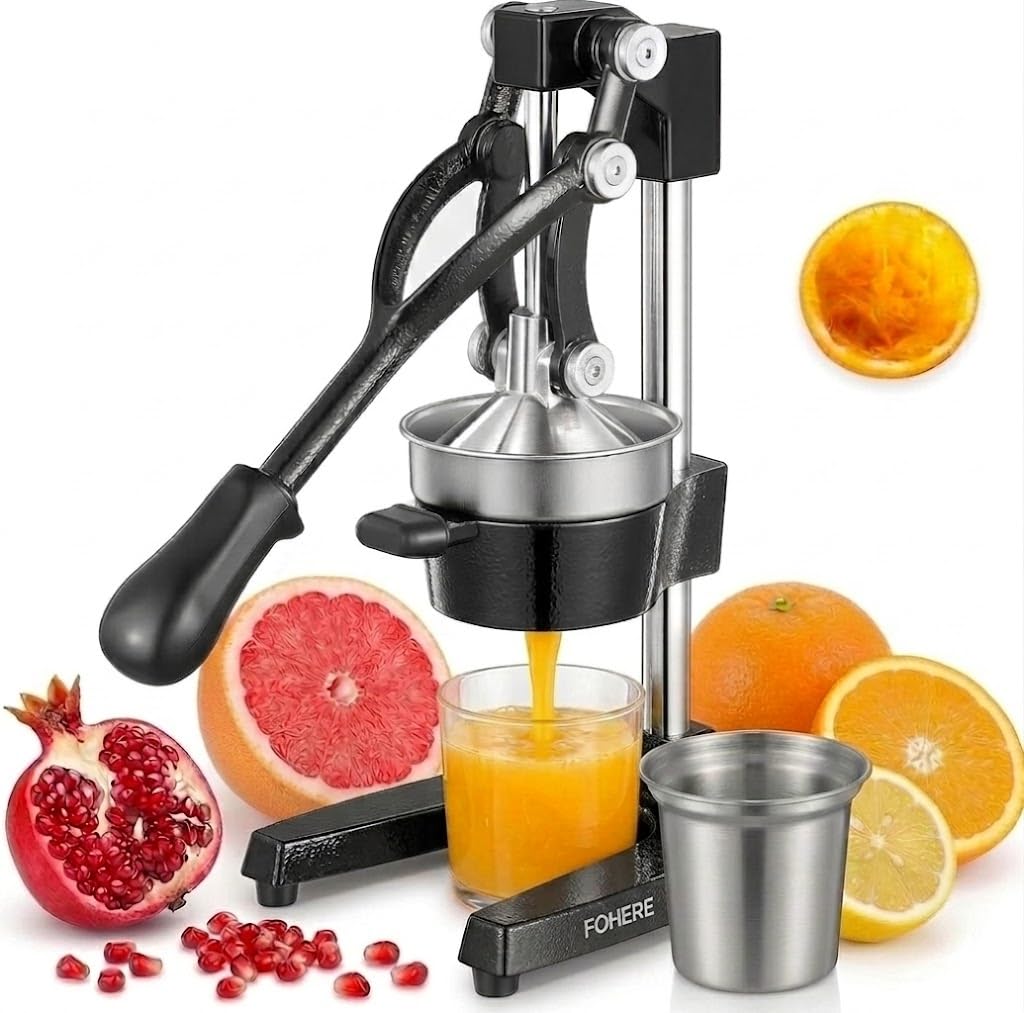
The FOHERE manual press delivers the highest juice yield in this lineup thanks to its cast iron lever mechanism that uses your body weight to crush fruit halves against a 304 stainless steel strainer. Users report extracting roughly twenty-five percent more juice compared to handheld squeezers because the full surface area of the fruit is compressed evenly, leaving only dry pith behind. The anti-slip silicone handle and four rubber feet keep the base planted during operation, though the lever does generate enough torque to slide the unit backward unless you hold the base with your free hand.
Cleanup is straightforward: the pressure cap, filter funnel, and 400ml stainless steel cup detach without tools and are top-rack dishwasher safe. The included L-shaped wrenches allow you to tighten the pivot bolt periodically, maintaining smooth lever action over years of use. The machine handles oranges, lemons, grapefruits, pomegranates, and even grapes, making it a true multi-citrus press for home kitchens or small juice bars.
The only ergonomic compromise is that the base lacks suction cups, so you must either brace it against a backsplash or apply downward pressure on the rear footplate during each press. This is a minor adjustment for the extraction efficiency gain, but it prevents true one-handed operation. For anyone prioritizing pure yield per orange over convenience, this press is the top performer.
Why it’s great
- Highest juice extraction rate in the group
- Detachable 304 stainless steel parts are dishwasher safe
- Four anti-slip feet provide solid counter grip
Good to know
- Base can slide backward without a hand holding it down
- Requires body weight for full leverage on thicker citrus
2. Hurmovae Cast Iron Juicer
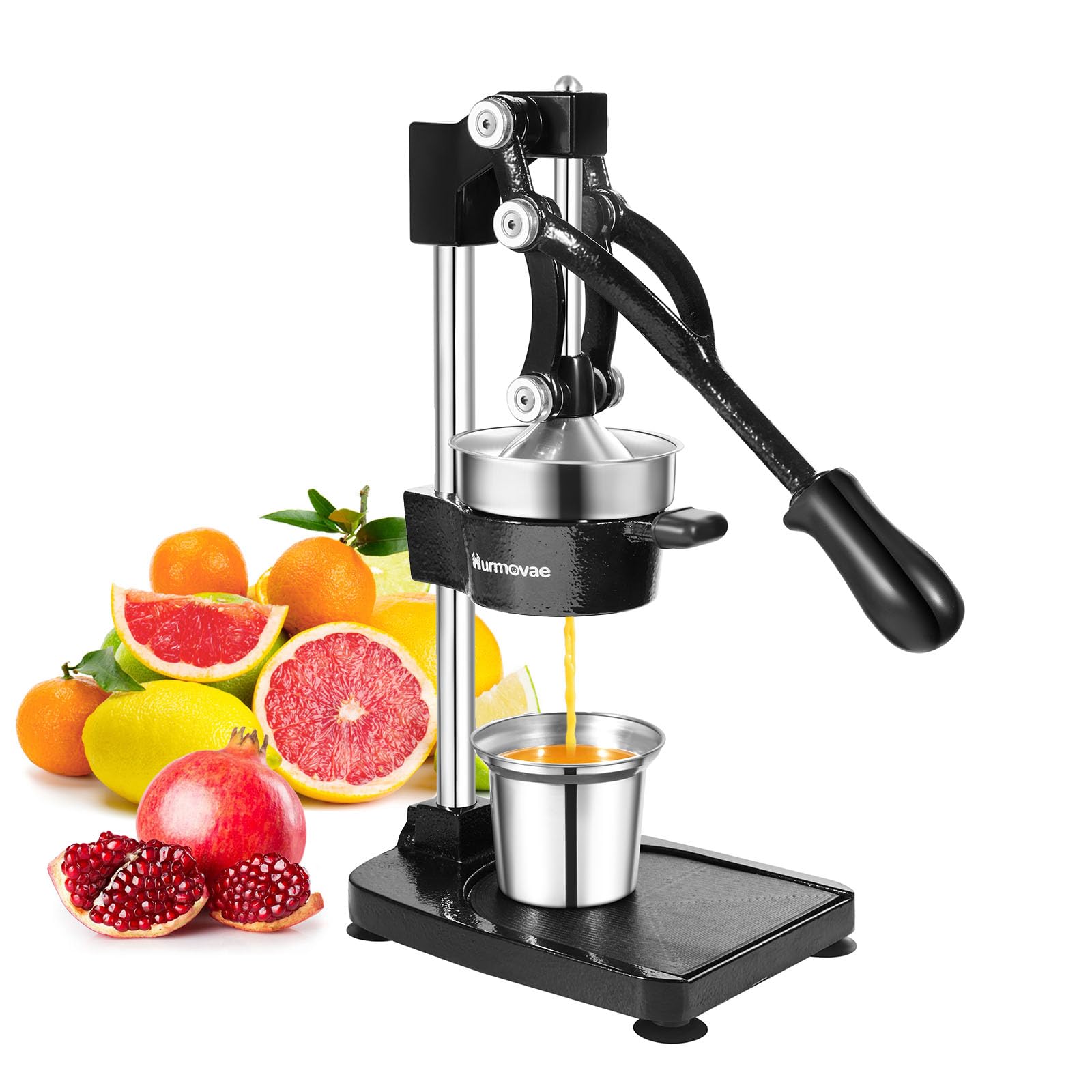
The Hurmovae press differentiates itself with a seventeen-inch lever that provides substantial mechanical advantage, allowing you to extract juice from large grapefruits and pomegranates with noticeably less hand force than shorter presses. The five-inch stainless steel funnel accommodates whole fruit halves, reducing prep time because you don’t need to quarter oversized citrus. A strong suction cup on the flat base locks the unit to the counter, effectively solving the sliding issue present on some other manual presses.
All food-contact components—the strainer, funnel, and press cup—are grade 304 stainless steel, which resists the acidic corrosion that can pit lower-grade metals over time. The cast iron body is painted black and weighs nearly sixteen pounds, giving it a presence that feels commercial-grade. The ergonomic rubber handle reduces hand fatigue during multi-fruit sessions, and the 201 stainless steel shaft delivers smooth, binding-free movement throughout the press stroke.
The main trade-off is footprint: at seventeen inches tall and nearly a foot deep, this press requires dedicated counter space and is not practical for cabinets. Additionally, the suction cup, while effective when clean, can lose grip on textured or greasy surfaces, occasionally popping free under high force. Regular damp-wiping of the cup restores hold. For heavy-duty home juicing or light commercial use, the Hurmovae balances leverage and stability better than any other manual option here.
Why it’s great
- Tall 17-inch lever provides excellent mechanical advantage
- Suction cup base prevents counter sliding
- 304 stainless steel food-contact parts resist corrosion
Good to know
- Large footprint needs permanent counter space
- Suction cup may release on oily or textured surfaces
3. Cuisinart Pulp Control Citrus Juicer CCJ-500P1

The Cuisinart CCJ-500P1 hits the sweet spot for daily electric juicing by combining three pulp control settings with an auto-reversing reamer that spins in both directions to extract juice from the entire fruit half. Low, medium, and high pulp settings give you direct control over the final texture—fine for mimosas, chunkier for recipes that benefit from pulp body. The final-spin feature runs the reamer an extra cycle after the fruit is removed, squeezing residual juice from the pulp that would otherwise go to waste.
Build quality is solid for the mid-range electric category. The base is weighted enough to stay put during operation, though the plastic housing and reamer feel utilitarian rather than premium. The extra-long snap-up spout accommodates glasses of varying heights and folds down to prevent drips between uses. All parts that contact juice—reamer, pulp basket, lid, and spout—are dishwasher safe, making cleanup as simple as unloading the top rack.
The main limitation is that the reamer is designed for halved citrus only; you cannot juice whole fruit or process non-citrus items like pomegranates or grapes. The motor is not the most powerful in its class, so large grapefruit halves require a bit of downward pressure to engage the reamer fully. Still, for a dedicated orange and lemon juicer that delivers consistent pulp control and quick cleanup, the CCJ-500P1 is the most practical electric choice for most households.
Why it’s great
- Three adjustable pulp control settings (low/medium/high)
- Auto-reversing reamer improves extraction from both sides
- Dishwasher-safe parts simplify daily cleaning
Good to know
- Plastic build feels less durable than all-metal presses
- Motor can bog down on very large grapefruit halves
4. Eurolux Electric Citrus Juicer ELCJ-4800
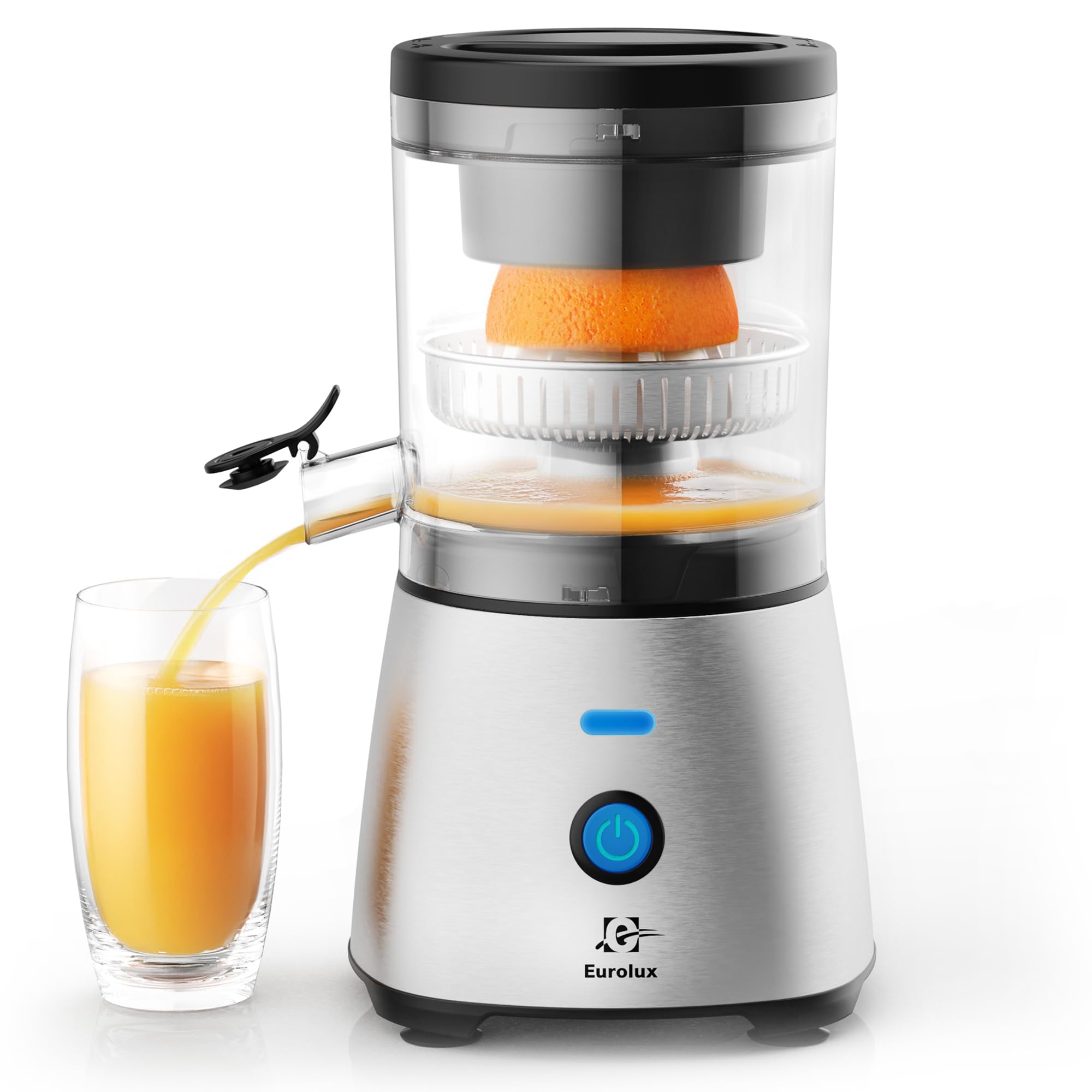
The Eurolux ELCJ-4800 is built around a 300-watt motor that runs at a slow 110 RPM—deliberately low speed to minimize foam and oxidation while still delivering high torque for thorough extraction. The one-touch operation is genuinely simple: cut the fruit, place it on the cone, close the lid, and press the single button. The motor engages immediately and runs until you lift the lid, with no variable speed dials or timers to confuse the morning routine.
The entire machine is compact—just four inches deep and eight inches wide—making it one of the most counter-friendly electric juicers available. The stainless steel body and BPA-free components give it a clean, modern look that blends with most kitchen aesthetics. Noise output is notably lower than competing electric reamers because the 110 RPM motor produces a smooth hum rather than a high-pitched whine, an advantage for early-morning use in shared living spaces.
Where the Eurolux falls short is pulp management. The built-in strainer catches seeds and coarse pulp, but fine sediment passes through into the juice, and the strainer clogs after a single cup of orange juice, requiring removal and rinsing. The lid also needs slight downward hand pressure during operation; otherwise, the reamer can vibrate the fruit half off the cone. For someone who values compact storage and quiet operation over batch capacity, this is a solid entry-level electric option.
Why it’s great
- Quiet 300W motor at 110 RPM for low-noise juicing
- Ultra-compact footprint fits small counters
- One-button operation is intuitive and fast
Good to know
- Strainer clogs quickly, needing mid-session cleaning
- Lid requires hand pressure to keep fruit in place
5. SUCCFLY Manual Lemon Squeezer

The SUCCFLY manual squeezer takes a different approach from the lever presses above: it uses a scissor-style handle mechanism to clamp down on fruit halves, collecting juice in an integrated 550ml stainless steel container built into the base. The design is more portable and compact than a cast iron press, making it suitable for small kitchens, RVs, or picnic setups where counter space is at a premium. The 304 stainless steel construction resists rust and corrosion from acidic citrus oils.
The ergonomic curved handles are designed to reduce hand strain, and several users with arthritic hands report that the squeezing motion is significantly easier than twisting a reamer or using a handheld squeezer. The thick strainer separates seeds and most pulp effectively, producing relatively clean juice in a single press. Disassembly requires no tools: the strainer and container pop apart for rinsing under running water or placement in the dishwasher.
The main reliability concern is the hinge mechanism. When the handles are raised past their normal range, the lever arm can unhinge from its pivot point, requiring realignment. This does not happen during typical juice strokes, only when the handles are lifted excessively high during cleaning or storage. Additionally, the manufacturer recommends hand-washing the hinge area to prevent debris buildup. For a budget-friendly manual option that prioritizes portability and low storage footprint over brute-force extraction, the SUCCFLY is a capable companion.
Why it’s great
- Compact scissor design fits in small spaces and travel bags
- 550ml stainless steel container holds several servings
- Ergonomic handles reduce hand fatigue during use
Good to know
- Lever can unhinge if raised too high during cleanup
- Not as high yield as a full cast iron lever press
FAQ
Does an electric orange juicer produce less juice than a manual press?
What pulp control setting should I use for a mimosa?
Can I juice a whole orange in a citrus juicer?
How do I clean a cast iron manual juicer without rusting it?
Final Thoughts: The Verdict
For most users, the best orange juicer winner is the Cuisinart CCJ-500P1 because it balances electric speed, three pulp control settings, and dishwasher-safe cleanup at a mid-range investment that works for daily use without dominating counter space. If you want maximum juice yield and are willing to trade convenience for extraction efficiency, grab the FOHERE Cast Iron Press. And for compact, quiet electric juicing with minimal counter footprint, nothing beats the Eurolux ELCJ-4800.