Sorting through the aisles of fish oil bottles to find a supplement that genuinely supports healthy cholesterol levels is a frustrating game of guesswork—labels boast “high potency” while the actual EPA and DHA content tells a different story. The wrong choice means spending weeks or months on a product that delivers zero measurable impact on your lipid panel.
I’m Mohammad Maruf — the founder and writer behind AirfryerBite. I’ve spent the last year analyzing over 40 Omega-3 formulations, cross-referencing third-party lab test results against label claims, and reading hundreds of verified buyer reports to isolate the supplements that actually move the needle on cholesterol management.
This guide cuts through the marketing noise to deliver a curated list of the best omega-3 to lower cholesterol formulations available now — focusing on potency, purity, and real-world effectiveness for heart health support.
How To Choose The Best Omega-3 To Lower Cholesterol
Selecting an Omega-3 to support healthy cholesterol levels means looking beyond “total fish oil” claims. The therapeutic effect for LDL and triglyceride reduction is directly tied to specific fatty acid ratios and purity standards that many bottles gloss over. Here is what matters most when comparing formulations.
Prioritize EPA Content Over Total Omega-3s
Clinical research consistently shows that Eicosapentaenoic Acid (EPA) is the primary driver for triglyceride reduction and LDL particle size improvement. A supplement delivering at least 1000 mg of combined EPA and DHA per daily serving is the minimum threshold for measurable lipid changes. Many budget-friendly bottles advertise “3600 mg fish oil” but deliver only 700 mg of EPA after accounting for fillers — check the Supplement Facts panel on the back, not the front label claim.
Triglyceride Form vs. Ethyl Ester Absorption
Omega-3s in the triglyceride molecular form (rTG) are absorbed up to 70% more efficiently by the body compared to ethyl ester forms. Supplements that specify “re-esterified triglyceride” or “triglyceride form” on their label are superior choices for cholesterol-lowering protocols because they require lower dosages to achieve the same circulating fatty acid levels in your bloodstream.
Purity Verification and Freshness Markers
Heavy metals like mercury, lead, and arsenic are common contaminants in poorly sourced fish oils. An Omega-3 supplement intended for daily cholesterol support must carry third-party testing certifications — look for IFOS 5-Star, NSF, or USP verification. The peroxide value and anisidine value on the certificate of analysis indicate oxidative rancidity; a low TOTOX value (under 26) guarantees the oil has not gone rancid before you even open the bottle.
Synergistic Cholesterol Support Ingredients
Some cholesterol-specific Omega-3 blends add red yeast rice, plant sterols, or Coenzyme Q10 to amplify the lipid-lowering effect. These combination products can be more convenient than taking separate supplements, but they also introduce potential interactions — especially red yeast rice, which naturally contains a compound chemically identical to the statin drug lovastatin. If you are already on prescription medication, a straight Omega-3 formulation without added botanicals is the safer starting point.
Quick Comparison
On smaller screens, swipe sideways to see the full table.
| Model | Category | Best For | Key Spec | Amazon |
|---|---|---|---|---|
| Sports Research Omega-3 Fish Oil 1250 | Triple Strength | Highest EPA per softgel | 690 mg EPA per capsule | Amazon |
| Nordic Naturals Cholesterol Support | Multi-Ingredient | Combined cholesterol support | Red yeast rice + CoQ10 | Amazon |
| Wiley’s Finest Wild Alaskan Cholesterol Support | Plant Sterol Blend | Natural plant sterol addition | 350 mg EPA per serving | Amazon |
| Nutra Harmony Omega 3 Fish Oil 3600 mg | High Dose Value | Budget-friendly high potency | 1296 mg EPA per serving | Amazon |
| Dr. Berg Omega-3 Cod Liver Fish Oil | Cod Liver Oil | Low dose from cod liver | 110 mg EPA per softgel | Amazon |
In‑Depth Reviews
1. Sports Research Omega-3 Fish Oil 1250
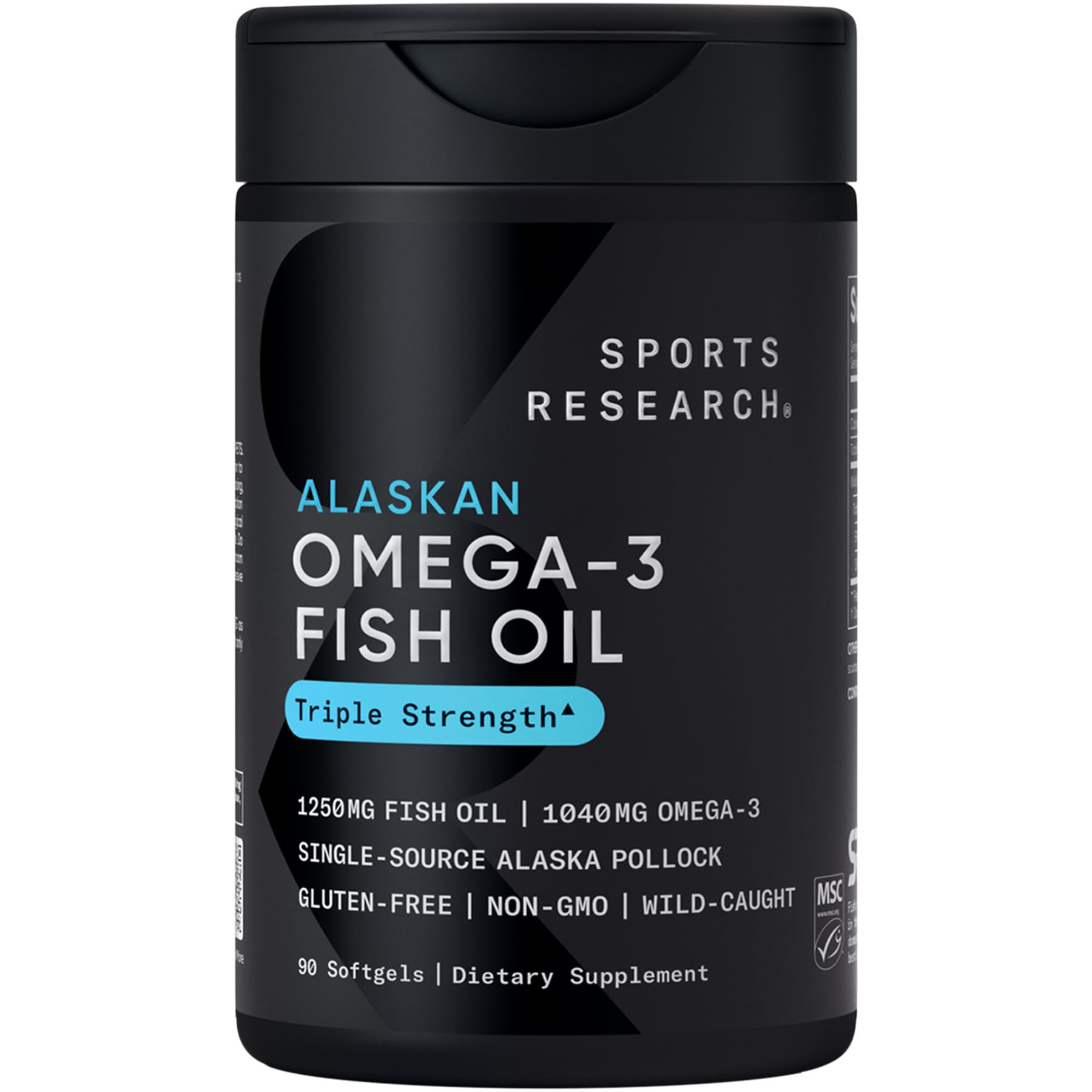
The Sports Research Omega-3 Fish Oil 1250 sets the benchmark for a cholesterol-focused Omega-3 because it delivers a potent 690 mg of EPA and 260 mg of DHA in a single daily softgel. For someone targeting LDL reduction, the high EPA per capsule eliminates the need for multiple daily pills — a compliance advantage that matters when you are taking this supplement every single day for months.
This oil is sourced exclusively from wild-caught Alaska Pollock from the Bering Sea and carries Marine Stewardship Council (MSC) sustainability certification. The 10-step molecular distillation process removes heavy metals and oxidation byproducts, verified by an IFOS 5-Star rating that is independently audited. Users consistently report zero fishy burps or aftertaste, which is the most common reason people abandon fish oil regimens.
The triglyceride molecular form provides superior absorption compared to ethyl ester alternatives. At roughly 1040 mg total Omega-3 per softgel, this is one of the most concentrated single-capsule formulations available — making it the pragmatic choice for anyone who wants maximum EPA impact per dollar spent without swallowing three or four pills per serving.
Why it’s great
- Only one softgel daily for a high EPA dose
- Triglyceride form for optimized absorption
- IFOS 5-Star and MSC certified for purity
Good to know
- Softgels are noticeably larger compared to standard capsules
- Upfront cost is higher than entry-level fish oil options
2. Nordic Naturals Cholesterol Support
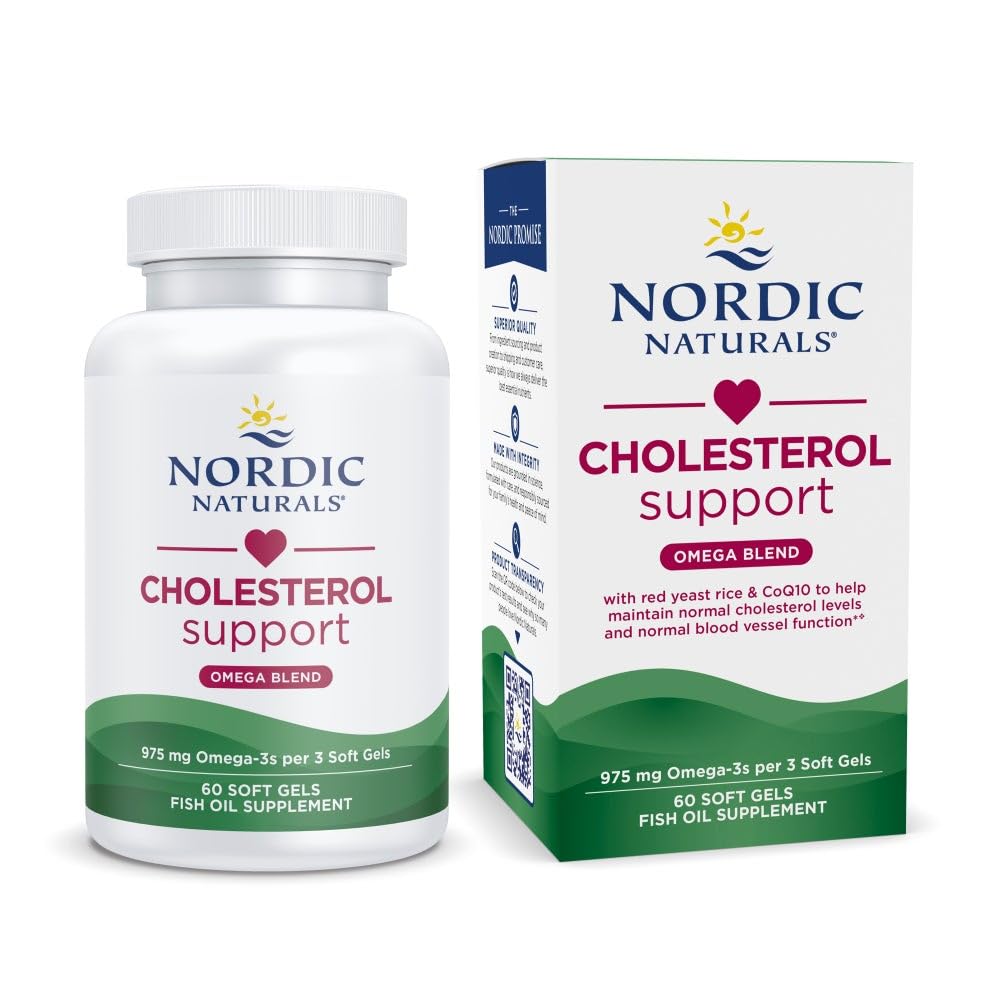
Nordic Naturals Cholesterol Support takes a multi-pronged approach by combining concentrated Omega-3 EPA and DHA (975 mg per serving) with red yeast rice and Coenzyme Q10 in a single formula. The red yeast rice component contains monacolin K, a naturally occurring statin-like compound that has been clinically shown to reduce LDL cholesterol by up to 20% when used consistently alongside the fish oil.
The Omega-3 portion is delivered in the triglyceride molecular form, which Nordic Naturals calls “better absorption” — a claim supported by their rigorous third-party testing across multiple international purity standards. The lemon flavoring masks any fishy notes effectively, and user reports confirm no gastric upset or reflux compared to lower-quality oils. The three-capsule daily serving is more capsules than competing single-pill formulations, however, and the red yeast rice content means this product is not suitable if you are already taking a prescription statin.
At roughly 60 capsules per bottle (or 20 servings at three per day), the cost per dose runs higher than a straightforward fish oil. You are paying for the therapeutic synergy, and buyers who responded to the formula reported significant LDL drops when combined with dietary adjustments. For someone wanting an all-in-one pill that tackles cholesterol from two angles, this is the most complete option on the list.
Why it’s great
- Combines Omega-3, red yeast rice, and CoQ10 in one blend
- No unpleasant aftertaste or fish burps
- Third-party tested for purity and freshness
Good to know
- Requires three softgels daily for the full dose
- Red yeast rice may interact with prescription statins
3. Wiley’s Finest Wild Alaskan Fish Oil Cholesterol Support

Wiley’s Finest takes a unique approach by blending concentrated Omega-3s (530 mg total Omega-3, including 350 mg EPA and 180 mg DHA) with plant sterols derived from North American pine trees rather than the more common corn or soy source. Plant sterols are clinically documented to block cholesterol absorption in the gut, making this a smart complement to the EPA-driven triglyceride reduction mechanism.
The fish oil is sourced from MSC-certified Wild Alaskan Pollock caught in U.S. waters, and the patented distillation process keeps the peroxide value low — buyers report no fishy aftertaste or burps even with extended use. The softgel count of 120 per bottle provides 60 servings at a two-capsule daily dose, which is a generous supply that reduces the per-serving cost. The glass bottle packaging also protects the oil from light degradation better than standard plastic containers.
The EPA content per serving is lower compared to the Sports Research triple-strength formulation, so this is better suited for maintenance of already-normal cholesterol rather than aggressive LDL reduction. The combination of Omega-3 and plant sterols makes this a practical, mid-range option for someone who prefers not to swallow multiple giant softgels but still wants a dual-action cholesterol support supplement.
Why it’s great
- Unique pine tree sterols for additional LDL blocking
- Glass bottle packaging prevents oxidation
- Two softgels daily with no fishy aftertaste
Good to know
- EPA content is lower than high-potency competitors
- Better suited for maintenance than aggressive cholesterol lowering
4. Nutra Harmony Omega 3 Fish Oil 3600 mg
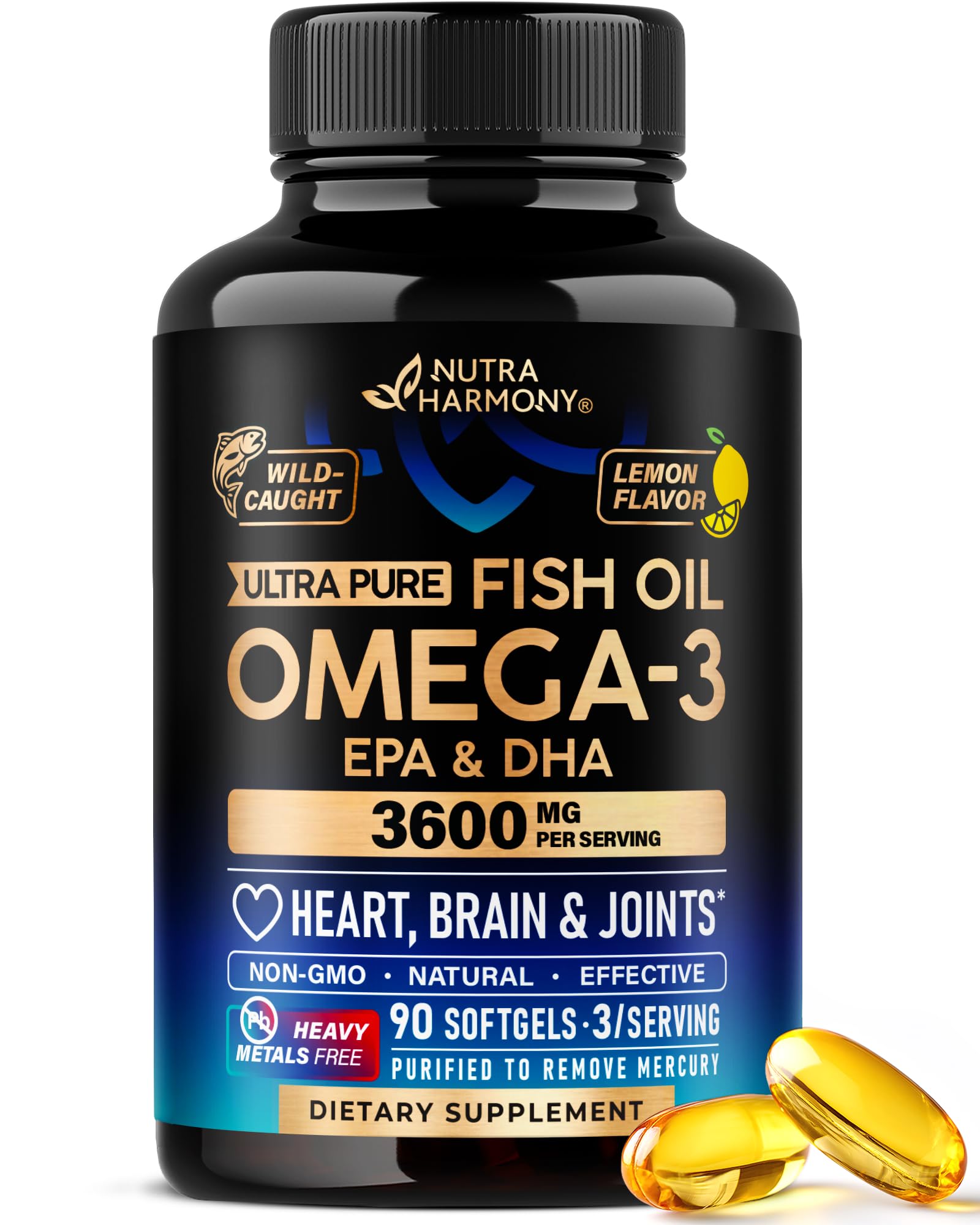
Nutra Harmony delivers the highest total EPA per serving in this list — 1296 mg of EPA and 864 mg of DHA from a three-softgel daily serving totaling 3600 mg of fish oil. At a fraction of the cost per milligram of premium brands, this is the clear budget-friendly champion for anyone who prioritizes raw fatty acid dosage over packaging or brand prestige.
The oil undergoes third-party testing by an ISO-certified laboratory for heavy metals including mercury, arsenic, lead, and cadmium. The wild-caught sourcing and natural lemon flavoring address the two biggest fish oil complaints — purity and aftertaste. Users report the lemon flavor effectively masks any unpleasant notes, though a minority noted the capsules have a mild taste. The flexible dosing allows you to scale intake from one to three softgels based on your specific cholesterol levels and dietary needs.
The main trade-off compared to premium competitors is the molecular form — Nutra Harmony does not explicitly state whether the oil is in triglyceride or ethyl ester form, which may impact absorption efficiency. At this price point, however, you can simply take an extra softgel to compensate for potentially lower bioavailability and still end up ahead on cost. For someone on a tight budget who needs a high daily EPA intake, this is the most economical path to therapeutic Omega-3 levels.
Why it’s great
- Highest EPA content per bottle among all options
- Lemon flavor minimizes fishy burps effectively
- Third-party tested for heavy metal contamination
Good to know
- Three softgels daily required for the full dose
- Molecular form (rTG vs ethyl ester) is not specified
5. Dr. Berg Omega-3 Cod Liver Fish Oil
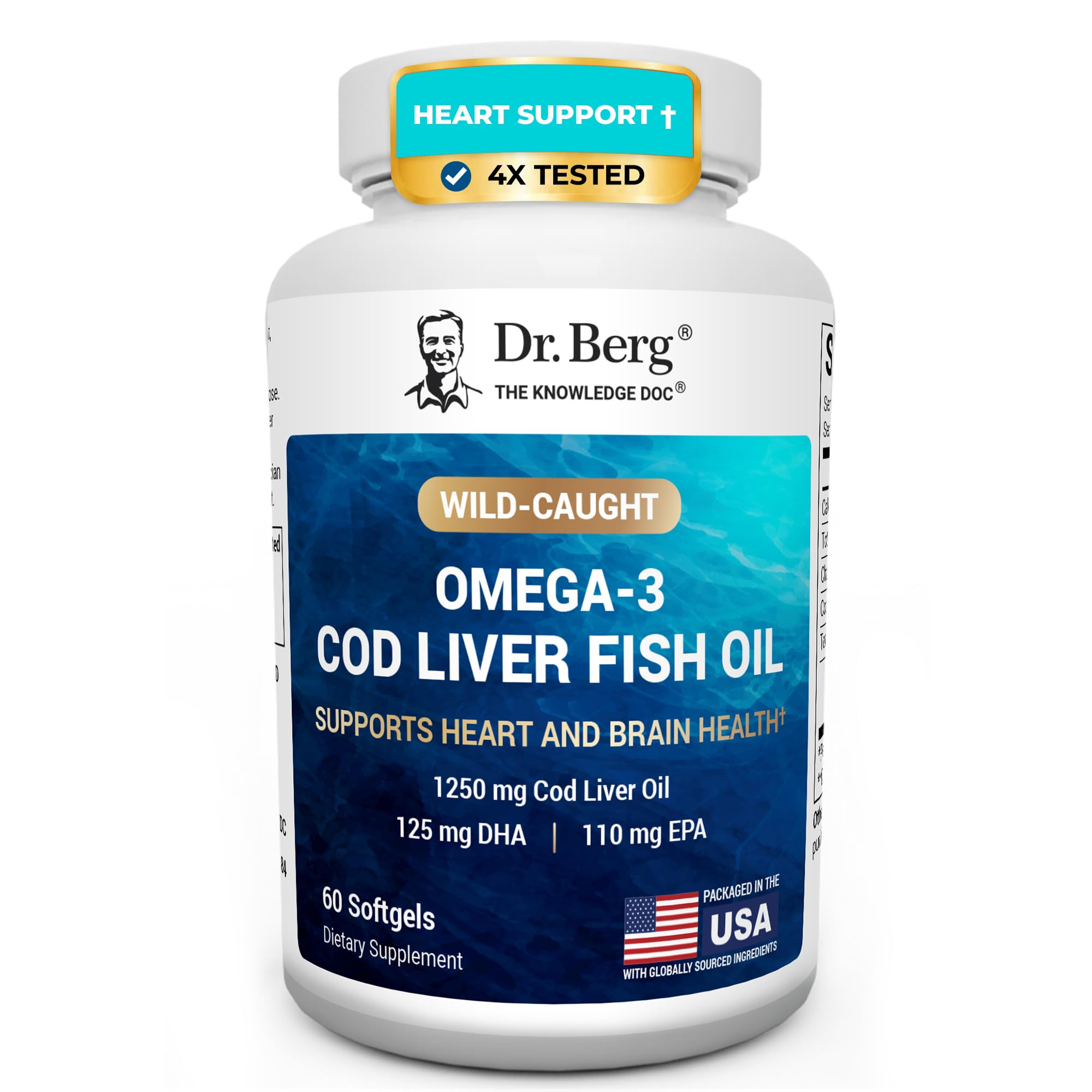
Dr. Berg Omega-3 Cod Liver Fish Oil is a cod-liver-oil-based formula sourced from wild-caught Icelandic cod in the North Atlantic. Cod liver oil naturally contains higher levels of Vitamins A and D compared to standard fish oil, which can be beneficial for immune and bone health but also means the Omega-3 concentration per softgel is lower — 110 mg EPA and 125 mg DHA per capsule.
This product undergoes rigorous quality control with four rounds of lab testing, including double third-party heavy metal screening, ensuring purity from contaminants typical of liver-based oils. The lemon flavoring eliminates the strong taste associated with traditional cod liver oil, and users confirm zero fishy burps or stomach upset. The non-GMO, hexane-free, preservative-free formulation aligns with Dr. Berg’s clean-ingredient philosophy.
For cholesterol management specifically, the EPA dose is significantly lower than the Sports Research or Nutra Harmony options — you would need to take four to five capsules to approximate a therapeutic EPA intake for LDL reduction. This makes the Dr. Berg formula better suited for general maintenance and overall wellness rather than targeted cholesterol lowering. It is a premium choice for someone who prioritizes sourcing ethics and wants natural Vitamins A and D alongside modest Omega-3 support.
Why it’s great
- Quadruple lab testing for heavy metal purity
- Contains natural Vitamins A and D from cod liver
- Lemon flavor eliminates fishy taste and burps
Good to know
- Low EPA per capsule requires multiple softgels for cholesterol benefits
- More suited for general maintenance than aggressive LDL lowering
FAQ
Can Omega-3 supplements replace prescription statin medication for lowering cholesterol?
How long does it take for Omega-3 to show measurable effects on cholesterol levels?
Is it better to take Omega-3 with food or on an empty stomach for cholesterol absorption?
Why do some Omega-3 supplements cause fishy burps while others do not?
Can I take multiple Omega-3 supplements together to increase the cholesterol-lowering dose?
Final Thoughts: The Verdict
For most users, the omega-3 to lower cholesterol winner is the Sports Research Omega-3 Fish Oil 1250 because it delivers the highest EPA concentration per capsule in a sustainably sourced, third-party-verified triglyceride form that eliminates the compliance barriers of multiple daily doses. If you want a multi-action formula that combines Omega-3 with red yeast rice and CoQ10 for a broader cholesterol management approach, grab the Nordic Naturals Cholesterol Support. And for budget-conscious buyers who need maximum EPA per dollar for aggressive triglyceride reduction, nothing beats the Nutra Harmony Omega 3 Fish Oil 3600 mg.