The omega-3 you choose during preconception, pregnancy, and nursing directly supplies the building blocks for your baby’s brain, eyes, and nervous system. The right DHA dose, delivered in a form your body can actually absorb, makes the difference between ticking a box and giving your child a measurable developmental advantage.
I’m Mohammad Maruf — the founder and writer behind AirfryerBite. Over years of analyzing supplement specifications, I have evaluated dozens of omega-3 formulations specifically for fertility and prenatal needs, weighing delivery forms, purity certifications, and bioavailable dosages that actually support early development. this review of the best omega 3 for fertility focuses on the specific molecular forms, sourcing methods, and dosages that matter most for conception and fetal growth.
Here you will find five top-rated options — from algae-derived vegan softgels to high-concentration wild fish oils — each reviewed against the criteria that serious fertility and prenatal supplement buyers care about: DHA content per serving, triglyceride versus ethyl ester form, third-party purity testing, and freedom from mercury and heavy metals.
How To Choose The Best Omega 3 For Fertility
Not all omega-3 supplements are built for the unique demands of fertility and pregnancy. The molecular form, the source (algae versus fish), the DHA concentration, and the purity testing all directly affect how much omega-3 actually reaches your bloodstream and, subsequently, your baby. Below are the four make-or-break factors to evaluate.
DHA Dosage Per Serving
For fertility and prenatal support, the March of Dimes recommends a minimum of 200 mg of DHA daily, but many specialists now aim for 300 mg to 500 mg. A serving delivering 400 mg or more is the sweet spot for supporting fetal brain and eye development. Products that list only “total omega-3s” without breaking out DHA separately often underdeliver on the prenatal-specific benefit.
Triglyceride Form vs. Ethyl Ester
The molecular form determines how much omega-3 your body retains. Triglyceride form — the natural structure found in fish and algae — has been shown in multiple studies to have 50 to 70 percent better absorption than synthetic ethyl ester forms. Many budget fish oils use ethyl ester because it is cheaper to produce. For prenatal use, always verify the label says “triglyceride form” or “re-esterified triglyceride.”
Source: Algae vs. Fish
Algae-derived omega-3 eliminates the risk of mercury, PCBs, and other ocean-borne contaminants entirely. It is also fully vegan and produces no fishy aftertaste. Fish-sourced omega-3 can be equally pure if the brand uses molecular distillation and sources from MSC-certified sustainable fisheries, but the burden of proof is higher — look for a third-party purity seal on every batch.
Third-Party Testing and Certifications
Purity claims are meaningless without independent verification. Certifications such as USP, NSF International, GMP, Non-GMO Project Verified, and Vegan Action provide assurance that the product contains exactly what the label states and is free from heavy metals, dioxins, and PCBs. Skip any brand that cannot provide a Certificate of Analysis (CoA) from a third-party lab upon request.
Quick Comparison
On smaller screens, swipe sideways to see the full table.
| Model | Category | Best For | Key Spec | Amazon |
|---|---|---|---|---|
| Nordic Naturals Vegan Prenatal DHA | Vegan Premium | Algae-derived non-GMO DHA | 500 mg DHA per serving | Amazon |
| OmniBiotics Vegan Omega 3 DHA EPA | High Potency Vegan | 700 mg DHA per serving | 700 mg DHA + 20 mg EPA | Amazon |
| Mama Bird Pre+Postnatal DHA | Fish Oil Premium | Triglyceride fish oil, neurologist-formulated | 500 mg DHA in triglyceride form | Amazon |
| Garden of Life Dr. Formulated Prenatal DHA | Vegan Budget | Value-priced algae DHA with DPA | 400 mg DHA + 90 mg DPA | Amazon |
| Wiley’s Finest Wild Alaskan Fish Oil Prenatal DHA | High Potency Fish | Total 900 mg EPA/DHA per serving | 600 mg DHA + 300 mg EPA | Amazon |
In‑Depth Reviews
1. Nordic Naturals Vegan Prenatal DHA

Nordic Naturals Vegan Prenatal DHA delivers 500 mg of plant-based DHA per serving in the highly bioavailable triglyceride molecular form, making it the official omega-3 of the American Pregnancy Association. The algae source is sustainably farmed and Non-GMO Verified, so there is zero risk of ocean-borne contaminants — no mercury, no PCBs, no dioxins — a clean slate for fetal development.
The veggie softgels are intentionally shaped for easy swallowing, and the unflavored coating eliminates any fishy aftertaste or burps that can be a dealbreaker for sensitive pregnant stomachs. Customer reviews consistently mention zero nausea, zero burping, and zero stomach upset, which is a major practical advantage during the first trimester when smell aversions peak.
Each batch undergoes third-party purity testing that surpasses international standards, and the brand publishes Certificates of Analysis on request. The only practical trade-off is the capsule count — 30 servings per bottle — which means replenishment every month, but the subscription option on Amazon mitigates that inconvenience.
Why it’s great
- Triglyceride form for superior absorption
- 500 mg DHA — exceeds March of Dimes minimum
- Zero fishy burps reported by users
- Vegan, Non-GMO, and sustainably sourced algae
Good to know
- 30 servings per bottle; monthly refill needed
- Unflavored — no added taste enhancers
2. OmniBiotics Vegan Omega 3 DHA EPA
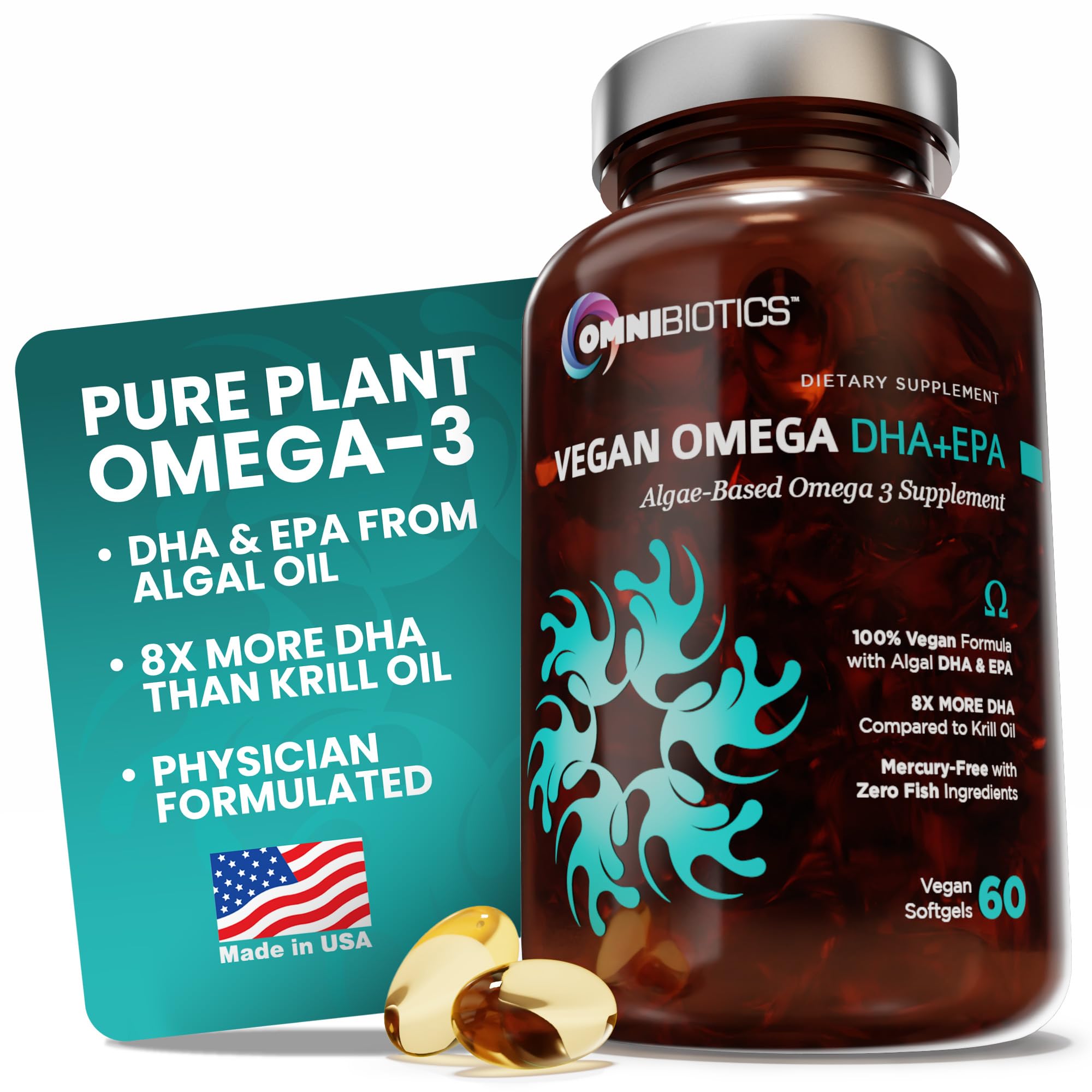
OmniBiotics Vegan Omega 3 DHA EPA stands apart with 700 mg of DHA per serving — one of the highest plant-based DHA concentrations on the market — plus 20 mg of EPA for additional anti-inflammatory support. This is a serious dose for anyone wanting to exceed the standard prenatal DHA recommendations, particularly those in preconception who want to build up DHA stores before conception.
The algae oil is free from mercury and heavy metals by design, and the product is manufactured in an NSF-certified, cGMP facility in the USA. The softgels are oval-shaped and small enough to swallow without water for some users, according to reviews. The inclusion of EPA, even at a modest 20 mg, provides a dual benefit: DHA for the baby’s brain and nervous system, and EPA for the mother’s inflammatory balance and mood regulation during pregnancy.
The main practical consideration is that a small number of users report occasional mild “sea life” burps if the softgels are taken on an empty stomach — far less offensive than fish oil burps, but worth noting. Taking both capsules with a meal solves that issue completely for most.
Why it’s great
- 700 mg DHA per serving — best in class for vegan
- Includes EPA for maternal inflammation support
- Small oval softgels, easy to swallow
- NSF and cGMP certified facility
Good to know
- Occasional mild burps without food
- No third-party purity seal on bottle (manufacturer claims certification)
3. Mama Bird Pre+Postnatal DHA
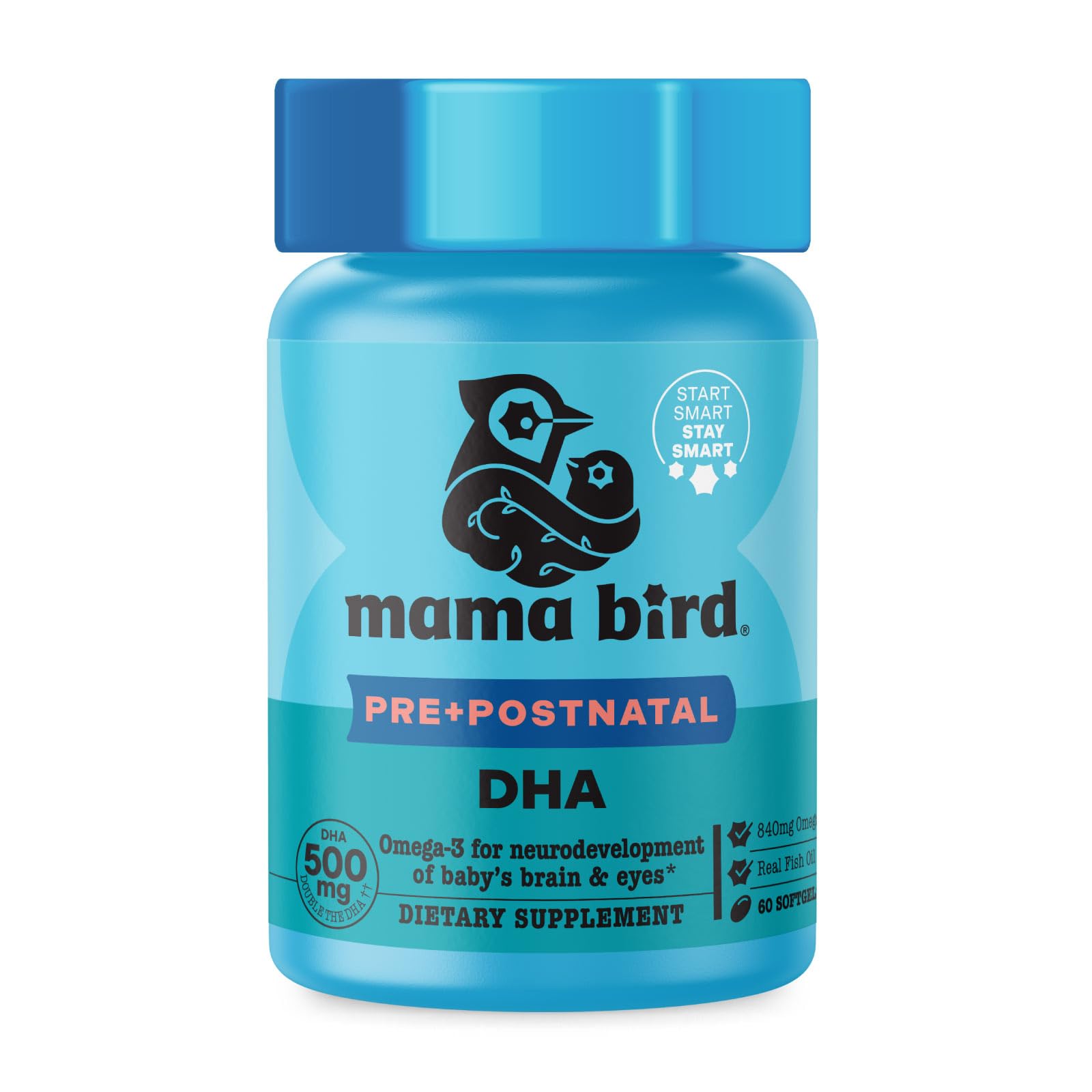
Mama Bird Pre+Postnatal DHA was formulated by a board-certified neurologist who is also a mother — Dr. Mika Gupta — which gives this product a unique clinical perspective on fetal brain development. Each serving provides 500 mg of DHA plus EPA in the natural triglyceride form, delivering over twice the March of Dimes minimum recommendation in a lemon-infused softgel that effectively masks any fishy notes.
The fish oil is sustainably sourced and the softgels are intentionally small, measuring just under half an inch each. Customer reviews across multiple pregnancies consistently report zero nausea, zero stomach upset, and zero fishy burps — a standout achievement for a fish-based DHA. The 30-serving count per bottle aligns with a one-month supply, and the packaging uses recyclable materials with post-consumer content.
The one limitation for strict vegans is that this is fish-sourced oil, so it will not fit a plant-based diet. However, for those comfortable with fish oil, the triglyceride molecular form and neurological-formulation backing make this a premium choice for supporting the “first 1000 days” from conception through infancy.
Why it’s great
- Created by a board-certified neurologist
- Triglyceride form — not ethyl ester
- Lemon-infused eliminates fishy burps
- 500 mg DHA per serving
Good to know
- Fish-sourced — not vegan
- 30 servings per bottle; monthly purchase
4. Garden of Life Dr. Formulated Prenatal Vegan DHA

Garden of Life Dr. Formulated Prenatal Vegan DHA is a value-driven entry into algae-sourced omega-3, delivering 400 mg of DHA plus a notable 90 mg of DPA per serving. DPA is a lesser-known omega-3 that acts as a reservoir for DHA and EPA in the body, meaning the body can draw on DPA to maintain DHA levels when needed — a smart redundancy feature for prenatal support.
The softgels are made from single-sourced and fully traceable algae (Schizochytrium sp.), and the product is Non-GMO Verified, Vegan Certified, and produced under GMP standards. The pill size changed in early 2022 from a red, scentless capsule to a clear, smaller softgel with a mild fruity scent — customers report the new version is easier to swallow and still burp-free. Many users continue taking this postpartum for lactation support.
The trade-off is the 30-softgel count per bottle, which is standard for this price tier but still requires monthly reordering. The DHA content at 400 mg is slightly lower than some competitors, but the addition of DPA makes the total omega-3 package more complete than the DHA-only alternatives at this price level.
Why it’s great
- Includes 90 mg DPA for reserves
- Third-party Non-GMO and Vegan Certified
- Traceable single-source algae
- No fishy taste or burps
Good to know
- 400 mg DHA — below the 500 mg threshold
- 30 servings per bottle
5. Wiley’s Finest Wild Alaskan Fish Oil Prenatal DHA
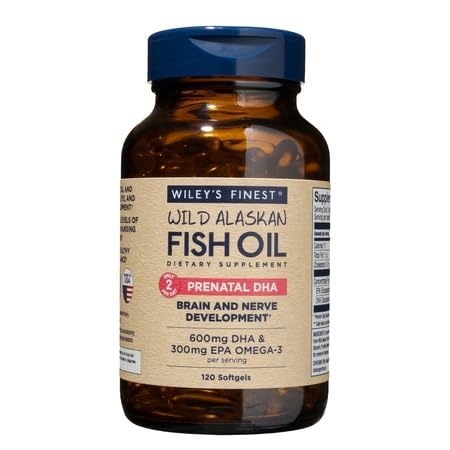
Wiley’s Finest Wild Alaskan Fish Oil Prenatal DHA is the highest total omega-3 option in this lineup, packing 600 mg of DHA and 300 mg of EPA for a combined 900 mg per two-softgel serving. The fish oil is sourced exclusively from wild-caught Alaska Pollock from an MSC-certified sustainable fishery, and every batch is molecularly distilled to remove mercury, PCBs, and dioxins.
The softgels use fish gelatin (not standard beef gelatin), making them suitable for those with certain dietary restrictions, and they come in a glass bottle — a small but meaningful touch that avoids BPA and light degradation. The unflavored formulation relies on the freshness of the oil itself rather than masking agents, and customer reviews overwhelmingly confirm zero fishy burps and zero aftertaste across multiple pregnancies.
The only adaptation needed is that the softgels are noticeably larger than the vegan options, so anyone with a strong gag reflex during pregnancy should test the size with one capsule first. The 60-softgel bottle provides 30 full servings, and the potency means you do not have to worry about coming up short on DHA — 600 mg comfortably exceeds all prenatal guidelines.
Why it’s great
- 600 mg DHA per serving — highest in this review
- 300 mg EPA for mood and inflammation support
- MSC certified sustainable Alaska Pollock
- Molecular distillation removes all contaminants
Good to know
- Softgels are larger than vegan capsules
- Fish-sourced — not suitable for vegans
FAQ
Can I take omega-3 before pregnancy while trying to conceive?
What is the difference between algae DHA and fish oil DHA for fertility?
Why do some prenatal DHA supplements cause fishy burps and others do not?
How much EPA do I need in a prenatal omega-3 supplement?
Final Thoughts: The Verdict
For most users, the best omega 3 for fertility winner is the Nordic Naturals Vegan Prenatal DHA because it delivers 500 mg of triglyceride-form DHA from sustainably farmed algae, with a Non-GMO certification, third-party purity testing, and zero reports of fishy burps or nausea. If you want the highest DHA dose in a vegan format, grab the OmniBiotics Vegan Omega 3 DHA EPA at 700 mg per serving. And for a neurologist-formulated fish oil with proven digestive tolerance, nothing beats the Mama Bird Pre+Postnatal DHA.