Making pesto demands a specific olive oil—one that balances grassy, peppery notes without overwhelming the basil. Too mild and the paste tastes flat; too robust and the garlic and Parm get buried. Freshness and a smooth, medium-intense profile matter more here than any other olive oil use.
I’m Mohammad Maruf — the founder and writer behind AirfryerBite. I’ve spent years analyzing the chemical and sensory specs of hundreds of culinary oils, particularly how polyphenol levels and cold-press methods affect raw applications like pesto, where no cooking masks the oil’s character.
A true olive oil for pesto should deliver a grassy, herb-forward flavor that lifts the basil and pine nuts, not masks them. The wrong pick can ruin the emulsification and leave a greasy aftertaste.
How To Choose The Best Olive Oil For Pesto
Pesto is a raw sauce. Unlike sautéing or roasting, the oil is never heated, so its untreated flavor, freshness, and chemical stability determine the final taste. Picking the wrong bottle can make your basil paste taste greasy, bitter, or flat.
Flavor Intensity & Grassy Profile
A medium-intensity oil with clear grassy and herbaceous notes is ideal. Oils with “robust” or “intense” labels can overwhelm the basil and pine nuts. Oils labeled “mild” or “light” lack the structure to bind the sauce. Look for sensory descriptors like “freshly cut grass,” “tomato leaf,” or “green almond” on the bottle.
Freshness & Harvest Date
Olive oil degrades with time. A harvest date printed on the bottle—not just a “best by” date—indicates freshness. For pesto, use oil harvested within the last 12 to 18 months. Stale oil produces a flat, musty paste that fails to emulsify with the cheese and nuts.
Acidity Level & Extraction Method
“Extra Virgin” means the oil has less than 0.8% free acidity, but premium bottles often hover between 0.2% and 0.4%. Lower acidity indicates higher quality and a cleaner taste. “Cold-pressed” or “cold-extracted” ensures no heat was used during processing, preserving volatile compounds that give pesto its aromatic lift.
Single-Origin vs. Blended
Single-origin oils from a recognized region—Sicily, La Mancha, California—offer consistent flavor profiles year to year. Large commercial blends may mix oils from multiple countries to cut cost, resulting in an unpredictable taste that can clash with fresh basil. PDO or COOC certification adds traceability.
Quick Comparison
On smaller screens, swipe sideways to see the full table.
| Model | Category | Best For | Key Spec | Amazon |
|---|---|---|---|---|
| Corto TRULY | Premium | Chef-level pesto base | Cold-extracted, COOC certified | Amazon |
| BONO Organic Sicilian | Premium | Bright, delicate pesto | Acidity 0.2–0.4%, PDO certified | Amazon |
| Garcia de la Cruz Organic | Mid-Range | Everyday pesto with peppery finish | Polyphenol rich, cold-pressed | Amazon |
| Mantova Garlic EVOO | Mid-Range | Garlic-forward twist on pesto | Cold-pressed garlic infusion | Amazon |
| Fody Shallot Infused EVOO | Specialty | Low FODMAP pesto | Low FODMAP certified shallot infusion | Amazon |
In‑Depth Reviews
1. Corto TRULY Extra Virgin Olive Oil
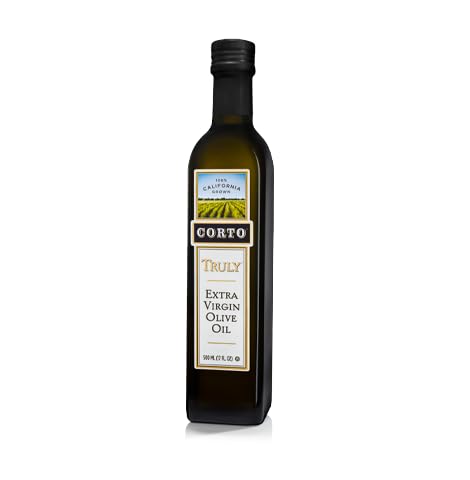
The Corto TRULY delivers the cleanest green flavor profile we tested for pesto. Produced from California olives cold-extracted at peak ripeness, it registers a light, floral aroma with a subtle peppery finish that brightens basil rather than burying it. The California Olive Oil Council certification ensures the oil passes both chemical and sensory panels, so you are not getting a diluted blend.
At 17 fluid ounces, the volume is generous for regular pesto batches. Chefs praise its consistency because Corto controls the orchard-to-bottle process, eliminating the variability common in imported bulk oils. The flavor survives refrigeration without turning waxy, a critical trait if you freeze pesto cubes.
The only real consideration is the premium price point, which sits above typical grocery-store Italian imports. But for anyone who values a pesto that tastes bright, emulsifies smoothly, and doesn’t separate after a day in the fridge, the Corto TRULY earns the top spot.
Why it’s great
- COOC certified for purity and flavor
- Light, floral profile ideal for raw sauces
- Cold-extracted on family-run orchard
Good to know
- Premium pricing compared to supermarket blends
- Mild pepper finish may not suit robust recipes
2. BONO Organic Sicilian Extra Virgin Olive Oil
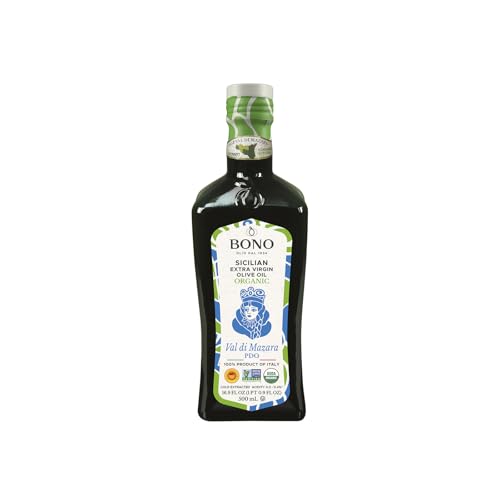
The BONO Sicilian carries two quality markers rarely seen together at this tier: USDA Organic certification and Val di Mazara PDO status. That PDO designation means every olive was grown, harvested, and pressed within a specific Sicilian region, giving the oil a consistent delicate flavor with a subtle spiciness on the finish. The acidity reading of 0.2 to 0.4 percent is exceptionally low, indicating careful harvesting and minimal handling.
For pesto, this oil behaves like a neutral canvas that still contributes green fruit notes. It emulsifies easily with Parmigiano-Reggiano and pine nuts, creating a creamy paste that coats pasta without oil separation. Customer reviews consistently mention its “delicate yet spunky” character, which matches exactly what a basil-forward pesto needs.
The packaging is a dark glass bottle that protects against light degradation, a detail that matters when you store oil for several weeks. One trade-off: the bottle is standard 16.9 ounces, which may not be the best value if you use oil heavily in other cooking beyond pesto.
Why it’s great
- PDO certification guarantees Sicilian origin
- Ultra-low acidity for a clean taste
- Delicate green fruit profile perfect for basil
Good to know
- Smaller bottle size for frequent pesto cooks
- Mild peppery kick may not suit all palates
3. Garcia de la Cruz Organic Extra Virgin Olive Oil
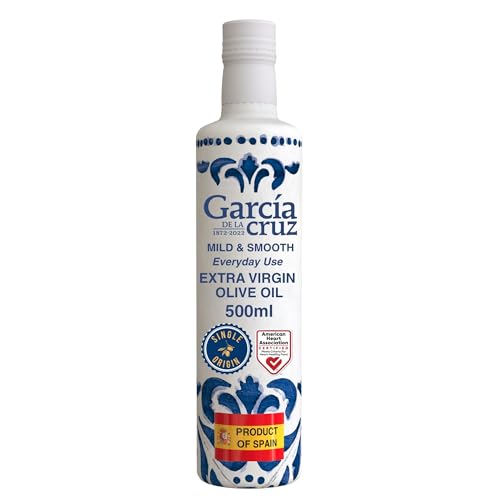
The Garcia de la Cruz delivers a medium-full flavor with distinct notes of tomato and freshly cut grass, making it one of the most pesto-friendly oils in the mid-range bracket. Harvested from single-origin olives in La Mancha, Spain, and cold-pressed on a fifth-generation family farm, this oil is rich in polyphenols — the antioxidants that give olive oil its peppery throat burn and help stability.
In pesto, the grassy character reinforces the basil without battling it. The pepper finish is present but balanced, adding depth rather than heat. Many users report that the oil tastes vibrant enough to drink straight, which is a strong sign of freshness. The replica 1872 bottle design includes an easy-pour spout and dark glass to block UV damage.
Some may find the medium-full intensity slightly stronger than a classic Ligurian oil, so if you prefer a very mild pesto base, consider diluting with a splash of neutral oil. The 16.9-ounce bottle is a fair serving for several pesto batches, and the award-winning track record—gold medals from LA and NY competitions—backs the quality.
Why it’s great
- Award-winning Spanish single-origin quality
- High polyphenol content for stability and flavor
- Grassy, tomato notes complement basil
Good to know
- Medium-full intensity may overpower delicate palates
- Not PDO certified like Sicilian competitors
4. Mantova Garlic Extra Virgin Olive Oil

The Mantova Garlic EVOO offers a clever shortcut for cooks who want to streamline the pesto process. Infused with real garlic extract in a cold-pressed extra virgin olive oil base, it delivers a smooth, mellow garlic flavor without the harsh bite of raw cloves. The oil’s body is slightly thicker than standard EVOO, which helps create a richer emulsion when blended with basil, pine nuts, and cheese.
Because the garlic is infused rather than added fresh, the flavor doesn’t degrade over time. A batch of pesto made with this oil will taste just as garlicky on day four as it did fresh. The 34-ounce bottle is the largest in this lineup, making it a practical option if you make pesto in bulk or use garlic oil for other recipes like roasted vegetables and bread dipping.
The main trade-off is flexibility. If you want to control the garlic level independently from the oil, the infusion limits your ability to adjust. Also, the garlic note is permanent — you cannot use this oil for a neutral pesto or a basil-only sauce. It is a specialized tool, but for garlic lovers, it is a time-saving one.
Why it’s great
- Large 34-ounce bottle for high-volume cooking
- Garlic flavor holds up even after days in the fridge
- Smooth emulsion works well with pine nuts and cheese
Good to know
- Fixed garlic level cannot be adjusted
- Not suitable for non-garlic pesto variations
5. Fody Foods Shallot Infused Extra Virgin Olive Oil

For those following a low FODMAP diet or managing IBS, the Fody Shallot Infused EVOO is a game-changer for pesto. Traditional pesto calls for garlic, which is high in fructans and can trigger digestive distress. This oil delivers the savory allium depth of shallots without the offending compounds, certified by Monash University for low FODMAP compliance.
The oil base itself is a quality cold-pressed Italian extra virgin olive oil, so you aren’t sacrificing the grassy, peppery notes essential to a good pesto. In practice, the shallot flavor is milder than garlic but adds a subtle sweetness that pairs well with basil and pine nuts. Customer feedback highlights that the flavor concentrates impressively — you only need a standard amount to get noticeable allium character.
The 8.45-ounce bottle is small compared to other options, which makes it more expensive per ounce. Frequent pesto makers may find themselves repurchasing often. But for anyone who loves pesto but cannot tolerate garlic or onion bulbs, this oil is the only reliable option that delivers both safety and authentic flavor.
Why it’s great
- Low FODMAP certified for IBS-friendly cooking
- Concentrated shallot flavor with no digestive triggers
- Quality Italian EVOO base maintains pesto texture
Good to know
- Small bottle size leads to frequent reordering
- Shallot flavor is milder than traditional garlic
FAQ
Can I use any extra virgin olive oil for pesto or does it need a specific flavor profile?
Does the harvest date really matter when buying oil specifically for pesto?
Why do some pesto recipes recommend using a blend of olive oil and neutral oil?
Final Thoughts: The Verdict
For most users, the olive oil for pesto winner is the Corto TRULY because it delivers the cleanest, most consistent flavor profile for raw sauces and holds up well in the fridge. If you want a bright, delicate base with PDO traceability, grab the BONO Organic Sicilian. And for a budget-friendly everyday option with a satisfying grassy kick, nothing beats the Garcia de la Cruz Organic.