Wooden spoons crack, split, and dry out when they lack proper moisture. A thin layer of the right conditioning oil keeps them smooth, prevents food from seeping into cracks, and extends their life by years. The wrong oil, however, turns rancid or leaves a sticky residue that ruins the spoon’s natural feel.
I’m Mohammad Maruf — the founder and writer behind AirfryerBite. I’ve analyzed the chemical composition, food-safety certifications, and real-world application methods for dozens of wood conditioners to separate the formulas that genuinely protect wood from those that merely sit on the surface.
This guide breaks down five proven options to help you select the right oil for wooden spoons based on penetration depth, drying time, and long-term moisture resistance rather than marketing claims.
How To Choose The Best Oil For Wooden Spoons
Not every bottle labeled “food safe” works equally well on wooden utensils. The oil must penetrate the grain, resist heat from hot liquids, and never turn sticky or rancid over months of regular use. Three factors separate effective conditioners from products that merely coat the surface.
Food Grade Mineral Oil vs. Drying Oils
Mineral oil is the safest choice for wooden spoons because it is colorless, odorless, and will never go rancid. Drying oils like tung or linseed oil can polymerize inside the wood and form a hard film that may crack as the wood expands with moisture. Stick to USP-grade mineral oil or blends where mineral oil is the primary ingredient.
Beeswax Content and Surface Seal
Pure mineral oil soaks deep but evaporates over weeks, requiring frequent reapplication. A conditioner that combines mineral oil with beeswax — often called “board butter” or “wood butter” — leaves a thin wax layer on the surface that slows moisture loss and reduces how often you need to treat the spoon. Look for blends where beeswax is the second ingredient, not a trace additive.
Container and Application Method
Liquid oils in squeeze bottles allow precise control on small utensils. Wax-based pastes in tins require rubbing the product into the grain with your fingers or a cloth. For spoons, a gel or butter consistency spreads evenly without dripping onto the handle joinery. Avoid spray-on formulas that cannot deliver enough oil to penetrate end-grain surfaces.
Quick Comparison
On smaller screens, swipe sideways to see the full table.
| Model | Category | Best For | Key Spec | Amazon |
|---|---|---|---|---|
| TotalBoat Wood Honey | Drying Oil Blend | Satin finish on visible spoons | Solvent-free, 8 fl oz | Amazon |
| BEARDED CHEF Wood Butter | Mineral Oil + Wax | Dry, cracked utensils | FDA compliant, 8 oz | Amazon |
| Epicurean Board Butter | Mineral Oil + Wax | Quick one-step conditioning | Sponge applicator, 4.5 oz | Amazon |
| Rowdy Rooster Cutting Board Gel | Gel Oil + Wax | Teak and bamboo utensils | Citrus scent, 8 fl oz | Amazon |
| Howard BBB012 Butcher Block Oil | Pure Mineral Oil | Frequent spoon maintenance | Vitamin E enriched, 3-pack | Amazon |
In‑Depth Reviews
1. TotalBoat Wood Honey Food Safe Finish
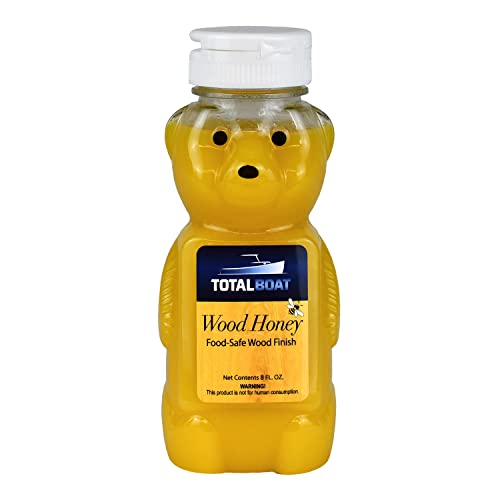
TotalBoat Wood Honey is a solvent-free conditioning oil that cures to a satin sheen with mild odor, making it ideal for wooden spoons that double as serving pieces. The oil penetrates deeply on first application — users report it soaks into end-grain within minutes — and builds a water-resistant barrier after two coats. Its viscosity is similar to cooking oil, which means it spreads easily over long spoon handles without pooling at the bowl.
The finish requires a 5-to-7-day full cure before the surface reaches its maximum water resistance, though light handling is possible after 48 hours. Several reviewers note that the bottle dispenses unevenly, so transferring the oil to a condiment-style squeeze bottle improves control. The formula works across hardwoods and bamboo, making it versatile for mixed-wood utensil drawers. Customers report that the wood grain appears warmer and more defined after each application, with no sticky residue even after multiple coats.
This is a premium option for spoon users who want a durable, low-gloss finish that repels stains from coffee, tea, and acidic ingredients. The extended cure time is its main trade-off; if you need a product that lets you use the spoon immediately after treatment, a beeswax blend may be more practical.
Why it’s great
- No volatile organic compounds or toxic metals
- Produces a warm satin sheen without a glossy look
- Works on soft and hard wood species including exotics
Good to know
- Full cure takes up to 7 days before water resistance peaks
- Original bottle design makes controlled pouring difficult
2. BEARDED CHEF Wood Butter
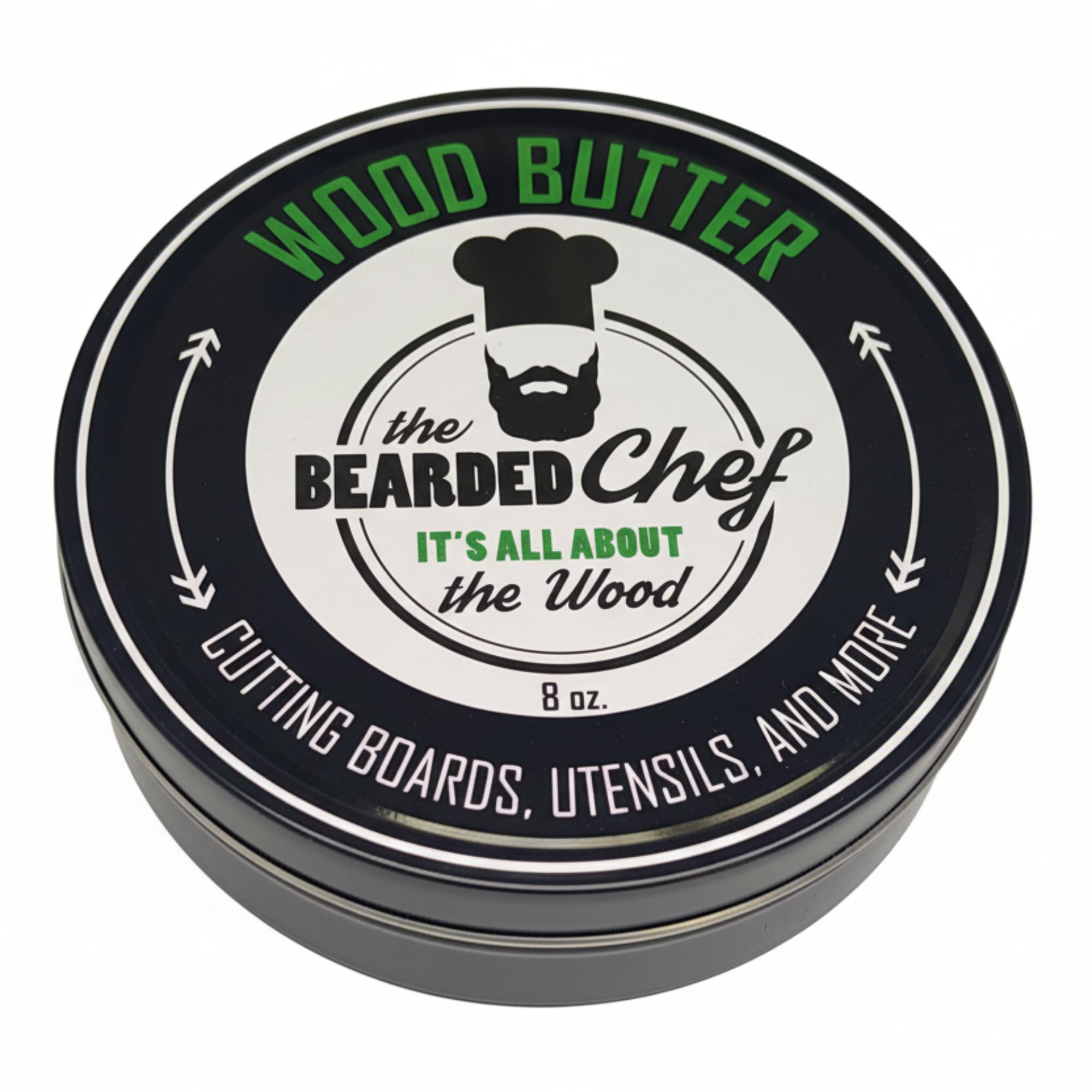
BEARDED CHEF Wood Butter combines food-grade mineral oil and beeswax into a thick, honey-like paste that provides longer-lasting protection than pure oil alone. The consistency is smooth enough to apply with a rag or bare hands, and users report that a single overnight soak followed by a buff brings dry, cracked spoons back to a hydrated state. The beeswax component holds the mineral oil deeper in the grain, reducing the need for weekly reapplication.
This formula is FDA compliant and carries a subtle rosemary scent that fades after the first wash. Several customers mention that the product is firm inside the container — scraping it out requires some effort, especially in cooler kitchens. Warming the jar in hot water for a few minutes softens the paste to a spreadable texture. The 8-ounce size treats roughly 15 to 20 standard spoons depending on how dry the wood is.
For users with a mix of cutting boards, spoons, and rolling pins, this single product covers all wooden tools. The veteran-owned brand adds a layer of trust, but the real value is the beeswax seal that keeps spoons hydrated for weeks rather than days. If your wooden spoons show visible cracks or a rough surface from dishwasher use, this is the most effective restorative option in this lineup.
Why it’s great
- Beeswax holds the oil in the wood fiber longer than liquid-only treatments
- No artificial colors, and the rosemary scent dissipates quickly
- FDA compliant and made in the USA
Good to know
- Paste is firm at room temperature and requires scraping from the container
- Rosemary fragrance may be noticeable for the first use
3. Epicurean Board Butter

Epicurean Board Butter simplifies the conditioning process with a built-in sponge applicator recessed into a retro-style tin. The butter-like consistency is a proprietary blend of food-grade mineral oil and beeswax, and the sponge distributes the product evenly across spoon surfaces without the need for a separate cloth. Users who dislike getting oil on their fingers will appreciate the hands-free application — simply dab and spread.
The 4.5-ounce tin is compact, fitting easily into a kitchen drawer, but the small size means you will use it up faster on large spoon collections. Several reviews note that the sponge can trap bacteria if not cleaned between uses, and the top layer of the sponge should be wiped off before storing the tin. The formula restores worn Epicurean boards to near-new condition, and customers confirm it works equally well on bamboo and vintage wooden handles.
The trade-off is longevity: some users report needing to reapply every two weeks on spoons used daily. The convenience of the sponge applicator is the main draw here. If you have a small set of spoons and want a no-mess solution that fits in a drawer, this tin delivers. For heavier maintenance needs, a larger jar of paste or a liquid oil may offer better value per application.
Why it’s great
- Built-in sponge means no messy rags or finger application
- Retro tin is small, neat, and easy to store
- No odor or taste imparted on kitchen tools
Good to know
- Small tin size may require frequent repurchase for heavy users
- Sponge surface must be cleaned to avoid bacterial buildup
4. Rowdy Rooster Cutting Board Gel
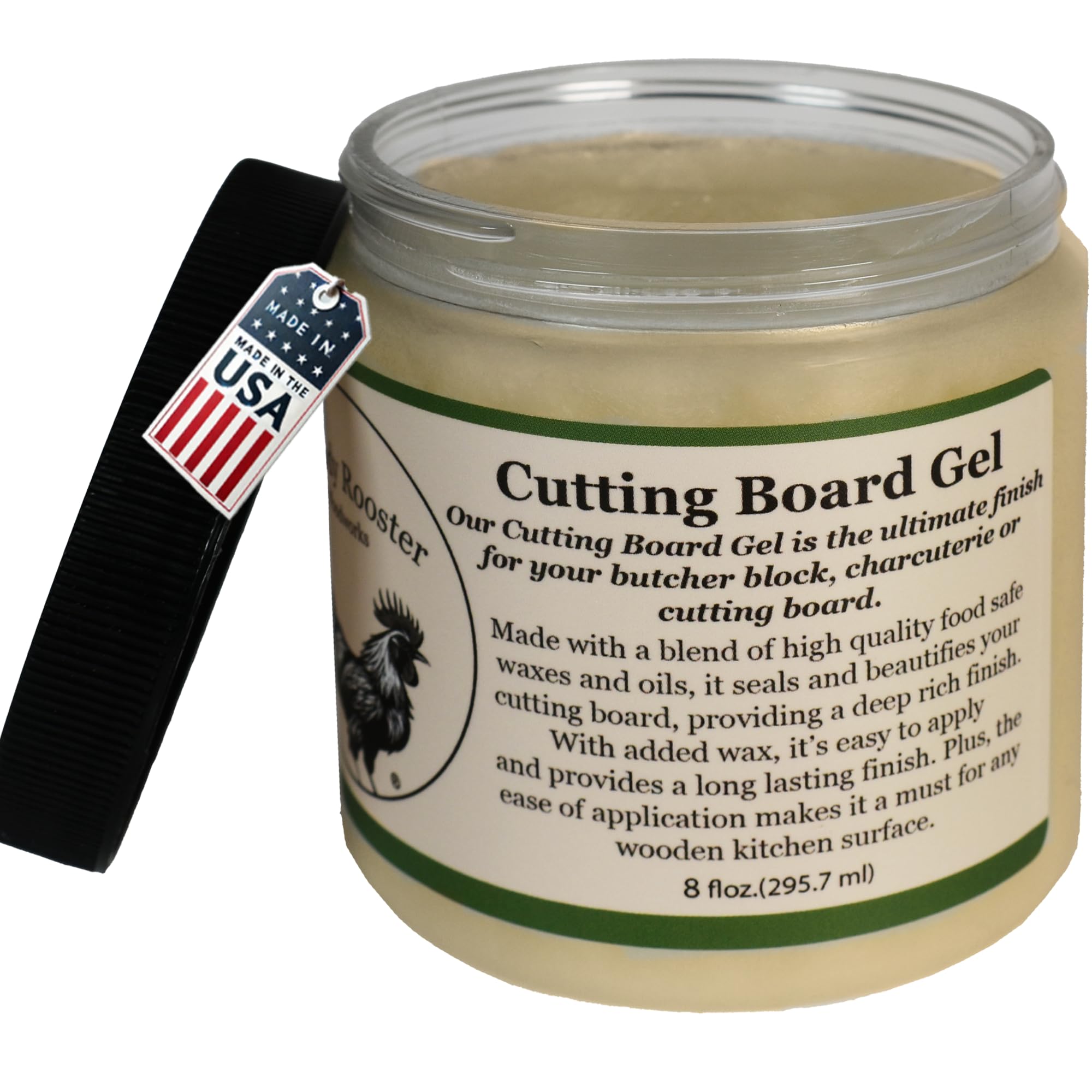
Rowdy Rooster Cutting Board Gel uses a thick gel consistency that combines food-grade mineral oil and beeswax into a single-step application. The gel does not drip or run, making it easy to control on vertical spoon handles and curved bowls. Users describe the texture as soft butter with a pleasant citrus aroma, and the gel soaks into the wood within minutes, leaving a protective seal that lasts through multiple washes.
The product is especially effective on teak and bamboo — two materials that can resist standard mineral oil penetration. Reviewers who used it on teak cutting boards note that the gel restored the original luster after a single overnight soak. The 8-ounce container is adequate for treating a full set of spoons plus a medium cutting board, though users with large surfaces may need a second bottle. The manufacturer recommends a monthly application cycle for regular-use items.
One point of friction: the gel requires generous amounts to cover larger surfaces, so cost per application is slightly higher than liquid oils. The citrus scent is pleasant but noticeable for the first few hours, so if you prefer an odorless treatment, this may not be your first choice. For spoon owners who want a controlled, no-drip application and a pleasant fragrance during use, this gel is a strong mid-range pick.
Why it’s great
- Gel stays in place after application without running off
- Works well on denser woods like teak and bamboo
- Citrus scent makes the treatment process more pleasant
Good to know
- Requires a generous amount for full coverage on large items
- Citrus aroma lingers for several hours after application
5. Howard Products BBB012 Butcher Block and Cutting Board Oil
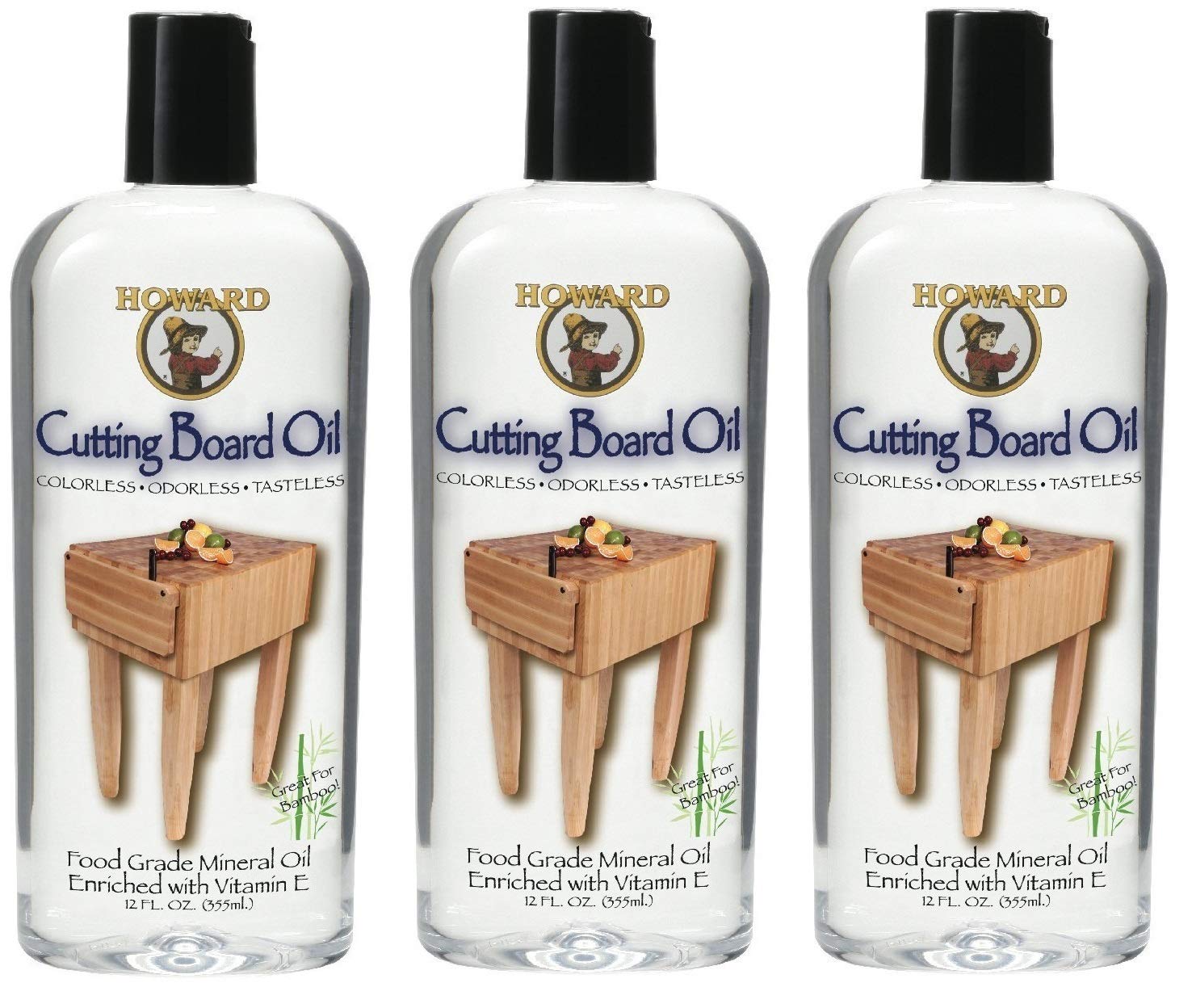
Howard Products BBB012 is a pure food-grade mineral oil enriched with Vitamin E, sold in a three-pack that delivers excellent value per ounce. Because mineral oil does not contain unsaturated fats, it will never go rancid inside the wood grain — a critical advantage over vegetable-based oils that spoil over time and produce an unpleasant smell. Each 12-ounce bottle lasts through multiple treatments on a full set of spoons, with users reporting that a single bottle covers a dozen utensils plus a standard cutting board for several months.
The oil is thin enough to soak into end-grain within seconds, and a silicone brush or lint-free cloth spreads it evenly across spoon surfaces. Customers who have used this oil for over two years note that their daily-use spoons remain free of warping, cracking, and dark stains with weekly applications. The Vitamin E additive acts as a mild stabilizer and gives the oil a slightly thicker feel than generic drugstore mineral oil, though the difference is subtle.
The main limitation is the lack of wax: pure oil evaporates from the surface faster than a beeswax blend, so you will need to reapply more frequently — roughly once a week if you wash your spoons by hand daily. The three-pack format is ideal for users who maintain multiple wooden tools and want a single, reliable oil that never spoils. If you prefer a one-step product that seals and hydrates simultaneously, a beeswax blend will reduce your maintenance schedule.
Why it’s great
- Pure mineral oil cannot go rancid, unlike vegetable-based alternatives
- Three-pack format provides long-term supply at a low per-bottle cost
- Enriched with Vitamin E for added wood conditioning
Good to know
- No wax content means the oil evaporates faster than blended conditioners
- Requires weekly reapplication on spoons used and washed daily
FAQ
Can I use olive oil or coconut oil on wooden spoons?
How often should I oil my wooden spoons?
What is the difference between a wood conditioner and a wood butter?
Should I sand my spoons before applying oil?
Final Thoughts: The Verdict
For most users, the oil for wooden spoons winner is the BEARDED CHEF Wood Butter because its mineral oil and beeswax combo provides deep hydration and a durable surface seal that lasts weeks between applications. If you want a pure oil that never goes rancid and prefer to control your own application frequency, grab the Howard Products BBB012 three-pack. And for a mess-free one-step treatment with a built-in applicator, nothing beats the Epicurean Board Butter.