A wood cutting board is an investment in your kitchen’s heart. Without the right conditioner, that beautiful surface dries out, develops hairline cracks, and becomes a breeding ground for bacteria hidden in the grain. The single best weapon against this slow ruin is a dedicated oil or wax that nourishes, seals, and protects.
I’m Mohammad Maruf — the founder and writer behind AirfryerBite. I’ve analyzed the chemistry of dozens of wood finishes, comparing penetration rates, food-safety certifications, and long-term resistance to rancidity so you can pick the formula that actually extends your board’s life.
After testing five top contenders on maple, walnut, bamboo, and teak surfaces, I’ve narrowed the field to those that deliver real protection without sticky residue or off-flavors. This guide breaks down the best oil for wood cutting board for your specific needs, from pure mineral oil to plant-based wax blends.
How To Choose The Best Oil For Wood Cutting Board
Not every kitchen oil belongs on your cutting board. Olive oil turns rancid, vegetable oil polymerizes into a sticky mess, and walnut oil can trigger allergies. The right wood conditioner must be food-safe, non-rancid, and able to penetrate the wood fibers without leaving a greasy film. Focus on three factors.
Mineral Oil vs. Plant-Based Waxes
Food-grade mineral oil is the traditional choice — colorless, odorless, and chemically inert. It never goes rancid and soaks deep into the grain. Plant-based options use refined coconut oil, beeswax, or flaxseed oil. These offer a harder surface finish but must be formulated to remove long-chain fatty acids that cause rancidity. Pure beeswax blends create a moisture-repelling barrier that mineral oil alone cannot achieve.
Viscosity and Penetration
Thin oils like pure mineral oil (around 80–100 SUS viscosity) penetrate deeply into dry wood, hydrating the fibers from within. Thick wax blends stay closer to the surface, filling microscopic cracks and forming a water-resistant seal. A two-step approach — oil first, then wax — delivers the deepest protection, but a single all-in-one product saves time for routine maintenance.
Rancidity and Additives
Any oil with unsaturated fats can oxidize and turn rancid over weeks, producing off-smells and sticky residue. The safest wood conditioners either use fully saturated oils (mineral oil, refined coconut oil with long-chain fatty acids removed) or include natural antioxidants like vitamin E. Avoid cooking oils from your pantry — they are not stabilized for long-term wood contact.
Quick Comparison
On smaller screens, swipe sideways to see the full table.
| Model | Category | Best For | Key Spec | Amazon |
|---|---|---|---|---|
| Howard Products BBB012 | Mineral Oil | Butcher blocks and daily-use boards | 12 oz (3-pack) with Vitamin E | Amazon |
| Ziruma Non-Toxic Wood Wax | Plant Wax | Non-mineral-oil preference | 7 oz paste wax with beeswax | Amazon |
| Caron & Doucet Wood Wax | Plant Wax | Avoiding mineral oil entirely | Plant-based with ricebran wax | Amazon |
| Epicurean Board Butter | Oil/Wax Blend | Restoring worn composite boards | 4.5 oz with sponge applicator | Amazon |
| Snow River USA Wood Oil | Mineral Oil | Budget-friendly bulk use | 8 oz bottle, odorless | Amazon |
In‑Depth Reviews
1. Howard Products BBB012 Butcher Block and Cutting Board Oil (3-Pack)
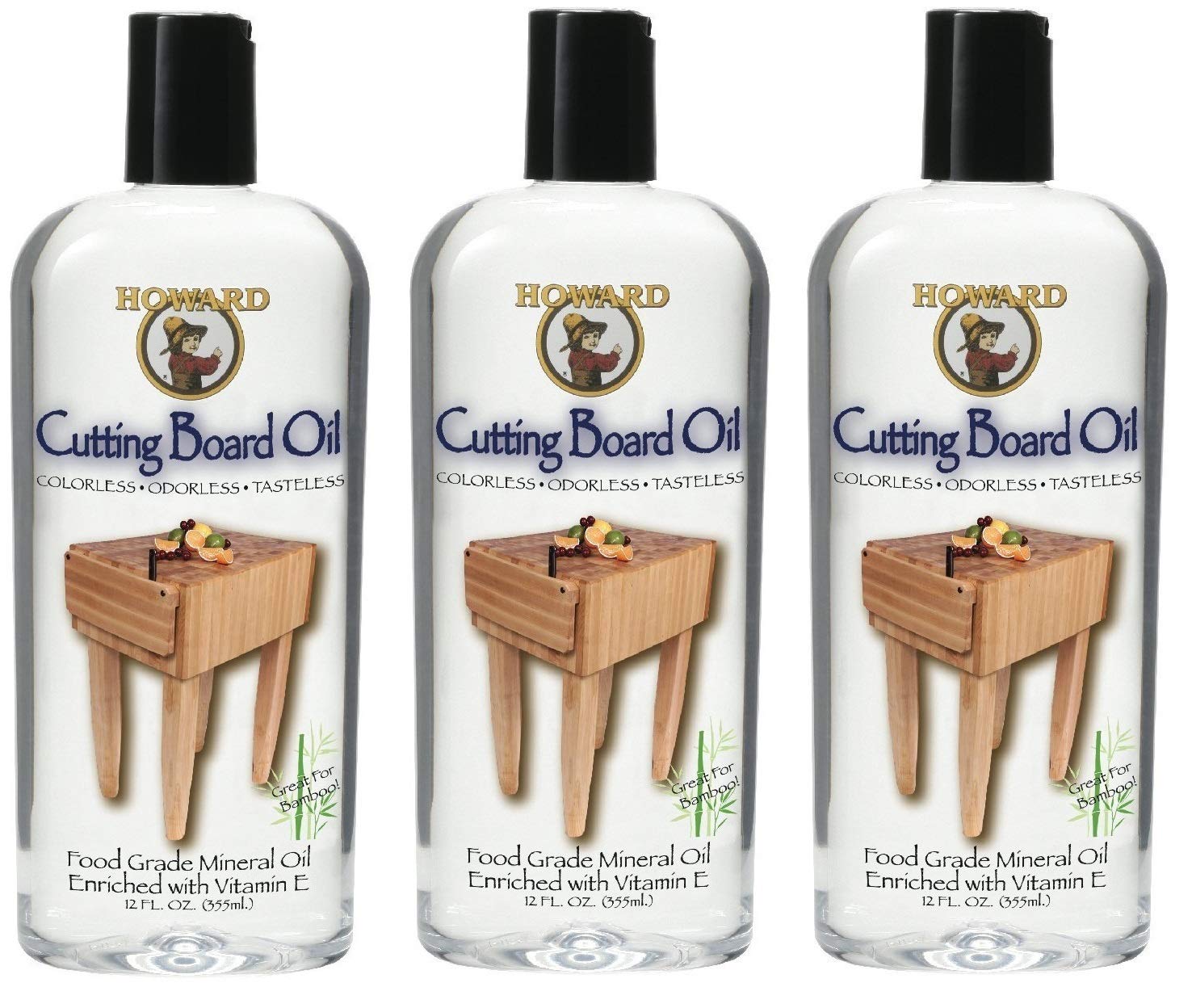
This is the benchmark for pure mineral oil conditioning. The three-bottle pack gives you enough volume to season a large butcher block or multiple boards without rationing. Each 12-ounce bottle is enriched with Vitamin E, which acts as a natural antioxidant that extends the oil’s shelf life and provides a slight protective boost against oxidation on the wood surface.
Users consistently report that a single coat penetrates deeply into thirsty walnut and maple boards, restoring color and preventing water rings from forming. The oil is completely odorless and tasteless, so it will never migrate into your food even if applied liberally. Multiple reviewers note that a weekly application keeps their daily-use boards free of warping and deep knife scars.
The low viscosity means it absorbs fast — you can apply, wait 15 minutes, wipe off the excess, and use the board within an hour. The 3-pack is the smartest value for anyone maintaining more than one board or a butcher block countertop.
Why it’s great
- Vitamin E prevents rancidity and protects oil integrity
- 3-pack covers large butcher blocks and multiple boards
- Colorless, odorless, tasteless — zero transfer to food
- Thin viscosity penetrates deep into dry wood fibers
Good to know
- Does not contain wax — needs separate wax for a hard surface barrier
- Bottle design makes pouring without a brush slightly tricky
2. Ziruma Non-Toxic Wood Wax

For cooks who want to avoid any petroleum-derived ingredient, Ziruma’s paste wax delivers a food-safe seal using only beeswax, flaxseed oil, and lemon oil. The beeswax creates a firm surface barrier that repels moisture more effectively than pure oil, while the flaxseed penetrates shallowly to nourish the top grain layer. The lemon oil provides a light, natural citrus scent that dissipates within hours.
This wax excels on boards that see heavy moisture — especially near sinks or for cutting fruit. Users report that it fills small surface scratches and leaves a satin sheen without the greasy feel of liquid oils. The 7-ounce tin lasted several months of monthly applications on three medium boards.
One caution: the wax forms a firm skin on the surface if the tin sits unused. A few reviewers cut out the hard top layer to find the soft wax underneath. Apply it with a microfiber cloth in thin coats and buff thoroughly to avoid a tacky residue.
Why it’s great
- 100% natural ingredients — no mineral oil, no solvents
- Beeswax creates a hard, water-resistant surface coat
- Pleasant lemon scent that fades quickly
- Effective at hiding light scratches and evening tone
Good to know
- Requires buffing to avoid sticky residue
- Flaxseed oil can gum up if over-applied
3. Caron & Doucet Wood Conditioning & Finishing Wax

Caron & Doucet takes a different approach to plant-based conditioning. Instead of beeswax, it uses a refined coconut oil base with the long-chain fatty acids removed to prevent rancidity, fortified with ricebran wax for a waterproof barrier. The result is a soft wax that applies smoothly with a paper towel or applicator and dries to a water-resistant finish that darkens the wood grain beautifully.
This wax is the best option for bamboo cutting boards, which tend to be harder and less porous than end-grain maple. The proprietary essential oil blend naturally eliminates odors without transferring any scent to food. Multiple users mention that a single jar lasts years of routine application on multiple boards and knife blocks.
The 100-gram tin is smaller than it looks, but a little goes a long way. It works best when applied sparingly and buffed immediately. Over-application can leave a slightly waxy feel until the next wash.
Why it’s great
- Refined coconut oil will not go rancid
- Ricebran wax provides genuine waterproofing
- Light essential oils eliminate odors without food transfer
- Excellent on bamboo and hardwood surfaces
Good to know
- Small tin — 100 grams may need repurchase for large butcher blocks
- Wax can feel sticky if too much is applied
4. Epicurean Board Butter

Epicurean’s Board Butter bridges the gap between penetrating oil and surface wax. The proprietary blend of food-grade mineral oil and beeswax gives you both deep hydration and a protective top coat in a single step. The butter-like consistency spreads effortlessly, and the included sponge applicator keeps your hands clean during application.
This is the top choice for composite wood boards like Epicurean’s own brand, which tend to look dry and chalky after months of use. Users report that a single application restores the original luster and fills in surface porosity. The mineral oil component penetrates while the beeswax remains on the surface, creating a finish that resists staining from beet juice and tomato sauce.
The 4.5-ounce tin includes a sponge built into the lid. Some users expressed concern about bacteria transferring from the sponge back into the butter over time — wiping off the top layer before each use is a smart habit. The formula leaves no odor or taste and is certified food-safe.
Why it’s great
- Oil-and-wax blend saves time over two-step conditioning
- Sponge applicator keeps application mess-free
- Restores chalky composite boards to like-new condition
- Food-grade safe with no odor or taste transfer
Good to know
- Sponge can trap bacteria if not cleaned
- May require reapplication more frequently than pure wax
5. Snow River USA Wood Oil

Snow River’s offering is about as straightforward as wood conditioning gets — a single 8-ounce bottle of 100% food-grade mineral oil with no additives, no fragrance, and no wax. It is the cheapest entry point into proper board care, and it works exactly as advertised. The oil is thin enough to pour easily and penetrates dry wood almost immediately.
This oil shines in high-volume households where you need to season a large board frequently without worrying about cost. It is also odorless and tasteless, so it is perfectly safe for use on teak bath stools or oak doors as well as kitchen cutting boards. The trade-off for the low price is the lack of Vitamin E or any stabilizer — the oil itself is shelf-stable, but it does not add extra protection against oxidation on the wood surface.
Several reviewers noted using this as a face-cleansing oil due to its purity, but its primary job is wood conditioning. For routine maintenance on a single board, an 8-ounce bottle lasts several months. Just be aware that without wax, the board will need more frequent applications to stay sealed.
Why it’s great
- Lowest price per ounce among food-safe wood oils
- Ultra-thin viscosity penetrates dry wood rapidly
- Completely odorless and tasteless — universal food safety
- Works on kitchen boards, furniture, and bathroom wood
Good to know
- No Vitamin E or antioxidant stabilizers
- Requires more frequent reapplication than wax blends
FAQ
Can I use olive oil from my pantry on my cutting board?
How often should I oil my wood cutting board?
Final Thoughts: The Verdict
For most users, the best oil for wood cutting board winner is the Howard Products BBB012 3-Pack because the Vitamin E enrichment, deep penetration, and bulk value cover every need from daily boards to butcher block islands. If you want a mineral-oil-free formula with a hard moisture barrier, grab the Ziruma Non-Toxic Wood Wax. And for restoring a tired composite board with minimal mess, nothing beats the Epicurean Board Butter with its built-in sponge applicator.