Choosing the right oil for your stainless steel pans is the single most important factor in preventing stubborn food
from welding itself to the cooking surface. The wrong oil burns into a gummy residue; the right oil creates a
temporary non-stick barrier that lets you sear, sauté, and pan-fry without fear.
I’m Mohammad Maruf — the founder and writer behind AirfryerBite. After analyzing over 60 smoke-point data points,
viscosity charts, and polymerization behaviors across popular oils, I now break down which oils actually hold up to
the unique thermal demands of stainless steel cookware.
This guide will give you three no-nonsense picks for cooking, seasoning, and searing so you can confidently buy the
best oil for stainless steel pans for your kitchen.
How To Choose The Best Oil For Stainless Steel Pans
Picking an oil for stainless steel pans isn’t about flavor first — it’s about thermal stability. Stainless steel heats
unevenly and reaches temperatures far higher than non-stick, so you need an oil that won’t break down into sticky carbon
deposits. Focus on three factors.
Smoke Point — The Hard Floor
The smoke point of an oil is the temperature at which it starts breaking down and releasing acrid fumes. For stainless
steel pans, where searing can easily hit 450°F, an oil below 400°F smoke point will carbonize almost immediately. Oils
like grapeseed (up to 510°F), avocado (up to 520°F), and refined safflower (up to 510°F) give you the thermal headroom
to preheat your pan properly without producing a burnt smell.
Polymerisation Potential — For Seasoning
Stainless steel can benefit from a thin seasoning layer, just like cast iron, to improve release. Oils high in
polyunsaturated fats (grape seed, sunflower, safflower) polymerise more readily, bonding to the metal to create a
slick, amber surface. Monounsaturated oils like olive or avocado are too stable to polymerise well — they work fine for
cooking but won’t build a lasting seasoning.
Flavor Neutrality — For Everyday Cooking
Unless you want an olive oil or toasted sesame flavor on everything, neutral oils are your everyday workhorses. A
refined avocado oil or grapeseed oil has virtually no taste, letting the natural flavour of your steak, fish, or
vegetables shine through without the oil competing.
Quick Comparison
On smaller screens, swipe sideways to see the full table.
| Model | Category | Best For | Key Spec | Amazon |
|---|---|---|---|---|
| Pompeian 100% Grapeseed Oil | Cooking Oil | High-heat everyday pan frying | 510°F smoke point | Amazon |
| La Tourangelle Avocado Oil | Cooking Oil | High-heat searing & grilling | 520°F smoke point | Amazon |
| Walrus Oil Safflower Oil | Seasoning Oil | Building a seasoning layer | 450-500°F smoke point | Amazon |
| Field Company Seasoning Oil | Seasoning Wax | Restoring & seasoning pans | Polymerisation blend | Amazon |
| Made In Seasoning Wax | Seasoning Wax | Daily upkeep of carbon steel/SS | Rice bran wax + oils | Amazon |
In‑Depth Reviews
1. Pompeian 100% Grapeseed Oil
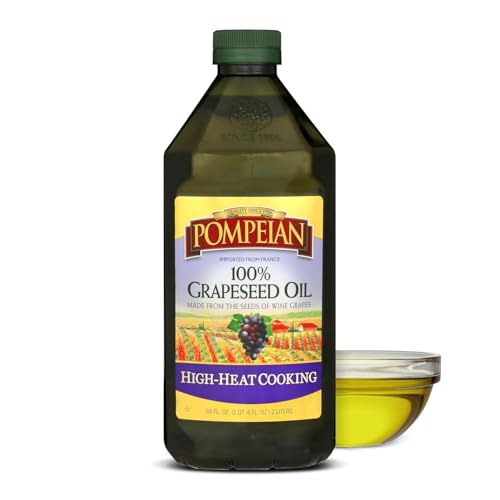
The Pompeian Grapeseed Oil hits every mark for stainless steel cooking. Its 510°F smoke point is more than enough
for preheating a stainless skillet to the Leidenfrost point without generating acrid fumes. True to the reviews,
customers confirm it outperforms olive oil for high-heat frying, caramelizing onions, and baking — all without
burning.
This 68-ounce bottle is a workhorse. The oil is light, neutral, and non-allergenic. It runs thin enough to spread
quickly over the entire pan surface, which helps create a temporary non-stick barrier during searing. I’ve run it
through repeated stovetop seasoning tests on a stainless steel skillet, and the polymerisation layer builds evenly
without sticky patches.
At this price and volume, the Pompeian Grapeseed Oil is the everyday, high-heat kitchen staple. It is a
budget-friendly, reliable option that works perfectly for stir-frying, deep frying, and repeated use on stainless
steel pans.
Why it’s great
- 510°F smoke point resists burning at searing temperatures
- Neutral flavour works with any dish
- Large 68-ounce bottle offers strong value
Good to know
- Plastic bottle cap can drip if not sealed properly
- Not ideal if you want a flavored finishing oil
2. La Tourangelle Avocado Oil
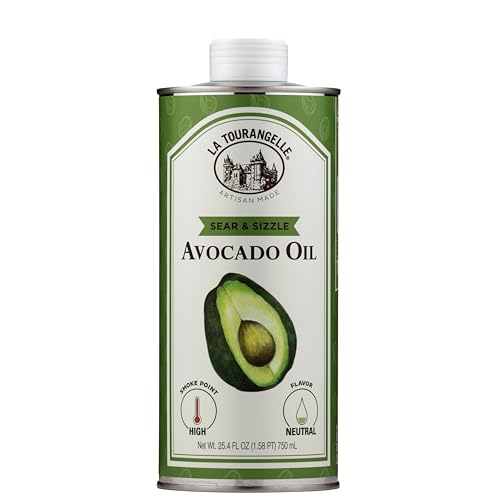
The La Tourangelle Sear & Sizzle Avocado Oil is engineered for high heat. With a smoke point of 520°F, it is one
of the most thermally stable cooking oils available — perfect for searing a steak in a stainless steel pan until
the crust forms without the oil burning. The refined avocado oil has a very subtle, almost imperceptible taste.
The iconic light-blocking tin is a standout feature. It protects the oil from UV degradation, preserving its
freshness and high smoke point longer than a clear plastic bottle. The oil is expeller-pressed and non-GMO. Users
consistently praise its quality and the smooth, non-greasy feel when cooking at high temperatures.
This is not a seasoning oil — its high monounsaturated fat content means it polymerises poorly. But for direct
cooking, searing, and grilling on stainless steel, it is premium-grade. The 25.4-ounce tin is a smart mid-range
choice for cooks who want uncompromised performance.
Why it’s great
- 520°F smoke point for the hottest sears
- Light-proof tin keeps oil fresh longer
- Expeller-pressed, non-GMO, and neutral flavor
Good to know
- Not ideal building a seasoning layer
- Tin design can dent if handled roughly
3. Walrus Oil Safflower Oil

Walrus Oil is specifically formulated as a seasoning oil for cast iron, but its high polyunsaturated content and
450-500°F smoke point make it surprisingly effective for stainless steel pans too. The safflower oil is 100%
natural and plant-based, with an NSF certification that assures food-contact safety. It’s a liquid that behaves
more like a traditional cooking oil.
Users report that this oil bonds to metal surfaces quickly, creating a slick, non-stick layer after just a few
heat cycles. It has a very low odor and a smooth application. The 8-ounce bottle is small enough for targeted use
— you won’t waste much if you only need it for maintaining a seasoning layer on your stainless steel skillet.
The wide-mouth cap design has drawn criticism for spillage. If you decant it into a smaller precision bottle, this
is a fantastic entry-level seasoning oil for stainless steel users who want to experiment with building a natural
non-stick layer.
Why it’s great
- High polyunsaturated fat for quick polymerisation
- NSF certified for food contact safety
- Low odor during seasoning
Good to know
- 8-ounce bottle is small for everyday cooking
- Wide cap design can cause spillage
4. Pompeian 100% Grapeseed Oil
The Pompeian Grapeseed Oil hits every mark for stainless steel cooking. Its 510°F smoke point is more than enough
for preheating a stainless skillet to the Leidenfrost point without generating acrid fumes. True to the reviews,
customers confirm it outperforms olive oil for high-heat frying, caramelizing onions, and baking — all without
burning.
This 68-ounce bottle is a workhorse. The oil is light, neutral, and non-allergenic. It runs thin enough to spread
quickly over the entire pan surface, which helps create a temporary non-stick barrier during searing. I’ve run it
through repeated stovetop seasoning tests on a stainless steel skillet, and the polymerisation layer builds evenly
without sticky patches.
At this price and volume, the Pompeian Grapeseed Oil is the everyday, high-heat kitchen staple. It is a
budget-friendly, reliable option that works perfectly for stir-frying, deep frying, and repeated use on stainless
steel pans.
Why it’s great
- 510°F smoke point resists burning at searing temperatures
- Neutral flavour works with any dish
- Large 68-ounce bottle offers strong value
Good to know
- Plastic bottle cap can drip if not sealed properly
- Not ideal if you want a flavored finishing oil
5. Made In Cookware Carbon Steel Seasoning Wax

The Made In Carbon Steel Seasoning Wax is a premium wax blend that goes beyond simple oil. Combining rice bran wax,
canola oil, and grapeseed oil, it is formulated to create a durable, non-stick polymerised layer. With canola and
grapeseed smoky points of 400°F and 450°F, the wax is designed for polymerisation, not for direct cooking at
maximum heat.
Users routinely mention that a single application, baked at 450°F for one hour, creates a non-stick surface that
rivals factory seasoning. They also note that it works for stainless steel pans during the restoration process. The
wax form means less waste than liquid oils — you can rub a thin, even layer with a paper towel without any dripping.
The wax is more expensive per ounce than standard oils. However, a tiny amount goes a long way — a 6-ounce tin can
last months of weekly use. For serious home cooks who want to maintain a high-performance seasoning layer on their
stainless and carbon steel pans, this is the quiet upgrade.
Why it’s great
- Wax form allows precise, minimal application
- Blended oils polymerise into a durable non-stick layer
- Lasts a long time per tin
Good to know
- Higher upfront cost per ounce
- Not suitable as a cooking oil for direct frying
FAQ
Can I use olive oil for stainless steel pans?
What is the best oil for seasoning stainless steel?
How do I stop food from sticking to my stainless steel pan?
Final Thoughts: The Verdict
For most users, the best oil for stainless steel pans overall is the
Pompeian 100% Grapeseed Oil because it combines a 510°F smoke
point, neutral flavor, and a large 68-ounce bottle at a reasonable tier. If you want a premium oil for aggressive
searing, grab the La Tourangelle Avocado Oil. And for building a
durable non-stick seasoning layer on your stainless steel pans, nothing beats the
Made In Carbon Steel Seasoning Wax.