Choosing the wrong oil for your cast iron skillet leads to sticky surfaces, uneven seasoning, and pans that rust instead of release. The chemistry of polymerization demands a fat that bonds at high heat without leaving a tacky residue — and most pantry oils simply lack the smoke point or the fatty acid profile to do the job right.
I’m Mohammad Maruf — the founder and writer behind AirfryerBite. I’ve spent thousands of hours analyzing the smoke points, iodine values, and polymerization behavior of cooking oils specifically for cast iron seasoning, and I know exactly which formulations produce a durable, non-stick patina and which ones flake off after three uses.
This guide breaks down the top-rated candidates, explains how smoke point and fatty acid saturation affect your seasoning layer, and helps you identify the best oil for seasoning cast iron that suits your cooking habits and budget.
How To Choose The Best Oil For Seasoning Cast Iron
Not every high-heat oil creates a good seasoning. The molecular structure of the fat determines whether you get a hard, slick polymer or a gummy mess. Focus on three variables before buying.
Smoke Point Above 400°F
A seasoning oil must withstand 400–500°F without breaking down into acrid smoke. Oils with smoke points below 375°F (unrefined olive oil, butter, flaxseed) will burn off before polymerization occurs, leaving carbonized residue instead of a protective layer. Safflower oil (450–500°F), refined avocado oil (520°F), and refined coconut oil (400°F) are the reliable benchmarks.
Fatty Acid Profile: Saturated vs. Polyunsaturated
Oils high in polyunsaturated fats (flaxseed, grapeseed, walnut) polymerize quickly but produce brittle, flaking seasoning layers that chip under metal spatulas. Oils with a high percentage of saturated fats (coconut, palm) or monounsaturated fats (safflower, avocado) create a more flexible, durable bond that withstands heat cycling and scraping. Check the saturated fat gram count per serving — higher numbers generally mean tougher seasoning.
Additives and Purity
Many cooking oils contain anti-foaming agents, preservatives, or flavor additives that interfere with polymerization. Dedicated cast iron seasoning blends skip these extras and often include beeswax or other stabilizers that help the oil spread evenly and bond at lower oven temps. If you use a generic cooking oil, look for “100% pure,” “refined,” and “unflavored” on the label — no extra ingredients means no surprises in your seasoning layer.
Quick Comparison
On smaller screens, swipe sideways to see the full table.
| Model | Category | Best For | Key Spec | Amazon |
|---|---|---|---|---|
| Walrus Oil Safflower | Dedicated Seasoning | Building initial seasoning layers | Smoke point 450–500°F | Amazon |
| Heritage Products Avocado | Dedicated Conditioner | Maintaining patina on griddles | Non-rancid avocado blend | Amazon |
| Crisbee Cream Sunflower | Beeswax Stick | Post-wash touch-ups | Non-GMO sunflower + beeswax | Amazon |
| Spectrum Safflower | Generic Cooking Oil | Budget bulk seasoning | USDA organic, 32 oz bottle | Amazon |
| CLARK’S Coconut | Refined Coconut | Rust prevention after cleaning | 12 oz, never goes rancid | Amazon |
In‑Depth Reviews
1. Walrus Oil Safflower Seasoning Oil

Walrus Oil’s 8-ounce bottle is a purpose-built seasoning solution using refined safflower oil with a smoke point of 450–500°F — exactly the thermal window needed to trigger full polymerization without burning off. The NSF certification confirms it’s food-contact safe, and the 100% natural, vegan formula contains no silicones or petroleum-based additives that could compromise food safety.
Users report that a single oven cycle at 450°F produces a hard, amber-colored seasoning layer that resists flaking even after multiple high-heat sears. The low odor during application is a practical bonus for apartment kitchens. On the downside, the wide-mouth cap design makes controlled dispensing tricky — several reviews note spillage and waste when trying to apply a thin, even coat.
The 8-ounce bottle is small but sufficient for initial seasoning of 3–4 standard skillets plus several months of post-wash touch-ups. If you want a dedicated formula that skips guesswork and delivers consistent polymerization on the first try, this is the benchmark product.
Why it’s great
- Smoke point sits perfectly in the polymerization sweet spot (450–500°F)
- NSF certified and free of petroleum additives or silicones
- Produces hard, non-sticky seasoning after one oven cycle
Good to know
- Wide-mouth cap makes controlled dispensing difficult
- Small 8 oz bottle runs out quickly if you season multiple large pans
2. Heritage Products Cast Iron Seasoning Oil

Heritage Products uses a refined avocado oil base blended with other plant-based ingredients to create a low-smoke, high-temperature seasoning conditioner. Avocado oil’s smoke point of roughly 500°F makes it one of the most thermally stable cooking oils, and this formula is engineered to polymerize at lower temperatures than straight avocado oil alone — reducing smoke during oven seasoning.
The “non-rancid” claim holds up: because avocado oil is primarily monounsaturated fat, it resists oxidative rancidity far longer than polyunsaturated oils like flaxseed or grapeseed. Users who restored rusted Blackstone griddles after flooding report that a few thin coats of this oil rebuilt the seasoning layer to a slick, non-stick finish without any sticky residue or off-flavors.
At 8 fluid ounces the bottle is compact, but the formulation is concentrated enough that a dime-sized drop covers a 12-inch skillet. One recurring packaging concern is the cap seal — some units arrived with the bottle partially open and leaking during shipping, so inspect the seal on arrival.
Why it’s great
- Avocado oil base with one of the highest smoke points among cooking oils
- Specially formulated to polymerize with less smoke during oven cycles
- Non-rancid chemistry keeps seasoning stable over long storage periods
Good to know
- Cap sealing issue reported — bottle may arrive leaking
- Small 8 oz bottle size limits how many pans you can season at once
3. Crisbee Cream Cast Iron Seasoning

Crisbee Cream takes a different physical approach: a semi-solid stick of non-GMO sunflower oil blended with beeswax. The beeswax acts as a carrier that helps the oil spread in an ultra-thin, even layer across the pan surface without pooling, which is the single biggest variable in achieving a non-sticky seasoning. The 6-ounce container is large enough for dozens of applications.
The stick format eliminates the spill risk of liquid oils and makes post-wash maintenance simple — apply a thin coat to a warm pan, let it set, and wipe off the excess. Users report that the Crisbee formula fixed long-standing seasoning issues like sticky spots and flaking after a few oven cycles, restoring a glass-like patina on vintage Wagner and Griswold skillets.
Because the beeswax does not polymerize at typical oven temperatures (it melts and absorbs rather than bonding), this product works best for maintenance seasoning rather than building thick new layers from scratch. It’s an excellent choice for weekly touch-ups between deep-seasoning sessions.
Why it’s great
- Beeswax carrier ensures ultra-thin, even application without pooling
- Semi-solid stick format is mess-free and easy to control
- Restores glass-like patina on vintage cast iron with repeat use
Good to know
- Beeswax does not polymerize — best for maintenance, not initial build
- Soft texture can squirt out of the tube if squeezed hard in warm conditions
4. Spectrum Organic High Heat Safflower Oil
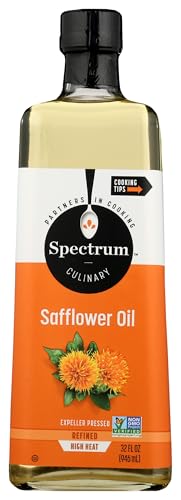
Spectrum’s 32-ounce bottle of organic, high-heat safflower oil is not a dedicated seasoning product — it’s a cooking oil with the right specs for cast iron work. Refined safflower oil offers a smoke point between 450°F and 500°F, the same polymerization-friendly window as the Walrus Oil product, but at a fraction of the per-ounce cost. The light, neutral taste means zero flavor transfer to your cookware.
Users who bought this for deep-frying and general cooking discovered its seasoning capability by accident. Multiple reviews note that it “doesn’t start smoking” during high-heat searing and leaves pans with an improved release surface over time. The glass bottle is recyclable but heavy — handle with care in the kitchen.
The trade-off is purity: while the oil is USDA organic and non-GMO, it is not specifically formulated for seasoning. You may need 2–3 oven cycles to build a seasoning layer comparable to a dedicated blend. If you already cook with high-heat safflower oil and want one bottle that does double duty, this is the most economical route.
Why it’s great
- Large 32 oz bottle provides months of seasoning and cooking oil for one price
- Smoke point matches dedicated seasoning oils (450–500°F)
- USDA organic, non-GMO, and neutral flavor profile
Good to know
- Not a dedicated seasoning blend — may need multiple oven cycles for thick layers
- Glass bottle is heavy and breakable in kitchen use
5. CLARK’S Premium Cast Iron Seasoning Oil
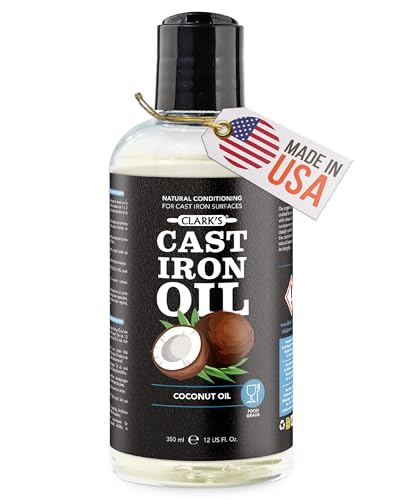
CLARK’S uses highly refined coconut oil as its sole ingredient — a saturated fat that provides excellent resistance to oxidative rancidity and a smoke point of roughly 400°F. While that is lower than safflower or avocado oil, it is sufficient for oven seasoning cycles at 350–400°F and for stovetop maintenance after cooking. The 12-ounce bottle is the largest dedicated seasoning product in this roundup.
The company specifically states that this oil “does not need to be refrigerated” and will never go rancid, which is true of refined coconut oil’s chemical stability. Users who inherited heirloom cast iron from the Oklahoma Land Rush era report that CLARK’S kept those pans in serviceable condition without flaking or sticky buildup. The application method is simple: apply a light coat after washing, then heat in a 350°F oven to drive off moisture.
The main limitation is the 400°F smoke point ceiling. If you frequently sear at temperatures above 425°F, the coconut oil may smoke and break down faster than a higher-smoke-point alternative. For standard stovetop cooking and regular maintenance seasoning, however, this is a reliable, no-surprises option.
Why it’s great
- Refined coconut oil is chemically stable — never goes rancid
- Largest dedicated seasoning bottle in the lineup (12 oz)
- Simple application process works for regular post-wash care
Good to know
- Smoke point (400°F) is lower than safflower or avocado alternatives
- May smoke and degrade faster during high-temperature searing sessions
FAQ
Can I use olive oil to season my cast iron skillet?
Why does my seasoning look patchy after using flaxseed oil?
How many coats of seasoning oil do I need on a new pan?
Final Thoughts: The Verdict
For most users, the best oil for seasoning cast iron winner is the Walrus Oil Safflower Seasoning Oil because its 450–500°F smoke point, NSF certification, and pure safflower formula deliver reliable polymerization without sticky residue on the first try. If you want a mess-free maintenance option that works on vintage pans, grab the Crisbee Cream Stick. And for bulk seasoning capacity at the lowest entry price, nothing beats the Spectrum Organic Safflower Oil.