Seasoning a carbon steel pan is about building a durable, non-stick polymer layer through controlled heat and the right lipid. Choosing the wrong oil means a gummy surface, weak adhesion, or a finish that flakes on the first meal. The fat’s smoke point and fatty acid profile dictate whether that seasoning bonds hard or slides off.
I’m Mohammad Maruf — the founder and writer behind AirfryerBite. I’ve spent years analyzing how different oils polymerize on bare metal, cross-referencing smoke points, iodine values, and real-world kitchen use to separate marketing claims from functional performance.
After reviewing dozens of options against measurable criteria, I’ve narrowed the field to the five oils that consistently deliver a dark, slick, and durable seasoning layer. This guide covers exactly what makes each one effective so you can choose the oil for seasoning carbon steel that matches your cookware’s needs and your cooking habits.
How To Choose The Best Oil For Seasoning Carbon Steel
Not every oil can survive the 400-500°F heat required to polymerize on raw carbon steel. Oils with low smoke points burn before bonding, leaving sticky carbon deposits that ruin your pan’s surface. Focus on three criteria: smoke point above 400°F, a fatty acid profile that cross-links tightly, and a formula without additives that interfere with seasoning adhesion.
Smoke Point and Polymerization Temperature
The oil must have a smoke point at or above 450°F to withstand the initial seasoning process without breaking down into acrid smoke. Oils like refined avocado, safflower, and coconut oil hit this threshold. Oils with smoke points under 375°F, such as extra-virgin olive oil or unrefined flaxseed oil, burn before they polymerize and create a fragile seasoning that flakes off.
Fatty Acid Profile and Seasoning Hardness
Saturated and monounsaturated fats form harder, more water-resistant polymers than polyunsaturated fats. Oils high in polyunsaturates (like flaxseed or walnut oil) create a brittle seasoning that may chip under metal spatula contact. Refined coconut oil, high-oleic sunflower oil, and avocado oil deliver a tougher, more flexible seasoning layer that bonds to carbon steel’s surface texture.
Additives and Purity
Dedicated seasoning oils are formulated without emulsifiers, anti-foaming agents, or flavor additives that can leave residues on bare metal. Mineral oil, vegetable shortening blends, and flavored oils should be avoided for initial seasoning. Pure, single-ingredient oils or proprietary blends designed for seasoning provide the cleanest polymerization with the least risk of sticky buildup.
Quick Comparison
On smaller screens, swipe sideways to see the full table.
| Model | Category | Best For | Key Spec | Amazon |
|---|---|---|---|---|
| Crisbee Cream | Premium | Initial seasoning & re-seasoning | Beeswax + sunflower oil blend | Amazon |
| Clark’s Cast Iron Oil | Premium | Rust prevention & daily maintenance | Refined coconut oil, 12 oz | Amazon |
| Heritage Products Avocado | Mid-Range | Low-smoke seasoning on griddles | Avocado oil, 8 oz | Amazon |
| Walrus Oil Safflower | Mid-Range | High-heat first-coat seasoning | Safflower oil, 450-500°F smoke point | Amazon |
| GriddleMATe Seasoning | Budget-Friendly | Flat-top griddle seasoning | High-oleic sunflower oil, 6.5 oz | Amazon |
In-Depth Reviews
1. Crisbee Cream Cast Iron and Carbon Steel Seasoning

Crisbee Cream combines non-GMO sunflower oil with beeswax to create a semi-solid paste that melts evenly across the pan surface. The sunflower oil provides a smoke point around 450°F, while the beeswax adds a protective barrier that resists moisture penetration during the seasoning cooldown. This blend delivers a consistent, glass-smooth finish that holds up to repeated heating cycles without turning tacky.
Users report that one to three oven rounds transform a sticky or bare carbon steel skillet into a non-stick surface that rivals decades-old seasoning. The paste format eliminates messy drips common with liquid oils, making it especially practical for vertical seasoning in an oven. Reviews note noticeable improvement even on vintage pans that had lost their original patina.
Because it’s a proprietary blend rather than a pure oil, Crisbee Cream works best when applied in thin coats and fully polymerized before the next layer. The beeswax component means you must heat the pan to at least 400°F to ensure complete bonding — low-temperature drying leaves a waxy film that attracts dust. For carbon steel woks or large griddles, the 6-ounce tin covers approximately six full-seasoning sessions.
Why it’s great
- Paste format prevents wasteful dripping on oven walls
- Beeswax adds rust-inhibiting barrier during storage
- Proven to fix sticky seasoning in 3 oven rounds
Good to know
- Requires full oven heat above 400°F to bond waxy components
- Semi-solid requires finger or cloth application, not pour-on
2. Clark’s Cast Iron Seasoning Oil
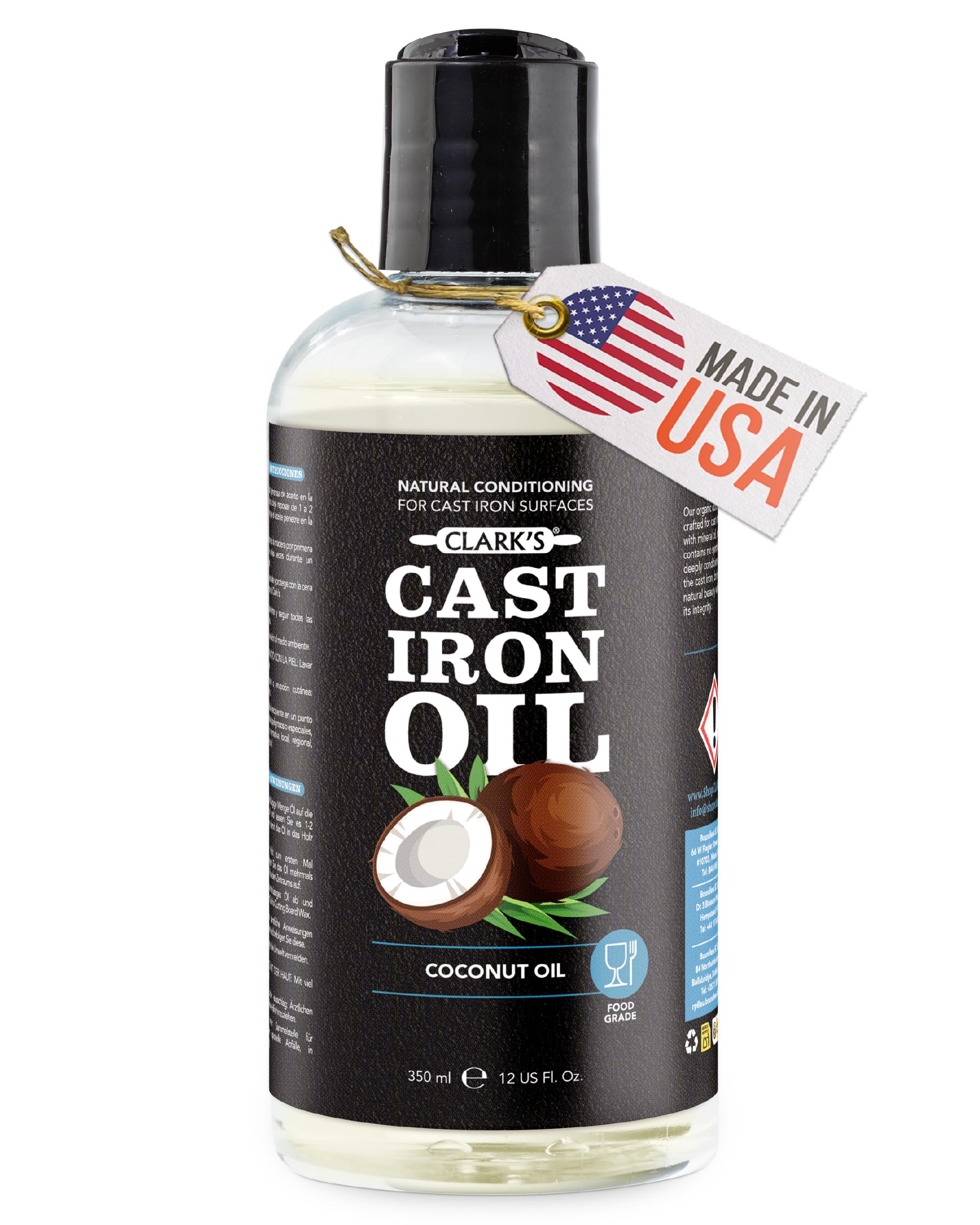
Clark’s uses 100% highly refined coconut oil with a smoke point of approximately 450°F, making it suitable for both initial seasoning and daily post-wash maintenance. Coconut oil’s high saturated fat content — about 90% saturated — creates a dense polymer that resists water absorption and prevents flash rusting on freshly cleaned carbon steel. The 12-ounce bottle offers generous volume for seasoning multiple pans over several months.
Users report that a light coating applied after washing and dried in a 350°F oven leaves the pan protected without any rancid odor. Unlike polyunsaturated oils, refined coconut oil does not oxidize or smell stale even when stored at room temperature for extended periods. The oil applies easily as a liquid at room temperature and solidifies slightly on cool metal, which helps maintain an even film during application.
One limitation is that coconut oil’s polymerized layer, while moisture-resistant, can appear more matte than glossy. It bonds well to carbon steel but may require more frequent reapplication if the pan sees heavy acidic cooking. For users who prioritize rust prevention and food-safe simplicity over visual shine, Clark’s is a functional workhorse.
Why it’s great
- High saturated fat content creates water-repelling seasoning
- 12-ounce bottle provides excellent volume-to-cost value
- Does not go rancid; no refrigeration needed
Good to know
- Seasoning finish is matte rather than glossy
- May need more frequent reapplication with acidic dishes
3. Heritage Products Cast Iron Seasoning Oil (Avocado)

Heritage Products formulates this oil with avocado oil as the base, which delivers a smoke point around 500°F and a monounsaturated fat content near 70%. This profile produces a low-smoke seasoning experience that is noticeably less acrid than flaxseed or grapeseed oil during the polymerization phase. The formula is solvent-free and plant-based, designed specifically for cast iron but equally effective on carbon steel skillets and flat-top griddles.
Users consistently mention that the oil spreads thinly and evenly, requiring only a few drops to coat an entire 12-inch pan. The low-smoke characteristic makes it suitable for indoor seasoning without setting off kitchen smoke alarms. Multiple reviewers report successful restoration of rusty Blackstone griddles after a single cleaning and oiling session, with the seasoning holding up through repeated high-heat cooks.
On the downside, the bottle cap design has drawn occasional complaints about leakage during shipping. The oil’s relatively thin consistency means you must work quickly to avoid pooling in the pan’s center. For carbon steel woks that need a seasoning layer resistant to high stir-fry temperatures, this avocado-based formula stands up to prolonged heat without breaking down.
Why it’s great
- 500°F smoke point reduces smoke during seasoning
- Avocado monounsaturates produce flexible, chip-resistant seasoning
- Effective on both carbon steel and vintage cast iron
Good to know
- Thin oil requires careful application to avoid pooling
- Bottle cap has intermittent quality control issues
4. Walrus Oil Cast Iron Oil (Safflower)

Walrus Oil uses 100% natural safflower oil with a verified smoke point between 450°F and 500°F, placing it among the highest-temperature options for initial carbon steel seasoning. Safflower oil is predominantly linoleic acid, a polyunsaturated fat that polymerizes into a hard, glossy surface comparable to commercial factory seasoning. The 8-ounce bottle is NSF certified and bottled in the USA, confirming food-contact safety standards.
Customer feedback highlights the oil’s low odor during the seasoning process — a common complaint with flaxseed-based products. Users report that a single oven coat at 475°F produces a dark bronze patina that transitions to black after two or three rounds. The oil’s thin viscosity allows it to wick into microscopic pores in the carbon steel, creating a strong mechanical bond that resists flaking under metal spatulas.
The wide-mouth cap design has been flagged by multiple users as prone to spillage when pouring. Because safflower oil is polyunsaturated, it has a shorter shelf life than monounsaturated or saturated oils and should be stored away from heat and light. For carbon steel pans that see daily use, this oil excels at building that initial hard base layer before switching to a maintenance oil post-seasoning.
Why it’s great
- NSF certified for food-contact safety
- Produces hard, glossy seasoning on first application
- Low odor during high-heat polymerization
Good to know
- Wide mouth cap can cause accidental spills
- Polyunsaturated oil has shorter storage life than coconut or avocado
5. GriddleMATe Griddle Seasoning
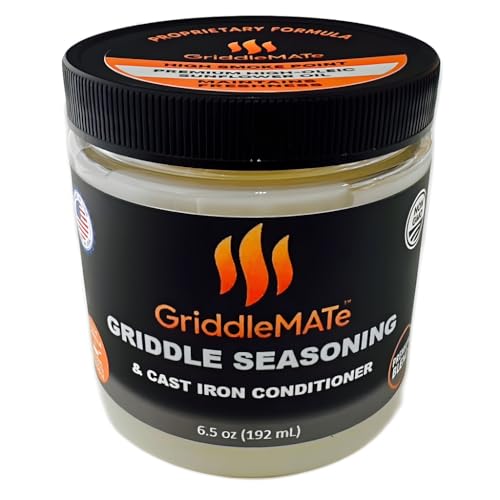
GriddleMATe employs high-oleic sunflower oil in a proprietary blend engineered specifically for flat-top griddles and carbon steel cookware. High-oleic sunflower oil contains about 80% monounsaturated fat, giving it a smoke point near 475°F and a polymerization profile that leaves a dry, non-sticky finish. This formula is designed to resist breakdown during the extreme heat cycles common on Blackstone-style griddles where surface temperatures can exceed 500°F.
Users note that the first coat may feel slightly sticky until the oil fully bonds across the entire cooking surface — some reviewers report needing three to four thin applications before achieving true non-stick behavior. The dry finish is a standout feature: unlike many oils that leave a tacky residue if applied too thick, GriddleMATe cures to a slick surface that does not attract airborne dust or lint. This makes it particularly suitable for outdoor griddles stored in garages or covered patios.
The 6.5-ounce container is compact, designed for portability to job sites or camping trips. Because the formula is proprietary, there is no single-ingredient transparency for users who prefer pure oils. For carbon steel griddle owners who prioritize a dry, dust-resistant curing finish, GriddleMATe offers a purpose-built alternative to general-purpose cooking oils.
Why it’s great
- Dry finish does not attract dust or lint during storage
- High-oleic sunflower tolerates extreme griddle temperatures
- Compact bottle fits in camping kitchen kits
Good to know
- Requires 3-4 thin coats for full non-stick performance
- Proprietary blend lacks single-ingredient purity details
FAQ
Can I use olive oil to season carbon steel?
How many coats of seasoning oil do I need on a new carbon steel pan?
Does seasoning oil expire or go rancid?
Final Thoughts: The Verdict
For most users, the oil for seasoning carbon steel winner is the Crisbee Cream because its beeswax-sunflower blend delivers a consistently smooth, glass-like finish in fewer coats than competing liquid oils. If you want maximum rust protection and a budget-friendly volume, grab the Clark’s Cast Iron Seasoning Oil for its refined coconut oil’s water-repelling polymer. And for low-smoke indoor seasoning on carbon steel woks or griddles, nothing beats the Heritage Products Avocado Oil with its 500°F smoke point and minimal odor.