If your stomach knots up or your sinuses clog after a shake, the culprit is usually whey—a dairy derivative that dominates the protein market but torments a significant portion of users. The shift to a plant-based or alternative animal protein isn’t just a lifestyle choice; it’s a biological necessity for those with lactose intolerance, dairy allergies, or a desire for a cleaner amino acid profile without the inflammatory side effects.
I’m Mohammad Maruf — the founder and writer behind AirfryerBite. I’ve spent years analyzing the supplement landscape, cross-referencing ingredient labels, and breaking down the bioavailability of alternative protein sources to help buyers navigate the crowded non-whey shelf.
Whether you are managing a dairy sensitivity, following a vegan protocol, or simply want to diversify your protein intake, finding the right formula requires understanding specific isolates and their amino acid completeness. This guide cuts through the marketing fluff to reveal the best non-whey protein powder for your specific needs.
How To Choose The Best Non-Whey Protein Powder
Dropping whey opens a door to dozens of isolates, from yellow pea to sprouted brown rice, each with a distinct digestion rate, amino acid profile, and texture. The best choice depends on your digestion, dietary restrictions, and whether you want a complete protein on its own or are willing to combine sources.
Amino Acid Completeness
Whey is a complete protein because it contains all nine essential amino acids in ample quantities. Many single-source plant proteins—like pea or rice—are either low in methionine or lysine. To match whey’s muscle-building capacity, look for blends (pea + rice) or isolates fortified with specific BCAAs. A product that lists multiple protein sources in the ingredient deck is usually engineered for completeness.
Digestive Tolerance and Additives
Non-whey does not automatically mean gentle. Some plant proteins are high in fiber or contain added prebiotics that can cause gas or bloating if you are not accustomed. Check for digestive enzyme blends (bromelain, papain, or probiotics) that aid breakdown. Also confirm the label is free of artificial sweeteners like sucralose or sugar alcohols that trigger their own digestive distress.
Purity and Third-Party Testing
Because the non-whey market is less regulated than standard dairy protein, brand integrity matters. Look for USDA Organic certification, Non-GMO Project verification, and third-party testing for heavy metals and banned substances. A brand that publishes its Certificate of Analysis online demonstrates accountability beyond the marketing copy.
Quick Comparison
On smaller screens, swipe sideways to see the full table.
| Model | Category | Best For | Key Spec | Amazon |
|---|---|---|---|---|
| Orgain Organic Vegan Protein | Plant Blend | Gut-friendly all-in-one | 21g protein + 6g prebiotic fiber | Amazon |
| Optimum Nutrition Plant Protein | Sports Blend | Muscle recovery | 24g plant protein per serving | Amazon |
| Sunwarrior Active Organic | Active Lifestyle | Recovery with digestive support | Probiotics + enzymes added | Amazon |
| Peak Performance Beef Protein | Animal Isolate | Paleo / Carnivore | 20g lactose-free beef isolate | Amazon |
| Truvani Organic Plant Protein | Organic Clean | No additives / Keto | 20g organic pea + monk fruit | Amazon |
| Carlyle Pea Protein Isolate | Bulk Isolate | Bulk unflavored supply | 29g protein per serving, 7lb | Amazon |
| Nutricost Organic Pea Protein | Certified Organic | Budget organic volume | 20g USDA organic pea protein | Amazon |
In‑Depth Reviews
1. Orgain Organic Vegan Protein Powder
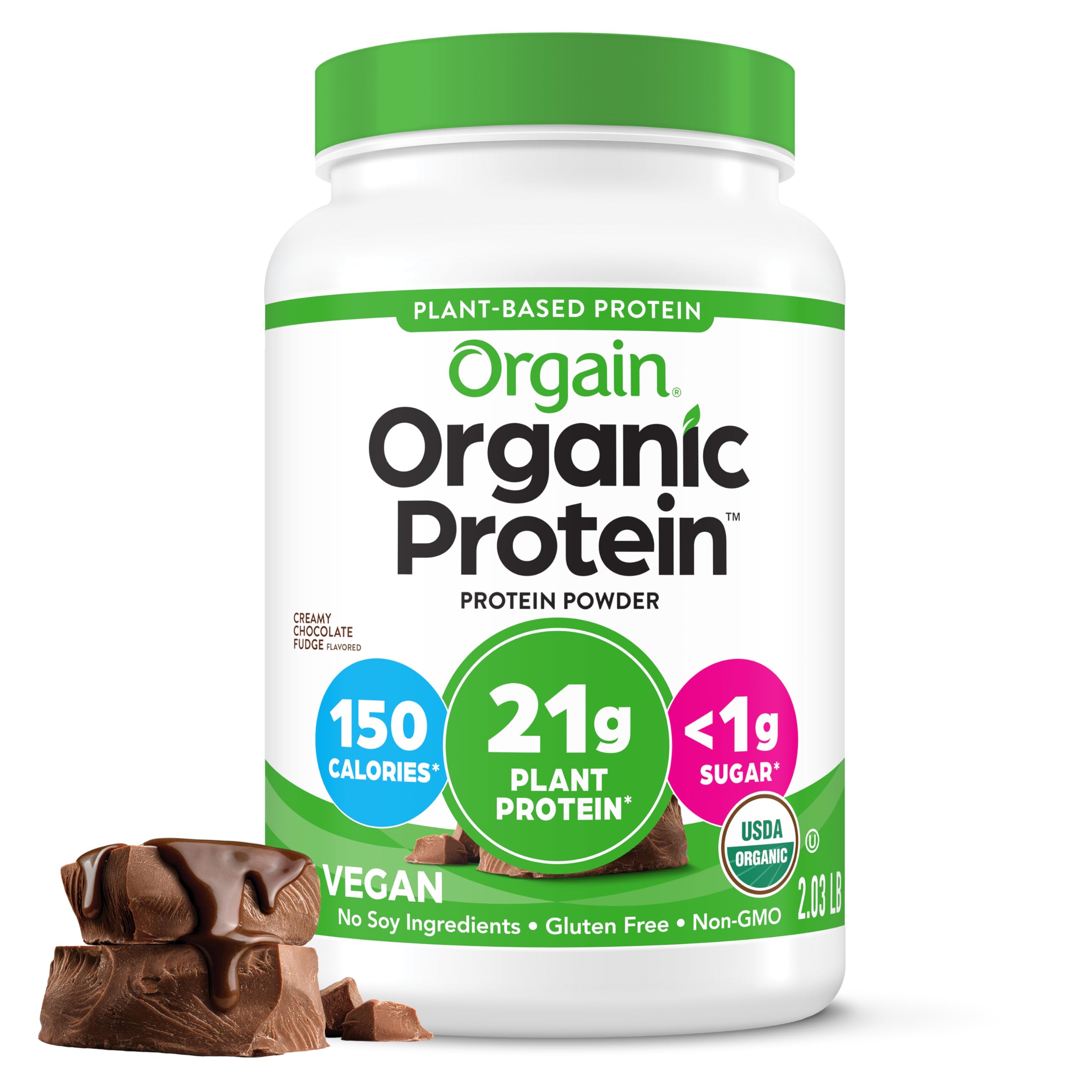
Orgain’s formula combines organic pea, brown rice, and chia seed protein to deliver a complete amino acid profile while adding 6g of prebiotic fiber per serving—a feature that directly addresses the digestive discomfort many users experience with whey. The 21g of protein per scoop keeps it competitive with mid-range blends, and the 0g added sugar threshold means you are not masking with empty carbs.
The texture leans slightly thicker than thin isolates, which works well in smoothies but can feel heavy when mixed with water alone. Organic certification and the absence of carrageenan, soy, and lactose reinforce its clean-label promise. For anyone transitioning from whey due to bloating or dairy sensitivity, this blend provides a gentle transition point.
Long-term users report consistent digestion without the gas that often accompanies high-fiber powders, thanks to the inclusion of chia seeds which also add omega-3s. The chocolate fudge flavor is balanced and does not rely on artificial sweeteners—a rare trait in this category.
Why it’s great
- Includes 6g of prebiotic fiber for gut health
- Certified USDA organic and non-GMO
- Zero added sugar and no artificial flavors
Good to know
- Thicker consistency when mixed with water only
- Lower protein density (21g) compared to isolate-only formulas
2. Optimum Nutrition Gold Standard Plant Protein
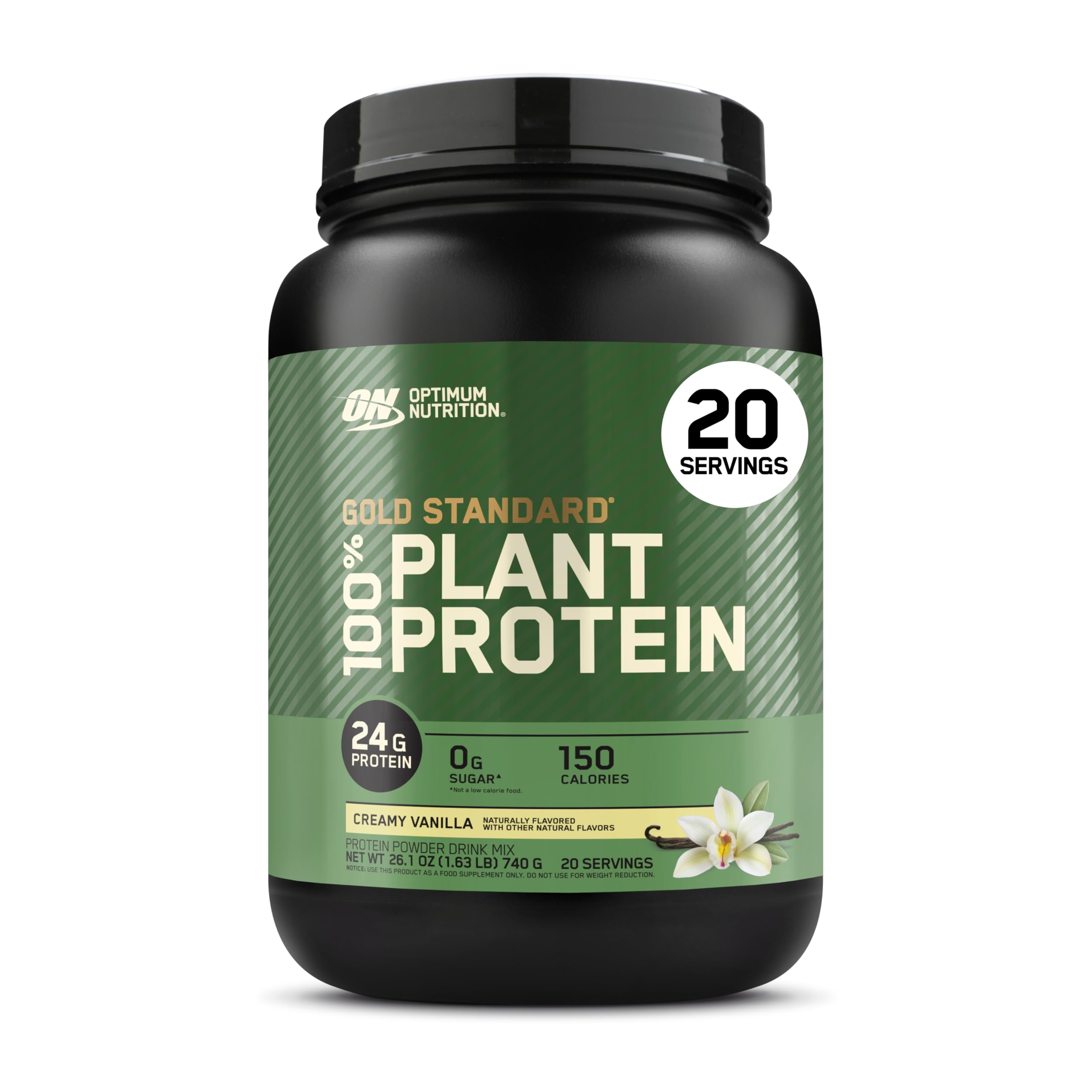
Optimum Nutrition brings its sports-nutrition credibility to the plant space with a pea, rice, and fava bean blend that hits 24g of protein per serving—one of the highest counts among non-whey options. The inclusion of fava bean protein boosts the leucine and lysine levels, which are critical for triggering muscle protein synthesis after resistance training.
The powder mixes cleaner than many single-source pea isolates, with minimal grit and a neutral enough flavor to work as a shake or stir-in for oatmeal. Third-party banned-substance testing adds a layer of confidence for competitive athletes who cannot risk tainted supplements. The 20-serving tub is compact but a lighter pantry footprint than bulk bags.
Because it contains no added sugar and relies on the natural sweetness of the vanilla flavoring, the taste is subtle rather than dessert-like. Users coming from whey-based Gold Standard will notice a slightly grainier texture, but the protein dose per scoop justifies the adjustment period.
Why it’s great
- 24g protein from a three-source blend for complete aminos
- Third-party tested for banned substances
- Low grit texture compared to single-isolate competitors
Good to know
- Flavor is mild, not sweet
- Smaller tub size (20 servings) for the price tier
3. Sunwarrior Active Organic Plant Protein
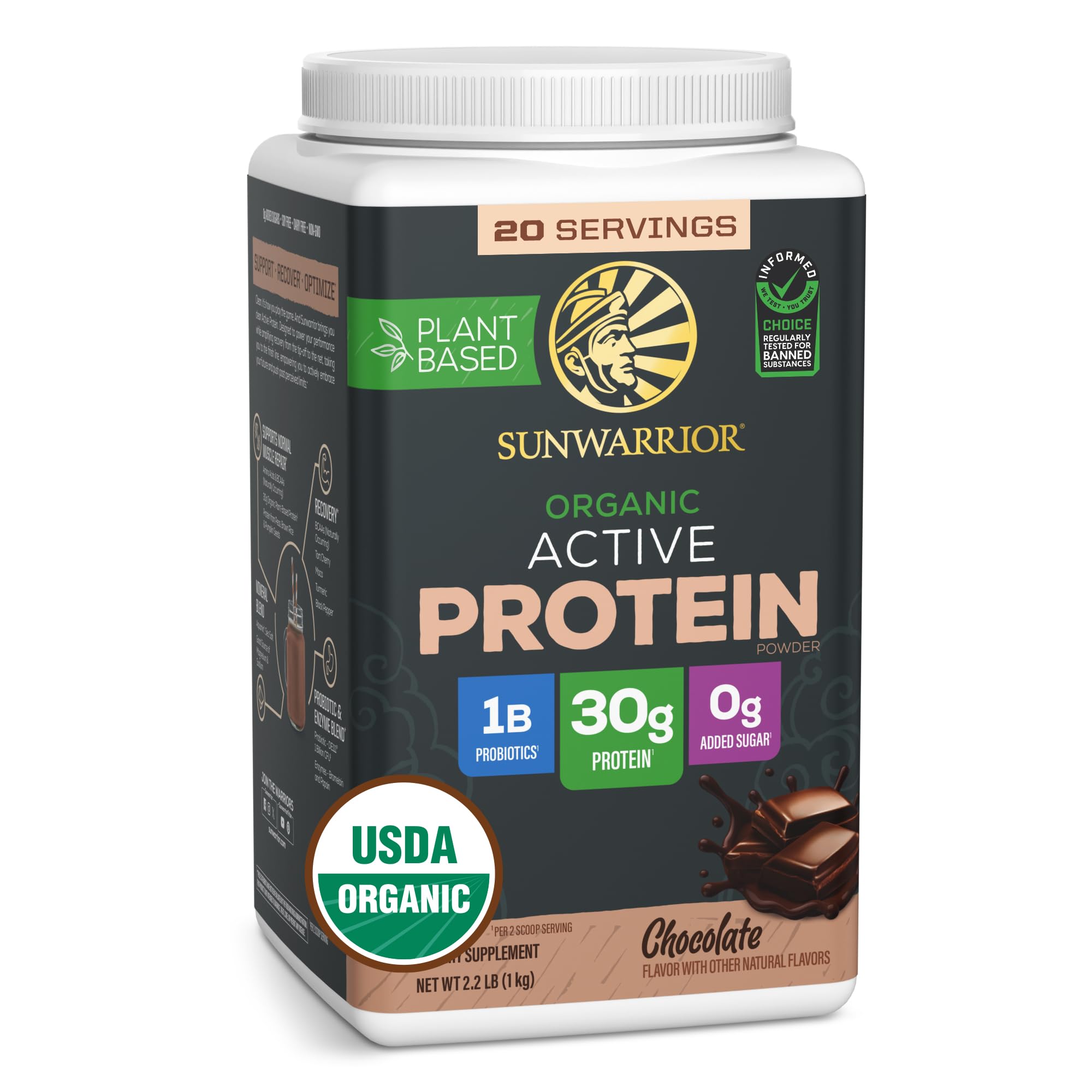
Sunwarrior’s Active formula targets the post-workout window by pairing a rice, pumpkin, and pea protein base with added probiotics and digestive enzymes—a rare combination in the non-whey category. The enzyme blend (including bromelain and papain) helps break down plant cell walls, reducing the heavy feeling some users get from dense legume proteins.
At 2.2 pounds per container, it sits in the mid-to-upper tier of pricing, but the ingredient list justifies the cost. No added sugar, soy, GMOs, or gluten, and the organic certification is maintained across the protein sources. The chocolate flavor is noticeably darker and less sweet than mass-market competitors, which suits those trying to reduce overall sugar intake.
Long-term users note that the probiotic addition seems to stabilize digestion over consistent use, rather than causing the initial bloating common when switching to a high-fiber plant protein. The texture is smooth when blended but can clump slightly if simply shaken in a bottle.
Why it’s great
- Probiotics and digestive enzymes aid plant-protein digestion
- Low-carb and keto-friendly profile
- Triple-source protein for balanced aminos
Good to know
- Requires blending for best texture
- Premium pricing for the 20-serving size
4. Peak Performance Grass Fed Beef Protein Isolate

Not all non-whey protein is plant-based. This beef protein isolate delivers 20g of complete animal protein per scoop with zero lactose, whey, or soy, making it a legitimate option for paleo and carnivore dieters who still want a post-workout shake. The hydrolysis process breaks the protein into smaller peptides, which research suggests may be absorbed faster than intact casein or whey isolates.
The unflavored variety is virtually tasteless, mixing cleanly into water or broth without the chalky aftertaste that plagues some plant powders. It contains zero sugar and zero carbs, which is critical for those tracking macros tightly. The grass-fed sourcing from European farms also means higher conjugated linoleic acid (CLA) content compared to grain-finished beef.
Because it is an animal isolate, the amino acid profile mirrors whey more closely than any plant blend, including high leucine. Users with dairy allergies report zero reaction, and the lack of fiber means digestion is fast and light—ideal for immediate post-workout consumption.
Why it’s great
- Complete animal protein without dairy or lactose
- Hydrolyzed for faster absorption
- Zero carbs and zero sugar
Good to know
- Unflavored taste requires mixing with flavorful liquids
- Higher price per serving than plant-based options
5. Truvani Organic Plant Protein

Truvani takes a minimalist approach to non-whey protein, using only organic pea, pumpkin seed, and chia seed protein with organic monk fruit for sweetness. There are no artificial sweeteners, no stevia aftertaste, and no fillers like maltodextrin or gums that can cause digestive upset in sensitive individuals.
The chocolate peanut butter flavor is rich enough to be enjoyable as a standalone shake, and the powder blends smoothly without the chalkiness common in low-additive formulas. Each serving delivers 20g of protein with only 120-140 calories, making it a viable option for those on a keto or low-carb regimen. The label transparency includes the specific percentage of each protein source, a level of honesty uncommon in the category.
Premium-priced relative to bulk competitors, but the ingredient quality—USDA Organic, non-GMO, gluten-free, and soy-free—justifies the cost for buyers who prioritize purity over volume. The small package size (1.61 pounds) also encourages trial before committing to a five-pound tub.
Why it’s great
- USDA Organic with simple, transparent label
- Sweetened with monk fruit, not stevia or sugar
- Smooth texture with no chalky residue
Good to know
- Smaller container for the price tier
- Limited flavor variety
6. Carlyle Pea Protein Isolate Powder
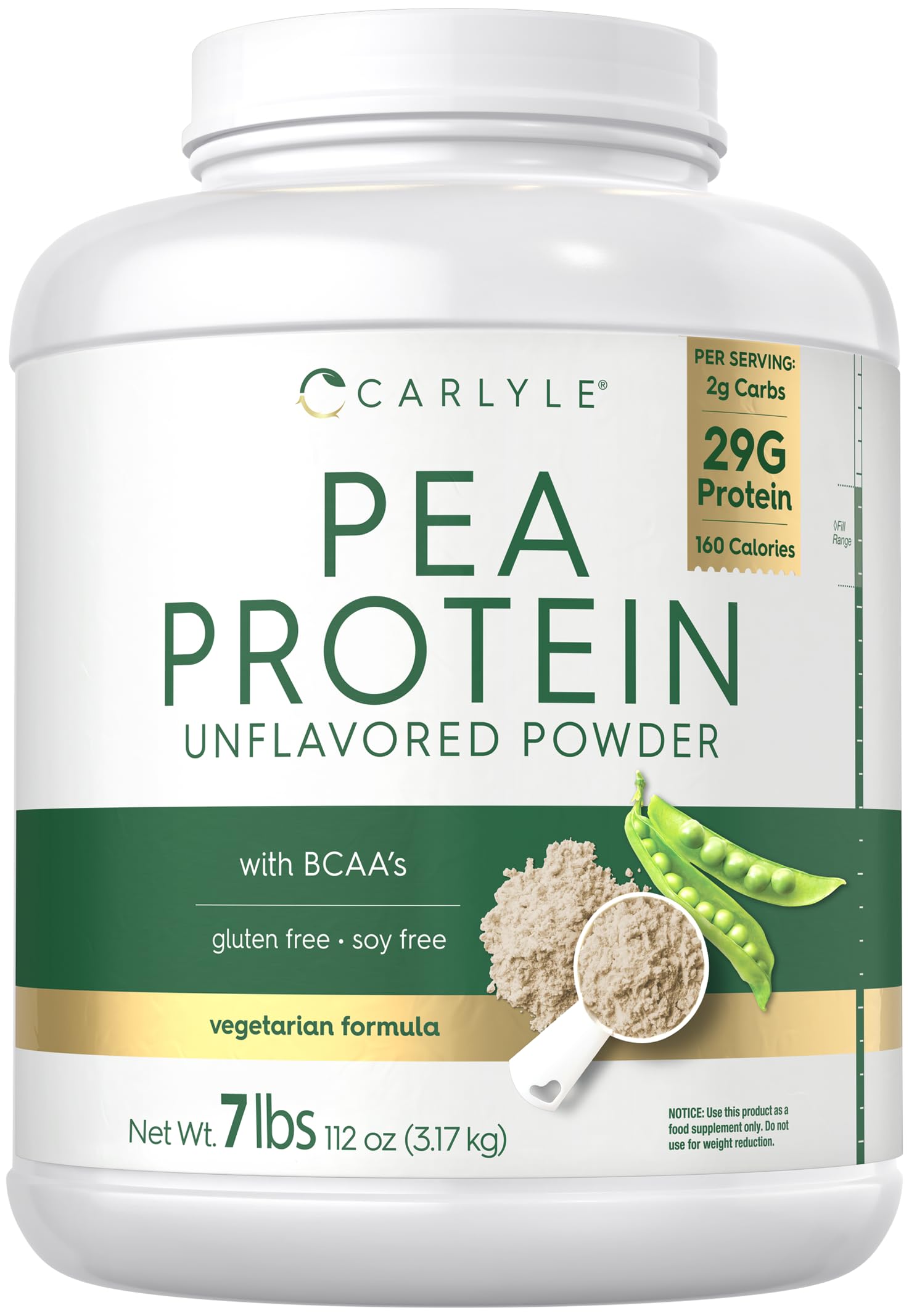
Carlyle’s pea protein isolate delivers 29g of protein per serving—the highest dose in this roundup—packed into a massive 7-pound container designed for serious athletes or households. The unflavored format means zero sweeteners, no flavoring agents, and total macro control. You can add it to smoothies, soups, or baking without altering the intended taste profile.
Because it is a single-source isolate, the amino acid profile is slightly lower in methionine compared to a blended powder, but for most users the 29g dose compensates by sheer volume of leucine and lysine. The powder is non-GMO, gluten-free, and soy-free, and it undergoes laboratory testing for purity. The lack of added flavors also keeps the ingredient list short: pea protein isolate and nothing else.
The texture is fine and mixes relatively well with a shaker bottle, though unflavored pea protein has an earthy taste that some find more noticeable than flavored blends. This product is ideal for those who want maximum grams per dollar and are willing to mask the flavor themselves.
Why it’s great
- 29g protein per serving—highest in this guide
- 7-pound bag offers excellent cost-efficiency
- No artificial additives or sweeteners
Good to know
- Unflavored has a noticeable earthy taste
- Single-source means incomplete amino profile alone
7. Nutricost Organic Pea Protein Isolate

Nutricost combines USDA Organic certification with a 5-pound tub at a price point that undercuts most certified-organic competitors. The formula is straightforward: 20g of organic pea protein isolate per scoop, with no added flavors, sugars, or filler ingredients. For buyers who require organic sourcing but want to avoid the premium markup, this is the most direct route.
Because it is a single-source isolate, users should pair it with a complementary protein like brown rice to ensure a complete amino acid profile throughout the day. The unflavored nature again means you control the taste, but the base powder is milder than some other pea isolates, with a less aggressive earthy note. It mixes adequately in a shaker with a slight foaminess that settles quickly.
The GMP-compliant manufacturing and third-party testing add a layer of safety without inflating the cost. For families or individuals using protein in daily smoothies, this tub provides the best organic gram-per-dollar ratio on this list, though you trade flavor variety and a complete amino profile for the purity and volume.
Why it’s great
- Certified USDA Organic at an entry-level price
- 5-pound tub delivers high volume for the cost
- Clean label with no fillers or sweeteners
Good to know
- Only 20g protein per serving compared to isolates with 25-29g
- Single-source pea means incomplete amino profile alone
FAQ
Is non-whey protein powder as effective as whey for muscle building?
Can non-whey protein powder cause bloating or gas?
What is the difference between a protein isolate and a protein blend?
Final Thoughts: The Verdict
For most users, the best non-whey protein powder winner is the Orgain Organic Vegan Protein Powder because it combines a complete plant-based amino blend with prebiotic fiber that supports digestion—addressing the two biggest pain points of switching from whey. If you want the highest protein density per scoop for serious athletic recovery, grab the Optimum Nutrition Gold Standard Plant Protein. And for a clean, additive-free organic option that mixes smoothly, nothing beats the Truvani Organic Plant Protein.