Plastic cutting boards develop deep knife scars that become breeding grounds for bacteria, particularly when used for raw meat and poultry. Switching to a natural wood or bamboo board eliminates that risk while providing a surface that is actually gentler on your knife blades.
I’m Mohammad Maruf — the founder and writer behind AirfryerBite. I have spent years analyzing kitchen tool materials and food safety standards, and I know exactly which specs separate a safe, durable meat board from a porous, quickly-warped disappointment.
After cross-referencing grain direction, thickness, juice groove design, and FSC certification across seven top contenders, I have identified the absolute best non plastic cutting board for meat on the market today.
How To Choose The Best Non Plastic Cutting Board For Meat
Choosing a non-plastic cutting board for meat means prioritizing density, grain structure, and fluid management. Plastic boards absorb odors and harbor bacteria in cut grooves, while wood and bamboo naturally resist microbial growth — but only if you pick the right material thickness, grain orientation, and groove design for raw proteins.
Edge Grain vs End Grain for Meat Prep
Edge-grain boards (strips of wood glued on their sides) are harder and show fewer deep knife scars over time, making them ideal for raw meat where you want a smooth, non-porous cutting surface. End-grain boards (the butchers block style) are softer on knife edges but develop deeper grooves that can trap meat juices. For poultry, beef, and pork, an edge-grain construction is the safer bet. All seven boards on this list use edge-grain or a comparable dense laminate structure.
Thickness and Weight Matter for Stability
A board thinner than 1.5 inches will slide around on the counter when you are pressing down on a large chicken breast or a rack of ribs. Every board reviewed here is at least 1.5 inches thick, with some premium options reaching 1.75 inches. Heavier boards (6 pounds and up) stay planted without needing a damp towel underneath. Lighter boards may shift mid-chop, which is both annoying and dangerous when handling a sharp knife over raw protein.
Juice Groove Depth and Placement
A perimeter juice groove catches the runoff from carved roast beef, sliced steak, or segmented poultry. The groove must be deep enough to hold liquid without spilling over when you tilt the board. A reversible board with a groove on one side and a flat surface on the other adds flexibility — use the grooved side for raw meat and the flat side for cooked carving or vegetable prep. Most boards in this guide offer at least one side with a juice groove.
Wood Species and Knife Wear
Bamboo is technically a grass, not a wood, and it contains silica that accelerates blade dulling. Acacia and maple are both hardwoods that provide a dense cutting surface without excessive knife wear. Cherry wood is softer than maple and more forgiving on edges but may show cut marks sooner. For dedicated meat prep where you might use a cleaver or heavy chef knife, maple or acacia offer the best balance of durability and edge preservation.
Quick Comparison
On smaller screens, swipe sideways to see the full table.
| Model | Category | Best For | Key Spec | Amazon |
|---|---|---|---|---|
| WoodForChef Maple 20×16 | Premium Maple | Large meat prep batches | 20x16x1.5 in, 12.5 lb | Amazon |
| John Boos Round Maple 15×1.75 | Pro Round | Butcher block carving station | 15 in round, 1.75 in thick | Amazon |
| WoodForChef Cherry 20×16 | Premium Cherry | Knife-friendly large surface | 20x16x1.5 in, cherry wood | Amazon |
| WoodForChef Maple 16×12 | Mid Maple | Everyday meat and veg prep | 16x12x1.5 in, 8 lb | Amazon |
| John Boos B Series Maple Square | Compact Pro | Small kitchen meat station | 12×12 in, 1.5 in thick | Amazon |
| FANICHI Acacia Wood 17×13 | Value Acacia | Budget-friendly large board | 17x13x1.5 in, acacia wood | Amazon |
| SOULFINO Bamboo 17×13 | Bamboo Entry | Budget meat board starter | 17x13x1.5 in, bamboo | Amazon |
In-Depth Reviews
1. WoodForChef Large Maple Butcher Block 20×16

This 20×16-inch North American maple board offers the largest single-piece cutting surface in the lineup, with a 1.5-inch edge-grain construction that resists warping even under repeated heavy cleaver work. The deep juice groove runs along one side, capturing runoff from a full brisket or a tray of chicken thighs without spillover. It weighs 12.5 pounds, so it stays firmly planted on the counter without any sliding pads.
The board comes pre-seasoned with mineral oil and beeswax, meaning it is ready to use straight out of the box — no overnight oil soaks required. Hard maple is dense enough to resist deep scarring from daily meat prep, yet it remains forgiving on knife edges compared to bamboo or glass alternatives. The FSC certification confirms the wood was responsibly harvested, which matters for long-term sustainability.
Multiple verified buyers report that after proper initial oiling (three to four coats), the surface remains smooth and non-porous even after months of raw meat use. A few note that the board lacks integrated handles, but at 20 inches long, the overhang provides enough grip for easy lifting. This is the board you buy when you need maximum surface area for batch meat prep and want a single workhorse surface.
Why it’s great
- Largest cutting area at 20×16 inches handles whole briskets or multiple poultry pieces
- Pre-seasoned with mineral oil and beeswax saves three hours of prep work
- FSC-certified North American hardwood ensures responsible sourcing
Good to know
- No integrated handles make carrying a full board slightly awkward
- Initial oiling still recommended even though pre-seasoned for best long-term protection
2. John Boos CB Series Round Maple Cutting Board 15×1.75
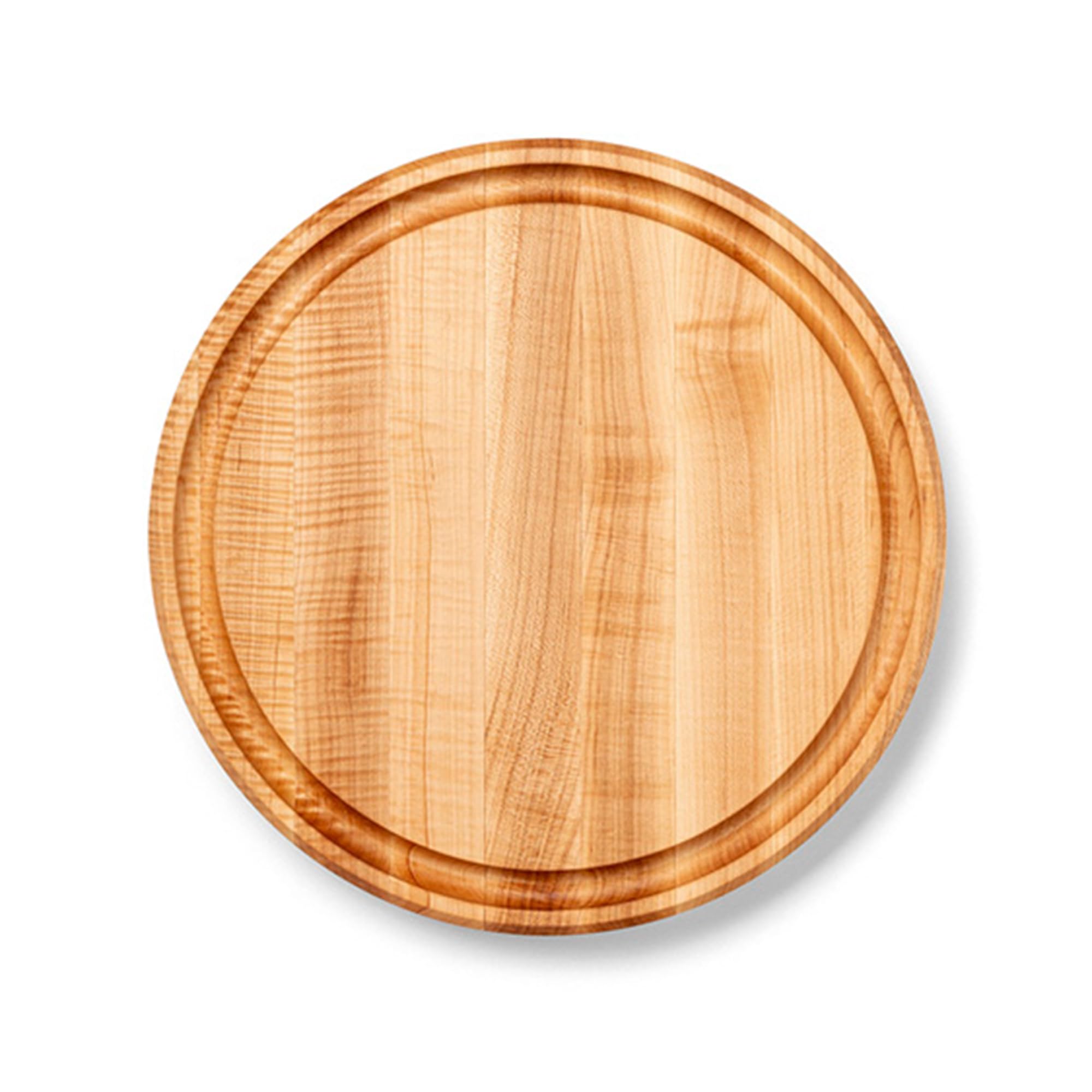
John Boos has been manufacturing butcher blocks in the USA since 1887, and the CB series round board continues that legacy with a 15-inch diameter, 1.75-inch thickness, and recessed finger grips on both sides. The extra quarter-inch over standard 1.5-inch boards provides additional heft and stability when carving a large roast or breaking down a whole bird. The perimeter juice groove is machined into one side, while the reverse is flat for vegetable prep or serving.
This is an edge-grain maple board, which means the wood fibers run vertically instead of horizontally. That orientation creates a harder surface that resists deep knife penetration, so raw meat juices have less opportunity to seep into the wood. The board requires hand washing and periodic oiling with Boos Block Mystery Oil to maintain its water resistance, but users report that after proper seasoning, it develops a near-nonstick quality that makes cleanup after raw chicken remarkably simple.
Several professional chefs note that the round shape fits smaller kitchens better than a large rectangular board, and the 1.75-inch thickness prevents any flex or rocking during heavy chopping. The only limitation is the 15-inch diameter, which is too small for very large brisket flats but perfect for a single roast or two porterhouse steaks. This is the board to choose when you want American-made craftsmanship and a compact form factor that doubles as a charcuterie server.
Why it’s great
- American-made edge-grain maple with 1.75-inch thickness for maximum stability
- Reversible with juice groove on one side and flat surface on the other
- Recessed finger grips allow secure handling even with wet hands
Good to know
- 15-inch diameter limits use for very large cuts of meat
- Requires regular oiling with dedicated Boos oil for best longevity
3. WoodForChef Large Cherry Butcher Block 20×16

Cherry wood sits between maple and walnut in hardness, offering a noticeably gentler feel on knife edges than either maple or bamboo. This WoodForChef board matches the 20×16-inch dimensions of the maple version but uses American cherry, which develops a rich reddish-brown patina over time. The 1.5-inch edge-grain construction provides the same warp resistance as maple, and the deep juice groove spans the full length of one side to handle large meat loads.
Like the maple variant, this board arrives pre-seasoned with mineral oil and beeswax from the manufacturer, so it is ready for immediate use on raw poultry, beef, or pork. The FSC certification applies here as well, and the cherry grain patterns vary naturally, giving each board a unique appearance. Many users specifically choose cherry because it shows fewer visible knife marks than maple, which helps the board maintain a clean look over years of meat prep.
At 5.14 kilograms (about 11.3 pounds), the cherry board is slightly lighter than the maple 12.5-pound version, but still heavy enough to stay put on the counter. A few buyers note that cherry is softer and may develop shallow cut lines faster than maple, but the trade-off is significantly less blade dulling over time. If you own high-end Japanese or German knives and want a dedicated non-plastic meat board that will preserve your edge geometry, this cherry board is the smart pick.
Why it’s great
- Cherry wood is the most knife-friendly hardwood option for raw meat prep
- FSC-certified and pre-seasoned for immediate use straight out of the box
- Deep juice groove contains fluids from large cuts without overflowing
Good to know
- Cherry is softer than maple and will show more visible knife scars over time
- Requires regular mineral oil reapplication to prevent drying and cracking
4. WoodForChef Medium Maple Butcher Block 16×12
The 16×12-inch medium maple board from WoodForChef splits the difference between a compact prep station and a full butcher block. The surface area accommodates a whole cut-up chicken or a 3-pound pork loin without crowding, and the 1.5-inch thickness delivers solid weight at 8 pounds. The edge-grain maple construction, FSC certification, and pre-seasoned finish mirror the large version, just in a more counter-friendly footprint.
The juice groove is machined into one side at a depth that easily holds runoff from a medium roast or multiple steaks, and the reverse side is flat for vegetable or bread prep. Several verified buyers mention that this board sits perfectly flat on the counter with zero rocking, which is critical for safe meat cutting. The pre-seasoning with mineral oil and beeswax means you can start cutting immediately, though applying a few extra coats over the first week improves water resistance noticeably.
One recurring note from users is that the 16×12 size is ideal for standard kitchen counters that cannot accommodate a 20-inch board. It also fits in most kitchen sinks for easier hand washing. The main trade-off is surface area — you cannot fit a full brisket or a turkey on this board in one go, but it covers 90 percent of daily meat prep tasks. This is the best middle-ground option for someone who wants a premium non-plastic meat board without dedicating half the counter to it.
Why it’s great
- Compact 16×12 size fits standard counters and sinks while handling whole chickens
- Pre-seasoned finish allows immediate use with raw meat
- Edge-grain maple resists deep knife scarring better than softer woods
Good to know
- Too small for full brisket or turkey prep in one session
- Requires monthly oiling to maintain moisture barrier
5. John Boos B Series Maple Square 12×12
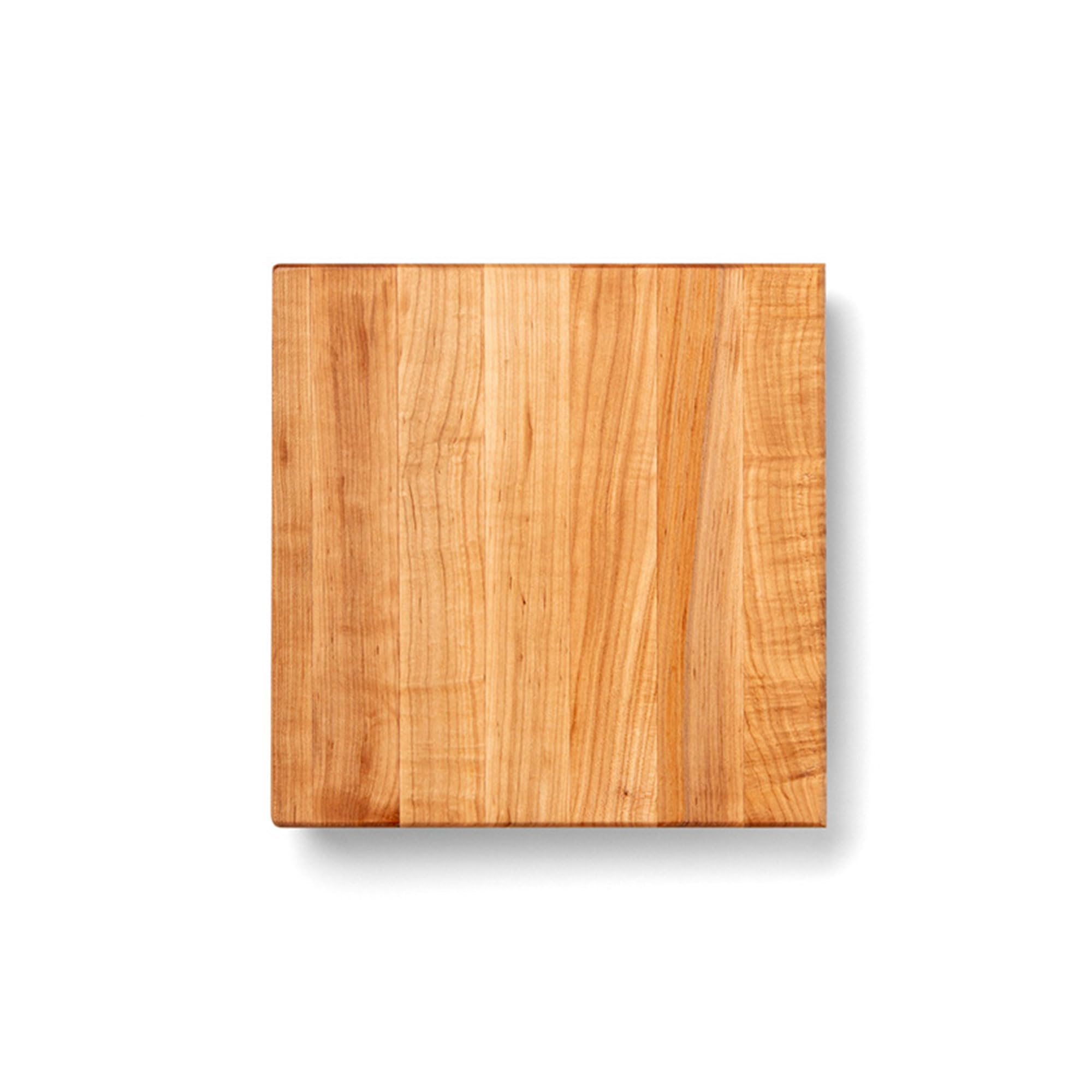
The John Boos B12S is a 12×12-inch square maple board with four raised bun feet that elevate the board about half an inch off the counter. This design keeps the underside dry and allows air circulation, reducing the risk of mold or moisture trapping underneath after washing. At 1.5 inches thick and 6 pounds, it is the smallest board on this list, but the edge-grain maple construction provides the same professional-grade stability as the larger round Boos model.
This board is non-reversible, meaning the bun feet are fixed to the bottom, so there is only one cutting surface. There is no juice groove, which makes it less ideal for raw meat that releases significant fluids — you will want to pat your protein dry before cutting, or place a towel underneath to catch drips. The oil finish applied at the factory is thin, and most buyers recommend applying a generous coat of mineral oil before first use to protect the maple from meat juices.
Verified buyers appreciate the square shape for small kitchens and the fact that the board is easy on knife edges compared to the harder bamboo or plastic alternatives. The 12×12 surface is adequate for splitting a pack of chicken breasts, trimming a flank steak, or dicing a batch of onions for a stew. If counter space is tight and you need a compact non-plastic board for occasional meat prep, the Boos B12S delivers professional credentials in a footprint that fits beside a microwave.
Why it’s great
- Raised bun feet prevent moisture trapping and mold growth underneath
- Compact 12×12 size fits tiny kitchens without sacrificing maple quality
- Professional edge-grain construction from a trusted American brand
Good to know
- No juice groove means raw meat fluids require towel management
- Non-reversible design limits cutting surface to one side only
6. FANICHI Acacia Wood Cutting Board 17×13
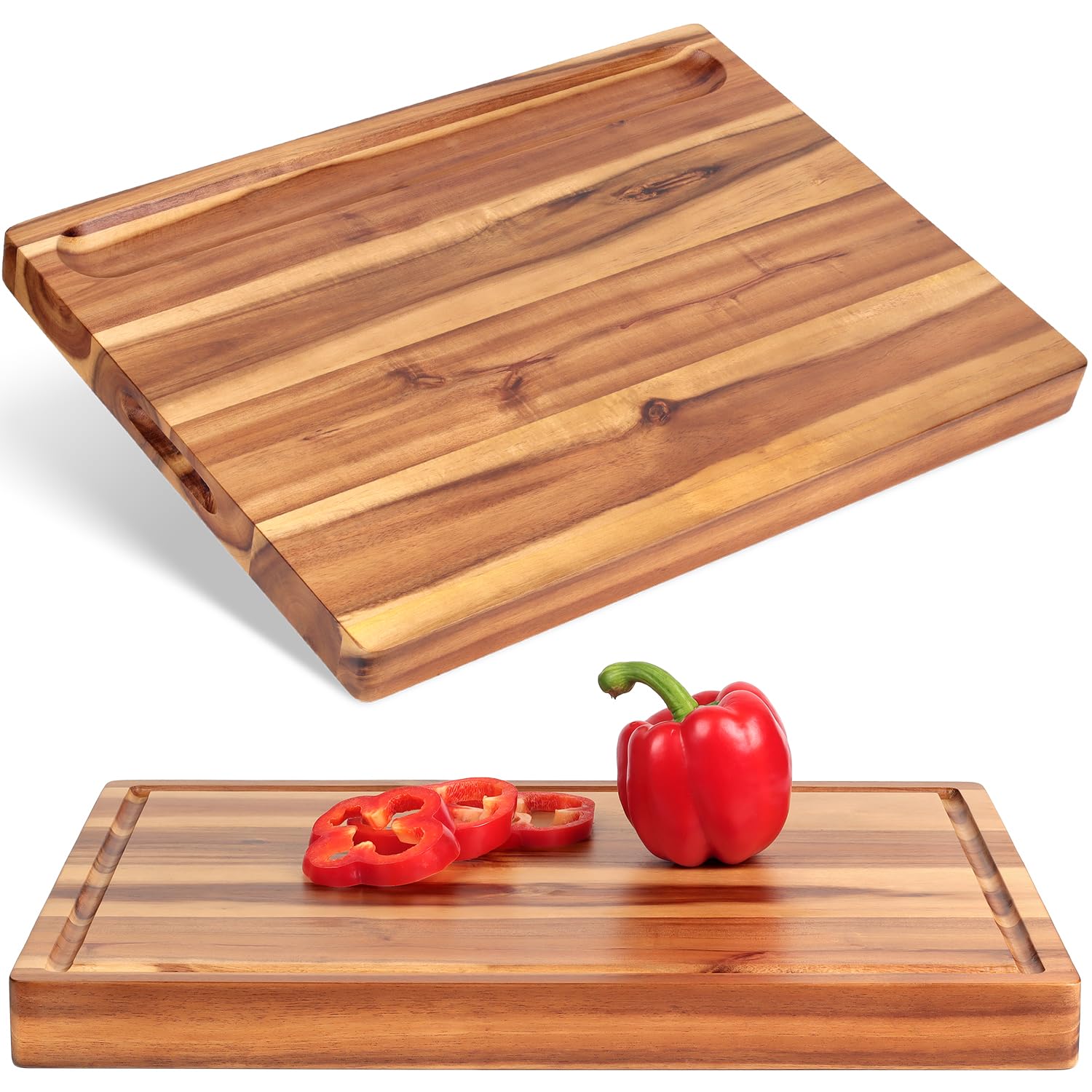
Acacia wood is naturally dense and water-resistant, making it an excellent material for a meat board at a lower price point than North American maple. The FANICHI board measures 17x13x1.5 inches and weighs 3.22 kilograms (about 7 pounds), providing a generous cutting area for batch meat prep. The front side features a machine-carved juice groove along one edge, while the backside includes a cracker holder channel — a dual-purpose design that works for both raw poultry carving and serving cheese or charcuterie.
The board is made from 100 percent natural acacia with no paint or chemical treatments, so there is zero risk of synthetic coatings leaching into raw meat. Several verified buyers note that the natural wood color and grain pattern vary between units, which is expected for a natural product. The inner side handles make it easy to lift and move the board even when it is covered in meat juices, and the reversible design gives you two different functional surfaces for the price of one.
One important detail: this is not an end-grain board despite some packaging references. It uses a standard edge-grain construction, which is actually preferable for raw meat prep because it leaves fewer deep grooves for bacteria to colonize. Buyers recommend giving the board a thorough mineral oil soak before first use, as the factory finish is minimal. For anyone looking to switch from plastic to wood without spending premium money, the FANICHI acacia board delivers solid performance at an accessible tier.
Why it’s great
- Acacia wood is naturally dense and water-resistant, ideal for raw meat
- Reversible with juice groove on one side and cracker holder on the other
- Inner side handles make moving a loaded board safe and easy
Good to know
- Requires additional mineral oil seasoning before first meat use
- Not an end-grain board despite some labeling ambiguity
7. SOULFINO Bamboo Butcher Block 17×13
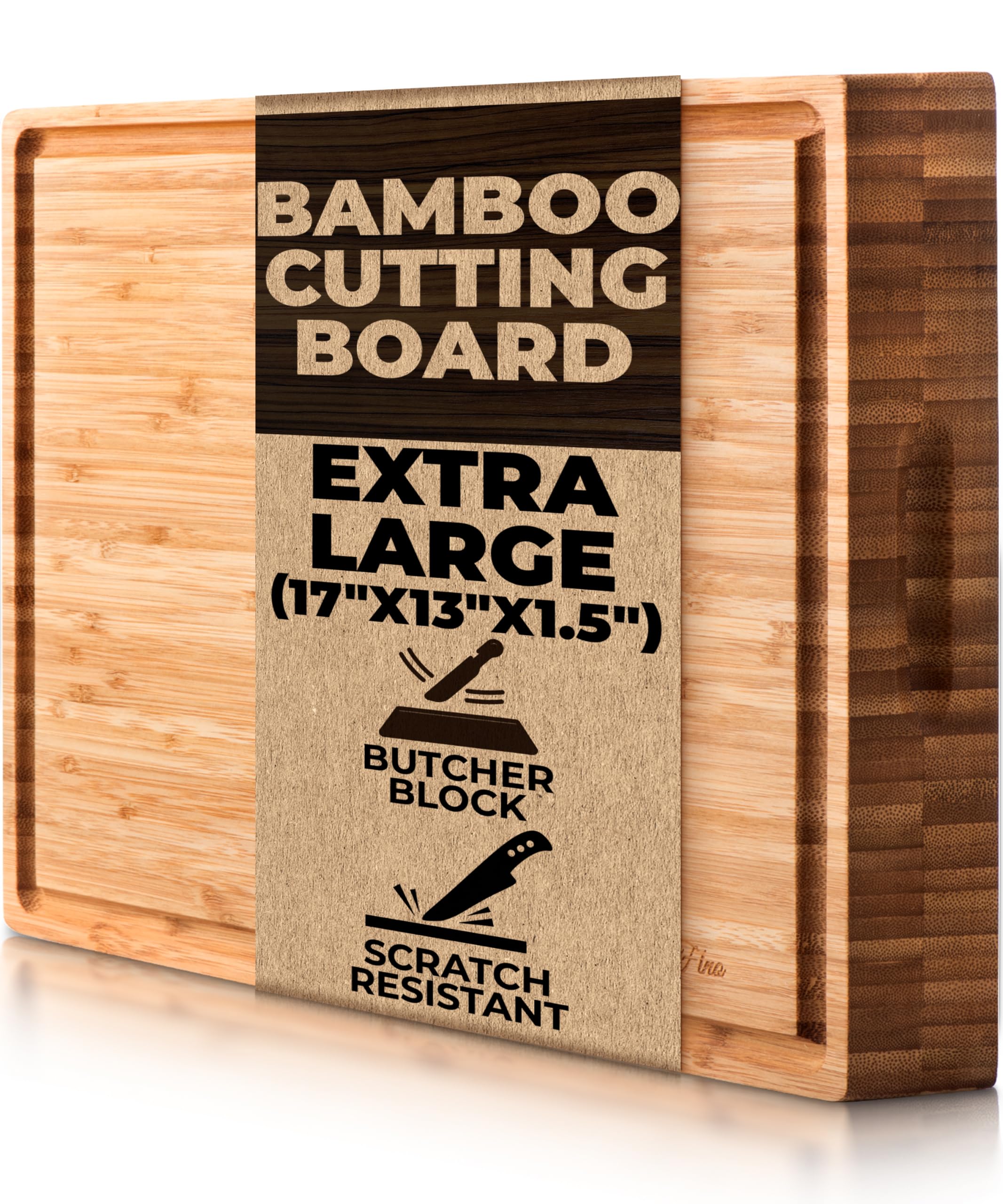
Bamboo is the most renewable material in this lineup, regenerating in three to five years compared to decades for hardwood trees. The SOULFINO board measures 17x13x1.5 inches and weighs 6.8 pounds, giving you a large cutting surface at a very accessible investment. The juice groove is pre-cut around the perimeter, and the board comes pre-seasoned with mineral oil so it is ready for meat prep immediately out of the package.
The main trade-off with bamboo is its silica content, which means it is harder than maple or acacia and will dull knife edges faster over time. For a dedicated meat board where you may use a heavier or less expensive knife, this is an acceptable compromise. The bamboo laminate construction is dense and resists warping, and the included juice groove effectively contains fluids from pork chops, chicken thighs, or sliced steak. Side handles make it easy to transfer the board to the sink for hand washing.
Several customers report that the initial finish is smooth and the board maintains its flatness even after months of daily use. A few noted that bamboo can shed fine particles during the first few washes, and that the laminate construction means you should never soak the board or run it through a dishwasher. If you want the most sustainable non-plastic option and you do not mind a slightly harder cutting surface that requires more frequent knife sharpening, the SOULFINO bamboo board is a smart entry point.
Why it’s great
- Bamboo is the most eco-friendly material, fully renewable in 3-5 years
- Pre-seasoned and ready to use with a deep juice groove for meat fluids
- Side handles make carrying and washing convenient
Good to know
- Bamboo’s silica content accelerates knife blade dulling
- Laminate construction may show minor particle shedding initially
FAQ
Can I use a non-plastic cutting board for raw chicken without risking cross-contamination?
How often should I oil my wood cutting board if I use it daily for meat?
Is bamboo really better than wood for meat prep since it is harder?
Do I need a juice groove on every non-plastic meat board?
Can a non-plastic cutting board go in the dishwasher?
Final Thoughts: The Verdict
For most users, the non plastic cutting board for meat winner is the WoodForChef Large Maple Butcher Block because it combines the largest cutting area, FSC-certified edge-grain maple, a deep juice groove, and factory pre-seasoning that makes it ready for raw meat immediately. If you want a more knife-friendly surface that protects premium blade edges, grab the WoodForChef Cherry Butcher Block. And for a compact kitchen counter with professional heritage, nothing beats the John Boos B Series Maple Square as a dedicated meat station.