The wrong spray leaves your heirloom table looking oily, sticky, and dust-covered within days. Many commercial polishes rely on silicone, petroleum distillates, and synthetic fragrances that build up a plastic-like film, trapping grime and dulling the natural wood grain over time. A quality natural formula feeds the wood itself rather than coating it.
I’m Mohammad Maruf — the founder and writer behind AirfryerBite. I’ve spent years analyzing ingredient labels, comparing carrier oil purity, and cross-referencing user reports on wax build-up versus absorption across dozens of wood care products to find what actually protects and revives real wood surfaces.
This guide cuts through the marketing to focus on formulations that clean, condition, and protect without leaving harmful residues. After reviewing ingredient safety, application ease, and finish quality, here are the top contenders for the best natural wood cleaner and polish.
How To Choose The Best Natural Wood Cleaner And Polish
Selecting the right natural wood cleaner and polish requires understanding your wood’s finish and the ingredients in the bottle. A mismatch can leave residue, fail to moisturize, or even strip an existing sealant. Here are the key factors to consider before you buy.
Carrier Oil Base: Mineral Oil vs. Plant Oils
The carrier oil is the delivery agent that penetrates the wood grain to replace lost moisture. FDA-grade mineral oil is hypoallergenic and won’t go rancid, making it a safe choice for cutting boards and kitchen items. Plant oils like orange oil or lemon oil add natural scent and mild cleaning solvency, but pure essential oils can degrade some lacquers. A blend — such as beeswax suspended in mineral oil or fractionated coconut oil — provides both penetration and a protective barrier without turning sticky.
Wax Content: Surface Protection vs. Deep Conditioning
Beeswax-based polishes leave a thin, breathable layer on the surface that repels water and light scratches. These are ideal for antique finishes, chalk-painted furniture, and untreated wood that needs a protective seal. Oil-only polishes (lemon oil, orange oil) penetrate deeper to rehydrate dry wood but offer less surface protection. For daily dusting on sealed furniture, a spray oil is quicker; for restoring a neglected piece, a wax paste yields a richer, longer-lasting glow.
Silicone and Petroleum-Free Verification
Many conventional polishes use dimethicone or other silicones to create an instant shine. While the effect looks good initially, silicone builds up over time, making refinishing difficult because the new stain or paint won’t adhere to the residue. Look for labels that explicitly state “silicone-free,” “petroleum-free,” and “solvent-free.” Products carrying a USDA Certified Biobased label, like the Daddy Van’s formula, provide independent verification that the ingredients are plant-derived rather than petrochemical-based.
Quick Comparison
On smaller screens, swipe sideways to see the full table.
| Model | Category | Best For | Key Spec | Amazon |
|---|---|---|---|---|
| Daddy Van’s Beeswax & Lavender | Wax Paste | Antique restoration & chalk paint finish | 6 oz; USDA Certified Biobased | Amazon |
| Howard Products Lemon Oil | Spray Oil | Preventing drying & fading | 16 oz trigger spray; silicone-free | Amazon |
| Milsek Furniture Polish | Liquid Concentrate | Removing heat & water rings | 12 fl oz; water, wax, silicone-free | Amazon |
| Method Wood Polish (Almond) | Spray Polish | Everyday dusting on finished wood | 14 oz spray; 100% recycled bottle | Amazon |
| Natchez Solution Complete Furniture Care | Oil Blend | Re-moisturizing antiques | 8 oz; beeswax, lemon oil & mineral oil | Amazon |
In‑Depth Reviews
1. Daddy Van’s All Natural Beeswax & Lavender Furniture Polish

Daddy Van’s is the only product in this roundup carrying a USDA Certified 100% Biobased label, confirming that every ingredient — beeswax, pure lavender essential oil, and the carrier base — is derived from renewable plant materials with zero petroleum content. The paste consistency requires a bit more elbow grease than a spray, but the payoff is a deep, matte sheen that looks like the wood is glowing from within rather than sitting under a glossy film.
Users report that a single application waterproofs patio furniture (water beads on the surface) and revives thrifted dressers without altering the original stain color. It also works as a finishing wax for chalk and milk paint projects, creating a durable matte seal that resists fingerprints. The lavender scent is noticeable during application but fades within a day, leaving no competing fragrance on the furniture.
The 6-ounce tin is small, but because a little wax goes a long way when rubbed in a thin circular motion, it lasts through multiple full-furniture treatments. This is the best choice for antique restoration, unfinished wood conditioning, and anyone who prioritizes a solvent-free, tox-free ingredient list.
Why it’s great
- USDA Certified 100% Biobased — no petroleum or solvents
- Creates a water-resistant protective barrier
- Safe for chalk paint finishing and raw wood
Good to know
- Paste format requires buffing with a clean cloth
- Smaller tin size compared to spray bottles
2. Howard Products Lemon Oil Furniture Polish

Howard’s Lemon Oil is one of the most widely recognized names in wood care, and this 16-ounce trigger spray delivers a fine mist that makes quick work of dusting finished cabinets, tables, and chairs. The base is primarily mineral oil scented with lemon oil, which helps cut through light grime and replenishes moisture in dry wood to prevent cracking and fading in low-humidity environments.
Several users caution that the spray nozzle can splatter if aimed directly at the furniture, so it’s best to spray onto a soft cloth first and then wipe. The lemon scent is fresh and invigorating during application but fades quickly—ideal if you prefer a neutral-smelling room afterward. On finished surfaces, it leaves a clean, organic shine without the greasy residue that heavier wax polishes can leave.
One important note: the ingredient label lists mineral oil as the primary component, not pure lemon oil. This is consistent with most commercial “lemon oils” on the market, but if you are expecting 100% cold-pressed citrus extract, this isn’t it. For regular maintenance on modern sealed wood, the ease of use and lack of silicone make it a solid mid-range choice.
Why it’s great
- Convenient trigger spray for fast application
- Silicone-free formula won’t build up over time
- Pleasant lemon scent that dissipates quickly
Good to know
- Primarily mineral oil, not pure lemon oil
- Spray splatters if applied directly to furniture
3. Milsek Furniture Polish and Wood Cleaner with Orange Oil

Milsek’s formula is unique in this lineup because it contains no water, wax, or silicone — just a concentrated orange-oil liquid that cleans, polishes, and protects in one step. The absence of wax means there is zero residue build-up, making it exceptionally effective on dark espresso cabinets and high-gloss finishes where streaking is a common complaint with other polishes.
Multiple users report that Milsek successfully removes heat rings and water marks that other products couldn’t touch. It is highly concentrated — applying it full-strength rather than diluted yields the best results on water-damaged or dry, dull wood. The orange aroma is strong during application (some reviewers recommend opening a window or wearing gloves if you are scent-sensitive), but it fades to a clean citrus note that many find more pleasant than synthetic fragrances.
One practical limitation: this product is not designed to remove cooking grease. If you are using it on kitchen cabinets, you need to clean the grease residue first before applying Milsek. For general household dusting, surface cleaning, and restoring luster to antiques with fragile lacquers, this is a versatile, build-up-free option at a very accessible price point.
Why it’s great
- Water-free, wax-free, silicone-free — zero build-up
- Effectively removes heat rings and water marks
- Highly concentrated; small amount treats large areas
Good to know
- Strong orange scent requires ventilation
- Does not remove cooking grease from cabinets
4. Method Wood Polish, Almond
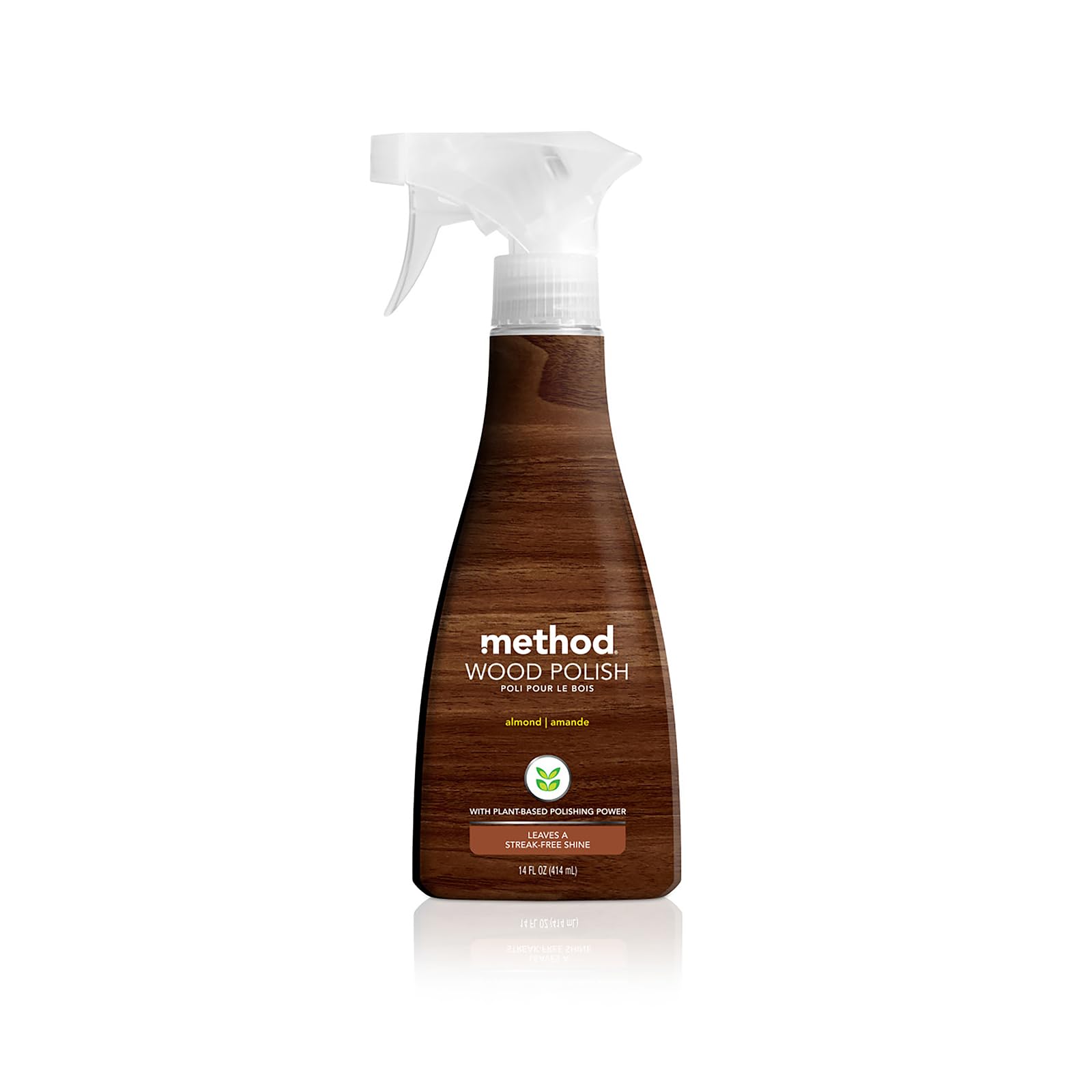
Method’s Almond Wood Polish stands out for its packaging and scent. The bottle (minus the nozzle) is made from 100% post-consumer recycled plastic, and the formula is cruelty-free — never tested on animals. The almond fragrance is noticeably different from the citrus-heavy competition: warm, subtly sweet, and light enough that several reviewers mention receiving compliments on how the room smells after dusting.
Performance-wise, this is a light-duty polish designed for finished wood surfaces. It polishes and shines without the heavy conditioning that a paste wax or concentrated oil provides, making it best for weekly dusting on furniture that is already in good condition. Users report that it leaves a clean, non-oily shine on cabinets and window sills, and one housekeeper specifically requested it over other brands.
The main trade-off is concentration. Compared to Milsek or Natchez Solution, Method’s formula is thinner and requires more product per application, meaning the 14-ounce bottle may run out faster if you are covering large surfaces. If your priority is a pleasant, non-toxic spray for everyday touch-ups on sealed, modern furniture, this is a reliable and environmentally conscious pick.
Why it’s great
- Bottle made from 100% recycled plastic
- Warm almond scent that complements any home
- No streaks or oily residue on finished wood
Good to know
- Thinner formula; uses more product per cleaning
- Best for light-duty dusting, not deep conditioning
5. Natchez Solution Complete Furniture Care

Natchez Solution combines beeswax, lemon oil, and FDA-quality mineral oil into a single 8-ounce bottle that delivers a rich, emollient finish specifically praised by antique collectors. The formula is hypoallergenic and all-natural, with no wax build-up even after repeated applications — the wax content is balanced so it conditions without creating a sticky surface layer that attracts dust.
Users report that it re-moisturizes severely dry wood, helps hide light scratches, and even minimizes the appearance of water stains on vintage pieces. One reviewer attached a photo of an old solid wood sewing table that looked decades younger after a single treatment. It is not intended for everyday use: the manufacturer recommends letting the first application soak in for a while, especially on neglected surfaces, before buffing to a shine.
The small 8-ounce bottle is intentional — a little goes a long way, and the proper technique involves applying sparingly and buffing thoroughly. For those who own real-wood antiques or heirloom furniture that needs careful, restorative care, this is a simple three-ingredient blend that outperforms more complex spray polishes.
Why it’s great
- Hypoallergenic and safe for antique finishes
- Helps conceal light scratches and water marks
- Beeswax + mineral oil blend won’t build up
Good to know
- Not designed for daily or weekly use
- Requires soak-in time before buffing
FAQ
Can I use a natural oil polish on my cutting board?
How often should I apply a wax-based natural polish?
Why does my furniture feel sticky after using a “natural” polish?
Final Thoughts: The Verdict
For most users, the best natural wood cleaner and polish winner is the Daddy Van’s Beeswax & Lavender because its USDA-certified biobased formula provides deep conditioning, water resistance, and a protective wax barrier without any petroleum solvents. If you want a quick spray-and-wipe routine for weekly dusting, grab the Method Wood Polish (Almond). And for restoring antiques and removing water rings without build-up, nothing beats the Milsek Furniture Polish with Orange Oil.