The rectangular profile, flat edge, and tall blade of a Nakiri knife are purpose-built for one task: making clean, fast work of vegetables. Unlike a standard chef’s knife that demands a rocking motion, a Nakiri glides straight through—each downward chop landing squarely on the cutting board. That efficiency matters most when you are knifing through a mountain of onions, carrots, or squash.
I’m Mohammad Maruf — the founder and writer behind AirfryerBite. Over years of reviewing kitchen hardware, I’ve focused on the geometry and steel behind Japanese-style blades, analyzing edge retention, balance, and how profile shape translates to real prep speed.
Choosing the right kitchen tool is about matching blade shape to your cutting habits. For anyone who prioritizes vegetable prep, this guide cuts through the noise to find the best nakiri knife for your kitchen routine.
How To Choose The Best Nakiri Knife
Selecting a Nakiri means focusing on the blade geometry and steel that match how you cut. Not every rectangular blade delivers the same experience. Here are the factors that separate a workhorse from a wall ornament.
Blade Steel and Hardness
The steel determines how often you need to sharpen and how tough the edge is. Japanese high-carbon stainless steels like 10Cr15CoMoV or molybdenum/vanadium blends hold a very acute edge (often 15 degrees per side) but can be more brittle under lateral stress. German stainless steel (1.4116) is tougher and more corrosion-resistant, but it won’t hold a razor edge as long. A Rockwell hardness between 58 and 62 HRC is the sweet spot: sharp enough for clean slices through tomato skin, durable enough for dense butternut squash.
Blade Height and Knuckle Clearance
The tall blade is the Nakiri’s signature. A height of at least 5 centimeters keeps your knuckles from scraping the board as you chop. Too short, and you lose the entire advantage of the profile. Too tall, and the knife feels clumsy. Most good Nakiri blades sit between 4.5 and 6 centimeters tall. Measure your own hand before purchasing—knuckle clearance is a non-negotiable comfort factor.
Handle Material and Balance
A Nakiri sees straight, repetitive motion—no rocking, no slicing curves. The handle should keep the blade balanced over your pinch grip. Natural wood (red sandalwood, pakka wood) absorbs hand moisture and provides a warm, secure feel, but requires hand washing and oiling. Synthetic handles (G10, dual-polymer, polyoxymethylene) are more durable and grippy when wet, and they resist cracking. Full-tang construction adds heft and stability, which helps the knife fall through vegetables with gravity on your side.
Quick Comparison
On smaller screens, swipe sideways to see the full table.
| Model | Category | Best For | Key Spec | Amazon |
|---|---|---|---|---|
| Made In 6″ Nakiri | Premium French Forge | Balanced all-purpose veggie prep | 2.5 mm blade, X50CrMoV15 nitrogen-treated steel | Amazon |
| Dalstrong Gladiator 7″ | German High-Carbon | Hefty daily driver with superb build | 56+ HRC, German high-carbon steel, G10 handle | Amazon |
| Global 7″ Vegetable Knife | Japanese Stainless | Lightweight precision for long sessions | Molybdenum/vanadium steel, 7-inch blade | Amazon |
| Mac JU-65 6.5″ | Japanese Molybdenum | Thin blade for delicate slicing | 2.5 mm blade, molybdenum steel, pakka wood handle | Amazon |
| HOSHANHO 7″ Nakiri | High-Carbon Forged | Entry-level Japanese edge on a budget | 10Cr15CoMoV steel, 60-62 HRC, red sandalwood handle | Amazon |
| Milk Street 6.75″ | German Steel | Comfort-focused ergonomic handle | 1.4116 German steel, 2-inch blade height, dual-density polymer handle | Amazon |
| Global 5.5″ Vegetable Knife | Compact Japanese | Small hands or tight counter space | 5.5-inch blade, molybdenum/vanadium steel | Amazon |
In‑Depth Reviews
1. Made In Cookware 6″ Nakiri Knife
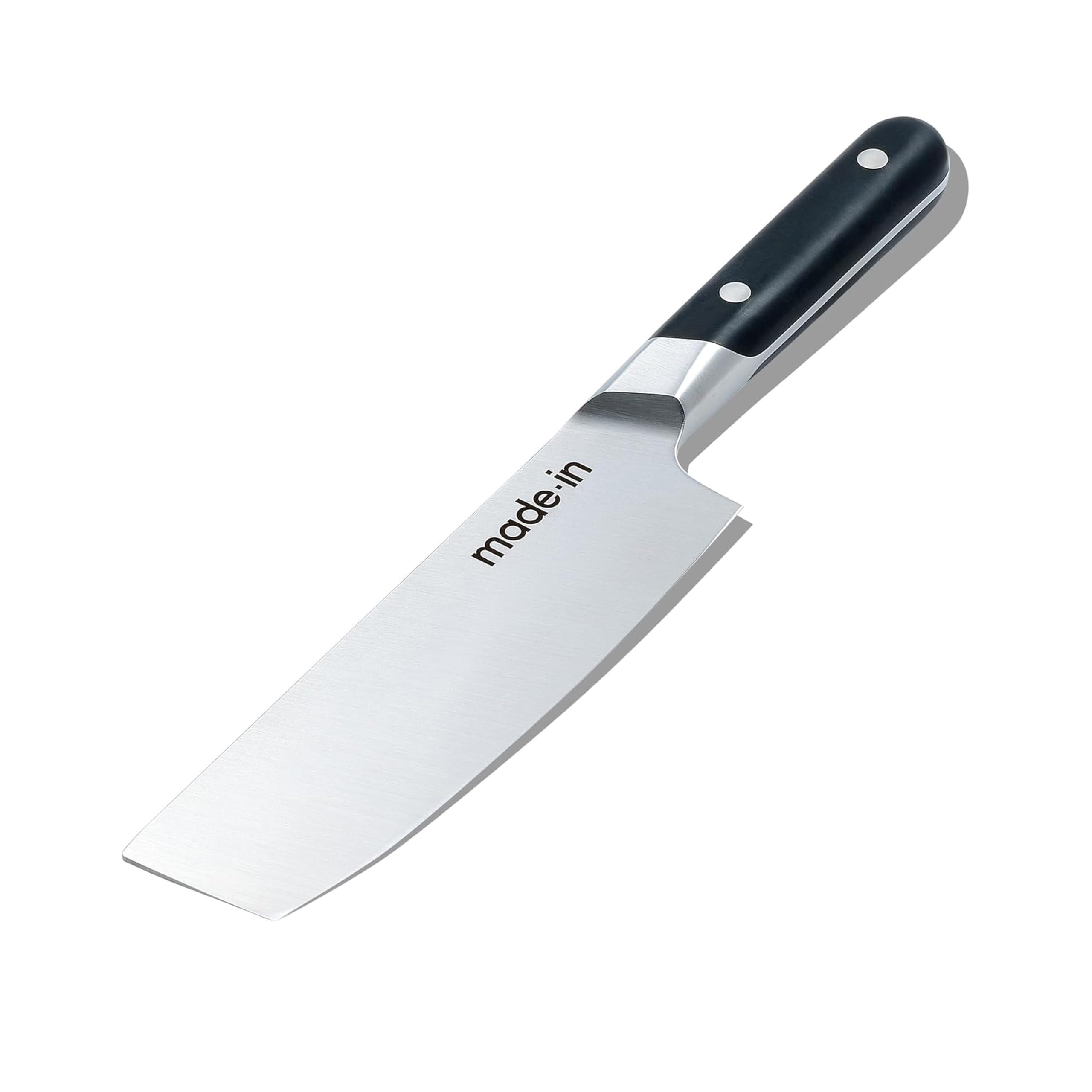
Made In’s 6-inch Nakiri is forged in Thiers, France from a single rod of X50CrMoV15 stainless steel—the same alloy used by classic French blade makers. The nitrogen treatment boosts corrosion resistance and hardness without making the steel brittle. At 2.5 mm thick, this blade is substantial enough to push through dense squash yet thin enough to produce translucent cucumber slices. The full-tang construction gives it a balanced, slightly forward-heavy feel that helps the blade fall through vegetables with minimal effort from your wrist.
The handle is crafted from Polyoxymethylene (POM), a dense engineering thermoplastic that resists moisture and won’t shrink or swell like wood. With a blade height of 1.83 inches, knuckle clearance is adequate for average-sized hands, and the flat edge makes the classic Nakiri straight-chop motion effortless. Multiple customer reviews note that the knife is exceptionally sharp out of the box and that it improves prep speed dramatically compared to a chef’s knife.
Some users report that the edge requires more frequent honing than they expected—weekly if you’re prepping heavy volumes. That is typical for X50CrMoV15; it is tough and easy to sharpen, but it does not hold a razor edge as long as harder carbon steels. For most home cooks, the trade-off for corrosion resistance and ease of sharpening is worth it. This knife is not dishwasher safe, so plan on hand washing and drying immediately after use.
Why it’s great
- Excellent balance from full-tang construction
- Forged by a 5th generation bladesmith in Thiers, France
- Nitrogen-treated steel resists stains well
Good to know
- Edge requires weekly honing with heavy use
- Blade height is on the shorter side for larger hands
2. Dalstrong Nakiri Asian Vegetable Knife 7″ – Gladiator Series

The Dalstrong Gladiator 7-inch Nakiri is a heavy-duty workhorse built around forged German high-carbon steel hardened to 56+ HRC with a hand-polished edge at 16-18 degrees per side. The full-tang blade extends through a triple-riveted black G10 handle—a glass-epoxy laminate that is denser than wood, impervious to moisture, and provides a secure grip even when your hands are slick from washed vegetables. The 7-inch length is the most versatile for a Nakiri, long enough to slice through a whole cabbage yet nimble enough for detail work on a single shallot.
NSF certification means this knife meets commercial kitchen sanitation standards, which is rare in the sub-hundred-dollar Nakiri category. The tall blade offers generous knuckle clearance, and the satin-finished steel resists staining better than many Japanese carbon alternatives. Customer reviews consistently praise the razor-sharp out-of-box edge and the comfortable, confidence-inspiring heft. One user reported cutting 75 turkeys without needing to resharpen, which speaks to the edge stability of the German steel.
The main drawback is handle ergonomics for extended sessions. Several reviewers note that the handle shape can create a pressure point on the index finger after prolonged chopping. At 318 grams, this is one of the heavier Nakiri options—great for powering through hard vegetables but potentially fatiguing during a very long prep shift. The included sheath is a practical bonus for storage.
Why it’s great
- NSF certified for commercial kitchen use
- Excellent edge retention from hardened German steel
- Includes protective sheath for safe storage
Good to know
- Handle design can cause index finger fatigue over time
- Heavy build may not suit those preferring lightweight knives
3. Global 7″ Vegetable Knife

The Global 7-inch Vegetable Knife is made from the brand’s signature molybdenum/vanadium stainless steel, a proprietary alloy that achieves a fine-grained structure capable of holding a very acute edge. The blade is stamped rather than forged, which keeps the weight down to just 192 grams. For vegetable prep, that matters—the lighter blade allows for fast, repetitive chopping without tiring your forearm, and the dimpled stainless steel handle provides a secure grip even when wet. The 7-inch length makes it one of the taller Nakiri options available, offering excellent clearance for larger ingredients.
Reviews consistently highlight the exceptional out-of-box sharpness: tomatoes yield zero skin tearing, and the blade glides through dense carrots with minimal pressure. The steel is easy to resharpen on a whetstone, and users report that it maintains its edge longer than most other stainless knives in this class. Global offers a limited lifetime warranty against defects and breakage, reflecting confidence in their manufacturing process. The one-piece metal construction means there is no joint between blade and handle to collect food debris, which simplifies cleanup.
The all-metal handle is polarizing. Some users love the seamless, modern feel and the precise balance point, while others find it slippery (despite the dimples) or cold to the touch in cooler kitchens. The knife is not dishwasher safe, but the metal handle is easy to rinse. At around 7 inches of blade length, this is one of the best options for cooks with smaller hands who need a lightweight, precision-oriented Nakiri.
Why it’s great
- Extremely lightweight (192g) for fatigue-free chopping
- Molybdenum/vanadium steel holds a keen edge
- Seamless handle design prevents debris buildup
Good to know
- All-metal handle can feel slippery to some users
- Stamped blade may not feel as substantial as forged options
4. Mac Knife Japanese Series Vegetable Cleaver 6.5″

The Mac JU-65 is a JDM classic that has been in continuous production for years—a testament to its functional design. The blade is made from molybdenum steel, a Japanese alloy that takes a very sharp edge and is easier to sharpen than high-carbon variants. At 2.5 mm thick with a 6.5-inch length, this Nakiri splits the difference between a thin slicer and a sturdy chopper. The pakka wood handle is sealed against moisture and offers a warm, traditional feel that balances the blade nicely. The flat edge and tall profile make straight vegetable chopping feel natural and precise.
Customer reviews from long-term owners are deeply positive: one user has owned the knife since 2016 and reports it still looks like new with proper care. The blade’s molybdenum steel does stain more easily than stainless—especially after cutting acidic foods like tomatoes or citrus—so immediate rinsing is necessary. The wood handle is not full-tang, which keeps the knife lighter but may concern users who prioritize absolute durability. The thin blade excels at delicate slicing: think paper-thin garlic, uniform brunoise dice, and clean basil chiffonade.
The 6.5-inch length is slightly shorter than some Nakiri options, which may require an extra pass when cutting large wedges of squash or cabbage. Some reviewers also note that the edge, while very sharp, is not the hardest they have used—it responds well to a honing rod between sharpenings. This is an ideal choice for cooks who want the Japanese Nakiri experience without paying a premium price, and who are comfortable with the maintenance that carbon steel requires.
Why it’s great
- Proven design with years of positive user feedback
- Thin blade reduces sticking and drag through vegetables
- Pakka wood handle offers comfortable, warm grip
Good to know
- Stains easily with acidic foods; must rinse immediately
- Not full-tang construction, lighter than some alternatives
5. HOSHANHO Nakiri Knife 7 Inch

The HOSHANHO 7-inch Nakiri punches above its price point with Japanese 10Cr15CoMoV high-carbon steel hardened to 60-62 HRC. That is a seriously hard edge—harder than what most German steel options offer—which translates to excellent edge retention and clean slicing through dense vegetables. The blade is hand-ground to a 15-degree angle per side, producing a razor-sharp edge that makes short work of tomatoes and peppers. The natural red sandalwood handle showcases an elegant grain pattern and provides an anti-slip, ergonomic grip that reduces hand fatigue during extended use.
Customer reviews affirm that the knife arrives extremely sharp and significantly reduces prep time. The full-flat profile and deep belly allow the Nakiri to cut straight through onions and carrots without wedging. The included gift box packaging makes it a viable option for giving, but the real value is in the steel: 10Cr15CoMoV is a premium alloy typically found on much more expensive Japanese knives. At this price tier, it is rare to see such high Rockwell hardness combined with a forged construction.
The main caveat is handle quality control. Some users have reported that the handle, advertised as red sandalwood, appears to be a synthetic material with wood grain printed or textured onto it. The knife performs well regardless of handle material, but the discrepancy is worth noting if you prioritize natural wood. The blade is not dishwasher safe and requires hand washing and immediate drying to prevent corrosion. For cooks on a budget who want to experience a true high-hardness Japanese Nakiri, this is the most accessible entry point.
Why it’s great
- Premium 10Cr15CoMoV steel at a very accessible price
- Excellent edge retention from 60-62 HRC hardness
- Sharp out of box with hand-ground 15-degree edge
Good to know
- Handle material may not be genuine red sandalwood
- High-carbon steel requires diligent drying after each use
6. Milk Street 6.75-inch Nakiri Knife by Christopher Kimball
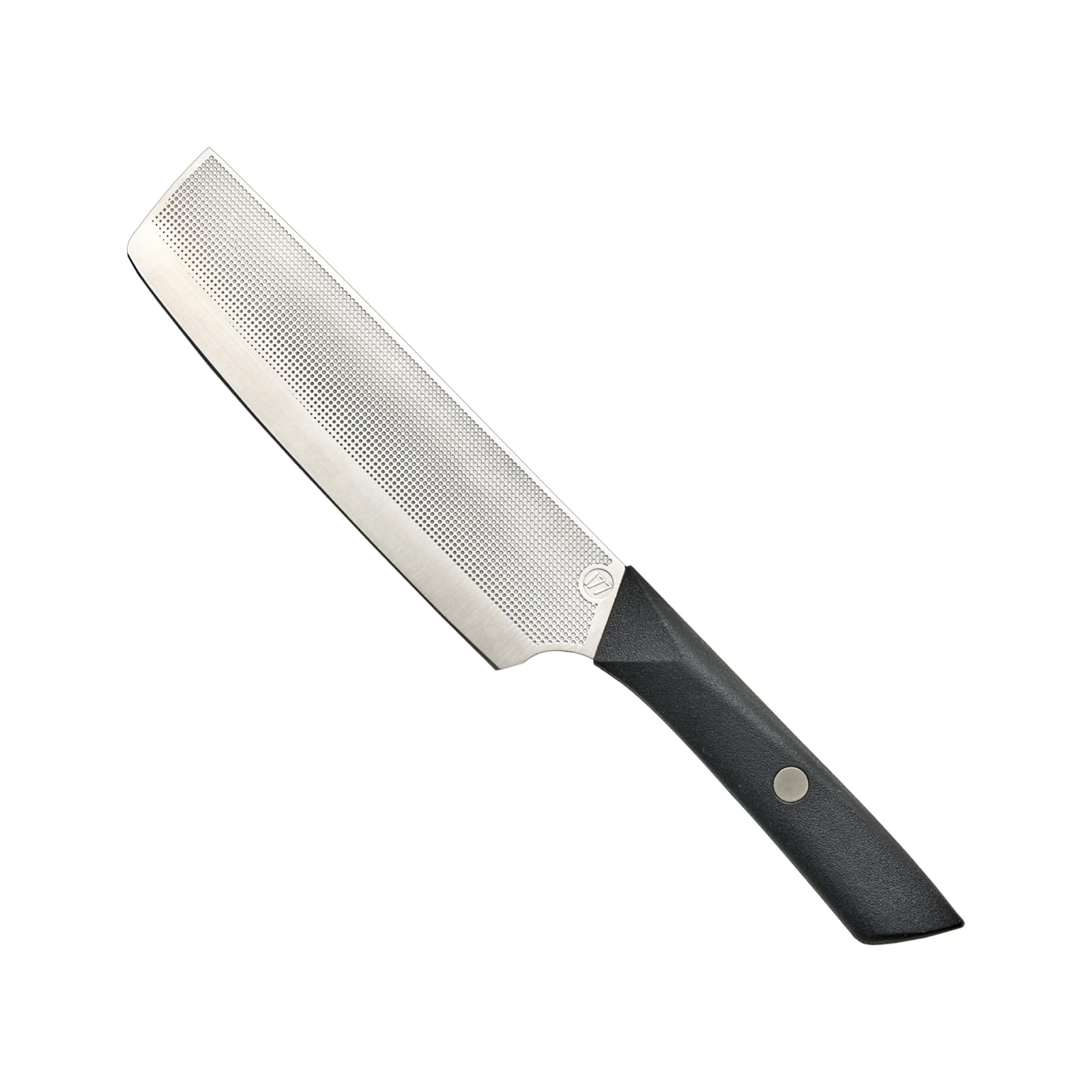
The Milk Street Nakiri was developed by Christopher Kimball’s team with a specific focus on handle ergonomics. The dual-density polymer handle has a hard polypropylene core for stability under a tight grip, wrapped in a softer, tactile thermoplastic elastomer that conforms to your palm. Pronounced texturing along the handle ensures the knife stays put even when wet or greasy. The blade is made from 1.4116 German stainless steel—the same alloy used by many German knife manufacturers—stamped with a file pattern on the blade face that mimics the traditional Japanese kurouchi finish and helps prevent food from sticking.
At 6.75 inches and with a 2-inch blade height, this Nakiri offers generous knuckle clearance and a comfortable reach for most prep tasks. The embossed blade texture genuinely reduces sticking with moist ingredients like cucumber or mushroom, which is a practical advantage over smooth blades. Multiple customer reviews praise the sharpness out of the box and the secure, confidence-inspiring grip. The knife feels lighter than its dimensions suggest, which helps during long chopping sessions.
The German steel is tougher and more stain-resistant than Japanese high-carbon steel, but it also means the edge will not hold as long between sharpenings. Some users feel the price is high for 1.4116 steel compared to other Nakiri options with harder alloys. The included care instructions recommend sharpening at a 17-degree angle, which is slightly less acute than traditional Japanese edges—this makes the edge more durable but slightly less razor-like. For cooks who prioritize a comfortable, slip-resistant handle and want a lower-maintenance stainless blade, this is a strong contender.
Why it’s great
- Exceptional handle grip with dual-density polymer construction
- Embossed blade texture reduces food sticking
- Tall 2-inch blade provides great knuckle clearance
Good to know
- 1.4116 steel won’t hold edge as long as harder Japanese alloys
- Premium price for entry-level German steel
7. Global Knives 5.5″ Vegetable Knife

The Global 5.5-inch Vegetable Knife is a compact, lightweight Nakiri-style blade made from the same molybdenum/vanadium stainless steel as Global’s larger models. At 5.5 inches, it is shorter than most Nakiri knives, making it an excellent choice for cooks with smaller hands or anyone who works in tight kitchen spaces. The one-piece stainless steel construction provides seamless hygiene and perfect balance, while the dimpled handle pattern ensures a reliable grip. The steel is known for taking a very sharp edge and holding it well, though not as long as higher-carbon Japanese steels.
Customer reviews highlight the knife’s comfortable feel and excellent balance. Users with smaller hands especially appreciate the reduced reach and lighter weight. The blade is thin and tracks well through large hard vegetables, making it a practical option for daily vegetable prep. The steel sharpens easily on a whetstone, and many users find it stays sharp enough for home cooking with regular honing. Global offers a limited lifetime warranty, reflecting the brand’s confidence in their manufacturing.
The compact size is both an advantage and a limitation. It excels at precision work on smaller ingredients like shallots, garlic, and individual bell peppers, but the shorter blade means it requires more strokes to cut through large items like a whole butternut squash or a head of cabbage. Some users note that the edge dulls faster than they would like with heavy use, which is consistent with the moderate hardness of molybdenum/vanadium steel. This is a fantastic secondary knife or a primary option for cooks who prioritize maneuverability and quick, precise cuts over raw chopping power.
Why it’s great
- Ideal size for small hands and tight spaces
- Excellent balance and comfortable grip
- Seamless one-piece construction is easy to clean
Good to know
- Short blade requires more passes on large vegetables
- Edge retention is moderate compared to harder steels
FAQ
Can I use a Nakiri knife to cut meat or bones?
How do I maintain the edge on a Nakiri knife?
What is the difference between a Nakiri and a Santoku knife?
Final Thoughts: The Verdict
For most users, the best nakiri knife winner is the Made In 6″ Nakiri because it combines French forging tradition with nitrogen-treated steel that offers excellent corrosion resistance, balanced weight, and a comfortable synthetic handle—ideal for daily vegetable prep. If you want a heavier, commercial-grade workhorse with NSF certification, grab the Dalstrong Gladiator 7″. And for precision-focused cooks who prioritize lightweight handling and a laser-sharp edge, nothing beats the Global 7″ Vegetable Knife.