Making pesto in a food processor spins heat into the leaves, dulling the basil and making the oil bitter before it ever hits the pasta. A proper mortar and pestle uses pressure, not blades, to coax out the volatile oils and emulsify the sauce into a creamy, fragrant paste that tastes like summer. The weight of the stone, the texture of the grinding surface, and the depth of the bowl all determine whether your pesto ends up silky or sloppy.
I’m Mohammad Maruf — the founder and writer behind AirfryerBite. I’ve spent years analyzing how small-batch kitchen tools handle the mechanical demands of wet grinding, pore structure retention, and thermal transfer to understand which designs actually improve the texture and flavor of fresh sauces.
Grinding basil, pine nuts, garlic, and Parmesan by hand demands a specific tool geometry — a shallow wide bowl invites splatter, while a slick surface fails to macerate the leaves. Finding the right mortar and pestle for pesto means weighing interior texture, capacity, weight, and material porosity against the specific mechanics of wet ingredient break-down.
How To Choose The Best Mortar And Pestle For Pesto
Pesto is a wet, oily, paste-like grind — a task that punishes shallow bowls, polished interiors, and lightweight stone. Choosing the right set requires focusing on the specific physics of macerating tender herbs and nuts into a cohesive sauce without overheating or slipping.
Bowl Capacity and Depth
A 2-cup capacity (around 400–500 ml) is the practical floor for pesto. Smaller bowls crowd the basil leaves, forcing you to grind in batches that break the emulsion. Depth matters more than width: a deep bowl keeps the splashing oil and basil fragments contained during the vigorous circular motion of the pestle. Shallow molcajetes look nice for serving guacamole but spray wet ingredients across your counter.
Interior Surface Texture
The interior must be rough — unpolished granite or unfinished stone creates the friction needed to tear basil cell walls and break down hard garlic and pine nuts. A polished or glazed surface slides over the ingredients, mashing rather than grinding, which produces a chunky, inconsistent paste. Check for visible small pits or grit on the inner surface; these are what grab and twist the leaves instead of just pressing them flat.
Weight and Stability
Pesto grinding requires a heavy, rocking motion with the pestle that tests the mortar’s grip on the counter. A lightweight bowl walks, spins, or tips — ruining the rhythm needed for a proper emulsion. Look for a weight of at least 3 kilograms (6.6 pounds). The base should be flat and wide, or have a non-slip ring or wooden coaster to prevent movement.
Material and Cleaning
Granite is the standard pesto tool because it is non-porous enough to resist oil rancidity but rough enough to grind. Porcelain is non-porous and flavor-neutral, but its glazed interiors cannot replace the friction of raw stone. Cast iron requires oil seasoning and is not dishwasher safe, but its deep shape and heavy weight are excellent for pesto. Avoid wood — it absorbs garlic oil and pine nut fat permanently, and it scratches too easily to maintain a clean surface.
Quick Comparison
On smaller screens, swipe sideways to see the full table.
| Model | Category | Best For | Key Spec | Amazon |
|---|---|---|---|---|
| Velaze Large 6.3 Inch | Granite | Wet grinding pesto and spice pastes | 580 ml unpolished granite interior | Amazon |
| Praknu 2 Cup Granite | Granite | Counter stability with non-slip bamboo base | 400 ml textured granite with wood coaster | Amazon |
| PriorityChef Granite 6.1 Inch | Granite | Mid-sized batches at a budget-friendly cost | 2-cup capacity, 3.9-inch pestle | Amazon |
| IMUSA 6.5 Inch Granite | Granite | High volume family batches | 6.5-inch diameter, 3.69 kg weight | Amazon |
| Cooler Kitchen Silicone Porcelain | Porcelain | Users with arthritis or grip issues | Non-porous glazed interior, dishwasher safe | Amazon |
In-Depth Reviews
1. Velaze Large Mortar and Pestle Set, 100% Granite

The Velaze set offers the largest usable capacity in this lineup at 580 ml, paired with an unpolished granite interior that provides the aggressive friction needed to tear basil cell walls and break down pine nuts and garlic into a smooth paste. Its 6.3-inch pestle gives you enough leverage to grind wet ingredients without transferring body weight onto the bowl — critical for maintaining a steady emulsion. The granite is heavy enough at 3.05 kg to stay planted during the rocking pesto motion.
Customer reviews confirm that the rough inner surface grinds spices and herbs smoothly without leaving stone grit behind, and the deep bowl shape contains splattering oil during the vigorous circular grind. Multiple users note that the set preserves the aroma of fresh ingredients effectively, though the packaging is plain cardboard and the unit requires hand washing only. The unpolished finish demands a thorough rinse after pesto to prevent oil residue from building up in the pores.
For anyone making pesto as a regular practice rather than an occasional treat, the Velaze’s interior texture and capacity hit the sweet spot between manageable weight and usable volume. The non-porous granite resists flavor transfer from garlic between batches, so yesterday’s pesto does not taint today’s salsa. If you want a dedicated pesto tool that handles 2–3 portions in one go, this is the most capable unit in this price tier.
Why it’s great
- Largest capacity (580 ml) handles full pesto batches without crowding
- Unpolished interior provides aggressive friction for wet grinding
- Heavy 3.05 kg base stays stable during rocking motion
Good to know
- Not dishwasher safe; needs thorough hand drying after rinsing
- Plain cardboard packaging may arrive with minor scuffs
2. Praknu Mortar and Pestle Set Large 2 Cup
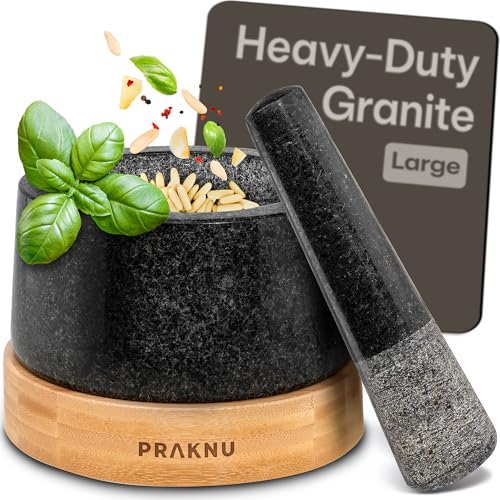
The Praknu set addresses the single most common pesto grinding complaint — the bowl sliding across the counter — with a sustainable bamboo coaster that grips the granite base securely. The 400 ml (2-cup) capacity is sufficient for a single large batch of pesto, and the textured granite interior breaks down garlic and basil efficiently without requiring the heavy downward pressure that lighter mortars demand. The set weighs over 3 kg, which together with the coaster keeps the bowl locked in place.
Reviewers consistently call the Praknu “beautiful” and “classy,” noting that the bamboo base dresses it up enough to leave on display. The granite interior is rough enough to grind black peppercorns and dried herbs, yet cleans easily with a water rinse and wipe — no soap needed. The 3.94-inch diameter bowl opening gives ample room for the pestle to move in a full circular arc, which is essential for the crushing and stirring action of pesto making.
One limitation: the 400 ml capacity is smaller than the Velaze, so if you are making pesto for more than 4 servings, you will have to work in two batches. The bamboo base, while excellent for stability, should not be submerged in water during cleaning — it requires wiping separately. The included gift box makes it a strong candidate for gifting, but the real value is in the weight and grip design that eliminates the frustration of chasing a moving bowl.
Why it’s great
- Bamboo coaster prevents any slipping during wet grinding
- Textured granite interior provides effective friction for herbs and garlic
- Heavy weight (3.25 kg) keeps the mortar planted on the counter
Good to know
- 400 ml capacity may require two batches for large pesto quantities
- Bamboo base must be cleaned separately and not submerged
3. PriorityChef Granite Mortar and Pestle Set, 6.1 Inch

The PriorityChef 6.1-inch granite mortar punches well above its price tier with a 2-cup capacity and a polished exterior that hides the natural stone’s rough interior. The rough inner surface is the key spec for pesto: it macerates basil leaves and grinds pine nuts into a fine paste without requiring supplemental chopping. The included detailed seasoning instructions walk you through the critical pre-grind step that removes loose stone dust and prepares the surface for food use.
User feedback highlights the effective grinding on garlic, herbs, and small batches of salsa — all relevant to pesto preparation. The 2.67 kg weight is lighter than the premium options, but the wide 6.1-inch diameter base provides enough surface area to keep the bowl stable during moderate grinding pressure. Anti-slip felt pads are included, which address the stability gap caused by the lighter weight. The bowl depth is adequate for pesto, though the slightly wider profile means oil splatter is possible if you grind too aggressively.
This is an excellent entry point for someone who wants to test hand-ground pesto without committing to a premium price. The seasoning process is simple but necessary — skipping it will leave grit in your first batch. The felt pads help with stability but can peel off over time with heavy use. For intermittent pesto making, the PriorityChef delivers granite friction and a practical 2-cup capacity at a very accessible cost.
Why it’s great
- Rough natural granite interior grinds basil and garlic effectively
- Included anti-slip felt pads improve counter stability
- Detailed seasoning instructions prevent grit contamination in first use
Good to know
- Lighter weight (2.67 kg) requires felt pads for stable pesto grinding
- Wider bowl shape may allow some oil splatter during vigorous motion
4. IMUSA 6.5 Inch Traditional Heavy Duty Polished Granite Molcajete

The IMUSA 6.5-inch molcajete is the widest and heaviest set examined here at 3.69 kg, giving it the most counter-hugging stability of the group. The polished exterior and rough interior granite surface provide the friction needed for pesto grinding, and the generous 6.5-inch diameter offers plenty of room for larger batches — though the bowl is shallower than deep mortars, which is a tradeoff to know. The rough inner surface grabs basil leaves and garlic cloves effectively, and the heavy pestle transfers momentum well during the grinding stroke.
Customer reviews confirm the molcajete is solid and traditional, requiring proper seasoning (several rounds of grinding rice or water) before first use. Some users note nicks or chips on arrival, which suggests quality control is uneven. The shallower bowl shape means pesto oil can splatter more easily than in deeper designs, and the wide opening makes it less suited for the contained emulsification of a thick paste. However, for someone making large volumes of pesto for a crowd, the wide surface area speeds up the grinding process because you can work more ingredients at once.
The IMUSA is the workhorse option for volume. If you regularly make big batches of pesto for freezing, the weight and diameter are hard to match at this price. Just budget extra time for the seasoning process, and accept that the shallow profile demands a slightly more careful grinding technique to avoid spraying olive oil across your workspace.
Why it’s great
- Heaviest in the test (3.69 kg) for maximum counter stability
- 6.5-inch wide interior handles large-volume pesto batches
- Rough granite surface provides strong friction for wet grinding
Good to know
- Shallow bowl shape increases oil splatter risk during pesto work
- Requires thorough seasoning before first use; some units arrive with chips
5. Cooler Kitchen Large Mortar and Pestle Set with Silicone Handle

The Cooler Kitchen set breaks the granite mold with a non-porous porcelain bowl and a detachable silicone base, prioritizing easy cleaning and grip accessibility over raw grinding friction. The glazed interior will not absorb garlic oil or basil odor, and the entire mortar is dishwasher safe — a practical advantage for frequent pesto makers who hate hand-scrubbing stone pores. The silicone handle on the pestle is designed for users with arthritis or wrist injuries, reducing the grip strength needed for the grinding motion.
Customer reviews highlight the sturdy build, the removable base that prevents counter slipping, and the pestle grip that helps hands with limited mobility. The 500 ml capacity is generous for a porcelain set, and the smooth interior cleans instantly without residue. The key tradeoff: the glazed surface lacks the aggressive friction of unpolished granite, so pesto making requires more patient, pressing strokes rather than quick circular grinding. Basil leaves may slide rather than tear initially, requiring you to press and twist rather than grind.
This set is ideal for anyone who prioritizes quick cleanup and easy handling over raw grinding speed. The porcelain will not crack from hot water, and the silicone base stays firmly planted. For traditionalists who want the full mortar experience, the glazed surface will feel slippery. But for users with wrist pain or a low tolerance for tedious cleaning, the Cooler Kitchen delivers a pesto-capable tool that fits a different set of needs.
Why it’s great
- Non-porous porcelain resists oil and odor absorption between pesto batches
- Dishwasher safe for effortless cleaning after oily grinding
- Silicone pestle grip and base help users with arthritis or grip issues
Good to know
- Glazed interior lacks friction of stone; basil may slide during initial grinding
- Porcelain can chip if dropped or hit hard with the pestle
FAQ
Can I use a mortar and pestle for pesto if the interior is polished or glazed?
How do I clean a mortar and pestle after making pesto without leaving garlic smell?
Final Thoughts: The Verdict
For most users, the mortar and pestle for pesto winner is the Velaze Large 6.3 Inch Granite Set because its 580 ml unpolished interior, heavy base, and deep bowl shape deliver the friction and stability needed for creamy hand-ground pesto without splattering. If you want a non-slip base that stays absolutely planted while grinding, grab the Praknu 2 Cup with Bamboo Coaster. And for users who need easy cleaning and an ergonomic grip due to arthritis or wrist issues, the Cooler Kitchen Porcelain Set offers a dishwasher-safe, low-friction alternative that still gets the job done.