The panic of finding a warm insulin vial or a spoiled critical liquid medication after a power blink, a long road trip, or a flight delay is a risk no patient or caregiver should have to take. The right storage unit maintains the strict 36°F to 46°F range required by most biologics, protecting both the efficacy of the drug and your peace of mind.
I’m Mohammad Maruf — the founder and writer behind AirfryerBite. My deep market research focuses on analyzing thermoelectric vs. compressor cooling hardware, real-time digital thermostat accuracy, and battery redundancy in portable medical cold chain devices to separate reliable clinical-grade units from inferior coolers.
After evaluating seven current models on cooling consistency, capacity for multiple pen vials, and fail-safes against freezing, this guide cuts through the marketing fluff to identify the most trustworthy best mini fridge for medication for home, office, and travel use.
How To Choose The Best Mini Fridge For Medication
Choosing the wrong model for your medication storage can result in spoiled vials that cost hundreds or thousands of dollars and put your health at immediate risk. You must prioritize precision temperature control and safety features over general “mini fridge” performance metrics like looks or large capacity.
Thermoelectric vs. Compressor Cooling: Why It Matters for Biologics
Most standard mini fridges use compressor cooling, which can create localized cold spots that dip below freezing. For insulin and other biologics, freezing destroys the protein structure and renders the medication ineffective. Thermoelectric cooling (Peltier chip) is gentler and typically provides a more even temperature distribution without the risk of freezing, making it the safer choice for medication storage.
Digital Thermostat and Real-Time Display: Non-Negotiable for Safety
A simple dial that just makes things “colder” or “warmer” is unacceptable for medication. You need a unit with an adjustable digital thermostat that lets you set a specific target (ideally in the 36°F to 46°F range) and a real-time temperature display so you can confirm the internal conditions at a glance. A visual confirmation prevents the silent failure scenario where the unit is running but not cooling enough to keep the medication safe.
Auto Shut-Off and Anti-Freeze Safety Features
The most advanced medication coolers now include an auto shut-off feature that pauses the cooling system when the internal temperature drops toward the freezing point, and restarts it when the temperature climbs too high. This active regulation is the gold standard for protecting high-value injectables. If you are storing medication in a car or home environment with variable ambient temperature, this feature is worth prioritizing over softer criteria like color or size.
Quick Comparison
On smaller screens, swipe sideways to see the full table.
| Model | Category | Best For | Key Spec | Amazon |
|---|---|---|---|---|
| 4ALLFAMILY Voyager | Travel Cooler | Multi-day trips with auto shut-off | Auto shut-off 36°F–46°F range | Amazon |
| Insucooler SleekCool Pro | Travel Cooler | Real-time temp display & USB-C | Adjustable 36°F–68°F range | Amazon |
| Nikupa Insulin Cooler Case | Travel Case | Includes power bank & satchel | 2°C–10°C auto shut-off | Amazon |
| Antarctic Star 18L Compressor | Desktop Fridge | Home/office home use | 40°F–61°F electronic control | Amazon |
| KOMORE 18L White | Desktop Fridge | Dual cooling/warming mode | Thermoelectric, 18L, glass door | Amazon |
| Nother Insulin Cooler | Travel Case | Battery and bag included | 2°C–8°C, USB-powered | Amazon |
| Antarctic Star 10L Compact | Desktop Fridge | Entry-level desk storage | 10L, AC/DC, no temp control | Amazon |
In‑Depth Reviews
1. 4ALLFAMILY Voyager Insulin Cooler MINI
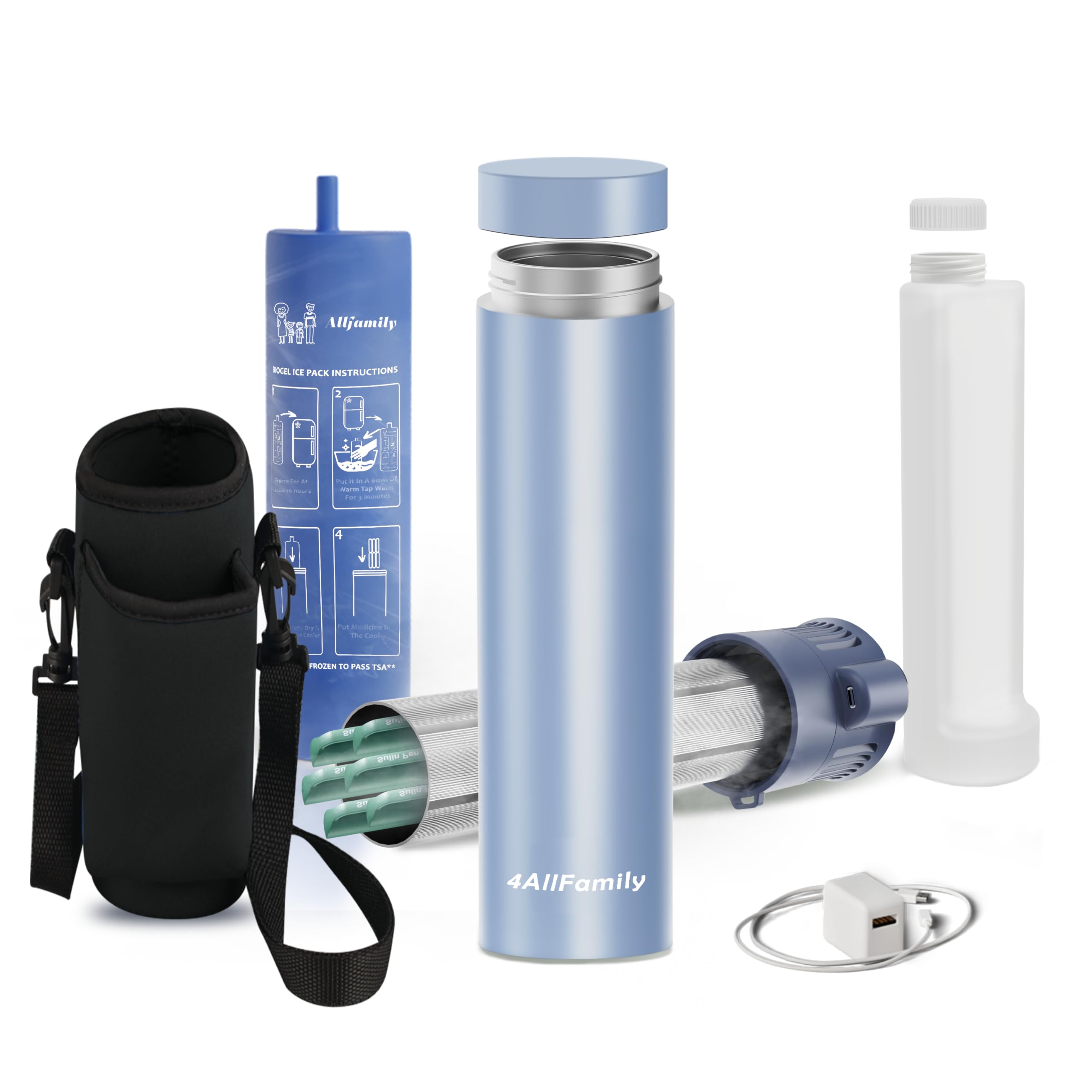
The Voyager stands apart from almost every other portable medication cooler because of its intelligent biogel-plus-USB hybrid system. You can rely on the included freeze pack for 27 hours of passive cooling on a flight, or plug the lid into any USB source for indefinite active refrigeration. The built-in thermostat automatically shuts off the cooling element if the internal temperature dips too low, preventing the freeze damage that can destroy insulin and other biologics.
In real-world scenarios, users have reported maintaining a stable 36°F–46°F range even during an 18-hour flight and on motorcycle trips through 107°F desert heat. The digital temperature display gives immediate confirmation of the internal environment, which is critical when you cannot afford a silent failure. The unit is compact enough for a carry-on, and the stainless steel construction feels durable enough for repeated travel.
The main trade-off is the limited capacity — it fits 1 to 3 pens depending on the type of medicine, which is sufficient for personal travel but not for multi-week trips or storing several different medications at once. The USB plug protrudes and can be vulnerable if the bag is jostled. Overall, this is the most secure and reliable active cooler for a single person’s critical injectables.
Why it’s great
- Built-in thermostat with auto shut-off prevents freezing
- Biogel pack delivers 27 hours of passive cooling without power
- Digital display provides real-time temperature confirmation
Good to know
- Limited to 1–3 pens — not for multi-medication storage
- USB plug can get knocked and damaged during transit
2. Insucooler SleekCool Pro Electric Insulin Cooler
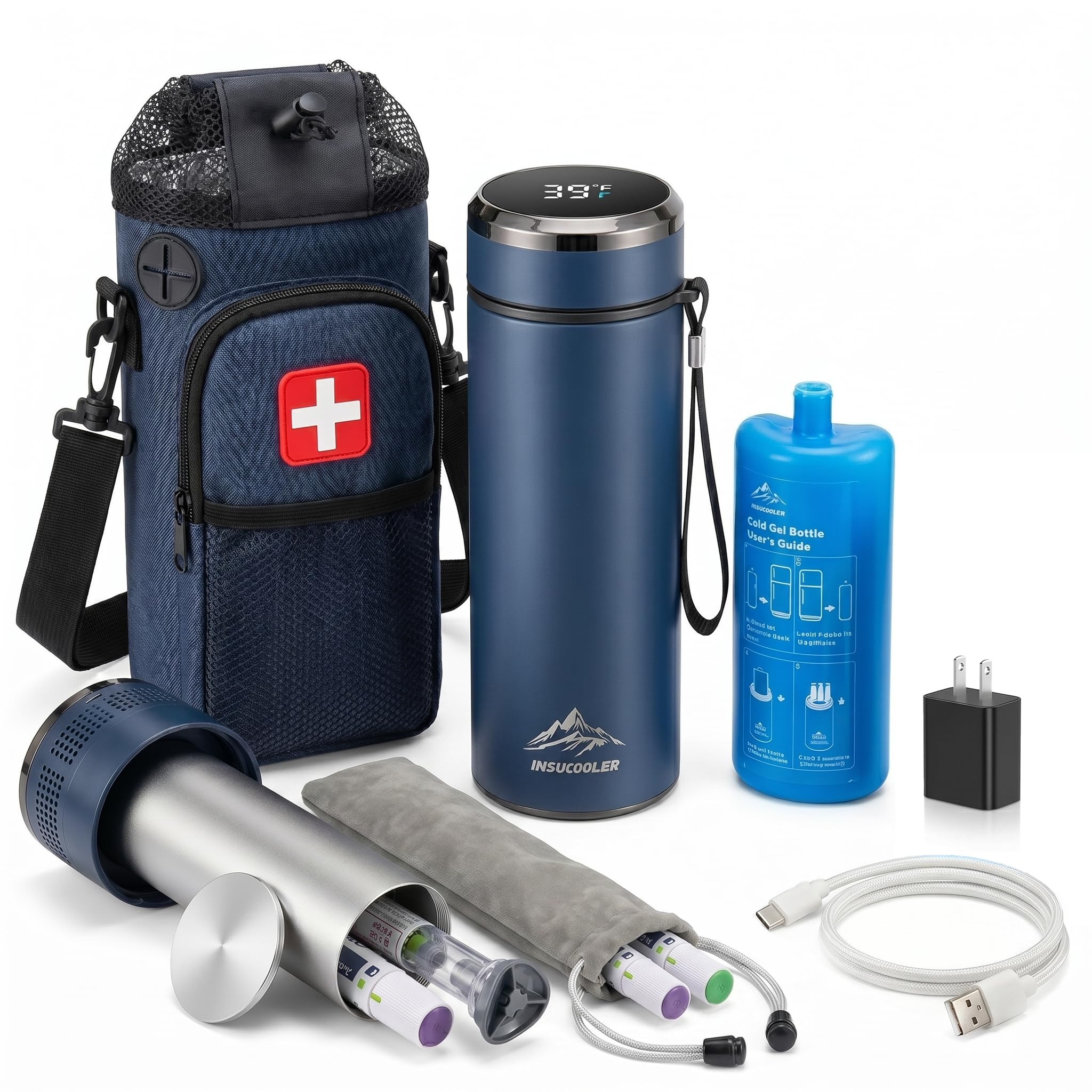
The SleekCool Pro distinguishes itself with a wide adjustable temperature range of 36°F–68°F (2°C–20°C) and a sharp real-time display that lets you switch between Fahrenheit and Celsius. This flexibility is valuable if you are storing different types of medications that have slightly different thermal requirements. Its intelligent cooling technology automatically adjusts performance based on the surrounding temperature, reducing power consumption and noise.
Customer feedback highlights its ability to keep medication under 46°F for nearly 30 hours at room temperature — outperforming four other coolers tested side by side in one user’s comparison. The USB-C connection makes it easy to power from a laptop, car charger, or standard power bank. The unit holds between 3 and 7 insulin pens, making it a solid choice for multi-day trips or slightly larger medication requirements.
The most significant limitation is the sealed 400mAh battery, which is non-replaceable. Some users have expressed concern about long-term reliability since the battery will degrade over time, and the manufacturer’s “free replacement” policy is vaguely documented. If you primarily use this cooler plugged into an external power bank rather than relying on the internal battery, this concern is less of a problem.
Why it’s great
- Adjustable temperature range from 36°F to 68°F for versatile medication storage
- Real-time digital display with Fahrenheit/Celsius toggle
- USB-C powered, compatible with wall adapters and power banks
Good to know
- Internal battery is sealed and non-replaceable
- Warranty documentation is vague on the replacement process
3. Nikupa Insulin Cooler Travel Case
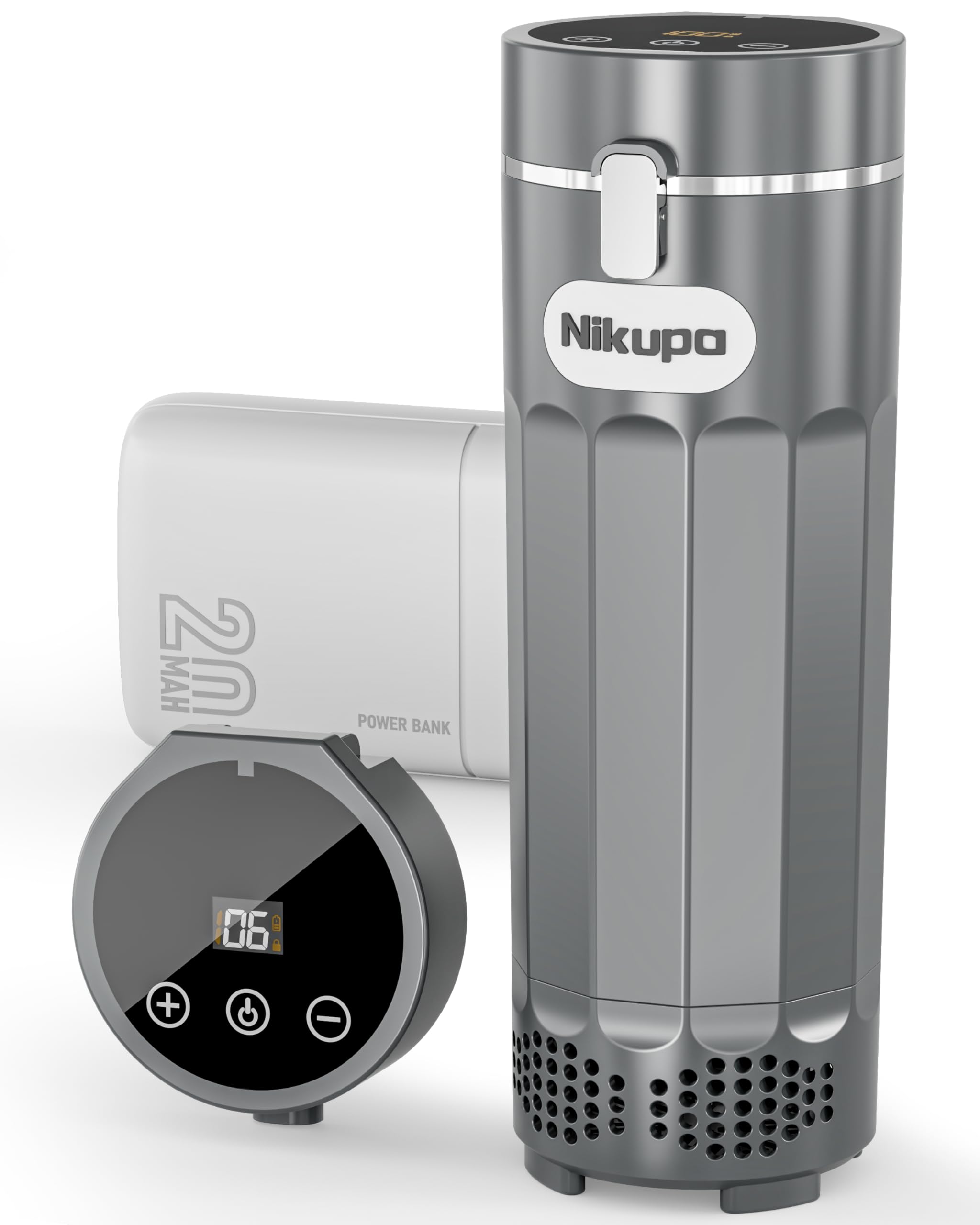
The Nikupa cooler delivers impressive value by bundling a 20,000mAh power bank, a carrying satchel, and charging cables into a single purchase. The core feature is the anti-freeze security system: the cooler uses an auto shut-off and auto-restart mechanism to keep the internal temperature within a safe range of 2°C–10°C (default 6°C). This means it actively protects against both overheating and freezing without requiring manual intervention.
With the included power bank, the runtime is between 3 to 6 hours depending on the ambient temperature — sufficient for most daily commutes or flights. The unit can hold up to 6 insulin pens or multiple vials, and the temperature display allows you to monitor conditions in real time. The construction is durable and the compact cylindrical shape fits easily into a backpack or carry-on bag.
One practical downside is that the power bank instructions are printed in illegibly tiny text, even with magnification. Additionally, the runtime drops significantly in hot ambient environments. You should test the battery life and cooling performance at home before relying on it for a critical trip. The one-year warranty provides some reassurance, but the support process is not explicitly detailed.
Why it’s great
- Includes 20,000mAh power bank, satchel, and cables
- Auto shut-off/restart prevents freezing and overheating
- Holds up to 6 insulin pens with real-time temperature display
Good to know
- Power bank instructions are extremely hard to read
- Battery runtime drops to 3 hours in hot environments
4. Antarctic Star 18L Beverage Refrigerator Cooler

This Antarctic Star is a compressor-based mini fridge with an electronic temperature control that allows you to set the temperature anywhere between 40°F and 61°F. Unlike many desktop coolers that rely on imprecise dials, this unit gives you actual set-point control, which brings it closer to a true medication-grade appliance. The compressor cooling is powerful enough to maintain a steady temperature even in warm summer environments, and the blue LED interior light makes it easy to see stored items.
The 18-liter capacity is generous, holding up to 24 standard cans, which means it can comfortably store multiple medication vials, insulin pens, and ancillary supplies like alcohol swabs and water for injection. The reinforced door with an airtight seal helps maintain consistent humidity and temperature. Reviewers have successfully used it to store breastmilk and skincare products, confirming its reliable temperature stability.
The key downside for medication use is the lower-end temperature limit of 40°F. Some biologics, such as certain types of insulin, may require storage at 36°F–46°F, and 40°F is near the upper end of that range. Additionally, compressor cooling can create cold spots that may approach freezing if the unit is overfilled or poorly organized. This is a solid home-based unit but not ideal for travel or situations requiring precise, minimal-temperature storage.
Why it’s great
- Electronic temperature control with set-point adjustment (40°F–61°F)
- 18-liter capacity fits many vials and supplies
- Compressor cooling maintains steady temp in warm conditions
Good to know
- 40°F minimum may be too warm for some biologics
- Compressor can create localized cold spots that risk freezing
5. KOMORE 18L Portable Tiny Fridge
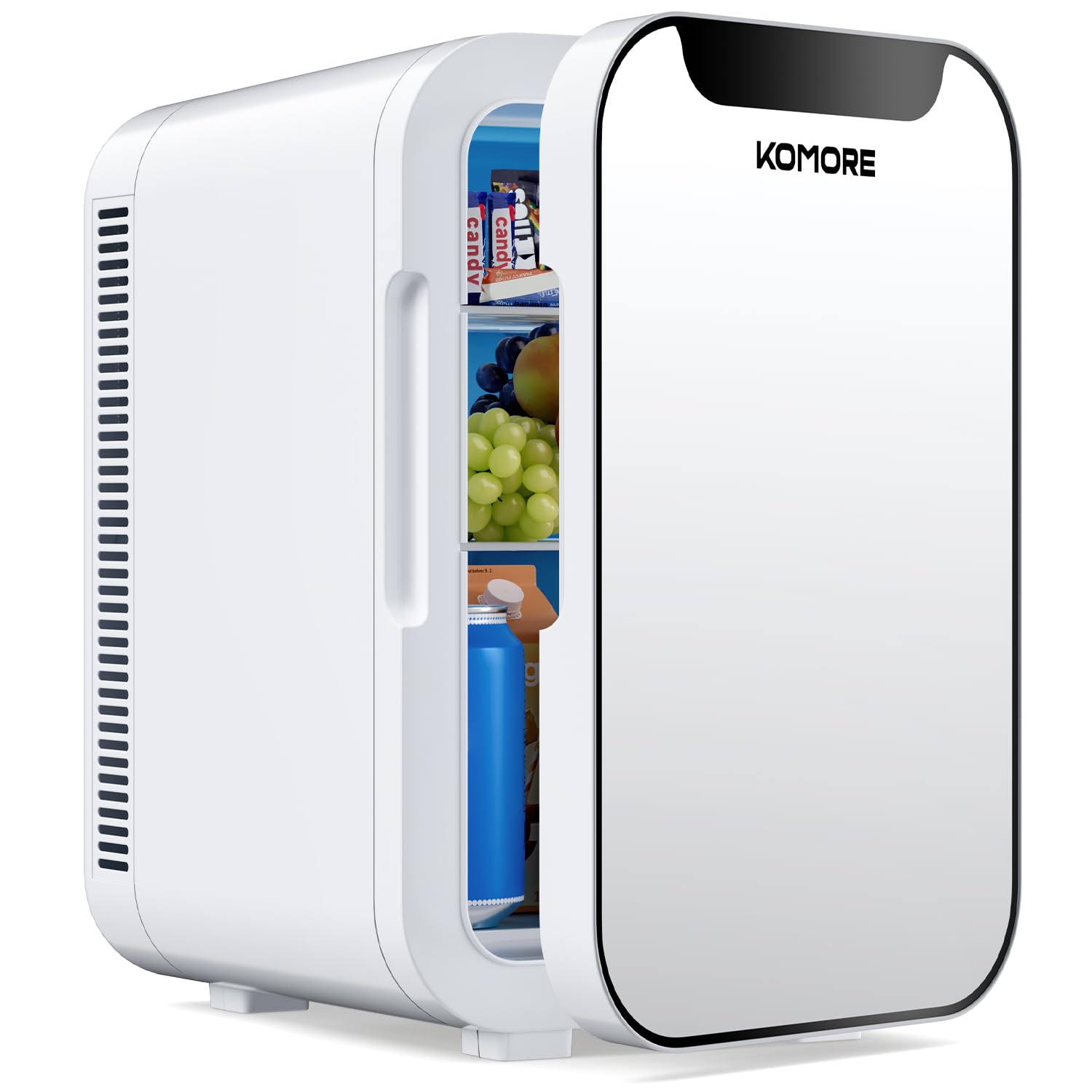
The KOMORE 18L uses thermoelectric cooling, which means it will not freeze your medication — a critical advantage over compressor-based units. It also offers a warming mode that can maintain temperatures up to 122°F–149°F, making it a versatile unit for travel where you might need to keep food warm or store medication that must not get too cold. The dual-voltage AC/DC adapter means it works at home (120V) and in the car (12V), adding to its portability.
The 18-liter capacity is spacious enough for several days’ worth of drinkable medication, snacks, and supplies. The glass door and removable shelves make organization straightforward, and the unit is exceptionally quiet thanks to the lack of a compressor. The exterior dimensions are compact enough for a countertop or desk, and the ergonomic carry handle makes it easy to move.
The main limitation is that thermoelectric coolers are influenced by ambient temperature: they typically cool to only 27°F–32°F below the surrounding room temperature. In a warm room, this might not reach the required 36°F–46°F range for sensitive biologics. You need to use this unit in an air-conditioned environment for it to be effective for medication. It is a capable secondary unit but not the primary choice for critical temperature-sensitive drugs.
Why it’s great
- Thermoelectric cooling prevents freezing of biologics
- Dual cooling and warming mode adds versatility
- AC/DC power cords included for home and car use
Good to know
- Cooling capacity is limited by ambient room temperature
- May not reach the 36°F–46°F range in warm environments
6. Nother Insulin Cooler Case USB Mini Medicine Refrigerator

The Nother cooler is a straightforward USB-powered case that claims a cooling range of 2°C–8°C, which is within the safe range for most insulin products. It includes a battery and a carrying bag right out of the box, making it a cost-effective all-in-one travel solution. The LCD touch screen displays the current temperature and battery level, which is a welcome feature at this tier.
The unit can hold about 3 insulin pens or 6 vials, which is adequate for a weekend trip or daily commute. It is powered by USB, so it can connect to wall chargers, power banks, car adapters, or laptops. The arc-angle design of the inner tank is a thoughtful detail that prevents medication from bumping during transit.
Customer feedback reveals a consistent reliability problem: multiple users report the cooler failing after 12 to 18 months, often without any warning, and in some cases heating up instead of cooling, destroying the medication inside. The short lifespan makes this a risky pick for storing expensive biologics. If you purchase this unit, a separate temperature alarm or regular manual checks are essential to avoid losing your medication.
Why it’s great
- LCD touch screen with temperature and power display
- Battery and bag included for immediate travel use
- USB-powered for flexible charging options
Good to know
- Reports of failure after 12–18 months
- Some units have heated up instead of cooling, spoiling medication
7. Antarctic Star 10L Compact Mini Fridge
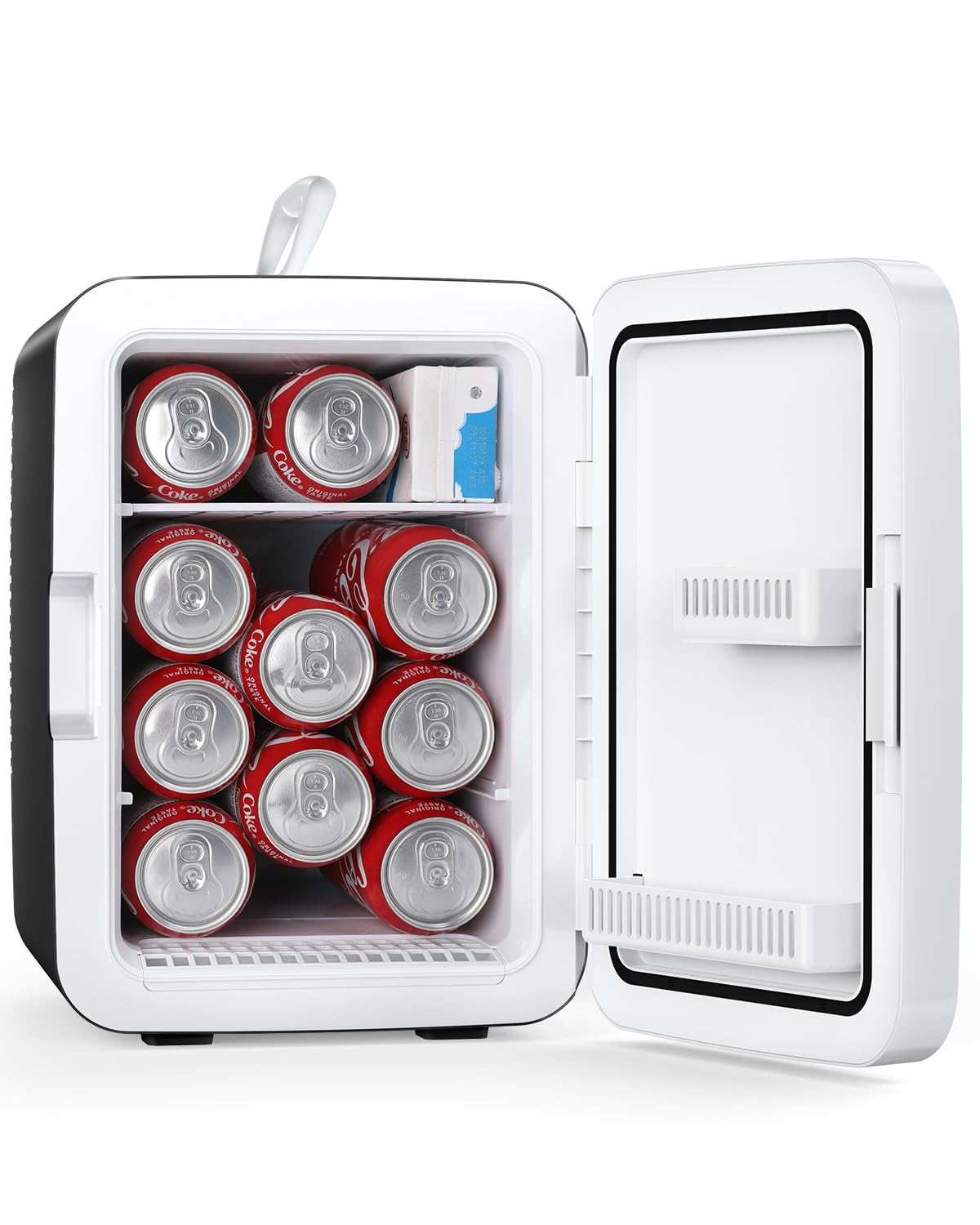
This 10-liter Antarctic Star is the most affordable and portable desktop option in the lineup. It uses thermoelectric cooling, so it will not freeze your medication, and it operates at a very low noise level (38 dB). The unit includes both AC (110V) and DC (12V) power cords, so it can be used at home, in a car, or in an RV. The top handle makes it easy to carry, and the 2.6-gallon capacity can hold a few vials and a supply of syringes or alcohol wipes.
The cooling performance is specified to drop the interior temperature by up to 32°F below ambient — for example, from 86°F to 54°F in about two hours. This means it can store medication at a cool temperature if the room is air-conditioned, but it will not consistently hold the 36°F–46°F range in a warm environment. The door has a writable surface, which is a thoughtful feature for labeling medication.
The critical shortcoming is the lack of any adjustable temperature control — the unit runs at a fixed rate with no thermostat. Additionally, some users report ice buildup around the screws in the back, requiring manual defrosting. Without a temperature display or set-point control, this unit is not suitable as a primary medication refrigerator. It is best used as a secondary backup cooler for non-critical items or as a personal beverage chiller for the office.
Why it’s great
- Extremely quiet at 38 dB
- AC/DC power cords for home and car use
- Affordable entry-level option for basic cooling
Good to know
- No adjustable temperature control or display
- Ice can build up around internal screws, requiring defrosting
FAQ
Can I use any regular mini fridge for insulin storage?
Why does my portable medication cooler need an auto shut-off feature?
Final Thoughts: The Verdict
For most users, the best mini fridge for medication winner is the 4ALLFAMILY Voyager because its auto shut-off thermostat, hybrid biogel-and-USB system, and digital temperature display provide the most reliable protection against both overheating and freezing in a travel-friendly form. If you want a wider adjustable temperature range and USB-C power, grab the Insucooler SleekCool Pro. And for a complete kit that includes a power bank, satchel, and auto shut-off safety at a competitive value, nothing beats the Nikupa Insulin Cooler Travel Case.